
New York
A Bronx public school whose exam-only admissions have produced more Nobel physics laureates than any other U.S. high school.
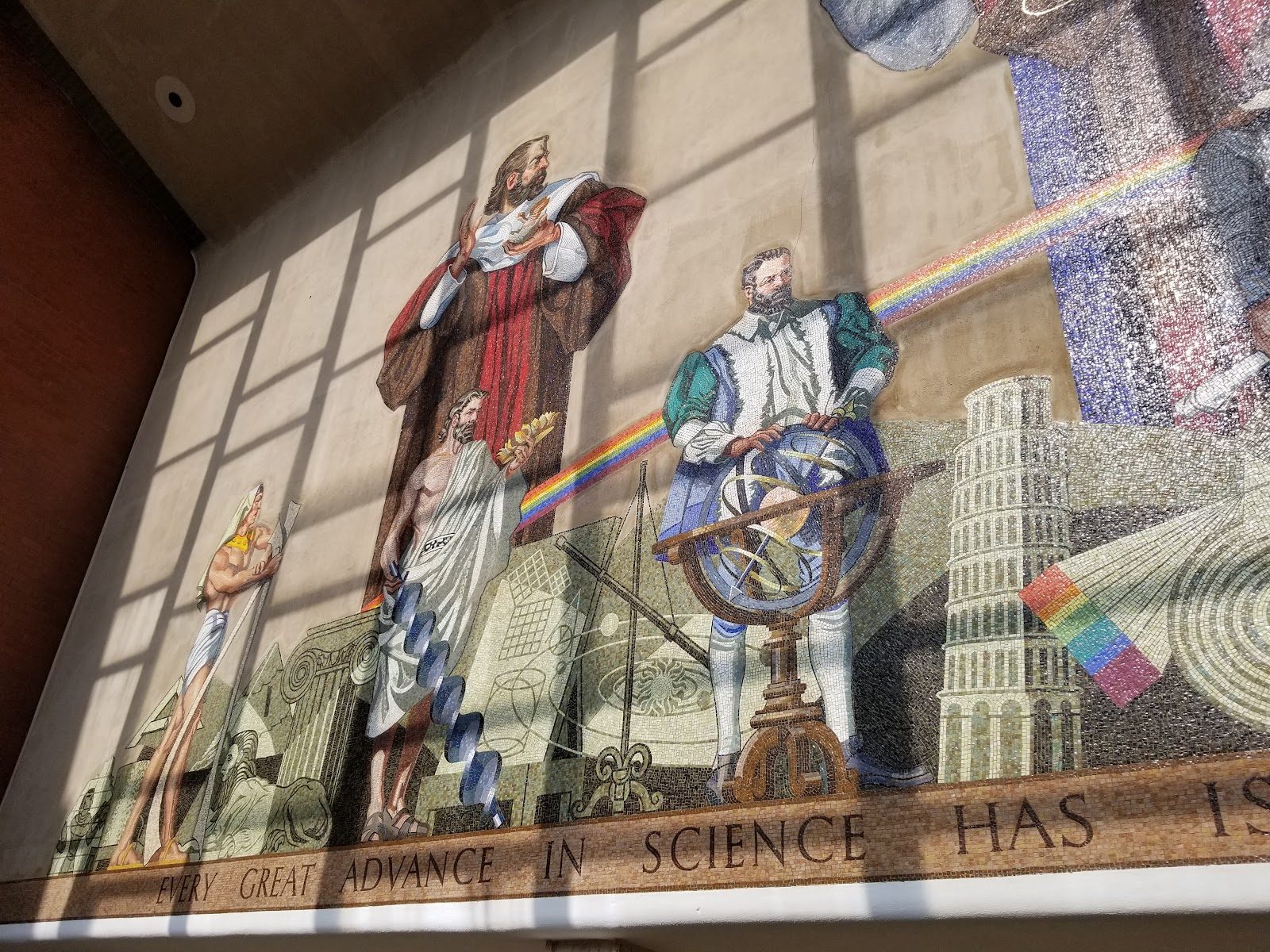
Photo © Isaac Alfieri via Google Maps
Type
Day
Ages
14–18
Curriculum
American
Qualifications
AP
Ratio
10:1
The Verdict
Editor's commitment
Right for
Ambitious New Yorkers who want an American public school with 1938 pedigree, 10:1 staffing and a proven pipeline into science and scholarship.
Wrong for
Families wanting hand-holding, religious formation or broad admissions discretion; this is a non-religious day school for ages 14–18 with exam-only entry.
Watch out for
NEASC and NAIS accreditation reassure, but the culture runs on student self-direction; even with classes averaging 18, nobody will spoon-feed your child.
Ranking breakdown
The Bronx High School of Science · #149 of 1591
Composite score 76.8. 8 weighted criteria.
By criterion
Academic Outcomes
Weight 20%
#43
of 1529 scored
University Placement
Weight 16%
#59
of 1529 scored
Prestige & Heritage
Weight 12%
#393
of 1529 scored
Alumni Network
Weight 12%
#386
of 1529 scored
Facilities
Weight 12%
#1099
of 1529 scored
Transparency & Communications
Weight 8%
#55
of 1529 scored
Peer & Industry Review
Weight 10%
#227
of 1529 scored
Admissions Selectivity & Demand
Weight 8%
#72
of 1529 scored
Score history
The Bronx High School of Science · 2026
Movement across 2024–2026. Peer average overlaid.
Overall — 2024–2026
76.8/ 100
▲ +25.4 vs 2025
year on year
Peer & Industry Review
How The Bronx High School of Science is regarded in the sector
92
Top-tier · high confidence
The Bronx High School of Science is consistently ranked among the top public high schools in the US by US News & World Report and Niche, and is famous for producing more Nobel laureates (8) than almost any other secondary school in the world, a fact widely cited in science education press and university admissions circles. Its elite specialized-exam admission (alongside Stuyvesant and Brooklyn Tech) makes it a perennial benchmark in NYC education coverage (Chalkbeat, New York Times) and national STEM-education discourse. Its alumni network includes numerous Nobel laureates, National Medal of Science winners, and prominent academics, giving it near-universal name recognition among education specialists and peer institutions.
Evidence sources
Award
Elite Science & Research 58
World's Top School · The Global Ranking
The Bronx High School of Science is featured on our Global Top 58 ranking at #13. This seal is available for the school's marketing team to use on their website, prospectus and social channels.
Editors' overview
Exam-only admission is the point here. The Bronx High School of Science is a New York City public day school for ages 14 to 18, founded in 1938, and it has built its identity around selective entry and hard academic pace rather than pastoral theatre. The school’s own front page still reads like an institution driven by student output: research celebrations, Science Olympiad, robotics, HOSA, speech and debate, and a student newspaper that has published 118 new articles in a single spring issue. That matters. This is a school where intellectual production is visible and routine. The numbers support the picture: a 10:1 student-teacher ratio and average class size of 18 give it more teaching contact than many large urban public schools manage, while NEASC and NAIS accreditation add a layer of institutional seriousness. Its strongest market distinction remains blunt: no other American high school has produced more Nobel laureates in physics. That is rarefied company by any standard.
Parents should shortlist Bronx Science for a child who wants pressure, competition and peers who treat academic stretch as normal. The school’s alumni record is not a thin anecdotal list but a deep bench: 243 notable alumni catalogued in Wikidata, including 109 scientists and scholars, 60 writers and journalists, 23 politicians and statespersons, and 12 business and finance leaders. That breadth matters as much as the science reputation. Despite the name, this is not a narrow technical academy; it is a serious intellectual ecosystem with strong evidence of life beyond the laboratory. The site’s emphasis on student journalism, arts awards, athletics and championship-level debate backs that up. Still, the centre of gravity is clear. This is an American curriculum school in English for teenagers who are fiercely academic, self-propelled and comfortable being surrounded by other high achievers.
It is not the right fit for every bright child. A student who needs constant hand-holding, a gentler tempo or a broader admissions philosophy will find the culture unforgiving. The very feature that makes Bronx Science attractive — exam-selective entry into a school with a long record of scholarly distinction — also makes it exacting. For the right teenager, that is the draw: ambitious classmates, tangible academic outlets, and a school culture that treats intellect as a public good rather than a private hobby. For families who want prestige without substance, look elsewhere. For families who want a high-pressure academic engine with proven depth, Bronx Science belongs on the shortlist.
An Elite Science & Research 58 school
The Bronx High School of Science, in the Kingsbridge Heights section of New York City, sits at rank thirteen because its alumni have won more Nobel Prizes than any other secondary school in the country, with graduates securing nine Nobel Prizes overall and exceeding the totals of entire nations. That distinction is not nostalgia; it sits on top of a research culture that still produces the largest cohort of Regeneron Science Talent Search Scholars of any American high school in multiple recent years, including twelve in 2025 and nine in 2024.
The specialism is systematic original research, scaffolded from freshman year through graduation. All entering students take a required Research Literacy course and pass through the Stanley Manne '52 Research Institute, before choosing one of four tracks -- Biology, Physical Science and Engineering, Math and Computer Science, or Social Science -- that carries them through sophomore proposal-writing into junior- and senior-year independent experimentation, seminar presentation, and competition submission. Mentorship reaches outside the building: students have worked in labs at Albert Einstein College of Medicine, Columbia, Memorial Sloan Kettering, the American Museum of Natural History, and Columbia's Lamont-Doherty Earth Observatory, where one Bronx Science student became an Intel ISEF finalist under a Lamont-Doherty marine biologist. Long-serving faculty such as Biology Research teacher Richard Lee, mentoring students for 27 years, anchor the pipeline that keeps the school among the top Regeneron performers nationally almost every cycle.
Notable alumni include Nobel laureates Roy Glauber (Physics, 2005), Leon Cooper (Physics, 1972, for BCS superconductivity theory), and Robert Lefkowitz (Chemistry, 2012), alongside AMD chief executive and electrical engineer Lisa Su, a 1986 graduate and Science Talent Search alumna who now sits in the National Academy of Engineering.
International openness is the honest limiting factor here. Bronx Science is a tuition-free New York City public specialized high school, not an independent international campus: there is no boarding, no dedicated overseas admissions track, and no visa sponsorship. Entry is solely by the Specialized High Schools Admissions Test, open only to New York City resident eighth- and ninth-graders, with roughly a 3 percent acceptance rate. English is the sole language of instruction, and support for English language learners exists within the standard NYC DOE framework rather than a bespoke ESL programme. For a family genuinely relocating to New York City, establishing residency and preparing for the October SHSAT twelve to eighteen months ahead is essential; for families not planning to relocate, this school should be admired as a benchmark rather than pursued as a direct destination.
Academic Performance
Academic performance here sits in the top tier of American public schooling, but the school does not publish the kind of clean, school-wide exam dashboard that international parents often expect. There is no public aggregate SAT or ACT profile on the homepage extracts here, and no AP score breakdown by grade band or pass-rate table. What it does publish is still telling: 28 AP courses, 12 post-AP courses, more than 4,800 AP exams sat, and a full graduation rate. That combination points to serious academic throughput rather than a boutique advanced programme serving a small honours track. At Bronx Science, demanding external exams are woven into the mainstream life of the school.
Relative to peers, the key distinction is depth at scale. Many strong schools can point to a handful of top scorers; fewer sustain a culture where advanced study, research activity, competition science, debate and selective university preparation all operate at once and in public view. The school’s tally of Regeneron scholars reinforces that point, even if it is not an exam metric in the narrow sense. The absence of published aggregate test-score data is a gap, and parents should treat it as one. Even so, the visible volume of advanced coursework and exam entry places Bronx Science among the most academically exacting U.S. secondary schools, with a hard-edged performance culture that is not for the faint-hearted.
Facilities
Bronx Science’s facilities are built around use rather than display. The clearest assets are the specialist spaces implied by the school’s public life: an auditorium that hosts yearbook photography, drama and major interest meetings; a library; sports provision extensive enough to sustain 43 PSAL teams; and the infrastructure to run robotics, Science Olympiad, HOSA, Mock Trial, Model UN and a student newspaper with industrial regularity. The presence of a school-based health centre also matters. In a public-school setting, that is a practical advantage for families. Add the volume of advanced science teaching and the school’s own research celebration, and the picture is of a campus designed for serious throughput in laboratories, competitions, publications and after-school programmes, not a showpiece campus built to impress on tour day.
Against peer schools, that puts Bronx Science in a strong but specific bracket. It offers more real academic and co-curricular infrastructure than the average urban public high school, and it uses those assets with high-intensity efficiency. It does not compete with the lavish theatres, aquatic centres or manicured estates that define top-fee American independents. That is not the proposition. The value here lies in density of opportunity: many clubs, many teams, constant events, and enough functional specialist space to keep a demanding student body in motion. Parents looking for architectural glamour will find leaner surroundings. Parents looking for facilities that support ambitious teenagers day after day will find a campus with substance over polish.
It does not compete with the lavish theatres, aquatic centres or manicured estates that define top-fee American independents
Prestige
Bronx Science carries serious academic prestige in the United States because its reputation rests on hard selection, durable public outcomes and a culture that prizes intellectual achievement in full view. Entry depends on the city’s specialised admissions test, which gives the school a status few comprehensive public schools can match. That status is then reinforced by visible institutional output: a long-running student newspaper, research celebrations, national-calibre debate, robotics, Science Olympiad and a long alumni roll that extends far beyond science. The headline distinction still matters most. The school cites 9 Nobel laureates, alongside 11 Pulitzer Prize winners and 2 Turing Award recipients. That is not a decorative honours list; it is a record that places Bronx Science in rare company among secondary schools of any kind.
The prestige here also has a specific texture. It is not polished, old-money or socially theatrical. It is meritocratic, exam-forged and tied to achievement rather than finish. For families who value pedigree built through gates, grounds and branding, other schools offer a smoother story. Bronx Science offers something more hard-edged: esteem earned through selection, competition and a public habit of producing scholars, researchers and writers at scale. That gives the name unusual weight with universities, academics and educated New Yorkers. It also explains the school’s enduring pull. This is not just a famous school; it is a high-status intellectual institution whose prestige has substance behind it.
Parent communication is practical, frequent and unusually well structured for a large public school
Communications
Parent communication is practical, frequent and unusually well structured for a large public school. The homepage does real work: start-of-term guidance, orientation notices for new families, attendance procedures, building entry and exit rules, calendar changes, health-centre information, bullying reporting routes, and replacement-card or planner processes all sit in plain view rather than buried in a parent portal. The school also signposts dedicated tools and channels — email, forms, JupiterEd, Naviance and a Parents’ Association — which gives families more than one route into the system. The event calendar is dense and specific, with timings, venues and audience relevance spelled out. That is competent, no-nonsense communication built for a busy school that cannot afford ambiguity.
Its weakness is tone, not function. The site reads like an operating manual, not a relationship document, and that will suit some families far better than others. Parents who want polished narrative, hand-holding or warm institutional voice will find it brisk and impersonal. Parents who want clear instructions, visible deadlines and evidence that the school runs on systems will rate it highly. The inclusion of a principal’s safety town hall, incoming family orientation, attendance reporting process and a clear bullying-report pathway points to a school that communicates most effectively when the issue is operational, behavioural or time-sensitive. In that lane, Bronx Science is hard-working and trustworthy. It is not cosy.
Uniqueness
What makes Bronx Science unique is not just selectivity or reputation, but the combination of both with public-sector scale. This is not a tiny magnet school built around a niche specialism. It is a large civic institution with exam-only entry, a full competitive ecosystem and a student body big enough to generate its own momentum. The school’s front page reads like a running log of intellectual production: research celebration, Keio exchange activity, state-level Speech & Debate, robotics, Science Olympiad, Mock Trial, Model UN, HOSA, championship sport and a student newspaper turning out 118 new articles in a single issue. That creates a self-propelling culture in which achievement is not hidden in a top set or a single honours corridor; it is the school’s everyday public language.
For students, that brings a distinct kind of education: immersion in a peer group that treats scholarship, competition and extracurricular output as normal rather than exceptional. The school’s menu is unusually deep for a public high school, with 28 AP courses and 12 post-AP courses feeding a culture of acceleration that extends beyond the classroom into publication, performance and contest work. The result is high-pressure, peer-driven and intellectually unsentimental. Teenagers who thrive here gain more than strong academics. They learn to operate in an environment where standards are visible, comparison is constant and ambition is ordinary. For the right student, that is transformative. For the wrong one, it is bruising.
What makes Bronx Science unique is not just selectivity or reputation, but the combination of both with public-sector scale
Student Profile
The student who fits Bronx Science is not just bright, but self-directed, competition-ready and comfortable in an environment where academic status is public. Admission by exam sets the tone before a child even walks through the door: this is a school for teenagers who can absorb pressure without constant reassurance and who gain energy from able peers rather than shrinking beside them. A pupil who likes chasing stretch papers, arguing in debate, building robots, writing for a student publication or throwing themselves into science competitions will have outlets in abundance. The scale matters too. With enrolment above 2,900 and more than 100 clubs, this is not an intimate hothouse; it is a large, fast-moving institution where initiative counts and nobody arranges your identity for you.
The less suitable student is easy to identify. A child who needs repeated prompting, fragile confidence management or a gentler social-academic climate will find the place bracing at best and punishing at worst. Despite the science brand, the profile is not narrowly STEM-only. The school’s public life includes speech and debate, drama, journalism, Mock Trial, Model UN and a heavy sports roster, so the strongest fit is an intellectually ambitious teenager with stamina and range rather than a one-dimensional test machine. The social centre of gravity still sits with achievement. If your child wants to be around classmates for whom high output is normal, Bronx Science is a serious fit. If they want warmth first and pressure second, it is not.
That creates a self-propelling culture in which achievement is not hidden in a top set or a single honours corridor; it is the school’s everyday public language
Co-curricular strengths
Arts & sport, on a separate axis
Overall 7.3/10
Scored 0-10 from the school's own published evidence. This axis is editorial-only — it does not feed the main WTS ranking.
Sports
8/10
Highly active PSAL "Wolverines" track, fielding dominant city-wide championship teams in wrestling, track, and volleyball.
Drama
7.5/10
While theater is highly popular, the true performance crown belongs to their Speech & Debate Team—consistently ranked #1 in the US.
Dance
5.5/10
Popular physical arts elective and extracurricular club track that integrates heavily into large musical theater ensembles.
Music
8/10
Supports massive, high-volume concert bands and orchestral arrays that highlight major seasonal cultural showcases.
Visual Arts
7.5/10
Focuses heavily on technical design and architecture, anchored by a historic 63-foot Venetian glass mosaic on the building's facade.
Editor-verified · 8/6/2026
Notable alumni · Wikidata
243notable alumni
Includes
- Lynn Mahoney(1964)
27 historic (born pre-1930) · 24 modern (born post-1970)wikidata:2026-07-28 How we source this
WTS 300 badge
2025/26 editionThe Bronx High School of Science is one of the World's Top 300 Schools for 2025/26. Claim your listing to add it to your site →
Strengths
- +The Bronx High School of Science is a public specialized high school in The Bronx in New York City, operated by the New York City Department of Education, meaning tuition and admission are free of charge to qualifying residents.
- +Nine Bronx Science alumni have won the Nobel Prize, a tally more than any other American high school, spanning physics, chemistry, medicine and economics.
- +The school ranks in the top 1% of all schools in New York for overall test scores (math proficiency is top 5%, and reading proficiency is top 5%), with 92% of students proficient in math and 97% proficient in reading, both well above state averages.
- +Bronx Science has always prided itself on providing students with opportunities to conduct independent research and has more finalists and semifinalists in the Science Talent Search than any other high school in history, supported by a four year research program that begins in ninth grade.
- +Students benefit from a research-intensive curriculum with advanced coursework in biology, chemistry, physics, and computer science, including partnerships with nearby institutions like Fordham University and the Albert Einstein College of Medicine.
Considerations
- −Entry depends entirely on a competitive written test scheduled in the fall of every year, commonly referred to as the Specialized High Schools Admissions Test, with the 8th-grade cutoff at Bronx Science at 518 out of 800 for 2025-2026, leaving no alternative pathway for students who test poorly on a single day.
- −At roughly 2,950 students, class sizes are large by international-school standards; the student-teacher ratio of 20:1 is higher than the New York state level of 11:1.
- −The diversity score of Bronx High School Of Science is 0.59, which is less than the diversity score at state average of 0.73, and minority enrollment is 80% of the student body (majority Asian), which is higher than the New York state average of 61% (majority Hispanic and Black), reflecting a student body skewed by exam-based entry rather than broad demographic representation.
- −All applicants are required to be residents of New York City for them to be qualified to take the exam, so the school offers no boarding option and is effectively closed to families without established city residency at application time.
Availability
Primary entry gate & tests
SHSAT (NYC Residents Only)
Gallery
Photo © Isaac Alfieri via Google Maps
Photo © Aaron Wald via Google Maps
Photo © Isaac Alfieri via Google Maps
Photo © Benjamin Raab via Google Maps
Photo © Thomas Barat via Google Maps
Photo © Thomas Barat via Google Maps
Photo © Dipika Kaushik via Google Maps
Photo © Dipika Kaushik via Google Maps
Photo © Dipika Kaushik via Google Maps
Parent reviews
Have you sent your child here?
Voice reviews carry the strongest trust badge — we transcribe them for you to tidy up before they go live. Prefer to type? A written review is fine too.
Add your voice
In 60 seconds, tell other parents: what's the best thing about The Bronx High School of Science, and what surprised you when your child joined?
We ask for a Google sign-in so every review has a real face behind it — no anonymous drive-by attacks on schools, and no faked positive reviews. Your email is never shown publicly.
Send this profile to a friend
International parents rely on word-of-mouth. Share this review with someone weighing the same decision.
Schools with places
Similar schools to The Bronx High School of Science with places available now.
Riverdale Country School
New York City · United States
- 2026-27
- WAITPOOLLate application possible
- 2027-28
- OPENS SOONOpens 8 Sept '26 (Noon ET)
Ethical Culture Fieldston School
New York City · United States
- 2026-27
- WAITPOOLLimited late availability
- 2027-28
- OPENS SOONOpens post-Labor Day '26
Saint Ann's School
Brooklyn · United States
- 2026-27
- WAITPOOLLate / attrition-dependent
- 2027-28
- OPENS SOONOpens 8 Sept '26
Friends Seminary
New York City · United States
- 2026-27
- WAITPOOLLate/held pending openings
- 2027-28
- OPENS SOONExpected Sept '26
Availability first, then country, area, curriculum, price, co-curricular
Consider also
Also worth looking at alongside The Bronx High School of Science.
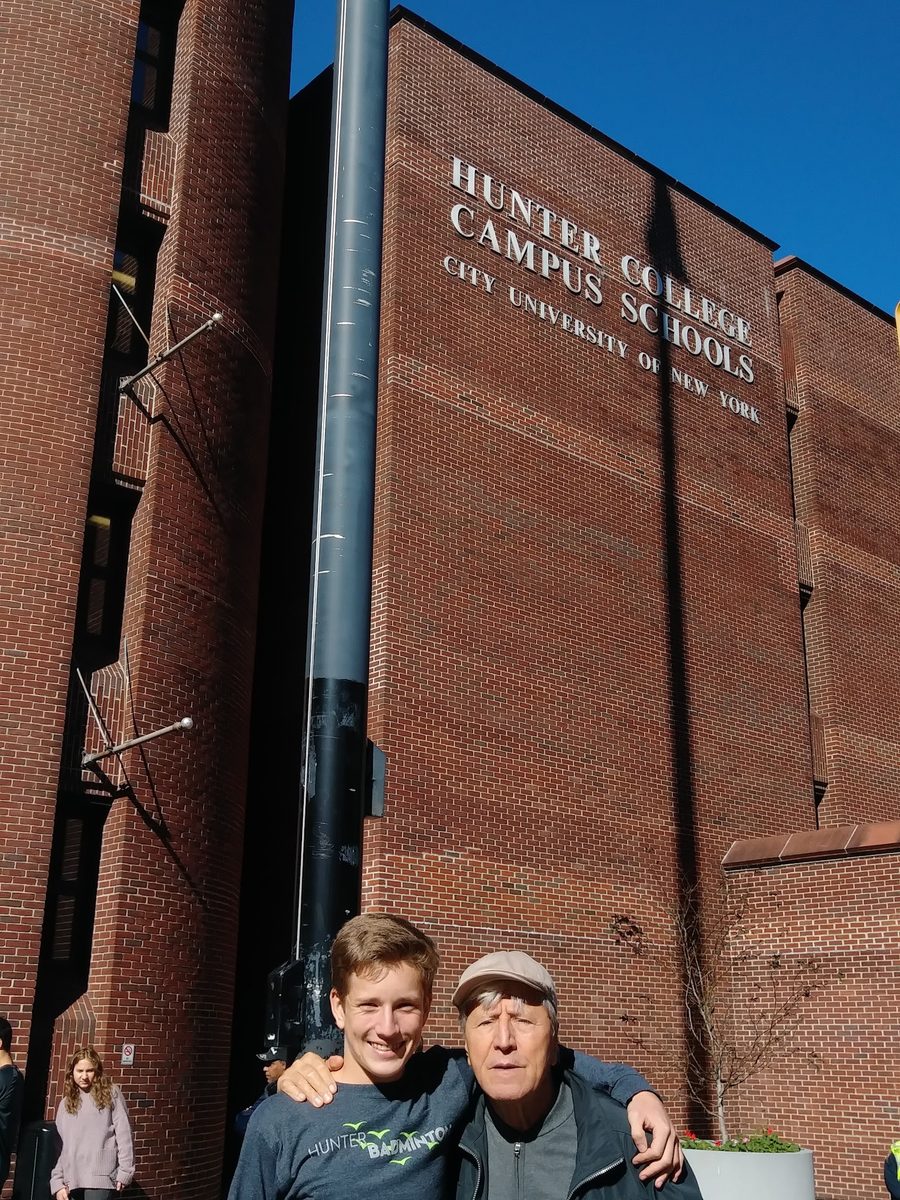
Hunter College High School
New York City · United States
A tuition-free CUNY-run gifted school on the Upper East Side, admitting by a single brutal exam and about 7 percent of applicants.
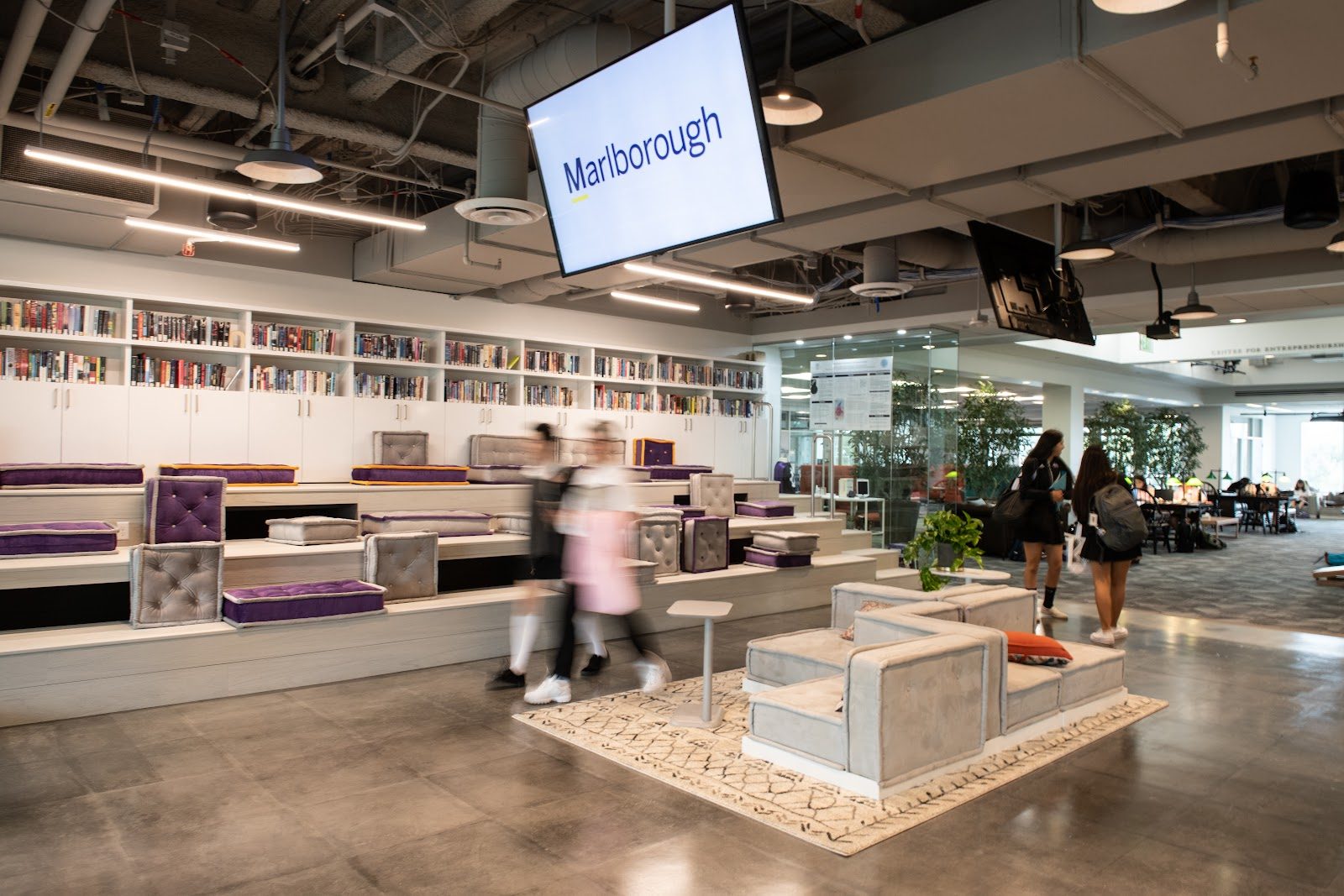
Marlborough School (LA)
Los Angeles · United States
Since 1889, this Hancock Park all-girls campus has paired a nationally recognized debate program with a first-of-its-kind Global Futures diploma.
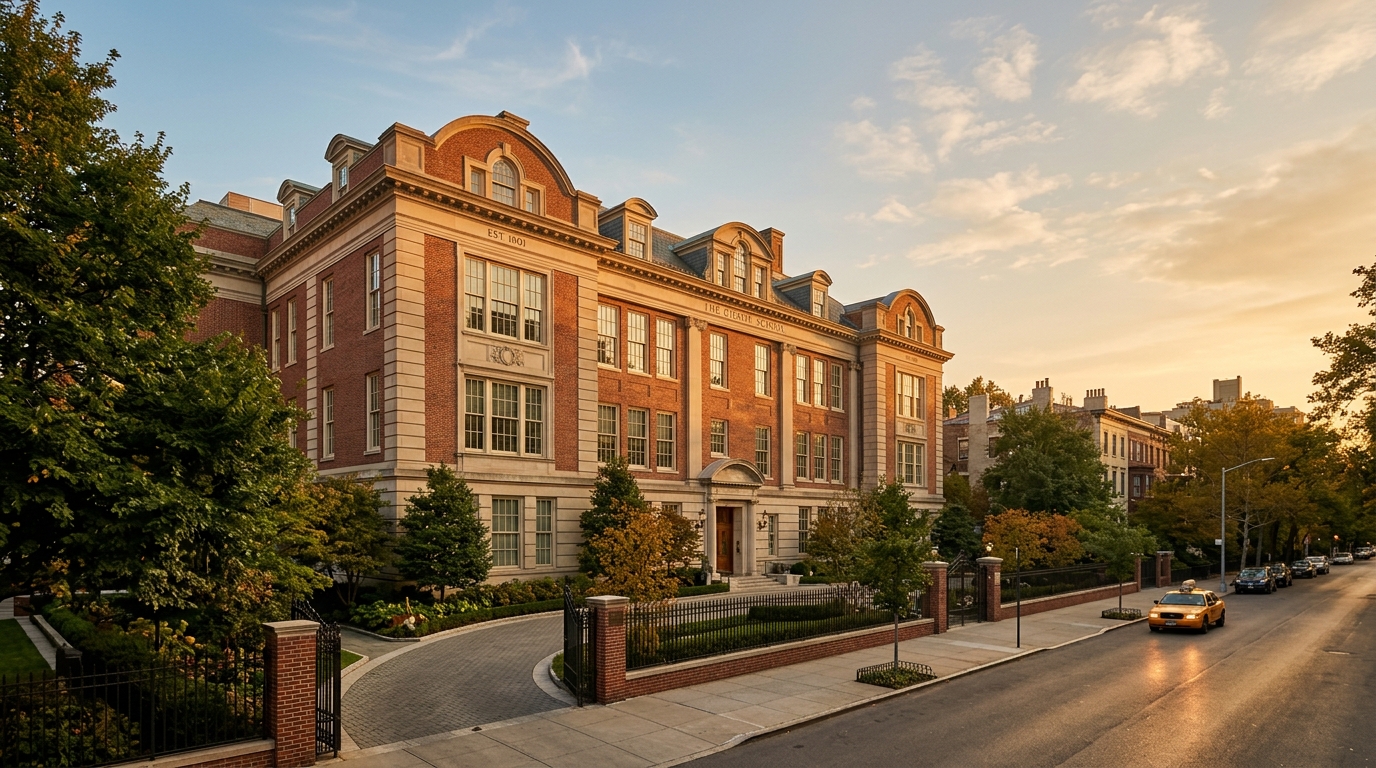
The Chapin School
New York City · United States
On the East River's edge, a K-12 girls' school where two years of Latin are compulsory and no valedictorian is named.
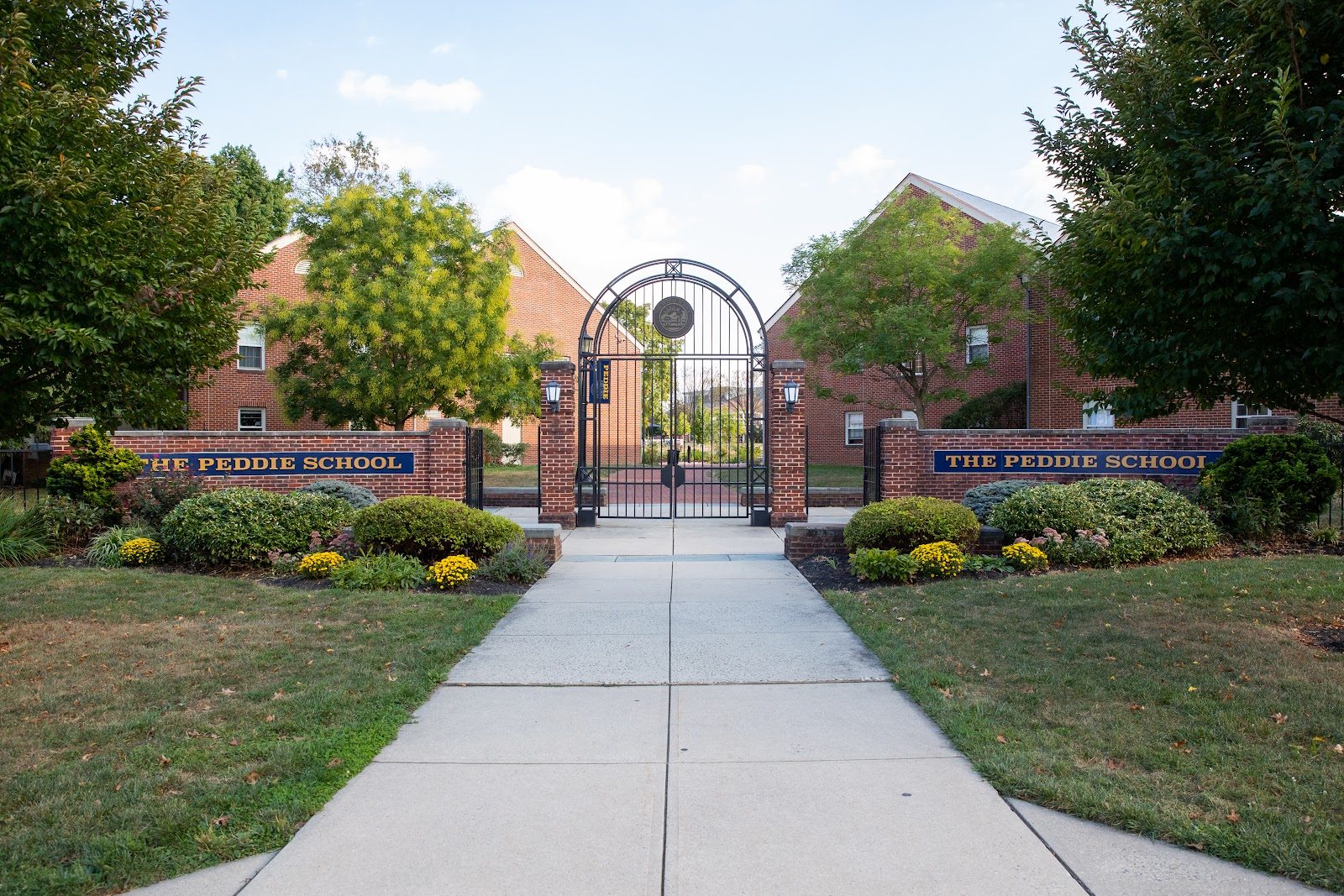
Peddie School
Hightstown · United States
Since 1864, a lakeside New Jersey campus builds signature tracks in research science and Shanghai-linked Asian studies.
Same country and curriculum — closest matches within ±10 points either way