
São Paulo
The first British school in Latin America accredited as a British School Overseas, blending UK curriculum with Brazilian roots in Jardins.
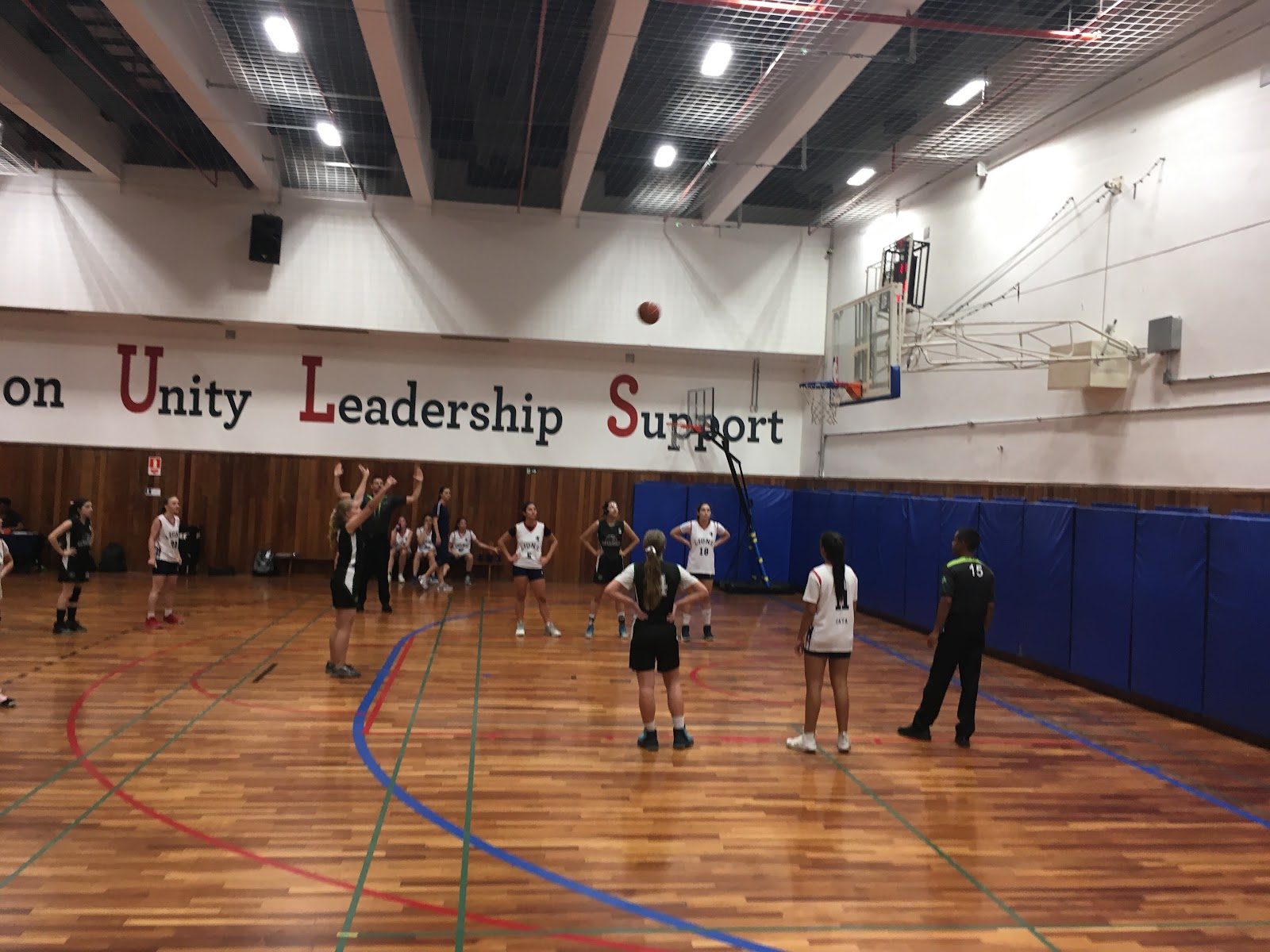
Photo © Pascal via Google Maps
Type
Day
Ages
2–18
Curriculum
British
Qualifications
IGCSE · IB Diploma
Ratio
—
The Verdict
Editor's commitment
Right for
Families wanting an English-medium day school in São Paulo, ages 2–18, with a British curriculum and IB World School status.
Wrong for
Parents seeking boarding, a secular culture, or Portuguese-first teaching; St. Paul's is day-only, Anglican and teaches in English.
Watch out for
The sales pitch leans on British prestige and 1926 heritage; the school does not publish hard outcomes to match its HMC and COBIS badges.
Ranking breakdown
St. Paul's School · # of 1591
Composite score 78.5. 8 weighted criteria.
By criterion
Academic Outcomes
Weight 20%
#208
of 1529 scored
University Placement
Weight 16%
#24
of 1529 scored
Prestige & Heritage
Weight 12%
#88
of 1571 scored
Alumni Network
Weight 12%
#114
of 1530 scored
Facilities
Weight 12%
#120
of 1534 scored
Transparency & Communications
Weight 8%
#9
of 1532 scored
Peer & Industry Review
Weight 10%
#26
of 1548 scored
Admissions Selectivity & Demand
Weight 8%
#760
of 1529 scored
Score history
St. Paul's School · 2026
Movement across 2024–2026. Peer average overlaid.
Overall — 2024–2026
78.5/ 100
▲ +25.8 vs 2025
year on year
Peer & Industry Review
How St. Paul's School is regarded in the sector
65
Respected · medium confidence
St. Paul's School São Paulo is consistently listed among the top international/British schools in São Paulo in expat parent forums (e.g., InterNations, Internations Brazil expat guides) and is a long-standing full member of COBIS (Council of British International Schools), which vets and benchmarks its academic and pastoral standards against other British schools worldwide. It lacks the broader specialist press coverage (Tatler, Good Schools Guide, Sunday Times) typical of top-tier UK/Asia international schools, but maintains a solid, credible regional reputation among peer British international schools in Latin America.
Evidence sources
Editors' overview
St. Paul’s School occupies a rare position in São Paulo: an old, high-status British school in Jardins with deep local roots and formal international credibility. Founded in 1926, it has had a century to build reputation, alumni loyalty and institutional habits. The sharp differentiator is its standing as the first British school in Latin America accredited as a British School Overseas, paired with IB World School status and memberships of HMC and COBIS. That combination matters. Parents are not buying a generic “international” label; they are buying a school that sits inside the British independent-school orbit while operating in Brazil. For families who want serious academic structure, cultural fluency and a school that can carry weight with universities in Brazil, the UK and the US, St. Paul’s earns a place on the shortlist quickly.
The school’s appeal rests on substance, not novelty. The campus in Jardins has benefited from continuous investment over the past 25 years, including a 2014 underground sports centre with courts and a full-size heated pool, and the 2016 Queen Elizabeth II Academic Centre with a learning resources centre, art studios, music facilities and 10 science laboratories. That is a strong physical offer in a dense urban setting. The school also states plainly that it is all-ability and family-oriented, with an Anglican foundation and English as the language of instruction. The pitch is broad education rather than hothouse selectivity: British curriculum, pastoral care, sport, arts and a visible emphasis on values. Parents who want published hard performance data will find less than they may want in the public domain. St. Paul’s trades on reputation, history and institutional confidence more than granular academic disclosure.
What is special here is the blend: *British discipline with Brazilian context, urban sophistication*, and a campus that has kept modernising without losing identity. In market terms, this is not the largest or cheapest option; it is an established premium day school for families who want permanence, polish and a recognisable educational framework. It suits children who will use the breadth on offer — academics, music, sport, co-curricular life — and who thrive in a community with tradition rather than disruption. The best fit is the student who wants high expectations, a grounded sense of community and an education that feels international without floating free of place. Children who need a narrowly academic pressure-cooker or a radically progressive culture will find a weaker fit. St. Paul’s works best for confident joiners who will take full advantage of a well-resourced, well-connected school with clear social capital in São Paulo.
Academic Performance
St. Paul’s does not publish the kind of granular exam data that would let parents benchmark it cleanly against the strongest international schools in the region. We have not seen aggregate IB averages, top score counts, subject-by-subject distributions or multi-year trend lines in the public domain. That matters. In a market where serious schools use results to prove academic muscle, the absence of those figures leaves reputation doing more work than evidence. The school states that pupils go on to leading universities in the UK, the US and Brazil, which signals a functioning academic pipeline, but it does not answer the harder question: how strong are results at the top, in the middle and across the cohort? For a school with this level of status, the disclosure is thin.
Relative to peers, that places St. Paul’s in an awkward category: clearly established, plainly credible, but opaque on outcomes. Parents can infer that standards are solid from its long-standing standing, university destinations and the scale of academic facilities, including 10 science laboratories. They cannot verify whether it competes academically with the most results-driven British and IB schools in Latin America, or whether it sits a tier below on raw examination performance. The school’s all-ability intake also matters here; broad-admissions schools deserve to be judged on value added and destination quality, not only headline scores. St. Paul’s has enough institutional weight to merit confidence, but not enough published data to command it outright.
Facilities
The campus strength sits in specialist spaces rather than acreage. In a dense urban neighbourhood, St. Paul’s has assembled a serious working estate: a full-size heated pool, indoor courts for basketball and volleyball, a dedicated learning resources centre, art studios, a music school with recording facilities, and 10 science laboratories. That mix covers the essentials for a premium all-through day school and then goes further in the areas that matter for daily pupil life: sport, lab science, performance and visual arts. The sports provision stands out because it is purpose-built and protected from the constraints that hobble many city campuses. The music provision also deserves attention; recording facilities are still uncommon outside the top fee tier, and they signal a school that has invested beyond token recital rooms.
Against peer schools in Latin America, this is a strong, well-funded campus offer, though not a sprawling one. Families looking for vast playing fields, equestrian centres or the resort-style excess found on suburban mega-campuses will not find that here. What they get instead is a compact but high-functioning site where academic and co-curricular facilities have clear depth. The long building programme has produced a campus that feels deliberately upgraded rather than patched together. Planned additions — an outdoor centre and an onsite innovation centre — point in the right direction, but they do not count until they open. As it stands, St. Paul’s competes well on indoor sport, science, music and arts; it competes less on sheer land and spectacle.
We have not seen aggregate IB averages, top score counts, subject-by-subject distributions or multi-year trend lines in the public domain
Prestige
St. Paul’s carries real social and educational prestige in São Paulo because it combines age, continuity and scarcity. There are newer international schools with shinier rhetoric; very few have this school’s inherited standing with local professional families, multinational households and alumni networks that keep feeding the institution’s influence. The British School Overseas recognition matters here not as a badge for brochures but as external confirmation that the school sits inside a recognisable British quality framework. Membership of HMC and COBIS reinforces that status. In practical terms, a St. Paul’s education signals established good taste, access to a well-connected parent body and entry into a school community with durable cultural capital.
The prestige also rests on visible substance. This is not a school trading on a name alone: the academic and co-curricular estate includes a serious music offer, art studios, a learning resources centre and 10 science laboratories, alongside high-grade sports provision. The campus investment programme has given the school a polished institutional confidence that parents notice quickly. That said, prestige here exceeds transparency. The school’s reputation in the city is stronger than its published academic evidence, and that distinction matters. St. Paul’s is high-status and widely respected; it is not the most data-open school in its competitive set. We rate it highly on prestige because the brand carries weight in admissions circles, family networks and university-facing narratives, even where hard public performance data remains thinner than it should be.
Paul’s School occupies a rare position in São Paulo: an old, high-status British school in Jardins with deep local roots and formal international credibility
Communications
St. Paul’s communicates with the polished assurance of an old institution. The public-facing site is orderly, easy to navigate and strong on tone, values and sense of community. It gives parents a clear feel for the school’s identity, shows the campus well through a 360 tour, and points cleanly to the main institutional priorities: pastoral life, broad education and co-curricular opportunity. That part works. The school does not hide behind clutter, jargon or frantic salesmanship. The voice is controlled, self-confident and decidedly premium. Parents who want to understand the culture and atmosphere will get a usable picture quickly.
Where communication weakens is in substance for hard-nosed decision-making. The school talks fluently about vision, heritage and pupil experience, but less well about measurable outcomes, operational detail and the specifics that experienced international parents scrutinise. We have not seen strong public disclosure on aggregate exam performance, and that limits trust at the sharp end of the admissions process. A school asking families to buy into a high-status proposition needs communication that does more than reassure; it needs communication that proves. St. Paul’s is effective at narrative and less effective at disclosure. For families already sold on its culture, that will suffice. For parents comparing elite schools line by line, the communication leaves important gaps.
Uniqueness
What separates St. Paul’s is not novelty but inheritance with teeth. This is an old Anglican school that has kept its social standing while adapting to a Brazilian metropolis and an international-university market. Many schools claim to blend cultures; St. Paul’s has done it for generations, and that produces something harder to copy: institutional memory, local fluency and a parent body that understands both British expectations and Brazilian realities. The result for pupils is a school life that is neither imported wholesale nor stripped of tradition for the sake of fashion. Children get a clear moral and communal framework, but not one detached from the country they live in. That matters in adolescence, when identity, belonging and ambition need a setting with real ballast.
The second point of difference is the combination of breadth and status without a sprawling suburban model. In a compact urban setting, pupils still get access to serious specialist provision, including 10 science laboratories and a music school with recording facilities. That gives the education practical range: strong preparation for academic study, credible space for the arts, and a co-curricular life with *more depth than many city campuses manage*. For students, the benefit is not only access but expectation. St. Paul’s sets up a version of school life where academic work, music, sport and service sit together inside one high-status, tradition-conscious culture. For the right child, that produces confidence without rootlessness and ambition without gimmickry.
Founded in 1926, it has had a century to build reputation, alumni loyalty and institutional habits
Student Profile
The pupil who fits best here is a confident joiner: socially at ease, willing to participate, and able to use a school that expects students to do more than move from lesson to lesson. St. Paul’s suits children who can handle a culture shaped by tradition, shared values and a visible community life, without needing either intense scholastic pressure or a loose, progressive atmosphere. The school states that it is all-ability and family-oriented, which points to a broad intake rather than a narrowly filtered academic cohort. That changes the peer environment. Expect students from established local and international families, a polished social tone, and a community where manners, involvement and institutional loyalty carry weight. For the right child, that creates a grounded, high-expectation setting with strong adult support.
The strongest fit is the pupil who wants breadth and will use it: science, music, sport, arts and the wider life of the school, not only exam preparation. A child with one narrow obsession and little interest in community may find the culture constraining. A student who enjoys structure, identity and belonging will do well. The same goes for internationally minded families who want access to universities across more than one system, but do not want a rootless campus culture. This is a school for children who benefit from institutional ballast, clear norms and a socially assured peer group — not for those who need anonymity, reinvention or a hothouse academic tribe. The age span from 3 to 18 also gives the student body a full all-through feel, with older pupils acting as visible reference points for younger ones.
Parents are not buying a generic “international” label; they are buying a school that sits inside the British independent-school orbit while operating in Brazil
Co-curricular strengths
Arts & sport, on a separate axis
Overall 8.54/10
Scored 0-10 from the school's own published evidence. This axis is editorial-only — it does not feed the main WTS ranking.
Sports
9/10
Multiple sports — Football, Swimming, Tennis, Rugby, Netball, Cricket and Basketball — indicating a solid multi-sport extracurricular offering, but gives no named facilities, staff, fixtures or results.
Drama
9.2/10
'Drama productions', which goes beyond a bare mention of drama by evidencing recurring staged activity.
Dance
6.5/10
Music
9.3/10
Choir and Orchestra, showing structured musical ensembles rather than a vague arts reference, but cites no dedicated music facility, specialist staff or awards.
Visual Arts
8.7/10
Editor first-pass · editor-reviewable · 7/27/2026
WTS 300 badge
2026/27 editionSt. Paul's School is one of the World's Top 300 Schools for 2026/27. Claim your listing to add it to your site →
Strengths
- +St. Paul's is the British school of Sao Paulo, the first South American School to be recognised by the UK government as a British School Overseas, following a 2012 ISI inspection.
- +The curriculum blends the English National Curriculum with Cambridge IGCSEs and the International Baccalaureate Diploma Programme, while incorporating the Brazilian Core Curriculum, giving pupils a dual route to Brazilian and overseas universities.
- +Founded in 1926 by the British community, the school is governed by FABEC as a not-for-profit foundation; the UK Consul General sits on the Board, giving it long institutional continuity.
- +Class sizes range from about 16 to 18 students per class, and a 10:1 student-teacher ratio supports personalized attention, alongside modern facilities in Jardins including a new sports centre, a Sixth Form centre, and a learning resources centre.
- +A Bursary Fund provides partial fee assistance for British families, funded by FABEC, with eligibility requiring the child and one parent to hold UK passports and the British parent to have lived in the UK for at least 10 years; assistance is means-tested, up to 40% of tuition.
Considerations
- −This school does not make their fees public for the academic year 2026/2027, so families cannot compare costs against other schools before formally applying.
- −As a British international school, admissions prioritises British and international applicants, which narrows the effective intake pool for locally based Brazilian families without an international connection.
- −The Bursary Fund is not a general needs-based aid scheme: eligibility requires the child and one parent to hold UK passports and the British parent to have lived in the UK for at least 10 years, excluding most non-British applicants from that support.
- −Safety in Sao Paulo is described as fair to poor overall, with areas like Jardins considered safer than the wider, massive city, meaning families must choose housing carefully relative to the school.
Availability
Primary entry gate & tests
Assessment + Expat Priority
Gallery
Photo © Andrea Sacay via Google Maps
Photo © Pascal via Google Maps
Photo © St. Paul's School São Paulo via Google Maps
Photo © St. Paul's School via Google Maps
Photo © St. Paul's School via Google Maps
Parent reviews
Have you sent your child here?
Voice reviews carry the strongest trust badge — we transcribe them for you to tidy up before they go live. Prefer to type? A written review is fine too.
Add your voice
In 60 seconds, tell other parents: what's the best thing about St. Paul's School, and what surprised you when your child joined?
We ask for a Google sign-in so every review has a real face behind it — no anonymous drive-by attacks on schools, and no faked positive reviews. Your email is never shown publicly.
Send this profile to a friend
International parents rely on word-of-mouth. Share this review with someone weighing the same decision.
Schools with places
Similar schools to St. Paul's School with places available now.
Availability first, then country, area, curriculum, price, co-curricular
Consider also
Also worth looking at alongside St. Paul's School.
British School Rio de Janeiro
Rio de Janeiro · Brazil
A century-old British foundation in Rio pairs the IB Diploma with Brazil's Ensino Medio in the shadow of Christ the Redeemer.
Colégio Bandeirantes
São Paulo · Brazil
Since 1934 in Vila Mariana, the school that pioneered Brazil's live presidential debates now tops ENEM leaderboards statewide.
Colégio Ari de Sá Cavalcante
Fortaleza · Brazil
Named for a self-taught Ceara educator, its Fortaleza campuses rank among Brazil's top ENEM performers nationwide.
Escola Americana do Rio de Janeiro
Rio de Janeiro · Brazil
Perched at the edge of Tijuca National Forest with Christ the Redeemer in view, a 1937 campus layers IB, American and Brazilian diplomas.
Same country and curriculum — closest matches within ±10 points either way