
Greater London
A 1509 founding charter to teach boys 'from all nacions and countres indifferently' still anchors this riverside Barnes campus on the Thames.
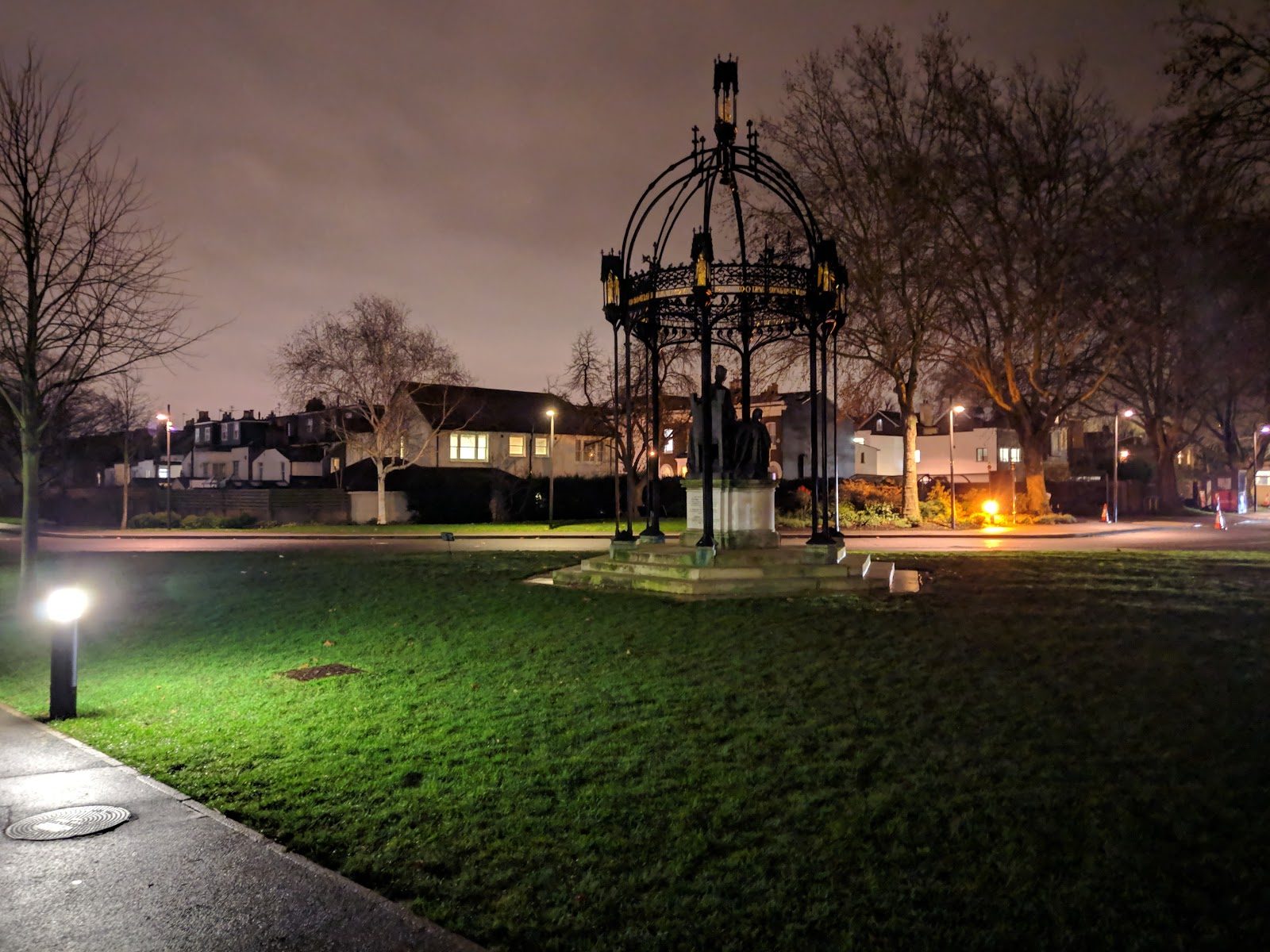
Photo © Haren via Google Maps
Type
Both
Ages
7–18
Curriculum
British
Qualifications
A-Level · GCSE
Ratio
10:1
The Verdict
Editor's commitment
Right for
Boys aiming high academically: 95% of 174 leavers reached top-100 universities, including 48 Oxbridge places, with a 10:1 ratio.
Wrong for
Families wanting co-education, a non-British curriculum or low-cost schooling; this is an Anglican boys' school charging £34,390 day fees on average.
Watch out for
The riverfront Barnes setting and 1509 pedigree impress, but the real story is pace and competition across ages 7–18, with boarding averaging £57,902.
Ranking breakdown
St Paul's School · # of 1591
Composite score 81.3. 8 weighted criteria.
By criterion
Academic Outcomes
Weight 20%
#32
of 1533 scored
University Placement
Weight 16%
#9
of 1529 scored
Prestige & Heritage
Weight 12%
#20
of 1580 scored
Alumni Network
Weight 12%
#25
of 1530 scored
Facilities
Weight 12%
#119
of 1540 scored
Transparency & Communications
Weight 8%
#457
of 1547 scored
Peer & Industry Review
Weight 10%
#55
of 1564 scored
Admissions Selectivity & Demand
Weight 8%
#229
of 1529 scored
Score history
St Paul's School · 2026
Movement across 2024–2026. Peer average overlaid.
Overall — 2024–2026
81.3/ 100
▲ +18.2 vs 2025
year on year
Peer & Industry Review
How St Paul's School is regarded in the sector
97
Top-tier · high confidence
St Paul's stands at the very summit of British independent education, named the number one school in the country in the 2025 Sunday Times league tables after two consecutive years as runner-up, and WhichSchoolAdvisor's own boys' schools guide confirms it "sits at the top of the national rankings." Its review calls the school "one of the finest schools in the UK" for the exceptionally academic boy, while The Good Schools Guide and Tatler both single it out for combining scholarly intensity with genuine breadth, from a 100-minute lunch break culture to rowing on its own Thames boathouse. The Old Pauline network, tracing from Milton and Pepys to Montgomery and Osborne, gives it a peer-benchmark status few schools can rival. The only real caveat, noted across reviewers, is limited boarding and bursarial provision, which narrows rather than dents its reputation.
Award
Elite Science & Research 58
World's Top School · The Global Ranking
St Paul's School is featured on our Global Top 58 ranking at #47. This seal is available for the school's marketing team to use on their website, prospectus and social channels.
Award
Elite Computing & AI 60
World's Top School · The Global Ranking
St Paul's School is featured on our Global Top 60 ranking at #30. This seal is available for the school's marketing team to use on their website, prospectus and social channels.
Award
Elite Mathematics 60
World's Top School · The Global Ranking
St Paul's School is featured on our Global Top 60 ranking at #34. This seal is available for the school's marketing team to use on their website, prospectus and social channels.
Award
Elite Entrepreneurship, Economics & Finance 60
World's Top School · The Global Ranking
St Paul's School is featured on our Global Top 60 ranking at #4. This seal is available for the school's marketing team to use on their website, prospectus and social channels.
Editors' overview
The 1509 charter still matters here. St Paul’s was set up to teach boys “from all nacions and countres indifferently”, and that old breadth of ambition survives in a school that is intellectually exacting, unapologetically academic and unusually well supplied. This is a British curriculum school for boys aged 7 to 18 on a riverside Barnes campus, with boarding as well as day places, a 10:1 student-teacher ratio and average classes of 18. The structure is clear: serious classroom teaching, a dense menu of societies, sport and arts, and a visible interest in scholarship for its own sake. The website’s sheer range of academic departments and co-curricular options — from classics, theology and philosophy to engineering, rowing and fencing — tells you what kind of institution this is: restless, high-octane and competitive.
The outcomes justify that stance. In the 2024 leavers’ cohort of 174, 95% went to top-100 universities; 48 went to Oxbridge, 62 to Russell Group universities and 9 to the Ivy League, with Cambridge, Oxford and Imperial the most common destinations. That is a striking set of numbers, and it places St Paul’s firmly in the top tier of academically selective London independents. Parents should also note the accreditations: ISI and HMC membership place it squarely inside the established British independent-school mainstream, not as a stylistic outlier but as a school with institutional heft. The average annual fee is £34,390 for day pupils across the full ladder and £57,902 for boarders, which is expensive but in line with the school’s market: central to outer-London elite day education, with boarding as an additional option rather than the core identity.
The special draw is not pastoral softness or glossy all-rounder rhetoric. It is the combination of old intellectual confidence, heavy co-curricular provision and a student body that expects to work hard and compete seriously. This school belongs on a shortlist for families who want a hard-driving boys’ education with real scale, strong university outcomes and enough breadth that able pupils do not get trapped in a narrow exam machine. It suits boys who are bright, self-motivated and happy in a culture where academic stretch is normal, not exceptional. It will appeal to a mathematically able classicist, a serious musician who also rows, a debater who wants philosophy on the timetable, or any boy who wants to be among fast peers and does not need hand-holding. It is not for the faint-hearted, and that is part of its appeal.
An Elite Science & Research 58 school
St Paul's School in Barnes, London, sits at rank forty-seven on the Elite Science & Research 58 because it converts a genuinely large share of its sixth form into medal-winning scientists rather than merely well-examined ones. In the 2025 British Biology Olympiad, Pauline participants were awarded 48 medals, with 86 percent of entrants earning a medal and 44 percent of those gold, a strike rate against a national field of thousands.
The specialism is less a single mandated thesis programme than a dense, compounding Olympiad and independent-research culture running from GCSE years into the sixth form. The 2025 RSC Chemistry Olympiad cohort of 152 Paulines set new school records of 48 gold and 72 silver awards, 144 in total, with Adavya Goyal finishing second of over 16,000 entrants and reaching the UK IChO selection camp. Physics and mathematics run in parallel, with recent cohorts producing multiple Top Gold British Physics Olympiad results. Facilities include a purpose-built Science Building offering university-standard laboratories, complementing the school's 45-acre Thames-side campus. Independent research is formalised through the Extended Project Qualification, beginning with a research-skills day before pupils work for two terms with an academic supervisor toward a presentation of original scholarship, supplemented by a Junior Projects Club, an RSC outreach scheme for state-school pupils, and STEM summer schools run with university partners.
Alumni anchoring the science reputation include Sir Mark Walport, who served as the UK Government's Chief Scientific Adviser from 2013 to 2017 after directing the Wellcome Trust, and Professor Paul Braterman, an Oxford-trained chemist and honorary research fellow at the University of Glasgow. The current pipeline is visible too: Adavya Goyal represented the UK across three international Olympiads in one summer, while Eamon Coates ranked fourth of 8,668 national entrants in the RSC Chemistry Olympiad.
International openness runs through a disciplined but genuine route: overseas candidates sit the same written papers as UK applicants, at a British Council office or their own school, with interviews held in person in London. A small boarding cohort operates from Year 9, and the school is a registered UK Visas and Immigration Child Student sponsor, though sponsored boarders need a UK-resident educational guardian. Instruction is entirely in English, with no ESL support, and 16+ applicants require strong English proficiency. Fees are £30,000 a year for day pupils and £55,000 for boarders. Families abroad should register at least two years ahead.
An Elite Computing & AI 60 school
St Paul's School in Barnes, London sits at rank thirty on the Elite Computing & AI 60 on the strength of an individual result that is hard to manufacture: a Pauline won a bronze medal for the UK at the 2024 International Olympiad in Informatics in Egypt, described by organisers as the most prestigious computer science competition for secondary students worldwide, and the same pupil went on to represent Great Britain at the International Mathematical Olympiad in 2025. That crossover between the country's hardest algorithmic and mathematical olympiads is a genuine signal of computational depth rather than curriculum polish.
The formal architecture is more modest than the headline result suggests, and honesty matters here: the taught course is a GCSE in Computer Science built around Python, extended through advanced A-Level projects rather than a published sequence of university-style modules in algorithms, systems or machine learning. What lifts the school is competition infrastructure around that base: pupils also fielded a team at the 2024 Western European Olympiad in Informatics, and three Paulines have gone to the IMO in the past two seasons, feeding a talent pipeline that runs through the same mathematically gifted cohort. Parents should treat the olympiad results as pupil-driven excellence layered onto a solid but not distinctively 'AI-specialist' syllabus, delivered from the Science Building and general teaching block on the 45-acre Thames-side campus.
Old Paulines with technology pedigree include Sam Houser, co-founder and president of Rockstar Games and a driving force behind the Grand Theft Auto franchise, and George Burgess, who founded the edtech app Gojimo during his final year at St Paul's before it reached millions of GCSE and A-Level users. Beyond named alumni, the school's recent strength is best evidenced through its olympiad pipeline: IOI, IMO and WEOI representation across the last two seasons.
International openness is real but structured: St Paul's is a UK Visas and Immigration Child Student sponsor for boys joining Year 9 and above, though sponsored pupils must be full boarders with a UK-based educational guardian. Overseas candidates sit written exams via British Council offices before an in-person interview in London. Fees are £55,000 a year for boarding and £30,000 for day places, with a small boarding cohort. Families should register at least two years ahead of 13+ entry and start the visa and guardian arrangements as soon as a place is offered, since sponsorship and boarding conditions are non-negotiable for overseas applicants.
An Elite Mathematics 60 school
St Paul's School in London sits at rank thirty-four on the Elite Mathematics 60 because its mathematics culture consistently produces national-team mathematicians rather than isolated prodigies. In 2025, Adavya Goyal won a bronze medal representing Great Britain at the International Mathematical Olympiad, continuing a run that saw Haolin Zhao selected for the 2024 IMO in Bath and Neil Prabhu named to the ten-strong training squad the year before, a lineage stretching back to Joe Benton's run of three silvers and a gold between 2014 and 2017.
The department, headed by Andrew Ashworth-Jones, states plainly that it does not accelerate pupils through early exam entry but instead stretches them with harder problems, and the numbers show this reaches deep into the cohort: of the 302 pupils who scored Gold in the Senior Mathematical Challenge in 2024-25, 95 qualified for the first round of the British Mathematical Olympiad and five progressed to BMO2, a round that only around 100 pupils nationally reach each year. Roughly 85% of pupils take A Level Mathematics and around 45% take Further Mathematics. Selected pupils attend UKMT training camps at Trinity College, Cambridge, and a pupil-run Maths Society, supported by Dr Baxter, hosts problem-solving sessions and outside speakers from Oxford and King's College London.
Notable alumni include Klaus Roth, who won the 1958 Fields Medal for his work on Diophantine approximation, and Imre Leader, who won an IMO silver medal for Britain in 1981 before becoming a Cambridge mathematician and later the UK's IMO team leader. The current generation is still building its record, with Adavya Goyal's 2025 bronze medal the most recent marker of that continuing tradition.
St Paul's is a UK Visas and Immigration Child Student sponsor for boys joining Year 9 and above, with full, weekly or flexi-boarding available from that point, though sponsored overseas pupils must board full-time and have a guardian who is a British citizen or holds Indefinite Leave to Remain. Overseas applicants sit the ISEB pre-test at a local school or British Council office before a compulsory interview in London. Day fees for 2025/26 run to roughly £35,850 a year, with full boarding around £51,000-54,000. Given interview and boarding places are scarce, families targeting 13+ entry should register three to four years ahead and begin the visa and guardianship paperwork at least a year before entry.
An Elite Entrepreneurship, Economics & Finance 60 school
St Paul's School, on the banks of the Thames in Barnes, southwest London, sits at rank four because its enterprise programme carries an externally validated competition record that few UK schools can match: the school's Young Enterprise operation has an outstanding record, winning UK company of the year three times, the European finals twice, and reaching the national finals one other time. That is not a one-off trophy but a sustained institutional pattern, reinforced most recently when Canopy was awarded the 2nd Best Overall Company at the Young Enterprise UK Finals, having designed, produced, and manufactured self-watering plant pots, selling over 120 units.
The architecture behind this is real. The Young Enterprise Scheme is run by the Economics Department for pupils in Year 12, sitting alongside an Economics A-Level built around the CORE Econ platform, an annual economics day featuring a Deutsche Bank trading simulation, and the Economics Research Council's Clash of the Titans forecasting competition, where pupils produce quarterly GDP, inflation and sterling predictions. Beyond the classroom, an enterprise pathway spanning primary school to Year 13 runs across ten West London Partnership schools founded by St Paul's, feeding into an incubator that offers up to £10,000 per founder plus legal and financial support, with alumni businesses progressing to further funding rounds.
Notable alumni in finance and entrepreneurship include Sam Houser, co-founder and president of Rockstar Games and a driving creative force behind the Grand Theft Auto franchise, and Old Pauline Harry Hampson, who spent over 30 years at JP Morgan, including as one of the Global Chairs of Investment Banking, before becoming Director of Corporate Finance at UK Government Investments.
International openness is structured but selective: St Paul's is a UK Visas and Immigration Child Student sponsor for Year 9 and above, though all sponsored pupils must be full-time boarders with a British or settled educational guardian, and overseas candidates sit written exams via British Council offices before a London interview. Day fees are £30,000 a year, with full boarding at £55,000. Instruction is English-medium with no dedicated ESL stream, so families should target strong existing English proficiency and begin the pre-test and visa sponsorship process at least a year ahead of entry.
Academic Performance
St Paul’s sits in the top flight of British academic selection. The school gives examination results their own navigation point, which matters: schools with weak outcomes bury them. Here, the public academic architecture is dense and unapologetic — separate pages for core sciences, classics, theology and philosophy, politics, engineering, modern languages and the EPQ — and that breadth points to a sixth form built for serious intellectual range, not just efficient grade production. University destinations back that up. In the latest leavers’ cohort, 48 secured Oxbridge places and 95% progressed to top-100 universities. That is not the profile of a school scraping by on reputation; it is the profile of one converting high prior attainment into elite exits with ruthless consistency.
Relative to peers, St Paul’s belongs in the same conversation as London’s hardest-driving academic independents and holds its ground comfortably. The distinction lies in the combination of specialist depth and volume: boys can push hard in traditional scholarship, sciences or newer academic lanes such as engineering without the programme thinning out. We have not seen aggregate GCSE or A-level grade tables in the public domain here, so parents do not get the forensic headline statistics that some competitors publish. That is a real gap. Even so, the destinations data and the scale of the academic offer place St Paul’s firmly among the most exacting schools in the capital: high-pressure, high-yield, and built for boys who want strong peers and no dilution.
Facilities
Facilities are a real point of strength here, and the school does not hide them. The public site gives separate prominence to a General Teaching Building, a Science Building and a campaign for “A Boathouse fit for the 21st Century”, which tells you where the institutional priorities sit: classroom capacity, laboratory science and rowing infrastructure. Add the named libraries for younger and older pupils, dedicated art, drama and music provision, engineering, computing, aquatics, fencing, fives, golf, rackets, strength and conditioning, and a formidably broad sports estate, and you get a campus built for serious throughput rather than decorative prestige. The riverside setting matters in practical terms too: schools that row at a high level need direct, workable access to the water, and St Paul’s has it.
Against peer schools, this is top-tier provision. Many London day schools have strong teaching space and good arts rooms; fewer can support this range of specialist sport without compromise, and fewer still can back it with boarding, extensive trip programmes and a co-curricular menu that runs from aikido to theology societies. The result is a school that functions more like a full-spectrum independent powerhouse than a cramped urban academic hothouse. The caveat is that breadth can become intimidating. Boys who want a quieter, less high-octane environment may find the scale of opportunity less liberating than demanding. For ambitious pupils, though, the facilities match the school’s ambitions and then some.
That is a striking set of numbers, and it places St Paul’s firmly in the top tier of academically selective London independents
Prestige
St Paul’s carries serious prestige in the British independent sector because it couples old institutional weight with present-day academic muscle. This is not prestige manufactured through branding or inflated by newness; it rests on a durable reputation for selecting bright boys, stretching them hard and sending them on to the most competitive universities in volume. The school’s public face reinforces that standing. It does not narrow itself to a handful of trophy subjects. Instead, it sustains a scholarly breadth that elite universities value: classics alongside engineering, theology and philosophy alongside computer science, plus the EPQ, substantial societies and a deep co-curricular structure. That combination gives the school a reputation for producing boys who are not only exam-ready but intellectually trained.
The prestige also has social and professional reach. The Old Pauline network, the dedicated careers and universities infrastructure, and a community architecture built around mentoring, volunteering and partnerships all add to the school’s status beyond raw results. Its collaboration with St Paul’s Girls’ School and the launch of Colet Mentoring with an ed-tech partner point to a school with institutional confidence and the ability to act beyond its own gates. The latest destinations data sharpen the point: 48 Oxbridge places and 9 Ivy League destinations in a single leaving cohort put St Paul’s in the thin end of the market. That prestige is earned, not decorative. It carries weight with universities, employers and families who know the sector well.
It suits boys who are bright, self-motivated and happy in a culture where academic stretch is normal, not exceptional
Communications
Parent communication is extensive, structured and easy to navigate. The website carries dedicated areas for parents, pupils and staff, plus clear paths into admissions, daily life, pastoral care, safeguarding, term dates, policies, transport, uniforms, food, wellbeing and events. That matters because schools with sprawling provision need clean information architecture; St Paul’s has it. Separate pages for each entry point, open-day process and selection procedure give parents a crisp sense of process rather than forcing them to decode a maze. The same goes for the split between prep and senior phases: families can see quickly what applies to younger boys and what changes later. The inclusion of virtual event recordings, a High Master’s blog, parents’ groups and practical pages such as “getting here” points to a school that treats communication as an operational task, not an afterthought.
The tone is formal, dense and institutionally confident. For many parents, that will read as reassuringly adult: the school publishes policies, inspection material, safeguarding information and detailed pastoral pages instead of hiding behind mood-setting photography. It also communicates beyond its own parent body through partnerships and Colet Mentoring, where the school cites work with almost 1,000 students and impact figures including a 19% rise in motivation in one evaluation. The weakness is volume. There is a lot here, and busy families will need discipline to keep up. This is not a soft-focus school that distils everything into three slogans. It expects parents to read, absorb and engage — a demanding style, but an effective one.
Uniqueness
What marks St Paul’s out is not old status on its own, but the way it turns that inheritance into a working educational model. The school still holds to its founding idea of teaching boys “from all nacions and countres indifferently”, and that matters because it frames excellence as something wider than narrow social inheritance. You see that in the intellectual architecture: theology and philosophy sit comfortably beside engineering; classics keeps its place without crowding out computing; scholarship lives alongside a heavy programme of societies, trips, volunteering and charity. The collaboration with St Paul’s Girls’ School and the Colet Mentoring project sharpen the point. This is a school with enough confidence to export academic support beyond its own fee-paying circle, and Colet’s trial work reached almost 1,000 students, with reported gains in motivation, team-working and wellbeing. That is institutional seriousness with public purpose, not just elite self-regard.
For pupils, the benefit is a culture that trains more than examination technique. Boys here get a hard-edged intellectual upbringing inside a school that values argument, range and initiative. The setting rewards boys who want to test themselves against fast company and then carry that confidence beyond school gates, whether through mentoring, partnerships or the sheer density of opportunities on offer. The risk is clear too: this is a demanding, unsentimental environment, and boys who need constant reassurance or a gentler pace will feel the pressure. For the right pupil, though, St Paul’s offers something distinctive and hard to copy: inherited academic authority, modern institutional reach, and a serious expectation that talent carries obligations.
St Paul’s sits in the top flight of British academic selection
Student Profile
The boys who thrive here are bright, quick-moving and happy under pressure. St Paul’s suits pupils who like ideas in their full form, not watered down for ease: boys who will argue a point properly, read beyond the set task and treat strong classmates as fuel rather than a threat. The school’s subject menu tells its own story. A boy can move from classics to computer science, from theology and philosophy to engineering, and then disappear into societies, productions, trips or a major sport. That breadth rewards intellectual appetite, competitive energy and a real tolerance for being stretched on several fronts at once. A low staffing ratio and classes averaging 18 help, but this is not a hand-held environment. Independence matters.
The best fit is a boy with serious self-propulsion: organised, resilient and willing to enter a culture where scholarship carries status. Musicians, rowers, debaters, mathematicians and boys with mixed portfolios all have room here, because the school has enough scale to support depth without forcing a single mould. Boys who enjoy mentoring or service will also find a natural lane through the school’s partnership work. The weaker fit is just as clear. A child who needs constant reassurance, a slower social tempo or a light-touch academic culture will find St Paul’s hard-driving and, at times, unforgiving. For the right pupil, that intensity is the point.
In the latest leavers’ cohort, 48 secured Oxbridge places and 95% progressed to top-100 universities
Co-curricular strengths
Arts & sport, on a separate axis
Overall 8.54/10
Scored 0-10 from the school's own published evidence. This axis is editorial-only — it does not feed the main WTS ranking.
Sports
9/10
Dominant West London athletic force directly bordering the Thames; home to one of the UK's premier school rowing boathouses.
Drama
9.2/10
The custom Samuel Pepys Theatre provides a highly technical, professional-standard venue for major classical productions.
Dance
6.5/10
Addressed mostly as an auxiliary component for physical theater inside drama tracks rather than an independent elective.
Music
9.3/10
Outstanding musical depth; supports multiple jazz big bands, massive symphonies, and elite choirs with deep cathedral pipelines.
Visual Arts
8.7/10
Exceptional art school infrastructure running top-tier advanced studios for architecture, fine oil painting, and digital media.
Editor-verified · 8/7/2026
Outcomes & destinations
Where students go next
Editorial estimateClass of 2024
174 graduates
A-Level distribution
100% covered
- A*61%
- A28%
- B8%
- C3%
Top destinations
122 placements
- Cambridge· 26
- Oxford· 22
- Harvard· 4
- Yale· 3
- Princeton· 2
- MIT· 3
- Imperial College London· 18
- UCL· 16
- Durham· 10
- Bristol· 7
- LSE· 6
- Warwick· 5
Consistently one of the highest Oxbridge success rates in the UK. Figures reflect the school's rolling three-year destinations page.
Editor-approximated from the school's own leavers report. Awaiting school-attested figures.
The story in one line
81% achieved ≥ AAB in 2+ facilitating subjects·ISI Routine Inspection 2025
AAB with 2 facilitating subjects is the Department for Education's published predictor of admission to a top-third UK university: the pupil has scored high grades in at least two of the classic Russell-Group subjects (maths, sciences, English, history, geography, or a modern language). Independent schools don't appear in the state-only HE-destinations dataset, so this is the strongest DfE-verified sixth-form signal available. Source: DfE 16-18 school and college performance data · 2023/24. Value-added +0.38
DfE-verified statistics
Official GCSE data · 2024/2025
Progress 8
—
Value-added score. State-schools only; 0 = expected progress, +1 = one grade above.
Attainment 8
33
Average grade across 8 GCSEs (score out of 90). National ≈ 46.
EBacc average score
2.30
Avg grade across the 5 EBacc pillars (English, Maths, Sciences, Language, Humanity).
EBacc slots filled
2.6
How many of the 5 EBacc pillars pupils typically enter (max 5).
A-Level attainment
Cohort · 2023/24
Avg A-Level grade
A+
APS per entry: 54.33
Best 3 grade
A+
Best-3 APS: 54.25
≥ AAB + 2 fac.
81.0%
Russell-Group predictor.
Progress (value-added)
+0.38
Above average
Read with care. Independent schools frequently sit IGCSEs or Pre-U qualifications instead of standard GCSEs — DfE data only counts standard GCSEs, so these numbers may reflect a partial cohort. For a fuller picture, cross-check with the school's own annually-published results.
URN 102942Verified · DfE 2024/2025
Official inspection
ISI report · 2025
Inspectorate
Independent Schools Inspectorate
The Government-approved inspectorate for English independent schools.
Latest report
14 January 2025
Routine Inspection
Report history
Verified · Independent Schools InspectorateSource-of-truth
WTS 300 badge
2026/27 editionSt Paul's School is one of the World's Top 300 Schools for 2026/27. Claim your listing to add it to your site →
Strengths
- +Founded in 1509 by John Colet, St Paul's is one of England's original nine Clarendon 'great' public schools with over five centuries of continuous academic tradition.
- +The 2024 A-Level cohort achieved 61% of grades at A* and 89% at A*/A, and 95% of leavers progressed to top-100 universities.
- +Oxbridge outcomes are consistently among the strongest of any UK school, with 48 of the 2024 leavers heading to Oxford or Cambridge.
- +The 45-acre Thames-side campus includes on-site facilities uncommon for a mainly day school, including a boathouse, science building, library and specialist teaching spaces.
- +A substantial means-tested bursary programme (Founder's Awards) supports academically qualifying boys regardless of family income.
Considerations
- −The Senior School is boys-only, so families seeking coeducation for this age group will need to look elsewhere (a separate sister girls' school exists).
- −Fees are among the highest in the UK independent sector, at £30,000 a year for day places and £55,000 for boarding.
- −13+ entry is intensely competitive, with roughly half of places each year going to boys already at St Paul's own prep school, leaving external candidates competing for the remainder.
- −The academic culture is notably intense, with high expectations and a serious, exam-focused atmosphere that may not suit every temperament.
- −Boarding is limited to a small cohort (around 35 places), so it is not a boarding-first environment.
Availability
Primary entry gate & tests
13+ ISEB / Exams
(2029 closes Oct 16)
Gallery
Photo © Navid Anayati via Google Maps
Photo © Navid Anayati via Google Maps
Photo © Navid Anayati via Google Maps
Photo © Navid Anayati via Google Maps
Photo © Navid Anayati via Google Maps
Photo © Navid Anayati via Google Maps
Photo © Navid Anayati via Google Maps
Photo © Michael Angeli via Google Maps
Photo © elf via Google Maps
Recommended reading
Independent write-ups of this school from editorial outlets we trust.
- St Paul's School reviewGood Schools Guide
Parent reviews
Have you sent your child here?
Voice reviews carry the strongest trust badge — we transcribe them for you to tidy up before they go live. Prefer to type? A written review is fine too.
Add your voice
In 60 seconds, tell other parents: what's the best thing about St Paul's School, and what surprised you when your child joined?
We ask for a Google sign-in so every review has a real face behind it — no anonymous drive-by attacks on schools, and no faked positive reviews. Your email is never shown publicly.
Send this profile to a friend
International parents rely on word-of-mouth. Share this review with someone weighing the same decision.
Schools with places
Similar schools to St Paul's School with places available now.
King's College School, Wimbledon
London · United Kingdom
- 2026-27
- CLOSEDStandard route
- 2027-28
- PLACES OPEN11+/16+ Active (Closes Oct)
Dulwich College
London · United Kingdom
- 2026-27
- CLOSEDStandard route
- 2027-28
- PLACES OPEN11+ Nov 2 / 16+ Oct 16
North London Collegiate School
London · United Kingdom
- 2026-27
- CLOSEDStandard route
- 2027-28
- PLACES OPENCloses Nov
Westminster School
London · United Kingdom
- 2026-27
- CLOSEDStandard route
- 2027-28
- PLACES OPEN16+ Active (Sept 30); 13+ Closed
Availability first, then country, area, curriculum, price, co-curricular
Consider also
Also worth looking at alongside St Paul's School.
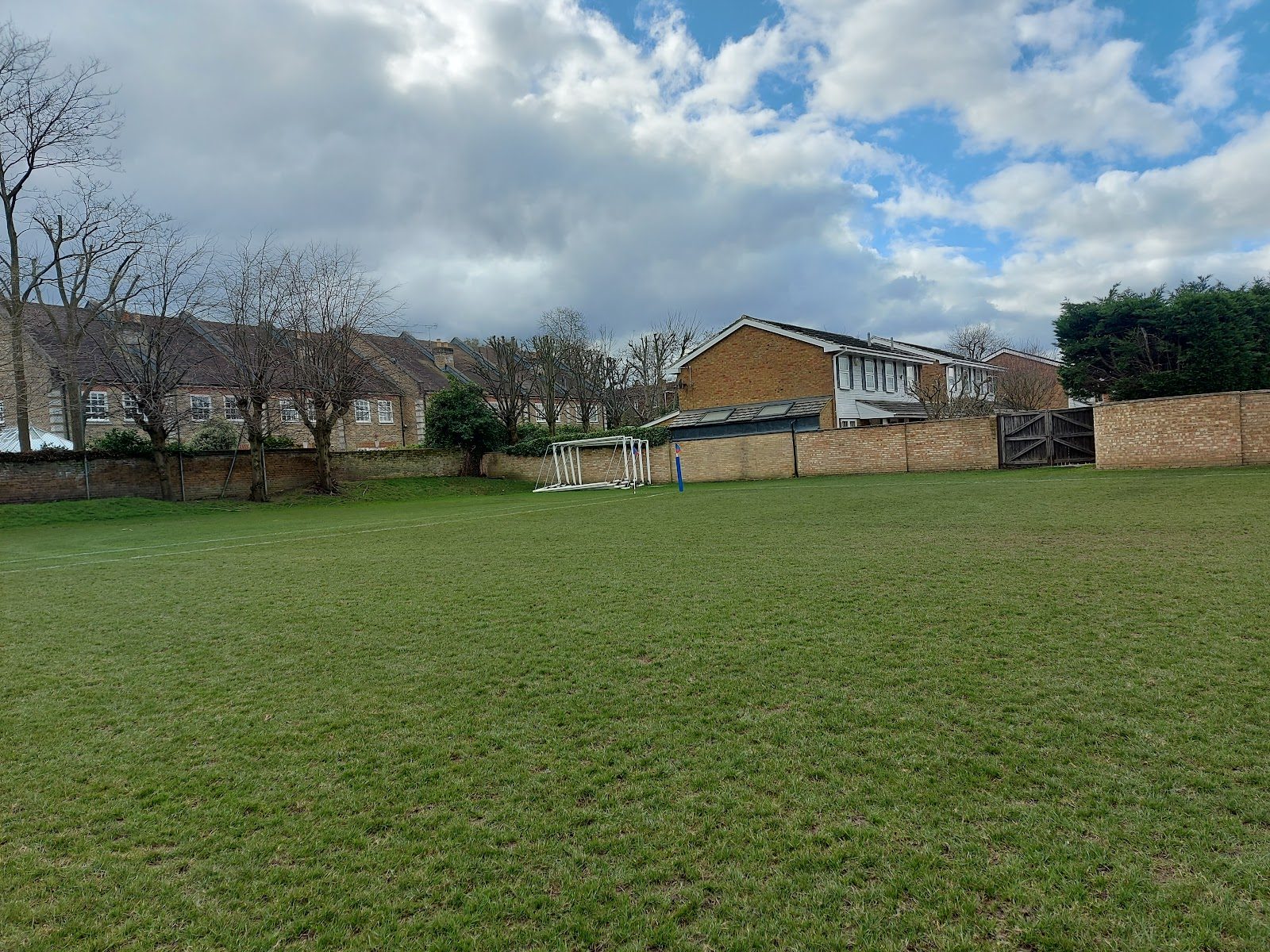
King's College School, Wimbledon
London · United Kingdom
Beside Wimbledon Common, a Royal Charter school where sixth-formers choose A-levels or the IB and rank among England's very best in both.
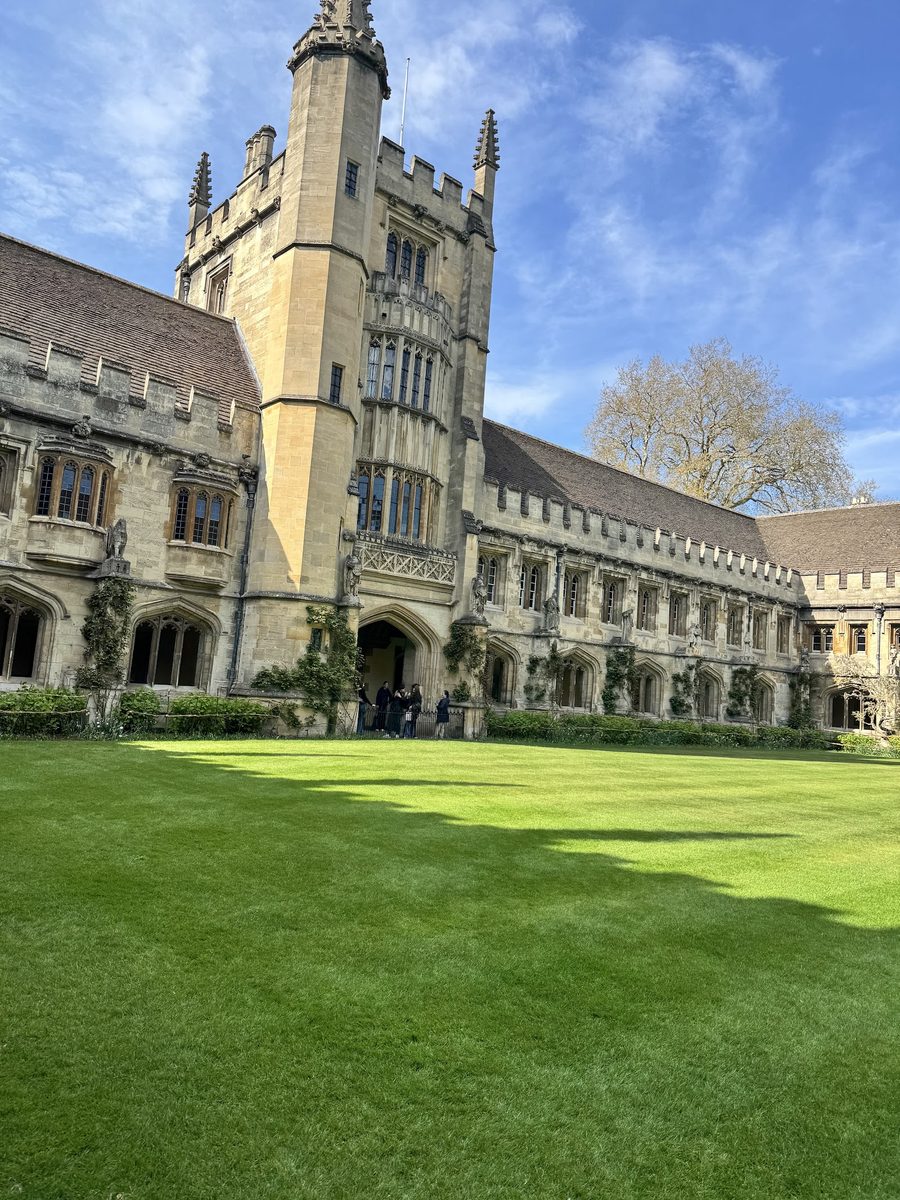
Magdalen College School
Oxford · United Kingdom
Educating Magdalen College's choristers since 1480, this Oxford day school is now opening its ancient choir stalls to girls for the first time.
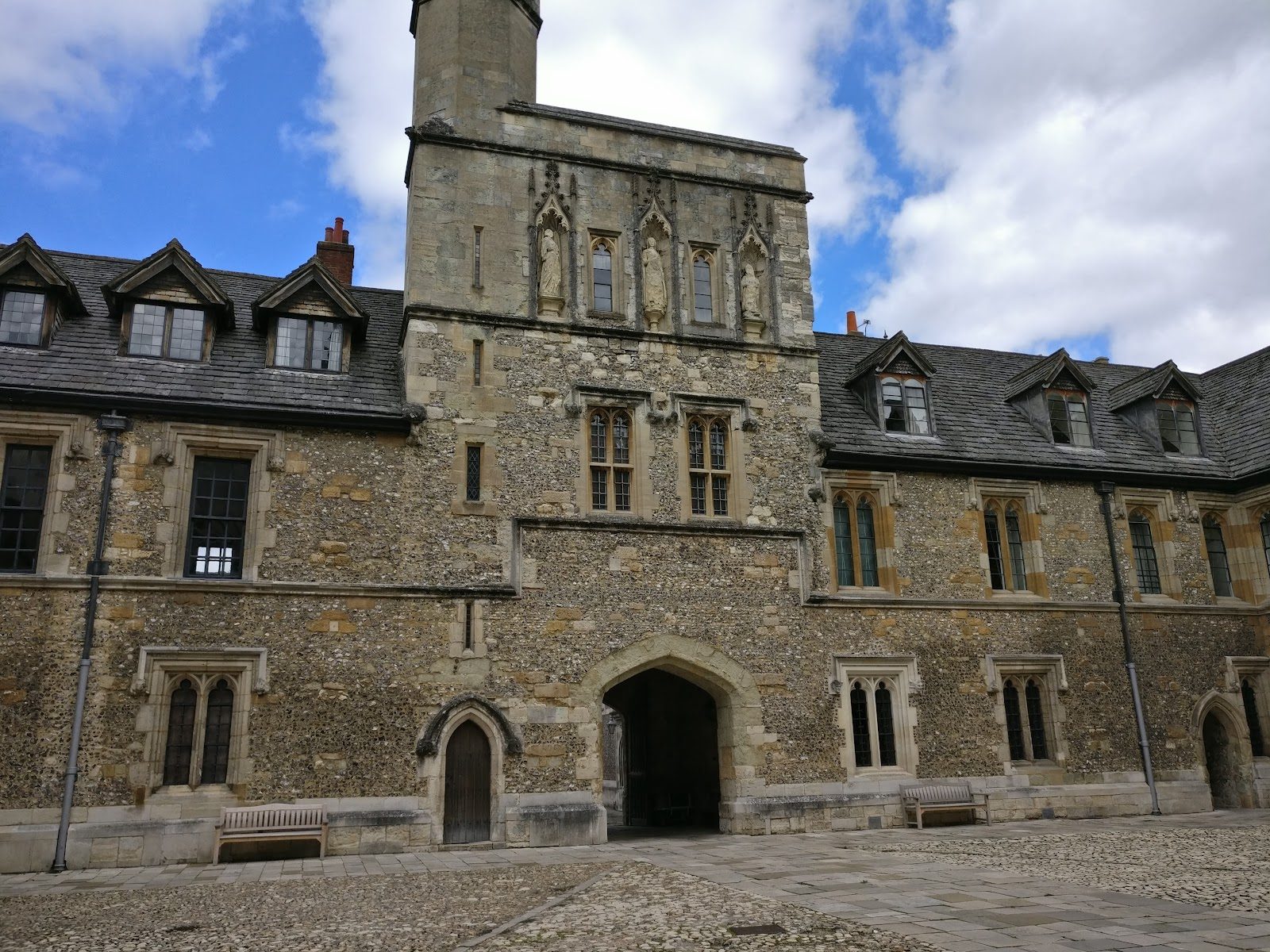
Winchester College
Winchester · United Kingdom
Six hundred years on College Street, still built around Div - unexamined seminars in history, literature and philosophy.
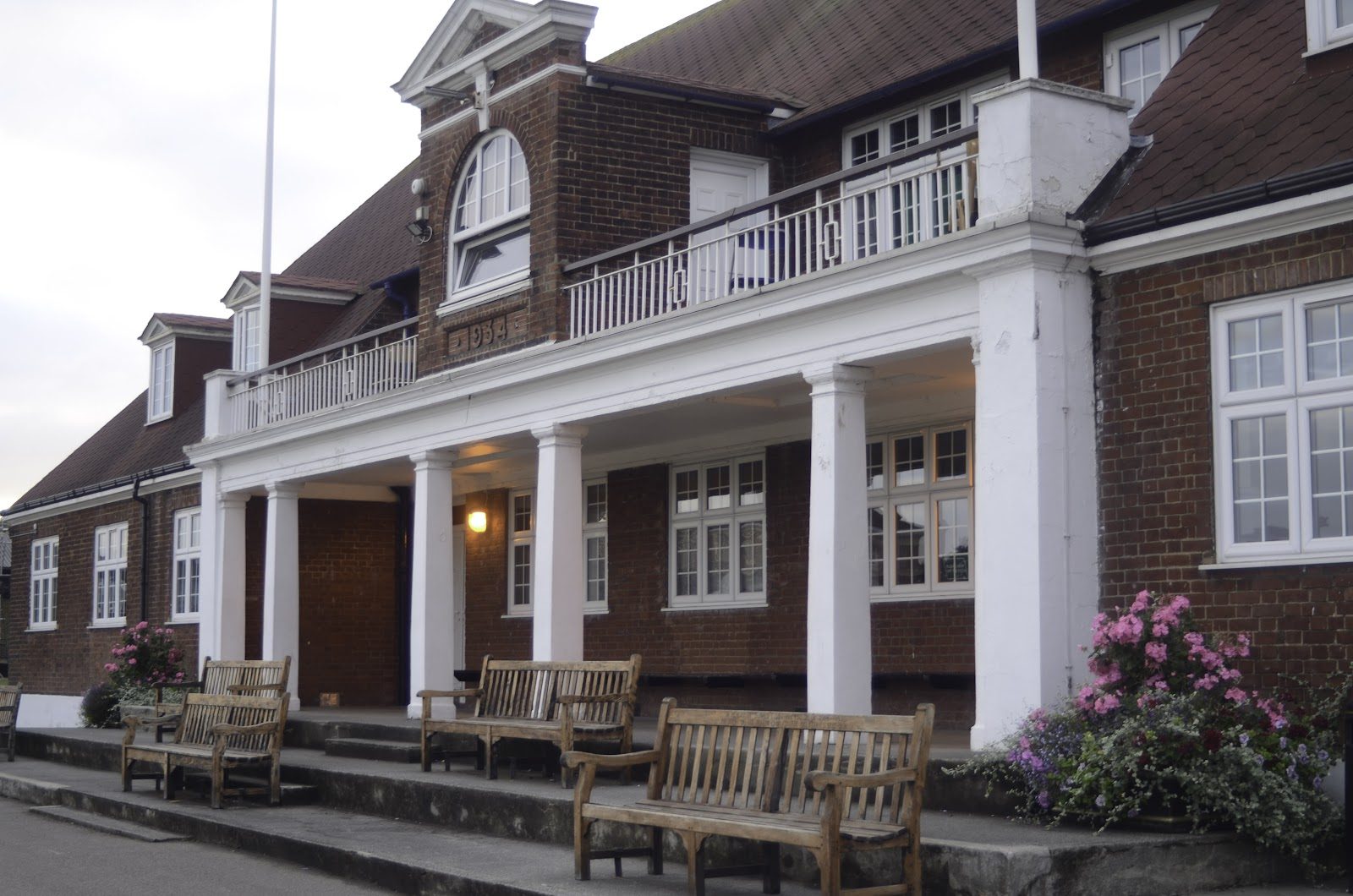
Dulwich College
London · United Kingdom
Founded in 1619 by an Elizabethan stage actor, its 75-acre South London campus still runs on three historic boarding houses.
Same country and curriculum — closest matches within ±10 points either way