
Sichuan
Chengdu No. 7 High School
Heir to a Yuan-dynasty academy, this Chengdu institution now streams live classrooms to hundreds of schools across western China.
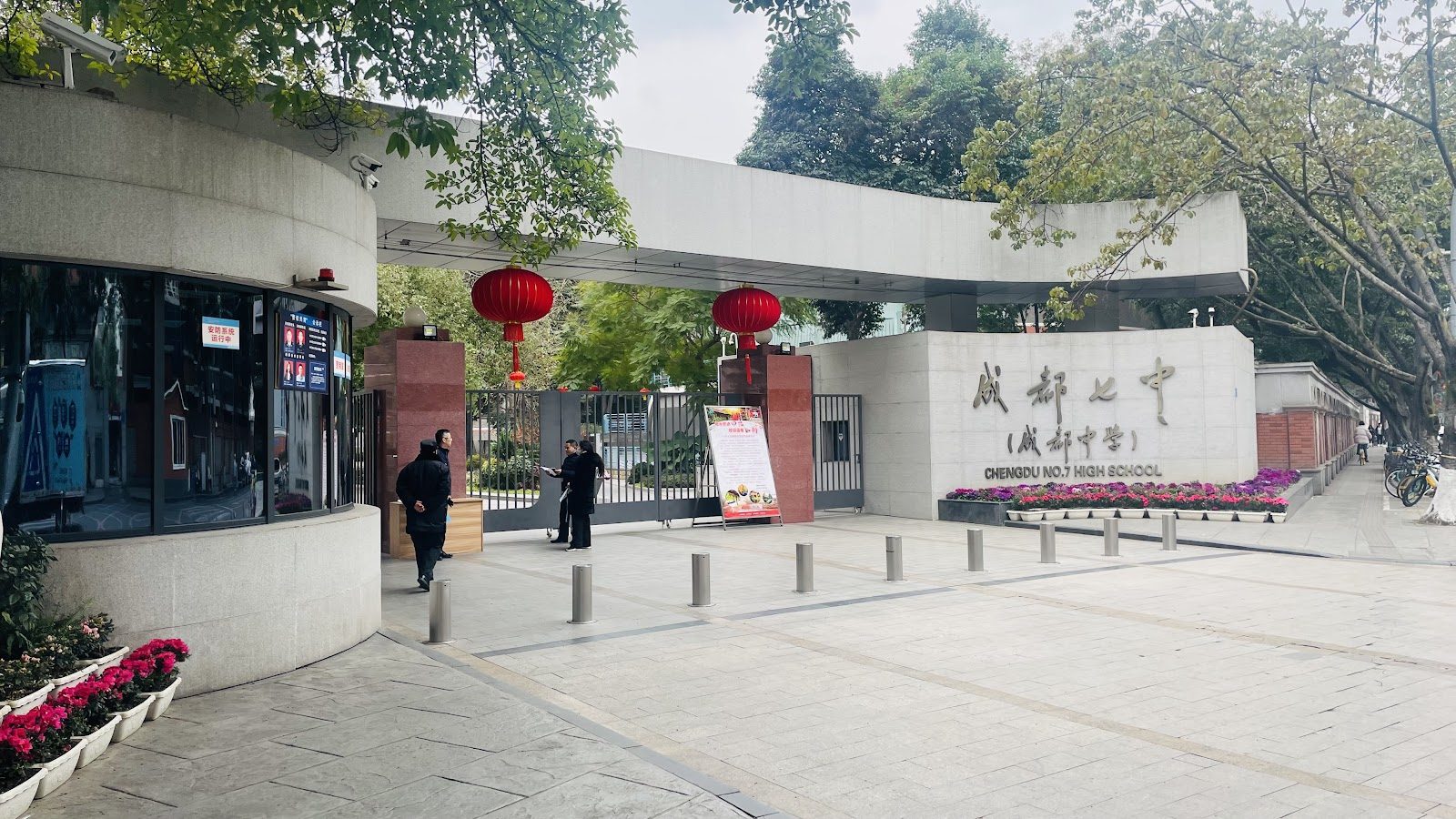
Photo © 谭瑞 via Google Maps
Type
Day + Boarding
Ages
15–18
Curriculum
Chinese National
Qualifications
Gaokao
Ratio
—
The Verdict
Editor's commitment
Right for
Families who value a Chinese National curriculum at ages 15–18, with Mandarin and English, inside a Chengdu institution founded in 1905.
Wrong for
Parents seeking IB, A-Levels or a religious school should move on; this is non-religious, Ministry-accredited, and squarely Chinese National.
Watch out for
Day and boarding widen access, but public data on outcomes is thin; heritage and livestream reach do not replace published results.
Ranking breakdown
Chengdu No. 7 High School · #377 of 1591
Composite score 72.1. 8 weighted criteria.
By criterion
Academic Outcomes
Weight 20%
#91
of 1529 scored
University Placement
Weight 16%
#136
of 1529 scored
Prestige & Heritage
Weight 12%
#21
of 1529 scored
Alumni Network
Weight 12%
#1131
of 1529 scored
Facilities
Weight 12%
#1013
of 1529 scored
Transparency & Communications
Weight 8%
#1245
of 1529 scored
Peer & Industry Review
Weight 10%
#426
of 1529 scored
Admissions Selectivity & Demand
Weight 8%
#120
of 1529 scored
Peer & Industry Review
How Chengdu No. 7 High School is regarded in the sector
72
Respected · medium confidence
Chengdu No. 7 is consistently grouped with Chengdu Shishi (No. 4) and Chengdu No. 9 in the informal 'Si-Qi-Jiu' ranking that Sichuan educators and parents use to denote the province's three most competitive public secondary schools, reflecting strong standing among peer institutions rather than self-promotion. Its Gaokao results regularly place graduates into Tsinghua and Peking University at rates cited in Sichuan provincial education bureau summaries and regional press, reinforcing its reputation with mainland China's top universities as a reliable feeder school. Independent national media attention has been substantial and specific: China Youth Daily's December 2018 investigative feature 'This Screen May Change Destiny' documented how the school's live-streamed classroom broadcasts to under-resourced partner schools across western China measurably improved those schools' university admission rates, a story later picked up internationally (including the New York Times) as a case study in educational equity. This coverage positioned Chengdu No. 7 in national discourse less as a marketing subject and more as an object of policy and pedagogy scrutiny, distinguishing its public profile from that of privately marketed international schools reviewed by outlets like WhichSchoolAdvisor.
Award
Elite Mathematics 60
World's Top School · The Global Ranking
Chengdu No. 7 High School is featured on our Global Top 60 ranking at #31. This seal is available for the school's marketing team to use on their website, prospectus and social channels.
Editors' overview
Chengdu No. 7 High School occupies a rare position in the Chinese market: a top municipal public school with deep local prestige and a national reach built through classroom broadcasting. Founded in 1905, it carries the weight of an old Sichuan academic tradition, but its real distinction lies in scale and influence now, not heritage alone. This is a Chinese National curriculum school for ages 15–18, with teaching in Mandarin and English, and both day and boarding provision. For parents comparing elite academic routes inside China, the shortlist case is clear: Chengdu No. 7 is not a boutique international school selling small classes and glossy pastoral language; it is a serious, selective, high-pressure academic institution with a proven role in shaping mainstream secondary education across western China. That gives it real public weight and institutional confidence.
What sets it apart is the live-broadcast model. Chengdu No. 7 did not just build a strong local sixth-form; it turned its classrooms into a distribution network for teaching, transmitting lessons to hundreds of partner schools. That matters. It places the school at the centre of a wider educational ecosystem and signals confidence in the consistency of its teaching. Few schools can claim influence beyond their own campus; Chengdu No. 7 can. The result is a school with unusual reach, serious academic gravity and a reputation tied to instruction, not lifestyle branding. Parents who want a polished international bubble should look elsewhere. Parents who want a demanding Chinese academic environment with status, structure and strong peer competition should pay attention.
The market position is therefore precise. Chengdu No. 7 sits at the top end of the domestic academic sector in Chengdu: prestigious, competitive and expensive in opportunity cost, even when public-sector pricing undercuts private international rivals. It offers boarding, which broadens access beyond immediate neighbourhood catchments, and it operates in Mandarin with English in the mix, which suits families committed to a Chinese university track or to keeping that option fully open. The school’s standing with the Chinese Ministry of Education, its 15–18 age focus and its old-established name all reinforce a hard-edged academic culture. We have not seen aggregate exam score data in the public domain, so parents should ask directly about gaokao outcomes, university destinations and boarding oversight rather than relying on reputation alone.
The right student for Chengdu No. 7 is disciplined, resilient and comfortable in a competitive cohort. This is not the place for a teenager who needs broad curricular choice, progressive assessment or a low-stakes atmosphere. It suits students who thrive on routine, can absorb teacher-led instruction at pace and want the legitimacy of a major Chinese public school behind them. For the right family, that combination is formidable, intellectually exacting and hard to replicate. For the wrong one, it will feel rigid. That clarity is a strength.
An Elite Mathematics 60 school
Chengdu No.7 High School, in the Wuhou district of Chengdu, Sichuan, sits at rank thirty-one on the Elite Mathematics 60. The anchor fact is unambiguous: at the 2018 International Mathematical Olympiad, its student Zhang Yin scored 41 points to take gold, part of a Chinese cohort in which the world had only four perfect scores that year, and China claimed three. That same year the school hosted the 34th China Mathematical Olympiad, drawing competitors from across the country plus Russian and Singaporean teams.
The mathematics architecture runs well beyond a handful of stars. In 2024, three students entered the national training camp, three were admitted into Peking University's math talent class, nine into Tsinghua's Qiu Chengtong Mathematics Leading Program, and one into the Qiu Chengtong elite class, with training-camp entrants earning direct Tsinghua/PKU admission. By 2026, Chengdu No.7 topped the national list for pre-admissions into Tsinghua and Peking University's five elite "young talent" programs. Competition coaching is led by named specialists including head coach Xiang Yongli, with veteran coach Wei Hua credited with training multiple CMO gold medallists. Crucially, this penetrates the cohort rather than a lucky few: the school admits fewer than 1,000 students per grade yet rivals national schools several times its size in olympiad medal counts, and in one recent year 108 of Sichuan's 401 first-prize winners across the five major subject olympiads came from Chengdu No.7, over a quarter of the provincial total.
The standout named alumnus is Zhang Wei, who graduated from Chengdu No.7 in 2000 before being admitted directly to Peking University's mathematics school, later earning a PhD at Columbia and becoming an MIT mathematics professor, winning the 2010 SASTRA Ramanujan Prize for number theory and automorphic forms. On the current generation, Meng Yuxuan won individual gold at EGMO 2025, the first medal Chengdu No.7 has won at that competition and the first for Sichuan province.
International openness runs through an attached international department, founded in 1999 and administratively merged with the main campus since 2013, teaching AP, A-Level and IFY tracks. Entry requires an English-and-maths entrance exam plus interview alongside a qualifying Chinese zhongkao score, tuition runs around RMB 138,000 per year plus a RMB 40,000 three-year overseas-admissions counselling fee, with boarding available on the Gaoxin campus. Because entry is gated by the domestic zhongkao, this is fundamentally a launchpad for China-resident students heading to Oxbridge, Imperial and the Ivy League, not an open-enrollment boarding option for teenagers arriving from abroad — families should only target it if already resident and schooled within the Chinese system, applying immediately after zhongkao results are released each June.
Academic Performance
Chengdu No. 7 High School’s academic standing rests on reputation and selectivity, but the hard numbers are less transparent than they should be. We have not seen published aggregate gaokao results, subject-by-subject score distributions or a consistent university destination list in the public domain. For a school with this level of prestige, that opacity matters. Parents should not accept brand value in place of data. Ask for recent top-band gaokao outcomes, admission rates to China’s strongest universities and results trends over at least 3 years. Without that, any claim to elite academic performance remains institutionally asserted rather than publicly testable.
That said, the school sits in the upper tier of the municipal public-school market and is treated as a serious academic benchmark by peers. Its classroom-broadcast network would not carry weight across such a wide footprint if teaching quality and examination preparation were weak. That is the strongest indirect indicator available: schools borrow from Chengdu No. 7 because its instruction has real authority in an exam-driven system. Relative to international schools in the city, the comparison is straightforward: this is a hard-results environment built around domestic university competition, not a broad-profile, multi-pathway model. Relative to top public-school peers, it belongs in the conversation, but the lack of published outcome data stops short of a cleaner verdict.
Facilities
The facility that matters most here is not a theatre or an aquatics complex; it is the school’s teaching-broadcast infrastructure. Chengdu No. 7 operates a remote live-teaching network that connects more than 260 schools and reaches more than 170,000 students. That puts its classroom technology in a different category from the token “smart campus” claims common across Chinese secondary schools. The benchmark is not whether it has screens in rooms; many peers do. The benchmark is whether its lessons are built for transmission at scale, with the audiovisual reliability, timetable discipline and teaching consistency that such a system demands. On that measure, Chengdu No. 7 sits in a rarefied bracket. For families, that does not make the campus glamorous; it makes it instructionally consequential.
Beyond that, the public picture is thinner than it should be. We have not seen a clear published breakdown of science labs, arts spaces, sports provision, boarding houses or specialist sixth-form facilities. That absence matters because elite public schools now compete with private rivals that itemise everything from track surfaces to maker spaces. Against those peers, Chengdu No. 7’s facilities profile is function-first, not lifestyle-led. The school’s strongest physical and technical asset is the infrastructure that supports serious academic delivery and distance reach. Parents who care about sports depth, performing arts production space or boarding comfort need to ask direct questions. This is a school where academic utility outranks showcase architecture, and that priority will suit some families better than others.
Chengdu No. 7 High School’s academic standing rests on reputation and selectivity, but the hard numbers are less transparent than they should be
Prestige
Chengdu No. 7 carries serious domestic prestige. In its own city, the name signals entry into the top public-school tier: selective intake, strong peer competition and the social capital that follows from surviving both. This is not prestige manufactured through fees, imported branding or glossy international positioning. It is the older, harder form built inside the state system, where status depends on examination culture, staff quality and the calibre of students a school can attract. The school’s influence extends far beyond its own cohort because its live-teaching network reaches more than 260 schools and more than 170,000 students. That scale gives the school institutional weight few secondary schools can match. When a school’s classrooms are treated as a model for others to watch in real time, prestige moves from local reputation to system-level authority.
I rate it highly because its standing rests on reach, selectivity and educational influence rather than on marketing language. The strongest point is that Chengdu No. 7 matters to other schools, not just to its own families. That places it above the standard “good local school” category and into the benchmark institution bracket for western China. There is still a limit to the verdict. Public prestige and professional influence do not replace published outcome data. The school’s name carries real force, but parents should still ask for hard university-entry evidence before treating reputation as proof.
Chengdu No. 7 High School occupies a rare position in the Chinese market: a top municipal public school with deep local prestige and a national reach built through classroom broadcasting
Communications
Parent communication looks functional, centralised and unapologetically top-down. That fits the institution. A school built around disciplined teaching and system-level delivery does not trade in warm, chatty parent relations; it communicates to instruct, inform and organise. The website gives a clear institutional front, but not a parent-friendly one. Navigation, notices and public updates carry the tone of a major Chinese public school: formal, administrative and geared towards announcements rather than dialogue. That works for families who value order and know how to operate inside the state-school system. It works less well for international or first-time parents who need a cleaner account of day-to-day routines, pastoral structures, escalation routes or who exactly to contact when something goes wrong. On that front, the public-facing communication is serviceable, not parent-centred.
The strongest evidence for communication effectiveness sits in the school’s wider operating model. An institution that can transmit live teaching across more than 260 partner schools and reach over 170,000 students has built serious habits of coordination, timetable control and message discipline. That does not guarantee responsive parent care, but it does indicate institutional competence at scale. My reading is blunt: Chengdu No. 7 communicates well when the goal is consistency, compliance and academic execution; it communicates less well when the goal is reassurance, transparency or individual hand-holding. Parents who want crisp systems and can tolerate a hard-edged administrative style will cope well. Parents who expect high-touch engagement need to push for specifics.
Uniqueness
What makes Chengdu No. 7 distinctive is that it is not only a school but also a source school: its own lessons are built to be watched, copied and relied on by a vast external network. That creates a different standard of classroom discipline. Teaching has to hold up beyond one room, one cohort or one charismatic teacher. In practice, that pushes the school towards high-consistency instruction, system-level seriousness and a degree of scrutiny that most secondary schools never face. Students benefit from that clarity. They are taught inside an institution that treats lesson delivery as something to be engineered, not improvised, and that tends to produce tight routines, strong pacing and little tolerance for drift.
The deeper point is cultural. Many strong schools are influential inside their own gates; Chengdu No. 7 influences the practice of more than 260 schools and reaches more than 170,000 students. That scale gives pupils something unusual: they study at a place with real civic authority in education, not just local cachet. For the right student, that brings confidence, exposure to demanding peers and the sense of being trained at a school whose methods matter beyond itself. The trade-off is plain. A school built to set the pace for others is not designed around personalisation, softness or educational experimentation. It is built for precision, academic pressure and repeatable excellence.
Ask for recent top-band gaokao outcomes, admission rates to China’s strongest universities and results trends over at least 3 years
Student Profile
The students who fit here are the ones who treat school as serious work, not as an exercise in self-expression. Chengdu No. 7 suits adolescents with strong study habits, high tolerance for repetition and the nerve to be measured against able peers every day. They need to cope with constant academic pressure, teacher-led lessons and a culture that rewards accuracy, stamina and compliance with routines. This is a good match for pupils who like clear standards, can absorb dense instruction at pace and do not need every class tailored around their preferences. It is a poor match for teenagers who need frequent affirmation, broad elective choice or a school culture built around personal voice. In plain terms, this is not for the faint-hearted.
There is also a social profile. Students who thrive here tend to draw confidence from being part of a high-status academic machine rather than from standout individualism. They can live with formality, cope with administrative bluntness and keep going when the workload hardens. The school’s reach across more than 170,000 learners through partner-school teaching adds another layer: pupils study in a place that expects classrooms to be orderly enough, and teaching strong enough, to carry beyond its own walls. That creates a disciplined, high-expectation environment with little room for drift. Families who want polish, softness or experimental pedagogy should walk away. Families who want competitive seriousness and social legitimacy inside the Chinese system will understand the appeal.
Relative to top public-school peers, it belongs in the conversation, but the lack of published outcome data stops short of a cleaner verdict
Co-curricular strengths
Arts & sport, on a separate axis
Overall 6.7/10
Scored 0-10 from the school's own published evidence. This axis is editorial-only — it does not feed the main WTS ranking.
Sports
7.5/10
Drama
6.5/10
Dance
5.5/10
Music
7/10
Visual Arts
7/10
Strengths
- +Founded in 1905, the school was one of the first key high schools designated by the Ministry of Education of China, and it is one of the four "National Model High schools" in China.
- +Considered to be the top high school in Sichuan Province and Western China, Chengdu No.7 High school is well known across China for its high-quality education and excellent academic performance in science and mathematics.
- +Chengdu No. 7 High School is honored as a High-Quality Student Source Base for both Peking University and Tsinghua University, reflecting a strong record of placing graduates into China's top two universities.
- +The school runs a live-broadcast teaching program in which more than 5,000 high school students attend the No. 7 School in person each day, and 42,000 more high school students from 182 schools in smaller cities and rural areas attend remotely.
- +A separate International Department is a public program created by Chengdu No.7 High School (Gaoxin Campus) and Kant Education Group, founded in 2002, and it is one of the first public international departments in western China, offering AP, A-Level and IFY pathways.
Considerations
- −Entry to the mainstream Chinese-curriculum track is extremely competitive; 2024 city admissions data placed its two campuses among Chengdu's highest zhongkao (senior-high entrance exam) cut-off scores, at 643 and 629 out of 700.
- −The fee-paying International Department carries a substantial extra cost, with published tuition of roughly RMB 138,000 per year plus additional charges for boarding and university-guidance services.
- −Admission to the International Department itself is selective, requiring a zhongkao score well above the city's key-school line together with written English/maths tests and a bilingual interview.
- −As a school built around Gaokao and zhongkao preparation, the daily schedule is long and exam-focused, typical of top Chinese public high schools, which may not suit families seeking a lighter-touch or broader liberal-arts pace.
Availability
Primary entry gate & tests
Sichuan Zhongkao Exam
Parent reviews
Have you sent your child here?
Voice reviews carry the strongest trust badge — we transcribe them for you to tidy up before they go live. Prefer to type? A written review is fine too.
Add your voice
In 60 seconds, tell other parents: what's the best thing about Chengdu No. 7 High School, and what surprised you when your child joined?
We ask for a Google sign-in so every review has a real face behind it — no anonymous drive-by attacks on schools, and no faked positive reviews. Your email is never shown publicly.
Send this profile to a friend
International parents rely on word-of-mouth. Share this review with someone weighing the same decision.
Schools with places
Similar schools to Chengdu No. 7 High School with places available now.
Availability first, then country, area, curriculum, price, co-curricular
Consider also
Also worth looking at alongside Chengdu No. 7 High School.
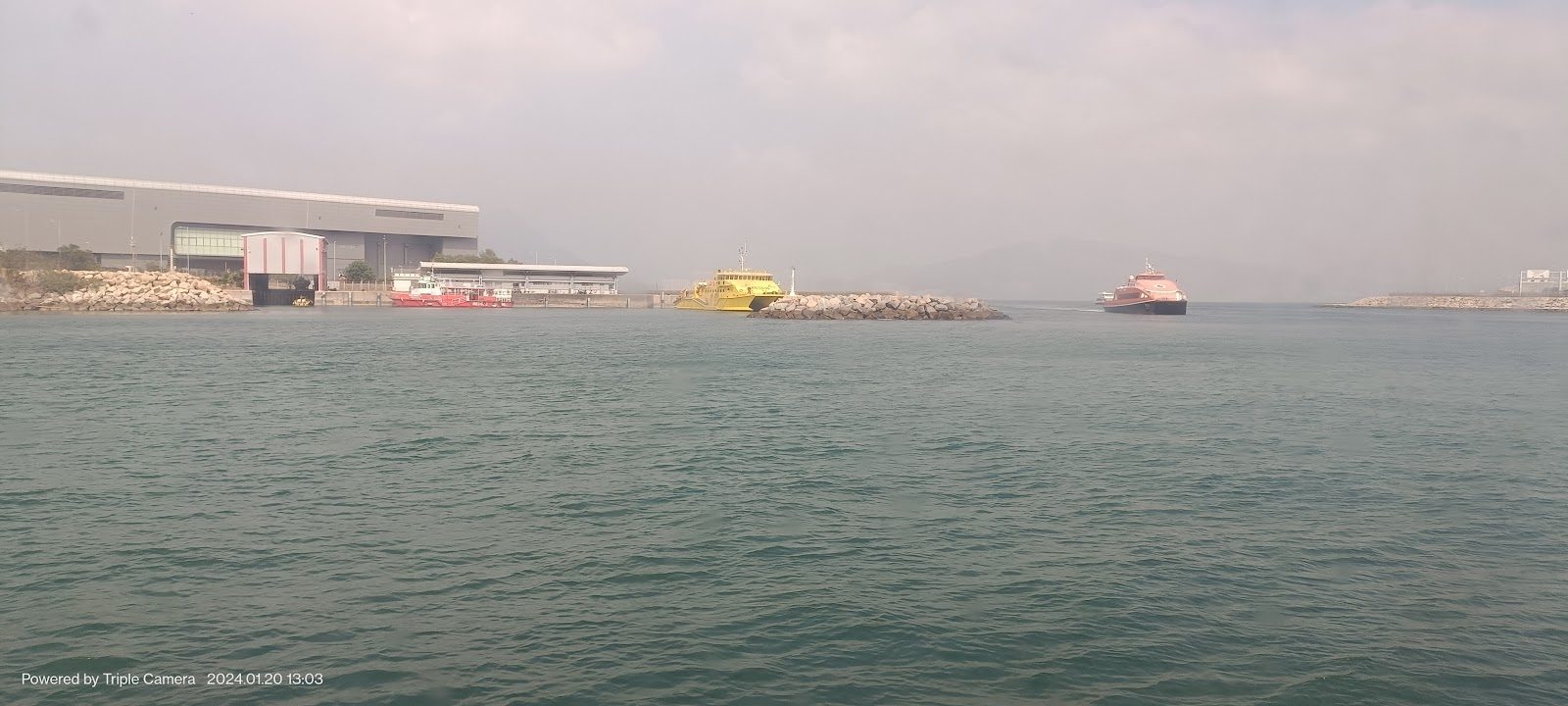
UWC Changshu China
Changshu · China
On an island in Kuncheng Lake, mainland China's first UWC pairs the IB diploma with mandatory Mandarin study and a student-run Zhixing service programme.
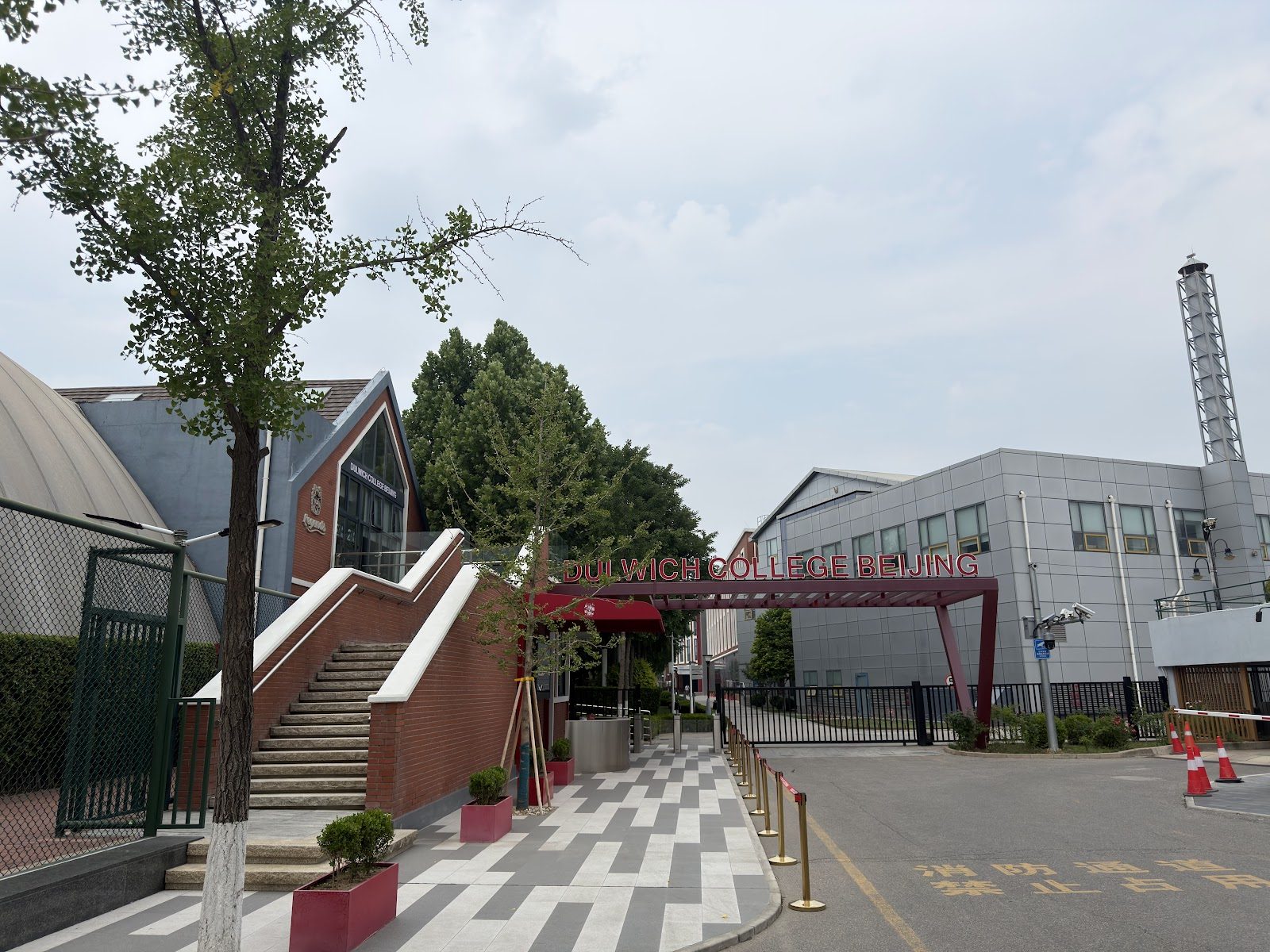
Dulwich College Beijing
Beijing · China
Rooted in a 400-year London lineage, its Shunyi campus has posted IB scores averaging seven points above the global mean for four straight years
International School of Beijing
Beijing · China
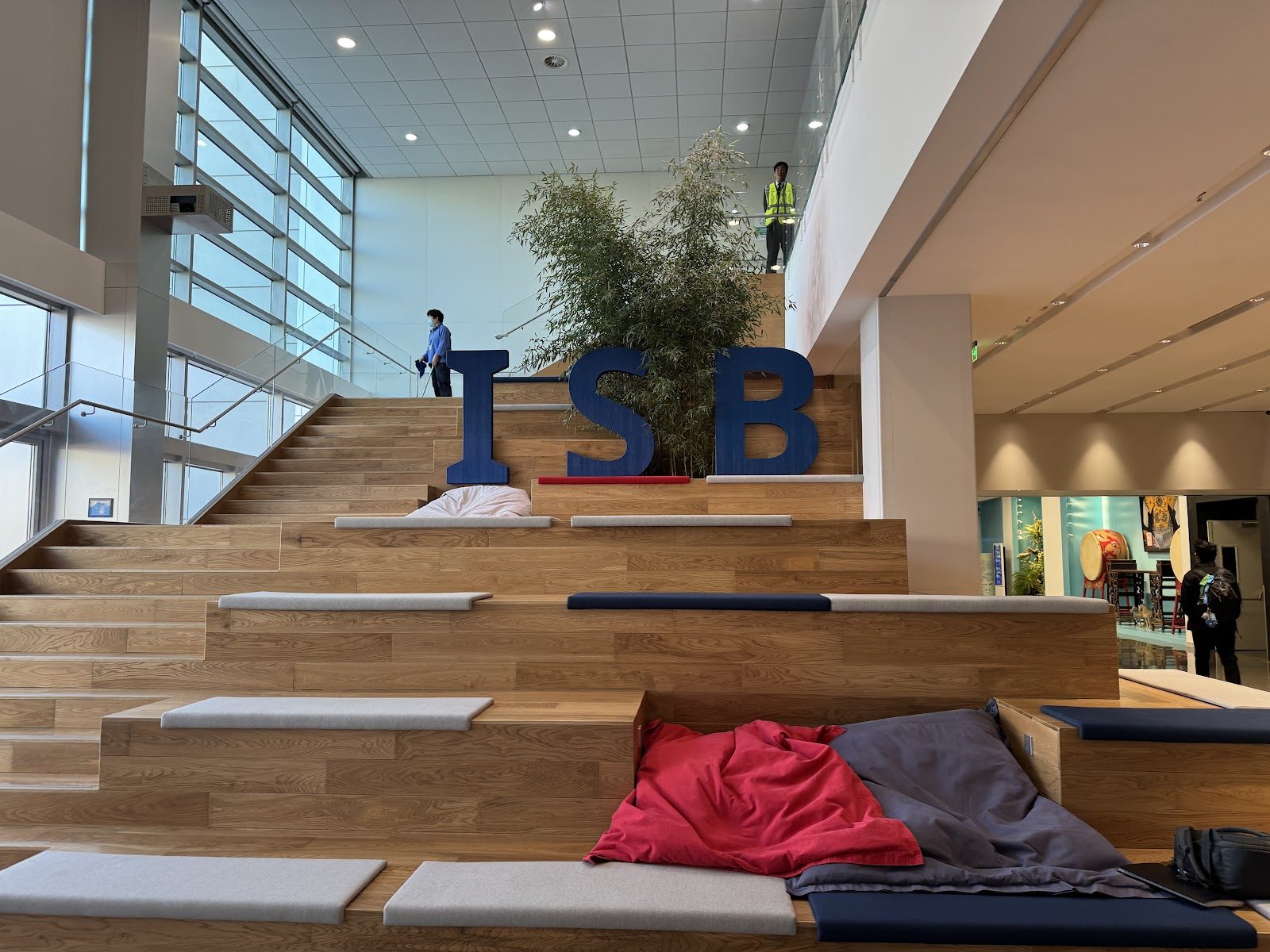
Founded in 1980 by five embassies, this Shunyi day school pairs a US diploma track with IB rigor and dual-language classes from early years.
Western Academy of Beijing
Beijing · China
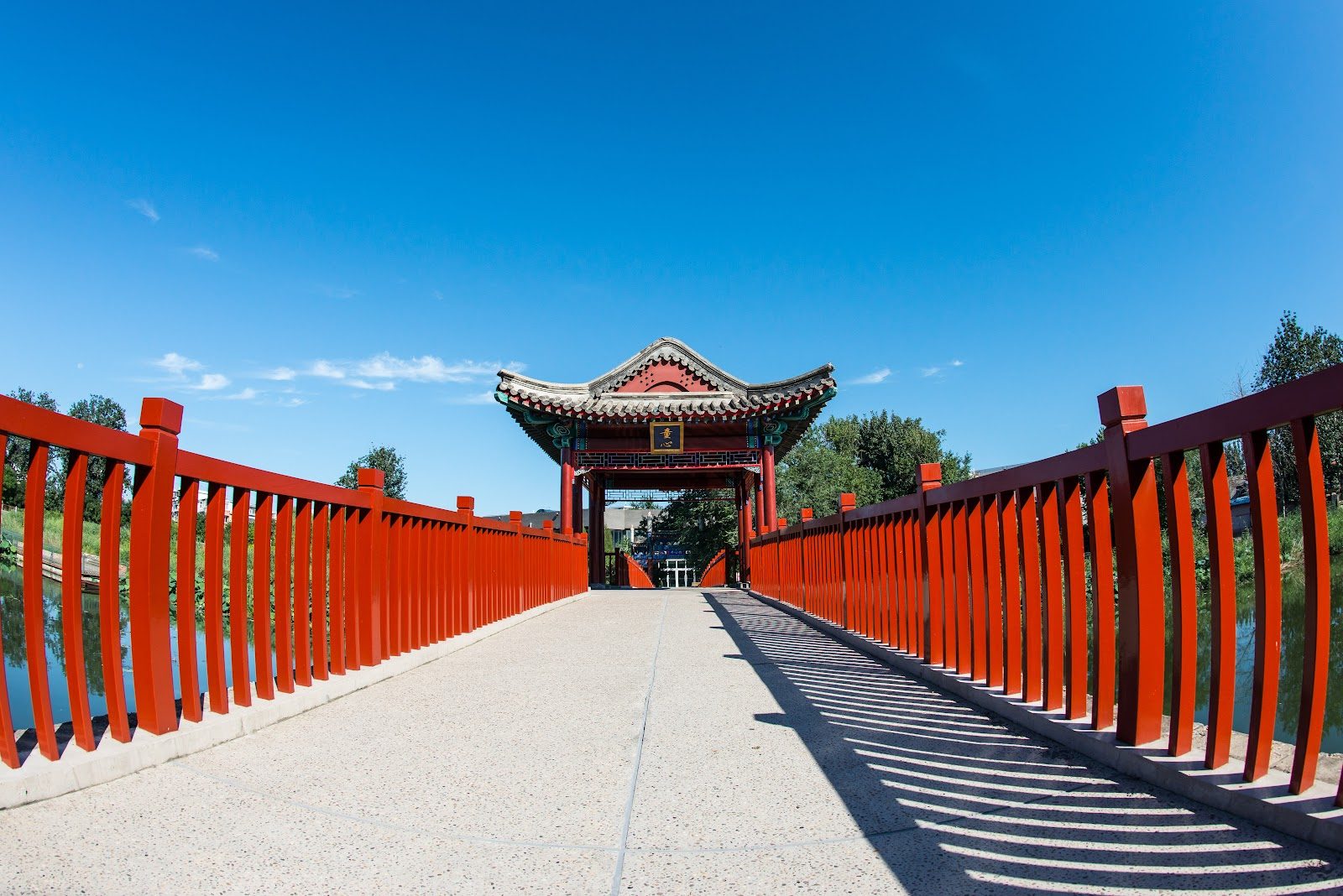
Running the full IB continuum since 1994 from a Chaoyang campus once named a Beijing Olympic model school
Same country and curriculum — closest matches within ±10 points either way