
Bangkok
NIST International School
low confidence· 6/6 cats · 1.25 avg sourcesFounded in 1992 with United Nations backing, Thailand's first not-for-profit IB World School sits amid downtown Sukhumvit.

Photo © NIST International School Bangkok , Sukhumvit 15 via Google Maps
Type
Day
Ages
3–18
Curriculum
IB · British
Ratio
—
The Verdict
Editor's commitment
Right for
Families who want Bangkok's first full IB World School, founded in 1992, with English-medium teaching from ages 3 to 18.
Wrong for
Parents seeking boarding, a religious ethos, or a pure British pathway; NIST is day-only, non-religious, and runs the IB throughout.
Watch out for
The average annual day fee is $25,000, and the Class of 2025 sent 121 leavers with single admits listed at Oxford, UCL and Imperial.
Ranking breakdown
NIST International School · #326 of 1591
Composite score 71.8. 8 weighted criteria.
By criterion
Academic Outcomes
Weight 20%
#385
of 1529 scored
University Placement
Weight 16%
#305
of 1529 scored
Prestige & Heritage
Weight 12%
#442
of 1571 scored
Alumni Network
Weight 12%
#334
of 1530 scored
Facilities
Weight 12%
#477
of 1534 scored
Transparency & Communications
Weight 8%
#123
of 1532 scored
Peer & Industry Review
Weight 10%
#330
of 1548 scored
Admissions Selectivity & Demand
Weight 8%
#991
of 1529 scored
Score history
NIST International School · 2026
Movement across 2024–2026. Peer average overlaid.
Overall — 2024–2026
71.8/ 100
▲ +24.8 vs 2025
year on year
Peer & Industry Review
How NIST International School is regarded in the sector
88
Strong · high confidence
NIST is consistently ranked among Bangkok's top international schools in independent expat forums (ExpatDen, ISC Research, International School Parent) and is frequently cited alongside Bangkok Patana and ISB as one of the 'big three' IB-focused schools in Thailand. It has a strong long-standing reputation as one of the pioneering IB World Schools in Asia with a long track record of high IB Diploma results and university placements, and its alumni network is well-regarded among peer international schools in the region. It is well established in specialist education press coverage (e.g., The International Educator, ISC Research profiles) though it doesn't achieve the same universal 'best school lists' name recognition as UK-linked brand schools like Harrow or Shrewsbury Bangkok.
Evidence sources
Editors' overview
NIST’s claim to attention starts with two facts that matter in Bangkok: it opened in 1992 with United Nations backing, and it was Thailand’s first full IB World School. That still shapes the place. This is a non-profit, English-medium day school for ages 3 to 18, planted in downtown Sukhumvit rather than on a distant suburban campus, and it leans hard into an international brief. The school runs the full IB continuum while also declaring a British element in its curriculum, and it layers that with its own diploma options, service learning and expeditions. Parents looking for a plainly international school rather than a national system exported abroad will understand the distinction at once.
What marks NIST out is breadth with structure. The school advertises more than 300 activities, formal expeditions that build in challenge from the early years onwards, and a service programme tied directly to the UN Sustainable Development Goals. That package will suit children who thrive when school extends well beyond classrooms and exams. It will also suit families who want diversity without apology: NIST talks about global citizenship, belonging and language as core parts of the community, not decorative add-ons. The trade-off is obvious. This is not a narrowly exam-driven school for families who want a stripped-back academic machine and little else. It is a large, busy, high-expectation environment with many moving parts.
The academic offer still carries weight. NIST is accredited by the IBO, and its Class of 2025 sent 121 leavers on to universities including Oxford, Imperial College London and UCL. Those destination details do not prove mass elite placement, but they do show that top-end outcomes are in the mix. The average annual day fee across the full age range is $25,000, which places NIST in Bangkok’s expensive tier, though not at a level that looks irrational for a long-established flagship international school in the city centre. It belongs on a shortlist for internationally mobile families, diplomat and NGO households, and ambitious local families who want a cosmopolitan, full-through IB education with substance outside the timetable. The best fit is a student who is academically capable, curious, socially adaptable and willing to throw themselves into a demanding, outward-facing school culture.
Academic Performance
NIST publishes enough headline IB data to place it with confidence in Bangkok’s top tier, though not at the absolute summit of global super-selective IB schools. The school cites an average Diploma score of 37 and an IB Diploma pass rate of 98%. Those are strong, credible numbers. In most markets, a score in the high 30s puts a school comfortably above the global IB average and in serious academic company. The pass rate matters too: it points to depth across the cohort, not just a handful of star candidates. For parents, the message is clear. NIST delivers real academic weight without reducing the school to a narrow results factory.
There are limits to the picture. NIST does not publish a fuller public results breakdown here: no subject-level outcomes, no top-score count, no distribution by points band, and no multi-year trend line. That weakens comparison with the most transparent competitors, especially schools that disclose how many pupils reach the mid-40s or convert strong coursework into consistently exceptional final scores. Even so, the available figures place NIST in the category of serious IB operators: academically well above the pack, broad in delivery, and robust enough to send pupils to highly selective universities. This is not a school trading on atmosphere while ducking outcomes. It has substance where it counts.
Facilities
The key facility advantage at NIST is not one marquee building but the way the campus supports a whole-school operating model that runs far beyond lessons. The school ties physical space directly to activities, service, wellbeing and expeditions, and that matters because many schools promise breadth while housing pupils on cramped urban plots that force compromises by lunchtime. NIST’s own campus messaging points to recent revitalisation work for learning, safety and belonging, and the scale of the co-curricular programme — more than 300 activities — tells you those spaces are being used hard, not parked in brochures. Add home-language provision during the school day and the campus reads as a serious multi-use environment: classrooms, activity areas and community spaces all carrying weight. For a downtown school, that is a genuine competitive strength.
Against Bangkok peers, the trade-off is clear. Schools on larger suburban estates will still hold the edge for sheer acreage, big-field sport and the sense of physical escape that central-city campuses rarely deliver. Parents wanting sweeping grounds and the optics of space for its own sake will find stronger offers elsewhere. NIST’s advantage lies in density with purpose: access, intensity, and facilities organised around a large, internationally mixed student body rather than a resort-style setting. In market terms, that puts it above many city-centre rivals for practical day-to-day usability, even if it does not win the arms race for land.
Those destination details do not prove mass elite placement, but they do show that top-end outcomes are in the mix
Prestige
NIST carries real prestige in Bangkok’s international-school market because it has institutional heft, not just glossy branding. United Nations roots still confer cachet with globally mobile families, and the governance model matters: a parent-elected foundation and not-for-profit status give the school a different social and moral footing from investor-owned competitors. That matters in a city crowded with premium-fee schools selling aspiration. NIST’s reputation rests on something firmer: long establishment, a deep bench of activities, visible service culture and a student body drawn from 95 nationalities. That mix gives it rare international legitimacy. It feels properly global rather than expat-niche, and that distinction carries weight with diplomat, NGO and senior corporate families who want peers as much as pedagogy.
The prestige is not old-world or aristocratic; it is *cosmopolitan, high-functioning and modern*. The school’s scale strengthens that status. A community of 1,800+ students can sustain language provision, specialist teaching and a broad extracurricular machine in a way smaller schools cannot. The bilingual diploma figure — 63% of graduates — adds another layer, signalling that multilingualism is built into the culture rather than bolted on for prospectuses. There are limits. NIST’s university destinations, as publicly disclosed here, do not establish the relentless Oxbridge-Ivy conveyor belt that defines a tiny group of global prestige schools. Its standing rests instead on serious substance, international social capital and the confidence that children will move through an ambitious, diverse environment with credible academic outcomes and strong co-curricular range.
NIST publishes enough headline IB data to place it with confidence in Bangkok’s top tier, though not at the absolute summit of global super-selective IB schools
Communications
NIST communicates like a large, high-accountability institution with many constituencies to manage. The public-facing site is dense, current and structurally clear: core programmes, wellbeing, service, expeditions and activities all have dedicated space, and the school does not hide the scale of what parents are buying into. The strongest signal is operational breadth. A school advertising 300+ activities, 12 home languages during the day and a student body drawn from 95 nationalities has to communicate with consistency or descend into chaos. The messaging also stays coherent. Global citizenship, belonging, service and outdoor challenge run through the site in a way that reads as organised rather than improvised. For internationally mobile families, that matters.
The weak point is precision. NIST is good at telling parents what the school values and how the student experience is structured; it is less good at publishing the harder comparative detail that exacting parents look for. Academic headlines are there, but fuller breakdowns are absent, and that limits trust at the sharp end. The tone also carries a lot of institutional language — purpose, empowerment, holistic experience — which can drift into corporate uplift if not matched by hard data. Even so, the overall communications standard is strong, disciplined and parent-literate. This is not a muddled school. It knows its message, it repeats it with professional consistency, and it gives families a clear sense of the culture they are entering.
Uniqueness
What sets NIST apart is the combination of non-profit governance, United Nations roots and a deliberately international social mix that runs through daily school life rather than sitting as a slogan on the website. In Bangkok, many premium schools sell global outlook; NIST builds it into the operating model. The parent-elected foundation matters here. It changes the institutional logic from shareholder growth to stewardship, and parents who care about long-term educational decisions will value that. The school also treats multilingualism and cultural range as core infrastructure. With 12 home languages offered during the school day and a community spanning 95 nationalities, students grow up in a setting that is genuinely international, socially complex and far removed from the usual expat bubble.
The distinctive benefit for pupils is breadth with obligation. NIST does not just offer clubs after class; it expects students to engage with service, outdoor challenge, wellbeing and cross-cultural life as part of a full education. The bilingual diploma rate — 63% of graduates — points to students leaving with more than academic credentials alone. So does the scale of student-led service activity. That combination produces children who are not only exam-capable but outward-facing, highly adaptable and used to navigating difference without fuss. The downside is clear enough: this is not a place for families who want a tidy, narrow, classroom-only education. NIST’s distinctiveness lies in producing students who can handle complexity because the school gives them plenty of it.
The distinctive benefit for pupils is breadth with obligation
Student Profile
The child who fits best here is bright, socially fluent and fully game for a school that expects participation, not passive compliance. NIST suits students who like people, cope well with difference and can move comfortably between classrooms, activities, service commitments and outdoor challenge. A community spanning 95 nationalities and more than 12 home languages during the day creates a social environment that is unusually cosmopolitan, fast-moving and demanding in a good way. Children who need a narrow friendship pool, a highly local social culture or a quiet institutional rhythm will find the scale and mix harder work. Children who are curious, self-starting and happy to join in will thrive.
It also suits families who want their children stretched beyond academics. The school offers more than 300 activities and builds expectation around contribution, initiative and resilience. That points to a student body with a high-functioning, outward-facing cast: pupils who sign up, turn up and get involved. The best fit is not the child who wants to do the minimum and retreat. Nor is it the teenager who wants a hothouse, exam-only existence. NIST works for students who can handle a busy schedule, a diverse peer group and adult expectations around service, conduct and self-management. In blunt terms, this is a school for engaged children with energy and range, not for spectators.
NIST’s distinctiveness lies in producing students who can handle complexity because the school gives them plenty of it
Co-curricular strengths
Arts & sport, on a separate axis
Overall 8.88/10
Scored 0-10 from the school's own published evidence. This axis is editorial-only — it does not feed the main WTS ranking.
Sports
9/10
A sports complex with a FIFA-certified football pitch, gymnastics studio, sports hall with multiple basketball and volleyball courts, swimming pool and tennis courts, plus year-round Falcons Sports Academies and SEASAC/BISAC competition, which together evidence purpose-built facilities and sustained competitive sport.
Drama
9.2/10
A School Musical plus a dedicated 300-seat theatre within the arts facilities, so the school clearly has both recurring production activity and a named dedicated drama facility.
Dance
8/10
NIST has multiple dance studios, which is dedicated specialist facility evidence strong enough for a notable dance programme even though specific dance activities are not further described.
Music
9.2/10
Choir and String Ensemble, plus multiple instrumental and vocal music rooms, private practice rooms and a recording studio, showing both active ensembles and substantial dedicated music facilities.
Visual Arts
9/10
A creative arts building with multiple visual arts studios, which is clear evidence of a dedicated arts facility and specialist space for visual arts.
Editor first-pass · editor-reviewable · 7/28/2026
Outcomes & destinations
Where students go next
Class of 2025
121 graduates
Top destinations
20 placements
- Imperial College London· 1
- University of Oxford· 1
- University College London· 1
- University of Pennsylvania· 1
- Cornell University· 1
- University of Melbourne· 1
- University of New South Wales· 1
- University of Sydney· 1
- McGill University· 1
- University of Toronto· 1
- King's College London· 1
- Australian National University· 1
- University of Edinburgh· 1
- University of Manchester· 1
- Monash University· 1
- University of Tokyo· 1
- University of British Columbia· 1
- University of Michigan-Ann Arbor· 1
- University of California, Los Angeles· 1
- Yonsei University· 1
Reported by the school. Confirm with admissions.
Notable alumni · Wikidata
7notable alumni
0 historic (born pre-1930) · 6 modern (born post-1970)wikidata:2026-07-28 How we source this
Strengths
- +First school in Thailand to be authorised to offer the full IB continuum (PYP, MYP, DP), a status it has held since 1999.
- +Recent IB Diploma cohorts have posted strong results, including average scores well above the global mean and near-100% pass rates in several reported years.
- +Operates as a not-for-profit institution governed by a parent-elected Foundation, with fees reinvested into campus and staffing rather than shareholder returns.
- +Central Sukhumvit location within walking distance of Asok BTS/MRT station, making it one of the most transit-accessible international schools in Bangkok.
- +Accredited by both the Council of International Schools (CIS) and the New England Association of Schools and Colleges (NEASC).
Considerations
- −Annual fees sit at the top end of the Bangkok market, with 2025/26 tuition reported around THB 628,200-1,094,500 plus a one-off registration fee of THB 265,000 and a refundable campus development fee of THB 575,000.
- −The school applies a nationality cap policy (commonly cited around 30% per nationality), which can push families from over-represented nationalities, such as Japanese applicants, into extended waiting pools.
- −Older applicants to Secondary (Year 7+) need intermediate-to-advanced English proficiency to access the English Language Acquisition programme, limiting suitability for late arrivals with weaker English.
- −The central Sukhumvit site is a compact, vertical campus, and some reviewers note this creates space constraints compared with suburban Bangkok campuses on larger plots.
Availability
Primary entry gate & tests
Academic Record + Interview
Gallery
Photo © PHIRAPHONG DETCHAROENWIWAT via Google Maps
Recommended reading
Independent write-ups of this school from editorial outlets we trust.
- NIST International School Bangkok ReviewWhichSchoolAdvisor
Parent reviews
Have you sent your child here?
Voice reviews carry the strongest trust badge — we transcribe them for you to tidy up before they go live. Prefer to type? A written review is fine too.
Add your voice
In 60 seconds, tell other parents: what's the best thing about NIST International School, and what surprised you when your child joined?
We ask for a Google sign-in so every review has a real face behind it — no anonymous drive-by attacks on schools, and no faked positive reviews. Your email is never shown publicly.
Send this profile to a friend
International parents rely on word-of-mouth. Share this review with someone weighing the same decision.
Schools with places
Similar schools to NIST International School with places available now.
Bangkok Patana School
Bangkok · Thailand
- 2026-27
- CLOSEDThai closed / Non-Thai open
- 2027-28
- OPENS SOONThai 1 Sept / Non-Thai rolling
Shrewsbury International School Bangkok
Bangkok · Thailand
- 2026-27
- WAITPOOLSpace-dependent
- 2027-28
- PLACES OPENRolling
International School Bangkok
Bangkok · Thailand
- 2026-27
- WAITPOOLSpace-dependent
- 2027-28
- OPENS SOONOpens Sept '26
Availability first, then country, area, curriculum, price, co-curricular
Consider also
Also worth looking at alongside NIST International School.
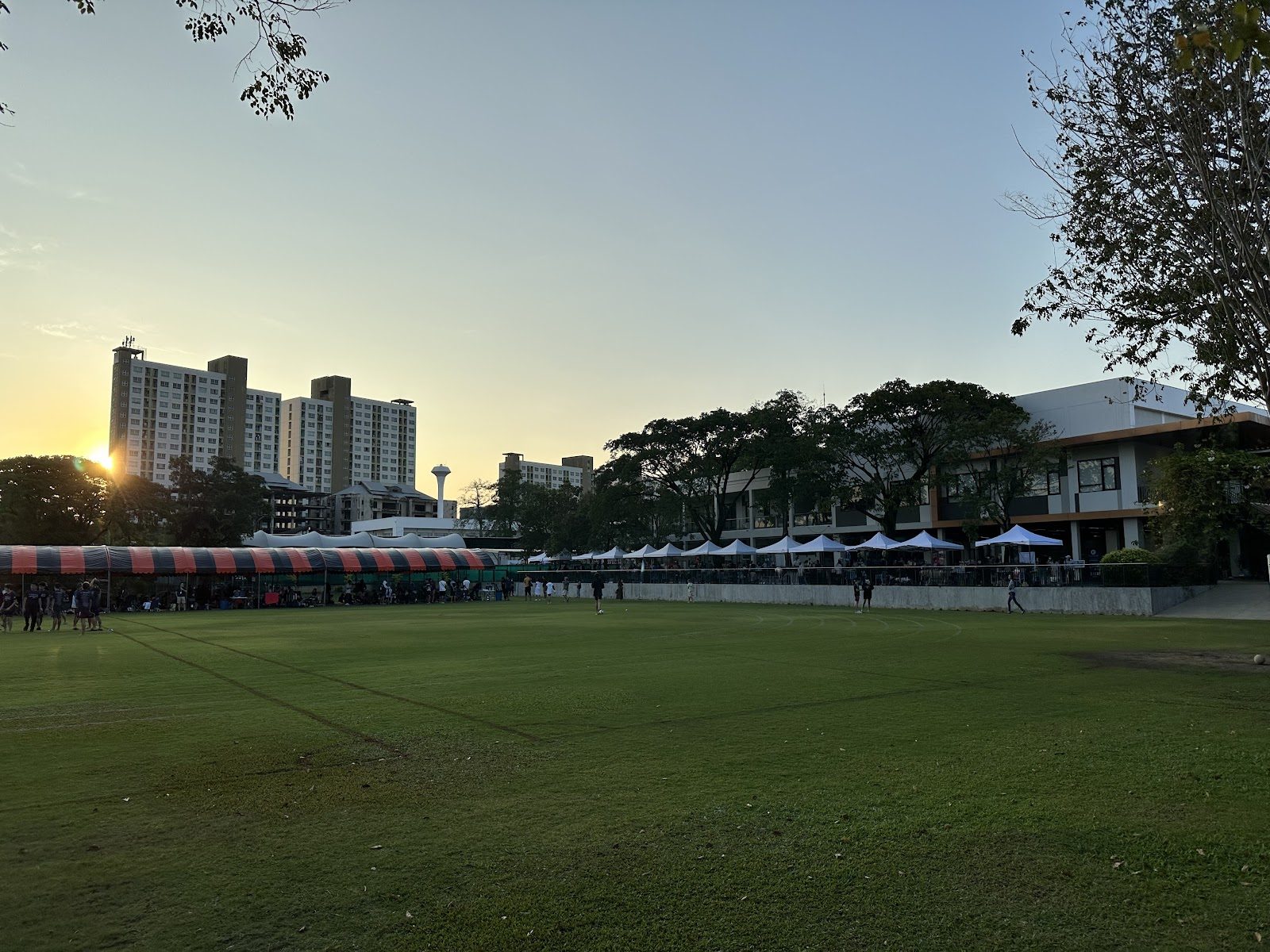
Bangkok Patana School
Bangkok · Thailand
Thailand's first British school, running since 1957, blends English curriculum grounding with IB breadth across a 17-hectare Bang Na campus.
Shrewsbury International School Bangkok
Bangkok · Thailand
A 1552 English public-school pedigree anchors a Chao Phraya riverside campus reachable by its own school boat.
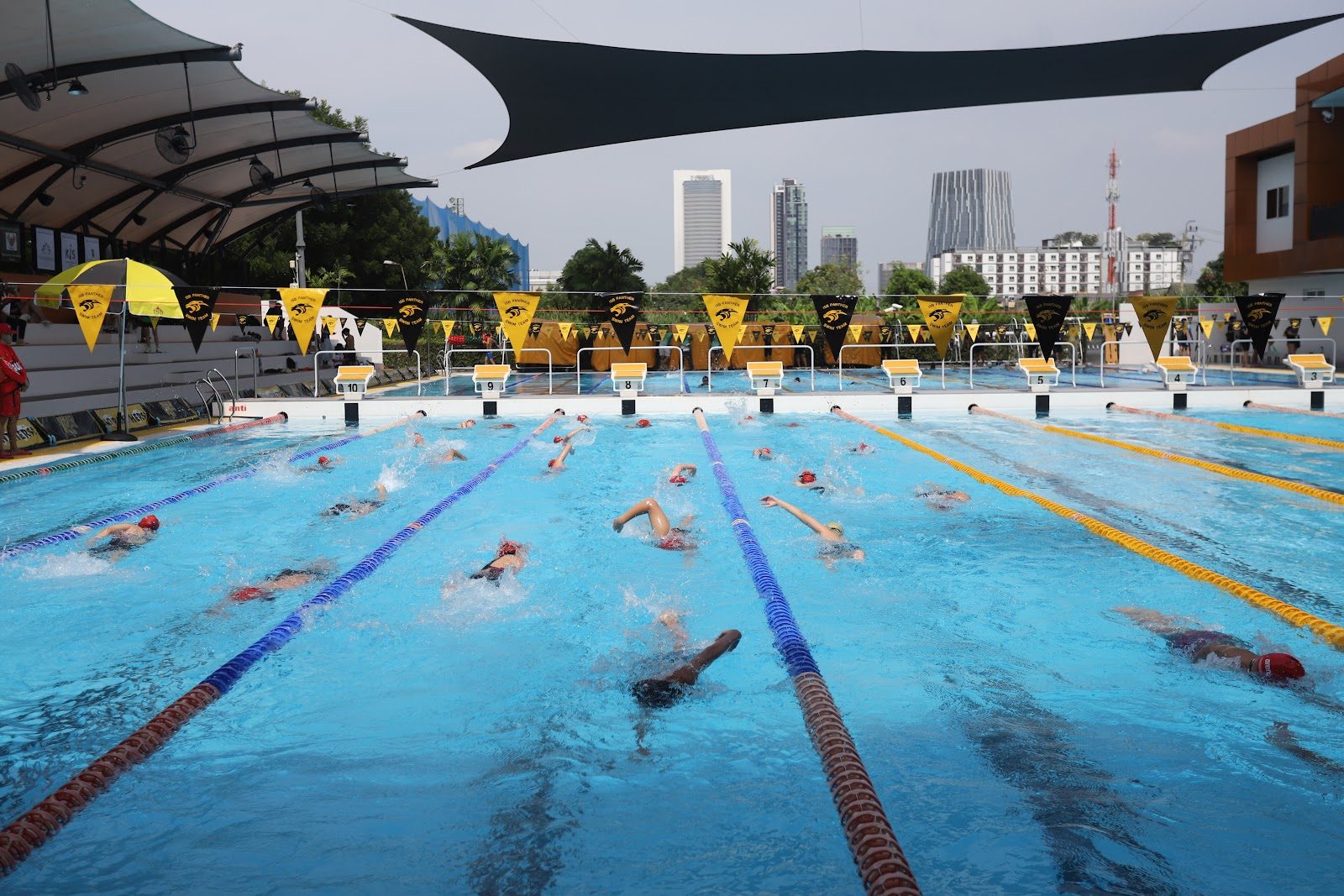
International School Bangkok
Bangkok · Thailand
Opened in 1951 as Thailand's first international school, it pioneered the country's IB Diploma and runs a wilderness campus in Phetchaburi.
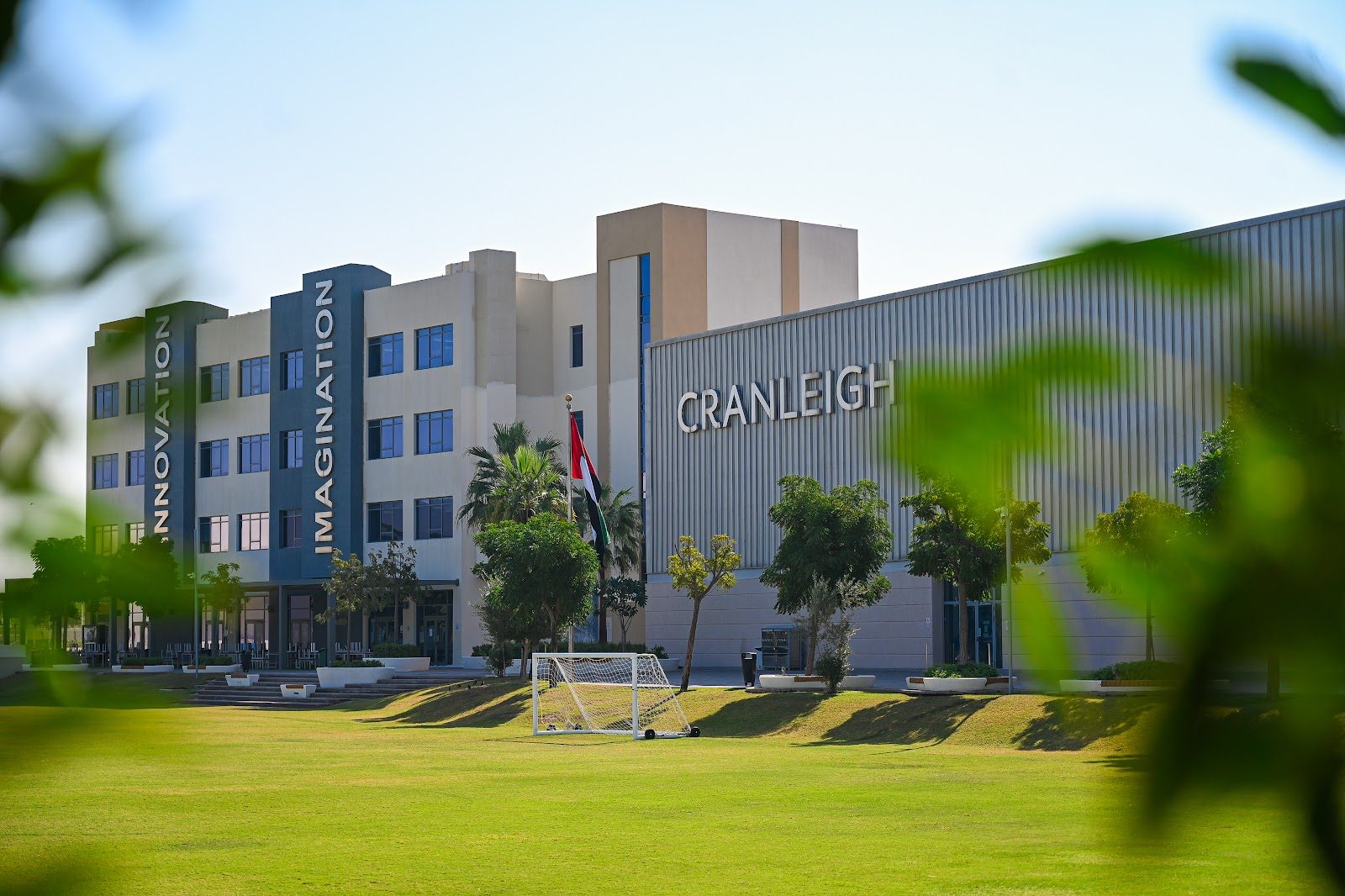
Cranleigh Abu Dhabi
Abu Dhabi · United Arab Emirates
On Saadiyat's museum mile, sixth-formers debate round Harkness tables before choosing A-Levels or the IB Diploma
Same country and curriculum — closest matches within ±10 points either way