
Hanoi
VNU University of Science High School for the Gifted
Born in 1965 as Vietnam's first specialized math class, this 6-percent-acceptance school now leads the country in science olympiad medals.
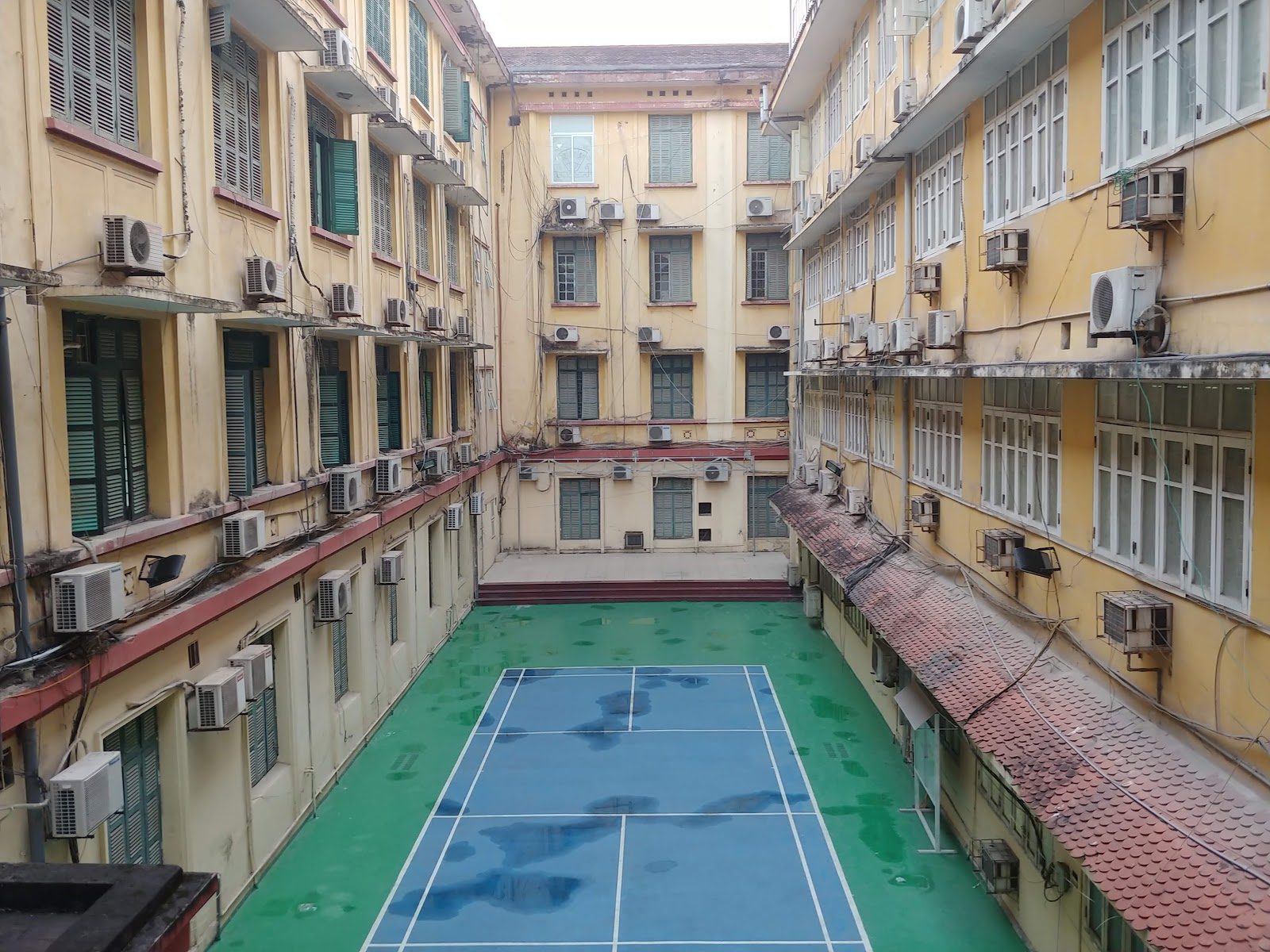
Photo © Thành Deeptry via Google Maps
Type
Day
Ages
15–18
Curriculum
Vietnamese
Qualifications
Vietnamese national curriculum (gifted track)
Ratio
—
The Verdict
Editor's commitment
Right for
Pupils aged 15–18 who want Vietnam's specialised curriculum at a day school founded in 1965, with science olympiads at the centre.
Wrong for
Families wanting boarding, a broad all-round secondary, or English-medium teaching; this Hanoi school is secular and teaches in Vietnamese and English.
Watch out for
Admission is brutally selective: the school cites a 6 per cent acceptance rate, and its public face leans hard into olympiad medals.
Ranking breakdown
VNU University of Science High School for the Gifted · #234 of 1591
Composite score 73.6. 8 weighted criteria.
By criterion
Academic Outcomes
Weight 20%
#32
of 1533 scored
University Placement
Weight 16%
#187
of 1529 scored
Prestige & Heritage
Weight 12%
#55
of 1580 scored
Alumni Network
Weight 12%
#154
of 1530 scored
Facilities
Weight 12%
#1377
of 1540 scored
Transparency & Communications
Weight 8%
#1173
of 1547 scored
Peer & Industry Review
Weight 10%
#636
of 1564 scored
Admissions Selectivity & Demand
Weight 8%
#20
of 1529 scored
Peer & Industry Review
How VNU University of Science High School for the Gifted is regarded in the sector
68
Respected · medium confidence
VNU University of Science High School for the Gifted (Chuyen Khoa Hoc Tu Nhien) is consistently ranked among Vietnam's top specialized high schools alongside Hanoi-Amsterdam and the National University's Foreign Languages specialized school, based on annual national exam entrance-score league tables published by Vietnamese education press (VnExpress, Dan Tri, Tuoi Tre) each admissions cycle. Its reputation rests heavily on International Science Olympiad results (Mathematics, Physics, Chemistry, Informatics), which state media and the Ministry of Education and Training cite when comparing specialized schools nationally. Graduates are regularly reported gaining admission to VNU-HUS itself, Hanoi University of Science and Technology, and scholarships to overseas universities in the US, Singapore (NUS), and Australia, though systematic Western university admissions-office commentary is not independently documented. There is no coverage from WhichSchoolAdvisor, Good Schools Guide, or similar international review bodies, as these focus on international/private schools rather than Vietnam's public specialized-school system. Peer regard is therefore strongest domestically, anchored in olympiad medal counts and exam-score rankings rather than international independent press review.
Award
Elite Mathematics 60
World's Top School · The Global Ranking
VNU University of Science High School for the Gifted is featured on our Global Top 60 ranking at #14. This seal is available for the school's marketing team to use on their website, prospectus and social channels.
Editors' overview
VNU University of Science High School for the Gifted occupies a singular place in Vietnamese secondary education. Founded in 1965 as the country’s first specialised maths class, it has grown into a national training ground for elite science students. The school’s own news stream is dominated by olympiad results in informatics, maths, physics, biology and AI, which tells you exactly where institutional energy goes. This is not a broad, all-round international school dressed in STEM language. It is a selective Vietnamese day school for ages 15–18, attached to the University of Science within Vietnam National University, Hanoi, with a clear academic purpose and a record that is hard to ignore. With an acceptance rate of 6%, scarcity is part of its market position; so is prestige.
What sets it apart is intensity. The school runs specialist entry to class 10, publishes detailed admissions formats, and sustains a rhythm built around advanced subject study, competition preparation and research activity. It also organises a school-level science and engineering research competition across 22 fields, with projects supervised by school teachers and, in some cases, university or research staff. That university linkage matters. It gives able teenagers access to a more serious academic environment than most schools can offer. The result is a culture of hard academic edge, national-level competition, and serious scientific training. Parents who want glossy pastoral rhetoric or a large menu of non-academic identity-building will not find the school especially interested in that brief.
Why shortlist it? Because in Vietnam, few schools match its concentration of mathematical and scientific talent, and fewer still have this depth of olympiad credibility across multiple disciplines. The school also uses Vietnamese and English, and its website shows a steady flow of university guidance, overseas information sessions and academic notices rather than branding fluff. That signals institutional confidence and intellectual seriousness. The school is expensive in effort, not in image. For the right child, that is the attraction.
The right student for VNU University of Science High School for the Gifted is not merely bright. This school suits a teenager who wants difficult maths, science or informatics every day; who enjoys tests, selection and ranking; and who treats competition as fuel rather than pressure. It fits students aiming for olympiads, research contests and top university pathways, especially in quantitative fields. It does not fit children who need a gentle pace, broad curricular freedom or heavy pastoral cushioning. In market terms, this is Hanoi’s high-pressure academic crucible for science specialists: demanding, prestigious, and built for students who want to measure themselves against the strongest peers in the country.
An Elite Mathematics 60 school
HUS High School for the Gifted, run by VNU University of Science in Hanoi, sits at rank fourteen on the Elite Mathematics 60 because of a single, striking statistic: the school has trained six of the ten Vietnamese students in history to score a perfect 42/42 at the International Mathematical Olympiad, and six of the nine gold medalists Vietnam has produced across two consecutive IMO years. Mathematics was the very first department the school opened, in 1965, well before physics, chemistry or biology were added, and it has anchored the national olympiad pipeline ever since.
The specialism is delivered through the chuyen Toan stream, one of five specialized classes that together take roughly 525 new pupils a year, with the maths track alone enrolling around 105 students annually - a substantial share of the incoming cohort rather than a token handful. The standard three-year national curriculum is compressed into two and a half years of specialized mathematics teaching, leaving a final half-year for university-entrance exam preparation. For decades the programme has been shaped by Nguyen Vu Luong, who headed the school's combined Mathematics-Informatics division from 1993 to 2010, served as founding principal from 2010 to 2015, and still regularly teaches the national olympiad squad today. Formal university-level courses such as real analysis or abstract algebra are not part of any published syllabus; the true differentiator is depth of olympiad-style proof training penetrating far beyond the top few pupils, not an accredited advanced-mathematics curriculum.
Notable alumni include Ngo Bao Chau, who entered the school's specialized mathematics class in 1987, won back-to-back IMO gold medals in 1988 and 1989, and went on to become the first Vietnamese winner of the Fields Medal, in 2010, having been taught in his school years by mathematics teacher Pham Hung alongside Nguyen Vu Luong. The current generation is carrying the tradition forward: Nguyen Dinh Tung took IMO silver in 2025 before returning to win gold in 2026 as Vietnam's top scorer, finishing 14th among 666 contestants, alongside 2025 silver medalist Nguyen Dang Dung.
International openness is minimal, and that needs saying plainly. HSGS is a Vietnamese public magnet school under VNU, admitting pupils nationwide only through its own highly competitive June entrance exam; there is no published overseas-applicant track, no ESL support, and instruction runs entirely in Vietnamese. It is a day school with no boarding, and because it is not structured as an international institution, standard student-visa services simply do not apply. Fees are nominal for a state school - about 300,000 VND a month for the specialized track, rising to roughly 2,000,000 VND a month for the parallel 'chat luong cao' quality stream. For an expatriate family, this is not a realistic direct-enrollment target unless they already hold Vietnamese residency and can commit a child to at least a year of dedicated preparation for the entrance exam; it is better read as the benchmark against which Hanoi's international schools measure their own mathematics provision.
Academic Performance
Academic performance here is best read through national and international competition outcomes, because that is where the school publishes its strongest evidence. The public record is dense with olympiad results across informatics, astronomy and astrophysics, maths, biology and physics, including 4 student medals at IOAI and a school science and engineering competition spanning 22 research fields. That breadth matters. Many specialist schools build a reputation around one flagship subject; this one produces across the quantitative sciences with remarkable consistency. Its own news flow gives little space to generic celebration of school life and a great deal to medal tallies, selection notices and academic procedures. That is the clearest indicator of where the school sits relative to peers: at the sharp end of Vietnam’s selective science-school hierarchy.
What the school does not publish is just as important. We have not seen aggregate national graduation exam data, university placement tables, average subject scores or cohort-wide value-added measures. Parents therefore cannot judge whole-school academic performance in the rounded way they could at a transparent international school with full exam reporting. The trade-off is obvious. This is an institution whose public academic identity rests on elite outlier achievement rather than broad disclosure. In that narrow but important lane, it is formidable. For families comparing science-specialist options in Vietnam, the question is not whether the top end performs; it does. The question is whether your child thrives in a system where prestige is built on hard selection and public academic ranking.
Facilities
Facilities are functional, academically directed and tied closely to the school’s role inside a university environment. The public-facing infrastructure that matters most is not a parade of lifestyle amenities but the machinery of a selective science school: published timetables, formal academic procedures, specialist admissions systems and a school-run research competition spanning 22 fields. That last point matters more than a glossy auditorium. It signals access to supervised project work, with scope for input from university and research staff as well as school teachers. For a parent comparing specialist schools, that is a serious academic asset. The address inside the University of Science ecosystem also points to a more grown-up academic setting than a standalone secondary campus, even if the school does not publish the kind of facilities inventory international schools now treat as standard.
What is missing is also clear. The school does not publish a detailed campus guide, laboratory specifications, performing arts spaces, sports provision or library detail. That opacity weakens its case against better-documented peers, especially premium international schools that itemise every studio, court and maker space. So the benchmark is uneven. Against Vietnam’s exam-driven specialist schools, this school’s facilities case rests on academic utility and university adjacency. Against top-fee international competitors, the offer looks spartan and narrowly purposed. Families choosing this school are buying into intellectual infrastructure, not a polished all-round campus experience.
VNU University of Science High School for the Gifted occupies a singular place in Vietnamese secondary education
Prestige
This school carries top-tier academic prestige inside Vietnam’s science-education ecosystem. The reasons are concrete. It sits within a major national university structure, recruits by competitive specialist entry, and publishes a constant stream of high-level olympiad outcomes rather than lifestyle messaging. That pattern matters because prestige in this segment is not built on campus theatre or international branding; it is built on who gets in, how hard the work is, and which students reach national teams. By that measure, the school is elite. The range of recognised disciplines also strengthens the case: maths, physics, biology, informatics and AI all feature, alongside a school research competition covering 22 fields. That breadth gives the institution serious intellectual weight beyond a single-subject niche.
Why not rate it even higher in universal terms? Because its prestige is specialist, not general. This is not the kind of school whose name carries equal force across every social circle, every profession, or every overseas admissions office. Its authority is strongest among academics, selective universities, olympiad communities and families who understand Vietnam’s exam hierarchy. Within that world, the school’s status is hard-earned and unmistakable. Outside it, parents will need to do more interpretation than they would with a globally marketed Anglo-American brand. Still, for mathematically and scientifically ambitious pupils, an education won through a 6% acceptance funnel and validated by repeated medal-level performance has real cachet.
The right student for VNU University of Science High School for the Gifted is not merely bright
Communications
Parent communication is formal, frequent and unapologetically administrative. The website functions as the school’s central noticeboard, carrying timetables, admissions notices, class allocations, exam-related instructions, downloadable forms, grading explanation documents, transcript and school-record requests, and procedural guidance. Contact channels are plainly listed: phone, email and the school’s street address. For current families, that is useful, practical communication rather than branding theatre. The school also posts university-facing and outward-looking notices — sessions with Kyoto University, Seoul National University, EducationUSA and a Japanese high-school exchange — which gives parents a clear view of the opportunities pipeline. The research competition framework is explained with unusual procedural detail, including supervision rules and project structures across 22 fields. That level of specificity builds confidence.
The weakness is tone and audience design. Communication is built for people who already understand selective Vietnamese schooling and are prepared to track notices closely. It is dense, institution-first and light on interpretation. Parents looking for a polished portal, pastoral updates, principal letters, social storytelling or a strong hand-holding function will find the public communications spartan and hard-edged. There is little effort to translate the school’s intensity into reassuring parent language. That does not make the communication ineffective; it makes it transactional. For a highly academic school with an admissions funnel as severe as 6%, that bluntness fits the culture. It informs efficiently. It does not charm.
Uniqueness
What makes this school unusual is the clarity of its purpose. Many selective schools claim academic stretch; this one is built around it with almost no decorative packaging. The public face is a stream of admissions notices, timetables, olympiad headlines, subject-specific briefings and university guidance. Even its internal research competition is structured with unusual seriousness, spanning 22 fields and allowing supervision not only from school teachers but also from university and research staff. That gives students something rarer than prestige: early immersion in real academic culture. Teenagers here do not just study advanced science; they learn how high-level selection works, how projects are framed, and how strong peers raise the standard every day. The school’s attachment to a major university sharpens that environment into something distinctly more adult than the average secondary school.
For the right student, the benefit is obvious: concentrated time with equally able classmates, a direct route into competitive science, and daily exposure to a system that rewards precision, stamina and rankable performance. That can be transformative for pupils who want mathematics, informatics or laboratory science to sit at the centre of school life rather than on its edges. It also carries a cost. This is a high-pressure meritocracy with little interest in soft-focus schooling. Students gain intellectual sharpness, resilience and academic ambition; they also enter a culture where comparison is constant and excellence is public. For families who want a specialist crucible rather than a balanced all-round school, that is the point.
Many specialist schools build a reputation around one flagship subject; this one produces across the quantitative sciences with remarkable consistency
Student Profile
The students who fit here are competition-minded, self-propelled and happiest when school is built around hard subjects rather than school spirit. This is a strong match for teenagers who enjoy mathematics, informatics, physics, biology or research for its own sake, and who do not need constant adult prompting to work. They need stamina as much as brains. The public life of the school centres on selection, notices, olympiads, research activity and university-facing opportunities, including a science and engineering competition across 22 fields. That tells you the peer group: pupils who can cope with pressure, track details, meet formal expectations and treat high achievement as normal. A student who likes being surrounded by other top performers will find that environment electrifying.
Who struggles? Children who want broad curricular wandering, a large arts-and-sport identity, or a soft landing into adolescence. This is not for the faint-hearted. The school suits pupils who are comfortable being measured, compared and stretched in public view, and whose confidence survives contact with very able classmates. It also suits families who value academic seriousness over polish and who can navigate a system that communicates in a direct, procedural way. The admissions filter is severe at 6%, and the school’s medal culture leaves no doubt about standards. In plain terms, this is a home for the intellectually hungry and the thick-skinned; everyone else risks feeling out of place.
It fits students aiming for olympiads, research contests and top university pathways, especially in quantitative fields
Co-curricular strengths
Arts & sport, on a separate axis
Overall 5.2/10
Scored 0-10 from the school's own published evidence. This axis is editorial-only — it does not feed the main WTS ranking.
Sports
6/10
Drama
5/10
Dance
4/10
Music
5.5/10
Visual Arts
5.5/10

WTS 300 badge
2026/27 editionVNU University of Science High School for the Gifted is one of the World's Top 300 Schools for 2026/27. Claim your listing to add it to your site →
Strengths
- +Established in 1965 as a specialized mathematics class and later formalised, the school is a public magnet institution affiliated with VNU University of Science, a member of the Vietnam National University, Hanoi system.
- +It is one of Vietnam's most selective schools, a specialized, most-selective (6% acceptance rate) public magnet school serving talented students nationwide.
- +HUS High School for Gifted Students is ranked the first in International Science Olympiads (IMO, IOI, IPhO, IChO, and IBO), reflecting a strong track record in competitive STEM subjects.
- +This is also the high school where Professor Ngo Bao Chau, the first Vietnamese recipient of the Fields medal, studied, underlining its history of producing top mathematical talent.
- +As a unit of VNU University of Science, students can draw on practice rooms and laboratories that are diverse and modern, and on university-level library and equipment resources.
Considerations
- −Instruction follows the national Vietnamese-language curriculum with no English-medium, IB or A-level stream, so it does not serve families requiring an internationally portable qualification.
- −Entry is punishingly competitive: the school admits about 500 students each year from roughly 3,000 applications, with selection ratios in specialised classes ranging from 1 in 4 to 1 in 10, highest for the Informatics and Maths streams.
- −The academic offer is narrow by design, split into only Maths, Informatics, Physics, Chemistry and Biology classes of about 105 students each, leaving little room for humanities, arts or vocational pathways.
- −Admissions rules can shift year to year - automatic admission for provincial olympiad gold-medallists was withdrawn for the 2025 intake, with all candidates now required to sit a full four-subject exam - adding planning uncertainty for applicant families.
Availability
Primary entry gate & tests
VNU Competitive Entrance Exam
Gallery
Photo © AvisTravel.vn투어, 렌터카, 하노이 항공권 via Google Maps
Photo © Sơn Nguyễn via Google Maps
Photo © Minh Nghĩa Đỗ via Google Maps
Photo © Thanh Don via Google Maps
Photo © VAN THAI HA via Google Maps
Photo © Hạnh Ngô Đức via Google Maps
Photo © thuocvanminh via Google Maps
Parent reviews
Have you sent your child here?
Voice reviews carry the strongest trust badge — we transcribe them for you to tidy up before they go live. Prefer to type? A written review is fine too.
Add your voice
In 60 seconds, tell other parents: what's the best thing about VNU University of Science High School for the Gifted, and what surprised you when your child joined?
We ask for a Google sign-in so every review has a real face behind it — no anonymous drive-by attacks on schools, and no faked positive reviews. Your email is never shown publicly.
Send this profile to a friend
International parents rely on word-of-mouth. Share this review with someone weighing the same decision.
Schools with places
Similar schools to VNU University of Science High School for the Gifted with places available now.
Availability first, then country, area, curriculum, price, co-curricular
Consider also
Also worth looking at alongside VNU University of Science High School for the Gifted.
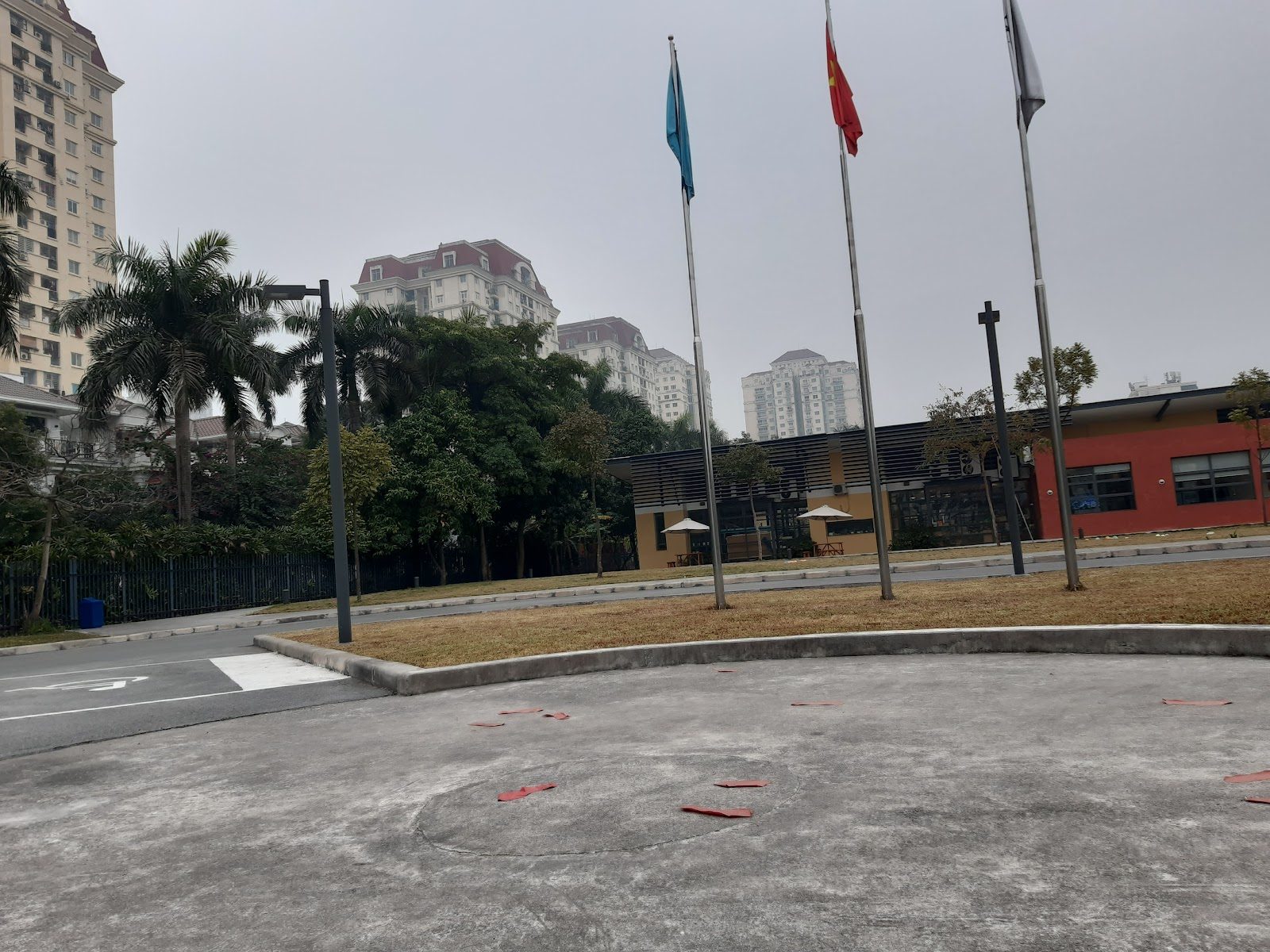
United Nations International School of Hanoi
Hanoi · Vietnam
One of only two UN-affiliated schools on earth, weaving the Sustainable Development Goals into an IB curriculum spanning 60-plus nationalities
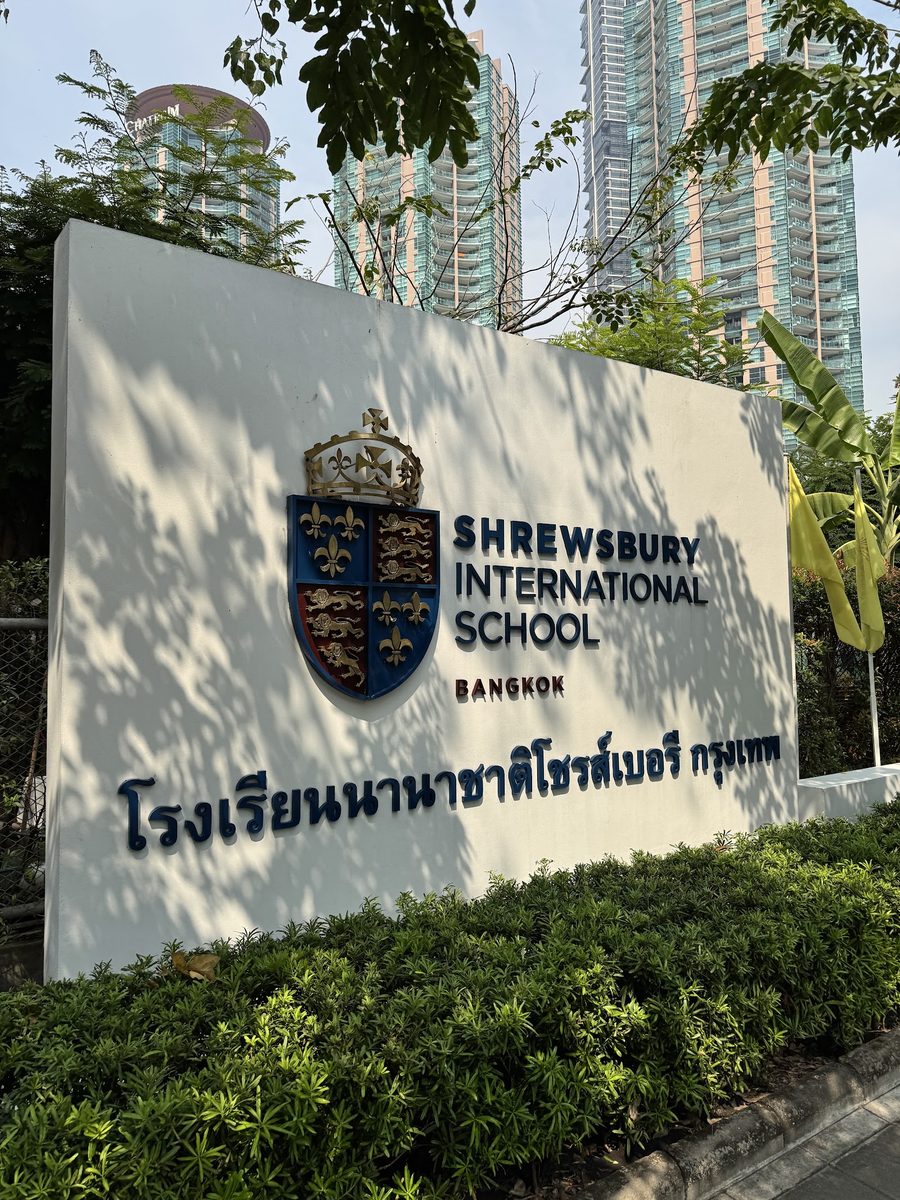
Shrewsbury International School Bangkok
Bangkok · Thailand
A 1552 English public-school pedigree anchors a Chao Phraya riverside campus reachable by its own school boat.

Dubai English Speaking College
Dubai · United Arab Emirates
Secondary heir to Dubai's oldest British school, pairing a not-for-profit ethos with a Sixth Form spanning A Levels to vocational BTECs.
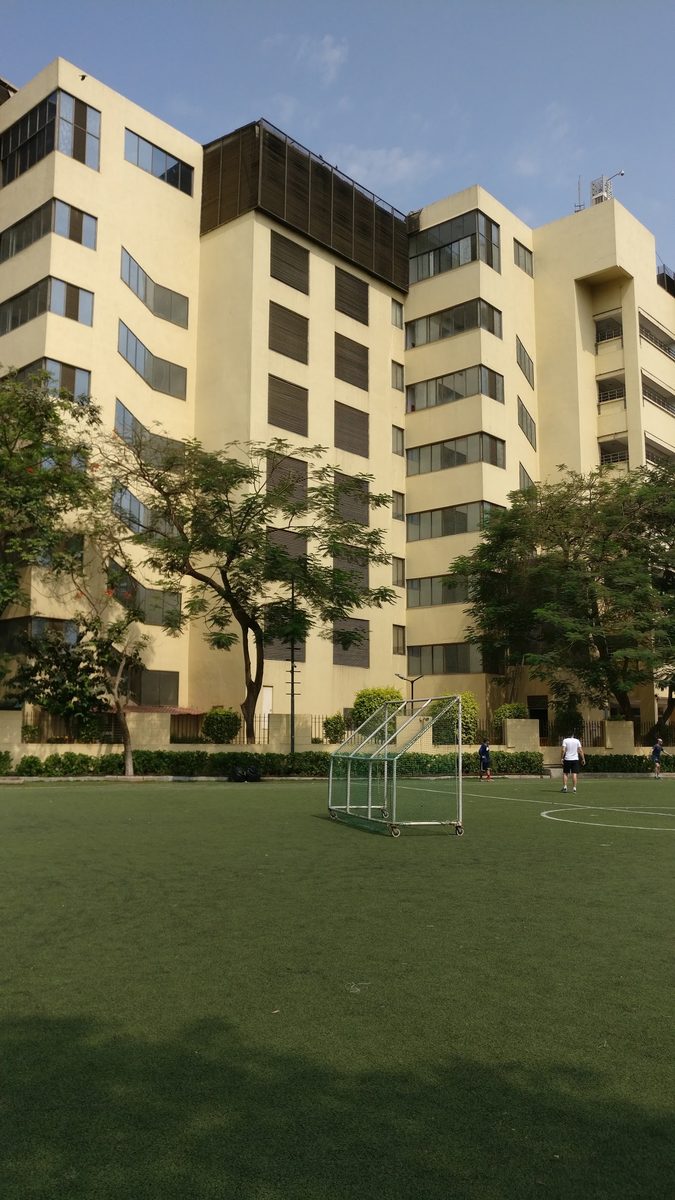
Dhirubhai Ambani International School
Mumbai · India
In the heart of Bandra-Kurla Complex, three curricula converge to produce some of India's highest IB Diploma averages.
Same country and curriculum — closest matches within ±10 points either way