
Virginia
St. Catherine's School
low confidence· 2/6 cats · 3 avg sourcesFounded in 1890 as Virginia's first school to send girls to college, still the state's only all-girls PK-12 campus.

Type
Day
Ages
3–18
Curriculum
American
Qualifications
AP
Ratio
1:8
The Verdict
Editor's commitment
Right for
Girls who want an Episcopal PK-12 day school founded in 1890, with American curriculum continuity and 15-pupil classes.
Wrong for
Families wanting co-education, boarding, or a secular ethos; this Richmond school is day-only, all-girls and accredited by NAIS and VAIS.
Watch out for
At an average US$31,407 a year across ages 3–18, you are buying a single-sex Richmond institution, not a bargain.
Ranking breakdown
St. Catherine's School · #1047 of 1591
Composite score 61.5. 8 weighted criteria.
By criterion
Academic Outcomes
Weight 20%
#586
of 1529 scored
University Placement
Weight 16%
#516
of 1529 scored
Prestige & Heritage
Weight 12%
#446
of 1571 scored
Alumni Network
Weight 12%
#1516
of 1530 scored
Facilities
Weight 12%
#489
of 1533 scored
Transparency & Communications
Weight 8%
#456
of 1532 scored
Peer & Industry Review
Weight 10%
#533
of 1548 scored
Admissions Selectivity & Demand
Weight 8%
#607
of 1529 scored
Peer & Industry Review
How St. Catherine's School is regarded in the sector
70
Respected · medium confidence
Within Richmond's tight cluster of independent schools, St. Catherine's is regarded as a peer of Collegiate School and, especially, of its brother school St. Christopher's, with which it maintains a decades-old cross-enrollment partnership recognised across Virginia's independent-school circuit as a distinctive, rarely replicated model. Its graduates matriculate heavily to University of Virginia, William and Mary, and other Mid-Atlantic institutions, a pattern consistent with a regional rather than national admissions footprint; it does not feature prominently in the Ivy-plus feeder data that university admissions offices circulate about flagship boarding schools. Independent education press coverage is largely local, Richmond Times-Dispatch profiles and NAIS/VAIS member listings rather than international outlets such as Tatler or the Good Schools Guide, which do not typically cover American day schools of this kind. Among peer heads, it is seen as a well-run, traditional single-sex institution respected for stability and community rather than for pedagogical innovation or national reach.
- Mary Sue Terry — Politician, former Virginia Attorney General
- Eleanor Roosevelt — attended briefly, First Lady
Editors' overview
St. Catherine’s occupies a narrow and valuable niche in the Richmond market: an Episcopal, all-girls day school covering ages 3 to 18 on one campus, and still Virginia’s only all-girls PK–12 school. That alone puts it on a serious parent’s shortlist. Few schools can offer a single educational through-line from nursery years to college counselling without the disruption of a school change at 11, 13 or 16, and fewer still do it in an environment built entirely around girls. The school’s historical claim matters too. Founded in 1890 as Virginia’s first school to send girls to college, it has a long institutional memory and a clear sense of purpose. This is not a school improvising its identity. It knows what it is. With an average class size of 15, the academic setting stays personal enough for teachers to know pupils properly, without drifting into boutique smallness.
What marks St. Catherine’s out is the combination of single-sex focus and full-spectrum provision. The school states plainly that every athletic resource and sport offering is designed for its girls; that is a more important point than the slogan attached to it. In co-educational schools, girls’ sport still too often shares attention, facilities and priority. Here, there is no internal competition for status with boys’ teams. The same logic extends beyond sport. Families who want a setting where leadership, classroom voice and institutional energy are directed at girls, not split between constituencies, will find a clear, deliberate model. The American curriculum and English-language teaching are standard for its market; the more useful markers of seriousness are its accreditations with NAIS and VAIS, its day-only structure, and the fact that it has sustained a broad offer across academics, arts, athletics, service learning and spiritual life on one site in the heart of Richmond.
At an average annual day fee of $31,407, St. Catherine’s sits in the expensive end of the local independent market, but not at the level where price alone turns it into a trophy purchase. Parents are paying for continuity, specialisation and a campus designed around girls from the outset. The right student for St. Catherine’s is a girl who will use that platform: academically engaged, comfortable in a structured environment, and keen to take visible roles in class, sport, the arts or service. It will also suit families who want strong pastoral continuity from early childhood to the end of school, within an Episcopal frame that still leaves room for a modern school life. It is a weaker fit for families who want the social mix and daily dynamics of co-education, or who prefer a more anonymous, less mission-driven culture. In its best form, St. Catherine’s offers a self-contained, confident ecosystem for girls who benefit from being expected to lead.
Academic Performance
St. Catherine’s does not publish the data parents need for a hard academic comparison. We have not seen aggregate SAT or ACT results, AP score distributions, National Merit counts, matriculation breakdowns by university tier, or any other external examination profile that would place the school cleanly against its peer set. That is a real gap. For a school with an overtly rigorous academic claim and a clear college-preparatory mission, public silence on outcomes limits scrutiny. Parents can still infer some academic seriousness from the school’s long-standing college focus, small classes and dedicated college counselling, but inference is not evidence. In this area, St. Catherine’s is *more opaque than the best-run independents*, which publish enough headline data to let families judge academic traction for themselves.
Relative to peers, that leaves St. Catherine’s in the strong-but-unproven category on published results. The school has the institutional ingredients of a serious university-prep environment — an all-through structure, specialist faculty, and a student body large enough to sustain depth across subjects — yet no public examination dashboard to verify how that translates into top-end attainment. In the American independent-school market, many schools still resist full disclosure, so this is not unusual; it is still unsatisfactory. A family comparing Richmond-area independents should press for recent AP participation and score patterns, average standardised test results where available, university destinations over several cycles, and evidence of how many girls secure places at selective colleges. Without that, academic performance remains credible, but not measurable.
Facilities
Facilities are a serious asset here, and the split between the main campus and the separate athletics and outdoor-education land gives St. Catherine’s more operational depth than many urban day schools. The key point is not grandeur; it is range. A compact city-campus school can struggle to offer both everyday convenience and genuine space for sport. St. Catherine’s avoids that trap. The school has a 16-acre main campus on Grove Avenue and a further 145 acres for athletics fields and outdoor learning in Goochland. That is a material advantage over peer girls’ schools and many co-educational independents in built-up locations, where sport competes with parking, traffic and land constraints. Families can expect a campus with room for academic life, arts activity and day-to-day school culture, backed by off-site acreage that supports a broader physical programme than the address alone implies.
The arts also read as a priority, not an afterthought. The school gives dance, music, theatre and visual arts their own clear place in the institutional structure, and it publishes dedicated arts facilities and a box office rather than folding performances into a generic school-hall model. That points to real infrastructure for production and exhibition, not token provision. In athletics, the school states plainly that resources are built for girls’ sport rather than shared around boys’ teams; that matters. Against peers, the overall facilities package is stronger than average for a day school of this kind: not a vast suburban estate with boarding-scale spectacle, but a well-resourced, purposeful environment with more breadth than many rivals.
In Richmond, an all-girls school with this age range, this history and this degree of institutional continuity occupies a distinctive tier
Prestige
St. Catherine’s carries real local weight. In Richmond, an all-girls school with this age range, this history and this degree of institutional continuity occupies a distinctive tier. Prestige here does not rest on glossy global branding or selective data release; it rests on durability, a clear social identity and deep roots in the city’s professional and independent-school networks. The school’s standing is strengthened by scale without sprawl: 975 pupils is enough to sustain breadth in academics, arts and sport, while keeping the community recognisable. The fact that 55 zip codes feed into the school tells its own story. Families travel for it. That matters more than marketing copy.
This is established rather than glamorous prestige. The Episcopal identity, the single-sex model and the long alumnae tradition give the school a strong inherited status, especially among families who value continuity, manners, service and female leadership within a structured environment. The campus footprint also contributes: a main campus paired with extensive athletics and outdoor land signals resources and permanence. Prestige, though, has limits. St. Catherine’s does not publish the kind of academic outcome data that would elevate its reputation from respected to indisputably elite. So the verdict is clear: this is a high-status regional school with serious social and institutional cachet, not a national name operating at the very top of the American independent-school hierarchy.
The school’s own line on athletics matters here: resources are allocated for its girls, full stop
Communications
St. Catherine’s communicates like a school with a clear internal structure and an active calendar. The public-facing architecture is organised and useful: admissions, academics, arts, athletics, school life, giving, alumnae and parents all have their own lanes, with direct routes to practical items such as calendars, major dates, after-school care, dining, box office and contact details. That matters. Parents do not need to decode a vague lifestyle brand in order to find out how the school runs. The presence of a dedicated parent area, event calendar and SaintsNet points to a well-drilled system for routine communication rather than improvised email traffic. The school also gives families multiple entry points for contact and visit arrangements, which is standard admissions practice but still a marker of basic operational competence.
What the school does less well is public accountability. It says a great deal about mission, belonging, leadership and purpose, and the tone is confident, but communications are stronger on ethos than on measurable outcomes. That imbalance matters more at a school charging an average of $31,407 a year. Parents can expect timely logistics, visible community messaging and a polished explanation of school life. They should not expect much hard data unless they ask for it directly. So the verdict is clear: communication with current families is probably efficient in practice and structurally sound, while communication to enquiring parents is selective in what it chooses to disclose. It informs well on daily life; it scrutinises poorly on performance.
Uniqueness
What St. Catherine’s offers, and few schools can match, is a complete girls-only education on one campus from the earliest years to the end of school. That creates a rare institutional coherence. A child does not need to relearn the culture at each transfer point or compete for visibility inside a co-educational hierarchy built around mixed priorities. She grows up in a school where classroom voice, pastoral systems, leadership opportunities, performances and sport all run through a girls-first lens. The school’s own line on athletics matters here: resources are allocated for its girls, full stop. In practice, that gives students more chances to captain, perform, speak, organise and lead, without the familiar dilution that can happen elsewhere. For families who want a purpose-built environment rather than a generic independent school with a girls’ empowerment message attached, that distinction is genuinely consequential.
The other point of difference is cultural rather than structural. St. Catherine’s combines an Episcopal frame, a strong honour-and-service language, and a long alumnae tradition with a modern emphasis on confidence and cultural competency. That mix produces a school with a defined moral centre and a clear idea of the adult it wants to form. Some girls thrive in that setting: they gain continuity, belonging and the confidence that comes from being known over time in a community of 975 pupils. Others will find it too self-contained or too consciously shaped. That is the trade-off. Its uniqueness lies not in novelty, but in how completely and consistently it commits to its model.
Its uniqueness lies not in novelty, but in how completely and consistently it commits to its model
Student Profile
The student who fits best here is a girl who wants to be known, expected and used. In a school built entirely around girls, there is less room to drift anonymously through the middle. Pupils who thrive tend to have a willingness to take part, speak up and shoulder visible responsibility, whether in class, on stage, in service work or on teams. The school’s own language of leadership, honour and belonging is not decorative; it points to a culture that rewards engagement and community-mindedness. With 975 students across the full age range and an average class size of 15, the social setting is large enough to offer variety but small enough for patterns of effort, conduct and contribution to be noticed. This suits girls who value continuity, structure and adults who keep track.
The weaker fit is just as clear. A student who wants the social dynamics of co-education, prefers a looser institutional culture, or resists organised participation will find this environment tight-framed and hard to evade. The Episcopal context and the school’s emphasis on character, service and cultural competency give it a deliberate moral tone; families need to want that, not merely tolerate it. Girls who enjoy all-female spaces, are comfortable with tradition, and benefit from consistent encouragement into leadership will do well. Girls who want to disappear into the crowd, test every boundary, or treat school as a transactional route to university will find St. Catherine’s too intimate and too consciously shaped.
Founded in 1890 as Virginia’s first school to send girls to college, it has a long institutional memory and a clear sense of purpose
Co-curricular strengths
Arts & sport, on a separate axis
Overall 8.74/10
Scored 0-10 from the school's own published evidence. This axis is editorial-only — it does not feed the main WTS ranking.
Sports
8.9/10
Highly active in Virginia independent leagues, utilizing top-tier indoor fitness pavilions and expansive physical fields.
Drama
8.8/10
The magnificent performing arts centers anchor an ambitious dramatic tracking program, mounting complex classical and modern plays.
Dance
8.7/10
Formal intensive dance track offering technical contemporary, jazz, and classical ballet choreography modules.
Music
8.7/10
Staggering musical breadth; supports a world-famous music department, multiple symphony orchestras, and extensive musical ensembles.
Visual Arts
8.6/10
Features custom exhibition galleries alongside massive digital imaging labs, industrial ceramics, and fine art studios.
Strengths
- +It is the oldest private, all-girls school in Richmond and the only independent all-girls school in Virginia for age 3 to grade 12, with roots dating to its 1890 founding by Virginia Randolph Ellett.
- +The campus, built in 1917, is a Colonial Revival collection designed by architect Hobart Upjohn and was listed on the National Register of Historic Places and the Virginia Landmarks Register in 2008.
- +The school has 955 students in grades PK, K-12 with a student-teacher ratio of 8 to 1, allowing for close academic attention.
- +The partnership with St. Christopher's School for co-ed classes in upper grades provides balanced social and educational experiences, softening the single-sex structure for older students.
- +After graduation, 100% of students from this school go on to attend a 4-year college, per Niche's data on outcomes.
Considerations
- −As a single-sex school, it structurally excludes families wanting a fully coeducational experience for their daughter throughout her schooling, despite some shared classes with St. Christopher's in the upper grades.
- −Tuition rises steeply by grade: Early Learners (age 3): $21,100 Junior Kindergarten: $23,800 Kindergarten: $28,200 Grades 1-2: $29,100 Grades 3-4: $30,300, a real budget consideration before financial aid.
- −St. Catherine's School ranks within the top 20% of private schools in Virginia... for Lowest average acceptance rates, indicating a genuinely competitive admissions process rather than an easy walk-in.
- −It is a day school only, with no boarding option, so relocating expat families must secure local housing and commuting arrangements within the Richmond area.
Availability
Primary entry gate & tests
ISEE/SSAT + Interview (Girls)
Gallery
Parent reviews
Have you sent your child here?
Voice reviews carry the strongest trust badge — we transcribe them for you to tidy up before they go live. Prefer to type? A written review is fine too.
Add your voice
In 60 seconds, tell other parents: what's the best thing about St. Catherine's School, and what surprised you when your child joined?
We ask for a Google sign-in so every review has a real face behind it — no anonymous drive-by attacks on schools, and no faked positive reviews. Your email is never shown publicly.
Send this profile to a friend
International parents rely on word-of-mouth. Share this review with someone weighing the same decision.
Schools with places
Similar schools to St. Catherine's School with places available now.
Episcopal High School
Alexandria · United States
- 2026-27
- CLOSEDRegular cycle closed
- 2027-28
- OPENS SOONOpens Sept '26
Thomas Jefferson High School for Science and Technology
Alexandria · United States
- 2026-27
- CLOSEDStandard route
- 2027-28
- OPENS SOONOpens 5 Oct '26
Availability first, then country, area, curriculum, price, co-curricular
Consider also
Also worth looking at alongside St. Catherine's School.
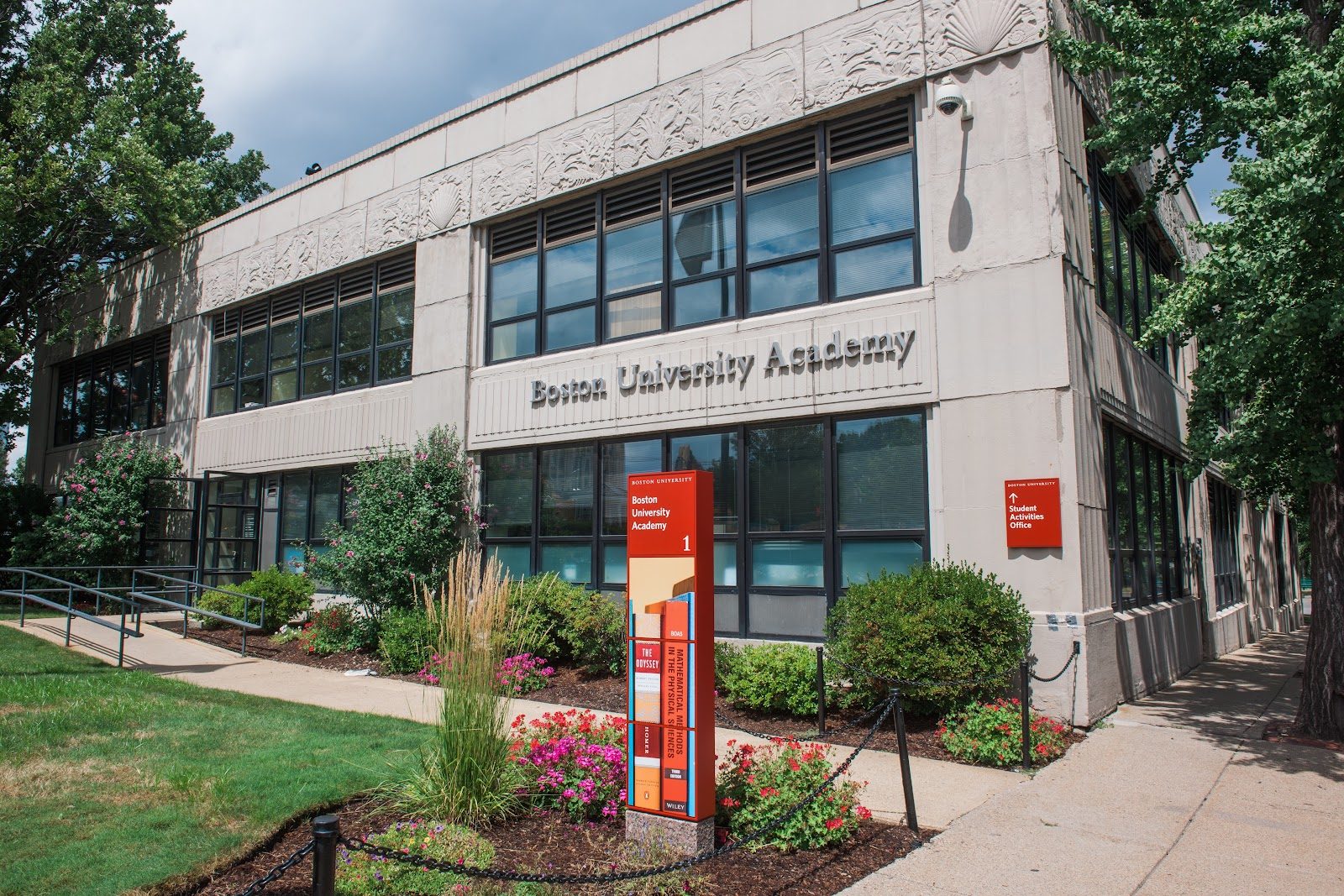
Boston University Academy
Boston · United States
Upperclassmen trade study halls for Boston University lecture halls, banking college credit before graduation.
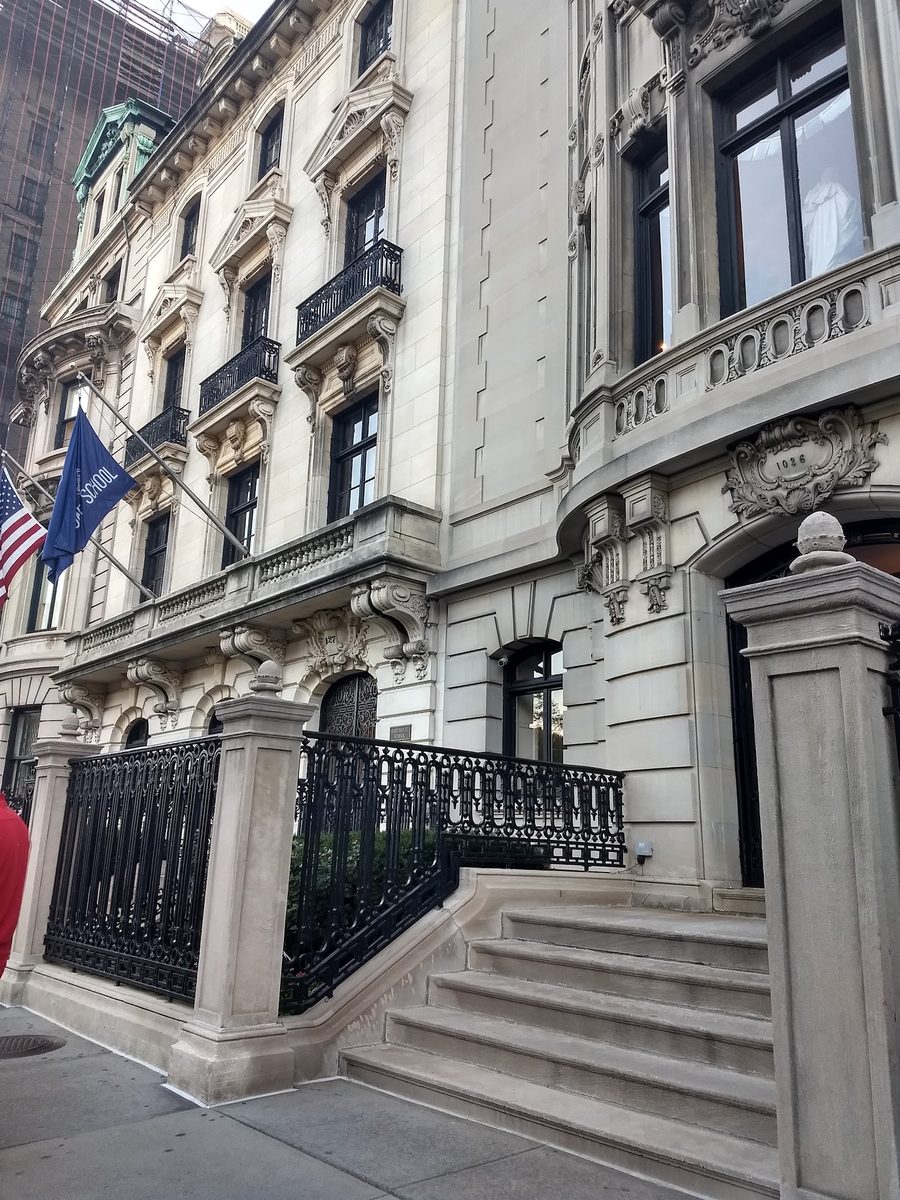
Marymount School of New York
New York City · United States
On Fifth Avenue, landmark mansions give way to Bloomberg terminals and classrooms inside the Met.
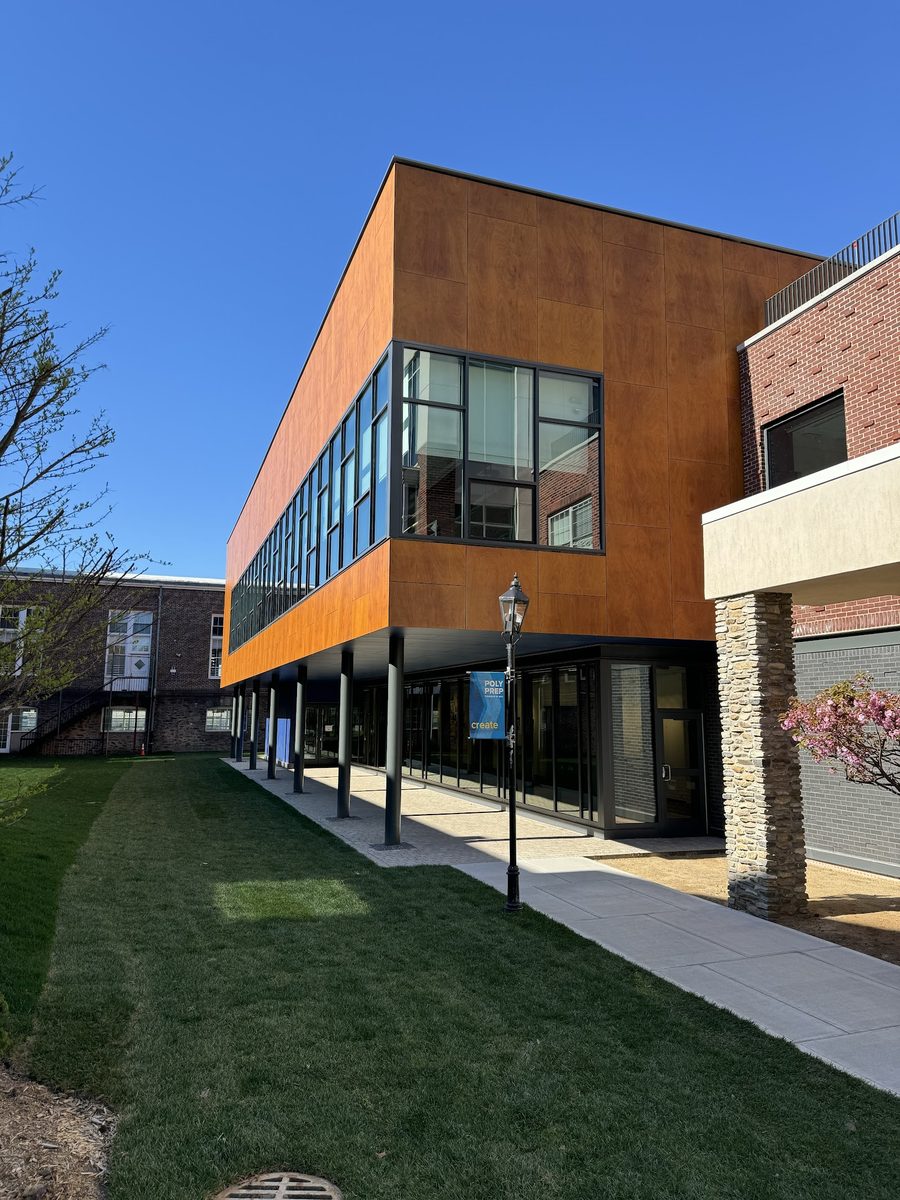
Poly Prep Country Day School
Brooklyn · United States
Founded in 1854 as Brooklyn's first boys' school, this day school pairs a Prospect Park mansion with a 25-acre Dyker Heights campus.

Germantown Friends School
Philadelphia · United States
Rooted in an 1845 Quaker meeting in historic Germantown, where juniors design a month-long independent study of their own.
Same country and curriculum — closest matches within ±10 points either way