
Virginia
Thomas Jefferson High School for Science and Technology
high confidence· 6/6 cats · 3.27 avg sourcesA Fairfax County magnet where every senior completes original research across fifteen specialized STEM labs.
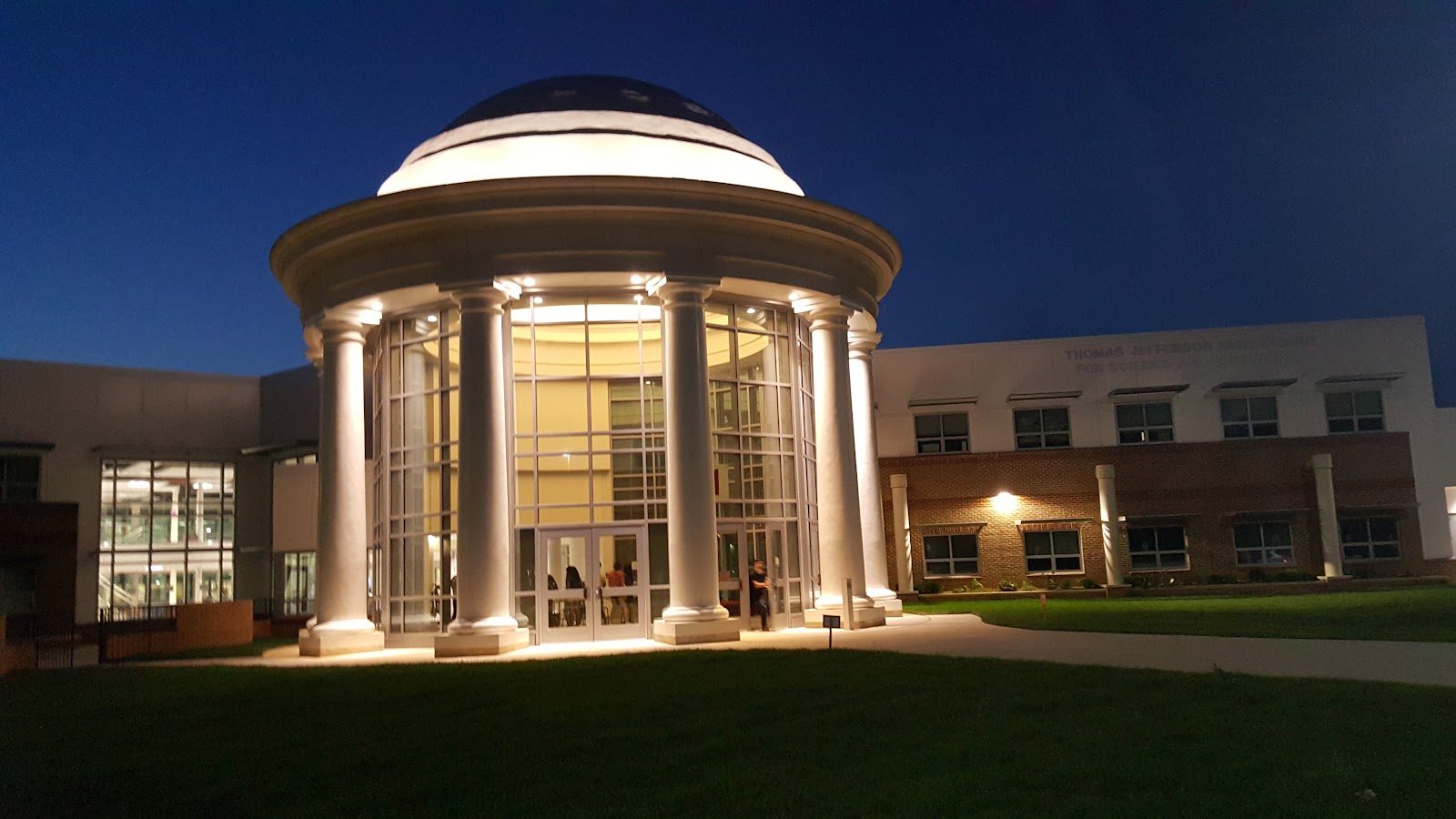
Photo © Bala Murugesan via Google Maps
Type
Day
Ages
14–18
Curriculum
American
Qualifications
AP
Ratio
10:1
The Verdict
Editor's commitment
Right for
Ambitious STEM teenagers who want a selective Fairfax County magnet with 15 specialised labs, a 10:1 ratio and compulsory senior research.
Wrong for
Students wanting breadth over science: ages 14–18, American curriculum and 18 average class size point to a focused academic machine.
Watch out for
Founded in 1985 and accredited by NEASC and NAIS, TJ is public and prestigious; admissions selectivity and intensity are the real price.
Ranking breakdown
Thomas Jefferson High School for Science and Technology · #19 of 1591
Composite score 81.2. 8 weighted criteria.
By criterion
Academic Outcomes
Weight 20%
#13
of 1529 scored
University Placement
Weight 16%
#2
of 1529 scored
Prestige & Heritage
Weight 12%
#188
of 1571 scored
Alumni Network
Weight 12%
#158
of 1530 scored
Facilities
Weight 12%
#666
of 1533 scored
Transparency & Communications
Weight 8%
#37
of 1532 scored
Peer & Industry Review
Weight 10%
#70
of 1548 scored
Admissions Selectivity & Demand
Weight 8%
#35
of 1529 scored
Score history
Thomas Jefferson High School for Science and Technology · 2026
Movement across 2024–2026. Peer average overlaid.
Overall — 2024–2026
81.2/ 100
▲ +20.3 vs 2025
year on year
Peer & Industry Review
How Thomas Jefferson High School for Science and Technology is regarded in the sector
96
Top-tier · high confidence
TJHSST is consistently ranked #1 or near-top among US public high schools by U.S. News & World Report and Niche, and is a perennial fixture in national media coverage (Washington Post, New York Times) for its elite STEM curriculum, competitive admissions, and Intel/Regeneron Science Talent Search success. Its alumni network includes notable scientists, tech founders, and academics, and it is frequently cited as a benchmark magnet school in specialist education press discussing STEM education and gifted programs nationally.
Evidence sources
Award
Elite Science & Research 58
World's Top School · The Global Ranking
Thomas Jefferson High School for Science and Technology is featured on our Global Top 58 ranking at #3. This seal is available for the school's marketing team to use on their website, prospectus and social channels.
Award

Elite Computing & AI 60
World's Top School · The Global Ranking
Thomas Jefferson High School for Science and Technology is featured on our Global Top 60 ranking at #3. This seal is available for the school's marketing team to use on their website, prospectus and social channels.
Award
Elite Mathematics 60
World's Top School · The Global Ranking
Thomas Jefferson High School for Science and Technology is featured on our Global Top 60 ranking at #44. This seal is available for the school's marketing team to use on their website, prospectus and social channels.
Award
Elite Entrepreneurship, Economics & Finance 60
World's Top School · The Global Ranking
Thomas Jefferson High School for Science and Technology is featured on our Global Top 60 ranking at #18. This seal is available for the school's marketing team to use on their website, prospectus and social channels.
Editors' overview
Every senior at Thomas Jefferson High School for Science and Technology completes original research, and that requirement tells you more about the school than any slogan could. This is a public magnet in Fairfax County, founded in 1985, for ages 14 to 18, with an American curriculum taught in English and a student-teacher ratio of 10:1. Average classes sit at 18, which matters in a school built around specialised work rather than mass delivery. The school’s identity is clear: rigorous STEM study, selective entry, and a culture that treats research as the centre of the sixth-form equivalent experience, not an add-on. Parents looking for a conventional high school with broad, easy-going academic expectations should look elsewhere; this is a high-pressure, deliberately specialised environment.
What puts TJHSST on a shortlist is not mystique but structure. It sits inside Fairfax County Public Schools yet operates as a selective magnet, with roots in state and county cooperation and links to Virginia’s Governor’s School network. That public framework gives it a different market position from expensive US independents: the attraction is concentrated academic opportunity rather than campus luxury or boutique pastoral packaging. The NEASC and NAIS accreditations add institutional credibility, but the sharper point is the school’s academic design. A teenager who wants serious lab-based work, peers with the same appetite for maths and science, and teachers who can handle advanced questions will find a *rare concentration of intellectual firepower* here. A teenager who wants to keep several doors equally open across arts, sport and a lighter academic pace will find the model narrow.
The alumni record reinforces the point. Wikidata alone catalogues 51 notable alumni, including 13 scientists and scholars, 8 business and finance leaders, and 11 writers and journalists. That spread matters: it shows the school does not produce only future engineers. It produces students trained to think hard, write clearly and handle competitive environments. This is still not for the faint-hearted. The right applicant is academically ambitious, comfortable with selection, energised by research, and happy to be measured against other very able teenagers every day. For that child, TJHSST is a serious contender and one of the clearest specialist propositions in American secondary education.
An Elite Science & Research 58 school
Thomas Jefferson High School for Science and Technology, in Alexandria, Virginia, sits at rank three on the Elite Science & Research 58 because its research culture is not an add-on but the organizing principle of the school. U.S. News & World Report's 2025-2026 rankings placed TJ in the national top ten overall and in the top ten specifically for STEM, citing its access to specialized research labs and a technical lab project required of every senior. That structural fact -- original research as a graduation requirement, not an elective enrichment -- is what separates TJ from a merely selective magnet school.
The architecture runs through fifteen dedicated senior Techlabs -- among them Biotechnology and Life Sciences, Neuroscience, Computer Systems, Quantum Physics & Optics, and Chemical Analysis & Nanochemistry -- each pairing students with a faculty mentor for a full-year original project culminating in a written paper and public presentation. Students who want off-campus placement instead can join the Mentorship Program, where since 1992 more than 1,700 TJ students have worked directly inside outside institutions such as George Mason University and the National Institutes of Health, with Biotechnology, Neuroscience and Computer Systems consistently the most sought-after placements. The payoff shows up in national competition: TJ has produced Regeneron Science Talent Search finalists and scholars nearly every recent cycle, including eight of the nation's 300 scholars in 2025 and nine in 2026, all from this one school, with senior Ray Zhang placing 10th nationally in 2025. Its Olympiad record includes an IChO gold medal, IChO and IBO silver and gold medals, and IMO qualification, plus a run from 2000-2005 fielding more USAMO qualifiers than any other U.S. high school.
Alumni include Vlad Tenev, a 2004 graduate who went on to co-found and now leads the trading platform Robinhood; Howard Lerman, co-founder of the search-management company Yext; and Geoffrey von Maltzahn, a biological engineer who founded Indigo Agriculture. More recently, Peter Andringa ('16) was named a Rhodes Scholar. Graduates regularly matriculate to MIT, Caltech, Carnegie Mellon and Ivy League STEM programs.
International openness is where families must be realistic: TJ is a public magnet school with no tuition, no boarding, and no ESL or visa track, and admission is legally restricted to residents whose parent or guardian actually lives full-time in Fairfax, Arlington, Loudoun or Prince William County or the City of Falls Church -- notably, the City of Alexandria itself does not participate. There is no international application route; a family must relocate and establish genuine, verifiable residency in a participating jurisdiction well before the application windows open each autumn, ideally 12-18 months ahead, and should not assume proximity to the campus is sufficient.
An Elite Computing & AI 60 school
Thomas Jefferson High School for Science and Technology, in Alexandria, Virginia, sits at rank three on the Elite Computing & AI 60. The anchoring fact is structural rather than promotional: Thomas Jefferson High School for Science and Technology offers six years of computer science, with a goal to provide a world class computer science education to its students, and U.S. News' 2025-2026 survey of more than 24,000 public high schools placed TJHSST fifth nationally, citing its STEM-focused curriculum that culminates with a technical lab project for seniors.
The architecture behind that ranking is the Computer Systems Lab, where teachers have 12 semester sections of Advanced Computer Science beyond AP Computer Science, and 5 sections of Senior Independent Research, and where studies cover applied computational science, computer architecture, artificial intelligence, and supercomputing, with students working in a UNIX environment with full internet access. A dedicated AI elective, taught by instructor Malcolm Eckel, is an elective at TJHSST available to students after they complete AP Computer Science, while the Math/CS division is led by Crissie Ricketts. Competitive-programming depth runs through the student-run Freshman, Intermediate and Senior Computer Teams, whose lectures are primarily geared towards preparing for USACO contests, with beginner lectures targeted at Silver and advanced lectures at Gold and Platinum, and through TJIOI, a contest held both in-person at TJHSST and virtually, for teams of up to three competitors from around the world.
Verifiable alumni include Vlad Tenev, co-founder and CEO of Robinhood; Emma Pierson, a computer scientist and Rhodes Scholar; Conor Russomanno, creator of the brain-computer interface company OpenBCI; and Andrew Kirmse, a longtime game developer and programmer. Graduates disproportionately head toward Carnegie Mellon's School of Computer Science, MIT, UIUC and Georgia Tech.
International openness is the school's honest limitation. TJHSST is a free, publicly funded Governor's School: the school divisions currently participating in TJHSST are Fairfax, Arlington, Loudoun and Prince William Counties and the City of Falls Church, and applicants outside those jurisdictions are not eligible. There is no boarding, and foreign nationals can only enroll through an F-1 exchange route where the family must reimburse the cost of education, paid in full with a certified check. A parent abroad should treat this as a residency-relocation project, not an application, starting well over a year ahead of the 8th- or 9th-grade window.
An Elite Mathematics 60 school
Thomas Jefferson High School for Science and Technology in Alexandria, Virginia, sits at rank forty-four because it built a decades-long pipeline into the hardest U.S. proof-based competitions: the school fielded more USAMO qualifiers than any other high school in America from 2000 to 2005, and it remains an official host site for the USAMO and USAJMO exams today, alongside institutions like MIT, Caltech and Berkeley. Current-era data backs this up further, with TJHSST named among the handful of schools that consistently produce the highest volume of USAMO/USAJMO awardees nationally.
The mathematics architecture goes well beyond a standard American high school track. Every student completes a required sequence through calculus, but the elective ladder pushes deep into college territory: Multivariable Calculus, Linear Algebra, Complex Analysis, Differential Equations and Advanced Math Techniques are all offered as electives beyond AP Calculus, with students able to reach Multivariable Calculus by junior year on accelerated tracks. This is not a token six-pupil enrichment program; the FAQ confirms students routinely combine multiple post-calculus electives depending on interest rather than a single narrow honors cohort. What TJHSST does not offer is a formal research-mathematics sequence in real analysis, abstract algebra or topology; its strength lies in competition depth and applied advanced coursework, not university-style pure-math seminars.
Notable alumni include Mark Embree, a mathematician and Rhodes Scholar who is now a professor of computational and applied mathematics, having taught at Rice University before returning to Virginia Tech. The broader alumni base includes over fifteen Rhodes Scholars, a rare density for a single public high school, reflecting the intensity of the STEM pipeline the mathematics program feeds.
International openness is genuinely limited: TJHSST is a tuition-free public magnet school, and applicants must live full-time with a parent or guardian inside Fairfax, Arlington, Loudoun or Prince William counties, or the cities of Fairfax or Falls Church, at the time of application and throughout attendance. There is no boarding option, no visa sponsorship route, and no international admissions channel — residency is verified and enforced continuously. For overseas families, the only realistic path is relocating to Northern Virginia well ahead of the freshman application window, which opens in the fall of the eighth-grade year; this is a destination for families already settled in the region, not a boarding-school alternative for prospective international mathematicians.
An Elite Entrepreneurship, Economics & Finance 60 school
Thomas Jefferson High School for Science and Technology in Alexandria, Virginia, sits at rank eighteen because a single pupil-run team from this STEM magnet has become one of the most consistent forces in America's premier scholastic investing competition. The squad known as DMV's Finest was crowned outright global champion of the 2022-2023 Wharton Global High School Investment Competition, beating out thousands of entries, then earned an automatic bye and reached the Global Finale again in 2024 and the semifinals in 2025 -- a multi-year run few schools worldwide can match.
Honesty matters here: TJHSST has no standalone entrepreneurship department, and its core identity remains computer science and STEM research. Its finance credentials are built instead through the Economics and Personal Finance graduation requirement, satisfiable via AP Macro/Microeconomics or the school's own Math of Finance and Economic Theory course, and through fiercely competitive extracurricular teams. Beyond the Wharton success, TJ students captured the 2013 Virginia Governor's Challenge in Economics and Personal Finance, and the school's academic teams draw direct sponsorship from firms including Jane Street Capital, evidence of a talent pipeline that finance recruiters already track.
The alumni record is genuinely elite. Vladimir Tenev, TJ class of 2004, co-founded and now chairs Robinhood, the trading platform that reshaped retail investing, and in 2025 donated $125,000 to the school. Kathryn Minshew, co-founder and longtime CEO of The Muse, built a career platform used by more than 70 million people annually. Sophia Kianni, a 2020 graduate, co-founded the AI shopping venture Phia after building the youth climate nonprofit Climate Cardinals into an international operation.
International openness is TJHSST's honest limitation. It is a fully public, day-only magnet school with zero tuition, but admission is restricted to students who reside full-time with a parent or guardian in Fairfax, Arlington, Loudoun, or Prince William Counties or Falls Church City -- there is no boarding, no international application route, and no visa sponsorship pathway. Multilingual learner support exists within Fairfax County Public Schools, but instruction is entirely in English. For a family determined to access this specific finance pipeline, the only realistic route is relocating permanently to Northern Virginia well before the 8th-grade application window opens each October, since seat competition among local residents alone is already extreme.
Academic Performance
TJHSST’s academic performance sits in an awkward position for conventional school-guide comparison: it is plainly elite in selectivity and scholarly culture, but the school does not publish the kind of simple public exam dashboard that lets parents line it up neatly against independent schools offering IB or A-levels. We have not seen aggregate SAT, ACT, AP or state-exam figures in the public domain through the sources here, and that opacity matters. For a school with such a hard-charging academic identity, headline attainment data should be easy to find. Still, the structure of the place points to a level above the standard American comprehensive. A mandatory senior research programme across specialised labs demands sustained analytical writing, data handling and subject mastery; weak cohorts do not survive that model.
Relative to peers, TJHSST belongs in the top tier of American public magnet schools, not the broad middle of suburban high schools. Its competitive set is schools such as Stuyvesant, Bronx Science and other selective STEM magnets where the benchmark is not graduation but depth, pace and post-school traction. The alumni floor of 51 notable figures already signals a serious intellectual yield, and the scientist-scholar contingent is the sharpest clue to academic reach. What parents do not get, however, is a clean published results ledger. That keeps the verdict impressive but incomplete: the school’s reputation for academic strength is strong, but its public disclosure on external exam outcomes is thin.
Facilities
The defining facilities are the school’s 15 specialised research labs, because they turn STEM from timetable branding into daily working practice. That matters more than glossy common spaces or athletic spectacle. A teenager here does not just pass through standard science rooms; the school is built around subject-specific environments that support advanced projects and the senior research requirement. In the public-school context, that is exceptional infrastructure. Against strong suburban comprehensives, it is on another plane. Against top American selective magnets, it holds its ground where it counts most: access to lab-based, discipline-specific spaces rather than generic “innovation” rooms that do little beyond impressing visitors.
There is, however, a trade-off. Families expecting the facility mix of a wealthy independent school — theatres, sprawling arts centres, expansive boarding-adjacent amenities, or country-club sport — should reset expectations. TJHSST’s estate is purpose-built for intellectual work, not for luxury campus theatre. The school occupies an older high-school building, and that fact cuts both ways: less architectural glamour, more evidence of a serious academic machine adapted over time for specialised use. Among peer STEM magnets, that is a credible and hard-edged profile. The facilities serve the mission with clarity. They do not try to distract from it.
Relative to peers, TJHSST belongs in the top tier of American public magnet schools, not the broad middle of suburban high schools
Prestige
Prestige here rests on selectivity, peer group and institutional standing inside the American public-school landscape. TJHSST is not a polished local high school with a science badge attached; it sits in the rarefied category of specialist magnets that function as national reference points for ambitious families who know the US system well. Its place within Virginia’s Governor’s School network and its status as a founding member of the National Consortium for Specialized Secondary Schools of Mathematics, Science and Technology give it a serious institutional cachet. That cachet is academic, not social. Parents buying status through old-boy networks, lacrosse culture or manicured independent-school pageantry will not find it here.
The school’s prestige also holds up because the brand has labour-market and university-recognition value beyond its immediate area. Among informed audiences, “TJ” signals a hard-edged environment built for mathematically fluent, science-driven teenagers who can compete with other top students every day. The notable-alumni floor of 51 helps, but the stronger point is the mix: scientists, business figures, writers and public servants, not a single-track conveyor belt. That breadth gives the school more than niche STEM credibility. The reservation is clear. Prestige without transparent headline outcomes leaves an unfinished public case. Even so, within the selective public-school tier, this remains a blue-chip academic name with reach far beyond a normal district school.
In the public-school context, that is exceptional infrastructure
Communications
Communication is functional, direct and more public-sector than polished independent-school theatre. The clearest public sign is the school’s own web presence: the legacy site now pushes families straight to the Fairfax County Public Schools address, which tells you two things. First, the school sits firmly inside a larger district communications machine. Second, parents need messages that are accurate, current and easy to find across more than one platform. That structure has strengths. District-backed systems bring consistency, standard policies and fewer opportunities for brand-led fluff. It also has a weakness: the school’s public-facing voice loses sharpness when information is split between a school identity and a county framework. For a high-pressure selective environment, communication needs to be exceptionally clear, because families are managing deadlines, research expectations and a demanding student culture.
Effectiveness, then, is mixed rather than exemplary. The redirect itself is sensible, but it also flags a communications set-up still tidying its front door. That matters at a school with 15 specialist labs and a senior body all completing major independent work; parents need navigable information, not digital clutter. We have not seen a rich public archive of outcome data or a crisply consolidated explanation of the school’s academic results, and that weakens trust. Strong communication is not only about calendars and announcements. It is also about disclosure. TJHSST communicates the essentials, but not with the finished precision or full transparency that its formidable academic reputation warrants.
Uniqueness
What makes TJHSST distinct is not selective admission on its own. The US has other selective public magnets. TJHSST stands apart because advanced science is organised as a school-wide working method, not a prestige label. The specialised lab system — 15 dedicated spaces tied to serious disciplines — gives pupils an academic life closer to a pre-university institute than a standard high school. Add the compulsory original research project for every senior and the message is uncompromising: students are here to investigate, build, test, write and defend ideas. That produces a research-first culture that is hard to fake and harder to sustain without real institutional discipline.
For students, the gain is depth. They learn early that high ability is only the entry ticket; what matters next is persistence, technical competence and the capacity to cope with scrutiny from bright peers. In a school operated by a large public system, that concentration of specialised opportunity is rare and intellectually demanding. It also broadens strong STEM pupils beyond rote excellence. Research forces them to frame questions, handle setbacks and communicate findings with precision — habits that travel well into university, laboratories, start-ups and policy work. The price is obvious. This is a narrower, more pressurised education than a broad suburban high school, and students who want a loose pace or a diffuse academic identity will find it claustrophobic.
Every senior at Thomas Jefferson High School for Science and Technology completes original research, and that requirement tells you more about the school than any slogan could
Student Profile
The pupils who thrive here are the ones who treat hard work as normal and intellectual competition as energising rather than threatening. This is a school for teenagers who like difficult problems, can tolerate scrutiny, and do not need constant reassurance when they are no longer the strongest student in the room. The peer group will be packed with high achievers; that changes the social and academic temperature at once. A child who has coasted on being the bright one at a local school can hit a wall here. A child who enjoys going deep, arguing precisely, and spending serious time on maths, science or technical work will find a fiercely academic tribe. The research structure and the 15 specialist labs also favour students with patience, independence and a taste for sustained intellectual graft, not quick wins.
Fit matters as much as ability. Pupils who need a broad, relaxed secondary experience with sport, arts and academics in equal balance will find the culture narrow and demanding. So will those who are clever but disorganised, thin-skinned, or dependent on external pushing. The strongest fit is a teenager with genuine subject appetite, solid self-management and enough confidence to be stretched daily by teachers and peers. Socially, that can be intense rather than warm-bath easy. For the right child, it is electrifying. For the wrong one, it is punishing.
This is a public magnet in Fairfax County, founded in 1985, for ages 14 to 18, with an American curriculum taught in English and a student-teacher ratio of 10:1
Co-curricular strengths
Arts & sport, on a separate axis
Overall 7.68/10
Scored 0-10 from the school's own published evidence. This axis is editorial-only — it does not feed the main WTS ranking.
Sports
7.7/10
Notable sports alumni including professional long-distance runner Christo Landry, swimmer Andrew Seliskar, and short-track speed skater Brandon Kim, which indicates a real athletics pedigree.
Drama
7.8/10
The school added a black box theater during renovations, and the alumni list includes actor Jose Llana plus screenwriters Ehren Kruger and Ashley Miller, giving both a dedicated facility and recurring drama-related alumni outcomes.
Dance
6.6/10
Music
8.4/10
The school's wind ensemble was invited in 1997, 2000, 2013, 2017, and 2025 to the Music for All National Concert Band Festival, which is sustained national-level recognition.
Visual Arts
7.9/10
Renovations added three-dimensional art galleries, which is clear evidence of a dedicated visual-arts facility, though no stronger programme or recognition detail is provided.
Editor-verified · 8/6/2026
Notable alumni · Wikidata
51notable alumni
0 historic (born pre-1930) · 33 modern (born post-1970)wikidata:2026-07-28 How we source this

WTS 300 badge
2025/26 editionThomas Jefferson High School for Science and Technology is one of the World's Top 300 Schools for 2025/26. Claim your listing to add it to your site →
Strengths
- +Ranked No. 5 nationally among U.S. public high schools by U.S. News & World Report in its 2025-2026 rankings, and No. 1 in Virginia.
- +Offers 15 specialized research labs spanning fields such as astronomy, astrophysics, oceanography and geophysical systems, alongside a senior technical lab project.
- +STEM curriculum includes distinctive courses such as DNA science, advanced marine biology, automation and robotics, and architectural drawing and design.
- +As a Fairfax County Public Schools Governor's School, it charges no tuition, unlike comparable private STEM-focused day schools.
- +Alumni network includes figures such as New Hampshire Governor Chris Sununu and Robinhood co-founder Vlad Tenev, reflecting strong outcomes in tech, policy and business.
Considerations
- −Admission is highly selective and merit-based, drawing applicants from six Northern Virginia jurisdictions competing for only 550 freshman seats.
- −The school's ranking has fluctuated significantly in recent years, falling from No. 1 to as low as No. 14 before recovering to No. 5, reflecting ongoing debate over changes to the admissions process.
- −The 2020-21 overhaul of admissions criteria (removing the standardized entrance test) has been the subject of sustained litigation and political controversy, including a challenge from Virginia's Attorney General over alleged discrimination against Asian American applicants.
- −As a public magnet school drawing from a wide catchment across Fairfax, Loudoun, Prince William and Arlington counties and Falls Church, many students face long daily commutes rather than a genuinely local campus experience.
Availability
Primary entry gate & tests
GPA + Portrait Sheet + Prob-Solving Essay
Gallery
Photo © Bala Murugesan via Google Maps
Photo © Ben via Google Maps
Photo © Diana Ree-Reeder via Google Maps
Photo © Diana Ree-Reeder via Google Maps
Photo © Edwin Prasad via Google Maps
Photo © Raymond Roberts via Google Maps
Photo © Wayne S via Google Maps
Photo © Wayne S via Google Maps
Photo © Wayne S via Google Maps
Parent reviews
Have you sent your child here?
Voice reviews carry the strongest trust badge — we transcribe them for you to tidy up before they go live. Prefer to type? A written review is fine too.
Add your voice
In 60 seconds, tell other parents: what's the best thing about Thomas Jefferson High School for Science and Technology, and what surprised you when your child joined?
We ask for a Google sign-in so every review has a real face behind it — no anonymous drive-by attacks on schools, and no faked positive reviews. Your email is never shown publicly.
Send this profile to a friend
International parents rely on word-of-mouth. Share this review with someone weighing the same decision.
Schools with places
Similar schools to Thomas Jefferson High School for Science and Technology with places available now.
Availability first, then country, area, curriculum, price, co-curricular
Consider also
Also worth looking at alongside Thomas Jefferson High School for Science and Technology.
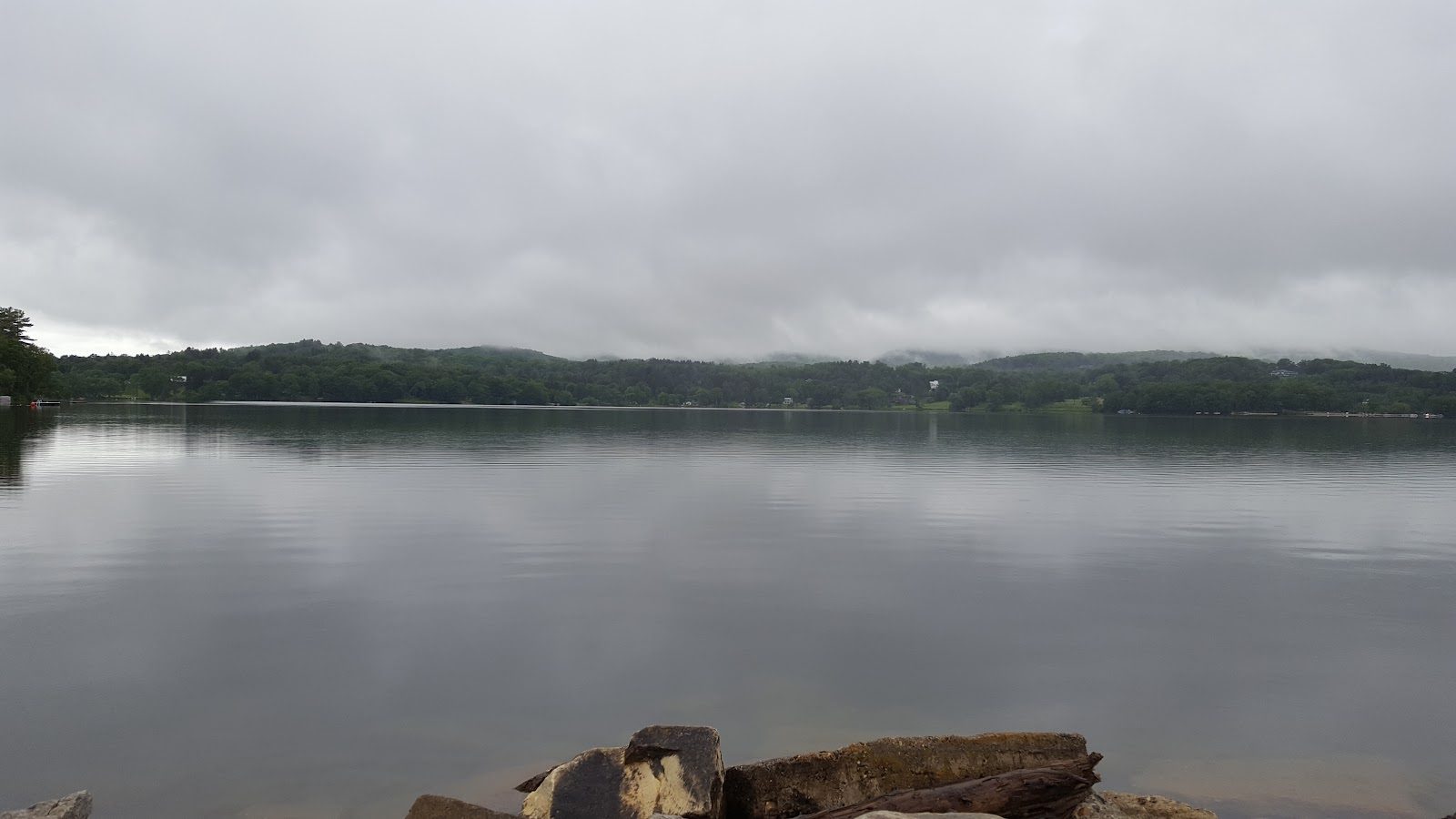
The Hotchkiss School
Lakeville · United States
On its 827-acre Berkshire campus, a 287-acre working farm supplies the dining hall and anchors the science curriculum.
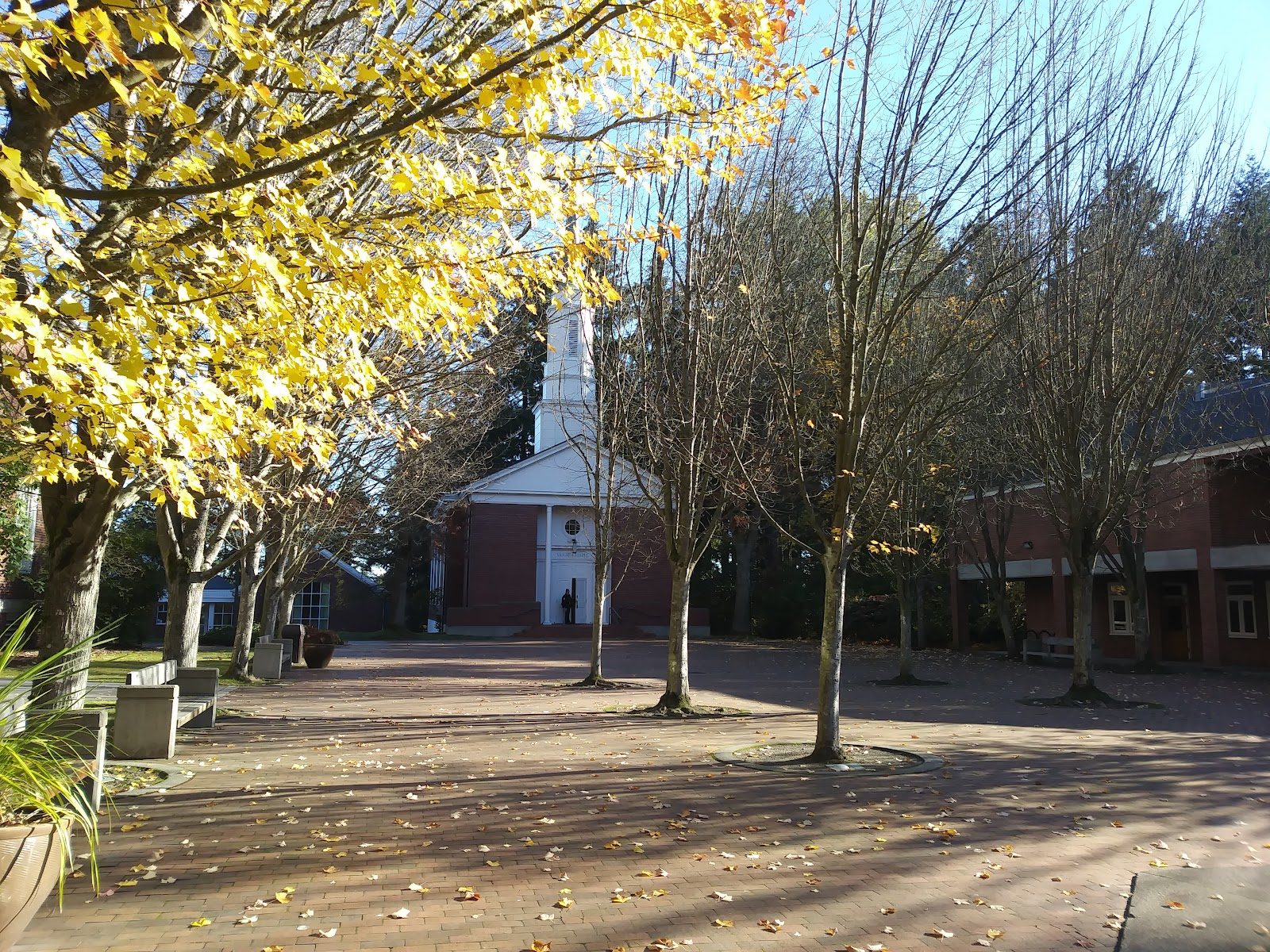
Lakeside School
Seattle · United States
On a wooded 33-acre campus above Lake Washington, a no-AP curriculum sets a rigor bar that exceeds the College Board's own.
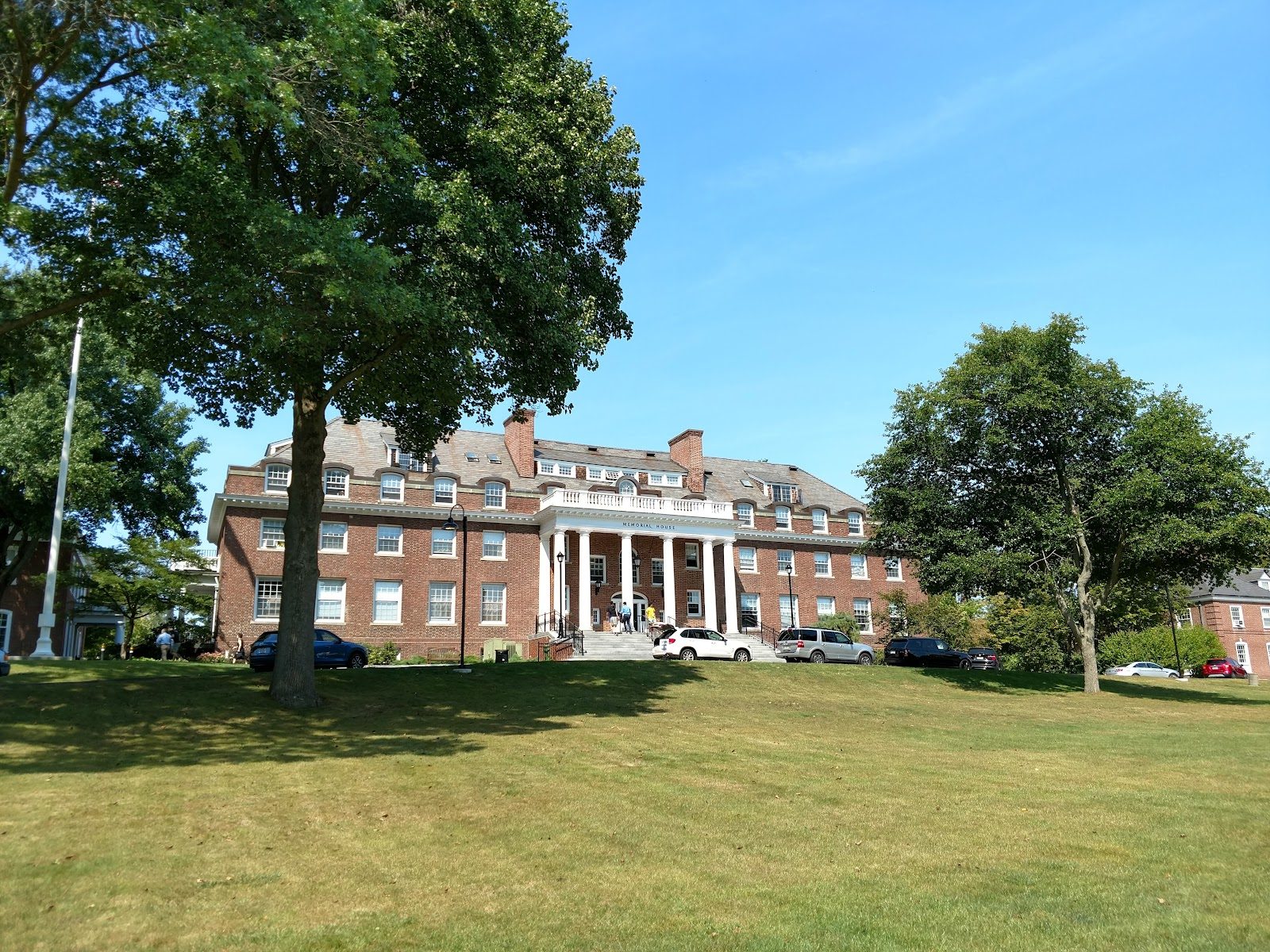
Choate Rosemary Hall
Wallingford · United States
A Wallingford campus where an I.M. Pei arts center anchors a rare, dedicated Arabic and Middle Eastern studies track.
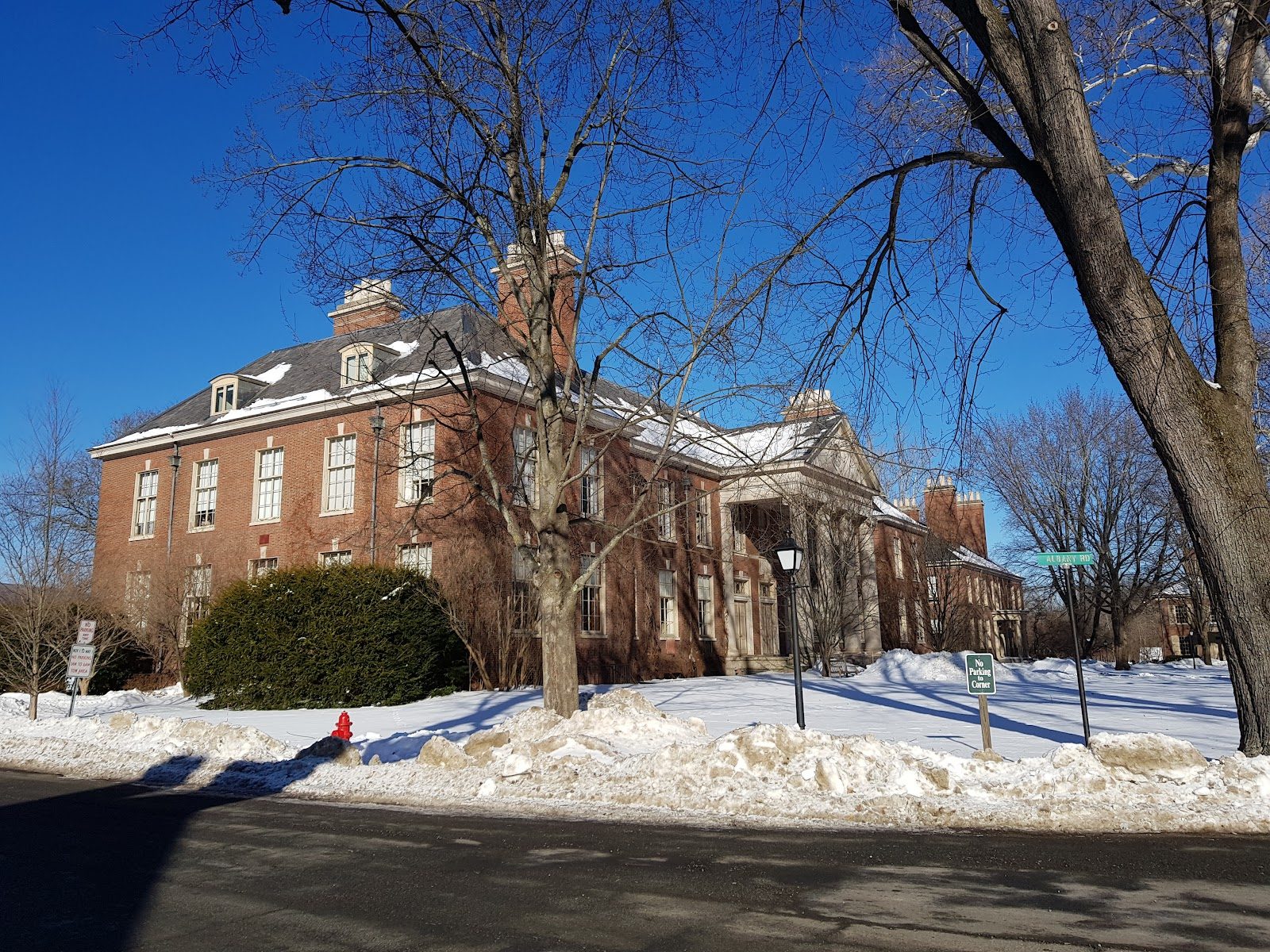
Deerfield Academy
Deerfield · United States
In a preserved 1797 village along the Deerfield River, seniors close their English studies not with an exam, but a spoken meditation.
Same country and curriculum — closest matches within ±10 points either way