
Pennsylvania
Weekly Quaker silence and a seven-term IB/AP calendar anchor rigorous college prep on a 240-acre Bucks County campus.
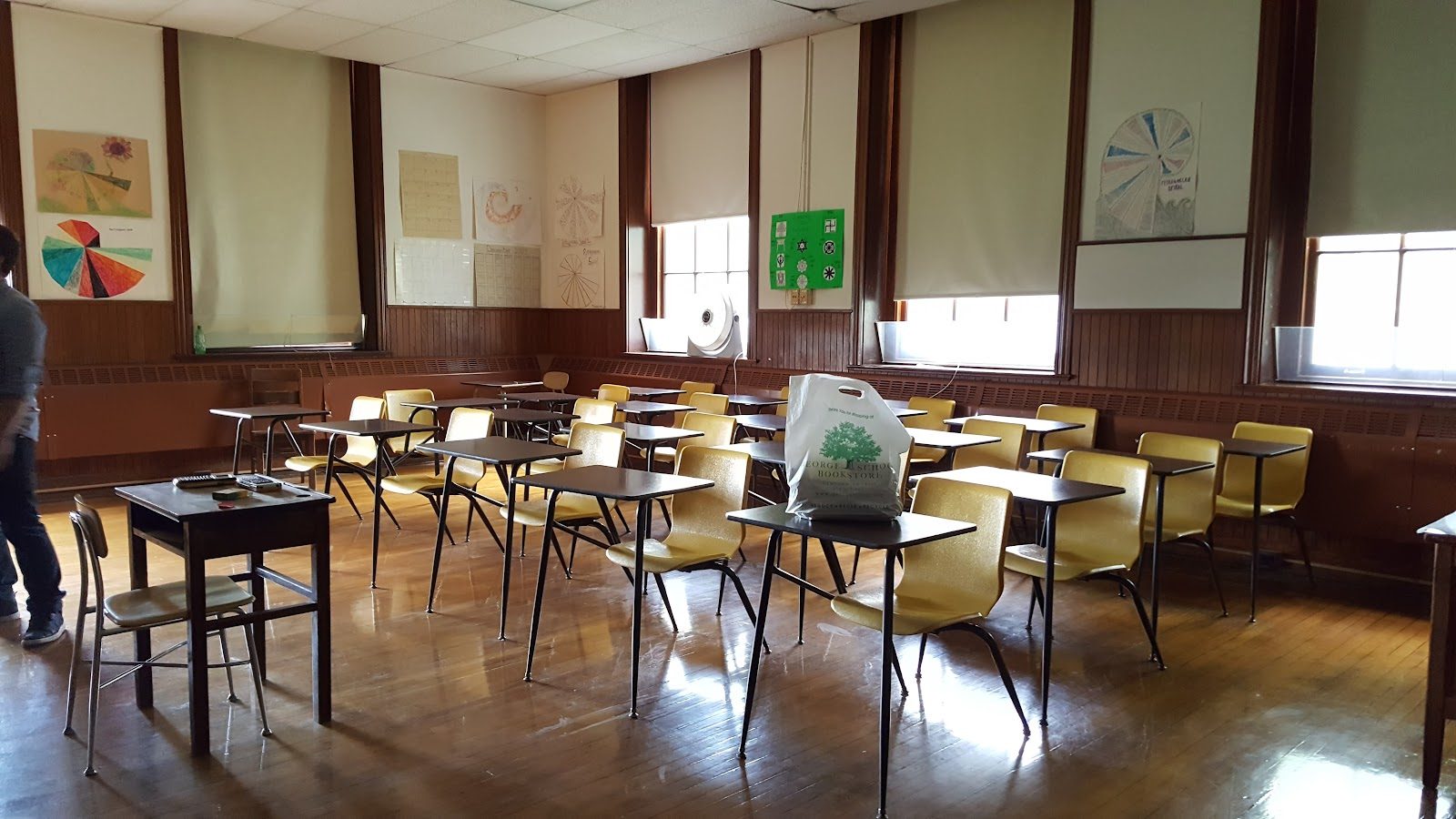
Photo © Alex Dettmer (DettMusic) via Google Maps
Type
Both
Ages
13–18
Curriculum
American
Qualifications
IB Diploma · AP · US High School Diploma
Ratio
1:8
The Verdict
Editor's commitment
Right for
Families who want a Quaker 9–12 boarding-and-day school with a 1:8 ratio, weekly silence, and a seven-term academic structure.
Wrong for
Students who need a conventional September-to-June rhythm, a secular culture, or a narrow single-track curriculum instead of American schooling with IB and AP.
Watch out for
George School was founded in 1893 and sells freedom hard; that seven-term calendar demands organisation, and the school does not publish aggregate exam outcomes here.
Ranking breakdown
George School · #887 of 1591
Composite score 63.8. 8 weighted criteria.
By criterion
Academic Outcomes
Weight 20%
#586
of 1529 scored
University Placement
Weight 16%
#516
of 1529 scored
Prestige & Heritage
Weight 12%
#377
of 1571 scored
Alumni Network
Weight 12%
#1358
of 1530 scored
Facilities
Weight 12%
#339
of 1533 scored
Transparency & Communications
Weight 8%
#456
of 1532 scored
Peer & Industry Review
Weight 10%
#480
of 1548 scored
Admissions Selectivity & Demand
Weight 8%
#607
of 1529 scored
Peer & Industry Review
How George School is regarded in the sector
71
Respected · medium confidence
Among Quaker schools, George School sits in respectable but second-tier company behind more heavily endowed peers such as Westtown and Sidwell Friends, a hierarchy acknowledged informally within Friends Council on Education circles rather than through public rankings. It maintains NAIS accreditation and participation in consortia like Global Online Academy, signalling credible peer recognition on curricular innovation. University admissions offices generally regard its diploma as solid preparation, particularly for liberal arts colleges attentive to Quaker pedagogy, though it lacks the concentrated Ivy-feeder reputation of top northeastern boarding schools. Independent education press coverage is thinner than for elite-tier boarding schools; it appears occasionally in Quaker-education and Bucks County regional features rather than in WhichSchoolAdvisor or Good Schools Guide flagship comparisons, reflecting its positioning as a values-driven mid-tier option rather than a globally benchmarked institution.
- Malcolm Forbes — Publisher/Chairman, Forbes Inc., Business
- James A. Michener — Author, Literature
- John C. Whitehead — Co-Chairman, Goldman Sachs, Finance
Editors' overview
George School earns shortlist status for families who want a serious American college-prep school with a lived Quaker culture rather than a decorative one. The distinctive features are clear: weekly Meeting for Worship, teachers addressed by first names, a residential community that pulls day and boarding pupils into the same orbit, and an academic structure built around a seven-term calendar rather than the standard two-semester march. On a 240-acre campus in Bucks County, with a 1:8 student-teacher ratio and more than 240 courses, it offers unusual room for manoeuvre without losing coherence. The school teaches in English, runs both boarding and day provision, and anchors its programme in an American curriculum with IB and AP both in the mix. That combination gives George School a calm seriousness that many US independents claim and few sustain.
What sets it apart is not raw competitiveness but the way rigour is organised. The seven-term schedule is the school’s clearest structural advantage: it gives students more flexibility to vary pace, combine demanding academic work with arts or travel, and recover from a poor term without having an entire year derailed. The Quaker foundation also has practical consequences. Silence, reflection, community decision-making, service, and a blunt expectation of respect are not side notes here; they shape daily life. Families who want constant public chest-beating on results will find less of that than at some rivals. George School sells an education and a culture, not a trophy cabinet. For many parents, that restraint reads as moral confidence; for others, it will feel insufficiently hard-edged.
The market position is strong and specific. George School sits in the segment for globally minded, values-driven families who still want academic range and recognised pathways to university. It is not a military-precision boarding school, not a glossy East Coast pressure cooker, and not a loose progressive enclave either. It occupies a narrower lane: reflective ambition, strong arts, meaningful global exposure, and a residential culture built to make adolescents known rather than processed. With students from 50 countries and 20 states, it also offers a level of international and domestic diversity that gives real weight to the school’s language about perspective and common good. That matters more here than at schools where “global” means a map on the wall.
The right student for George School is intellectually curious, self-directed, and open to community obligations. A pupil who wants to combine high-level academics with art, service, travel, or social engagement will find space here. So will a teenager who dislikes performative hierarchy and responds better to quiet conviction than institutional swagger. Students who need rigid external control, or who want sport and status to dominate the school’s identity, have stronger options elsewhere. George School suits young people who will use freedom well, tolerate introspection, and value a humane kind of rigour over noise.
Academic Performance
George School does not publish the kind of headline outcomes data that lets parents place it cleanly against the most results-forward American independents. We have not seen aggregate IB diploma averages, IB pass rates, AP score distributions, SAT or ACT ranges, or a full university destinations table in the public domain. That matters. In a market where some peers use external results as a central proof point, George School asks families to trust the architecture of the programme more than the scoreboard. That is a deliberate choice, but it leaves academic performance less transparent than at the strongest-reporting competitors.
What is clear is the breadth and seriousness of the academic offer: more than 240 courses, both IB and AP pathways, and a seven-term structure designed to vary pace and preserve depth. That combination gives able students room to build a demanding profile rather than follow a single conveyor belt. The school’s own account also ties academics to engaged citizenship, travel, arts and service, which broadens the definition of success beyond exam statistics. Relative to peers, George School sits in the camp of rigorous but not metrics-obsessed schools: credible, ambitious, and intellectually expansive, but not a place that trades on public exam data as a hard-edged badge of superiority. For some families, that restraint will read as confidence. For others, it is a reporting gap.
Facilities
The campus is one of George School’s strongest assets. It occupies over 20 academic, athletic and residential buildings on a quietly expansive rural site, and the school uses that scale in a way that fits its culture rather than overwhelming it. The most important facilities are the ones that support all-day community life: dorms integrated into the working life of the school, shared dining, the meetinghouse, arts spaces used during and beyond the school day, and enough classroom capacity to sustain a timetable with real flexibility. The school also frames the whole campus as a learning environment rather than a decorative backdrop, which carries more weight here than at prep schools where impressive grounds mask a conventional academic routine.
Against peers, George School does not trade on spectacular capital projects or a luxury-facilities arms race. Families looking for the flashiest performing arts centre, the biggest stadium, or a resort-style boarding complex will find stronger contenders elsewhere. What George School offers instead is a coherent residential plant that serves its educational model: adults living on campus, day pupils pulled into the same social orbit, and spaces that support reflection, discussion and informal contact across the day. That makes the estate feel lived-in rather than staged. For a school built around community and serious daily interaction, that is the right priority — and a more convincing one than architectural showmanship.
George School does not sit in the top rank of US schools whose names alone function as social currency across finance, politics and legacy admissions circles
Prestige
George School carries real prestige, but not the loud, status-signalling kind that some American independents cultivate. Its standing rests on recognisable substance: a long-established Quaker identity, a campus life where adults and students share more than classroom time, and an academic model that departs from the standard prep-school template in a serious way. The school’s draw also gains weight from the breadth of its community, with pupils drawn from 50 countries and 20 states. That gives the place reach beyond its local market. The combination of IB, AP, arts, global study and engaged citizenship marks it out as a school for families who want intellectual range and moral seriousness, not just a narrow university pipeline.
That prestige has limits. George School does not sit in the top rank of US schools whose names alone function as social currency across finance, politics and legacy admissions circles. Its public profile is more cultivated than glittering. The school’s refusal to trade heavily on outcomes data also restrains its status with results-driven parents, because prestige in this market depends in part on visible proof. Still, within the field of values-led American boarding and day schools, George School holds a distinctive and durable position. It has a clear institutional character, not a generic independent-school polish, and that gives it more credibility than schools that chase reputation through branding alone.
Still, within the field of values-led American boarding and day schools, George School holds a distinctive and durable position
Communications
George School communicates in the same register it educates in: warm, values-heavy, and personal rather than briskly transactional. The public-facing channels put community, reflection and belonging at the centre, with repeated emphasis on kindness, equity, shared responsibility and the Quaker habit of listening. That gives parents a clear moral picture of the school and a strong sense of daily culture. The admissions journey also looks well scaffolded, with direct prompts to enquire, schedule interviews and enter the application process. There is enough concrete substance to stop the message drifting into pure sentiment: more than 240 courses, the seven-term structure, engaged citizenship, arts, travel, and a student body drawn from 50 countries. That mix tells parents what the school values and how the programme is organised.
Where communication weakens is in precision. The school explains ethos better than it explains outcomes. It talks fluently about experience, distinctive scheduling and residential life, but far less openly about the academic results many parents use to judge effectiveness. That imbalance matters. Families who want plain reporting on attainment, university destinations and comparative performance will find the communications frustratingly selective. The tone also runs close to institutional uplift at times, with phrases about life-changing support and astonishing results that ask for trust rather than evidence. In short: strong on culture, strong on educational philosophy, less disciplined on proof. For families choosing George School for its character, that will suffice; for data-driven parents, it will not.
Uniqueness
George School’s distinctiveness lies in how completely its Quaker culture reaches into the working life of the school. Weekly Meeting for Worship is not decorative chapel time under another name; it gives students a regular discipline of silence, attention and self-scrutiny that few college-prep schools demand. Add the first-name basis with teachers, the expectation of shared responsibility, and a campus culture shaped by equity, stewardship and service, and the result is a school that trains adolescents to speak plainly, listen properly and live with difference. That has real educational value. In a community drawn from 50 countries and 20 states, those habits turn diversity from a brochure line into daily practice. The atmosphere is reflective without being soft, inclusive without vagueness, and morally serious in ways many peer schools only gesture at.
The other point of difference is structural. The seven-term calendar changes how students learn and organise themselves. It creates more room to combine demanding classes with arts, travel and engaged citizenship, and it reduces the dead weight of a conventional year-long timetable. Students get more chances to reset, redirect and build a course load that fits their strengths rather than endure a single fixed track. That flexibility, paired with more than 240 courses, gives George School a rarely coherent blend of freedom and rigour. For the right student, it produces self-command rather than mere compliance.
George School’s distinctiveness lies in how completely its Quaker culture reaches into the working life of the school
Student Profile
George School suits adolescents who can use freedom well. The strongest fit is a student who likes intellectual choice, can handle a timetable that asks for self-management, and does not need constant external pressure to stay on track. With more than 240 courses and multiple high-level pathways, the school rewards pupils who want to build an individual programme rather than follow a single prescribed route. It also suits students who will participate beyond class: artists, engaged citizens, thoughtful travellers, and teenagers who can move between study, service, discussion and community life without treating any one of those as decorative. The social profile is broad, with students drawn from many countries and states, so the right child needs comfort with difference and an appetite for hearing views that clash with their own.
The Quaker culture narrows the fit in useful ways. This is a strong school for reflective teenagers, for students who value calm over noise, and for those who respond to adults who know them well rather than enforce distance through hierarchy. Weekly silence, first-name terms with teachers and an explicit expectation of respect all favour pupils who can listen, speak plainly and live inside a community with real obligations. It is not a natural home for status-chasers, for teenagers who want school spirit built around athletics alone, or for students who need a high-control environment to function. The best George School pupil is self-possessed, community-minded and serious without being brittle.
George School earns shortlist status for families who want a serious American college-prep school with a lived Quaker culture rather than a decorative one
Co-curricular strengths
Arts & sport, on a separate axis
Overall 9.2/10
Scored 0-10 from the school's own published evidence. This axis is editorial-only — it does not feed the main WTS ranking.
Sports
9.3/10
Drama
9.3/10
Dance
9/10
Music
9.2/10
Visual Arts
9.2/10
Strengths
- +One of only a handful of US boarding schools offering the full International Baccalaureate Diploma Programme, alongside nearly 20 Advanced Placement courses.
- +IB Diploma pass rate has stayed in the mid-90s for the past decade, well above the global IB average.
- +The school meets 100% of demonstrated financial need and over half of students receive need-based aid, backed by roughly $10 million in annual grants.
- +A genuinely international boarding community, drawing students from more than 40 countries and over 20 US states on a 240+ acre campus.
- +Low student-to-teacher ratio of about 7.5:1 supports a personalised, seven-term academic schedule.
Considerations
- −Boarding tuition runs into the mid-$70,000s per year (day tuition in the high-$40,000s), placing it firmly in the upper tier of US independent school fees.
- −Admission is competitive, with a reported acceptance rate around one-third of applicants, well below the US private-school average.
- −The school's Quaker religious affiliation and practices, including community meetings for worship, shape daily culture in ways that will not suit every secular or differently-faith family.
- −Suburban Bucks County location is roughly 21 miles from Philadelphia and further from New York City, meaning families relying on direct airport access or urban weekend outings face real travel time.
Availability
Primary entry gate & tests
SSAT/ISEE + Interview
Gallery
Photo © Cindi F via Google Maps
Photo © Ben LeDonni via Google Maps
Photo © Michael Oryl via Google Maps
Photo © Andy Lehto via Google Maps
Photo © Joseph Direnzo via Google Maps
Parent reviews
Have you sent your child here?
Voice reviews carry the strongest trust badge — we transcribe them for you to tidy up before they go live. Prefer to type? A written review is fine too.
Add your voice
In 60 seconds, tell other parents: what's the best thing about George School, and what surprised you when your child joined?
We ask for a Google sign-in so every review has a real face behind it — no anonymous drive-by attacks on schools, and no faked positive reviews. Your email is never shown publicly.
Send this profile to a friend
International parents rely on word-of-mouth. Share this review with someone weighing the same decision.
Schools with places
Similar schools to George School with places available now.
The Haverford School
Haverford · United States
- 2026-27
- CLOSEDRegular cycle closed
- 2027-28
- OPENS SOONOpens Sept '26
Germantown Friends School
Philadelphia · United States
- 2026-27
- CLOSEDRegular cycle closed
- 2027-28
- OPENS SOONOpens Sept '26
The Hill School
Pottstown · United States
- 2026-27
- CLOSEDRegular cycle closed
- 2027-28
- OPENS SOONOpens Sept '26
The Baldwin School
Bryn Mawr · United States
- 2026-27
- CLOSEDRegular cycle closed
- 2027-28
- OPENS SOONOpens 1 Sept '26
Availability first, then country, area, curriculum, price, co-curricular
Consider also
Also worth looking at alongside George School.
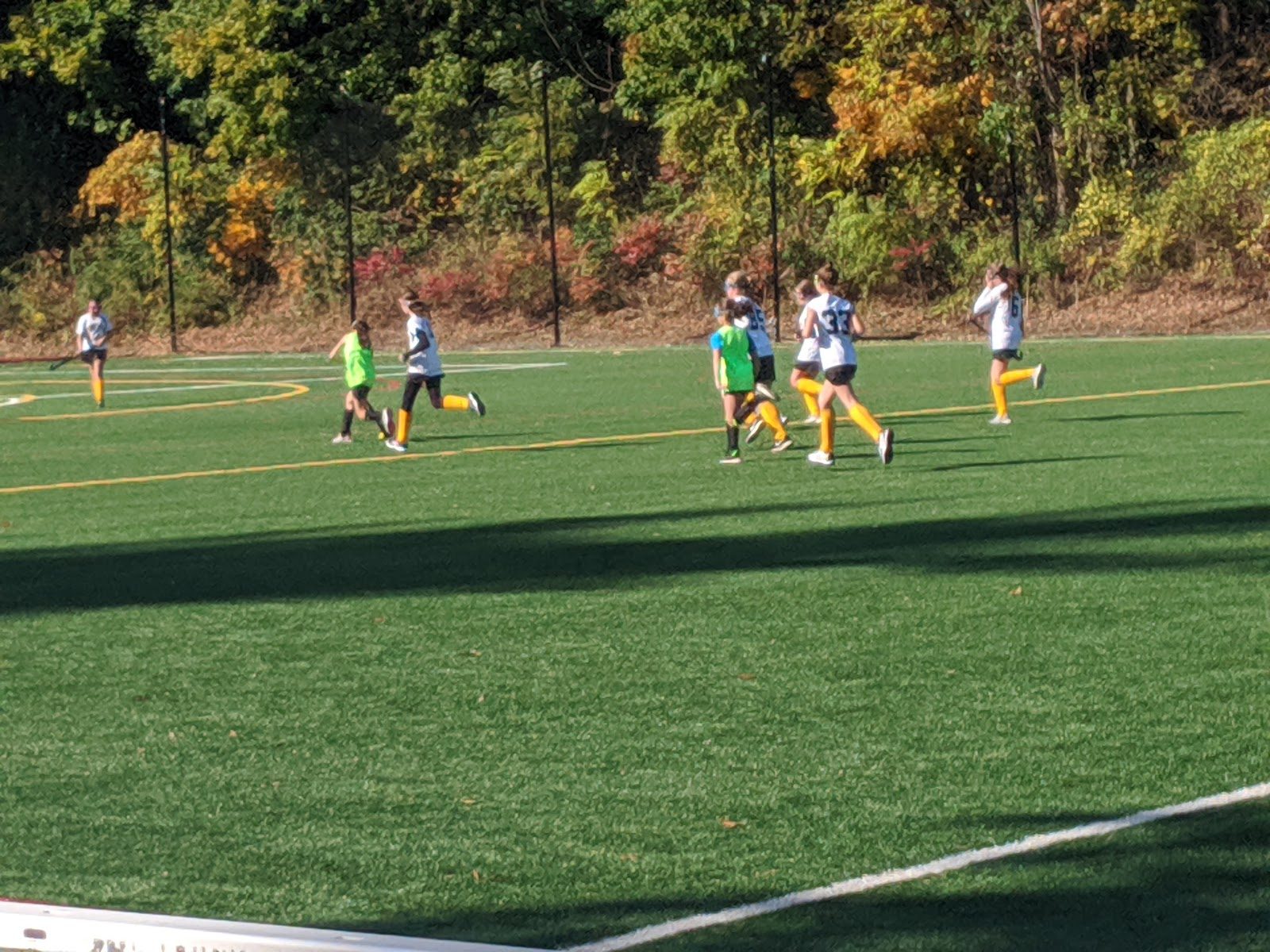
Greenwich Academy
Greenwich · United States
Connecticut's oldest all-girls school pairs single-sex grounding with coeducational upper-school classes shared alongside Brunswick's boys.
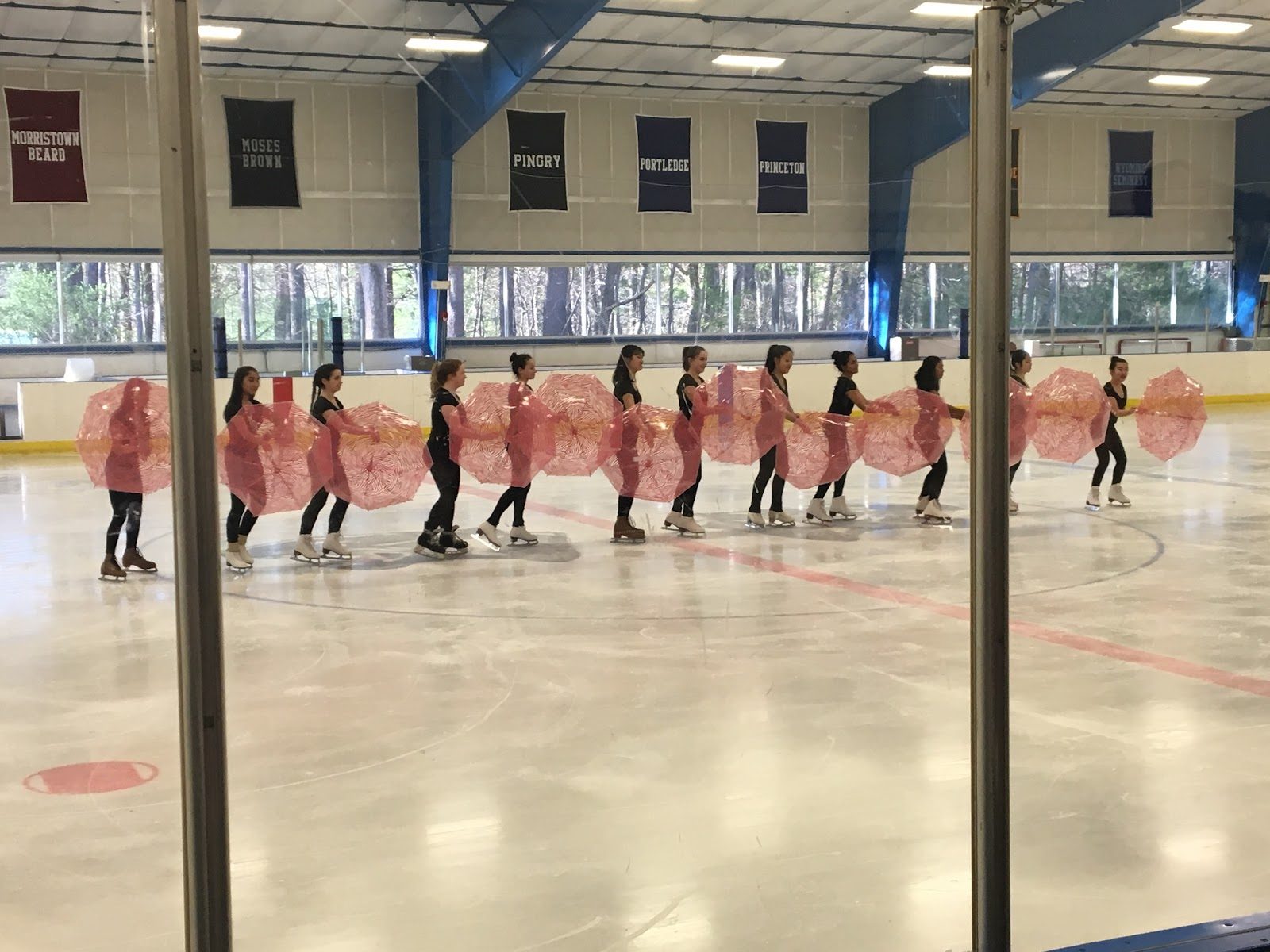
Princeton Day School
Princeton · United States
Formed by a 1965 merger of two century-old Princeton schools, pairing STEAM rigor with a rare four-year architecture program across 106 acres.
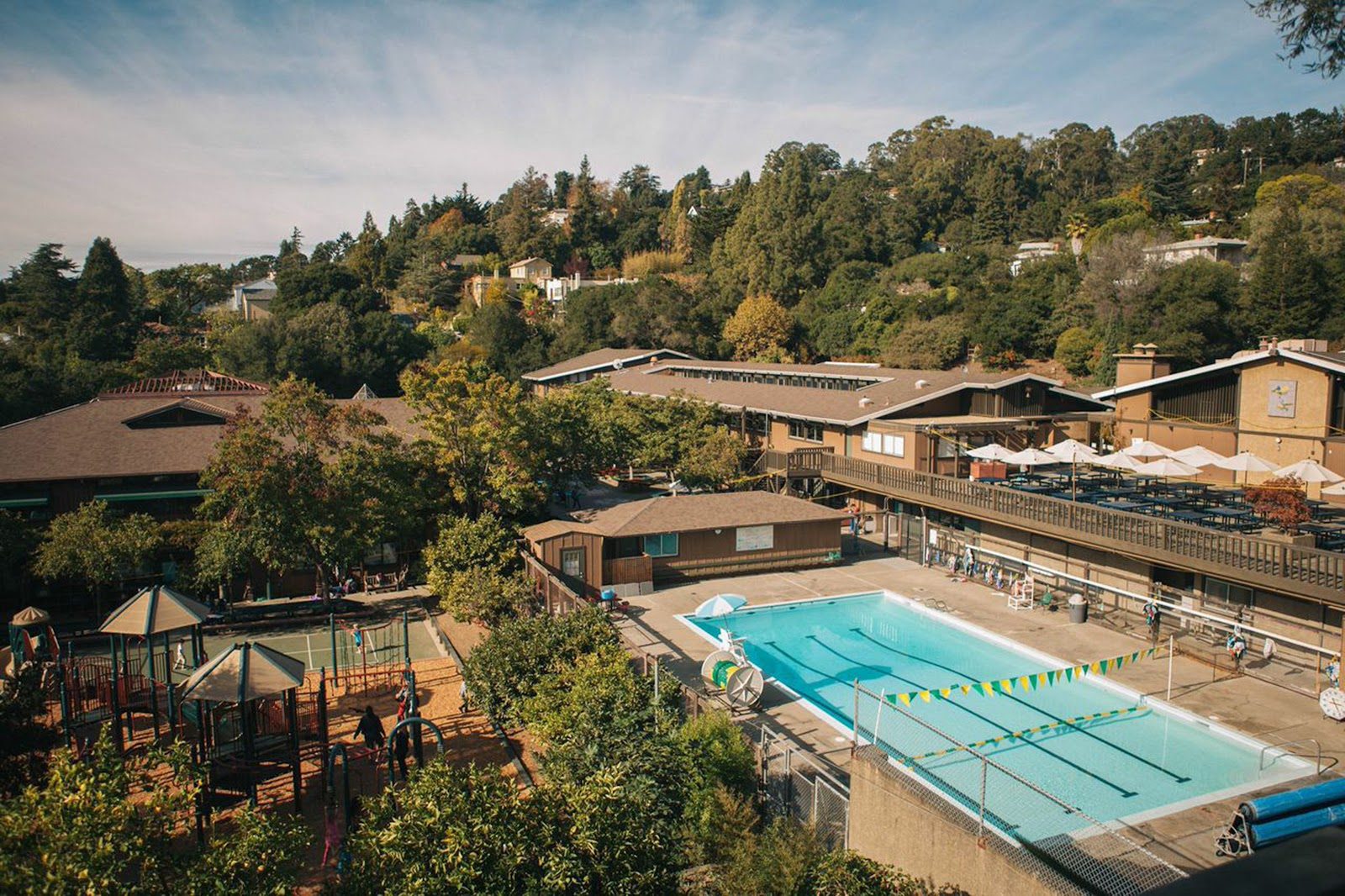
Head-Royce School
Oakland · United States
Since 1887 on a wooded Oakland hills campus, pairing rigorous scholarship with a decades-old public-school partnership that opens college doors for first-generation students
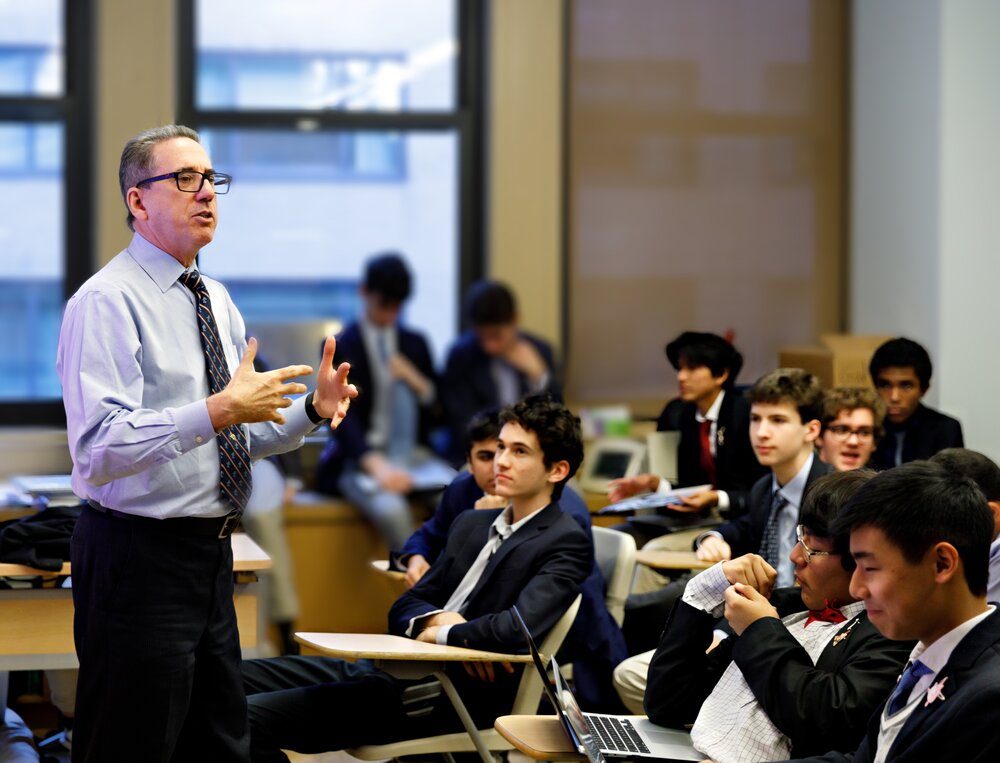
The Browning School
New York City · United States
Manhattan's only K-12 all-boys day school, expanding onto East 64th Street after nearly 140 years on the Upper East Side.
Same country and curriculum — closest matches within ±10 points either way