
Ontario
Modelled on Eton in 1829, this all-boys Toronto institution pairs IB rigour with 450 acres of wilderness learning at Norval.
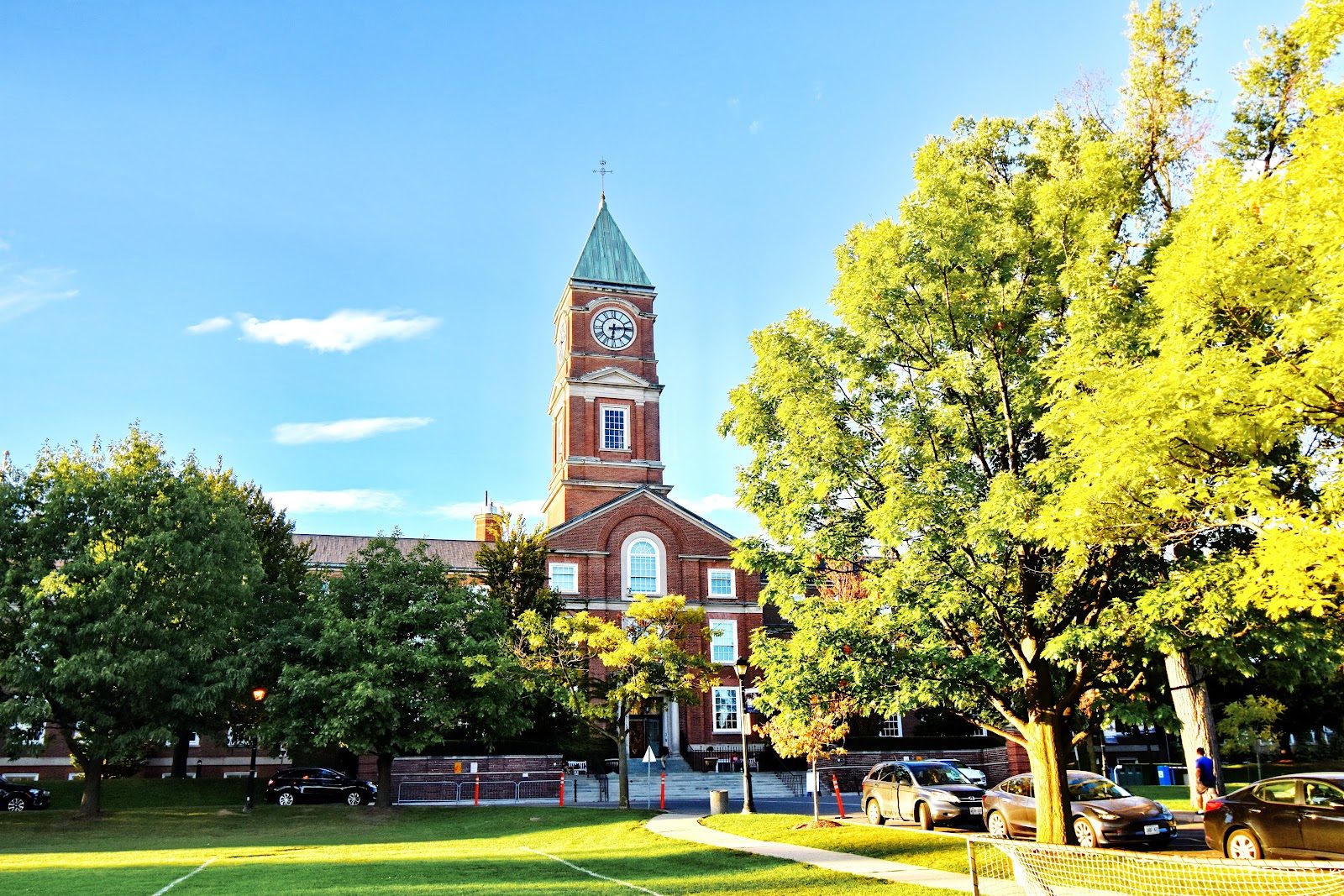
Photo © Rostyslav Tverdostup via Google Maps
Type
Both
Ages
3–18
Curriculum
Canadian · IB
Qualifications
IB Diploma
Ratio
10:1
The Verdict
Editor's commitment
Right for
Boys who will use 1829 heritage, a 10:1 ratio and the IB in a school that still boards.
Wrong for
Families wanting co-education, lower fees than CAD 46,830 day or CAD 82,274 boarding, or a broad US-destinations list beyond three named places.
Watch out for
UCC is old, expensive and male-only; recent published destinations list just California Polytechnic, Columbia and New England Conservatory, one student each.
Ranking breakdown
Upper Canada College · #40 of 1591
Composite score 79.7. 8 weighted criteria.
By criterion
Academic Outcomes
Weight 20%
#209
of 1529 scored
University Placement
Weight 16%
#219
of 1529 scored
Prestige & Heritage
Weight 12%
#53
of 1571 scored
Alumni Network
Weight 12%
#25
of 1530 scored
Facilities
Weight 12%
#28
of 1534 scored
Transparency & Communications
Weight 8%
#84
of 1532 scored
Peer & Industry Review
Weight 10%
#38
of 1548 scored
Admissions Selectivity & Demand
Weight 8%
#247
of 1529 scored
Score history
Upper Canada College · 2026
Movement across 2024–2026. Peer average overlaid.
Overall — 2024–2026
79.7/ 100
▲ +17.7 vs 2025
year on year
Peer & Industry Review
How Upper Canada College is regarded in the sector
90
Top-tier · high confidence
Upper Canada College is consistently cited as Canada's most prestigious boys' independent school, regularly featured in Globe and Mail and Maclean's private school rankings/coverage, and its alumni network (including prominent business, political, and cultural figures) is frequently referenced in Canadian media profiles of elite networks. It is a benchmark institution against which other Canadian private schools (e.g., Ridley College, St. Andrew's College) are compared in sector press, and it holds long-standing membership in CIS (Canadian Independent Schools) and international bodies like Round Square, reinforcing peer recognition.
Evidence sources
Editors' overview
Upper Canada College trades on two things that few schools can match in the same package: old institutional weight and a serious outdoor asset. This is an all-boys Toronto school founded in 1829, the oldest independent school in Ontario, with both day and boarding provision and a curriculum that combines Canadian schooling with the IB. The academic set-up is intimate by big-school standards, with a 10:1 student-teacher ratio and average classes of 18. The hook, though, is not heritage alone. UCC’s Norval property gives it 450 acres of wilderness learning, which lifts it beyond the usual urban private-school formula and gives the school a distinctive physical scale that most city schools cannot offer.
In market terms, UCC sits at the top end of Canadian independent education. The average annual day fee across the full age range is CAD 46,830, and boarding averages CAD 82,274. Parents are paying for a long-established institution with real brand power, an IB accreditation through the IBO, and an alumni network of unusual depth: Wikidata alone records 227 notable alumni, including 77 politicians and statespersons, 30 business and finance figures, and 40 scientists and scholars. That matters. For families who value network, tradition and recognisable social capital, UCC is a serious contender. It also carries the benefits and limits of a historic boys’ school: strong identity, strong rituals, and a culture that does not dilute itself to please everybody.
This school belongs on a shortlist for boys who thrive in structured environments, can handle academic pressure, and want a school with reach beyond the classroom. It will suit families who want the IB without sacrificing a Canadian setting, and who place value on boarding as part of the school’s character even if their son attends as a day pupil. It is less compelling for parents who want a progressive co-educational culture or a visibly broad university destinations list; the published recent destinations cited here are thin, with single students heading to California Polytechnic State University, Columbia University and the New England Conservatory of Music. That does not diminish the school’s stature, but it does make outcomes more opaque than they should be for a school at this price. UCC is for boys who will use its resources, tolerate its patrician edge, and benefit from a setting that is both high-pressure and unusually expansive.
Academic Performance
Upper Canada College’s academic reputation is stronger than its published exam transparency. The school offers the IB, which gives parents a clear external benchmark, but we have not seen aggregate diploma scores, subject averages, pass rates or point distributions in the public domain. That is a material omission at this fee level. Among top-tier independent schools, especially those trading on academic seriousness, families should not have to infer performance from prestige, selectivity or university anecdotes. In that respect, UCC is less open than it ought to be. The available destinations point to credible individual outcomes, but a list of isolated placements does not answer the central question: how the cohort performs as a whole, year after year.
Relative to peers, UCC sits in the bracket where expectations are uncompromising. Parents are buying access to a school with longstanding status, a deep network and the resources to deliver a strong academic programme; they should also expect cleaner disclosure of results. That does not put UCC in weak company academically. It puts it in opaque company on outcomes data. The low staffing ratio and small classes support serious teaching, and the school’s reputation has endured for good reason, but reputation is not the same thing as published performance. Until UCC releases cohort-level IB data, it remains a school with high academic expectations and an incomplete public record on external results.
Facilities
The standout facility is Norval, the school’s wilderness campus, and it changes the offer in a way glossy urban peers cannot match. A private-school playing field on the edge of a city is common enough; 450 acres dedicated to outdoor learning is not. That gives Upper Canada College room for field studies, residential programmes, team-building and the kind of environmental education that needs real land rather than a token forest patch behind the sports hall. For parents comparing elite schools in major cities, this is a genuine competitive advantage. It pushes UCC beyond the standard formula of classrooms, theatres and turf pitches and gives boys access to a rarer, more formative kind of space.
On the main campus, the facilities proposition is less exotic but still strong by Canadian independent-school standards. A school charging premium fees and carrying this level of institutional weight must deliver serious sports provision, well-kept teaching spaces and boarding that functions properly as lived accommodation rather than decorative tradition. UCC clears that bar. Against direct peers, the differentiator is not architectural flash or a resort-style campus; it is the combination of old-school permanence, urban convenience and that exceptionally powerful outdoor asset elsewhere. Families looking for cutting-edge spectacle may find other schools louder in presentation. Families who value land, continuity and facilities with real educational use will find UCC more convincing.
Upper Canada College trades on two things that few schools can match in the same package: old institutional weight and a serious outdoor asset
Prestige
Upper Canada College carries serious prestige in Canada and beyond because its status rests on more than polished branding. It has institutional longevity, name recognition that travels, and the social confidence of a school that has educated generations of public figures, financiers, scholars and writers. The alumni footprint is the clearest hard proof: 227 notable former pupils catalogued in Wikidata is a substantial verified base, and the spread matters as much as the count. This is not a school with influence confined to one profession or one decade. It has produced people who have held office, shaped business, written books and built public reputations. That breadth gives UCC a rare density of connection and a network that parents paying premium fees will value, whether they admit it plainly or not.
The prestige is also sharpened by scarcity and tone. An all-boys school with a long-established place in the country’s independent-school hierarchy attracts families who want tradition, structure and social capital in one package. That can be an asset or a drawback. For some boys, the environment will feel patrician, high-expectation and energising; for others, narrow and old-fashioned. Prestige here is real, not invented, but it is not neutral. It carries cultural signals as well as educational ones. We rate UCC highly on prestige because few Canadian schools combine that depth of alumni reach, that level of public recognition and that hard-edged institutional identity in the same way.
Upper Canada College’s academic reputation is stronger than its published exam transparency
Communications
Upper Canada College communicates with the assurance of an old institution that expects to be taken seriously. That has strengths and weaknesses. Parents get a clear sense of hierarchy, standards and institutional purpose; the school is not scrambling for attention or drowning its audience in chirpy marketing. The tone is formal, self-possessed and sometimes patrician. For families who value order, that reads as confidence. For families who want warmth, immediacy and constant hand-holding, it can read as distance. At this price point — CAD 46,830 for day pupils and CAD 82,274 for boarders on average each year — parents are entitled to communication that is not only polished, but fully informative.
That is where the school falls short. The biggest gap is academic disclosure. A school asking families to buy into a high-pressure, prestige-heavy model needs to publish aggregate external outcomes cleanly and routinely. UCC does not. That weakens trust because it leaves parents to rely on reputation where data should do the work. Elsewhere, the school’s communications carry the advantages of an established brand: consistency, institutional memory and a disciplined public voice. But effectiveness is not the same as elegance. UCC communicates its identity well; it communicates measurable results less candidly than it should. Parents who prize culture and continuity will tolerate that. Parents who want hard evidence alongside polished messaging will find the school more closed than ideal.
Uniqueness
What marks Upper Canada College out is not one feature in isolation, but an unusual collision of old establishment culture with serious educational range. Plenty of private schools have history. Plenty have strong teaching, sport or outdoor programmes. Very few combine a deeply embedded boys’ school identity, a city base, full boarding and a wilderness estate of 450 acres that functions as part of school life rather than a decorative extra. That mix gives boys access to two very different kinds of formation: the high-culture polish of an old institutional environment and the rougher, more demanding education that comes from time spent outdoors, away from the choreography of the main campus. It is a school that can cultivate confidence in formal settings and resilience in less controlled ones.
That distinctiveness brings clear benefits, and clear limitations. For the right pupil, UCC offers a rare breadth of formation: academic pressure, ritual, leadership opportunities, strong peer networks and outdoor experiences with real scale. Boys who thrive on structure and respond well to expectation can leave with more than exam preparation; they gain ease in institutions, practice in community life and a durable sense of belonging to something larger than themselves. The trade-off is that the model is not remotely universal. Its all-boys character, social tone and inherited self-belief will suit some families perfectly and repel others. UCC’s uniqueness lies in that hard-edged coherence. It knows exactly what it is, and boys either grow inside that culture or push against it.
Upper Canada College carries serious prestige in Canada and beyond because its status rests on more than polished branding
Student Profile
The boys who fit best here are those who respond to structure, absorb expectation and do not need school to flatter them. This is not a soft environment. It suits pupils with a strong internal motor: boys who can manage scrutiny, take correction, and keep their footing in a culture with a pronounced sense of hierarchy and tradition. Social confidence helps. So does comfort with competition, whether academic, athletic or social. The all-boys setting will work for families who actively want that dynamic, not those merely willing to tolerate it. With a 10:1 staffing ratio and classes averaging 18, boys get attention; that also means they get noticed. A pupil who wants anonymity, or who resists institutional discipline on principle, will find the place confining, high-pressure and not for the faint-hearted.
The best match is a boy who can use the school’s range rather than hide inside its prestige. That includes academically serious pupils, sporty boys, and those who gain from routine, ritual and a strong communal identity. Boarding adds another layer: resilience, independence and a willingness to live inside the school’s culture matter. The school will also appeal to families who value long-term networks and accept a certain patrician edge as part of the bargain. Boys who need a visibly progressive ethos, a looser social climate or a more emotionally demonstrative style of pastoral care will fit less well. UCC suits pupils who are self-possessed, ambitious and able to grow inside a demanding, tradition-bound institution.
Upper Canada College communicates with the assurance of an old institution that expects to be taken seriously
Co-curricular strengths
Arts & sport, on a separate axis
Overall 8.42/10
Scored 0-10 from the school's own published evidence. This axis is editorial-only — it does not feed the main WTS ranking.
Sports
8.8/10
Massive Canadian athletic force featuring its own indoor arena and elite rowing boathouse; dominates regional ice hockey and rugby leagues.
Drama
8.5/10
Immersive conservatory environment staging up to seven major student-run shows a year inside the custom David Chu Theatre.
Dance
7.5/10
Integrated seamlessly into their theater choreography tracks but yields in space to their giant rowing and hockey setups.
Music
8.8/10
Highly developed, complex symphonic wind bands, elite touring choirs, and traditional classical string quartets.
Visual Arts
8.5/10
Rigorous IB Design framework utilizing modern architectural 3D printing labs alongside fine arts studios.
Editor-verified · 8/6/2026
Outcomes & destinations
Where students go next
Class of 2024
Top destinations
30 placements
- California Polytechnic State University· 1
- Columbia University· 1
- New England Conservatory of Music· 1
- University of Pennsylvania· 1
- Duke University· 1
- Harvard University· 1
- Princeton University· 1
- Yale University· 1
- University of Toronto· 3
- University of Waterloo· 2
- Western University· 1
- University of British Columbia· 1
- McGill University· 1
- McMaster University· 1
- Queen's University· 2
- University of Cambridge· 1
- The University of Edinburgh· 1
- University College London· 1
- London School of Economics and Political Science· 1
- University of Oxford· 1
- Sciences Po· 1
- Yale-NUS College· 1
- Brighton and Sussex Medical School· 1
- Royal College of Surgeons in Ireland· 1
- University of St Andrews· 1
- University College Dublin· 1
Reported by the school. Confirm with admissions.
Notable alumni · Wikidata
227notable alumni
146 historic (born pre-1930) · 16 modern (born post-1970)wikidata:2026-07-28 How we source this

WTS 300 badge
2025/26 editionUpper Canada College is one of the World's Top 300 Schools for 2025/26. Claim your listing to add it to your site →
Strengths
- +Founded in 1829, making it the oldest independent school in Ontario and one of the oldest in Canada, with a nearly two-century operating history.
- +One of a small number of schools worldwide, and the only all-boys school in North America, authorised to teach the full IB Continuum (PYP, MYP and DP) alongside the Ontario diploma.
- +Offers a substantial financial assistance programme, with the school stating it provides several million dollars annually and describing its day-student admissions process as needs-blind.
- +Campus footprint includes a 35-acre midtown Toronto site plus a separate large rural property (Norval) used for outdoor and boarding-related programming.
- +Long-established international alumni network, with the school citing more than 12,500 graduates across 80-plus countries in fields including politics, finance and the arts.
Considerations
- −All-boys only, so it is not an option for families seeking co-education, regardless of academic fit.
- −Day tuition alone runs into the tens of thousands of Canadian dollars annually, with boarding fees markedly higher, plus separate application and one-time registration charges.
- −Boarding cohort is comparatively small (under 100 students), so international boarding places are limited relative to larger dedicated boarding schools.
- −Admission is competitive and process-heavy, requiring multiple years of report cards, testing/interview components and adherence to specific entry-year intake points rather than open enrolment.
Availability
Primary entry gate & tests
SSAT + Interview (Boys)
Gallery
Photo © robert fishman via Google Maps
Photo © robert fishman via Google Maps
Photo © robert fishman via Google Maps
Photo © Glenn Dickler via Google Maps
Photo © Van Essa Skye via Google Maps
Photo © H S via Google Maps
Photo © Anthony Whittingham via Google Maps
Photo © Upper Canada College via Google Maps
Photo © Upper Canada College via Google Maps
Parent reviews
Have you sent your child here?
Voice reviews carry the strongest trust badge — we transcribe them for you to tidy up before they go live. Prefer to type? A written review is fine too.
Add your voice
In 60 seconds, tell other parents: what's the best thing about Upper Canada College, and what surprised you when your child joined?
We ask for a Google sign-in so every review has a real face behind it — no anonymous drive-by attacks on schools, and no faked positive reviews. Your email is never shown publicly.
Send this profile to a friend
International parents rely on word-of-mouth. Share this review with someone weighing the same decision.
Schools with places
Similar schools to Upper Canada College with places available now.
University of Toronto Schools
Toronto · Canada
- 2026-27
- CLOSEDRegular cycle
- 2027-28
- OPENS SOONOpens Sept '26 (Closes 1 Dec)
Appleby College
Oakville · Canada
- 2026-27
- CLOSEDRegular cycle closed
- 2027-28
- OPENS SOONOpens Sept '26
Ridley College
St Catharines · Canada
- 2026-27
- WAITPOOLLimited Lower/Middle day
- 2027-28
- PLACES OPENActive now
The York School
Toronto · Canada
- 2026-27
- CLOSEDRegular cycle closed
- 2027-28
- PLACES OPENActive now
Availability first, then country, area, curriculum, price, co-curricular
Consider also
Also worth looking at alongside Upper Canada College.

University of Toronto Schools
Toronto · Canada
Admission decided purely by competitive exam at Canada's only university-affiliated prep school, embedded in U of T's downtown Bloor Street campus since 1910.
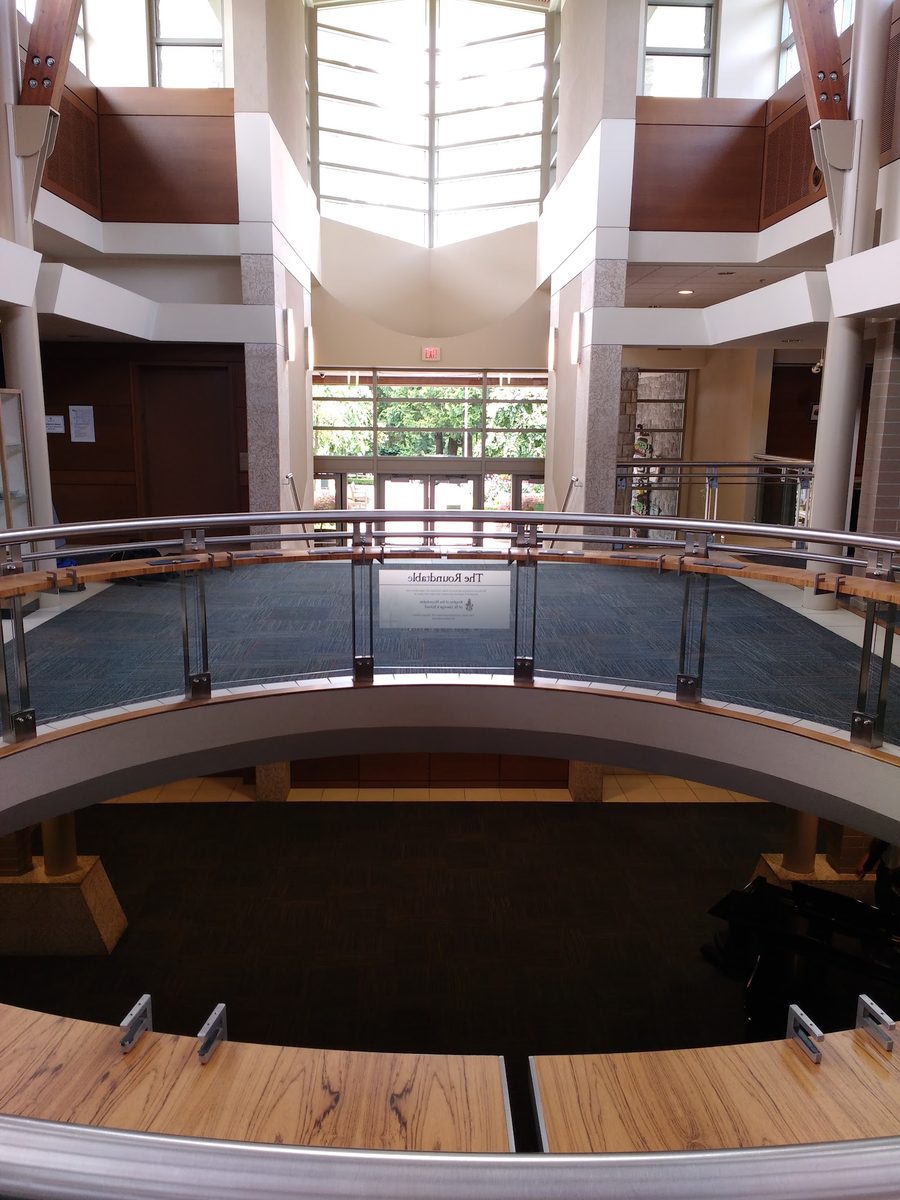
St. George's School
Vancouver · Canada
Vancouver's only boys' boarding house pairs BC's diploma with IB and AP courses, then swaps desks for weeks in the backcountry.
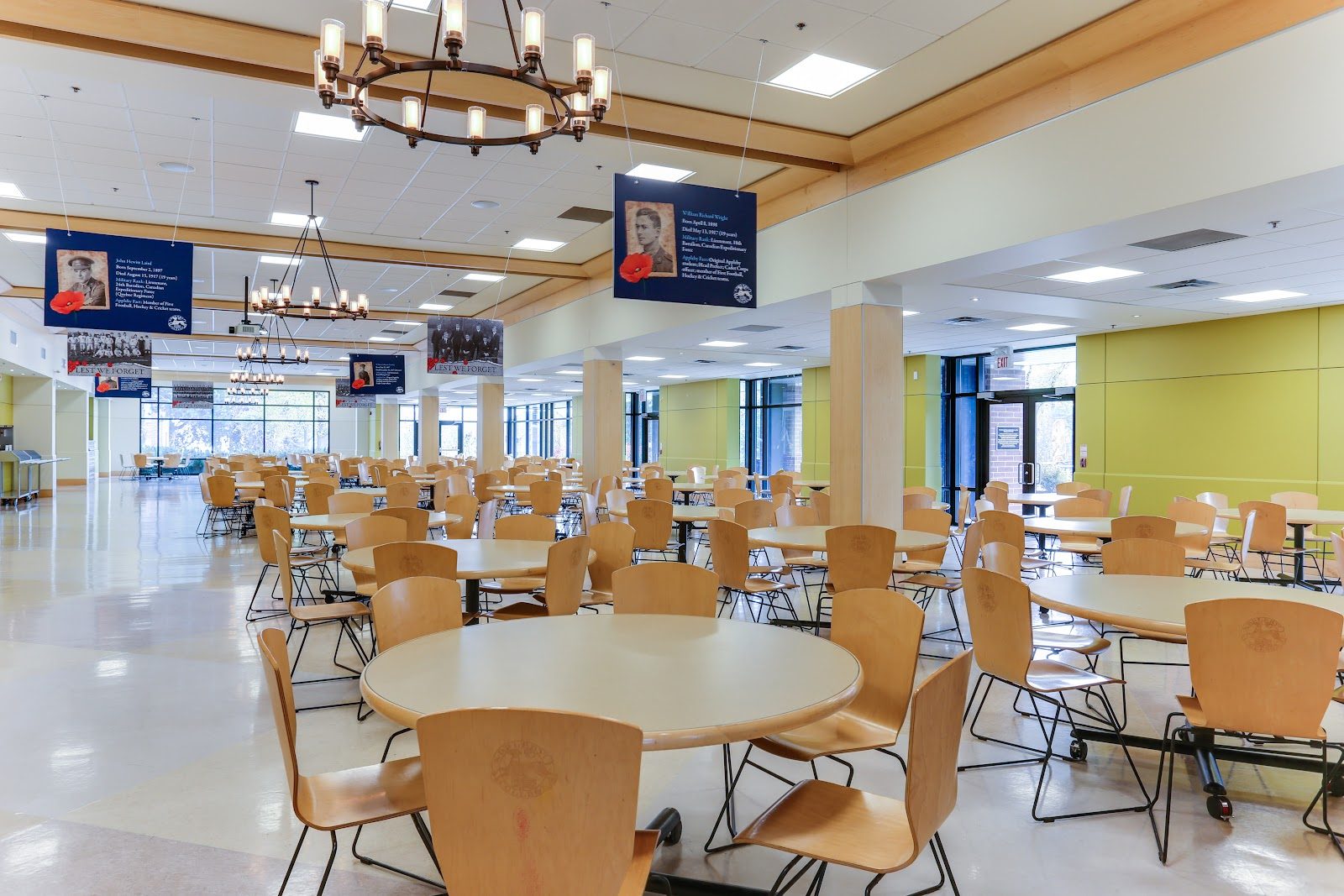
Appleby College
Oakville · Canada
A lakeside Oakville campus where every senior boards by tradition, and leadership training unfolds on a private island in Temagami.
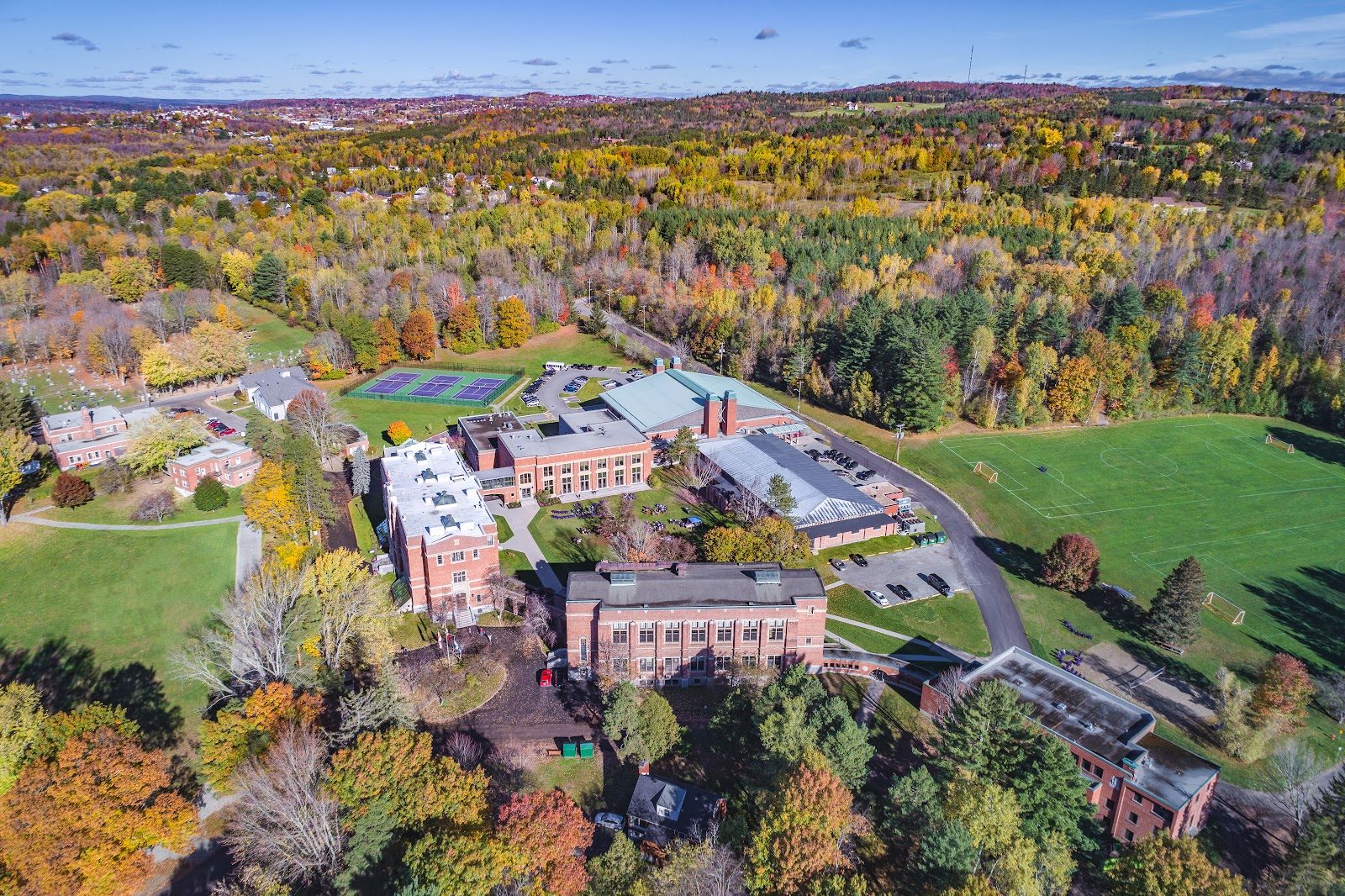
Bishop's College School
Sherbrooke · Canada
A 19th-century Eastern Townships campus once dubbed the 'Eton of Canada,' now blending IB rigor with eight-house boarding life.
Same country and curriculum — closest matches within ±10 points either way