
Ontario
Admission decided purely by competitive exam at Canada's only university-affiliated prep school, embedded in U of T's downtown Bloor Street campus since 1910.

Photo © Glenn Dickler via Google Maps
Type
Day
Ages
3–18
Curriculum
Canadian · American
Qualifications
AP
Ratio
—
The Verdict
Editor's commitment
Right for
Children who can win a competitive exam and want a university-linked Toronto education at 371 Bloor Street West, with Canadian and American pathways.
Wrong for
Families who need an easier admissions route, religious framing, or boarding; UTS is non-religious, day-only, and charges an average C$40,400.
Watch out for
This is a selective school with public destination data thinner than its reputation: recent named leavers went to Carleton, Dalhousie and McGill.
Ranking breakdown
University of Toronto Schools · #56 of 1591
Composite score 79.2. 8 weighted criteria.
By criterion
Academic Outcomes
Weight 20%
#20
of 1529 scored
University Placement
Weight 16%
#18
of 1529 scored
Prestige & Heritage
Weight 12%
#296
of 1571 scored
Alumni Network
Weight 12%
#195
of 1530 scored
Facilities
Weight 12%
#339
of 1533 scored
Transparency & Communications
Weight 8%
#153
of 1532 scored
Peer & Industry Review
Weight 10%
#221
of 1548 scored
Admissions Selectivity & Demand
Weight 8%
#45
of 1529 scored
Score history
University of Toronto Schools · 2026
Movement across 2024–2026. Peer average overlaid.
Overall — 2024–2026
79.2/ 100
▲ +19.6 vs 2025
year on year
Peer & Industry Review
How University of Toronto Schools is regarded in the sector
90
Top-tier · high confidence
UTS is consistently cited as one of Canada's top academic schools, known for its highly selective admissions and affiliation with the University of Toronto; it is frequently referenced in Canadian education press and university admissions discussions for its strong record of graduates entering elite universities. Its alumni network includes prominent Canadian figures in academia, law, and business, and it is often benchmarked by other independent Canadian schools such as Upper Canada College and Crescent School. Coverage in Canadian media (e.g., Toronto Life, Maclean's education rankings coverage) and university admissions counselor commentary reinforce its standing as an academically elite institution nationally.
Evidence sources
Award

Elite Computing & AI 60
World's Top School · The Global Ranking
University of Toronto Schools is featured on our Global Top 60 ranking at #41. This seal is available for the school's marketing team to use on their website, prospectus and social channels.
Award
Elite Mathematics 60
World's Top School · The Global Ranking
University of Toronto Schools is featured on our Global Top 60 ranking at #55. This seal is available for the school's marketing team to use on their website, prospectus and social channels.
Editors' overview
What sets University of Toronto Schools apart is not branding, campus gloss or a broad church admissions model, but selection. Entry is decided by competitive exam, and that single fact shapes the culture more than any mission statement. This is a day school on the University of Toronto’s Bloor Street campus, at 371 Bloor Street West, with roots going back to 1910 and a direct university affiliation that no other Canadian prep school matches. It teaches in English, runs as a non-religious school, and declares a Canadian and American academic offering, with the AP programme named explicitly. Parents looking for a fiercely academic environment, with little patience for hand-holding or status theatre, will understand the appeal at once.
The market position is clear. At an average annual day fee of CAD 40,400 across the full age range, UTS sits in the premium day-school bracket, but the real currency here is not comfort or exclusivity; it is access to an intellectually exacting peer group. The university setting matters because it reinforces the school’s identity as a place for students who want challenge, independence and adult-level expectations. The school talks openly about students taking risks, asking brave questions and challenging each other with respect. That rings true for a school that has produced 92 notable alumni catalogued in Wikidata, including 32 scientists and scholars and 22 writers and journalists. This is a school with a long record of sending able students into public life, research and the professions, not just into polished university applications.
There are limits, and parents should be clear-eyed about them. UTS is not the right choice for a child who needs a gentle pace, heavy pastoral cushioning or a broad admissions intake. A school built on competitive entry and academic compression can feel high-pressure and narrow by design. The public university destinations listed here — Carleton, Dalhousie and McGill, one student each — tell you very little on their own, and the school does not publish richer destination detail in the information we have seen. Even so, the core proposition is distinctive: a selective, urban, university-embedded school with a serious academic bent and an alumni base that carries weight. The students who will want UTS are bright, self-propelled, discussion-ready and comfortable being surrounded by other high achievers. For that child, it belongs on a shortlist immediately.
An Elite Computing & AI 60 school
University of Toronto Schools (UTS) in Toronto, Canada, sits at rank forty-one on the Elite Computing & AI 60 on the strength of a genuine competitive-programming pipeline: UTS student Allen Pei was named to Canada's official four-member IOI team in both 2021 and 2022 and took a Canadian Computing Olympiad gold medal, per University of Waterloo CEMC records. That is Olympiad-level informatics, not generic STEM enrichment, placing UTS among the few Canadian day schools to produce IOI-team-calibre coders in the last five seasons.
The specialism runs through the Math and Computer Science department rather than a dedicated AI major: courses are accelerated from grade 7, feeding a Math Club and Olympiad co-curricular structure that channels students toward the Canadian Computing Competition and Canadian Computing Olympiad, the actual selection ladder to the IOI, and UTS names also appeared on the 2023 CCC national honour roll. The clearest bridge into university-level computer science is Steve Engels, UTS class of 1994 and now a University of Toronto computer science professor, whose department runs an internship partnership with UTS; an internal AI Advisory Committee, led by director of AI Adnan Zuberi, guides classroom AI use rather than research output.
Notable alumni include Allen Pei, the IOI-team competitor above; Steve Engels '94, now a University of Toronto computer science professor whose department maintains that internship pipeline with UTS; and Angela Chen '13, a Stanford University entrepreneurship instructor and edtech founder who has returned to campus to discuss AI in education. The bench remains narrow, concentrated in named Olympiad competitors and academic-track alumni rather than a broad founder roster.
International openness has real limits: UTS is day-only, and any student, domestic or overseas, must live in the Greater Toronto Area full-time with a parent or guardian for the whole programme - no boarding, no visa-sponsored dormitory. Instruction is English with no dedicated ESL stream, and entry runs through a competitive Entrance Test, with roughly ninety-six grade 7 seats against up to four places at grades 10 and 11. Tuition sits at CAD 35,800-plus for 2024-25, with bursaries covering 5-100% of fees. Overseas parents should relocate and secure guardianship at least a year ahead of the November-December application window; UTS suits families already committed to Toronto, not a remote boarding placement.
An Elite Mathematics 60 school
University of Toronto Schools (UTS) in Toronto, Canada sits at rank fifty-five on the Elite Mathematics 60 because its competitive-mathematics pipeline has produced Canadian IMO team members almost every year for three decades, most recently Perry Dai, who won gold for Canada at the 2026 IMO in Shanghai as part of a Math Team Canada sweep of six medals that placed the country thirteenth of 117 nations. UTS students Howard Halim and Eric Shen, both prior UTS IMO medalists, returned this year as trainers and team leadership, showing a self-renewing coaching chain rather than a one-off result.
The specialism is built on an enriched, accelerated Ontario curriculum rather than a bolt-on AP track: UTS students take ten courses a year instead of the standard eight, and mathematics is taught through inquiry and problem-solving from Grade 7 rather than from textbooks. The school's Math Society, restructured under math and computer science teacher Adam Gregson into small competition pods, drives depth well beyond a handful of star pupils, feeding students into the Canadian Open Mathematics Challenge, the Canadian Mathematical Olympiad and the CJMO, where UTS students Perry Dai, Ryan Li and Kaylyn Zhang all medaled in 2026. UTS does not publish a formal real-analysis or abstract-algebra offering, but its Eureka! Research Institute gives senior students structured access to university-level inquiry.
The school's most consequential graduate is Jacob Tsimerman, who won two IMO golds as a UTS student, including a perfect score, and was awarded the 2026 Fields Medal as a University of Toronto mathematician - one of the very few Fields medalists to have come through a secondary-school olympiad program. Richard Hoshino (1996) and Jonathan Schneider (2009) extend that lineage of UTS IMO medalists across generations.
International openness is limited by design. UTS is day-only, with no boarding, so overseas families must arrange local guardianship and a Canadian study permit for a minor. Entry is by competitive written entrance exam plus interview; Grade 7 offers roughly 96 places, while Grades 9-11 offer only a handful of spaces each. Tuition runs from CAD $35,800 for 2024-25, with needs-based bursaries available. Given the scarcity of upper-school seats, international families should target Grade 7 entry a full year in advance rather than compete for the tiny Grade 9-11 intake.
Academic Performance
UTS trades on academic seriousness, but public reporting on external examination outcomes is thin. The school names the AP programme and frames its teaching around international benchmarks, reflection and deeper learning; what it does not publish is the data parents need to test those claims against peers. We have not seen aggregate AP participation, mean AP scores, the share of grades at 4 or 5, SAT or ACT profiles, or any other school-wide external results. That is a material gap for a school with a hard-selective admissions process. In a market where top academic schools often disclose at least headline examination performance, UTS asks families to trust the proposition without the scoreboard.
That does not place it in weak company academically; it places it in an opaque one. The competitive entry process, the university affiliation and the long alumni record in scholarship and public life all point to a high-octane student body. The question is not whether able students thrive here. Many do. The question is how cleanly the school converts that intake into externally benchmarked results against Toronto’s strongest independent peers. On that point, the published picture is incomplete. Until UTS releases fuller examination data, its academic reputation rests more on selectivity, culture and outcomes over time than on headline exam metrics.
Facilities
The defining facility at UTS is not a manicured estate but its address inside the University of Toronto environment. That gives students a city-embedded school experience rather than the self-contained campus model common in premium independents. For some families, that is a genuine advantage: the school sits in a serious academic district, with the university backdrop reinforcing its intellectual rather than ornamental identity. The website also names a Lang Innovation Lab, music, athletics, counselling, wellness, mentorship and the Eureka! Research Institute at UTS. That mix points to a school investing in research and applied learning, not just classrooms and playing fields. Parents who want a polished country-house fantasy will not find it here.
Against peers, the facilities case is mixed. UTS has stronger academic adjacency than almost any Toronto rival, and the explicit research institute gives it a sharper scholarly edge than many independent schools that talk about enquiry more than they build for it. The trade-off is obvious. Schools with large suburban estates, dedicated performance centres and expansive on-site sports provision will offer more in the way of physical breadth and visual impact. UTS competes on access, intensity and purpose-built academic culture, not on acreage. At an average annual fee of CAD 40,400, that matters: families are paying for selective intellectual infrastructure and university-linked context, not for a grand standalone campus.
What sets University of Toronto Schools apart is not branding, campus gloss or a broad church admissions model, but selection
Prestige
UTS carries rare institutional prestige in Canada because its reputation rests on two things that schools cannot manufacture quickly: hard selection and durable intellectual output. Admission by examination and interview gives the badge real scarcity, and the university link is not decorative; it places the school inside a serious academic ecosystem rather than beside one. In Canadian terms, that makes UTS a category of one. It is not merely a well-known independent school. It is a school whose name signals that a student has already cleared a meaningful academic bar, then spent their school years in a culture that rewards argument, pace and independence.
The alumni record strengthens that standing. Wikidata alone captures 92 notable alumni, including 32 scientists and scholars, alongside deep representation in public life, journalism and business. Wikipedia also notes attendance by two Nobel laureates. That does not prove present-day teaching quality on its own, and prestige is not performance. Still, it does show that the school has produced people of consequence across multiple fields over a long period. The result is earned prestige, not the softer social prestige of polished campuses, legacy networks and donor gloss. The caveat is clear: UTS’s public exam reporting is too opaque for a school of this reputation. Its name carries weight anyway, but the weight comes more from selectivity, university affiliation and alumni achievement than from transparent contemporary metrics.
Even so, the core proposition is distinctive: a selective, urban, university-embedded school with a serious academic bent and an alumni base that carries weight
Communications
UTS communicates with parents through a clear, functional public-facing structure: admissions guidance, bursary support, tours, a parent association, annual reporting, governance pages, stories, publications and a portal link all sit in plain view. That matters because this is a school with a high-stakes entry process and a culture that asks families to navigate rules, deadlines and expectations without confusion. On that front, the basics are handled well. The site architecture is orderly, the key routes for applicants are easy to find, and the school does not bury governance behind lifestyle imagery. The inclusion of board and annual report pages adds a layer of institutional seriousness that many independent schools omit or obscure.
The weakness is depth, not access. UTS communicates its ethos fluently — challenge, risk-taking, inclusion, research, student support — but gives parents less hard operational evidence than a school of this calibre should. We have not seen rich destination reporting, aggregate external exam data, or the kind of granular academic accountability that turns strong messaging into full public confidence. That shortfall affects parent communication as much as academic transparency. Families can find the door, understand the tone and locate the right office. They get a disciplined account of what the school values. They do not get enough numbers to test performance claims independently. For a school charging an average of CAD 40,400, that is too controlled.
Uniqueness
UTS is unique because the university link is structural, not theatrical. This is not a school borrowing prestige from a nearby institution or renting lecture halls for effect. It sits inside a live academic environment and builds its identity around that fact, from the research-facing Eureka! institute to an admissions model that screens for students ready for fast, discussion-heavy work. The result is a school that feels *closer to an honours seminar than a conventional prep school*. Students get daily exposure to a more adult intellectual culture: sharper peers, higher argumentative expectations, and less tolerance for spoon-feeding. For the right child, that is electrifying. For the wrong one, it is abrasive.
The other point of difference is durability. Plenty of schools claim to produce leaders; UTS has a verified public alumni footprint of 92 notable former pupils, with unusual depth in scholarship, public life and the written word. Wikipedia’s note that 2 Nobel laureates attended adds to the picture. That record does not excuse the school’s thin publication of current results, but it does mark out a place with a long habit of turning serious minds into consequential adults. What students gain, at best, is not polish or protection but formation: confidence with complex ideas, comfort with competition, and the capacity to operate in a room full of other high-calibre people without shrinking.
UTS is unique because the university link is structural, not theatrical
Student Profile
The students who fit here are the ones who enjoy being tested before they arrive and keep enjoying it once they are in. This is a school for children with real academic appetite: quick readers, sharp discussants, strong writers, mathematically confident thinkers, and students who do not need constant reassurance before speaking up. The admissions structure filters for that from the outset, and the daily culture will reward the same traits again and again. A child who likes argument, handles pace, and treats intellectual challenge as fun rather than threat will find serious peers here. The research strand, the innovation lab and the school’s record of producing at least 2 Nobel-attending alumni and 92 notable alumni all reinforce the same point: this environment suits the self-propelled, the mentally agile and the openly ambitious.
The weaker fit is just as clear. Children who need a broad-ability intake, heavy emotional cushioning or a low-pressure social atmosphere will struggle. So will students who want school spirit built around spectacle, extensive pastoral wrapping or easy status comfort. UTS asks for independence, resilience and a willingness to be one able student among many. It will suit the teenager who can take critique, recover fast, and keep pushing. It is not for the faint-hearted, and that is not a flaw; it is the school’s central truth.
Entry is decided by competitive exam, and that single fact shapes the culture more than any mission statement
Co-curricular strengths
Arts & sport, on a separate axis
Overall 7.5/10
Scored 0-10 from the school's own published evidence. This axis is editorial-only — it does not feed the main WTS ranking.
Sports
8.2/10
Competes fiercely across Canadian urban leagues, balancing city space constraints with high-intensity training programs.
Drama
8/10
Ambitious theater curriculum staging complex contemporary plays and student-written works inside modern theater spaces.
Dance
5/10
Active and creative choreography modules explicitly designed to anchor their collaborative musical theater arrays.
Music
8.5/10
Top-tier jazz combos, chamber orchestras, and choral ensembles that frequently headline Toronto's major cultural halls.
Visual Arts
7.8/10
Studio spaces running advanced design pipelines, ceramics, and digital media to clear elite university portfolios.
Editor-verified · 8/6/2026
Outcomes & destinations
Where students go next
Class of 2026
Top destinations
41 placements
- Carleton University· 1
- Dalhousie University· 1
- McGill University· 1
- McMaster University· 1
- OCAD University· 1
- Queen’s University· 1
- University of Alberta· 1
- University of British Columbia, Vancouver· 1
- University of British Columbia, Okanagan· 1
- University of Toronto· 1
- University of Waterloo· 1
- Western University· 1
- Wilfrid Laurier University· 1
- John Cabot University· 1
- Paris Institute of Political Science (Sciences Po)· 1
- Università Commerciale Luigi Bocconi· 1
- Durham University· 1
- Imperial College London· 1
- Royal Veterinary College· 1
- University of Oxford· 1
- Amherst College· 1
- Boston University· 1
- Brown University· 1
- Carnegie Mellon· 1
- Chapman University· 1
- Columbia University· 1
- Cornell University· 1
- Duke University· 1
- Harvard University· 1
- Johns Hopkins University· 1
- New York University· 1
- Rhode Island School of Design· 1
- Stanford University· 1
- University of California Berkeley· 1
- University of California Los Angeles· 1
- University of Michigan, Ann Arbor· 1
- University of Notre Dame· 1
- University of Pennsylvania· 1
- University of Southern California· 1
- Vanderbilt University· 1
- Yale University· 1
Reported by the school. Confirm with admissions.
Notable alumni · Wikidata
92notable alumni
Includes
- Dana Porter(1901)
31 historic (born pre-1930) · 6 modern (born post-1970)wikidata:2026-07-28 How we source this
WTS 300 badge
2025/26 editionUniversity of Toronto Schools is one of the World's Top 300 Schools for 2025/26. Claim your listing to add it to your site →
Strengths
- +Alumni include 22 Rhodes Scholars and two Nobel Prize winners: chemist John Polanyi and economist Michael Spence.
- +Founded in 1910 as a practice school, also known as a laboratory school, for the University of Toronto's Faculty of Education, and the school retains a formal affiliation agreement with the university today.
- +UTS has one of the largest bursary support programs among independent schools in Canada, with over $3.6 million awarded last year to 25% of students, covering 5% to 100% of tuition.
- +University of Toronto Schools offers Advanced Placement courses within an enriched, accelerated curriculum designed for high-achieving students.
- +The school recently moved into an iconic new home on the University of Toronto's St. George Campus under a formal Affiliation Agreement with the University.
Considerations
- −UTS is a day school only with no boarding option, so relocating or expat families must independently arrange housing, guardianship or homestay for a child attending.
- −Admission requires a UTS entrance examination and interview, and more than 500 students typically apply for up to 110 places in the first intake year, making entry highly selective.
- −The school offers Advanced Placement courses but does not have an International Baccalaureate program, which may not suit families expecting an IB pathway.
- −Enrollment is modest at roughly 675 students across grades 7 to 12 on a single urban campus, meaning fewer facilities and extracurricular options than larger international campuses.
Availability
Primary entry gate & tests
SSAT + UTS Internal Exam
Gallery
Photo © Torben Mauch via Google Maps
Photo © Mariam Sheikh via Google Maps
Photo © Patrick Asselin via Google Maps
Photo © Mahmud Iqbal via Google Maps
Photo © Mahmud Iqbal via Google Maps
Photo © Mahmud Iqbal via Google Maps
Photo © Anisa Kaviani via Google Maps
Photo © robert fishman via Google Maps
Photo © felisa pinilla via Google Maps
Parent reviews
Have you sent your child here?
Voice reviews carry the strongest trust badge — we transcribe them for you to tidy up before they go live. Prefer to type? A written review is fine too.
Add your voice
In 60 seconds, tell other parents: what's the best thing about University of Toronto Schools, and what surprised you when your child joined?
We ask for a Google sign-in so every review has a real face behind it — no anonymous drive-by attacks on schools, and no faked positive reviews. Your email is never shown publicly.
Send this profile to a friend
International parents rely on word-of-mouth. Share this review with someone weighing the same decision.
Schools with places
Similar schools to University of Toronto Schools with places available now.
Upper Canada College
Toronto · Canada
- 2026-27
- PLACES OPENBoarding open; Day closed
- 2027-28
- OPENS SOONOpens Sept '26
Appleby College
Oakville · Canada
- 2026-27
- CLOSEDRegular cycle closed
- 2027-28
- OPENS SOONOpens Sept '26
Ridley College
St Catharines · Canada
- 2026-27
- WAITPOOLLimited Lower/Middle day
- 2027-28
- PLACES OPENActive now
The York School
Toronto · Canada
- 2026-27
- CLOSEDRegular cycle closed
- 2027-28
- PLACES OPENActive now
Availability first, then country, area, curriculum, price, co-curricular
Consider also
Also worth looking at alongside University of Toronto Schools.
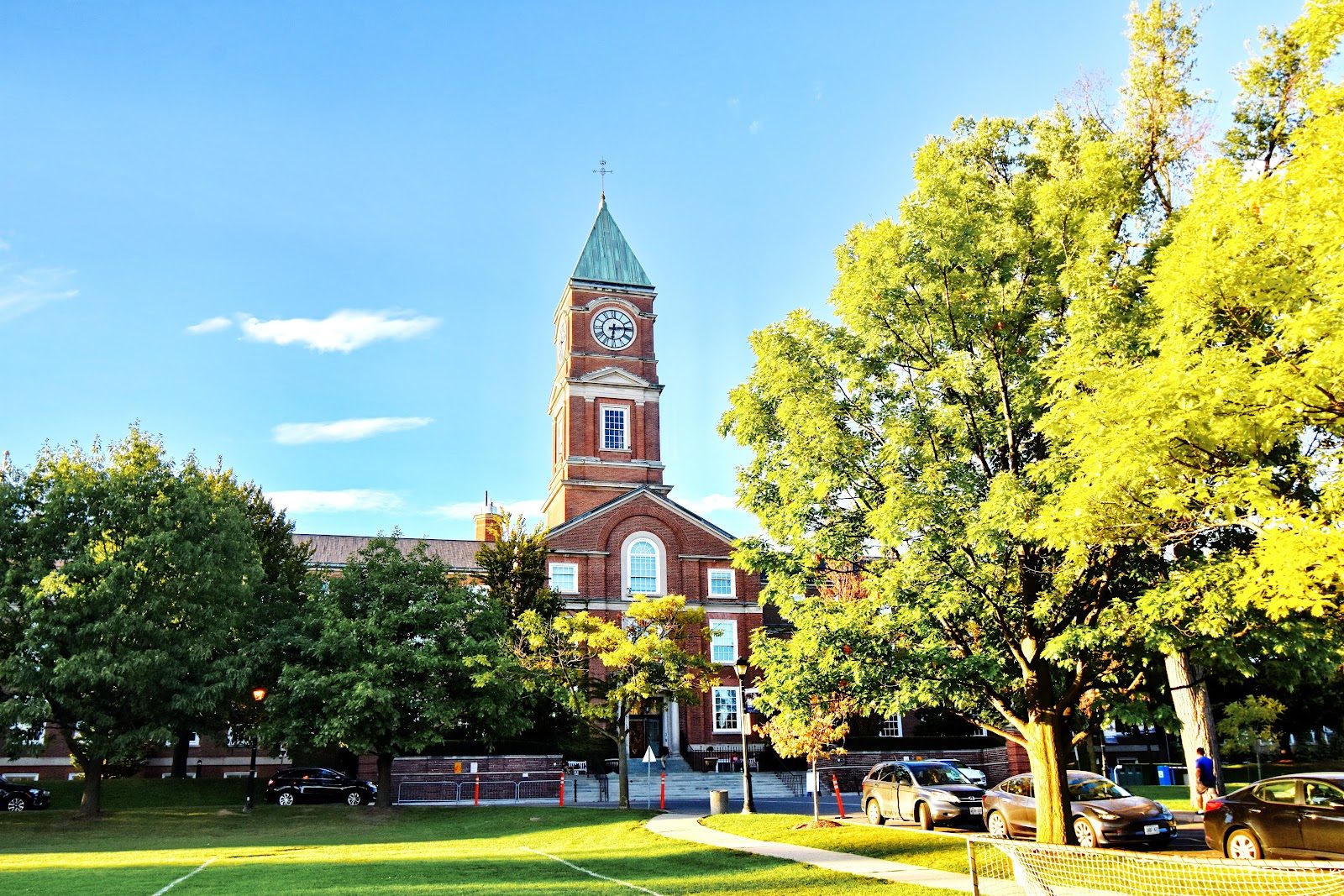
Upper Canada College
Toronto · Canada
Modelled on Eton in 1829, this all-boys Toronto institution pairs IB rigour with 450 acres of wilderness learning at Norval.
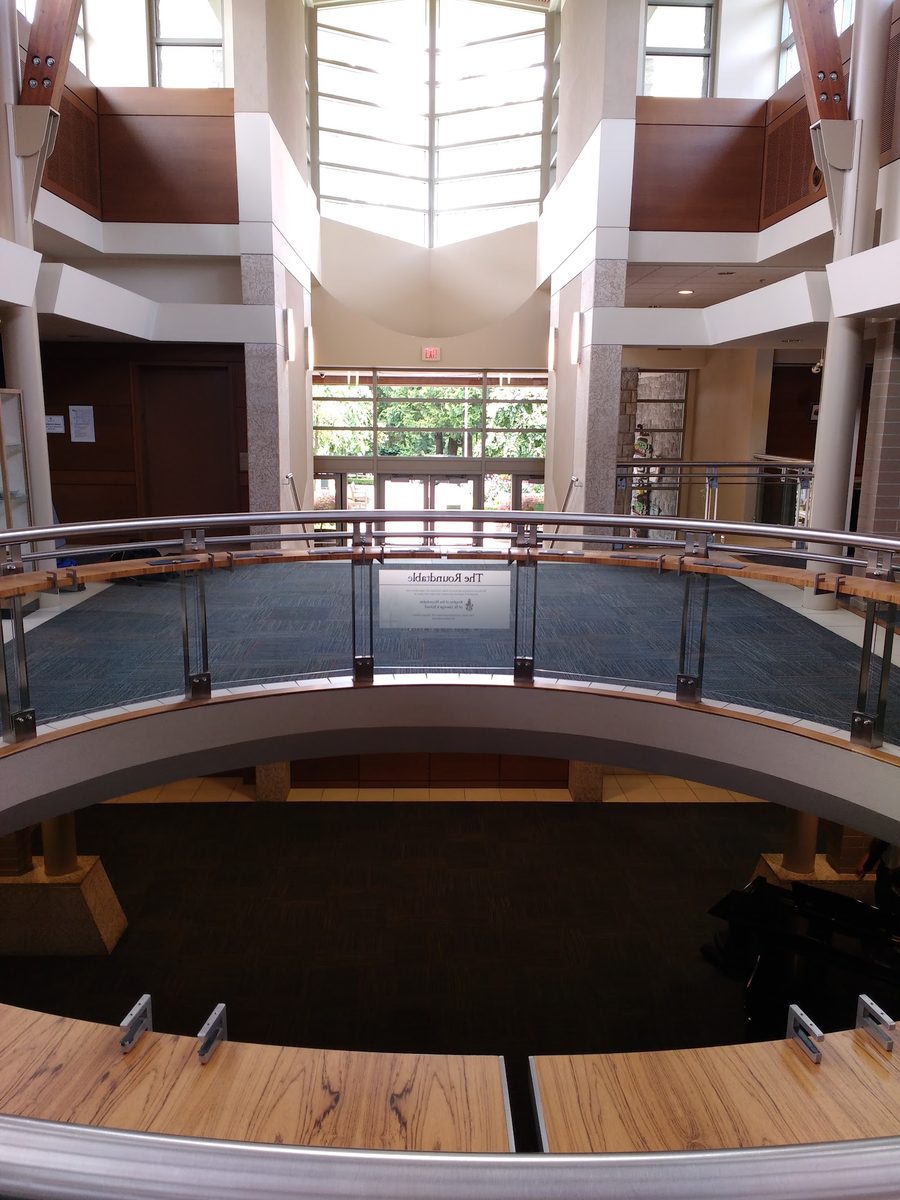
St. George's School
Vancouver · Canada
Vancouver's only boys' boarding house pairs BC's diploma with IB and AP courses, then swaps desks for weeks in the backcountry.
Appleby College
Oakville · Canada
A lakeside Oakville campus where every senior boards by tradition, and leadership training unfolds on a private island in Temagami.

Ridley College
St Catharines · Canada
St Catharines day-and-boarding school blending Ontario's OSSD with the full IB continuum
Same country and curriculum — closest matches within ±10 points either way