
Hong Kong
Nord Anglia International School Hong Kong
low confidence· 6/6 cats · 0 avg sourcesIn Kowloon, MIT-designed STEAM challenges and Juilliard masterclasses reshape a British IGCSE and A-Level day curriculum
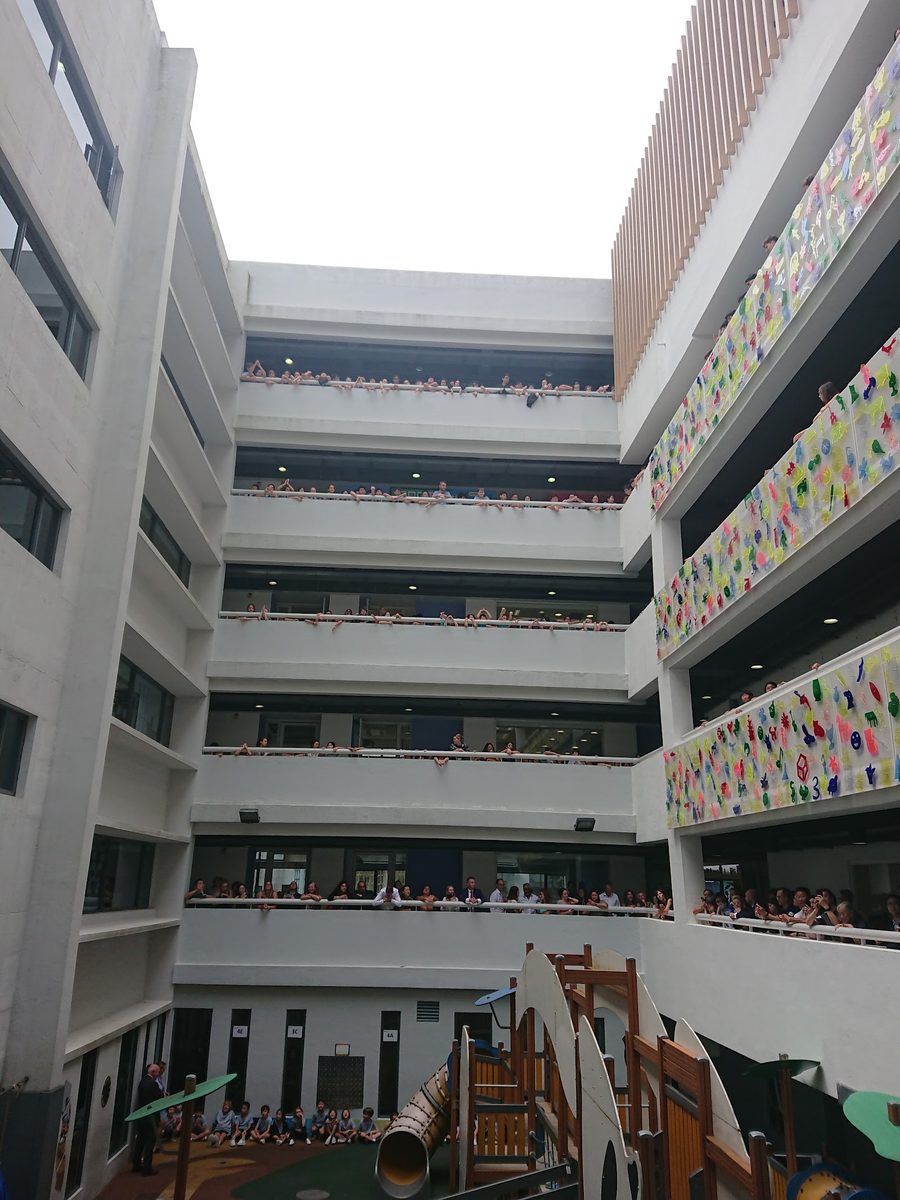
Photo © Patrick Luk via Google Maps
Type
Day
Ages
5–18
Curriculum
British (IGCSE, A-Level)
Ratio
11:1
The Verdict
Editor's commitment
Right for
Families in Lam Tin who want an English-medium day school from age 5 to 18, with a 10:1 ratio and 20-pupil classes.
Wrong for
Parents who want boarding, religious ethos or a single-track British route; this 2014 school also runs the IB alongside IGCSE.
Watch out for
Curriculum messaging lacks precision: context lists IGCSE and A-Level, while public sources also cite IB and the English National Curriculum.
Ranking breakdown
Nord Anglia International School Hong Kong · #939 of 1591
Composite score 64.0. 8 weighted criteria.
By criterion
Academic Outcomes
Weight 20%
#667
of 1529 scored
University Placement
Weight 16%
#649
of 1529 scored
Prestige & Heritage
Weight 12%
#1167
of 1571 scored
Alumni Network
Weight 12%
#1102
of 1530 scored
Facilities
Weight 12%
#504
of 1533 scored
Transparency & Communications
Weight 8%
#388
of 1532 scored
Peer & Industry Review
Weight 10%
#1000
of 1548 scored
Admissions Selectivity & Demand
Weight 8%
#1497
of 1529 scored
Peer & Industry Review
How Nord Anglia International School Hong Kong is regarded in the sector
63
Respected · medium confidence
Nord Anglia International School Hong Kong has established itself as a credible, if still maturing, presence in the city's crowded international school scene, buoyed chiefly by the pulling power of the Nord Anglia brand rather than a long independent track record. WhichSchoolAdvisor's review notes that the first IB cohort at Nord Anglia International School Hong Kong achieved an impressive average IB score of 36.3 and a 100% Diploma pass rate, alongside strong I/GCSE outcomes, evidence the school points to reassure parents wary of its relative youth. Tatler Asia includes it among its Best International Schools In Hong Kong collection, while the Good Schools Guide's independent write-up finds parents regard the school as offering the 'British way of doing things' and value its genuinely mixed nationality intake. Coverage is respectable and consistent rather than exceptional, reflecting a solid regional player still building the decades-long alumni network and peer benchmarking enjoyed by Hong Kong's most established international schools.
Editors' overview
Nord Anglia International School Hong Kong occupies a clear niche in Kowloon: a premium British day school with the scale, polish and global programming of a large international group. It opened in 2014, teaches in English, and runs a British pathway through IGCSE and A Level for ages 5 to 18. The school’s sharpest point of difference sits outside the timetable as much as inside it. Nord Anglia’s group partnerships — most visibly MIT-style STEAM challenges and Juilliard-linked performing arts work — give the school an outward-facing academic culture and a high-spec enrichment model that many standalone schools cannot match. Parents looking for a conventional local-independent-school feel will not find it here; this is an international brand school, and it trades on that network unapologetically.
Why shortlist it? Because it offers a well-engineered route for families who want British academics without a narrow, exam-factory atmosphere. A student-teacher ratio of 10:1 and an average class size of 20 point to strong classroom access, and the age range allows genuine continuity from primary into sixth form. The attraction is strongest for children who thrive when academic study is paired with performance, design, collaboration and polished presentation. This is not a school for families who want institutional austerity or old-school rough edges; it is for those who value structured ambition, confident self-expression and a campus culture built to keep students busy, visible and stretched.
The trade-off is plain. Nord Anglia schools are expensive, tightly managed and branded with unusual discipline. Some parents prize that consistency; others find it corporate. The question is not whether the model works — it does — but whether it suits the child. NAIS Hong Kong fits students who are articulate, internationally minded and comfortable in a school that expects participation beyond the classroom. It suits families who want a British curriculum delivered with global embellishments, and who want those embellishments to be substantial rather than decorative. For the right child, it offers a cosmopolitan school day with serious co-curricular reach.
Academic Performance
Academic performance is hard to judge cleanly because the school does not publish a full public run of aggregate examination data. We have not seen headline IGCSE or A Level tables in the public domain, nor subject-by-subject breakdowns over multiple years. That matters. In Hong Kong’s crowded international market, serious academic operators publish results with enough detail for parents to test consistency. NAIS Hong Kong asks families to place more trust in the school’s brand machinery and daily academic culture than in a forensic public results record. That is not the same thing as weak outcomes, but it does make peer comparison less exact.
Where does that leave it? In editorial terms, this school sits in the premium but not academically transparent bracket. The Nord Anglia network’s enrichment partnerships add intellectual range and polish, yet enrichment does not answer the core exam question. Families targeting the city’s most ruthlessly results-driven British schools will want harder data before treating NAIS Hong Kong as a first-choice academic bet. Families with a broader definition of success — strong teaching, good sixth-form support, confident presentation, and a school life that stretches beyond exam technique — will read the picture differently. The school’s low staffing ratio and manageable class sizes support attainment; the missing piece is a sustained, published outcomes record that proves where its top end sits against direct competitors.
Facilities
Facilities are a selling point here, though not in the sprawling, country-campus sense. This is an urban day school, so parents should expect a compact vertical footprint rather than acres of playing fields. The advantage is focus: spaces are built for daily school use, not ornamental scale. The school’s strongest facility story sits in specialist learning and performance provision, where the Nord Anglia model has real force. STEAM work tied to the group’s MIT collaboration needs proper maker-style environments, and performing arts programming linked to Juilliard carries more weight when rehearsal and presentation spaces are serious rather than improvised. Against Hong Kong peers, that places NAIS Hong Kong in the well-resourced metropolitan bracket: stronger than many smaller city schools on specialist provision, but without the land-rich sports estates of the territory’s biggest campuses.
The practical trade-off is sport. Families who want extensive on-site outdoor facilities, multiple full-size pitches or the boarding-school fantasy of wide green space will not find it here. Schools in Hong Kong with larger grounds retain the edge for field sport and sheer physical freedom. NAIS Hong Kong competes instead on high-spec indoor provision, efficient use of space and facilities that support visible student output — exhibitions, performances, collaborative projects, presentations. That suits children whose school life centres on arts, design, science and polished co-curricular production. It suits them less if daily access to expansive outdoor sport is non-negotiable. The low staffing ratio of 10:1 also matters here: good facilities count for more when students can actually get into them, use them properly and receive direct coaching rather than waiting their turn in an overcrowded timetable.
Its public academic record is too opaque for top-tier scholarly prestige
Prestige
Prestige here rests less on old institutional cachet than on network power, selective pricing and the habits of families who buy a polished international product. Nord Anglia carries weight in the global schools market, and that matters in Hong Kong, where parents read brand signals quickly. NAIS Hong Kong benefits from that association. The school’s group links to MIT-style STEAM work and Juilliard-led arts programming give it a high-status enrichment profile that travels well in expatriate and internationally mobile circles. The low staffing ratio of 10:1 also feeds prestige because it signals resource intensity, not austerity. This is not inherited prestige of the cathedral-and-cloister variety; it is premium contemporary prestige, built on access, presentation and the confidence of a large operator.
That distinction shapes the rating. Among families who prize tradition, public exam dominance and a century of local reputation, NAIS Hong Kong sits below the city’s most entrenched names. Its public academic record is too opaque for top-tier scholarly prestige. Prestige in schools rests on outcomes as well as image, and the school does not publish enough data to claim academic authority by right. Yet in the broader international-parent market, it remains socially desirable, expensive and highly legible: a school with strong branding, visible ambition and a student experience engineered to look expansive rather than narrow. In plain terms, this is a respected premium school, not an untouchable grande dame.
Nord Anglia International School Hong Kong occupies a clear niche in Kowloon: a premium British day school with the scale, polish and global programming of a large international group
Communications
Parent communication fits the Nord Anglia pattern: polished, centralised and relentless. Families do not deal with an improvised school office culture; they deal with a system. That has clear advantages. Messages reach parents in a consistent tone, key dates are hard to miss, and the school understands that premium fees buy responsiveness as well as teaching. For busy expatriate households, that matters. A school with an age span of 5–18 needs disciplined communication simply to keep calendars, trips, performances, assessments and pastoral notices from collapsing into clutter. NAIS Hong Kong has the infrastructure for that job, and parents who like order will value it.
The weakness sits at the other end of the spectrum. Highly managed communication can slide into corporate smoothness: plenty of updates, fewer unvarnished disclosures. That matters most on academic reporting. The school’s public exam transparency is thin, and communications do not fully correct that gap. Parents will get the rhythm of school life, the enrichment story and the sense of a busy, well-run community; they still need sharper answers on outcomes if academic comparison is the priority. In plain terms, communication is effective on logistics, culture and parent reassurance. It is less strong where families need hard-edged candour rather than presentation. For many parents that is sufficient. For exacting, data-hungry families, it is not.
Uniqueness
What sets NAIS Hong Kong apart is not the British day-school frame itself, but the way the Nord Anglia machine plugs that frame into global programmes with real classroom consequences. The distinctive offer sits in the school’s MIT-designed STEAM challenges and Juilliard-linked arts work: not as decorative extras, but as a different model of school life. Students get a timetable and co-curricular culture that reward building, presenting, performing and collaborating in public. That gives the school a more expansive brief than the standard test-driven British model. It pushes children to handle critique, work across disciplines and produce finished work that has to stand up in front of others. For articulate, energetic students, that is a serious advantage.
The other point of difference is institutional. This is a chain school, and the chain matters. Parents are buying into a high-control, high-resource system with common standards, polished delivery and access to opportunities that smaller independents cannot assemble alone. That brings consistency, ambitious programming and a student experience with international breadth. It also brings a more corporate texture than families get at older, idiosyncratic schools. Students who thrive here tend to enjoy visibility, structure and a school day that keeps them busy, stretched and on show. Children who want anonymity, informality or a narrower academic routine will find the model less comfortable.
It opened in 2014, teaches in English, and runs a British pathway through IGCSE and A Level for ages 5 to 18
Student Profile
The students who fit best here are outward-facing, verbally confident and willing to join in. This is not a school for children who want to drift at the edge of the room. The culture rewards those who can handle performance, collaboration and regular public output without shrinking from it. Pupils with interests that spill across subjects — the child who wants science with design, music with discipline, drama with polish — get more traction than the child who wants a narrow, exam-only existence. The average class size of 20 helps, but it also reduces hiding places. Teachers know who is participating and who is coasting.
Socially, NAIS Hong Kong suits internationally mobile families who value structure, pace and a highly managed school day. Students need a measure of self-possession: enough to cope with a premium environment where presentation counts and where peers are accustomed to opportunity. The school will suit children who enjoy being stretched into productions, projects and showcases, and who draw energy from a busy, visible culture. It suits them less if they are deeply private, resistant to organised enrichment or allergic to corporate polish. Children who need eccentricity, looseness or institutional scruff to feel at ease will find the tone too controlled. Children who like clear expectations, adult attention and a cosmopolitan peer group will fit far more comfortably.
The school’s sharpest point of difference sits outside the timetable as much as inside it
Co-curricular strengths
Arts & sport, on a separate axis
Overall 8.74/10
Scored 0-10 from the school's own published evidence. This axis is editorial-only — it does not feed the main WTS ranking.
Sports
8.8/10
Drama
8.8/10
Dance
8.8/10
Music
8.8/10
Visual Arts
8.5/10
Strengths
- +10:1 student-teacher ratio allows closer academic attention
- +Average class size 20 is manageable for most learners
- +English instruction suits internationally mobile anglophone families
- +British curriculum plus IGCSE, A-Level and IB pathways
Considerations
- −Lam Tin location may limit convenience for some families
- −Day school only; no boarding option
- −School opened in 2014; shorter track record than older rivals
Availability
Primary entry gate & tests
Academic Record
Gallery
Photo © Patrick Luk via Google Maps
Photo © Jeb Walker via Google Maps
Photo © Gaurang Gaurav via Google Maps
Photo © Yuk Kam Ng via Google Maps
Photo © kfLeoungGB via Google Maps
Photo © d “-0-0-” b via Google Maps
Photo © Koli Chan via Google Maps
Parent reviews
Have you sent your child here?
Voice reviews carry the strongest trust badge — we transcribe them for you to tidy up before they go live. Prefer to type? A written review is fine too.
Add your voice
In 60 seconds, tell other parents: what's the best thing about Nord Anglia International School Hong Kong, and what surprised you when your child joined?
We ask for a Google sign-in so every review has a real face behind it — no anonymous drive-by attacks on schools, and no faked positive reviews. Your email is never shown publicly.
Send this profile to a friend
International parents rely on word-of-mouth. Share this review with someone weighing the same decision.
Schools with places
Similar schools to Nord Anglia International School Hong Kong with places available now.
Harrow International School Hong Kong
Hong Kong · Hong Kong
- 2026-27
- WAITPOOLSpace-dependent
- 2027-28
- OPENS SOONOpens 1 Sept '26
Kellett School
Hong Kong · Hong Kong
- 2026-27
- WAITPOOLSpace-dependent
- 2027-28
- PLACES OPENRolling
Li Po Chun United World College of Hong Kong
Hong Kong · Hong Kong
- 2026-27
- CLOSEDStandard route closed
- 2027-28
- WAITPOOLVaries by National Committee / Direct
German Swiss International School
Hong Kong · Hong Kong
- 2026-27
- PLACES OPENRolling
- 2027-28
- PLACES OPENRolling
Availability first, then country, area, curriculum, price, co-curricular
Consider also
Also worth looking at alongside Nord Anglia International School Hong Kong.

Harrow International School Hong Kong
Hong Kong · Hong Kong
A crescent-shaped Tuen Mun campus, modelled on Bath's Royal Crescent, houses Hong Kong's only formal weekly boarding and house system.
Kellett School
Hong Kong · Hong Kong
Long-established, parent-founded British international day school in Hong Kong, taking pupils through GCSEs and A-Levels from age 4 to 18.

Li Po Chun United World College of Hong Kong
Hong Kong · Hong Kong
Perched above Tolo Harbour, this United World College gathers scholars from 90 nations for a service-driven IB Diploma.
UWC Atlantic
Llantwit Major · United Kingdom
In a seafront medieval castle in Wales, the founding United World College still teaches the IB curriculum it helped invent.
Same country and curriculum — closest matches within ±10 points either way