
Hong Kong
Kellett School
medium confidence· 4/6 cats · 3.33 avg sourcesLong-established, parent-founded British international day school in Hong Kong, taking pupils through GCSEs and A-Levels from age 4 to 18.
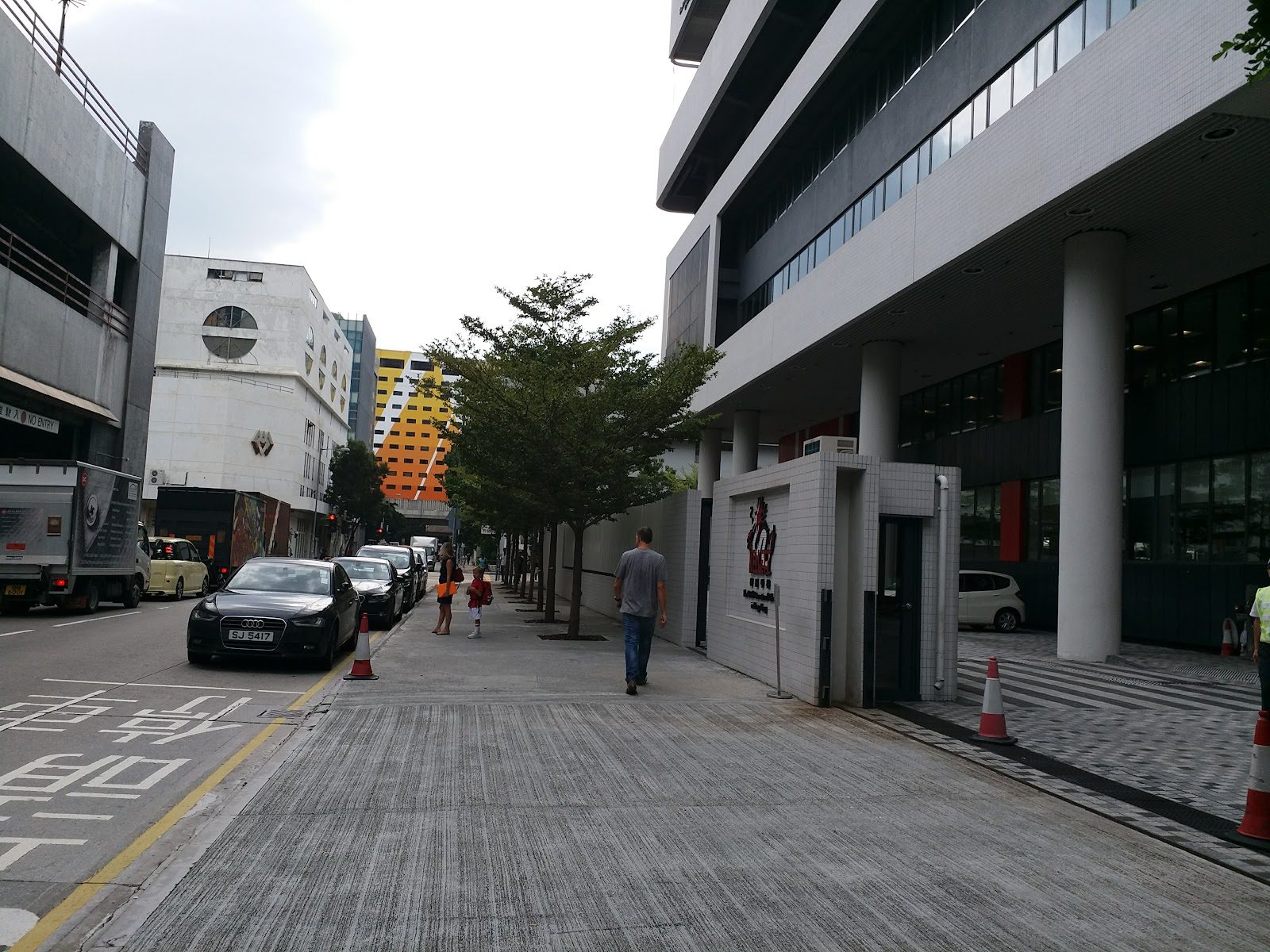
Photo © Rowena Cada via Google Maps
Type
Day
Ages
3–18
Curriculum
IB · British
Ratio
—
The Verdict
Editor's commitment
Right for
Hong Kong families wanting a 1976-founded, parent-founded day school with English teaching, CIS membership and a British-to-IB all-through route from age 3 to 18.
Wrong for
Parents after boarding, religious ethos or a cheaper option: Kellett is non-religious, day-only, and averages HKD 266,612 a year.
Watch out for
The school carries IBO and CIS accreditation, but public detail here centres on community language; hard academic data beyond GCSEs and A-Levels is thin.
Ranking breakdown
Kellett School · #330 of 1591
Composite score 72.8. 8 weighted criteria.
By criterion
Academic Outcomes
Weight 20%
#333
of 1529 scored
University Placement
Weight 16%
#354
of 1529 scored
Prestige & Heritage
Weight 12%
#393
of 1529 scored
Alumni Network
Weight 12%
#306
of 1529 scored
Facilities
Weight 12%
#419
of 1529 scored
Transparency & Communications
Weight 8%
#437
of 1529 scored
Peer & Industry Review
Weight 10%
#479
of 1529 scored
Admissions Selectivity & Demand
Weight 8%
#282
of 1529 scored
Score history
Kellett School · 2026
Movement across 2024–2026. Peer average overlaid.
Overall — 2024–2026
72.8/ 100
▲ +24.8 vs 2025
year on year
Peer & Industry Review
How Kellett School is regarded in the sector
80
Strong · high confidence
Kellett School is consistently positioned among Hong Kong's most sought-after British curriculum schools, distinguished in a market dominated by IB providers. The Good Schools Guide's independent verdict notes it is riding high on the wave of popularity, with waiting lists for all years that prospective families are prepared to wait out, while WhichSchoolAdvisor highlights its long wait list that is testament to its popularity with parents alongside its outstanding BSO inspection rating. Tatler's Hong Kong schools guide singles out small classes, low student-to-teacher ratios and robust pastoral care as competitive strengths, and recent results cited by Spear's 500 show graduates securing offers to universities around the world, including Oxbridge, UCL, King's College London and Columbia University. This breadth of independent editorial coverage, spanning fifty years of continuous operation, marks Kellett as a robust, peer-recognised institution rather than a marketing-driven newcomer, though it sits just below the handful of schools with truly unanimous top-tier billing in the territory.
Editors' overview
Kellett occupies a distinct niche in Hong Kong: a parent-founded, non-religious British international day school with deep local roots and a full 3–18 age range, yet with enough curricular breadth to carry both British and IB credentials. That combination matters. Many schools in this market offer imported branding or a narrow phase; Kellett offers continuity from the early years through GCSEs and A-Levels, with English as the language of instruction and CIS and IBO accreditation to anchor the operation. It was founded in 1976, which gives it something newer entrants do not have: institutional memory, settled demand and a community that did not arrive yesterday. The average annual day fee of HK$266,612 places it firmly in Hong Kong’s premium bracket. Parents are paying for a mature, full-ladder school, not a bargain.
What marks Kellett out is not novelty but stability, seriousness and a clear sense of what it is. This is not a school trying to be all things to all families. The public identity is British, the sixth-form route is A-Level, and the age span gives families a coherent through-school journey rather than a sequence of separate admissions hurdles. The IB accreditation adds international credibility, but the school’s centre of gravity remains British. That will suit families who want structure, external examinations and a school culture built around routine, pastoral oversight and long-term relationships. It will not suit parents hunting for a flashy campus story, a US-style model, or a school built around constant reinvention.
The strongest case for Kellett rests on fit. It belongs on a shortlist for families who want an academically focused day school with a settled reputation, a broad peer group and a parent community that has had decades to form. It suits children who thrive in a well-run, adult-guided environment and who value continuity from the prep years into senior school. It also suits internationally mobile families who still want a recognisable British spine to the education. The trade-off is clear enough: this is an expensive, established, high-expectation school in a competitive city. For the right student, that brings security and momentum. For a child who needs a looser, more progressive or more overtly experimental education, Kellett is the wrong fit.
Academic Performance
Kellett’s public case on academics rests more on reputation than disclosure. The school highlights a results section, which signals that exam outcomes matter, but the source extracts here do not include any published GCSE or A-Level data, no subject breakdowns, no top-grade proportions and no university destinations. That leaves a parent without the numbers needed to place Kellett cleanly against Hong Kong’s results-driven British schools. In this market, strong schools publish hard data. When those figures are absent, comparison gets needlessly opaque.
That does not mean weak performance; it means unverified performance. The school’s long-established through-school model, selective fee level and repeated emphasis on academic guidance point to a serious exam culture rather than a casual one. Parent testimonials also push the same line hard, praising academic standards and personal support. Still, testimonials are not results. For a school charging an average of HK$266,612 a year, parents should expect a clear annual account of GCSE and A-Level outcomes, including cohort size, pass rates, top grades and destination patterns. Until Kellett publishes that data in full, it sits in an awkward middle ground: plainly academic in identity, but not transparent enough on attainment to claim a top tier on evidence alone.
Facilities
Kellett’s strongest facility asset is breadth rather than spectacle. The school foregrounds music, art, drama and sport alongside classroom teaching, and parent testimony repeatedly returns to that mix. That points to a campus offer built for a full day-school life, not a narrow exam factory. For families, the practical takeaway is clear: children get access to specialist spaces and programmes beyond standard classrooms, with the arts carrying real weight rather than token status. In Hong Kong, where some schools trade heavily on tower-block constraints or split-site compromises, that matters. Kellett reads as a school with well-rounded operational substance, strong co-curricular infrastructure and a genuinely broad school day.
The limitation is disclosure. Kellett does not publish, in the extracts here, the kind of detailed facilities inventory that top competitor schools often use to make their case: no hard count of performance spaces, labs, pitches, studios or specialist suites. That leaves parents relying on reputation and community testimony rather than a precise map of what sits on each campus. Against peers, that places Kellett in a solid but less showy bracket. The facilities sound good, and good enough to support serious provision across the arts and sport, but the public presentation lacks the forensic detail that top-end rivals now provide. For an expensive through-school, that restraint reads as either confidence or opacity. Parents visiting in person need to test it.
Kellett reads as a school with well-rounded operational substance, strong co-curricular infrastructure and a genuinely broad school day
Prestige
Kellett has real standing in Hong Kong’s international-school market, but its prestige rests on reputation earned over time, not on cachet imported from an English public-school badge or a global chain. That matters. Parents are buying into a school with a long-established parent community, a full through-school structure and enough institutional depth to produce loyalty across generations. The website leans heavily on that community voice: parents talk about children staying for years, staff knowing pupils well, and strength across music, art, drama and sport as well as the classroom. That is the profile of a school with social confidence and deep local credibility. The fee level — an average of HK$266,612 a year — also places it squarely in the territory where prestige is expected, not incidental.
Still, prestige is not the same as supremacy. Kellett carries weight with families who want a settled, serious British education and the status that attaches to a well-known name in expatriate and internationally minded Hong Kong circles. It has less visible glamour than schools that trade on inherited aristocratic branding, celebrity alumni or aggressively marketed outcomes. Its authority is quieter than that. The limitation is clear: prestige without published headline exam data has a ceiling. In plain terms, Kellett is a respected and desirable school, not an untouchable one. Its name opens doors socially and reassures parents institutionally; it does not, on the evidence in public view, dominate the market academically.
Kellett’s distinctiveness lies in its origin and temperament
Communications
Kellett communicates like a school that values control and continuity over noise. The website gives parents a clear set of access points — Parent Portal, calendar, admissions FAQs, contact routes, campus tours, results and a school magazine — which covers the practical essentials without fuss. That matters in a through-school with families staying for years: parents need timetables, deadlines, event information and points of contact more than glossy messaging. The school also pushes community voice hard, with multiple parent testimonials carrying the burden of tone-setting. That choice tells you something. Kellett wants parents to read the school through lived experience and long-term loyalty, not through a barrage of executive rhetoric. At its best, that feels grounded, confident and community-literate.
The weakness is that communication looks stronger on culture than on hard information. The public-facing channels give access and reassurance, but they do not disclose enough in the areas where demanding parents want precision: published outcome data, a detailed facilities inventory, and sharper operational detail. For a school charging an average annual fee of HK$266,612, that gap matters. Parents can infer that day-to-day communication is organised and that existing families feel heard; the portal structure and repeated emphasis on belonging point that way. But external communication remains selective, curated and at times too comfortable with omission. In plain terms: Kellett communicates well enough to sustain trust inside its community, and not well enough to satisfy a hard-nosed parent doing cross-market comparison.
Uniqueness
Kellett’s distinctiveness lies in its origin and temperament. This is a parent-founded school, and that matters more than marketing copy ever does. Schools built that way tend to carry a stronger sense of accountability to families and a less corporate feel than chain operations or brand-licence outposts. At Kellett, that reads through the public voice the school chooses to foreground: not grand claims about disruption or innovation, but repeated emphasis on children being known well, staying for the long haul, and growing inside a tight-knit, adult-led community. For students, the benefit is continuity. A child can move from the early years to sixth form inside one institution with a consistent ethos, familiar expectations and relationships that deepen over time rather than reset at each phase.
Its other point of difference is the combination of British academic structure with a school culture that gives genuine room to music, art, drama and sport. Plenty of schools claim breadth; fewer have parents independently talking about those areas unprompted. That points to a school that does not reduce childhood to exam management. Students get a broad-gauge education inside a serious framework: external examinations, clear routines, and pastoral oversight, but also visible encouragement to develop confidence, responsibility and interests beyond the classroom. The result is not a flashy proposition. It is a settled, full-ladder school charging HK$266,612 a year because families are buying durability, coherence and a community with real staying power.
The age span of 3–18 also matters: Kellett suits families making a long-range choice, not a temporary stopgap
Student Profile
Kellett suits children who do well in a structured, adult-guided school life and families who value continuity over reinvention. The strongest fit is the pupil who wants to stay put, build long relationships and grow inside one community from the early years to sixth form. The school’s own parent voices keep returning to the same points: staff know children well, strengths are identified early, and support extends beyond academics into music, art, drama and sport. That points to a student body shaped less by churn and sharp elbows, more by settled commitment and participation across the full life of the school. For families paying an average annual fee of HK$266,612, that through-school stability is part of the proposition.
The right child for Kellett is academically capable, responsive to high expectations and comfortable in a school that prizes responsibility, inclusion and confidence. It will work well for students who like clear routines, visible pastoral oversight and a broad programme rather than a narrow exam treadmill. It will work less well for children who need a looser, more experimental environment or who resist institutional structure. Socially, this is a school for families ready to join a close-knit, high-investment parent community, not one for parents who want to remain distant from school life. The age span of 3–18 also matters: Kellett suits families making a long-range choice, not a temporary stopgap.
It was founded in 1976, which gives it something newer entrants do not have: institutional memory, settled demand and a community that did not arrive yesterday
Co-curricular strengths
Arts & sport, on a separate axis
Overall 8.96/10
Scored 0-10 from the school's own published evidence. This axis is editorial-only — it does not feed the main WTS ranking.
Sports
8.8/10
Multiple sports (football, netball, rugby, swimming, athletics, basketball and cricket), plus specialist facilities including a gymnasium, CrossFit gym, six-lane indoor swimming pool and Sky Pitch.
Drama
9/10
Drama is both curricular and extracurricular here, with drama productions listed and Wikipedia citing a dedicated dance and drama studio plus a fully operational theatre, which supports a strong score.
Dance
9/10
Wikipedia provides dimension-specific evidence of a dedicated dance and drama studio, which is enough to clear the notable-strength threshold even though no wider dance programme detail is given.
Music
9/10
The school offers school orchestra and choir, music is part of the curriculum, and Wikipedia cites dedicated music rooms, combining multiple strands of evidence for a notable music programme.
Visual Arts
9/10
Art is part of the curriculum and a dedicated art studio, giving clear evidence of both subject provision and specialist facility.
Editor first-pass · editor-reviewable · 7/27/2026
Strengths
- +Kellett educates over 1,400 students from 4 to 18 years in the English National Curriculum, evidenced by a BSO Inspection (2023) that, per Hong Kong's Education Bureau listing, rated the school outstanding across every category.
- +The school is a member of the Headmasters' and Headmistress' Conference (HMC), and the heads of the Prep Schools are members of the Independent Association of Prep Schools (IAPS), giving external professional accountability.
- +In 2025 at A level (cohort of 81 students), 28 per cent A*, 61 per cent A*/A, 89 per cent A*-B and 95 per cent A*-C, a solid outcome for a non-selective day school.
- +The Kowloon Bay campus opened in 2013 and its state-of-the-art spaces include a dance hall, a fully operational theatre, a CrossFit gym, a large artificial turf and multi-sport area including a running track on the Sky Pitch, and has won a merit award at the Quality Building Awards and the International Property Award for Best Public Service Architecture in Hong Kong.
- +Popular exit points in year 6 and year 8 to boarding school have diminished, with parents citing only one or two leavers within their child's friend circle rather than a mass exodus, suggesting improved family retention.
Considerations
- −Annual capital levy: HKD 40,000 (all new students)... All students must be covered by the annual capital levy or a debenture, and debentures start at HKD 1 million - a substantial cost on top of tuition.
- −Waiting lists for all years (the school doesn't sugar-coat this), prospective families are prepared to wait, meaning admission timing can be unpredictable.
- −The school runs a British IGCSE/A-Level pathway rather than the IB Diploma, so families seeking an International Baccalaureate exit qualification will not find it here.
- −The school operates across two locations: the Pok Fu Lam campus houses a preparatory school... while the Kowloon Bay campus comprises a prep and senior school, so families on Hong Kong Island may face a harbour crossing once children reach secondary age.
Availability
Primary entry gate & tests
Academic Record + Assessment
Gallery
Photo © Lam Lam via Google Maps
Photo © Kellett School (Kowloon Bay Campus) via Google Maps
Photo © Kellett School (Kowloon Bay Campus) via Google Maps
Photo © HONG KONG WALKING VIDEOS via Google Maps
Photo © Raymond Yuen via Google Maps
Photo © Kellett School via Google Maps
Photo © Larry Suen via Google Maps
Photo © Thought a throws via Google Maps
Photo © Kellett School (Kowloon Bay Campus) via Google Maps
Parent reviews
Have you sent your child here?
Voice reviews carry the strongest trust badge — we transcribe them for you to tidy up before they go live. Prefer to type? A written review is fine too.
Add your voice
In 60 seconds, tell other parents: what's the best thing about Kellett School, and what surprised you when your child joined?
We ask for a Google sign-in so every review has a real face behind it — no anonymous drive-by attacks on schools, and no faked positive reviews. Your email is never shown publicly.
Send this profile to a friend
International parents rely on word-of-mouth. Share this review with someone weighing the same decision.
Schools with places
Similar schools to Kellett School with places available now.
German Swiss International School
Hong Kong · Hong Kong
- 2026-27
- PLACES OPENRolling
- 2027-28
- PLACES OPENRolling
Harrow International School Hong Kong
Hong Kong · Hong Kong
- 2026-27
- WAITPOOLSpace-dependent
- 2027-28
- OPENS SOONOpens 1 Sept '26
Hong Kong International School
Hong Kong · Hong Kong
- 2026-27
- WAITPOOLVacancy-dependent
- 2027-28
- PLACES OPENPriority 1 Oct/1 Nov
Availability first, then country, area, curriculum, price, co-curricular
Consider also
Also worth looking at alongside Kellett School.
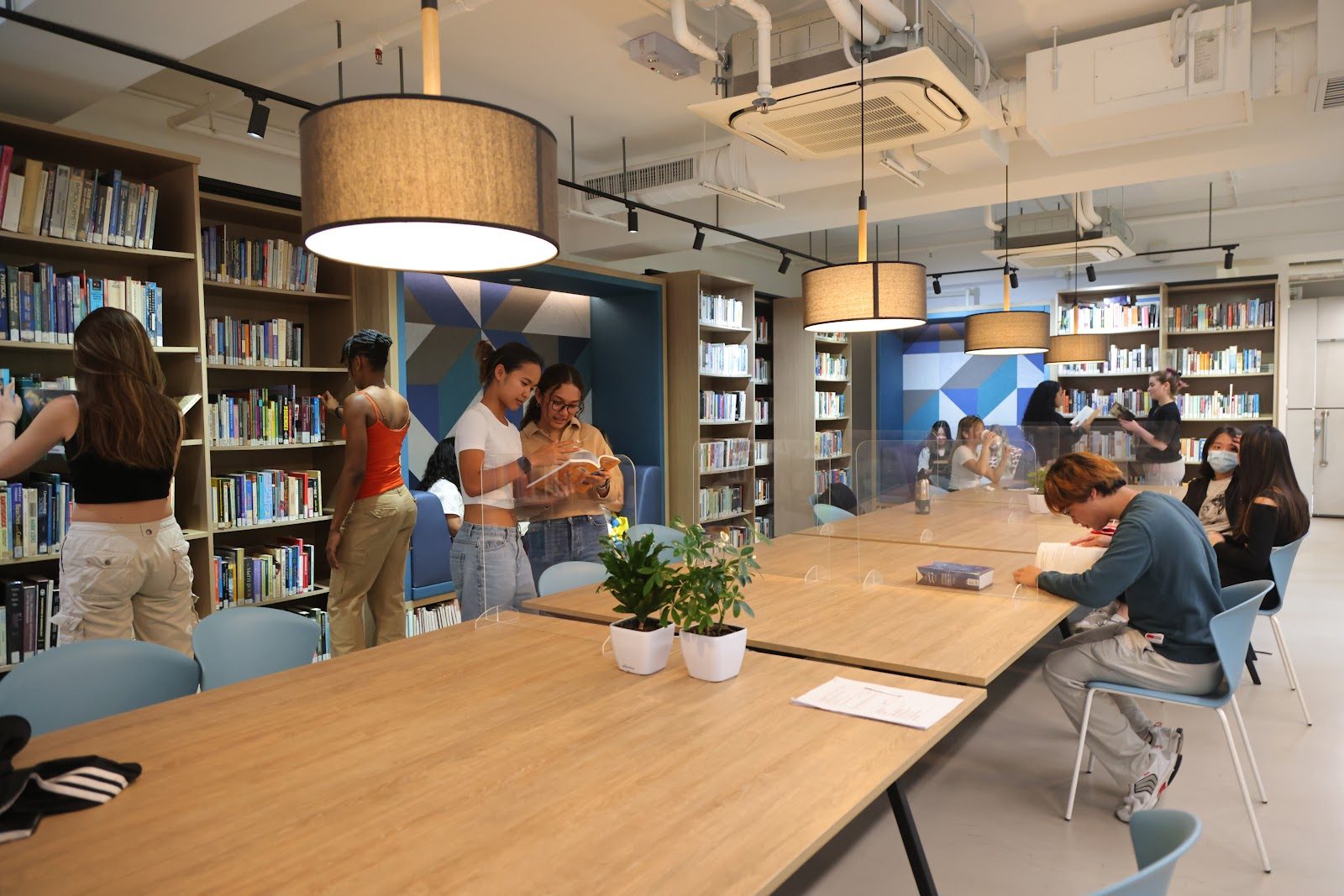
Li Po Chun United World College of Hong Kong
Hong Kong · Hong Kong
Perched above Tolo Harbour, this United World College gathers scholars from 90 nations for a service-driven IB Diploma.

German Swiss International School
Hong Kong · Hong Kong
Perched on the Peak since 1969, twin German Abitur and IB streams share one campus and one house system.

Harrow International School Hong Kong
Hong Kong · Hong Kong
A crescent-shaped Tuen Mun campus, modelled on Bath's Royal Crescent, houses Hong Kong's only formal weekly boarding and house system.
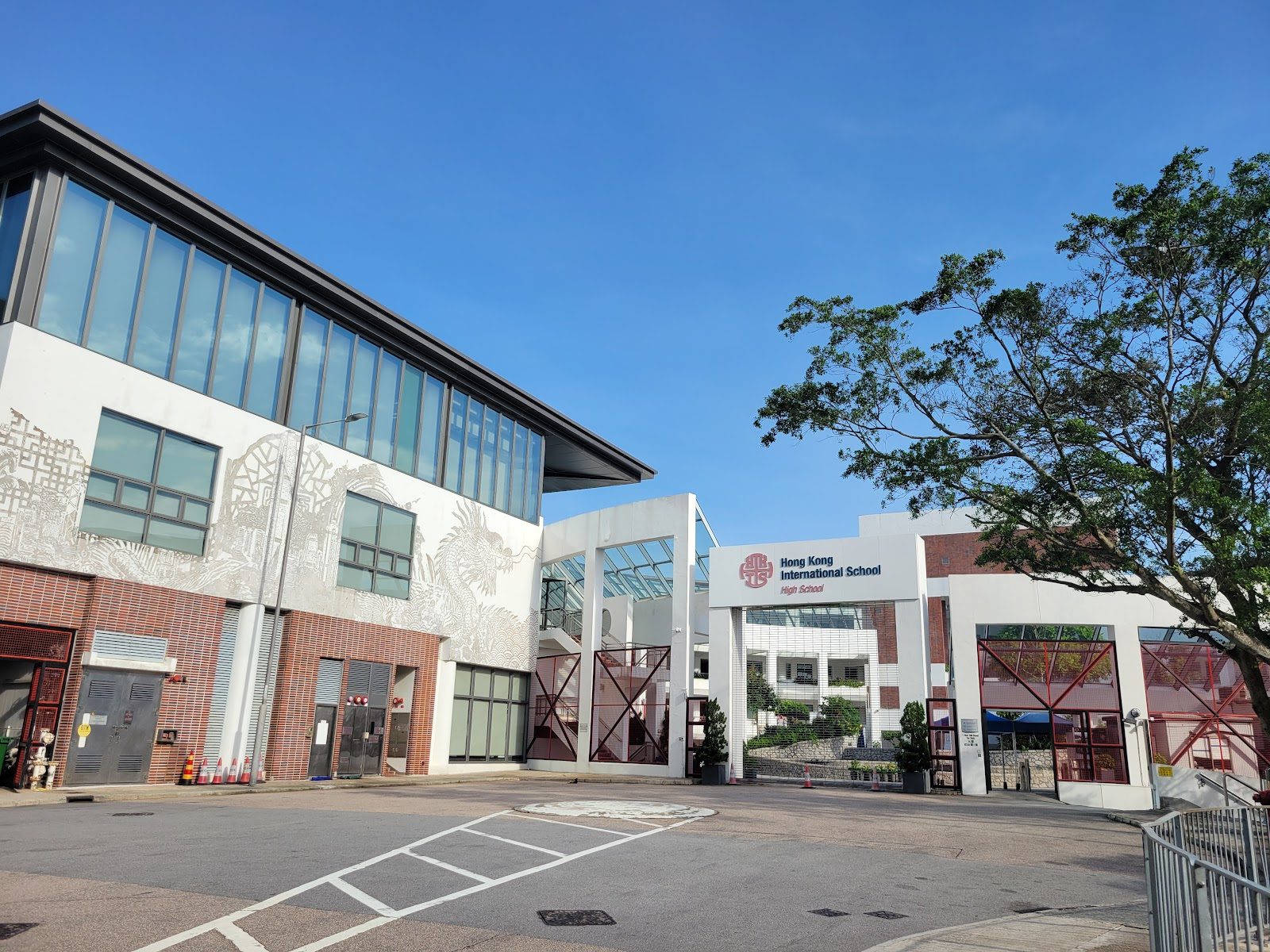
Hong Kong International School
Hong Kong · Hong Kong
Since 1966, an American-style curriculum with Lutheran roots spans two Hong Kong Island campuses framed by mountains and Tai Tam Bay.
Same country and curriculum — closest matches within ±10 points either way