
Cocody Deux-Plateaux
Cours Sévigné Abidjan
low confidence· 4/6 cats · 1 avg sourcesA Marcory day school since 1967, pairing AEFE-homologated academics with bilingual DNL classes and its own cultural arts space.
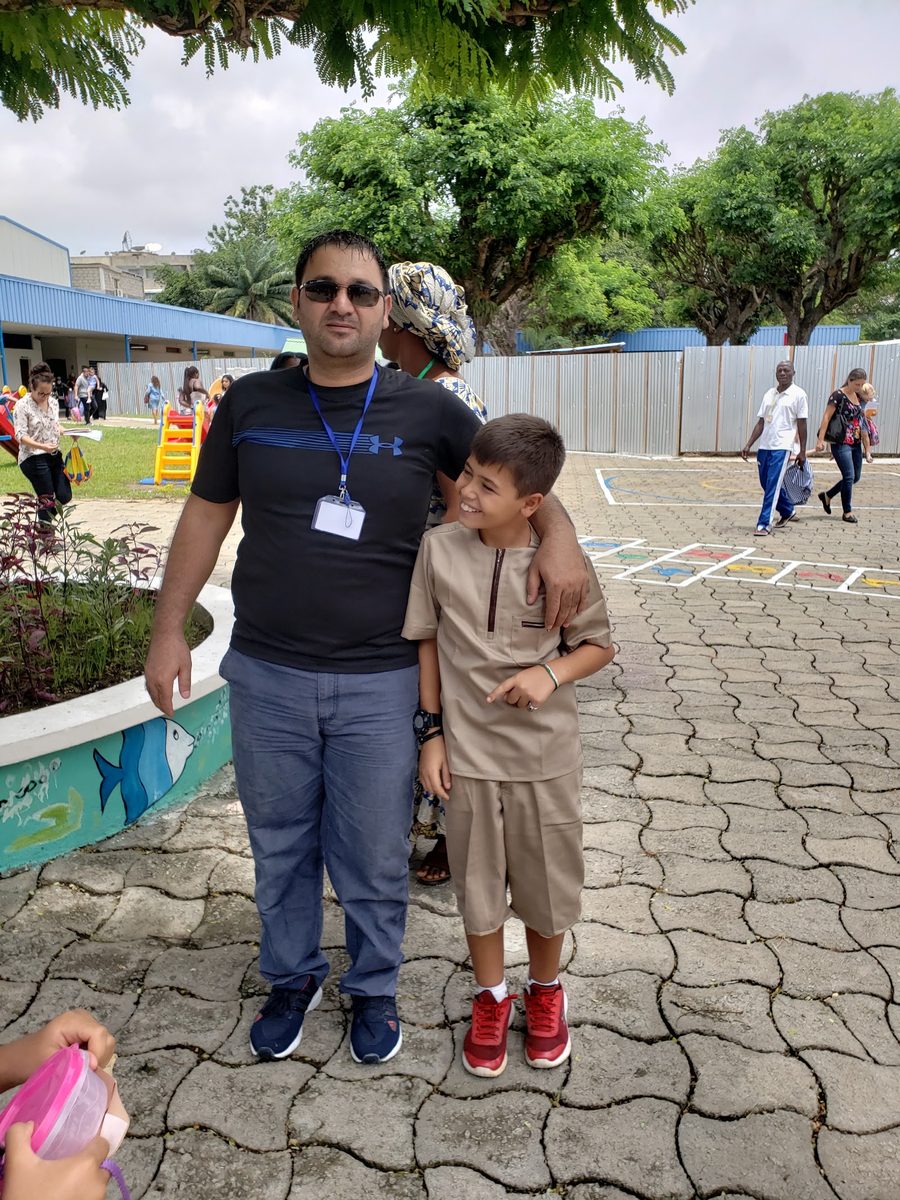
Photo © Fawzi Haidar via Google Maps
Type
Day
Ages
3–18
Curriculum
French Baccalaureate
Qualifications
Brevet
Ratio
—
The Verdict
Editor's commitment
Right for
Abidjan families wanting a 3–18 day school with the French Baccalaureate, French-medium teaching and Homologué status.
Wrong for
Parents seeking boarding, religious formation or an English-medium curriculum; Cours Sévigné Abidjan is a non-religious day school in Marcory.
Watch out for
Founded in 1975, it charges an average €5,224 a year; that buys French-system rigour, not the wider curriculum breadth of bigger internationals.
Ranking breakdown
Cours Sévigné Abidjan · #1417 of 1591
Composite score 51.5. 8 weighted criteria.
By criterion
Academic Outcomes
Weight 20%
#1370
of 1529 scored
University Placement
Weight 16%
#1359
of 1529 scored
Prestige & Heritage
Weight 12%
#1396
of 1571 scored
Alumni Network
Weight 12%
#1061
of 1530 scored
Facilities
Weight 12%
#1465
of 1533 scored
Transparency & Communications
Weight 8%
#1415
of 1532 scored
Peer & Industry Review
Weight 10%
#1216
of 1548 scored
Admissions Selectivity & Demand
Weight 8%
#1308
of 1529 scored
Peer & Industry Review
How Cours Sévigné Abidjan is regarded in the sector
63
Respected · medium confidence
I could not identify at least two independent third-party sources (e.g., Tatler, Good Schools Guide, specialist education press, or established expat-parent forums) that specifically discuss Cours Sévigné Abidjan's reputation, peer standing, or alumni network. Available information appears limited to the school's own promotional materials or general directory listings without substantive independent commentary.
Editors' overview
Cours Sévigné Abidjan sits in an unusual niche in the Abidjan market: a non-religious day school in Marcory for ages 3 to 18, running the French Baccalaureate with AEFE homologation and a clear bilingual edge through DNL teaching. That combination matters. Parents who want the structure and academic continuity of the French system, but do not want a narrow monolingual school culture, will find real value here. The school’s other point of distinction is cultural seriousness. Its own arts space gives it more texture than the standard exam-factory model, and that matters in a sector where many schools talk about rounded education but offer little beyond timetable fillers. At an average annual day fee of €5,224, it also lands in a sharply competitive bracket for an all-through French school.
The appeal is straightforward. This is a school for families who want the French curriculum from nursery through the end of secondary, taught in French, in a setting that is more grounded than glossy. The age span of 3–18 gives continuity, and the homologué status gives formal alignment that many internationally mobile francophone families will insist on. The bilingual DNL element adds a useful layer for students who need stronger linguistic agility without leaving the French academic track. That makes Cours Sévigné a good fit for children who are academically comfortable in a structured system, who benefit from clear expectations, and who will use the arts and cultural offer as more than decoration.
Why shortlist it? Because it does not try to be everything. It offers a defined proposition: French academics, day-school practicality, bilingual teaching strands, and a cultural dimension that gives the place some intellectual breadth. The school was founded in 1975, which gives it institutional age without relying on heritage theatrics. Parents who want an Anglo-American style of loose subject choice, lavish campus excess or brand-name international-school posturing will look elsewhere. Parents who want a disciplined, coherent French pathway in Abidjan, at a fee level that stays within the city’s mid-market independent range, should take it seriously.
Academic Performance
Cours Sévigné does not publish the exam data that would let parents judge performance with confidence. We have not seen aggregate French Baccalaureate pass rates, mention rates, subject breakdowns, cohort sizes or year-on-year trends. That is a real weakness in a market where serious schools use outcomes to prove academic substance. Homologation confirms formal alignment; it does not answer the sharper question of how well pupils perform at the end of the course. For an all-through school selling continuity and academic credibility, that gap leaves too much to inference. Parents asking hard questions on results, value added and sixth-form destinations are right to do so.
Relative to peers, that places the school in the opaque middle ground: not discredited, but not evidenced either. Schools with strong external results publish them, even if selectively, because exam outcomes remain the clearest public test of classroom standards. Here, the absence of published figures means Cours Sévigné cannot claim a place among Abidjan’s best-evidenced French schools on results alone. That does not make it weak academically; it makes it unproven in public. The school’s bilingual strands and cultural offer add range, but they do not replace hard attainment data. Until Cours Sévigné discloses headline outcomes — pass rates, honours profile and cohort scale — parents must treat academic performance as an open question, not a settled strength.
Facilities
The school’s most distinctive facility is not a sports complex or a technology suite but its own cultural arts venue, L’Espace Kiki de Mory. That matters. In a market where many mid-fee schools confine the arts to borrowed halls and occasional events, a dedicated space gives performances, exhibitions and cross-disciplinary work a proper home. For parents, that signals serious cultural intent rather than timetable filler. Beyond that, the public picture is thin. We have not seen a detailed campus map, specialist lab inventory, library specifications, indoor sports provision or auditorium capacity. That absence matters because facilities are one of the clearest places where schools either show substance or hide behind generalities. Here, the arts provision stands out; the rest remains insufficiently evidenced.
Against peer schools, that produces a mixed verdict. The campus does not read as a flashy, capital-intensive proposition built to impress on first visit. Families hunting for elite-level sports infrastructure, extensive maker spaces or a long list of specialist rooms will need to ask direct questions. Schools at this fee level rarely deliver the full international-school facilities arms race, and Cours Sévigné fits that pattern. Its advantage lies in focus: a practical day-school site with at least one genuinely differentiated asset in the arts. Its weakness is transparency. Until the school publishes a fuller account of classrooms, science spaces, play areas and student amenities, the facilities case rests on one visible strength and too many blanks.
The school’s most distinctive facility is not a sports complex or a technology suite but its own cultural arts venue, L’Espace Kiki de Mory
Prestige
Cours Sévigné’s prestige sits in the solid middle tier, not the elite bracket. In Abidjan, prestige in schooling comes from a mix of old family reputation, admissions selectivity, exam proof and social signalling. This school has some of that equation, but not the full set. The French-system alignment gives it institutional credibility, and the all-through structure adds permanence, which matters to families who prize continuity over churn. The average annual fee of €5,224 also places it well below the price point that buys automatic cachet in the city’s top private-school circles. That is not a criticism. It means the school’s standing rests more on practical respectability than on exclusivity or glamour.
The rating stays restrained for a second reason: the public case for distinction is incomplete. A school earns prestige through visible outcomes, not just through a stable profile and a coherent offer. Here, the bilingual teaching strands and cultural dimension add useful texture, and they lift the school above the plain-vanilla French day-school model. But the absence of published headline results blocks a higher verdict. Parents can attach value to its seriousness, accessibility and institutional continuity; they cannot point to hard public evidence that it belongs among the city’s academic heavyweights. That leaves Cours Sévigné with credible local standing, but not commanding prestige.
Its advantage lies in focus: a practical day-school site with at least one genuinely differentiated asset in the arts
Communications
Cours Sévigné’s parent communications read as functional rather than polished. The essentials are there: contact routes, admissions information, school identity and enough public-facing detail to tell parents what the school values. The strongest signal is consistency. A school that maintains a visible cultural programme and gives that work a named home is not treating communication as an afterthought; it is using public channels to reinforce school life beyond the classroom. That said, the communication standard does not reach the forensically transparent level that demanding parents now expect. We have not seen published headline exam outcomes, detailed facilities breakdowns or the kind of granular academic reporting that lets families test claims against evidence. That leaves the external message clear in outline but thin where scrutiny matters.
For current parents, effectiveness therefore rests on practicality more than depth. The school gives a coherent enough sense of ethos and day-to-day activity, and families who value order, routine and a defined educational model will find that reassuring. For prospective parents comparing options, the gaps are harder to ignore. A school asking families to commit across the full age range needs communication that does more than inform; it needs communication that answers difficult questions before they are asked. Here, the tone is serviceable, the identity is legible, but the disclosure standard remains too restrained for a school that wants full parental confidence.
Uniqueness
What marks Cours Sévigné out is the way it combines a conventional French academic spine with additions that many schools bolt on weakly or not at all. The bilingual DNL classes matter because they ask pupils to handle subject content through another linguistic frame, not just collect extra vocabulary in a separate lesson. That builds mental agility, sharper listening and a habit of switching register without losing precision. For children headed into higher study, cross-border family life or multilingual workplaces, that is a practical academic advantage, not a decorative flourish. The school’s fee level also makes that combination distinctly accessible: at an average of €5,224 a year, it offers more than the plain compliance model that dominates this part of the market.
The other point of difference lies in cultural seriousness. A school with its own arts venue can give music, theatre and public presentation real weight in the life of the week. That changes the student experience. Children learn to rehearse, perform, collaborate and stand in front of an audience with purpose. Those habits feed back into classroom confidence and personal discipline. Many schools talk about forming the whole child and then deliver assemblies and end-of-term shows. Cours Sévigné has a more concrete cultural infrastructure than that. The result is a school that gives pupils two useful things at once: structured academic training and regular exposure to the demands of language, performance and public expression.
The average annual fee of €5,224 also places it well below the price point that buys automatic cachet in the city’s top private-school circles
Student Profile
The best fit here is the child who responds well to structure, routine and clear adult direction. This is not the school for a student who needs endless elective choice, a loose classroom culture or constant hand-holding to stay engaged. It suits families who want an all-through day-school education that feels orderly, purposeful and grounded in habit. Pupils who cope well with steady academic expectations, regular written work and the discipline of moving through a demanding syllabus year after year will settle more comfortably than those who flourish only in highly personalised, discussion-led settings. The bilingual subject strands also favour students with good verbal confidence and a readiness to work across more than one linguistic register, even when that feels exacting.
Socially, the school fits children who do not need a high-gloss campus or a prestige-driven peer culture to feel secure. It will appeal to families who value seriousness over display and who want school life to include public performance, rehearsal and cultural participation rather than sport-led identity alone. Students with an interest in music, theatre or the performing disciplines have more room to grow here than they do in many comparably priced schools, especially at an average annual fee of €5,224. The weaker fit is the child who wants expansive facilities, a highly international social mix advertised in detail, or published academic data that removes doubt. This is a school for the steady, adaptable, intellectually usable student, not the one shopping for spectacle.
Parents who want the structure and academic continuity of the French system, but do not want a narrow monolingual school culture, will find real value here
Co-curricular strengths
Arts & sport, on a separate axis
Overall 5.9/10
Scored 0-10 from the school's own published evidence. This axis is editorial-only — it does not feed the main WTS ranking.
Sports
5.5/10
Drama
6/10
Dance
6/10
Music
6/10
Visual Arts
6/10
Editor first-pass · editor-reviewable · 7/30/2026
Strengths
- +Follows the French national curriculum through to the French Baccalaureate, a qualification recognised for university entry in France and internationally.
- +Offers French-medium instruction, which suits families already embedded in Francophone education systems or planning a return to France.
- +Day-school format situated in Abidjan, avoiding the cost and disruption of a boarding placement for local and expatriate families.
- +Operates within Cote d'Ivoire's established Francophone schooling tradition, serving a community with a long history of French-curriculum education.
Considerations
- −Very little independently published data (Baccalaureate pass rates, class sizes, staff qualifications, inspection reports) is available to benchmark the school against peers.
- −Single-curriculum offering means no IB, British, or bilingual pathway for families who may want to keep options open for different university systems.
- −Day-only structure with no boarding option limits suitability for families based outside greater Abidjan.
- −Low editorial/international profile compared with longer-established AEFE-network schools in the same city suggests a smaller scale or narrower alumni and resource base.
Availability
Primary entry gate & tests
Academic Record
Gallery
Photo © APE du Cours Sévigné via Google Maps
Photo © Folou Joel Henri AYEMOU via Google Maps
Photo © abcd via Google Maps
Photo © APE du Cours Sévigné via Google Maps
Photo © Alla koffi Landry Sagara via Google Maps
Parent reviews
Have you sent your child here?
Voice reviews carry the strongest trust badge — we transcribe them for you to tidy up before they go live. Prefer to type? A written review is fine too.
Add your voice
In 60 seconds, tell other parents: what's the best thing about Cours Sévigné Abidjan, and what surprised you when your child joined?
We ask for a Google sign-in so every review has a real face behind it — no anonymous drive-by attacks on schools, and no faked positive reviews. Your email is never shown publicly.
Send this profile to a friend
International parents rely on word-of-mouth. Share this review with someone weighing the same decision.
Schools with places
Similar schools to Cours Sévigné Abidjan with places available now.
Lycée Libanais Francophone Privé
Dubai · United Arab Emirates
- 2026-27
- PLACES OPENApps open / space-dependent
- 2027-28
- WAITPOOL2027/28 timetable TBC
Bilingual French International School Dubai
Dubai · United Arab Emirates
- 2026-27
- PLACES OPENApps open / space-dependent
- 2027-28
- WAITPOOL2027/28 timetable TBC
École Alsacienne
Paris · France
- 2026-27
- CLOSEDStandard route
- 2027-28
- OPENS SOONOpens Sept/Oct '26
The British School of Paris
Paris · France
- 2026-27
- WAITPOOLSpace-dependent
- 2027-28
- PLACES OPENRolling
Availability first, then country, area, curriculum, price, co-curricular
Consider also
Also worth looking at alongside Cours Sévigné Abidjan.
Groupe Scolaire Le Cardinal
Abidjan · Côte d'Ivoire
A day school in Abidjan holding firm to the French Baccalaureate amid Cote d'Ivoire's crowded private-school landscape
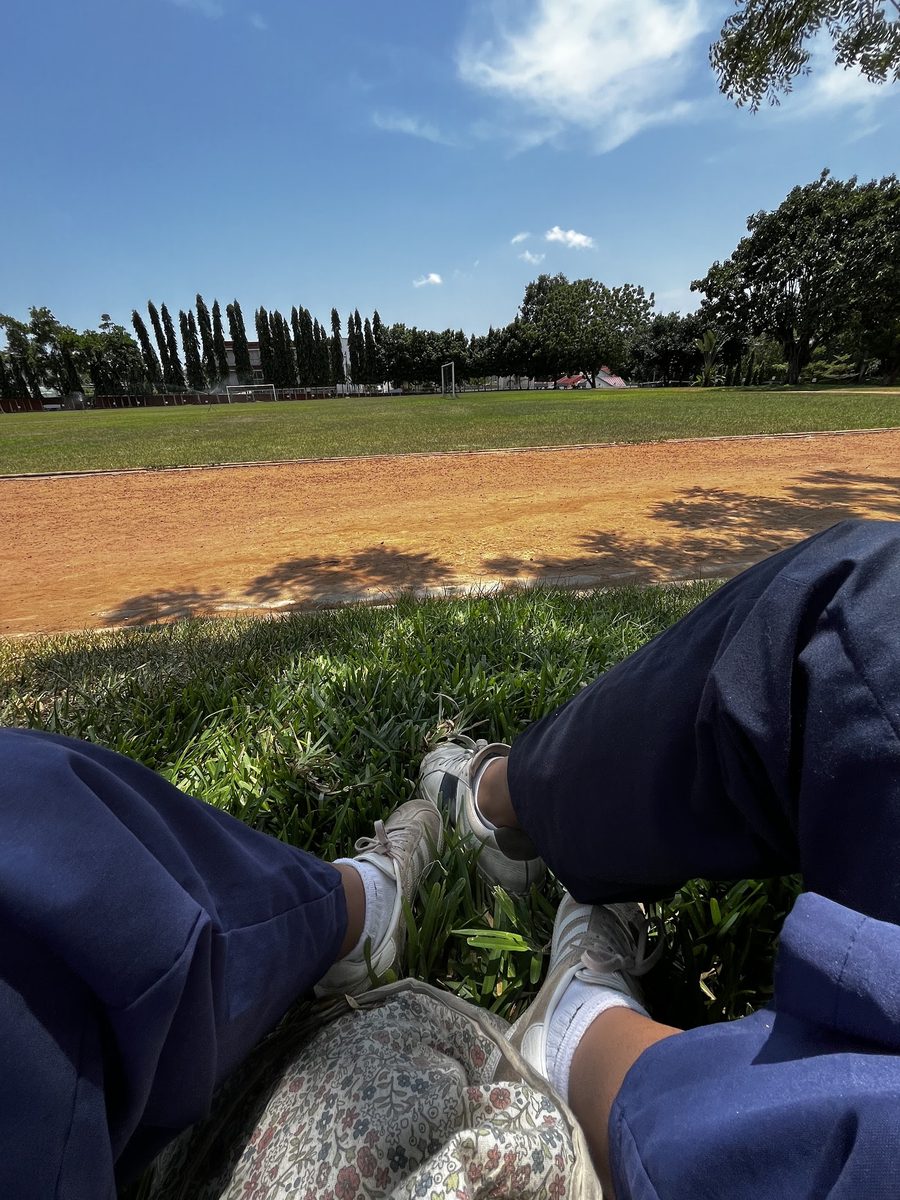
Lycée Français Blaise Pascal
Abidjan · Côte d'Ivoire
An award-winning bioclimatic gymnasium and a scientific classe preparatoire link this Abidjan lycee to France's Grandes Ecoles pipeline.
Enko Riviera International School
Abidjan · Côte d'Ivoire
A bilingual IB pathway from age three to Diploma, with Grade 1 career tracks aimed at global university admission
International Community School of Abidjan
Abidjan · Côte d'Ivoire
Sponsored by the U.S. Embassy, this PreK-12 Riviera III campus pairs an American curriculum with an IB Diploma track for over 60 nationalities.
Same country and curriculum — closest matches within ±10 points either way