
Greater London
In Shirley Park, a Steinway-filled music school whose choir is the only one asked back to the BBC Proms year after year.

Type
Day
Ages
10–18
Curriculum
British
Qualifications
A-Level · GCSE
Ratio
—
The Verdict
Editor's commitment
Right for
Croydon families wanting a day school, ages 10–18, with Anglican foundations and a serious music culture centred on Shirley Park.
Wrong for
Families wanting boarding, co-education now, or anything other than a British curriculum in English under ISI and HMC.
Watch out for
Founded in 1596, Trinity trades on pedigree; parents still need hard data, and the school does not publish results on its overview page.
Ranking breakdown
Trinity School · #614 of 1591
Composite score 61.1. 8 weighted criteria.
By criterion
Academic Outcomes
Weight 20%
#746
of 1529 scored
University Placement
Weight 16%
#736
of 1529 scored
Prestige & Heritage
Weight 12%
#689
of 1571 scored
Alumni Network
Weight 12%
#1345
of 1530 scored
Facilities
Weight 12%
#666
of 1533 scored
Transparency & Communications
Weight 8%
#652
of 1532 scored
Peer & Industry Review
Weight 10%
#793
of 1548 scored
Admissions Selectivity & Demand
Weight 8%
#686
of 1529 scored
Peer & Industry Review
How Trinity School is regarded in the sector
67
Respected · medium confidence
Within Croydon and the wider south London HMC circuit, Trinity is regarded as a solid, values-driven alternative to Whitgift, respected particularly for its choral and dramatic output rather than academic supremacy. Good Schools Guide commentary has historically praised its music department and pastoral warmth while noting it is less relentlessly academic than some rivals. It does not feature prominently in Sunday Times or Telegraph independent-school league tables, reflecting modest national press visibility compared with London's marquee day schools. University admissions offices know it as a reliable, if not headline, feeder - producing consistent Russell Group entrants and occasional Oxbridge places, but without the volume that would draw specific admissions-tutor commentary. Its HMC membership and Whitgift Foundation lineage give it standing at heads' conferences and shared-foundation events, where it is seen as the more culturally focused sibling institution. Overall, peer regard is respectful but regional rather than national - a well-run, musically distinguished school whose reputation is strongest among those who know Croydon's educational landscape closely.
- Peter May — Cricketer, Sport
- Julian Ovenden — Actor/Singer, Entertainment
- George Christie — Opera Impresario, Founder of Glyndebourne Festival, Arts/Business
Editors' overview
Trinity School occupies a distinctive niche in south London: an old Anglican day school, founded in 1596, with the reach and self-possession of a major independent school but without the boarding gloss that shapes so many of its competitors. For families in Croydon and the wider commuter belt, that matters. This is a serious British school for ages 10–18, taught in English, with ISI and HMC credentials and a public identity built around academic structure, pastoral systems and a deep co-curricular offer. The headline strength is music. The school’s own framing gives that away: music sits prominently alongside sport and drama, and Trinity’s reputation rests on substance, not branding. A school with a Steinway-rich music culture and a choir with that level of repeat Proms recognition offers real artistic heft and institutional confidence.
What sets Trinity apart is the combination of scale, tradition and breadth. The website lays out a school with an Academic Scholarship Programme, published results, future pathways guidance, tutors and heads of year, student wellbeing, extensive clubs and societies, CCF, Duke of Edinburgh, trips, partner primary schools and a bursary fund. That breadth tells parents two things. First, Trinity does not educate narrowly. Second, it expects pupils to commit themselves. This is not a small, intimate school built around hand-holding. It is a *high-functioning, adult-minded environment* where talented pupils can build a life across classrooms, ensembles, sports pitches, productions and service. The ongoing extension of co-education also places Trinity in an interesting market position: a historic boys’ school adapting its model rather than trading on nostalgia. That gives it forward motion without erasing its character.
Why shortlist it? Because Trinity offers more than a set of lessons and a polished prospectus. It gives ambitious children access to serious musical opportunity, strong academic organisation and a full school day in which enrichment is not an afterthought. In the London day-school market, that package has force. It will suit pupils who want to be busy, who can handle expectations, and who gain energy from a school with visible standards and multiple routes to distinction. The best fit is the student who wants more than one identity at school: scholar, chorister, actor, athlete, cadet, organiser. For that child, Trinity has proper range and earned distinction.
Academic Performance
Trinity puts academic performance front and centre: the site gives results their own place, alongside an Academic Scholarship Programme and future-pathways guidance. That architecture matters. Schools that publish outcomes and build formal stretch around scholarship are inviting scrutiny, and that is the right instinct in a crowded London market. The school’s public positioning points to a high-expectation, results-conscious culture rather than one that hides behind pastoral language or co-curricular glow. For parents weighing it against other established independents, Trinity sits in the bracket where strong external examination performance is part of the core offer, not an optional extra.
There is, however, a limit to how far the published picture goes from the source extracts here. We have confirmation that the school publishes results; we do not have the actual headline grades, subject distributions or university destinations in the source block above, so no honest editor should invent a pecking order. That means Trinity cannot be placed precisely against Whitgift, Alleyn’s, Dulwich or the top grammar schools on raw attainment from the evidence here. What can be said is narrower and still useful: this is not a school ducking accountability. It advertises results, scholarships and progression in a serious, performance-led frame. For many families, that places Trinity above softer, less transparent competitors; for the most data-driven parents, the next step is simple—inspect the school’s published examination tables in full before drawing a final comparison.
Facilities
The crucial facility story at Trinity is music. The editorial brief already flags the Steinways, and that matters because pianos of that calibre are not decorative assets; they signal serious rehearsal, accompaniment and performance capacity. Add a choir operation with that level of repeat Proms recognition and the conclusion is straightforward: Trinity has elite musical infrastructure by day-school standards. Among south London peers, plenty of schools offer music blocks, recital rooms and ensembles; fewer build a working musical ecosystem in which facilities, staffing, repertoire and public performance clearly reinforce one another. For a committed young musician, that carries more weight than a glossy new building with thin output.
Beyond music, the school’s own architecture points to a campus geared for full-spectrum pupil use rather than narrow academic throughput. Sport, drama, art and design, clubs and societies, CCF, Duke of Edinburgh and trips all sit as established strands, and schools do not sustain that range without the rooms, halls, outdoor space and organisational plant to support it. The site also advertises a virtual tour and facility hire, which indicates grounds and specialist spaces worth showing and usable beyond the core school day. Against competitor London day schools, Trinity’s edge is depth over flash. It does not trade on one showpiece complex or headline sports centre in the way some rivals do. Its facilities read as hard-worked, well-integrated and strongest where they feed a busy, talent-driven school culture.
That gives Trinity a distinctive edge over academically solid rivals whose identity stops at the classroom door
Prestige
Trinity carries real local prestige and a meaningful share of national cultural cachet. In the south London independent market, it sits in the company of schools that families name without explanation. That standing does not rest on branding alone. It comes from longevity, selective admissions points at 10+, 11+ and 16+, public emphasis on results, and a co-curricular machine with enough depth to confer status in its own right. The music offer does heavy lifting here. Plenty of schools claim musical strength; very few build a reputation that reaches beyond school concerts into the country’s best-known performance circuits. That gives Trinity a distinctive edge over academically solid rivals whose identity stops at the classroom door.
The prestige is not universal in the way of the most socially dominant London day schools, and that distinction matters. Trinity does not command the same automatic national shorthand as Eton, Westminster or St Paul’s. Its name lands differently: serious, earned, substantial rather than glamorous. For many families, that is a strength. The school projects standards, structure and ambition without the brittle theatre of old-regime elitism. Add HMC membership, published inspection reports and a visible scholarship culture, and the verdict is clear: this is a high-status education with proper credibility, strongest in the circles that value academic discipline, musical accomplishment and institutional depth over pure brand sheen.
Trinity’s distinctiveness lies in the way it fuses an old, church-rooted school structure with a genuinely high-output arts culture
Communications
Trinity’s parent communication reads as structured, operational and tied to the rhythms of a busy school rather than dressed up as lifestyle storytelling. The navigation alone tells you where the emphasis sits: transport, inspection reports, policies, open events, fees, learning support, wellbeing, tutors and heads of year, future pathways, publications, news and events all have clear homes. That matters. Parents do not need to hunt through a fog of branding to find the practical questions that govern daily life. The inclusion of parent seminars adds another useful signal: communication is not confined to announcements and term dates, but extends to guidance and expectation-setting. For a school with entry at 10+, 11+ and 16+, that degree of administrative clarity is not a luxury; it is basic competence, and Trinity delivers it.
The effectiveness, though, has a ceiling. The site architecture is serious and well ordered, but not especially warm, and families wanting a vivid sense of day-to-day tone, classroom exchange or how staff handle friction points will need more than the website. The public-facing communication gives plenty on systems and opportunities; it gives less on the texture of relationships. That is a common weakness in established independents, and Trinity does not escape it. Still, on the essentials that matter to parents—who to contact, how the school is organised, what support exists, what events run, what policies govern school life—the school is clear-eyed, usable and reassuringly adult.
Uniqueness
Trinity’s distinctiveness lies in the way it fuses an old, church-rooted school structure with a genuinely high-output arts culture. Plenty of London independents offer orchestras, choirs and annual productions; Trinity has built music into the school’s identity so deeply that it alters the character of the place. A pupil does not attend a school with music on the side; they enter a school where serious musical work has institutional weight. That changes expectations. It creates a disciplined, performance-facing environment in which rehearsals, ensemble standards and artistic ambition carry the same legitimacy as classroom success. The extension of co-education adds another point of difference: Trinity is not frozen in heritage mode. It is a tradition-conscious school still prepared to change its operating model.
For students, that mix brings breadth with pressure. The advantage is obvious: a child with more than one strength can build a full identity here across scholarship, performance, service and leadership, with entry points at 10+, 11+ and 16+ reinforcing that this is a school that selects for commitment at multiple stages. The trade-off is equally clear. Trinity will not suit children who want a low-demand, loosely structured education or who need constant coaxing to join in. Its uniqueness serves the pupil who wants standards, visibility and the chance to do things properly, in public, and at scale.
That means Trinity cannot be placed precisely against Whitgift, Alleyn’s, Dulwich or the top grammar schools on raw attainment from the evidence here
Student Profile
The best fit at Trinity is the pupil who wants a full week, not a narrow one. This school suits children who are ready to be occupied from morning through late afternoon by lessons, rehearsals, fixtures, productions, service and societies, and who take satisfaction from doing things properly in front of other people. The admissions structure at 10+, 11+ and 16+ reinforces that point: Trinity does not build around a single intake and then coast. It keeps selecting for students who can enter an established culture of standards and momentum. The strongest match is the self-starting, high-capacity student with more than one serious interest and enough stamina to carry them.
That does not mean every child needs to be a virtuoso or a natural extrovert. It means they need readiness for pressure, respect for structure and a willingness to contribute beyond the classroom. Musicians will find obvious room to thrive; so will pupils who like organised busyness, clear expectations and institutions with visible hierarchy and public standards. Children who need constant reassurance, resist competition or want an unpressured school day will find Trinity hard going. Nor is this the place for the casually engaged. It is a school for students who want to join something established, demanding and rich in opportunity—and who have the drive to use it.
Its uniqueness serves the pupil who wants standards, visibility and the chance to do things properly, in public, and at scale
Co-curricular strengths
Arts & sport, on a separate axis
Overall 8.58/10
Scored 0-10 from the school's own published evidence. This axis is editorial-only — it does not feed the main WTS ranking.
Sports
9.2/10
Preeminent day athletic force, fielding nationally competitive rugby, cricket, and hockey programs across state-of-the-art turf grounds.
Drama
9/10
The modern performing arts center anchors an ambitious dramatic tracking program, mounting complex classical and modern plays.
Dance
6.8/10
Maintained strictly as a minor auxiliary component for theatrical physical movement blocks or musical configurations.
Music
9.5/10
Internationally renowned for its world-class Trinity Boys Choir, routinely performing in professional opera recordings and major London concert halls.
Visual Arts
8.4/10
Highly structured fine art layout leaning heavily toward technical drawing, fine oils, and advanced portfolio mastery.
Strengths
- +Founded 1596; unusual institutional continuity.
- +World-class Trinity Boys Choir gives the school a distinctive musical identity.
- +Strong published 2026 A-Level record: 64.5% A*/A and 94% of leavers to a first- or second-choice place.
- +Confirmed facilities include a large concert hall, sports facilities and a 25-metre swimming pool.
- +ISI accreditation and HMC membership provide recognised oversight and networks.
Considerations
- −Day-only offering does not suit families seeking boarding.
- −Co-education is still being phased in, so girls' entry points are limited until the 2027-2031 transition completes.
- −Lower national visibility than larger neighbours such as Whitgift.
- −Anglican identity may not suit every family.
Availability
Primary entry gate & tests
Written Exams + Interview
Gallery
Parent reviews
Have you sent your child here?
Voice reviews carry the strongest trust badge — we transcribe them for you to tidy up before they go live. Prefer to type? A written review is fine too.
Add your voice
In 60 seconds, tell other parents: what's the best thing about Trinity School, and what surprised you when your child joined?
We ask for a Google sign-in so every review has a real face behind it — no anonymous drive-by attacks on schools, and no faked positive reviews. Your email is never shown publicly.
Send this profile to a friend
International parents rely on word-of-mouth. Share this review with someone weighing the same decision.
Schools with places
Similar schools to Trinity School with places available now.
Tiffin School
Kingston upon Thames · United Kingdom
- 2026-27
- CLOSEDStandard route
- 2027-28
- PLACES OPENCloses 1 Sept '26, 12pm
University College School
London · United Kingdom
- 2026-27
- CLOSEDStandard route
- 2027-28
- PLACES OPEN11+ (9 Nov); 16+ (28 Sept)
City of London School
London · United Kingdom
- 2026-27
- CLOSEDStandard route
- 2027-28
- PLACES OPEN11+/16+ Active
Latymer Upper School
London · United Kingdom
- 2026-27
- CLOSEDStandard route
- 2027-28
- PLACES OPENCloses Nov
Availability first, then country, area, curriculum, price, co-curricular
Consider also
Also worth looking at alongside Trinity School.

Downe House School
Cold Ash · United Kingdom
Rooted in Charles Darwin's former home, now a 110-acre Berkshire estate where science thrives and Oxbridge ambition runs deep.

Oakham School
Oakham · United Kingdom
Where a 1584 market-town foundation meets Rutland Water sailing, early co-education, and a long-standing IB Diploma alongside A-levels.
Ibstock Place School
London · United Kingdom
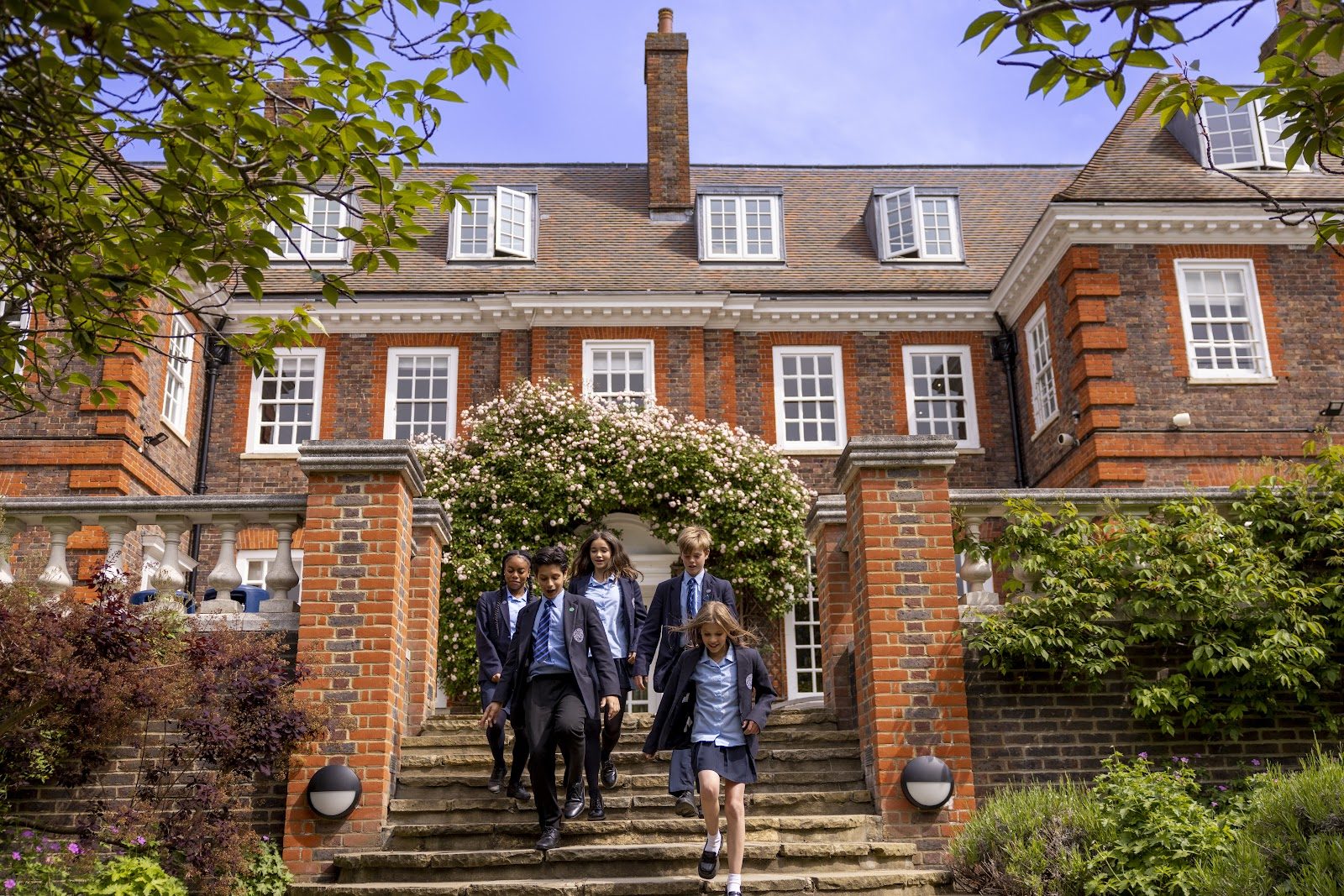
On the fringe of Richmond Park, a Froebel-founded day school has championed co-education since 1894.
Malvern College
Malvern · United Kingdom
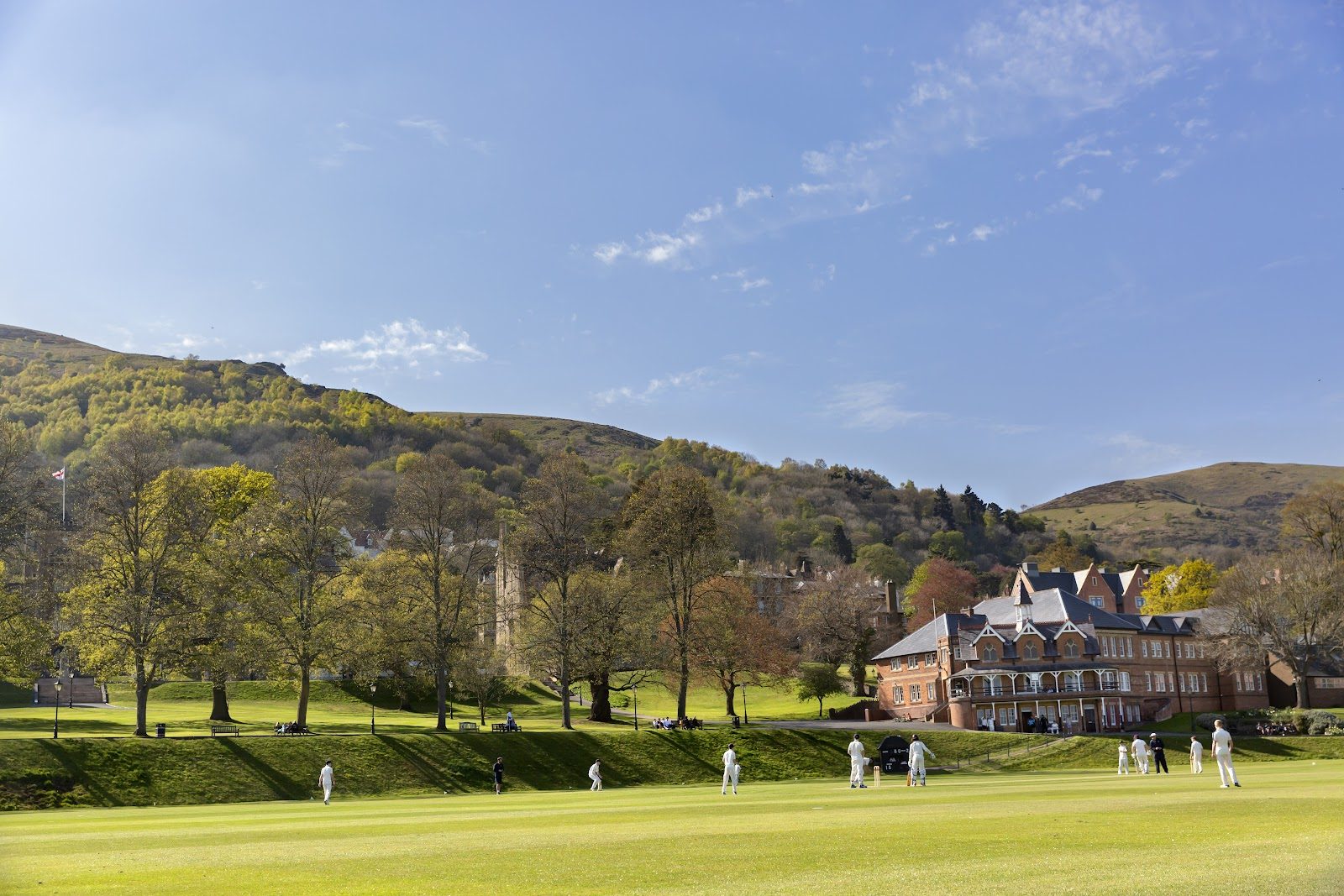
Beneath the Malvern Hills, a campus that once housed wartime radar research has produced four Nobel Prize winners.
Same country and curriculum — closest matches within ±10 points either way