
Pichincha
Colegio Alberto Einstein
medium confidence· 4/6 cats · 2.83 avg sourcesFounded by Ecuador's Jewish community in 1973, its full IB continuum now unfolds on a Harvard-advised Puembo campus.
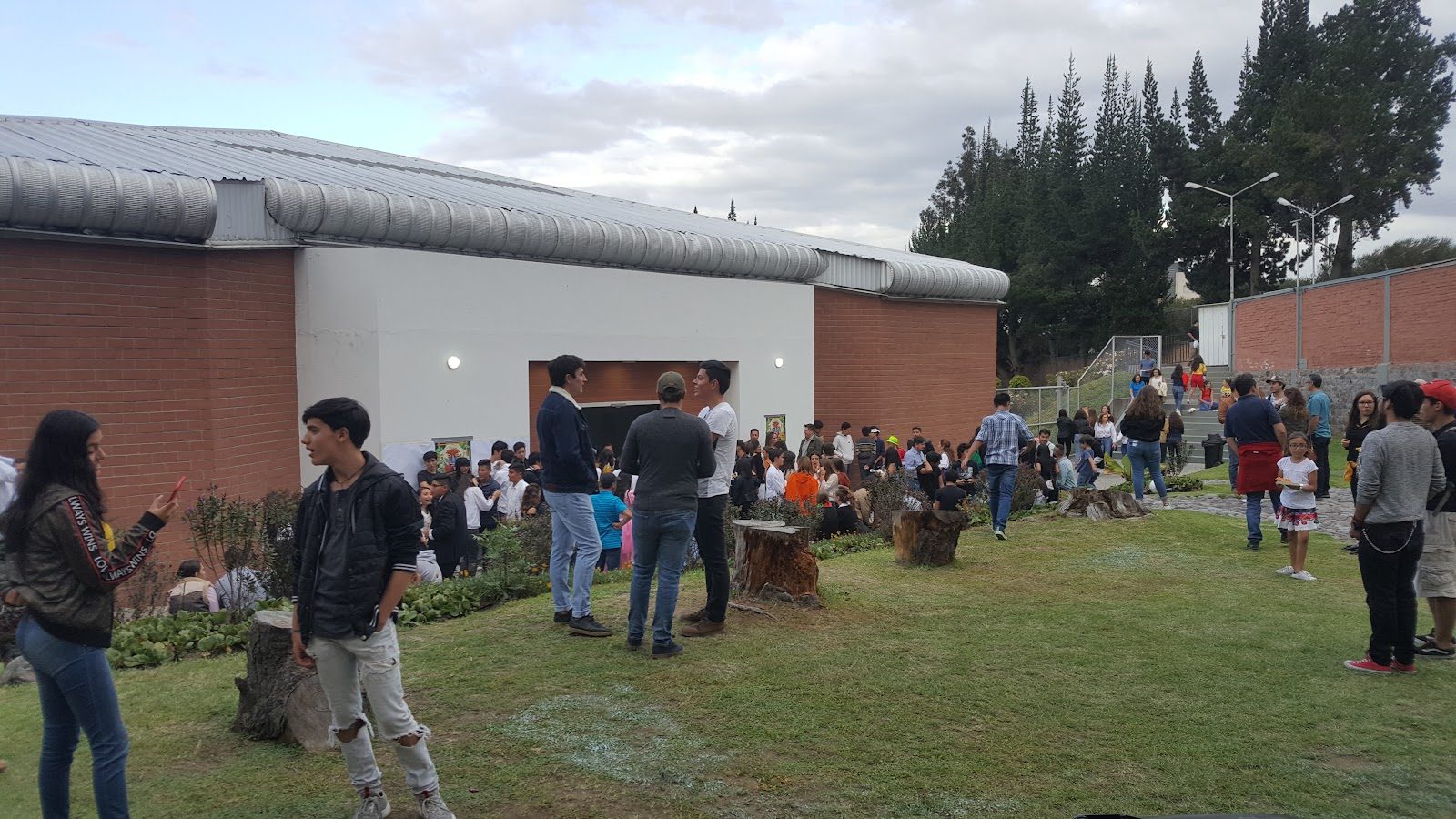
Photo © Luis Alberto Reyes via Google Maps
Type
Day
Ages
3–18
Curriculum
IB
Qualifications
IB Diploma
Ratio
—
The Verdict
Editor's commitment
Right for
Quito families wanting a day school for ages 3–18 with the full IB continuum in Spanish and English.
Wrong for
Families wanting boarding, a religious ethos, or a non-IB route; Colegio Alberto Einstein is non-religious, day-only and IB.
Watch out for
Founded in 1974 and rooted in Ecuador's Jewish community, it carries a defined identity despite its non-religious status.
Ranking breakdown
Colegio Alberto Einstein · #1017 of 1591
Composite score 60.8. 8 weighted criteria.
By criterion
Academic Outcomes
Weight 20%
#1084
of 1529 scored
University Placement
Weight 16%
#1089
of 1529 scored
Prestige & Heritage
Weight 12%
#1037
of 1571 scored
Alumni Network
Weight 12%
#663
of 1530 scored
Facilities
Weight 12%
#1081
of 1534 scored
Transparency & Communications
Weight 8%
#1099
of 1532 scored
Peer & Industry Review
Weight 10%
#891
of 1548 scored
Admissions Selectivity & Demand
Weight 8%
#888
of 1529 scored
Score history
Colegio Alberto Einstein · 2026
Movement across 2024–2026. Peer average overlaid.
Overall — 2024–2026
60.8/ 100
▲ +23.8 vs 2025
year on year
Peer & Industry Review
How Colegio Alberto Einstein is regarded in the sector
66
Respected · medium confidence
I could not identify at least two independent, credible third-party sources (e.g., Tatler, Good Schools Guide, specialist education press, or established expat forums) that substantively assess Colegio Alberto Einstein's reputation. Without verifiable independent evidence, a reputation score cannot be responsibly assigned.
Editors' overview
Colegio Alberto Einstein occupies a distinct niche in Quito: a non-religious, bilingual day school with the full IB continuum, founded by Ecuador’s Jewish community in 1974 and serving ages 3–18. That combination matters. In a market where many schools lean on a single programme, a faith identity, or a local-curriculum core with international additions, Einstein offers a cleaner proposition: Spanish and English instruction, an IB through-line from early years to graduation, and a campus in Puembo that gives it physical separation from the city’s denser school stock. The result is serious academic intent without the doctrinal framing that shapes parts of the sector.
What puts it on a shortlist is coherence. Parents looking for an international education in Quito are not just buying subjects; they are buying continuity, language confidence and a peer group with ambition. Einstein’s age range of 3–18 allows that continuity, and the IB framework gives the school a recognisable academic grammar from start to finish. The Harvard-advised campus line adds cachet, but the stronger point is operational: families get a school built around an integrated model rather than a patchwork of programmes. That makes Einstein attractive to parents who want a clear educational spine, bilingual fluency and a school culture that carries intellectual weight without sliding into corporate-school blandness.
This school will suit students who are comfortable with academic structure, discussion, writing and sustained independent work. It fits children who thrive in bilingual settings and families who value an outward-looking education but do not want a boarding environment or a religious framework. It also suits internationally minded local families who want prestige with substance and a school community that carries a strong sense of purpose. Students who need a looser, less demanding academic environment, or families seeking a more traditional single-language national school experience, will find a cleaner fit elsewhere. Einstein’s appeal rests on a precise offer: bilingual rigour, full-journey IB, and a market position in Quito that remains distinctive rather than generic.
Academic Performance
Colegio Alberto Einstein does not publish the data that matter most in any hard assessment of academic performance: no cohort-wide diploma average, no pass-rate history, no subject breakdown, no score distribution, and no comparative trend line across years. That is a real weakness. For a school that trades on academic seriousness, results transparency is not optional; it is part of the product. Without those figures, no responsible editor can place Einstein securely among Quito’s top academic performers, the city’s solid middle tier, or somewhere in between. Parents are left with reputation, programme breadth and school narrative, but not the clean evidence that confirms whether the senior years deliver at a consistently high level.
That opacity does not mean weak outcomes; it means unverified outcomes. Those are different judgments, and they need to stay separate. In markets where strong schools publish diploma averages, university destinations and top-score counts, silence reads as an avoidable gap. Einstein’s full programme structure gives it the framework for serious attainment, and its profile points to an ambitious academic culture, but framework is not performance. Until the school discloses headline external results — even a basic annual snapshot with pass rates, average points and subject highs — its academic standing relative to direct peers remains frustratingly hard to pin down. For families who rank published outcomes above ethos and institutional identity, that lack of disclosure is a material drawback.
Facilities
The decisive facility advantage here is the Puembo campus itself. In Quito, where many established private schools operate on constrained urban plots, space is not cosmetic; it shapes the school day. Einstein benefits from a proper campus setting with room for sport, circulation and specialist teaching beyond the cramped, vertical model common in the city. That gives it an edge over older central-campus competitors whose infrastructure is stronger in reputation than in physical ease. The Harvard-advised planning line carries marketing value, but the practical gain matters more: a site designed as a whole rather than a collection of incremental additions. For parents comparing premium schools, that places Einstein in the better-resourced physical bracket of the local market.
What remains missing is detail. The school does not publish a clear, granular account of its specialist facilities — no full public inventory of science labs, performing arts spaces, libraries, indoor sports provision or technology infrastructure. That gap limits any fine-grained comparison with direct peers. So the judgement rests on campus format rather than on a room-by-room audit. Even with that caveat, Einstein stands ahead of schools whose facilities are constrained by dense city locations, but it does not earn top marks for transparency. In this fee band, parents should expect hard specifics, not atmosphere. The campus looks like a serious institutional asset; the public disclosure around what sits on it is too thin.
Einstein’s appeal rests on a precise offer: bilingual rigour, full-journey IB, and a market position in Quito that remains distinctive rather than generic
Prestige
Einstein carries real prestige in Ecuador’s school market, but it is specific prestige, not mass-market glamour. The name has weight because the school sits in a narrow bracket: academically serious, socially established, and tied to a community foundation that gives it more identity than the interchangeable premium-school model. That matters. Many schools can claim ambition; fewer command recognition among families who know the local independent sector well. Einstein does. Its appeal rests on institutional substance and a peer group that parents read as driven, polished and upward-looking. The physical move out of the urban school grid also adds status value: space, separation and campus intent still read as prestige markers in this market.
That said, this is not prestige built on publicly proven dominance. The school does not publish the headline senior-school outcomes that would settle the question of academic standing with authority. So the prestige rating sits on reputation, selectivity cues, community history and market positioning rather than on disclosed top-line results. For many families, that still carries force; social reputation and school identity influence choice as much as exam tables do. But there is a limit. Prestige without transparent outcomes remains *partly inherited rather than earned afresh each year. Einstein still lands in the upper tier of recognition* in Quito, but not in the small group of schools that back status with fully visible performance data.
In markets where strong schools publish diploma averages, university destinations and top-score counts, silence reads as an avoidable gap
Communications
Einstein communicates with the confidence of an established institution, but not with the transparency of a school that invites outside scrutiny. For current parents, that often works well enough: schools with a settled community identity tend to rely on direct operational updates, event notices and routine calendar traffic rather than constant public explanation. That model suits families already inside the tent. It suits outsiders less well. The public-facing communication leaves too many practical blanks on the issues discerning parents check first: senior outcomes, detailed facilities, and the hard evidence behind academic claims. When a school asks families to trust its culture and standing without publishing those basics, communication shifts from informative to selectively managed.
That does not mean the school communicates badly day to day. It means it communicates more comfortably inward than outward. Parents who value a close-knit school community, clear administrative rhythm and a defined institutional voice will find that reassuring. Parents who expect forensic disclosure from a premium school will not. The distinction matters. Good communications are not just warm messages and polished announcements; they include uncomfortable data, clear comparisons and enough specificity for families to judge value with cold eyes. Einstein has the stature to do that and still does not do it. Until it publishes the numbers and operational detail that serious parents expect, its communications remain competent but guarded.
Uniqueness
Einstein’s distinctiveness lies in the combination rather than any single feature. In Quito, plenty of schools offer status, many offer bilingual teaching, and a smaller group offer an international programme. Far fewer combine those elements with a non-religious foundation rooted in a minority community and then sustain that identity across the full age span of 3–18. That gives the school a social texture that is harder to replicate than a new building or a premium fee point. Students grow up in an environment shaped by cultural seriousness, institutional memory and an idea of education that carries more moral weight than the standard achievement-and-brand formula. The result is a school that feels more grounded than corporate and more self-defined than fashionable.
For students, that brings two practical gains. First, there is a clearer sense of who the school is for: families who want intellectual ambition without doctrinal framing and who value a community with real internal coherence. Second, the peer culture has a better chance of consistency from the early years to graduation. In schools built from bolt-on programmes or market trends, students can end up with mixed messages about what the place values. Einstein offers a cleaner through-line. Children who thrive on belonging, continuity and academic expectation benefit from that. Those who want a looser, more anonymous school experience will not. That precision is part of the school’s appeal.
So the prestige rating sits on reputation, selectivity cues, community history and market positioning rather than on disclosed top-line results
Student Profile
The students who fit best here are those who like clarity, expectation and purpose. This is not a school for children who want to drift anonymously through the week. The social fit favours families who value education as a serious project and who want their children surrounded by classmates with strong academic habits, high self-command and a real tolerance for structure. Pupils who read willingly, cope well with sustained writing, and can handle teacher feedback without drama will do well. So will children who are comfortable moving between cultural worlds at home and at school. There is a groundedness to the profile: polished, ambitious, community-aware, and less interested in adolescent performative cool than in getting on with the work.
The harder truth is that this will not suit every able child. Students who need constant novelty, loose boundaries or a more forgiving pace can find the atmosphere too exacting. The same goes for families who want a school to feel socially casual or ideologically neutral in the empty, generic sense. Einstein attracts a cohort with clear internal drive and a pronounced sense that school matters. For the right child, that peer culture is a major asset: friends who take study seriously, classrooms with momentum, and adults who expect students to carry themselves well by the time they reach the upper years. For the wrong child, it can feel tight-grained, high-pressure and not especially forgiving.
Einstein’s distinctiveness lies in the combination rather than any single feature
Co-curricular strengths
Arts & sport, on a separate axis
Overall 6.66/10
Scored 0-10 from the school's own published evidence. This axis is editorial-only — it does not feed the main WTS ranking.
Sports
7.5/10
The extracurriculars explicitly list Basketball, Soccer, and Volleyball, showing a solid multi-sport offering but with no named facilities, staff, leagues, or competitive results described.
Drama
6.8/10
The extracurriculars explicitly list Theater.
Dance
5/10
Music
7/10
The extracurriculars explicitly list Choir, which is a clear music offering.
Visual Arts
7/10
Editor first-pass · editor-reviewable · 7/27/2026
Strengths
- +IB curriculum from ages 3–18
- +Spanish and English instruction
- +Day school suits Quito-based families
- +Non-religious setting broadens appeal
Considerations
- −No boarding for overseas families
- −Spanish-English model may not suit monolingual children
- −No published accreditations in provided context
Availability
Primary entry gate & tests
Academic Record
Gallery
Photo © Luis Alberto Reyes via Google Maps
Photo © Luis Alberto Reyes via Google Maps
Photo © Eveling Egas via Google Maps
Photo © Eveling Egas via Google Maps
Photo © Eveling Egas via Google Maps
Parent reviews
Have you sent your child here?
Voice reviews carry the strongest trust badge — we transcribe them for you to tidy up before they go live. Prefer to type? A written review is fine too.
Add your voice
In 60 seconds, tell other parents: what's the best thing about Colegio Alberto Einstein, and what surprised you when your child joined?
We ask for a Google sign-in so every review has a real face behind it — no anonymous drive-by attacks on schools, and no faked positive reviews. Your email is never shown publicly.
Send this profile to a friend
International parents rely on word-of-mouth. Share this review with someone weighing the same decision.
Schools with places
Similar schools to Colegio Alberto Einstein with places available now.
St Michaels University School
Victoria · Canada
- 2026-27
- CLOSEDRegular cycle closed
- 2027-28
- PLACES OPEN2027/28 open; priority 1 Dec '26
Marymount International School Rome
Rome · Italy
- 2026-27
- WAITPOOLSpace-dependent
- 2027-28
- PLACES OPENRolling
Ashbury College
Ottawa · Canada
- 2026-27
- CLOSEDRegular cycle closed
- 2027-28
- PLACES OPENDay Dec / Boarding rolling
Santiago College
Santiago · Chile
- 2026-27
- WAITPOOLSpace-dependent
- 2027-28
- PLACES OPENRolling
Availability first, then country, area, curriculum, price, co-curricular
Consider also
Also worth looking at alongside Colegio Alberto Einstein.

Colegio Menor San Francisco de Quito
Quito · Ecuador
A university-linked liberal arts school in Cumbaya, built on the founding creed of Goodness, Beauty and Truth
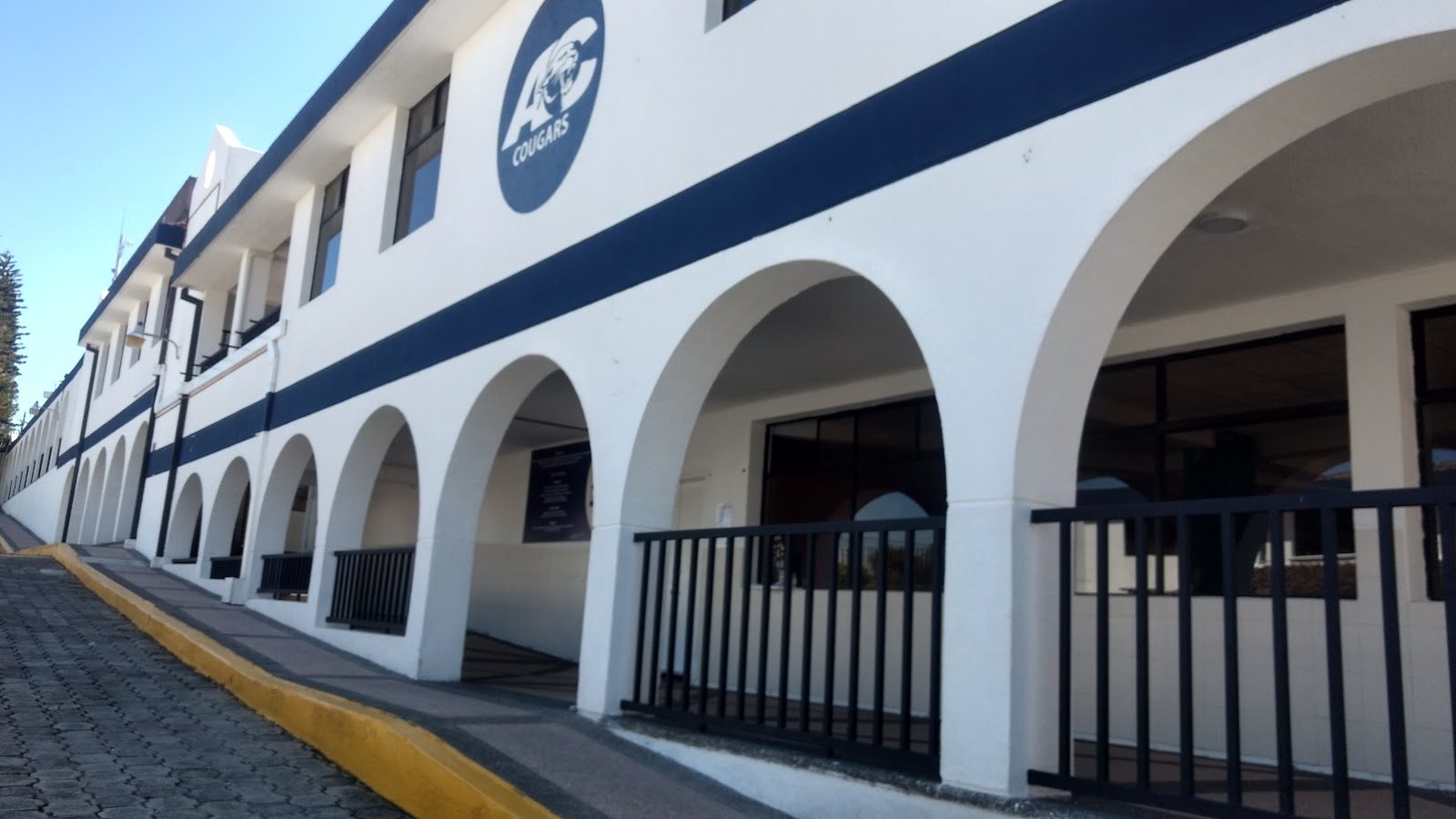
Academia Cotopaxi
Quito · Ecuador
High above Quito at 2,850 meters, this campus became Ecuador's first IB Diploma school back in 1982.
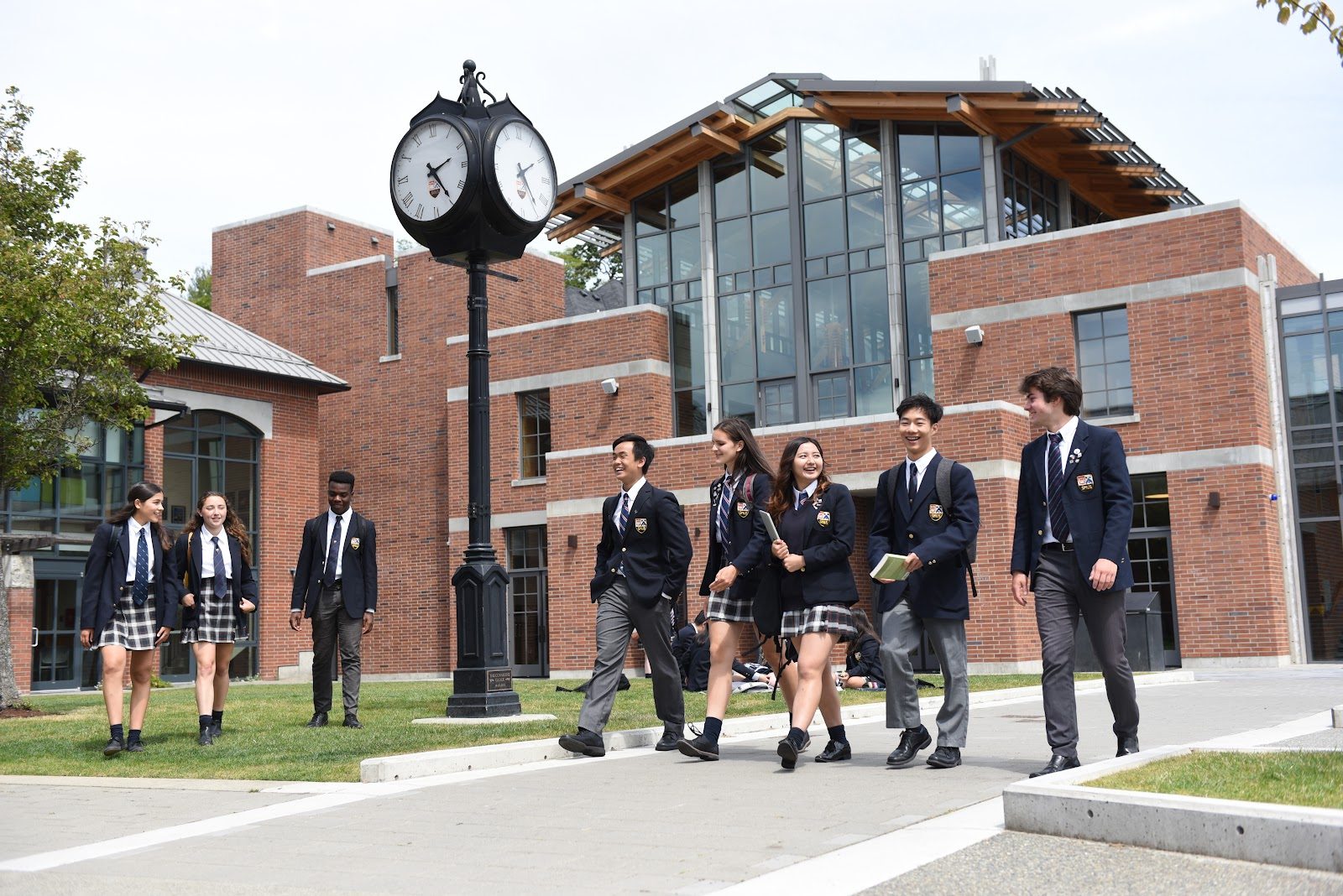
St Michaels University School
Victoria · Canada
On Vancouver Island, a AP pioneer school pairs Canadian, IB and American pathways with its own rowing centre on the Gorge Waterway.
Gyeonggi Suwon International School
Suwon · South Korea
One of Korea's first schools authorized for the full IB continuum, pairing American-rooted rigor with a faith-based ethos on a Suwon hillside campus.
Same country and curriculum — closest matches within ±10 points either way