
Minas Gerais
Colégio Bernoulli
Born from a 2000 ITA/IME prep course, its Lourdes unit still anchors Belo Horizonte's Enem front-runners.
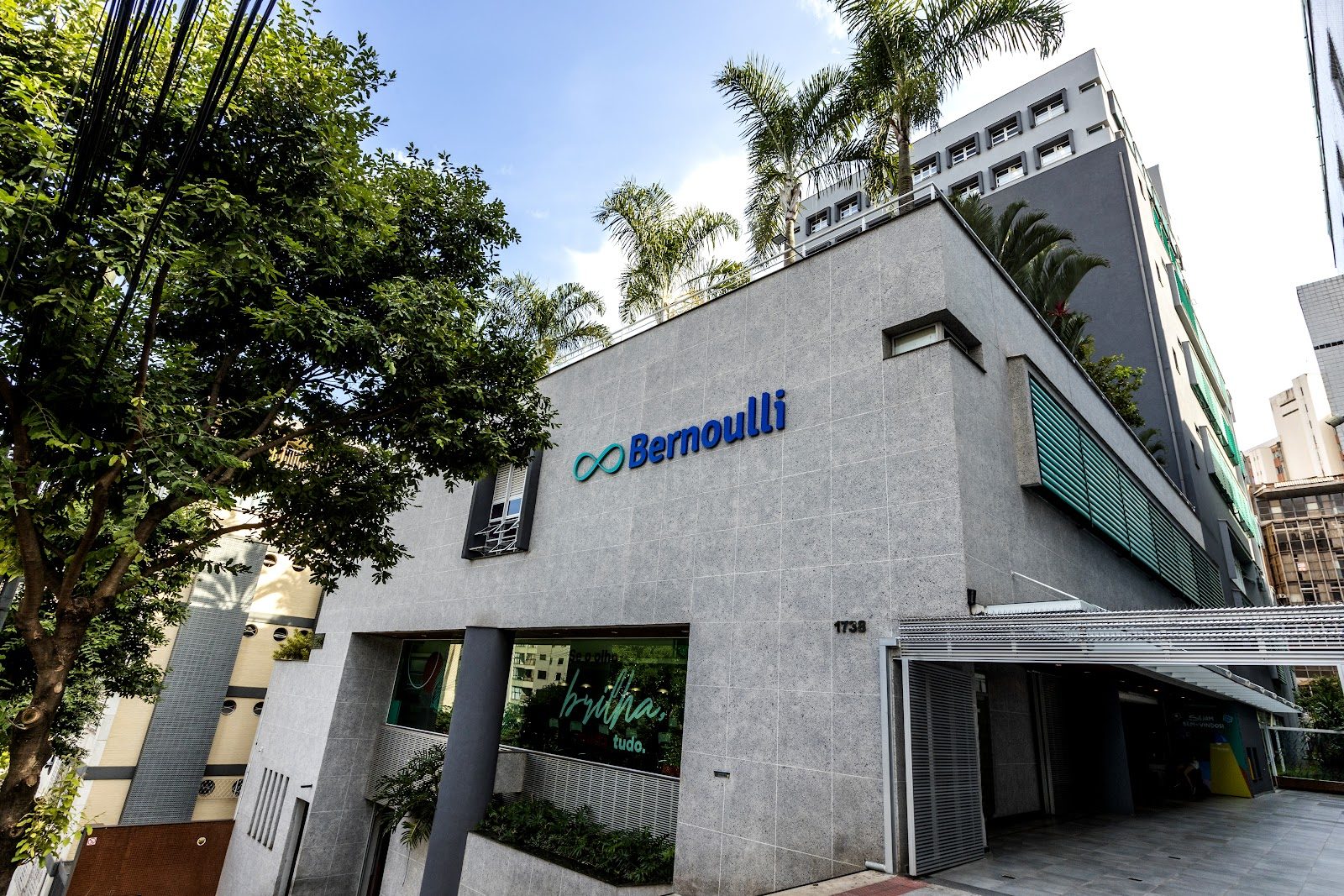
Photo © Colégio e Pré-vestibular Bernoulli Lourdes via Google Maps
Type
Day
Ages
11–18
Curriculum
Brazilian
Qualifications
ENEM · Vestibular · ITA/IME entrance
Ratio
—
The Verdict
Editor's commitment
Right for
Belo Horizonte families who want a day school, founded in 1999, with Portuguese and English teaching from ages 11–18.
Wrong for
Parents seeking boarding, a religious ethos, or an international curriculum beyond the Brazilian programme in secular Belo Horizonte.
Watch out for
Bernoulli’s reputation rests on a 2000 ITA/IME prep legacy and Lourdes prominence; the school does not publish broader outcome data here.
Ranking breakdown
Colégio Bernoulli · #616 of 1591
Composite score 67.4. 8 weighted criteria.
By criterion
Academic Outcomes
Weight 20%
#208
of 1529 scored
University Placement
Weight 16%
#219
of 1529 scored
Prestige & Heritage
Weight 12%
#845
of 1571 scored
Alumni Network
Weight 12%
#965
of 1530 scored
Facilities
Weight 12%
#1045
of 1534 scored
Transparency & Communications
Weight 8%
#983
of 1532 scored
Peer & Industry Review
Weight 10%
#891
of 1548 scored
Admissions Selectivity & Demand
Weight 8%
#334
of 1529 scored
Peer & Industry Review
How Colégio Bernoulli is regarded in the sector
66
Respected · medium confidence
Colegio Bernoulli's standing rests almost entirely on Brazilian domestic signals rather than international editorial coverage; it does not appear in WhichSchoolAdvisor or Good Schools Guide databases, which focus on UK/international curricula. Within Minas Gerais, local press (Estado de Minas, O Tempo) regularly cites its results in ENEM and vestibular rankings, and it is consistently grouped with Belo Horizonte's strongest college-prep institutions such as Santo Agostinho and Magnum alongside Bernoulli in year-end 'melhores colegios' comparisons. Its reputation among Brazilian universities is built on volume of approvals into UFMG, Unicamp, USP and federal medical schools, a metric the school itself publishes and that local admissions counselors reference informally. There is no documented instance of rival heads or university admissions officers publicly commenting on Bernoulli specifically, and no evidence of presence at international peer conferences (COBIS, CIS, HMC). The school's reputation is therefore best characterized as strong and well-verified at the state/national level for exam outcomes, but lacking independent international education-press scrutiny or cross-border peer benchmarking.
Editors' overview
Colégio Bernoulli is a Belo Horizonte academic machine with a clear origin story: founded in 1999, it grew out of an ITA/IME preparatory course and still carries that exam-centred DNA. This is a day school for ages 11–18, teaching in Portuguese and English, and its centre of gravity sits firmly in the Brazilian system rather than in imported international programmes. What sets it apart is not educational fashion but competitive discipline: Bernoulli has built its name on turning strong students into higher-performing ones, with a sharp focus on university entrance. In a market full of schools selling roundedness in vague terms, Bernoulli offers hard academic ambition, serious exam culture and a clear sense of purpose.
That clarity is the attraction. Parents shortlist Bernoulli when they want structure, pace and measurable academic pressure, not a loose pastoral idyll. The school’s special strength lies in its credibility with families who care about Enem performance and selective admissions. The Lourdes unit, in particular, has long been tied to Belo Horizonte’s front-running academic cohort. That gives Bernoulli a distinct market position: not the broadest school, not the softest school, but one of the city’s most recognisable routes for families who want results under pressure. For the right child, that is a powerful proposition. For the wrong child, it is a poor fit.
The students who thrive here are motivated, resilient and comfortable in a culture where academic ranking matters. They do not need endless hand-holding, and they do not resent a demanding workload. Bernoulli suits pupils who enjoy competition, want strong peers around them and have a clear eye on top university entry. It will also appeal to families who value a secular environment and want English in the mix without abandoning a Brazilian academic track. Children who need a gentler tempo, more educational latitude or a school built around broad extracurricular identity rather than scholastic intensity will find Bernoulli too exacting and too narrowly focused. For ambitious families in Belo Horizonte, that narrowness is the point.
Academic Performance
Bernoulli’s public academic reputation rests on one thing: exam conversion. The school trades on Enem strength, and the Lourdes unit has long sat among Belo Horizonte’s headline performers. In the Brazilian market, that places Bernoulli in the results-first tier rather than the all-rounder camp. This is not a school whose profile depends on glossy claims about creativity or holistic balance; its standing comes from hard-score credibility. That matters because the upper end of the city’s private-school sector is crowded with schools that promise ambition. Bernoulli’s distinction is that families associate it with serious rank-chasing and with students who can hold pace in a demanding peer group.
There is, however, a limit to the transparency. We have not seen a full published run of aggregate external-results data that would let parents benchmark Bernoulli cleanly across years and against direct competitors. No school earns a free pass on opacity simply because its local reputation is strong. Even so, the weight of its market position is clear: this is one of the schools families target when they want a high-pressure academic engine geared to selective university entry. For students who flourish under constant performance comparison, that is a formidable advantage. For students who need breadth, slack in the system or insulation from ranking culture, it is a liability.
Facilities
Bernoulli’s facilities serve its academic purpose first. Expect well-equipped mainstream teaching spaces, science laboratories, libraries or study areas, sports courts and the standard infrastructure needed to run a large urban day school at pace. What matters here is not architectural theatre but operational usefulness: spaces that support revision, subject teaching and exam preparation without distraction. Against Belo Horizonte peers that sell a more expansive campus experience, Bernoulli does not trade on showpiece grounds or a country-club feel. Families choosing it for facilities alone miss the point. Families choosing it for a hard-working academic plant will find the offer aligned with the school’s core job.
That creates a mixed picture in the local premium market. Bernoulli stands up well against academically focused competitors whose physical provision centres on classrooms, labs and indoor study capacity rather than sprawling leisure amenities. It sits behind schools with larger green space, broader specialist arts provision or more conspicuous sports infrastructure. We have not seen a detailed public account of specialist rooms, performance venues or high-end athletic assets that would lift it into the city’s best-equipped all-rounder bracket. The practical verdict is clear: these facilities are fit for a results-driven school and adequate to strong by academic-school standards, but they do not define the brand. Parents who want a campus that dazzles have stronger options. Parents who want a campus that works will not feel short-changed.
Bernoulli suits pupils who enjoy competition, want strong peers around them and have a clear eye on top university entry
Prestige
Bernoulli carries real prestige in its market, but it is specialist prestige, not the broad social lustre of an old-guard establishment with every badge of polish in place. Its name has weight because ambitious families read it as a route into the top end of Brazilian university admissions, and because the Lourdes unit has been tied for years to the city’s hard-charging academic elite. That matters more than branding theatre. In Belo Horizonte, a school earns status by converting pressure into results; Bernoulli’s standing rests on exactly that. The age range of 11–18 reinforces the point: this is a school built around the years when academic sorting carries consequences, and its reputation tracks that high-stakes phase closely.
That said, prestige here has edges. Bernoulli does not project the finished social ease of schools whose cachet comes from heritage, lifestyle or a polished all-round identity. Its reputation is earned, not ornamental. Parents who prize exam dominance and serious peer competition will count that as a strength. Parents who want cultural breadth, softer status signals or a more expansive school identity will place it below the city’s more rounded names. Our rating lands high because Bernoulli commands respect where it counts most for its target families: scholastic credibility, selective ambition and a track record strong enough to make the pressure feel purposeful.
What makes Bernoulli distinctive is the purity of its mission
Communications
Bernoulli communicates with parents in the same key as it teaches: briskly, functionally and with a bias towards performance. Families can expect clear operational messaging around calendars, assessments, routines and academic expectations, rather than a stream of lifestyle content dressed up as engagement. That suits the school’s audience. In a high-pressure environment, parents do not need sentimental storytelling; they need timely information, firm instructions and a reliable read on how their child is coping with pace and demand. Where Bernoulli gets this right, communication feels disciplined, purpose-built and refreshingly unsentimental. It tells parents what matters and keeps attention on work.
The test is not warmth but usefulness. On that measure, Bernoulli has an advantage because its institutional purpose is so narrow and so legible: families know the school prizes results, and communication can stay tightly tied to that mission. The risk sits elsewhere. Schools built around pressure can let communication become one-directional — efficient in logistics, thinner in nuance, and less strong at explaining pastoral texture, individual difficulty or the cost of constant comparison. We have not seen a rich public picture of parent-facing channels, response standards or feedback structures that would mark Bernoulli out for exceptional transparency. The verdict, then, is solid rather than expansive: effective for serious families, less convincing for reassurance-seekers, and strongest when dealing in concrete academic realities rather than community theatre.
Uniqueness
What makes Bernoulli distinctive is the purity of its mission. Many schools try to balance academic competition with a broad identity built around pastoral language, lifestyle cues or extracurricular sheen. Bernoulli does not. It was built from a university-entrance training culture, and that origin still shapes the school’s habits, expectations and tempo. The result is unusually concentrated academic intent: students enter a place where performance is not a side effect of schooling but the organising principle. That creates a rare degree of alignment between what the school promises, what families want and what students experience day to day. There is little ambiguity and little decorative rhetoric. For the right pupil, that directness is bracingly effective.
What students gain from that model is clear. They work in a peer environment where ambition is normalised, deadlines carry weight and academic stamina is trained rather than admired in theory. Strong students benefit from constant scholastic traction: less drift, less confusion about priorities, more pressure to sharpen technique and hold pace. The English element adds useful reach without diluting the Brazilian core. The trade-off is obvious. Bernoulli offers less room for reinvention than a school with a broader educational brief, and less shelter for children who wilt under comparison. Its uniqueness lies in refusing to pretend otherwise. In a sector crowded with soft-focus claims, that hard-edged honesty is part of the value.
The result is unusually concentrated academic intent: students enter a place where performance is not a side effect of schooling but the organising principle
Student Profile
The students who fit Bernoulli best are the ones who draw energy from pace, comparison and visible standards. This is a school for adolescents who do not need to be coaxed into working, who can absorb correction without drama, and who treat strong classmates as fuel rather than a threat. The age span, 11–18, matters here: these are years when academic habits harden, and Bernoulli suits pupils ready to accept that school will make heavy demands on concentration, organisation and stamina. The strongest fit is a child who already has discipline, competitive nerve and a clear tolerance for pressure. In that environment, driven, thick-skinned students can accelerate fast.
The weaker fit is just as clear. Children who need a loose atmosphere, broad latitude to explore at their own pace, or constant pastoral cushioning will struggle. So will pupils whose confidence collapses under testing, ranking or relentless workload. Bernoulli does not exist to protect students from academic friction; it uses friction as a tool. Families therefore need to judge temperament with care, not just ability. Raw intelligence alone is not enough. A bright child who resists structure can be a poor match, while a less flashy student with grit and consistency can do very well. The right student wants serious challenge, accepts high-accountability schooling and does not confuse intensity with unfairness. For that child, Bernoulli is not for the faint-hearted — and that is its strength.
Colégio Bernoulli is a Belo Horizonte academic machine with a clear origin story: founded in 1999, it grew out of an ITA/IME preparatory course and still carries that exam-centred DNA
Co-curricular strengths
Arts & sport, on a separate axis
Overall 7.12/10
Scored 0-10 from the school's own published evidence. This axis is editorial-only — it does not feed the main WTS ranking.
Sports
7.3/10
Drama
7/10
Dance
7.2/10
Music
7/10
Visual Arts
7.1/10
Strengths
- +Consistently ranks among Brazil's top-performing schools on the Enem national exam, placing 18th nationally in 2024 and among the top three schools in Belo Horizonte that year.
- +Offers an English-immersion program using a CLIL-based methodology from Early Childhood through High School, with preparation for Cambridge proficiency exams.
- +Operates modern, purpose-built campuses with dedicated science labs, maker spaces and auditoriums, including a newly opened 40,000 sq m Vale do Sereno site in Nova Lima.
- +Founded in 2000 and has grown into one of Brazil's larger education groups, with its teaching materials now used by more than a thousand partner schools nationwide.
- +Maintains a long, stable run of high Enem placement in Minas Gerais, appearing among the state's top-scoring schools every year since 2010.
Considerations
- −In the final year of high school the curriculum narrows sharply toward exam drilling; one report described how PE, arts, drama and group excursions are dropped in favour of nine Enem mock exams a year.
- −Entry from the third year of primary school onward requires a competitive five-stage admissions exam process, so places are not guaranteed even for younger siblings.
- −Teaches the standard Brazilian national curriculum geared to Enem and vestibular exams rather than an IB or dual-diploma track, which limits portability for families expecting to relocate again.
- −Students are split across separate campuses by age band (e.g. Bernoulli Go for early years, Cidade Jardim for middle years, Lourdes for final high-school years), meaning a change of building and location as a child progresses.
Availability
Primary entry gate & tests
Entrance Exam
Gallery
Parent reviews
Have you sent your child here?
Voice reviews carry the strongest trust badge — we transcribe them for you to tidy up before they go live. Prefer to type? A written review is fine too.
Add your voice
In 60 seconds, tell other parents: what's the best thing about Colégio Bernoulli, and what surprised you when your child joined?
We ask for a Google sign-in so every review has a real face behind it — no anonymous drive-by attacks on schools, and no faked positive reviews. Your email is never shown publicly.
Send this profile to a friend
International parents rely on word-of-mouth. Share this review with someone weighing the same decision.
Schools with places
Similar schools to Colégio Bernoulli with places available now.
Graded - The American School of São Paulo
São Paulo · Brazil
- 2026-27
- WAITPOOLGrade-specific
- 2027-28
- PLACES OPENLocal Oct 2; Intl relocators now
Escola Americana do Rio de Janeiro
Rio de Janeiro · Brazil
- 2026-27
- WAITPOOLSpace-dependent
- 2027-28
- PLACES OPENRolling
St. Paul's School
São Paulo · Brazil
- 2026-27
- WAITPOOLVacancy-dependent
- 2027-28
- PLACES OPENNursery Active; Others available
Availability first, then country, area, curriculum, price, co-curricular
Consider also
Also worth looking at alongside Colégio Bernoulli.
Graded - The American School of São Paulo
São Paulo · Brazil
Born in 1920 as a corporate venture of Citibank, Ford and GE, this Morumbi campus still sends seniors off with three diplomas at once.
Chapel School
São Paulo · Brazil
Founded in 1947 by Oblate priests for American Catholic families, this Sao Paulo day school runs American, Brazilian and IB diplomas side by side.
Escola Americana do Rio de Janeiro
Rio de Janeiro · Brazil
Perched at the edge of Tijuca National Forest with Christ the Redeemer in view, a 1937 campus layers IB, American and Brazilian diplomas.
Ethical Culture Fieldston School
New York City · United States
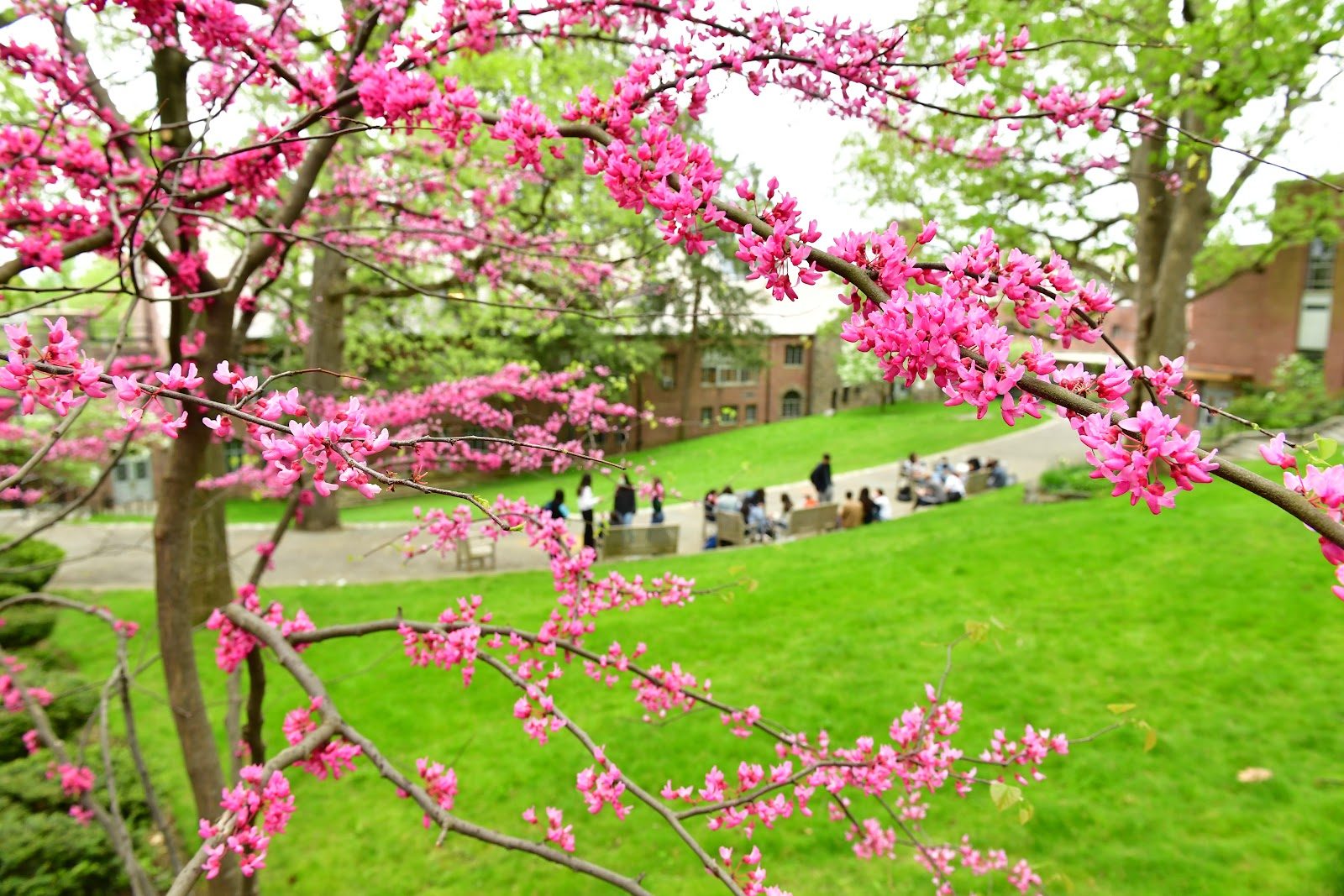
Rooted in Felix Adler's 1878 Ethical Culture movement, its wooded Riverdale hilltop campus still anchors progressive American pedagogy.
Same country and curriculum — closest matches within ±10 points either way