
Rio de Janeiro
Perched at the edge of Tijuca National Forest with Christ the Redeemer in view, a 1937 campus layers IB, American and Brazilian diplomas.
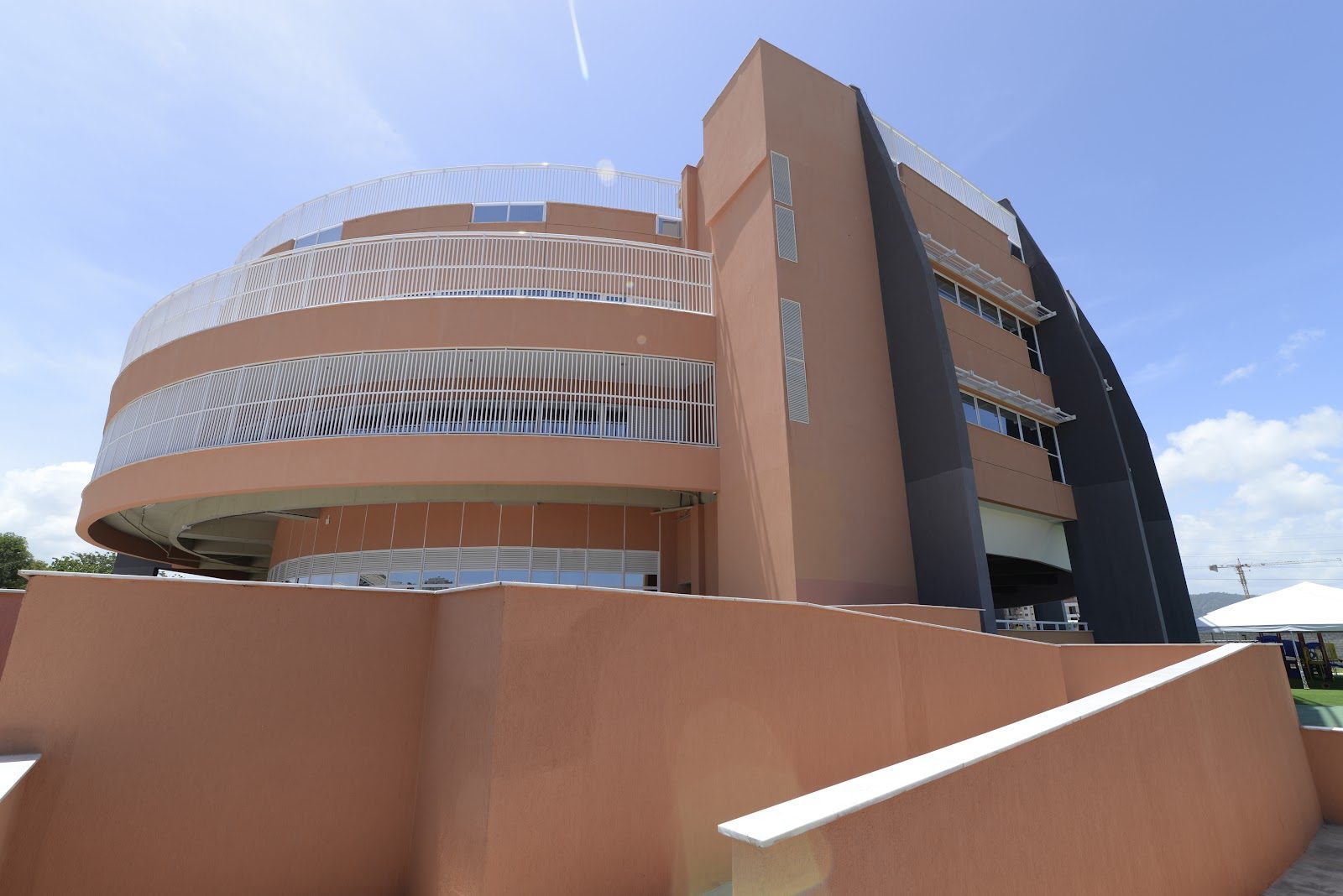
Photo © Beatriz Pontes via Google Maps
Type
Day
Ages
2–18
Curriculum
American · IB
Qualifications
US High School Diploma · IB Diploma
Ratio
—
The Verdict
Editor's commitment
Right for
Families wanting an English-Portuguese day school from age 2 to 18, with IB World status and an American curriculum on one campus.
Wrong for
Parents chasing bargain fees or a narrow local track: the average annual fee is $46,500, and the school runs beyond Brazil alone.
Watch out for
At 1,300 students and a 7.37:1 ratio, scale cuts both ways; ask how much individual attention survives beside Columbia and Amherst ambitions.
Ranking breakdown
Escola Americana do Rio de Janeiro · # of 1591
Composite score 74.3. 8 weighted criteria.
By criterion
Academic Outcomes
Weight 20%
#511
of 1529 scored
University Placement
Weight 16%
#59
of 1529 scored
Prestige & Heritage
Weight 12%
#206
of 1571 scored
Alumni Network
Weight 12%
#231
of 1530 scored
Facilities
Weight 12%
#188
of 1534 scored
Transparency & Communications
Weight 8%
#9
of 1532 scored
Peer & Industry Review
Weight 10%
#234
of 1548 scored
Admissions Selectivity & Demand
Weight 8%
#1232
of 1529 scored
Score history
Escola Americana do Rio de Janeiro · 2026
Movement across 2024–2026. Peer average overlaid.
Overall — 2024–2026
74.3/ 100
▲ +32.4 vs 2025
year on year
Peer & Industry Review
How Escola Americana do Rio de Janeiro is regarded in the sector
65
Respected · low confidence
Escola Americana do Rio de Janeiro is a long-established, AdvancED/Cognia and NEASC-accredited international school frequently mentioned in expat parent forums (e.g., InterNations, ExpatExchange discussions on Rio schooling) and in State Department-affiliated overseas school lists as a leading American curriculum option in Rio de Janeiro. It lacks the broader specialist press coverage (Tatler, Good Schools Guide) seen for higher-tier global institutions, but is consistently cited as one of the top international schools in Rio alongside British School Rio and PanAmerican School.
Evidence sources
Editors' overview
Perched beside Tijuca National Forest with Christ the Redeemer in view, EARJ trades on a setting few schools can match, but its real distinction sits in the academic structure: this is a school where American and IB pathways sit alongside the Brazilian diploma. That matters in Rio, where many international schools force a cleaner, narrower identity. EARJ instead serves families who want mobility without giving up local legitimacy. It is an IB World School, founded in 1937, and it runs from age 2 to 18 as a day school in English and Portuguese. For internationally minded Brazilian families, and for expatriates who want a serious route into North American universities without leaving Rio’s mainstream social and cultural life, that is a genuinely useful combination.
The scale also counts. With 1300 students, EARJ is big enough to offer breadth, yet the published 7.37 student-teacher ratio points to a level of staffing more associated with smaller, more expensive schools. The faculty profile adds weight: 39% international, 54% holding advanced degrees. Those numbers do not prove teaching quality on their own, but they do indicate an institution with the staffing depth to sustain multiple diplomas and a bilingual environment. The average annual fee across the full age range is $46,500, which places EARJ in the expensive end of the Rio market and squarely in the bracket where parents should expect strong university guidance, consistent academic delivery and a campus life with substance, not just polish.
The university destinations give a clearer signal than brand language ever does. Recent offers and enrolments include Amherst College, Babson College, Barnard College and Columbia University, with 3 heading to Columbia and 2 to Babson. That is a serious North American profile, and it fits the school’s long-standing American orientation. The student who will thrive here is academically ambitious, comfortable moving between languages and systems, and interested in keeping more than one future open at once. Families looking for a tiny, intimate school or a stripped-back single-curriculum experience will find EARJ too complex and too broad. Families who value range, international access and a school with real institutional heft in Rio should keep it firmly on the shortlist.
Academic Performance
EARJ gives parents a strong university-outcomes story, but a thin public exam-results story. The school publishes destination names that carry weight and fit its American orientation, yet it does not publish aggregate IB Diploma scores, pass rates, SAT or ACT ranges, AP results, or Brazilian national exam data in the public domain. That absence matters. In a market where ambitious schools use hard numbers to prove academic traction, EARJ asks families to infer performance from placements and reputation. For some that will suffice; for a school at this price point, it is not enough. Serious university placements do indicate capable students, competent counselling and courses with real stretch. They do not replace cohort-wide attainment data.
Relative to peers, EARJ sits in an unusual middle ground: stronger than schools with vague “global learning” rhetoric and no visible university pipeline, but less transparent than the best international schools that publish full IB or other external-results profiles every year. That leaves its academic performance credible but opaque. Families already committed to the school’s blend of pathways may accept that trade. Data-driven parents comparing Rio’s top international options should press for recent diploma outcomes, score distributions and destination consistency across several graduating classes before drawing conclusions. At present, EARJ’s external-results profile rests on selective proof points, not a fully disclosed record.
Facilities
The setting does heavy lifting here. A campus at the edge of Tijuca National Forest with Christ the Redeemer in view gives EARJ an immediate advantage over the more compressed urban sites that dominate Rio’s private-school market. That matters less for brochure photography than for daily life: more visual space, more air, and a stronger sense of separation from the city. For families weighing facilities against peers, that alone puts EARJ in the upper tier locally. The school’s published structure also points to a campus built to handle a full age range rather than a narrow senior-school operation, and a roll of 1300 indicates the scale to support dedicated spaces rather than improvised multi-use rooms. In Rio, plenty of schools sell ambition from constrained footprints; EARJ has the footprint of an institution with real physical presence.
What it does not publish is the detail that serious parents should want. There is no clear public breakdown of specialist labs, performing arts venues, sports provision, libraries, maker spaces or early-years facilities. That leaves the facilities picture strong in setting, weaker in disclosure. Top peer schools with nothing to hide list the practical assets plainly: pool or no pool, theatre or no theatre, number of science labs, pitch quality, indoor sports capacity. EARJ does not. The result is a campus that reads as substantial and attractive, but not fully evidenced in the way the best-run international schools now manage. A visit matters here more than it should.
EARJ’s parent communication has one clear strength: the school gives a clean top-line account of what it is and whom it serves
Prestige
EARJ carries real social and educational standing in Rio. Part of that comes from age and continuity; part comes from the fact that it sits in a narrow bracket of schools that connect local families, expatriate families and internationally mobile Brazilians without forcing a hard choice between home-country recognition and overseas access. That dual pull gives the school a wider reach than many international schools, which serve a transient expatriate niche or a local elite with international branding attached. Its size matters here too: a school of 1300 students has the visibility, alumni base and community weight to register in a city’s educational landscape in a way smaller operators do not. The fee level — an average of $46,500 a year — reinforces that status. This is premium territory, and families will read it as such.
The prestige is not absolute. EARJ has genuine cachet, but it does not sit on the same plane as the world’s most academically transparent international schools, because it does not publish the hard attainment data that would convert reputation into proof. Its standing rests instead on institutional longevity, a substantial campus operation, strong university placements and the confidence that comes with a deep-rooted school community. That makes EARJ well-regarded rather than untouchable: a school with clout, history and recognition, but not one that can rely on public results to end the argument.
That matters in Rio, where many international schools force a cleaner, narrower identity
Communications
EARJ’s parent communication has one clear strength: the school gives a clean top-line account of what it is and whom it serves. The public site is easy to navigate, the main routes for admissions, academics, student life and university placements sit where parents expect them, and the school puts a few hard institutional markers front and centre — 1300 students, 39% international faculty, 54% with advanced degrees. That is useful. It tells parents the school understands that numbers anchor trust better than slogans do. The tone, though, stays high-level and carefully managed. It sells confidence, community and outcomes, but gives less operational detail than a demanding parent wants once interest turns into scrutiny.
That gap matters because strong school communication is not only about polished navigation; it is about disclosure. EARJ does not use its public channels to publish the kind of granular information that reduces friction for families: fuller facilities inventories, cohort-wide academic results, or a richer picture of day-to-day school life beyond broad category labels. For existing parents, that does not prove weak communication inside the school gates; many schools handle practical updates well through portals and direct messages. For prospective parents, though, the external communications are competent rather than searching. The school explains itself clearly, but it does not open itself up deeply. In a premium school, that reads as controlled, not fully transparent.
Uniqueness
EARJ’s distinctiveness lies in combination, not gimmick. In one school, students can keep a foot in Brazil’s mainstream system while building a route into North American and other international universities. That is a rare practical advantage in a city where many international schools ask families to choose between local recognition and overseas mobility. Here, the structure is broader and more strategically useful: it suits expatriate families who do not want a cultural bubble, Brazilian families who want international options without cutting ties to home, and students whose plans are still forming. That flexibility has real value at sixth-form age, when university ambitions sharpen and families discover that “international” does not always travel cleanly across borders.
The other point of difference is institutional scale paired with a campus setting that softens it. A student body of 1300 brings breadth of courses, activities and peer groups; the published 7.37 student-teacher ratio points the other way, towards access to adults and tighter academic oversight than big schools often deliver. Add a site beside rainforest rather than wedged into a tower block, and daily life gains a striking sense of space that urban schools in Rio rarely match. For students, that mix produces something hard to replicate: a school large enough to offer range, rooted enough to feel part of the city, and internationally connected without becoming placeless.
EARJ instead serves families who want mobility without giving up local legitimacy
Student Profile
The pupil who fits EARJ best is comfortable with range. This is not a tight, single-track school for children who want one narrow peer group and one obvious route through adolescence. It suits students who can handle a mixed social world: local families with international ambitions, internationally mobile families who want deeper roots in Brazil, and children who move easily between different cultural codes. That mix gives the student body a cosmopolitan, high-functioning character, but it also demands adaptability. New pupils who need a small, highly sheltered environment or constant hand-holding will find the scale and breadth less forgiving than at a boutique school. Confident, engaged students who like having options tend to do better.
Academically, the natural fit is a student with real upward ambition and enough self-direction to make use of a school that offers multiple endpoints rather than one fixed script. The published university destinations point to a cohort with serious overseas aspirations, and the staffing profile — with 39% international faculty, 54% holding advanced degrees and a 7.37 student-teacher ratio — reinforces the picture of a school geared to students who will ask more of their teachers. Socially, EARJ fits families who want their children in a substantial community rather than an enclave. It is a strong match for bilingual or bicultural students, for internationally minded Brazilians, and for expatriate children who want Rio to feel lived in rather than visited.
It is an IB World School, founded in 1937, and it runs from age 2 to 18 as a day school in English and Portuguese
Co-curricular strengths
Arts & sport, on a separate axis
Overall 8/10
Scored 0-10 from the school's own published evidence. This axis is editorial-only — it does not feed the main WTS ranking.
Sports
8.5/10
The extracurriculars explicitly list football, volleyball, basketball, swimming, and track and field, showing a solid multi-sport offering but with no named facilities, specialist staff, or competitive results cited.
Drama
8.5/10
Drama club is explicitly named in the extracurriculars, but there is no further detail on productions, facilities, staff, or programme depth.
Dance
5.5/10
Music
8.5/10
School choir is offered, but the profile gives.
Visual Arts
9/10
Visual arts is explicitly named in the extracurriculars, but there is.
Editor first-pass · editor-reviewable · 7/27/2026
Outcomes & destinations
Where students go next
Top destinations
180 placements
- Amherst College· 1
- Babson College· 2
- Barnard College, Columbia University· 3
- Bentley University· 2
- Berklee College of Music· 1
- Boston College· 1
- Boston University· 1
- Brigham Young University· 1
- Brown University· 1
- Clemson University· 1
- Columbia University· 1
- Cornell University· 1
- Dartmouth College· 1
- Elon University· 1
- Emory University· 1
- Fashion Institute of Technology· 1
- Florida Institute of Technology· 2
- Florida International University· 2
- Fordham University· 2
- Georgetown University· 1
- Hofstra University· 1
- Houston Community College· 1
- Hult International Business School· 2
- Loyola Marymount University· 5
- Northeastern University· 6
- Northwestern University· 1
- Parsons School of Design, The New School· 3
- Pratt Institute· 1
- Purdue University· 1
- Rollins College· 1
- Rutgers University· 1
- San Diego State University· 3
- Sarah Lawrence College· 1
- Savannah College of Art and Design· 2
- Syracuse University· 4
- Temple University· 1
- Texas A&M University· 1
- The Cooper Union· 1
- The George Washington University· 1
- Tufts University· 1
- Tulane University· 1
- University of Arizona· 1
- University of California, Berkeley· 1
- University of California, Davis· 1
- University of California, San Diego· 1
- University of Chicago· 2
- University of Colorado Boulder· 2
- University of Florida· 1
- University of Hawai’i at Manoa· 1
- University of Massachusetts Dartmouth· 1
- University of Miami· 1
- University of Michigan· 1
- University of Rochester· 1
- University of South Florida· 2
- University of Southern California· 1
- University of Texas at Austin· 2
- University of Washington· 1
- Wake Forest University· 1
- Virginia Tech· 1
- Yale University· 2
- Arts University Bournemouth· 1
- Hult International Business School London· 1
- Instituto Marangoni London· 1
- King’s College London· 1
- Lancaster University· 1
- Regents University London· 1
- Royal Holloway University· 1
- SOAS University of London· 1
- University of Birmingham· 1
- University of Bristol· 1
- University of Manchester· 1
- University of the Arts London· 1
- ESPM· 1
- Estácio de Sá· 4
- Fundação Getulio Vargas· 2
- IBMEC· 3
- Link School of Business São Paulo· 2
- Pontifícia Universidade Católica do Rio de Janeiro· 10
- Universidade Federal do Estado do Rio de Janeiro· 2
- Huron University· 1
- McMaster University· 1
- University of British Columbia· 1
- University of Toronto· 5
- University of Western Ontario· 1
- American University Paris· 1
- ESCP Business School· 1
- Sciences Po· 1
- Sorbonne University, Paris· 1
- University College Dublin· 1
- Bocconi University· 2
- Istituto Marangoni Milan· 1
- Erasmus University· 1
- Erasmus University College· 1
- Erasmus University Rotterdam· 2
- Leiden University· 1
- Radboud University· 1
- Technical University of Eindhoven· 3
- Tilburg University Rotterdam· 2
- University of Amsterdam· 3
- University of Groningen· 1
- University of Twente· 1
- Utrecht University· 1
- Universadade do Porto· 1
- Universadade NOVA de Lisbon· 1
- EU Business School, Barcelona· 3
- IE University (Madrid)· 8
- IE University (Segovia)· 1
- Technical University of Madrid· 1
- University of Navarra· 2
- Universidad CEU San Pablo· 1
- Politecnica de Madrid· 1
- Glion Institute of Higher Education Hospitality· 1
Reported by the school. Confirm with admissions.

WTS 300 badge
2025/26 editionEscola Americana do Rio de Janeiro is one of the World's Top 300 Schools for 2025/26. Claim your listing to add it to your site →
Strengths
- +Escola Americana do Rio de Janeiro is an independent, non-profit, English-medium day school with two Rio de Janeiro campuses (Gavea and Barra), founded in 1937 and serving ages 3-18.
- +EARJ is a three-program International Baccalaureate world continuum school built around U.S. curriculum standards, and the IB Diploma Program has been offered since 1982.
- +School-reported university matriculation is spread across the USA (55%), Europe (18%), the UK (10%), Canada (10%) and Brazil (7%).
- +IB Diploma Programme results for the Class of 2024 include 40 diplomas awarded and an 88% diploma pass rate.
- +The school is fully accredited by Cognia and holds accreditation from NEASC, the International Baccalaureate Organization, and the State Board of Education of Rio de Janeiro.
Considerations
- −Current tuition and fee figures are not published on the school's own site; families are asked to contact the Admissions team directly for updated tuition and fees information, reducing budgeting transparency for prospective parents.
- −Historic published figures place the school at the premium end of the market: annual tuition was $25,800 for all grade levels with an entrance fee of $8,400 required, and a separate account cited high-school tuition around $33,000 plus a $6,500 registration fee.
- −EARJ does not calculate GPA or provide class rank, which some university admissions offices expect and which families must actively address with counselors.
- −The school operates across two distinct campuses, Gavea and Barra, meaning facilities, commute times and community feel differ depending on which site a family is assigned or chooses.
Availability
Primary entry gate & tests
Academic Record (Expat Priority)
Gallery
Photo © Beatriz Pontes via Google Maps
Photo © Elizier R. de Olivera via Google Maps
Photo © Elizier R. de Olivera via Google Maps
Photo © Cátia Dória via Google Maps
Photo © Celso Souza via Google Maps
Parent reviews
Have you sent your child here?
Voice reviews carry the strongest trust badge — we transcribe them for you to tidy up before they go live. Prefer to type? A written review is fine too.
Add your voice
In 60 seconds, tell other parents: what's the best thing about Escola Americana do Rio de Janeiro, and what surprised you when your child joined?
We ask for a Google sign-in so every review has a real face behind it — no anonymous drive-by attacks on schools, and no faked positive reviews. Your email is never shown publicly.
Send this profile to a friend
International parents rely on word-of-mouth. Share this review with someone weighing the same decision.
Schools with places
Similar schools to Escola Americana do Rio de Janeiro with places available now.
Availability first, then country, area, curriculum, price, co-curricular
Consider also
Also worth looking at alongside Escola Americana do Rio de Janeiro.

Graded - The American School of São Paulo
São Paulo · Brazil
Born in 1920 as a corporate venture of Citibank, Ford and GE, this Morumbi campus still sends seniors off with three diplomas at once.
St. Paul's School
São Paulo · Brazil
The first British school in Latin America accredited as a British School Overseas, blending UK curriculum with Brazilian roots in Jardins.

German Swiss International School
Hong Kong · Hong Kong
Perched on the Peak since 1969, twin German Abitur and IB streams share one campus and one house system.
Saint Ann's School
Brooklyn · United States
In Brooklyn Heights, narrative reports replace letter grades while nationally recognized arts programs anchor the curriculum.
Same country and curriculum — closest matches within ±10 points either way