
Zhejiang
Hangzhou International School
medium confidence· 4/6 cats · 2.7 avg sourcesThe city's first international school delivers a full IB continuum with daily Mandarin study on its purpose-built 2022 campus.
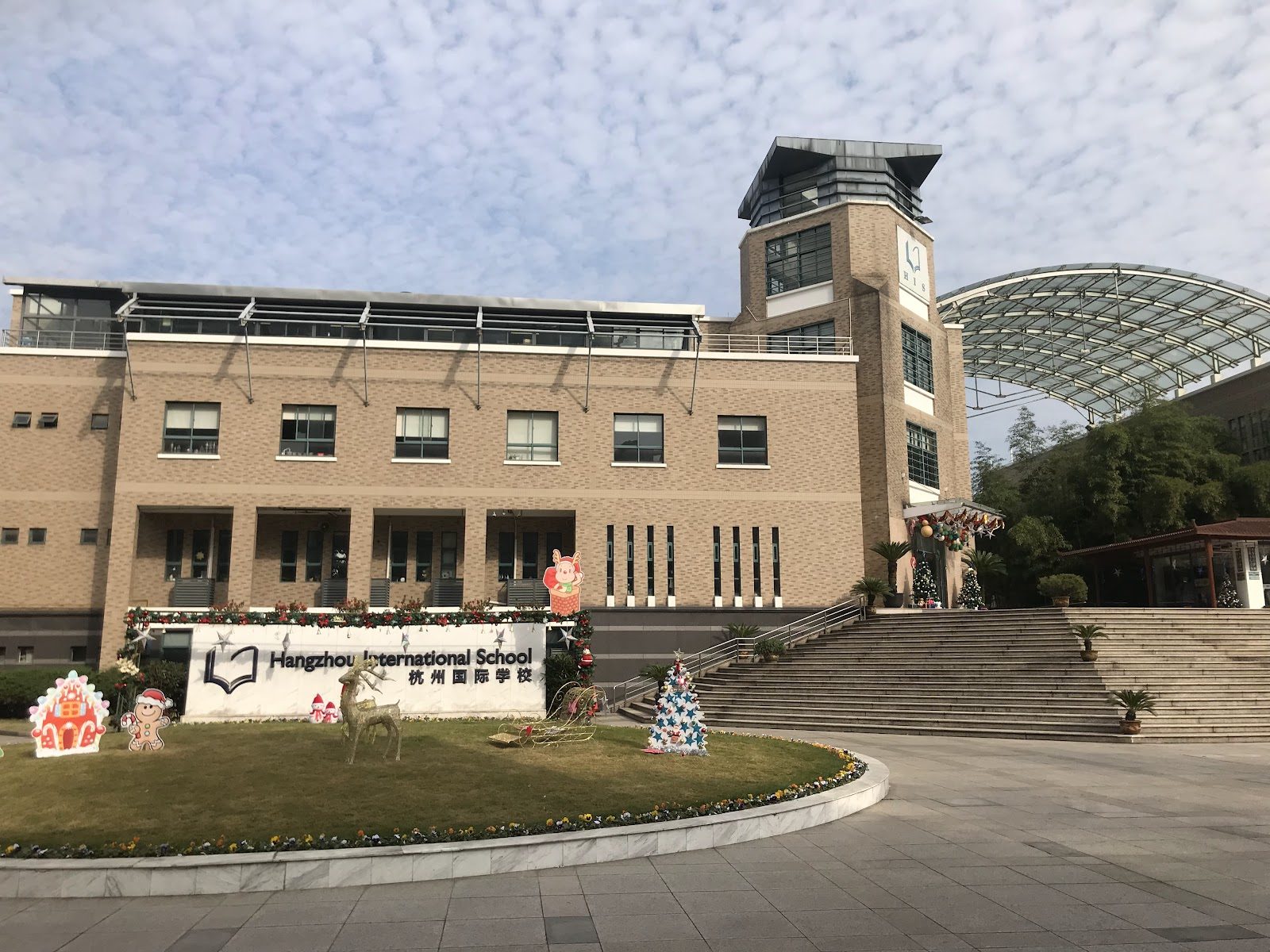
Photo © 路过都灵 via Google Maps
Type
Day
Ages
3–18
Curriculum
IB
Ratio
—
The Verdict
Editor's commitment
Right for
International families wanting a full IB continuum from age 3 to 18, daily Mandarin, and a purpose-built 2022 campus.
Wrong for
Families needing boarding, a Chinese-medium education, or bargain fees: this day school averages RMB 264,166 a year.
Watch out for
The headline 34 average IB score is solid, not elite; Class of 2026 lists 41 leavers and single admits to Imperial, Carnegie Mellon and Toronto.
Ranking breakdown
Hangzhou International School · #617 of 1591
Composite score 67.4. 8 weighted criteria.
By criterion
Academic Outcomes
Weight 20%
#587
of 1533 scored
University Placement
Weight 16%
#736
of 1529 scored
Prestige & Heritage
Weight 12%
#913
of 1580 scored
Alumni Network
Weight 12%
#560
of 1530 scored
Facilities
Weight 12%
#474
of 1540 scored
Transparency & Communications
Weight 8%
#697
of 1547 scored
Peer & Industry Review
Weight 10%
#792
of 1564 scored
Admissions Selectivity & Demand
Weight 8%
#607
of 1529 scored
Score history
Hangzhou International School · 2026
Movement across 2024–2026. Peer average overlaid.
Overall — 2024–2026
67.4/ 100
▲ +32.2 vs 2025
year on year
Peer & Industry Review
How Hangzhou International School is regarded in the sector
65
Respected · low confidence
Hangzhou International School (HIS) is generally regarded as one of the well-established international schools serving expat families in Hangzhou, with long-standing accreditation from WASC and membership in organizations like ACAMIS, and it is occasionally mentioned in expat forums and regional 'best international schools in China' roundups. However, independent specialist press coverage (Tatler, Good Schools Guide, Sunday Times, etc.) is sparse, and detailed third-party benchmarking against top-tier Beijing/Shanghai schools is limited, suggesting solid but regionally-bounded reputation rather than nationally top-tier standing.
Editors' overview
Hangzhou International School has two clear advantages in its market: it was the first international school in the city, and it now runs the full IB continuum on a purpose-built 2022 campus. That combination matters. In a city where international options remain thinner than in Shanghai or Beijing, HIS offers a settled, all-through route from age 3 to 18, in English, without the curriculum handovers that unsettle some expatriate families. The school is non-profit, secular and accredited by WASC, CIS and the IB, which places it firmly in the serious international-school bracket rather than the glossy-for-profit end of the market.
The scale is another strength. HIS enrols over 1,020 students from more than 50 nationalities, with a 1:9 teacher-student ratio, 25 faculty nationalities and more than 100 co-curricular activities. That gives it reach: enough students to sustain breadth in academics, sport and activities, but not the industrial scale of the biggest schools in China. Daily Mandarin study sharpens the local advantage. Families relocating to Hangzhou often want children anchored in an English-medium education without floating above the host country; HIS has built that into the routine. The published 34 average IB score is solid rather than table-topping, but it confirms academic competence, and the Class of 2026 destinations — 41 leavers, with places at Imperial College London, Carnegie Mellon and Toronto — show credible international university traction.
At 264,166 RMB a year on average across the full age range, HIS sits in the premium tier for Hangzhou. That price buys a mature all-through proposition: established governance, recognised accreditations, a broad international cohort and a campus recent enough to avoid the tiredness that affects older schools. The compromise is equally clear. Parents chasing a hyper-selective pressure cooker with headline-grabbing destination lists every year may find the outcomes too opaque and the published university list too modest in scale. HIS works best for globally mobile families who want continuity, a genuinely international student body and the full IB journey under one roof. The students who thrive here are adaptable, outward-facing and comfortable in a community where cultural mix is not a slogan but the daily norm.
Academic Performance
Hangzhou International School publishes one hard academic indicator that matters: an average IB Diploma score of 34. In the China international-school market, that places the school in the competent upper-middle tier: stronger than schools that publish weak or patchy diploma outcomes, short of the elite results factories in Shanghai, Beijing and a handful of Shenzhen campuses that trade on outsized point averages and dense Oxbridge-Ivy placement. A score at this level signals students are being prepared properly for the diploma’s demands, not merely carried through it, but it does not mark HIS out as an academic outlier. The more striking point is transparency. Many schools in the region still publish university logos and little else; HIS at least puts a score on the table.
The university picture is respectable rather than swaggering. The latest leavers secured admissions across multiple countries, with named destinations including Imperial, Carnegie Mellon and Toronto, plus close to USD 1 million in scholarships. That indicates real international mobility and credible guidance, but not a conveyor belt into the most selective institutions at scale. For parents comparing peers, the message is clear: HIS delivers dependable outcomes for a broad international cohort. It is not the school for families chasing a brutal hothouse academic culture or annual destination lists packed with global top-ten names. It is a steadier proposition than that.
Facilities
The strongest facility story at Hangzhou International School is coherence rather than spectacle. A purpose-built recent campus gives the school what many older China campuses lack: spaces planned for an all-through international school instead of retrofitted floors and awkward add-ons. That matters for daily use. Specialist teaching, student circulation, performance, sport and co-curricular life work better when the site was designed as one operation. The scale of activity also points to functional breadth. With 100+ co-curricular options to support, the campus needs proper arts, sports and shared spaces rather than a token hall and a few classrooms. Against Hangzhou peers, that puts HIS in the serious top tier for physical plant. Against the best-resourced campuses in Shanghai or Beijing, the edge shifts from flash to practicality: less statement architecture, more integrated day-to-day use.
The other facility advantage is how the campus serves community. A school with students from 50+ nationalities and a broad age range needs social spaces that can absorb volume without feeling impersonal. HIS has the scale to do that, and the public-facing life of the school points to a campus used hard rather than kept polished for tours. That is a better sign than glossy imagery alone. The limitation is plain: the school does not publish the kind of detailed facility breakdown that top schools use to prove depth in science, design or elite sport. Parents get a clear sense of a well-built, fully functioning campus, not a forensic map of every standout room.
Hangzhou International School publishes one hard academic indicator that matters: an average IB Diploma score of 34
Prestige
Hangzhou International School carries real local standing and measured international credibility, not elite cachet. In Hangzhou, that matters. The school has longevity, scale and the institutional seriousness that expatriate parents look for when the market is thinner than in China’s biggest cities. A student body of more than 50 nationalities and over 100 co-curricular options gives the school social breadth and practical substance; this is not a niche outpost serving a narrow corporate enclave. The non-profit model also strengthens its reputation. Parents read that as governance built around school quality rather than shareholder extraction, and in this market that distinction still counts.
The prestige ceiling sits lower than at the brand-name powerhouses in Shanghai and Beijing. HIS does not command the same trophy-school aura as campuses that dominate headlines with relentless top-university placements, historic name recognition or eye-watering selectivity. Its university outcomes are respectable, but they do not create bragging-rights prestige on their own. The school’s status rests instead on trust, continuity and the confidence that children will be well taught in an internationally mixed environment with proper scale. That is a solid form of prestige, but it is earned rather than glamorous. For families living in Hangzhou, that makes HIS one of the city’s serious choices. For families shopping across China without location constraints, it remains a strong regional school rather than a national prestige leader.
The strongest facility story at Hangzhou International School is coherence rather than spectacle
Communications
HIS communicates like a school that expects parents to stay close to daily school life. The public-facing rhythm is active: principal newsletters for lower and upper school, a rolling calendar of events, admissions access to a virtual tour, and a steady news feed that covers everything from campus works to university counselling. That matters because it signals institutional discipline, not just sporadic termly updates. The school also puts concrete headline data into public view — over 100 co-curricular activities, an average IB score, class destinations, scholarship totals — which gives parents more to work with than the logo-heavy, detail-light communication common in this market. For internationally mobile families, that level of disclosure is reassuringly adult.
The weakness is depth. HIS communicates frequency better than scrutiny. Parents can track what is happening, but they do not get a forensic public account of academic performance across year groups, nor a detailed published breakdown of teaching, facilities or strategic priorities. The tone is polished and community-minded, with the standard celebratory school-news framing, but it stops short of the hard-edged transparency that distinguishes the best-run schools. That leaves the overall verdict clear: communication is strong on cadence, access and practical visibility, weaker on difficult numbers and comparative context. For most families, that is effective and serviceable. For parents who want exhaustive disclosure before first enquiry, it falls short.
Uniqueness
What sets Hangzhou International School apart is not a gimmick but a market position few schools can claim with credibility: it serves an international-only cohort at real scale in a city where parents do not have a long list of equivalent alternatives. That matters more than glossy branding. Children here grow up among peers from 50+ nationalities, in a school large enough to avoid the thin social ecology of smaller expatriate campuses, yet contained enough to keep daily life recognisably communal. The non-profit structure sharpens that identity. Families are buying into a school built around continuity and institutional stability, not a franchise operation or a local bilingual compromise dressed up as international education.
For students, that produces a distinct kind of schooling. The benefit is not raw prestige; it is credible international immersion in a place where that still carries weight. A child can move through the whole school without a forced transfer at adolescence, build friendships across a broad multinational intake, and access a co-curricular menu that runs past token after-school provision into genuine choice, with 100+ activities on offer. Daily Mandarin study adds a useful local anchor: students do not sit inside an expatriate bubble sealed off from the country around them. The result is a school that suits families who want their children to be internationally fluent, socially adaptable and comfortable navigating difference as a normal condition of school life rather than an occasional theme week.
Hangzhou International School carries real local standing and measured international credibility, not elite cachet
Student Profile
The student body here suits children who are at ease in a genuinely international crowd and do not need a narrow national peer group to feel settled. With pupils drawn from more than 50 nationalities, the social life is unusually cosmopolitan for a school outside China’s biggest expatriate hubs. That brings obvious benefits: children meet classmates with different passports, languages and family trajectories as a normal part of the school day. It also brings a demand for adaptability. Students who thrive at HIS are comfortable making friends across cultures, joining in quickly, and navigating a community where mobility is part of the backdrop. Families looking for a soft landing after relocation, without the social thinness of a tiny expat school, will value that breadth.
The best fit is a child who wants a balanced school life rather than a single-minded academic furnace. The scale supports choice, and the co-curricular offer — more than 100 activities — gives sporty, artistic and broadly engaged students room to build an identity beyond lessons. This is also a good match for families who want international education without raising children in a sealed expatriate bubble; the daily study of the local language matters on that front. Less suited are students who want an aggressively selective peer culture, or parents chasing a status-anxious environment built around relentless university competition. HIS works better for open-minded, socially confident children who benefit from breadth, continuity and a grounded internationalism rather than pressure for its own sake.
HIS works best for globally mobile families who want continuity, a genuinely international student body and the full IB journey under one roof
Co-curricular strengths
Arts & sport, on a separate axis
Overall 8.62/10
Scored 0-10 from the school's own published evidence. This axis is editorial-only — it does not feed the main WTS ranking.
Sports
9.2/10
Basketball, Volleyball, Football, and Swimming, showing a solid multi-sport extracurricular offering.
Drama
8.5/10
Drama Production, which goes beyond a bare mention of drama by evidencing an active production-based offering, but no theatre, department, or recurring named productions are described.
Dance
8/10
Music
8.6/10
School Choir, indicating a structured music activity.
Visual Arts
8.8/10
Visual Arts appears explicitly in the extracurricular list.
Editor first-pass · editor-reviewable · 7/27/2026
Outcomes & destinations
Where students go next
Class of 2026
41 graduates
Top destinations
14 placements
- Imperial College London· 1
- Carnegie Mellon University· 1
- University of Toronto· 1
- The University of Hong Kong· 1
- University of Sheffield· 1
- Queen's University Belfast· 1
- University of Amsterdam· 1
- University College London· 1
- University of California, Berkeley· 1
- University of Cambridge· 1
- Parsons School of Design, The New School· 1
- McGill University· 1
- New York University· 1
- King's College London· 1
Reported by the school. Confirm with admissions.
Strengths
- +Non-profit IB World School, not for shareholders.
- +Founded 2002; established enough for institutional stability.
- +Over 1,020 students from 50+ nationalities.
- +1:9 teacher-student ratio supports individual attention.
Considerations
- −Only IB is stated; no alternative curriculum pathways.
- −Foreign nationals only, limiting local family eligibility.
- −Average IB score 34 may not suit ultra-selective ambitions.
Availability
Primary entry gate & tests
Academic Record
Gallery
Photo © to prints via Google Maps
Photo © Gabby He via Google Maps
Photo © Gabby He via Google Maps
Photo © Gabby He via Google Maps
Photo © Gabby He via Google Maps
Parent reviews
Have you sent your child here?
Voice reviews carry the strongest trust badge — we transcribe them for you to tidy up before they go live. Prefer to type? A written review is fine too.
Add your voice
In 60 seconds, tell other parents: what's the best thing about Hangzhou International School, and what surprised you when your child joined?
We ask for a Google sign-in so every review has a real face behind it — no anonymous drive-by attacks on schools, and no faked positive reviews. Your email is never shown publicly.
Send this profile to a friend
International parents rely on word-of-mouth. Share this review with someone weighing the same decision.
Schools with places
Similar schools to Hangzhou International School with places available now.
Canadian International School of Beijing
Beijing · China
- 2026-27
- WAITPOOLSpace-dependent
- 2027-28
- PLACES OPENRolling
Nanjing International School
Nanjing · China
- 2026-27
- WAITPOOLSpace-dependent
- 2027-28
- PLACES OPENRolling
Yew Chung International School of Beijing
Beijing · China
- 2026-27
- WAITPOOLSpace-dependent
- 2027-28
- PLACES OPENRolling
Beanstalk International Bilingual School
Beijing · China
- 2026-27
- WAITPOOLSpace-dependent
- 2027-28
- PLACES OPENRolling
Availability first, then country, area, curriculum, price, co-curricular
Consider also
Also worth looking at alongside Hangzhou International School.
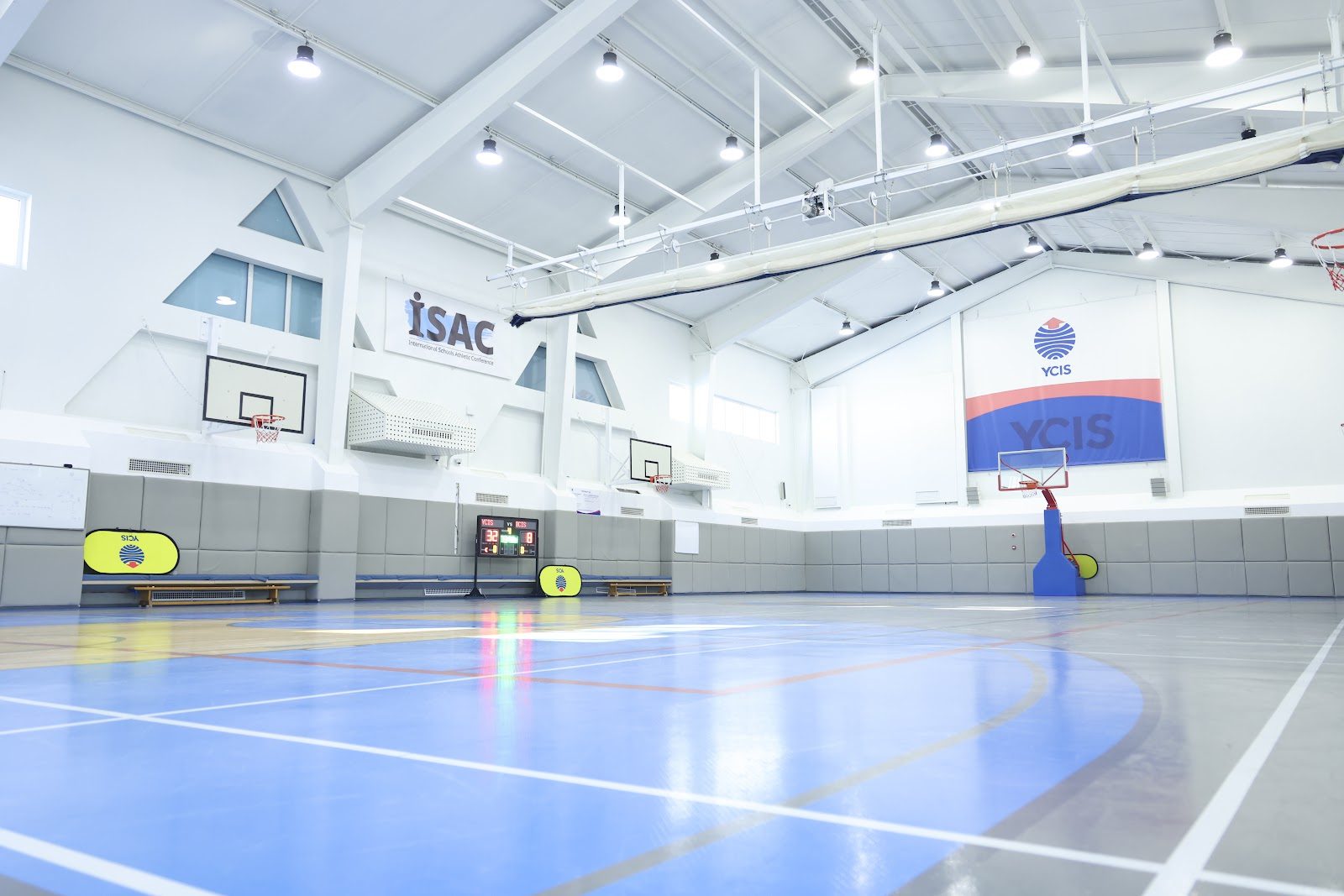
Yew Chung International School of Beijing
Beijing · China
Every classroom pairs a Western and a Chinese teacher, threading bilingual learning through a parkland Chaoyang campus.
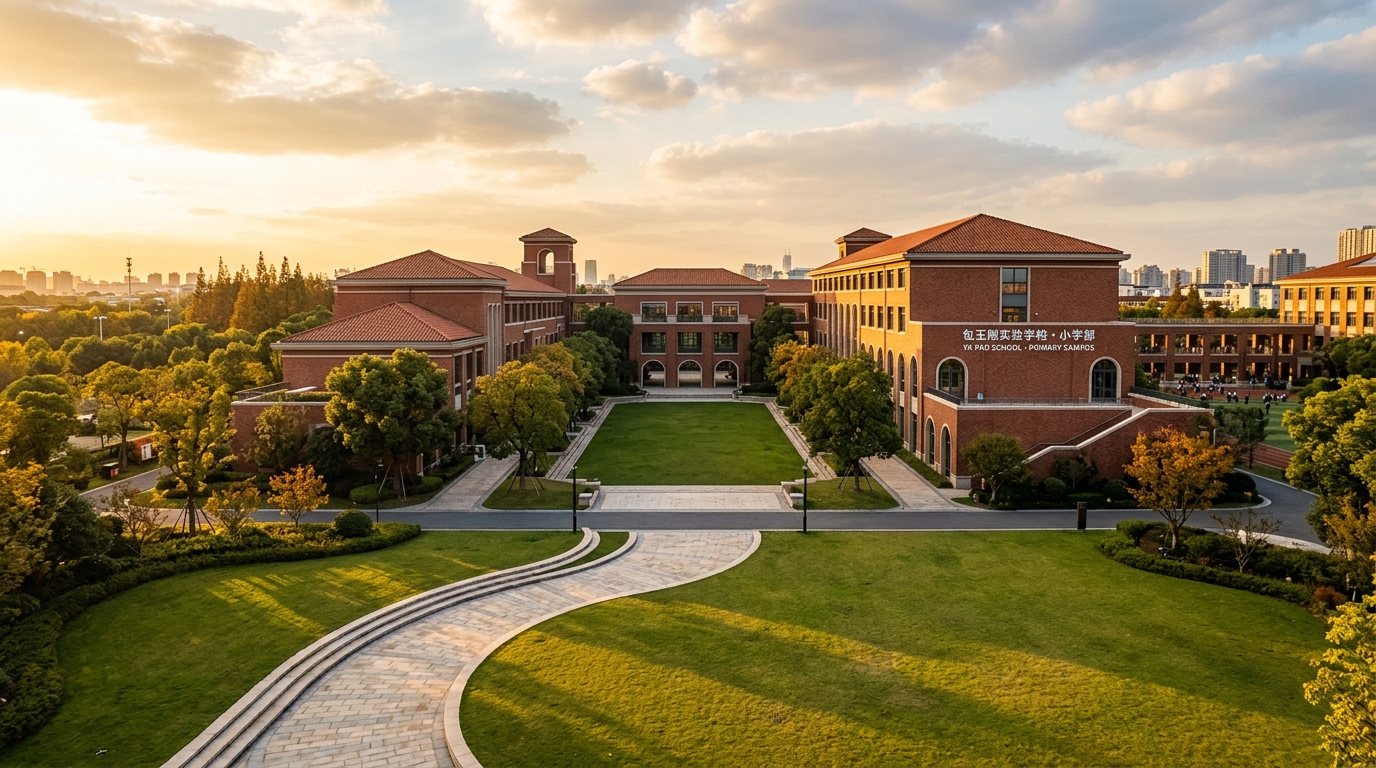
YK Pao School
Shanghai · China
Mandarin-English immersion anchors an IB and IGCSE track, with senior boarders housed in a Tudor-style village in Songjiang.
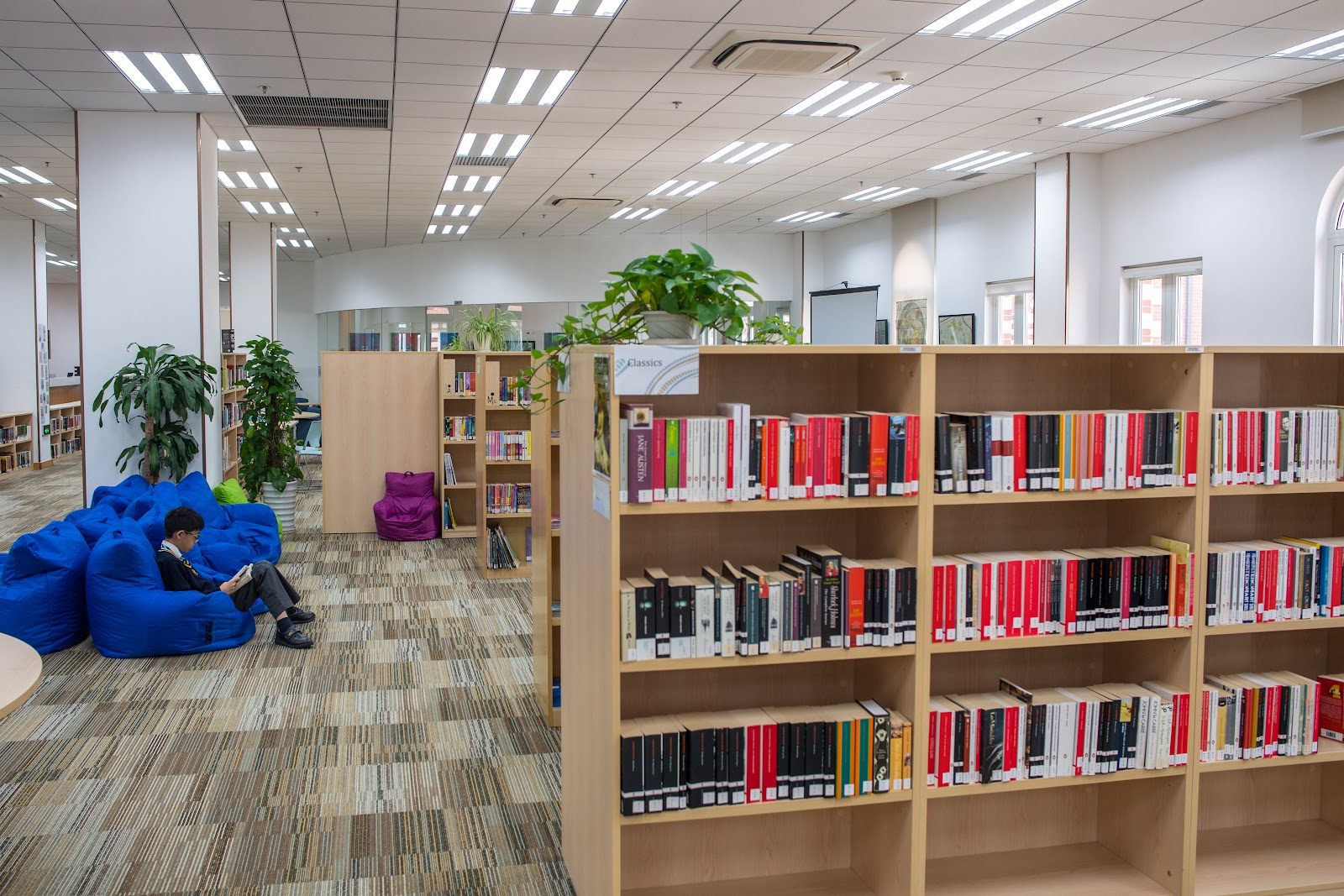
Wellington College International Shanghai
Shanghai · China
Rooted in an 1859 British foundation, this Pudong riverside campus channels house spirit into IB scores averaging 37 points.
UWC Changshu China
Changshu · China
On an island in Kuncheng Lake, mainland China's first UWC pairs the IB diploma with mandatory Mandarin study and a student-run Zhixing service programme.
Same country and curriculum — closest matches within ±10 points either way