
Madrid
Lycée Français de Madrid
Since 1885, two Madrid campuses have grown into the world's largest French school abroad, drawing pupils from over 70 nations.
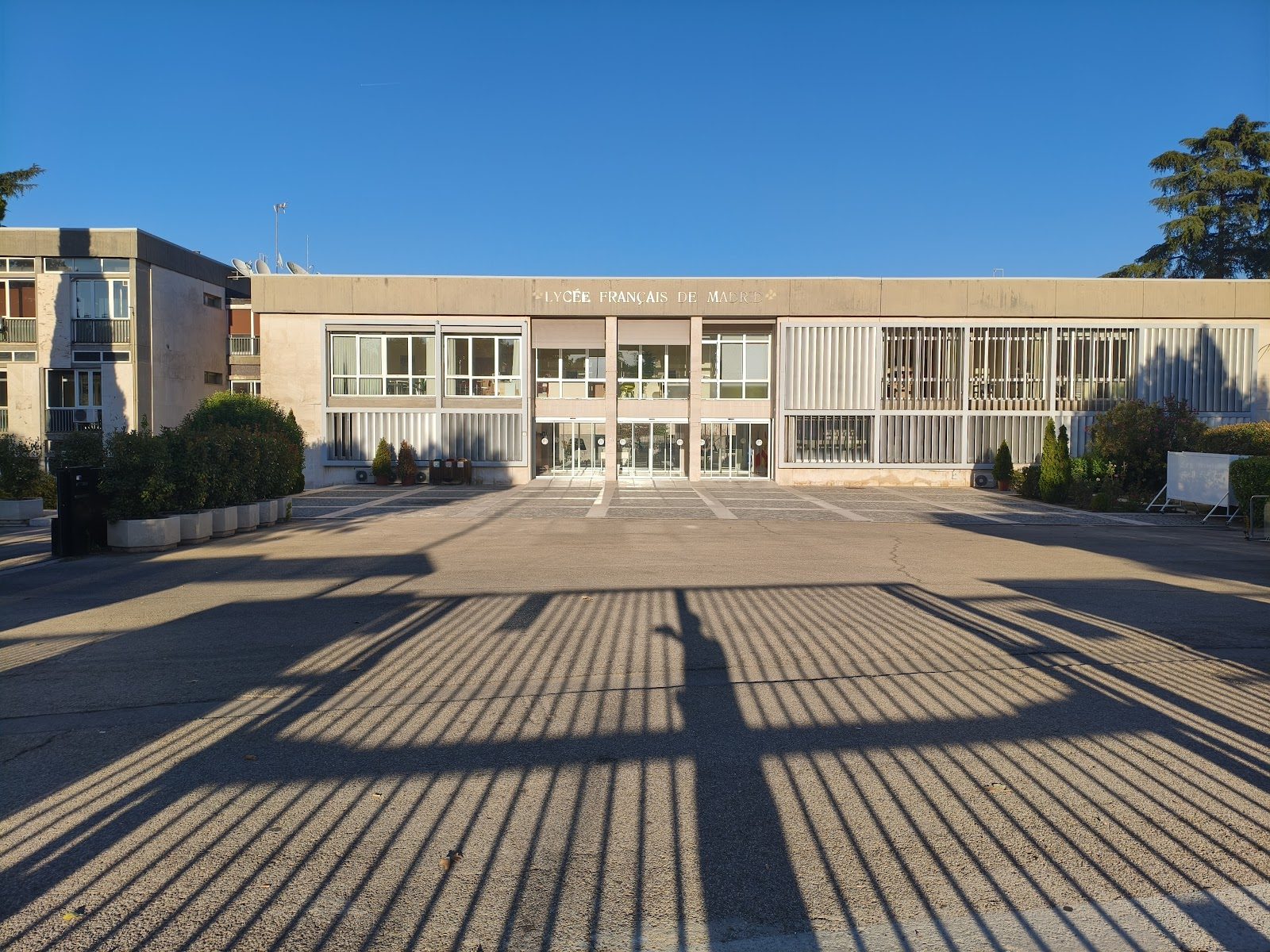
Photo © Jorge jivega via Google Maps
Type
Day
Ages
3–18
Curriculum
French
Qualifications
French Baccalauréat
Ratio
—
The Verdict
Editor's commitment
Right for
Families set on the French curriculum from ages 3–18, with AEFE oversight and two campuses in Madrid and Alcobendas.
Wrong for
Anyone wanting boarding, a non-French curriculum, or English-medium teaching; this is a day school teaching in French and Spanish.
Watch out for
Scale cuts both ways: founded in 1886 and billed as the world's largest French school abroad, Lycée Français de Madrid is no small enclave.
Ranking breakdown
Lycée Français de Madrid · #1313 of 1591
Composite score 55.4. 8 weighted criteria.
By criterion
Academic Outcomes
Weight 20%
#1085
of 1529 scored
University Placement
Weight 16%
#1164
of 1529 scored
Prestige & Heritage
Weight 12%
#1155
of 1529 scored
Alumni Network
Weight 12%
#1428
of 1529 scored
Facilities
Weight 12%
#1251
of 1529 scored
Transparency & Communications
Weight 8%
#1326
of 1529 scored
Peer & Industry Review
Weight 10%
#1430
of 1529 scored
Admissions Selectivity & Demand
Weight 8%
#1156
of 1529 scored
Peer & Industry Review
How Lycée Français de Madrid is regarded in the sector
55
Credible · medium confidence
Lycee Francais de Madrid sits inside the AEFE network (Agence pour l'enseignement francais a l'etranger), the French state's accreditation body for schools abroad, and its standing is judged largely through that lens rather than through UK-centric rankers. Because it delivers the French national curriculum and Baccalaureat rather than IB or A-Levels, it does not feature in WhichSchoolAdvisor or Good Schools Guide indices, which concentrate on British-curriculum international schools; this is a gap in visibility rather than a negative signal. Within the AEFE community it is regarded as one of the largest and most established lycees francais outside France, frequently cited in AEFE network statistics and French diplomatic/expatriate circles in Madrid as the default choice for French national families. Spanish and French university admissions offices treat its Baccalaureat results as equivalent to metropolitan French lycees, easing progression to French classes preparatoires and Spanish public universities alike. Independent Anglophone education press coverage is thin, reflecting its niche as a national-curriculum institution rather than a globally marketed international school; reputation is instead sustained through AEFE inspection reports and word-of-mouth among French expatriate professional networks in Madrid.
Editors' overview
Lycée Français de Madrid occupies a rare position in the Madrid market: an established French state school abroad with real scale, deep institutional roots and a clear academic identity. Founded in 1886, it runs across 2 campuses — Conde de Orgaz in Hortaleza and Saint-Exupéry in La Moraleja — and serves children from age 3 to 18. The point of difference is not branding but substance. This is the world’s largest French school abroad, operated by AEFE rather than merely affiliated to it. For families who want the French curriculum delivered inside the official French overseas network, that matters. It offers serious continuity, institutional heft and a route that stays coherent from maternelle to lycée.
What puts it on a shortlist is the combination of scale and clarity. Many international schools promise multilingualism and mobility; this school delivers a defined national system in French, in Madrid, with Spanish also in the daily mix. That gives it strong appeal for French families, binational households and internationally mobile parents who want their children anchored in a recognised public-sector framework rather than a hybrid model assembled from several traditions. The size cuts both ways. Large schools can offer breadth, peer diversity and organisational resilience; they can also feel less intimate and more bureaucratic. Parents who want a close-knit cocoon or a boutique pastoral culture will find stronger alternatives elsewhere.
The school suits pupils who thrive in a structured academic setting and families who value consistency over customisation. It is right for children who are comfortable in a big community, can navigate a clear set of expectations and benefit from immersion in French while living in Spain. It also suits families planning future movement within the French-speaking or French-state education world. It is less persuasive for parents chasing an Anglo-American model, heavy co-curricular theatre or a school built around individual hand-holding. The attraction here is academic seriousness, cross-border credibility and a clear cultural centre of gravity. For the right child, that is a powerful proposition.
Academic Performance
The school does not publish public headline exam data in the sources we have seen: no aggregate baccalauréat pass rate, no mention-level breakdown, no subject profile and no comparative score table against other French schools abroad. That leaves a clear reporting gap in any assessment of academic performance. For a school of this scale and status, that opacity matters. Parents can infer a strong examination culture from its place inside the French state overseas network and from the continuity of schooling through to the final years, but inference is not evidence. A school asking families to trust a serious academic machine should disclose the hard numbers.
Relative to peers, the school’s standing rests more on institutional weight than on published outcomes. Direct operation by AEFE gives it stronger academic alignment and oversight than many private French schools overseas, and its size gives it the breadth of cohort and staffing that high-functioning exam systems need. That does not automatically place it above the best French lycées abroad; it places it in the group that ought to perform strongly and ought to prove it. Until the school publishes consistent external results, parents cannot judge whether it delivers merely solid outcomes or genuinely elite ones. In this area, reputation runs ahead of disclosure.
Facilities
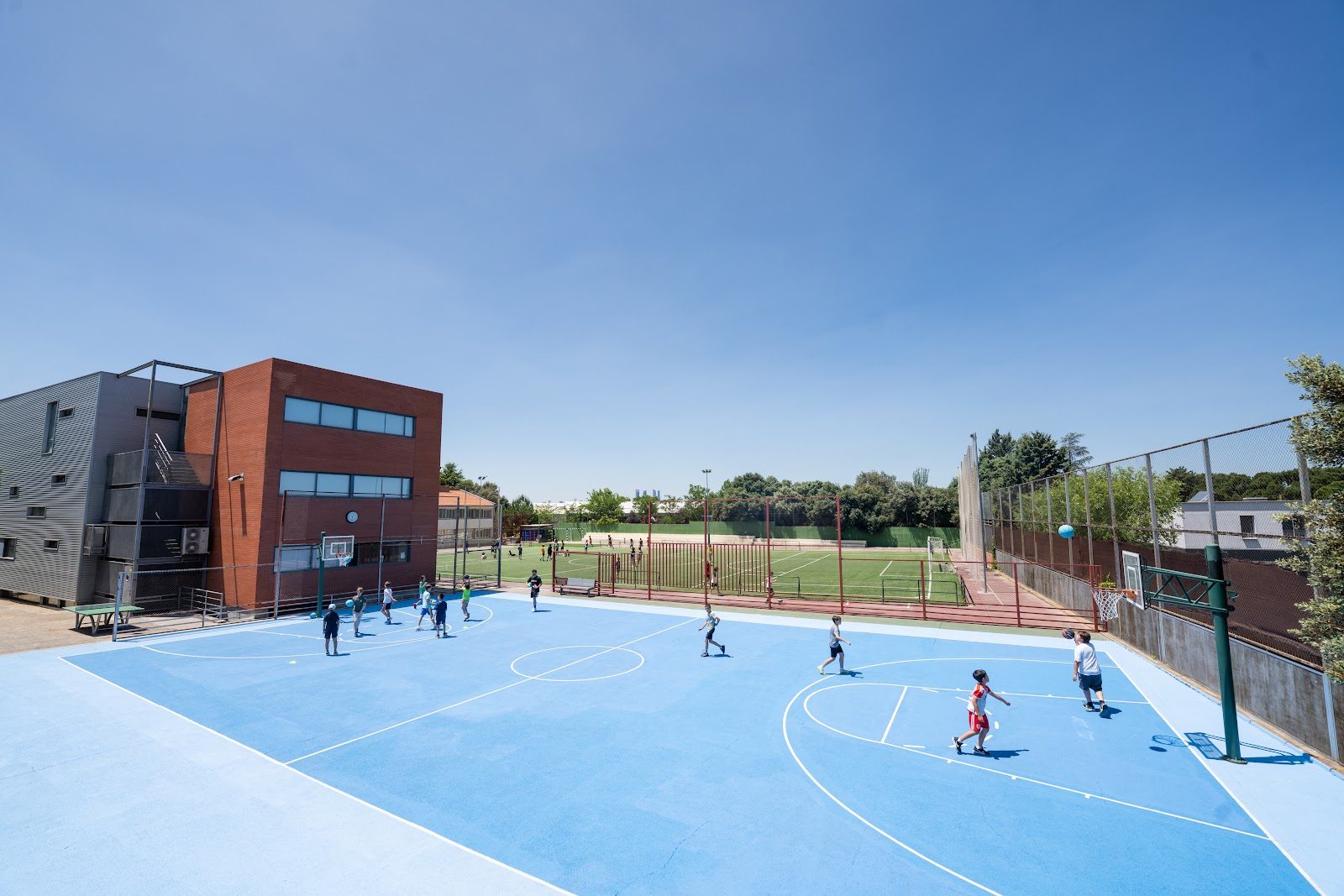
The practical advantage here is breadth. A school operating across 2 sites and serving a very large roll has room to build facilities that many single-campus French schools abroad cannot match in scale, even if the public record is thin on specifics. Parents can expect the core infrastructure that a full-through French school needs: dedicated spaces for early years, classrooms for the secondary years, science teaching rooms, sports provision and the circulation capacity to handle a high-volume daily operation. The split-site model also matters. It eases pressure on one campus and gives families access to a broader estate than a cramped urban lycée on one plot. Against Madrid peers, that points to solid institutional capacity rather than boutique design flair.
The limitation is disclosure. The school does not publish the kind of detailed facilities inventory that serious comparison requires: no clear breakdown of sports assets, specialist arts spaces, libraries, laboratories or performance venues. That matters because top-tier international competitors now market facilities with forensic precision. Here, the picture is less polished and more functional. Parents choosing this school for architecture, innovation labs or a showpiece campus experience will find stronger contenders elsewhere. Parents choosing it for the dependable physical infrastructure of a large, established school inside the French state system get a more convincing proposition. The facilities case rests on scale and permanence, not spectacle.
What sets Lycée Français de Madrid apart is not novelty but jurisdiction
Prestige
Its prestige is real. In the French international system, direct AEFE operation carries more weight than a loose network badge or a franchise-style association. This school sits inside the official machinery of French overseas education, not at the edge of it, and that gives its diploma pathway and day-to-day standards a level of institutional legitimacy many competitors cannot match. Add its status as the world’s largest French school abroad and a pupil body drawn from more than 70 nationalities, and the result is serious international standing rather than local cachet dressed up as globalism. Among French and francophone families, that name recognition is strong. Among non-French international families, the prestige is more specialist than universal: meaningful if you value the French state system, less magnetic if you are shopping for an Anglo-American brand.
That distinction matters. This is not prestige built on glossy selectivity, celebrity alumni or published league-table dominance; it rests on scale, history, official status and continuity. In Madrid, that makes the school formidable within its niche and high-status for families who want a recognised French education with cross-border portability. It does not carry the same broad social signalling power as the most famous British or American international schools, because the appeal is narrower and more system-specific. Even so, within its lane, the school has genuine authority. The missing piece is public outcomes data. Prestige grounded in structure is valuable; prestige confirmed by transparent results is stronger.
Until the school publishes consistent external results, parents cannot judge whether it delivers merely solid outcomes or genuinely elite ones
Communications
Parent communication looks functional rather than polished. A school of this scale, spread across 2 sites and serving families from more than 70 national backgrounds, has to run on systems, timetables and standardised messaging; anything looser would fail fast. That points to communication that is institutionally disciplined, process-heavy and geared to keeping a large community moving in step, not to creating a warm boutique feel. The school’s public profile also carries the hallmarks of a state-linked institution: clear on core identity, less strong on the kind of granular parent-facing detail many premium international schools now publish as routine. We have not seen public disclosure of the practical metrics that reassure parents — response standards, satisfaction data, or a detailed picture of how information flows between school and home.
How effective is it? Effective enough for families who value order, consistency and formal structures. Less effective for parents who expect high-touch access, constant updates and the white-glove style common in smaller private schools. In a large, official system, communication tends to prioritise accuracy and compliance over charm and speed, and that trade-off suits some families better than others. The school’s size and complexity demand bureaucratic competence; they do not lend themselves to intimacy. Parents who can work comfortably within formal channels will manage well. Parents who want rapid, personalised reassurance will find the model blunt-edged.
Uniqueness
What sets Lycée Français de Madrid apart is not novelty but jurisdiction. This is not a private school borrowing French elements or buying network legitimacy; it sits inside the French state overseas system itself, under direct AEFE operation. That gives pupils something unusually concrete: a school experience tied to the standards, rhythms and administrative culture of French public education abroad, rather than a local interpretation of it. The scale matters too, though not as a boast. A pupil body drawn from more than 70 nationalities creates a daily environment that is genuinely international without diluting the school’s centre of gravity. Children get exposure to a broad social mix while moving through a coherent academic structure that does not change its mind every few years.
For students, that brings stability, portability and a clear sense of educational identity. Families moving within the francophone world, or between countries with French overseas schools, get a system that travels well. Pupils benefit from a peer group large enough to avoid the social claustrophobia common in smaller international schools, and from an institution with the organisational heft to sustain established routines and expectations. The trade-off is plain: this is not an intimate school built around individual tailoring. Its distinctiveness lies in being big, official and system-led. For the right child, that means clarity, continuity and a stronger link to France than most international schools can offer.
That matters because top-tier international competitors now market facilities with forensic precision
Student Profile
The social fit is clear. This school suits children who are comfortable in a large-scale, rule-bound environment and do not need constant adult mediation to find their place. The pupil body spans more than 70 nationalities, so classmates are diverse, but the culture has a firm centre and expects students to adapt to it rather than the other way round. That works well for French families, binational households and internationally mobile parents who want continuity inside a recognisable system. It also suits academically steady pupils who can handle routines, deadlines and a pace that leaves limited room for drift. Children who flourish in structured seriousness will settle faster than those who need a highly personalised, therapeutic style of schooling.
Personality matters as much as background. Pupils who do best here are resilient, socially self-starting and happy to make their way in a community of real scale rather than a cosseting small-school circle. They do not need every talent individually curated, and they can cope with an institution that runs on process. That makes the school a strong fit for independent learners and for families who value stability over bespoke attention. It is a weaker match for children who need intensive pastoral wrapping, a soft-edged atmosphere or an education built around continuous individual negotiation. In plain terms: this is a school for students who can step into a serious machine and keep up.
A pupil body drawn from more than 70 nationalities creates a daily environment that is genuinely international without diluting the school’s centre of gravity
Co-curricular strengths
Arts & sport, on a separate axis
Overall 6.8/10
Scored 0-10 from the school's own published evidence. This axis is editorial-only — it does not feed the main WTS ranking.
Sports
7/10
Drama
7/10
Dance
5/10
Music
8/10
Visual Arts
7/10
Strengths
- +Operated directly by AEFE (Agence pour l'Enseignement Francais a l'Etranger), the French government's own network for education abroad, rather than a franchise or licensed operator.
- +Official 2025 exam results published by the school show a 99.7% Baccalaureat pass rate, with 93% of candidates earning a mention and 46.6% achieving the top 'Tres Bien' grade.
- +Graduates leave with a dual French Baccalaureat and Spanish 'Titulo de Bachiller', giving direct access to both French and Spanish university systems.
- +Became a UCAS-accredited exam centre in September 2023, centralising applications to British universities alongside the French and Spanish pathways.
- +One of the largest Lycee francais institutions in Europe, with over 4,300 pupils and more than 70 nationalities represented across two campuses.
Considerations
- −Scale is considerable - over 4,300 students across two sites - which typically means larger cohorts and less individualised attention than smaller boutique schools.
- −First-time registration carries a substantial non-refundable fee: EUR 1,528 for Maternelle/Elementaire or EUR 1,700 for College/Lycee, on top of termly tuition.
- −The school is explicitly not a bilingual institution - Spanish is taught to a high level, but the day-to-day ethos, administration and staffing remain francophone-led.
- −Registration is handled independently by the school and opens roughly a year in advance each autumn, meaning families who arrive later in the admissions cycle may face long waitlists.
Availability
Primary entry gate & tests
Academic Dossier
Gallery
Photo © Emilio Mora via Google Maps
Photo © Juan Jose Blasco via Google Maps
Photo © VictorR via Google Maps
Photo © VictorR via Google Maps
Photo © VictorR via Google Maps
Photo © VictorR via Google Maps
Photo © VictorR via Google Maps
Parent reviews
Have you sent your child here?
Voice reviews carry the strongest trust badge — we transcribe them for you to tidy up before they go live. Prefer to type? A written review is fine too.
Add your voice
In 60 seconds, tell other parents: what's the best thing about Lycée Français de Madrid, and what surprised you when your child joined?
We ask for a Google sign-in so every review has a real face behind it — no anonymous drive-by attacks on schools, and no faked positive reviews. Your email is never shown publicly.
Send this profile to a friend
International parents rely on word-of-mouth. Share this review with someone weighing the same decision.
Schools with places
Similar schools to Lycée Français de Madrid with places available now.
Highlands School Madrid
Madrid · Spain
- 2026-27
- WAITPOOLSpace-dependent
- 2027-28
- FUTURE CYCLEDates TBC
Colegio Base
Madrid · Spain
- 2026-27
- WAITPOOLSpace-dependent
- 2027-28
- FUTURE CYCLERolling claim not independently verified for 2027/28
Colegio Estudio Madrid
Madrid · Spain
- 2026-27
- WAITPOOLSpace-dependent
- 2027-28
- FUTURE CYCLEDates TBC
American School of Madrid
Madrid · Spain
- 2026-27
- WAITPOOLSpace-dependent
- 2027-28
- PLACES OPENRolling
Availability first, then country, area, curriculum, price, co-curricular
Consider also
Also worth looking at alongside Lycée Français de Madrid.
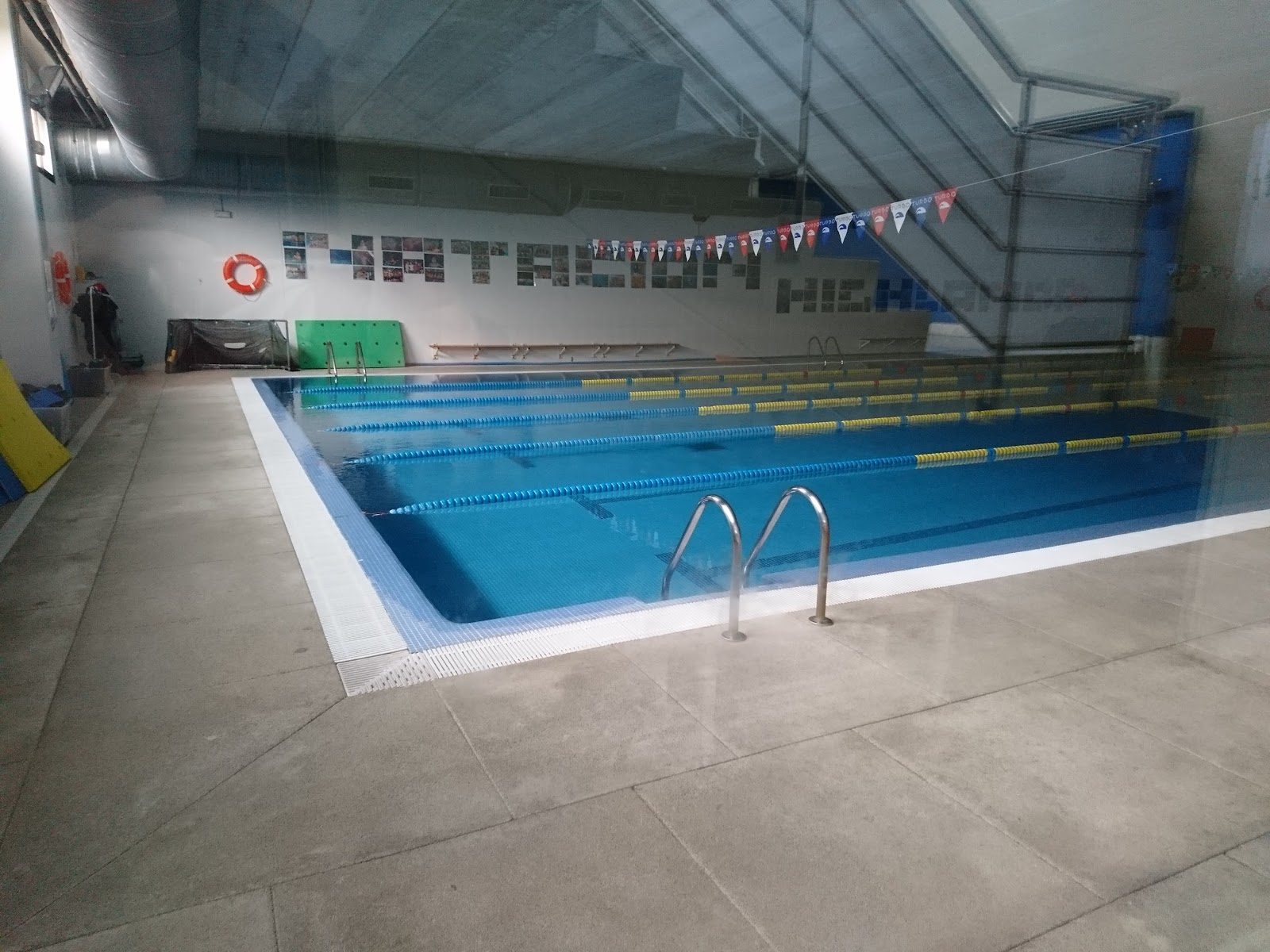
Highlands School Madrid
Madrid · Spain
In La Moraleja's green belt, a Cambridge-accredited trilingual campus pairs British rigour with a public-speaking programme built into daily lessons
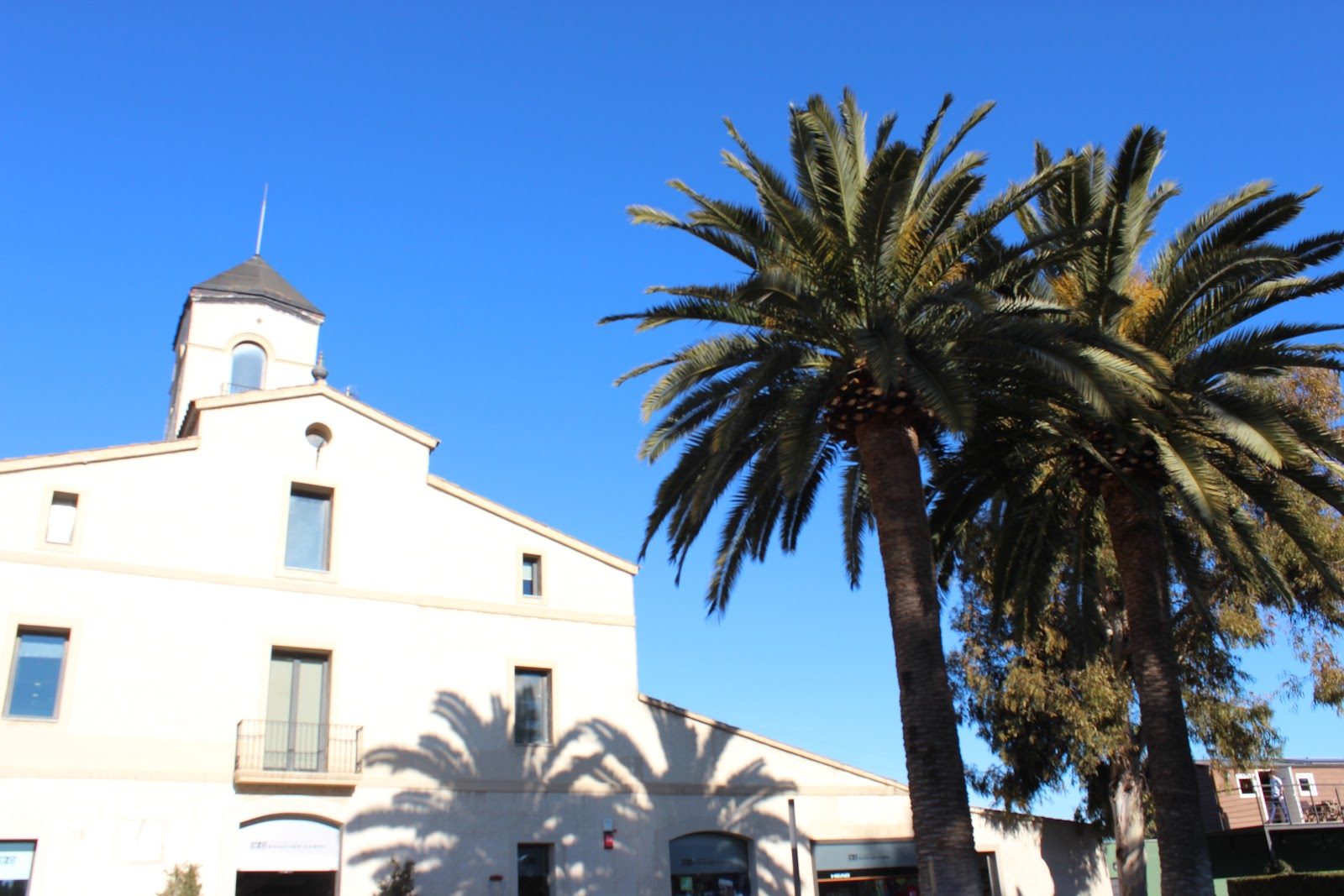
ES International School of Barcelona
Barcelona · Spain
An American diploma earned between classrooms and clay courts at the Sanchez-Casal tennis academy outside Barcelona.
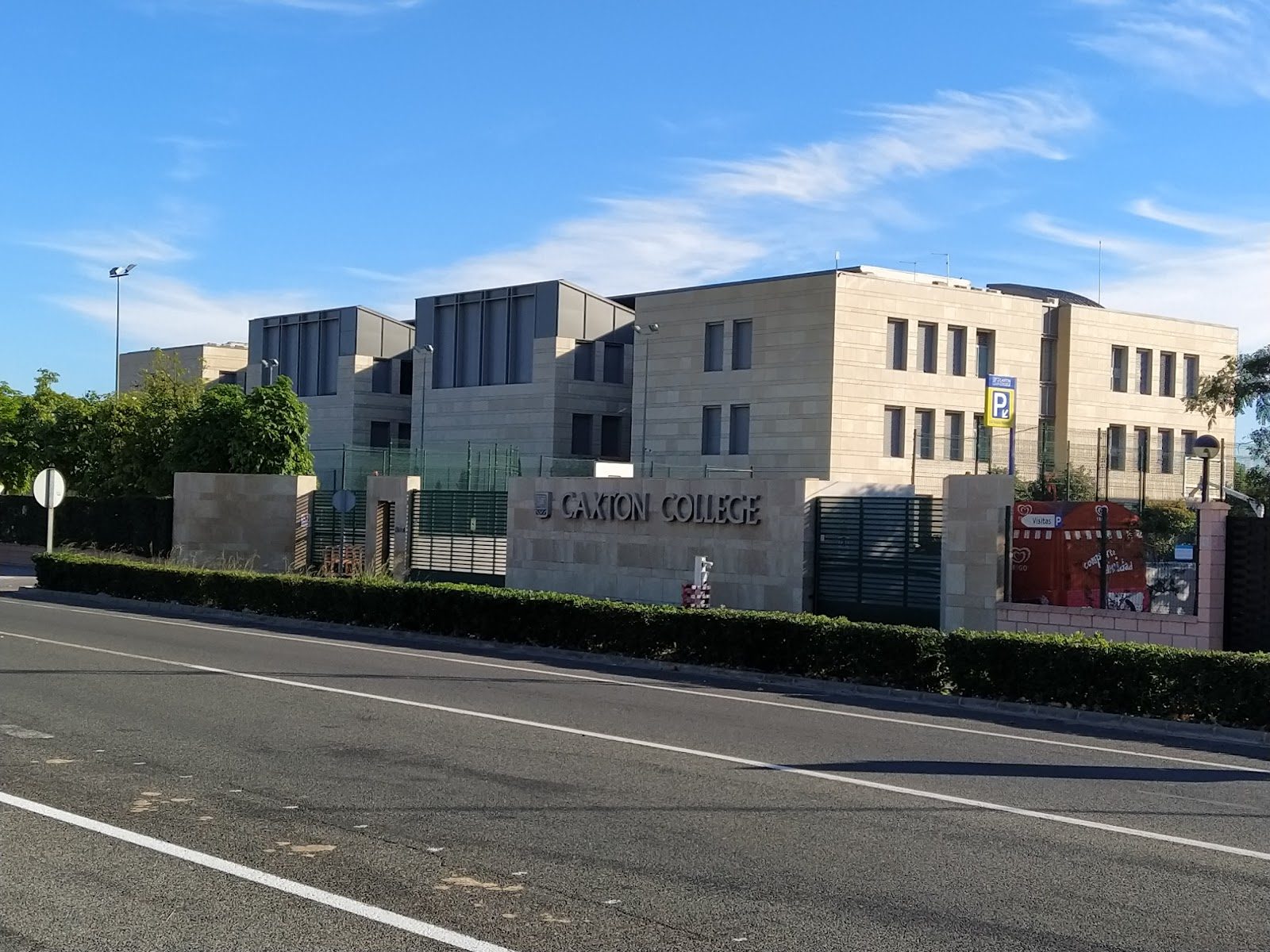
Caxton College
Puçol · Spain
On Valencia's coast between mountains and sea, a family-run British school pairs A-Levels with native Spanish literary strength.
Colegio Base
Madrid · Spain
Rooted in the Institucion Libre de Ensenanza since 1962, this La Moraleja campus runs three Baccalaureate tracks under one roof.
Same country and curriculum — closest matches within ±10 points either way