
Tokyo
Kanto International Senior High School
A Shibuya campus where ten foreign-language tracks, from Vietnamese to Russian, outnumber most universities' language departments
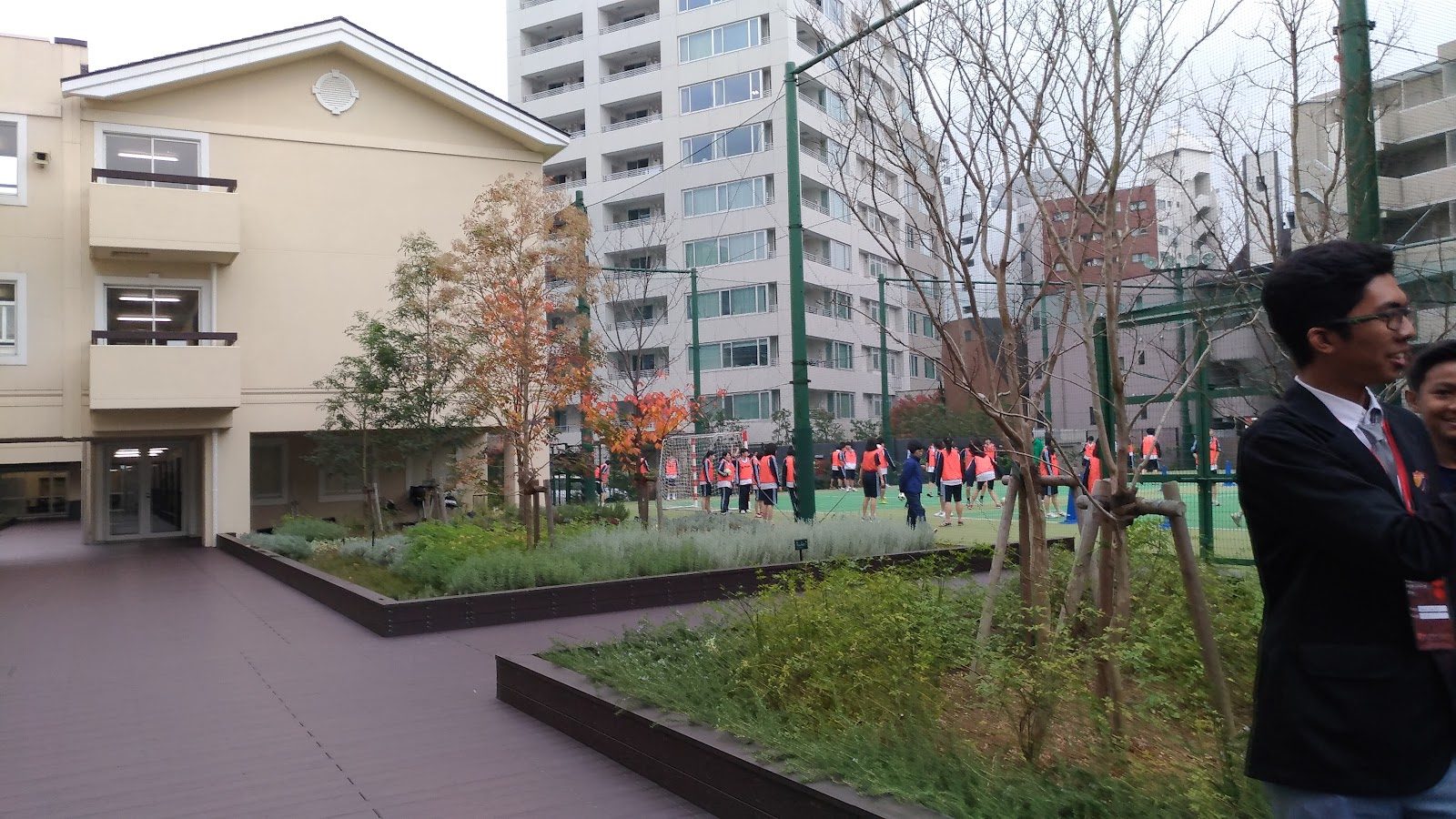
Photo © Muhammad Sudrajat via Google Maps
Type
Day
Ages
15–18
Curriculum
Japanese National
Qualifications
Japanese Diploma · IB
Ratio
—
The Verdict
Editor's commitment
Right for
Families in Tokyo wanting a day school founded in 1924, ages 15–18, with ten foreign-language tracks and English instruction.
Wrong for
Parents wanting boarding, primary years, or a non-Japanese curriculum; this is a day senior high using the Japanese National curriculum.
Watch out for
Shibuya access and ten language routes are clear; published aggregate university outcomes, exam results and accreditation detail are not.
Ranking breakdown
Kanto International Senior High School · #1493 of 1591
Composite score 46.9. 8 weighted criteria.
By criterion
Academic Outcomes
Weight 20%
#1386
of 1529 scored
University Placement
Weight 16%
#1414
of 1529 scored
Prestige & Heritage
Weight 12%
#1503
of 1529 scored
Alumni Network
Weight 12%
#1484
of 1529 scored
Facilities
Weight 12%
#1336
of 1529 scored
Transparency & Communications
Weight 8%
#1097
of 1529 scored
Peer & Industry Review
Weight 10%
#1503
of 1529 scored
Admissions Selectivity & Demand
Weight 8%
#1497
of 1529 scored
Peer & Industry Review
How Kanto International Senior High School is regarded in the sector
45
Credible · medium confidence
Kanto International Senior High School operates primarily within Japan's domestic private-school sector rather than the expatriate international-school circuit, so it receives little of the independent scrutiny typical of Tokyo's IB or British-curriculum schools. It does not appear in WhichSchoolAdvisor or Good Schools Guide directories, which focus on English-medium international schools, nor in Nikkei or Japan Times private-school league tables that rank academic elites like Keio or Waseda affiliates. There is no publicly documented commentary from rival heads of school or university admissions officers specifically addressing its reputation. Its recognition instead rests on its distinctive multilingual course tracks (Chinese, Korean, Russian, Spanish alongside English), which occasionally draw mention in Japanese-language education media as a niche offering rather than as evidence of elite academic standing. Absent verifiable third-party rankings, alumni outcomes data, or press awards, the school's peer and industry standing should be characterized as regionally recognized for language specialization but largely outside the international benchmarking conversation that defines top-tier peer and university reputation.
Editors' overview
Kanto International Senior High School occupies a distinctive niche in Tokyo: a Japanese national high school in Shibuya with an unusually large foreign-language offer. The headline fact is simple. It runs 10 language tracks across European and Asian languages, including Russian, Italian, Spanish, French, Chinese, Korean, Thai, Indonesian and Vietnamese, alongside English. That breadth is rare at school level and gives Kanto a sharper academic identity than the generic “international” label used by many private schools. Founded in 1924, it has age and institutional depth on its side. Parents who want language study to sit at the centre of a teenager’s education, not as an after-school extra, should pay attention. The draw here is serious linguistic ambition, a conspicuously broad language menu and a *clear route into domestic and overseas university applications*.
The school’s strongest point is focus. Kanto is not trying to be all things to all families. Its public case rests on foreign-language education, native-speaker teaching and progression to universities in Japan and abroad. That makes it a better fit for students with a defined academic interest than for those who want the wider co-curricular spectacle or brand gloss that some Tokyo independents sell at high prices. The trade-off is equally clear. This is a senior high school, not an all-through international school, and it follows the Japanese national curriculum despite English-medium instruction. Families looking for IB or a conventional British or American programme need to look elsewhere. Kanto belongs on a shortlist because it offers urban intensity, intellectual direction and a concrete specialism in a market full of vague global rhetoric.
The right student for Kanto is not hard to identify. This school suits a teenager aged 15–18 who wants language learning to shape daily school life, who is motivated by cross-border university options, and who is comfortable in a focused, academically purposeful environment. It will also suit students who want Tokyo energy without boarding, since this is a day school in Shibuya. The less suitable candidate is the child who wants a broad Anglo-American international-school experience with a large expatriate social scene and familiar overseas qualifications. Kanto’s appeal is narrower than that, but also more distinctive: a school with a real specialism, not a generic international badge.
Academic Performance
Kanto does not publish the exam data that would let parents judge academic performance properly. We have not seen aggregate pass rates, grade distributions, university entrance outcomes by cohort, or any equivalent external benchmark. That is a real weakness in a school asking families to trust a specialised academic model. The public case for academic success rests instead on destination language: support for university entry in Japan and overseas, a list of partner universities abroad, and guidance for recommendation-based and comprehensive admissions routes. That tells us the school has a progression infrastructure. It does not tell us how strong the results are. In a market where serious schools disclose hard numbers, this level of opacity leaves Kanto in the trust-us category.
Relative to peers, that places it in an awkward middle ground. Its academic identity is sharply defined and more distinctive than the standard private-school promise of “global” education, but distinctiveness is not the same as measurable attainment. Schools with IB, A level or AP programmes can point to externally legible score profiles; selective Japanese schools can point to named university admissions data. Kanto, on current public evidence, does neither. The school may still serve self-directed linguists very well, especially those targeting admissions routes that reward interviews, recommendations and subject commitment, but parents looking for cold comparative proof will find too little disclosed and too much left unstated.
Facilities
Facilities are defined by the school’s academic purpose, not by grand physical spectacle. The public campus picture centres on Shibuya and a separate Katsuura campus, with Katsuura training listed as part of school life. That matters more than a glossy atrium. For a language-led senior high school, the key asset is teaching space that supports small-group oral work, sustained contact with native-speaker staff and a timetable built around multiple language pathways. The school also gives Japanese culture its own course route and keeps clubs, extra-curricular activity and an annual events calendar in view, which points to a campus used for more than classroom throughput. Still, Kanto does not publish the kind of facilities detail serious parents look for: no library specification, no science-lab description, no theatre, no sports inventory, no arts suite breakdown. That silence leaves the estate under-described.
Against peer schools, this places Kanto in a specialist rather than showcase category. Schools competing on premium international-school terms advertise performing arts venues, athletics infrastructure, maker spaces and design labs in forensic detail. Kanto does not. Its standout facility is the academic platform for 10 language tracks, spread across European and Asian courses, plus access to 2 campuses with different uses. For the right student, that is a genuine asset. For families measuring schools by sports grounds, black-box theatres or high-spec STEM centres, Kanto gives too little public evidence to rank near the top. The facilities story here is functional, focused and opaque.
Kanto International Senior High School occupies a distinctive niche in Tokyo: a Japanese national high school in Shibuya with an unusually large foreign-language offer
Prestige
Kanto’s prestige sits in a narrow band. It does not carry the broad social cachet of Tokyo’s best-known international schools, nor the exam-driven status of Japan’s elite academic high schools. Its standing comes from specialism. A school offering 10 distinct language tracks, with routes spanning European and Asian languages, has a recognisable intellectual identity and a degree of seriousness that generic “global” schools lack. For families who value language study as a core discipline, that is real distinction. For families chasing brand recognition, old-boy networks or instantly legible academic trophies, it is a weaker proposition. Prestige here is earned through focus, not inherited through market dominance.
That distinction matters. Kanto has a clear enough profile to command respect among parents who know the sector and want something more exact than a polished international label. The native-speaker teaching claim adds to that sense of purpose, and the school’s stated pathways to universities in Japan and overseas give the model practical weight. But prestige rises on visible outcomes as well as character, and this is where Kanto falls short. The school does not publish the hard attainment data that turns a specialist reputation into fully credible academic authority. The result is a school with niche prestige, not top-tier prestige: admired for its unusual language offer, but not established as a dominant name across the wider market.
Kanto’s appeal is narrower than that, but also more distinctive: a school with a real specialism, not a generic international badge
Communications
Kanto’s parent-facing communication is strong on navigation and weak on proof. The website is busy but structured: admissions, fees and scholarships, Q&A, access, school life, course routes, student voices, parent-child interviews, campus pages, and university guidance are all surfaced in the main architecture. For a school with 10 language pathways and multiple progression routes, that organisational discipline matters. Parents can work out the shape of the offer without digging through dead ends. The school also gives communications a practical cast rather than a decorative one. It foregrounds enquiries, document requests and events for prospective families, which signals a school that expects questions and has built channels to answer them. That is competent, serviceable communication.
The weakness is depth. Kanto communicates plenty about categories and options, but too little about standards, outcomes and the lived mechanics of school-home contact. We have not seen clear public detail on reporting cycles, parent conference structure, response expectations, pastoral communication, or how the school handles routine updates once a child is enrolled. Nor does it publish the hard performance data that would turn promotional clarity into full credibility. The tone is orderly and the site map is parent-friendly; the substance remains thin where it matters most. For prospective families, communication works best at the “what is offered here?” level. It works less well at the trust-building level, where serious parents want evidence, cadence and accountability.
Uniqueness
What makes Kanto distinctive is not the overused word “international” but the structure underneath it. The school has built itself around foreign-language study with 10 separate tracks split across European and Asian languages, plus a plain route structure for university applications in Japan and overseas. That is an uncommon academic design at school level. Most schools treat languages as one department among many; Kanto gives them institutional priority. The inclusion of courses such as Thai, Indonesian, Vietnamese and Russian sets it apart from the standard menu of English plus a token second language. For students, that creates a more serious linguistic environment: peers have chosen into language study, the timetable has to accommodate sustained progression, and the school’s identity does not depend on vague global branding.
That specialism brings clear gains and clear limits. The gain is real intellectual direction. A teenager who wants language learning to be central, not decorative, gets a school culture organised around that choice, backed by native-speaker teaching and explicit admissions support. The limit is breadth. Families seeking the classic premium international-school mix of marquee facilities, broad overseas qualifications and a highly legible outcomes story will not find it here. Kanto’s uniqueness lies in being purpose-built rather than all-purpose. For the right student, that is a strong advantage: a school with a defined academic centre of gravity and a sharper sense of what it is for.
For families measuring schools by sports grounds, black-box theatres or high-spec STEM centres, Kanto gives too little public evidence to rank near the top
Student Profile
The students who fit best here are purposeful adolescents with a defined interest in languages and the stamina to pursue that interest seriously. This is not the place for a teenager who wants to drift through a generic “international” experience and pick up a few global buzzwords on the side. It suits pupils who enjoy structure, tolerate intensity and do not mind being surrounded by classmates who have chosen a clear route. The foreign-language department is the social and academic centre of gravity, and the presence of 10 language pathways creates a student body with more linguistic intent than most schools can muster. That gives Kanto a self-selecting, specialist culture: curious, outward-facing, and more academically directional than fashionable.
The best fit is a student who likes depth more than display. That includes strong language learners, students interested in cross-cultural study, and teenagers who want university planning built into school life rather than bolted on at the end. It also suits pupils who are happy in a school where identity rests on academic focus, not on elite-brand theatre or a sprawling expatriate scene. The weaker fit is clear. A child who wants broad premium-school indulgence, highly visible sporting glamour, or constant validation from published results will hit friction here. Kanto works for teenagers who value serious purpose, clear choices and a narrower but sharper school culture.
What makes Kanto distinctive is not the overused word “international” but the structure underneath it
Co-curricular strengths
Arts & sport, on a separate axis
Overall 7.86/10
Scored 0-10 from the school's own published evidence. This axis is editorial-only — it does not feed the main WTS ranking.
Sports
8.5/10
Drama
7.5/10
Dance
7.8/10
Music
8/10
Visual Arts
7.5/10
Strengths
- +Founded in 1924, the school was the first in Japan to add Chinese, Russian, Korean, Thai, Indonesian and Vietnamese courses alongside English and later Italian, Spanish and French, and now runs ten language tracks.
- +Main campus sits in Shibuya-ku, a short walk from Nishi-Shinjuku-gochome station, giving day students easy access via central Tokyo's subway network.
- +A dedicated satellite campus in Katsuura, Chiba, overlooking the Pacific, is used for week-long residential training stays that form part of the standard curriculum.
- +University placements include Sophia University, Rikkyo University and Aoyama Gakuin University among other MARCH-tier private universities, alongside some overseas university entries.
- +The school offers dedicated recommendation, general, returnee (kikokusei) and international-student entrance routes, giving flexibility for relocating families.
Considerations
- −Entrance deviation scores sit around 52-55, and recommendation/general admission ratios are reported near 1.0x, indicating this is not an academically selective institution by Tokyo private-school standards.
- −Independent student review aggregators give the school a modest overall satisfaction score (around 2.8 out of 5), with facilities and school-event categories rated particularly low.
- −Parent and student forums repeatedly flag fees as high relative to comparable schools, and the compulsory monthly 'educational expenses' charge and Katsuura training fee are additional to standard tuition.
- −The curriculum's strength lies heavily in foreign-language specialisation, which may come at the expense of broader STEM depth for students not on the general-studies (futsuka) track.
Availability
Primary entry gate & tests
Entrance Exam
Gallery
Photo © T. Yam717 via Google Maps
Photo © T. Yam717 via Google Maps
Photo © T. Yam717 via Google Maps
Photo © T. Yam717 via Google Maps
Photo © T. Yam717 via Google Maps
Photo © T. Yam717 via Google Maps
Photo © T. Yam717 via Google Maps
Parent reviews
Have you sent your child here?
Voice reviews carry the strongest trust badge — we transcribe them for you to tidy up before they go live. Prefer to type? A written review is fine too.
Add your voice
In 60 seconds, tell other parents: what's the best thing about Kanto International Senior High School, and what surprised you when your child joined?
We ask for a Google sign-in so every review has a real face behind it — no anonymous drive-by attacks on schools, and no faked positive reviews. Your email is never shown publicly.
Send this profile to a friend
International parents rely on word-of-mouth. Share this review with someone weighing the same decision.
Schools with places
Similar schools to Kanto International Senior High School with places available now.
Tokyo International School
Tokyo · Japan
- 2026-27
- WAITPOOLSpace-dependent
- 2027-28
- FUTURE CYCLEDates TBC
Christian Academy in Japan
Tokyo · Japan
- 2026-27
- WAITPOOLSpace-dependent
- 2027-28
- PLACES OPENRolling
Aoba-Japan International School
Tokyo · Japan
- 2026-27
- WAITPOOLSpace-dependent
- 2027-28
- PLACES OPENRolling
Nishimachi International School
Tokyo · Japan
- 2026-27
- WAITPOOLSpace-dependent
- 2027-28
- PLACES OPENRolling
Availability first, then country, area, curriculum, price, co-curricular
Consider also
Also worth looking at alongside Kanto International Senior High School.
Sacred Heart School Kobe
Kobe · Japan
Perched above Kobe, this Catholic girls' school blends Japan's curriculum with an American track in an Antonin Raymond-designed hall.

Hiroshima International School
Hiroshima · Japan
One of Japan's oldest IB schools, where students carry origami cranes to Hiroshima's Sadako Peace Monument each year.

Tokyo International School
Tokyo · Japan
Grown from five preschoolers into a full IB continuum, this Minato campus relocates to Takanawa Gateway City ahead of its first DP class in 2027.

Kyoto International School
Kyoto · Japan
Grown from a 1957 missionary homeschool into Kyoto's only full IB continuum, blending British rigor with inquiry-based learning.
Same country and curriculum — closest matches within ±10 points either way