
Ohio
Columbus Academy
low confidence· 2/6 cats · 3 avg sourcesOne of the nation's first country day schools, offering AP-caliber rigor without AP labels across 231 wooded acres near Columbus.

Photo © Columbus Academy via Google Maps
Type
Day
Ages
3–18
Curriculum
American
Qualifications
AP
Ratio
1:8
The Verdict
Editor's commitment
Right for
Families wanting a non-religious American day school, ages 3–18, with a 1:8 ratio on 231 wooded acres near Columbus.
Wrong for
Anyone wanting boarding, a city-centre campus, or a school with a broad published badge-book of accreditations beyond NAIS.
Watch out for
Founded in 1911 and coeducational only since 1991, Columbus Academy trades on history; the school does not publish outcomes here.
Ranking breakdown
Columbus Academy · #400 of 1591
Composite score 71.8. 8 weighted criteria.
By criterion
Academic Outcomes
Weight 20%
#449
of 1529 scored
University Placement
Weight 16%
#398
of 1529 scored
Prestige & Heritage
Weight 12%
#467
of 1571 scored
Alumni Network
Weight 12%
#359
of 1530 scored
Facilities
Weight 12%
#354
of 1533 scored
Transparency & Communications
Weight 8%
#388
of 1532 scored
Peer & Industry Review
Weight 10%
#432
of 1548 scored
Admissions Selectivity & Demand
Weight 8%
#489
of 1529 scored
Peer & Industry Review
How Columbus Academy is regarded in the sector
72
Respected · medium confidence
Within central Ohio, Columbus Academy is consistently grouped with Columbus School for Girls and The Wellington School as one of the region's three leading independent day schools, a reputation reflected in local rankings (Niche, Columbus-area 'best schools' surveys) rather than in national or international press. It does not feature in UK-oriented outlets such as the Good Schools Guide or WhichSchoolAdvisor, which mainly track British and international schools, underscoring its regional rather than global standing. College counseling outcomes place graduates at a solid spread of liberal arts colleges and state flagships, with occasional elite admits, but the school is not cited by admissions officers as a major feeder in the way top Northeastern boarding schools are. It maintains active membership in the National Association of Independent Schools and Ohio Association of Independent Schools, giving it visibility at peer conferences, but its industry profile is that of a respected regional player rather than a nationally benchmarked institution.
Editors' overview
Columbus Academy occupies a distinct place in the Columbus market: an old independent day school with real land, real history and no need for gimmicks. Founded in 1911, it ranks among the country’s early day schools, and that matters. Schools with that kind of lineage tend to know what they are. Here, the proposition is clear: a non-religious, college-preparatory American education for ages 3 to 18 on 231 acres of wooded campus, eight miles from downtown Columbus. The school’s scale sits in a useful middle ground — large enough to sustain breadth, small enough to keep students known — and the 1:8 student-teacher ratio reinforces that. A serious school with room to breathe is still a rare thing.
What sets Columbus Academy apart is the combination of traditional academic ambition and a country-day setting that gives students space, literally and culturally. This is not an urban pressure-cooker school operating out of a tight footprint. It offers a calm, self-possessed atmosphere and the expectation of disciplined study without boarding-school remove. The editorial tagline captures the academic position neatly: AP-calibre rigour without AP labels. For parents, that signals a school that values substance over branding. The appeal rests less on flash and more on deep-rooted institutional confidence, close teaching, and a campus that can support a full school life rather than a timetable squeezed into limited facilities.
This belongs on a parent’s shortlist if the brief is clear: strong academics, day-school practicality, and an environment that feels grounded rather than performative. It also suits families who want independence without a religious frame and who value continuity from early years through graduation. Columbus Academy will suit students who are academically capable, comfortable with structure, and ready to use the resources of an established school well. It will not be the first choice for families chasing a highly branded exam factory or a school built around spectacle. Its audience is the student who wants quiet seriousness, breadth, and the confidence that comes from attending a school that has been refining its model for more than 100 years.
Academic Performance
Columbus Academy’s academic reputation rests on college placement and the strength of its course load, but the school does not publish the kind of hard external-exam data that lets parents benchmark it cleanly against top independent peers. There are no aggregate AP score tables in the public domain, and that matters, because the school’s academic pitch trades on rigour without the AP label. That can be intellectually serious and educationally sound; it also leaves outsiders with less clean evidence than schools that disclose full AP or IB outcomes. In editorial terms, this is a school with a strong academic claim and limited public proof on examinations.
Relative to other established US independents, that places Columbus Academy in a respectable but not fully transparent category. The low staffing ratio points to the conditions for high attainment, and a college-preparatory school of this kind does not build its standing without students performing well across demanding courses. Still, parents comparing schools on measurable examination strength will find thinner disclosure here than at institutions that publish score distributions, subject entries, or National Merit data. The result is a confidence-based proposition: the school asks families to trust its internal standards and downstream outcomes rather than a public dashboard of results. For some, that reads as old-school assurance; for others, it is an avoidable opacity.
Facilities
The campus is the facility story. A wooded estate of 231 acres gives Columbus Academy something many day schools cannot match: room for proper separation between age groups, athletics, outdoor learning and the daily business of moving children around without crowding. That matters in practice. Junior pupils do not feel wedged into leftover corners of a senior school, and older students get a setting that supports concentration rather than constant compression. Against peer independents, this is a serious physical advantage. Many urban and inner-suburban competitors deliver strong teaching from constrained sites; Academy has the land to offer a fuller school day and a more settled rhythm.
What we do not have is a sharply itemised public account of standout specialist spaces — no clear published inventory that lets parents weigh theatres, labs, maker facilities or sports venues in detail against rivals. That is a weakness in the school’s public case. Still, the broad picture is clear enough: this is not a school surviving on a compact footprint or borrowed prestige. The scale of the grounds points to strong provision for sport and outdoor use, and to a campus experience with real breathing room. In the peer group, that places Columbus Academy above schools whose facilities are constrained by land, but below the best-documented independents that publish a precise, room-by-room case for their arts, science and athletic infrastructure. The estate is impressive; the public detail is thinner than it should be.
Columbus Academy occupies a distinct place in the Columbus market: an old independent day school with real land, real history and no need for gimmicks
Prestige
Columbus Academy carries real standing in its market, though not the sort of global name recognition that travels on brand alone. Its prestige is earned rather than advertised: the cachet of a long-established independent school, a student body capped at around 1,000, and the social confidence that comes from institutional continuity. In Columbus, that matters. Families who know the local independent scene will recognise Academy as a serious address, one associated with university-bound students, stable governance and a school culture that values discipline over display. The move from an all-boys model to coeducation also matters here; it marks a school that modernised without discarding its core identity.
The limit on prestige is equally clear. This is not a household-name East Coast boarding school, nor a national trophy school whose reputation rests on published exam dominance or relentless admissions mythology. Its standing is regional, durable and credible, not rarefied or status-obsessed. That still counts for a great deal: many families want a school whose reputation opens doors in the Midwest and reads well in selective university admissions without the distortions of a prestige machine. The wooded campus, the country-day inheritance and the low staffing ratio all reinforce an image of old-money steadiness rather than new ambition. That gives Columbus Academy a form of prestige that is quiet but substantial — strongest close to home, and respectable well beyond it.
Columbus Academy will suit students who are academically capable, comfortable with structure, and ready to use the resources of an established school well
Communications
Columbus Academy communicates in the manner of an established American independent school: formal, orderly and aimed first at current families rather than casual browsers. The public-facing site does the essentials clearly — admissions route, school structure, calendar functions and baseline institutional facts — but it does not make a virtue of radical transparency. Parents who want exhaustive public disclosure on outcomes, facilities or comparative performance will hit the same wall here as elsewhere in the school’s public case. That matters, because communication is not only about warmth or polish; it is about what a school is prepared to state plainly. On that test, Academy is competent, controlled and at moments too guarded. The low staffing ratio of 1:8 supports the expectation of direct parent access in day-to-day school life, and schools built at this scale can maintain closer home-school contact than larger systems.
Effectiveness, then, rests less on glossy messaging than on institutional discipline. This is not a school chasing families with hyperactive marketing or endless branding language. For many parents, that restraint will read as reassuringly adult. For others, it will feel opaque. We have not seen strong public evidence of unusually rich parent information architecture — detailed dashboards, deep academic reporting explained in public, or unusually clear performance data — so the communications strength lies in steadiness, not openness. In plain terms: Academy communicates like a school confident that families already in the circle will stay informed, but less interested in proving itself to outsiders. That is efficient, old-school and not always enough.
Uniqueness
What makes Columbus Academy distinctive is not a single programme or branded signature, but the combination of old independent-school discipline with a setting that does not feel compressed, frantic or theatrical. Many American college-prep schools sell intensity. Academy offers rigour in a more settled, self-contained form. Its roots as one of the country’s early country day schools still shape the experience: students get the expectations of a serious university-preparatory education while going home at night, and they do so on a campus large enough to give school life genuine range. That mix remains unusually hard to replicate. Add the school’s progression from pre-kindergarten through twelfth grade and enrolment of around 1,000, and the result is a community with continuity, scale and institutional memory, without the social churn or anonymous sprawl that weaker all-through schools can produce.
For students, that translates into a daily life with more balance than the standard high-pressure independent model. Younger children are not swallowed by older ones; older students are not educated in a fishbowl. The low staffing ratio — 1:8 — reinforces that advantage by making close academic attention structurally possible, not merely aspirational. The school’s shift from a boys’ school to coeducation also matters: Academy carries traditional backbone without remaining trapped in it. The benefit is a culture that feels confident rather than trendy — serious, spacious and durable, with enough breadth to let students grow up without being pushed into performance for its own sake.
Relative to other established US independents, that places Columbus Academy in a respectable but not fully transparent category
Student Profile
The student who fits Columbus Academy is bright, organised and comfortable in a culture that does not need to shout. This is not a school for children who need constant novelty, loose boundaries or a performative social scene. It suits pupils who can make good use of close teacher attention — the 1:8 ratio matters here — and who respond well to adults who expect steady effort, decent judgement and follow-through. The all-through structure also favours families who value continuity: children who settle into institutions and grow with them will do better here than those who need frequent reinvention. Socially, the strongest fit is a student who can handle a community with old-school expectations and a measure of quiet self-possession.
Temperament matters as much as raw ability. Academy will reward students who are serious without being brittle: academically ambitious, but not obsessed with turning every activity into a display. The campus setting adds another layer to the profile. Children who enjoy space, sport and the relief of not being boxed into a dense urban site will find daily life easier here. So will families who want a non-religious environment with a clear college-preparatory purpose and little appetite for theatrics. The weaker fit is easy to identify: students chasing a high-gloss prestige performance, or those who need a highly visible hothouse culture to stay motivated. Columbus Academy works best for the internally driven, the well-grounded and the quietly competitive.
Columbus Academy carries real standing in its market, though not the sort of global name recognition that travels on brand alone
Co-curricular strengths
Arts & sport, on a separate axis
Overall 8.48/10
Scored 0-10 from the school's own published evidence. This axis is editorial-only — it does not feed the main WTS ranking.
Sports
9.2/10
Drama
8.7/10
Dance
6.5/10
Music
8.8/10
Visual Arts
9.2/10
Strengths
- +Ranked #2 among private high schools in Ohio by Niche, with an overall A+ grade based on academics and outcomes.
- +Small-scale teaching model: average class size of 15 and an 8:1 student-to-teacher ratio across a 231-acre campus.
- +Substantial need-based aid program, with roughly a quarter of students receiving assistance averaging around $14,000 a year.
- +Broad extracurricular base, offering 16 interscholastic sports plus dedicated visual and performing arts facilities.
- +Long institutional history, founded in 1911 and accredited through ISACS with NAIS membership.
Considerations
- −Day tuition runs from about $27,900 to $37,100 depending on grade, a significant recurring cost for relocating families.
- −Admissions are competitive, with a reported acceptance rate around 57% and required ISEE testing plus interview.
- −Purely a day school with no boarding option, drawing most students from within roughly a 30-mile radius of central Ohio, which limits its practicality for families without local housing.
- −Located in suburban Gahanna, 8 miles from downtown Columbus, meaning families are car-dependent rather than close to an urban or international community hub.
Availability
Primary entry gate & tests
ISEE/SSAT + Interview
Gallery
Photo © Columbus Academy via Google Maps
Photo © Columbus Academy via Google Maps
Photo © Columbus Academy via Google Maps
Photo © Columbus Academy via Google Maps
Parent reviews
Have you sent your child here?
Voice reviews carry the strongest trust badge — we transcribe them for you to tidy up before they go live. Prefer to type? A written review is fine too.
Add your voice
In 60 seconds, tell other parents: what's the best thing about Columbus Academy, and what surprised you when your child joined?
We ask for a Google sign-in so every review has a real face behind it — no anonymous drive-by attacks on schools, and no faked positive reviews. Your email is never shown publicly.
Send this profile to a friend
International parents rely on word-of-mouth. Share this review with someone weighing the same decision.
Schools with places
Similar schools to Columbus Academy with places available now.
Blair Academy
Blairstown · United States
- 2026-27
- CLOSEDRegular cycle closed
- 2027-28
- PLACES OPENActive now — opened 1 Aug
Newark Academy
Livingston · United States
- 2026-27
- CLOSEDRegular cycle closed
- 2027-28
- OPENS SOONOpens Sept '26
Delbarton School
Morristown · United States
- 2026-27
- CLOSEDRegular cycle closed
- 2027-28
- OPENS SOONOpens Sept '26
The Pingry School
Basking Ridge · United States
- 2026-27
- CLOSEDRegular cycle closed
- 2027-28
- PLACES OPENActive now
Availability first, then country, area, curriculum, price, co-curricular
Consider also
Also worth looking at alongside Columbus Academy.
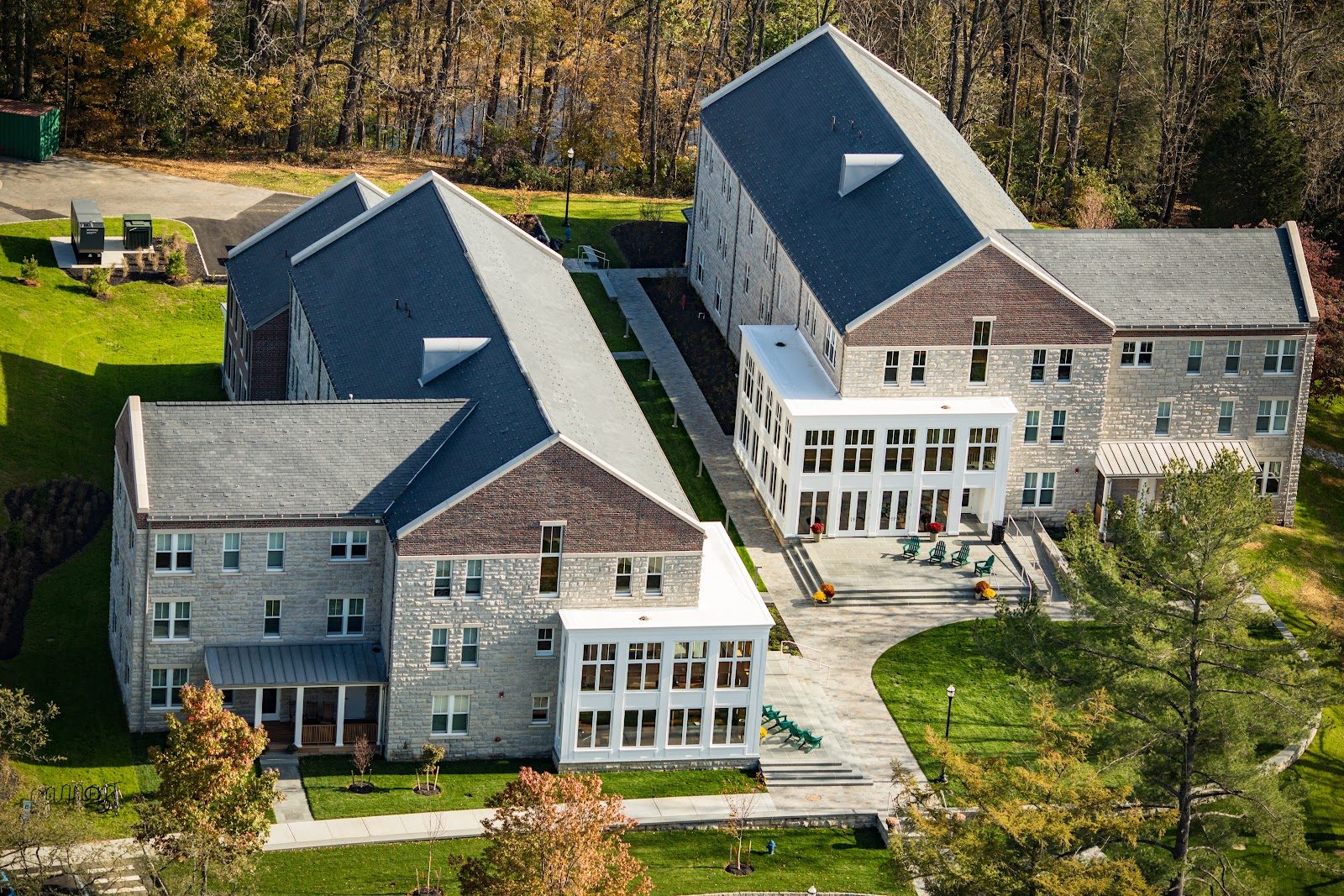
Blair Academy
Blairstown · United States
A hilltop New Jersey campus, founded 1848, where the weekly Society of Skeptics turns global debate into a signature course of study

Newark Academy
Livingston · United States
Founded in 1774, this Livingston day school remains New Jersey's only private IB Diploma provider
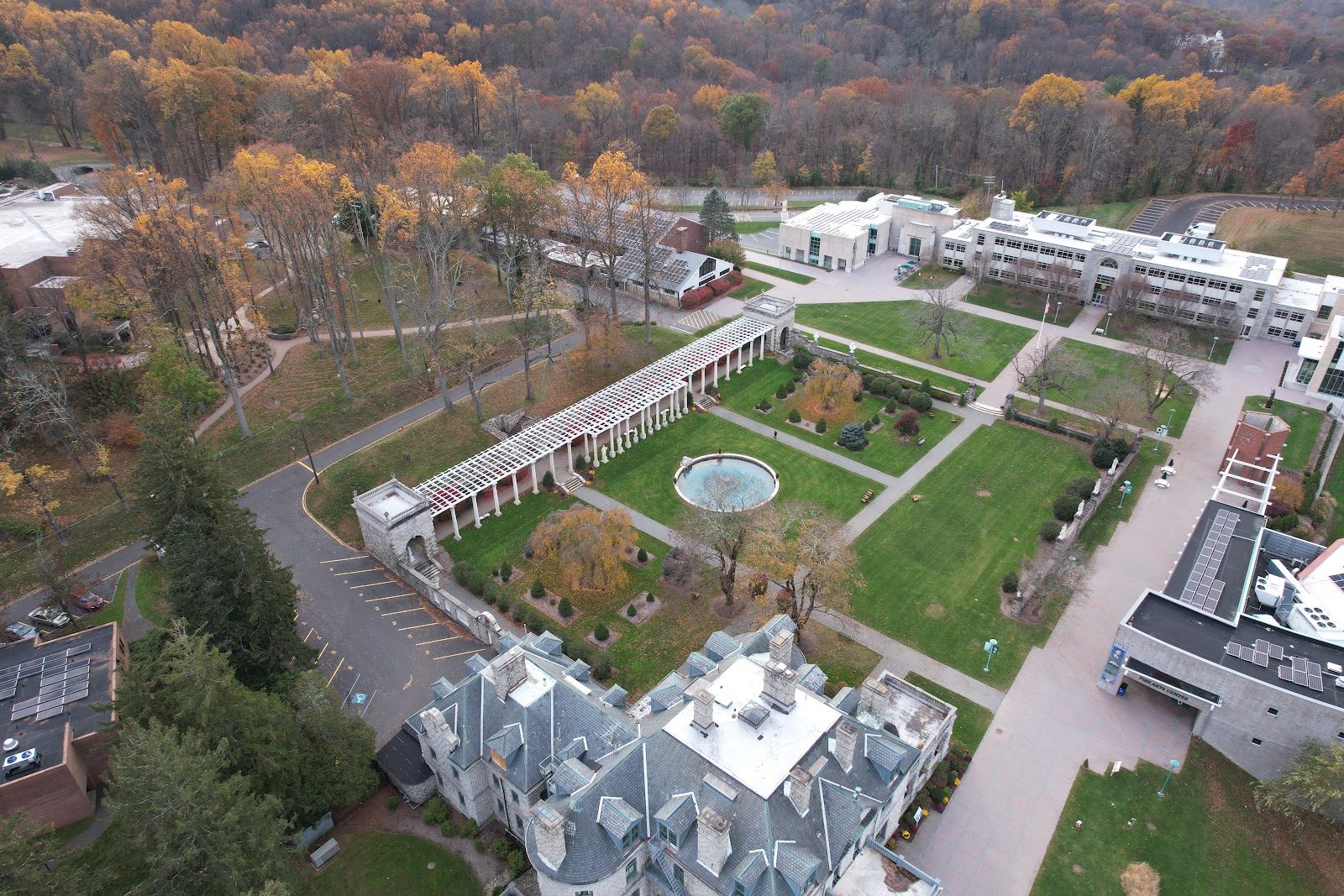
Delbarton School
Morristown · United States
On a 187-acre abbey campus outside Morristown, Benedictine monks still guide a rigorous, near-1,500-year-old liberal arts tradition.
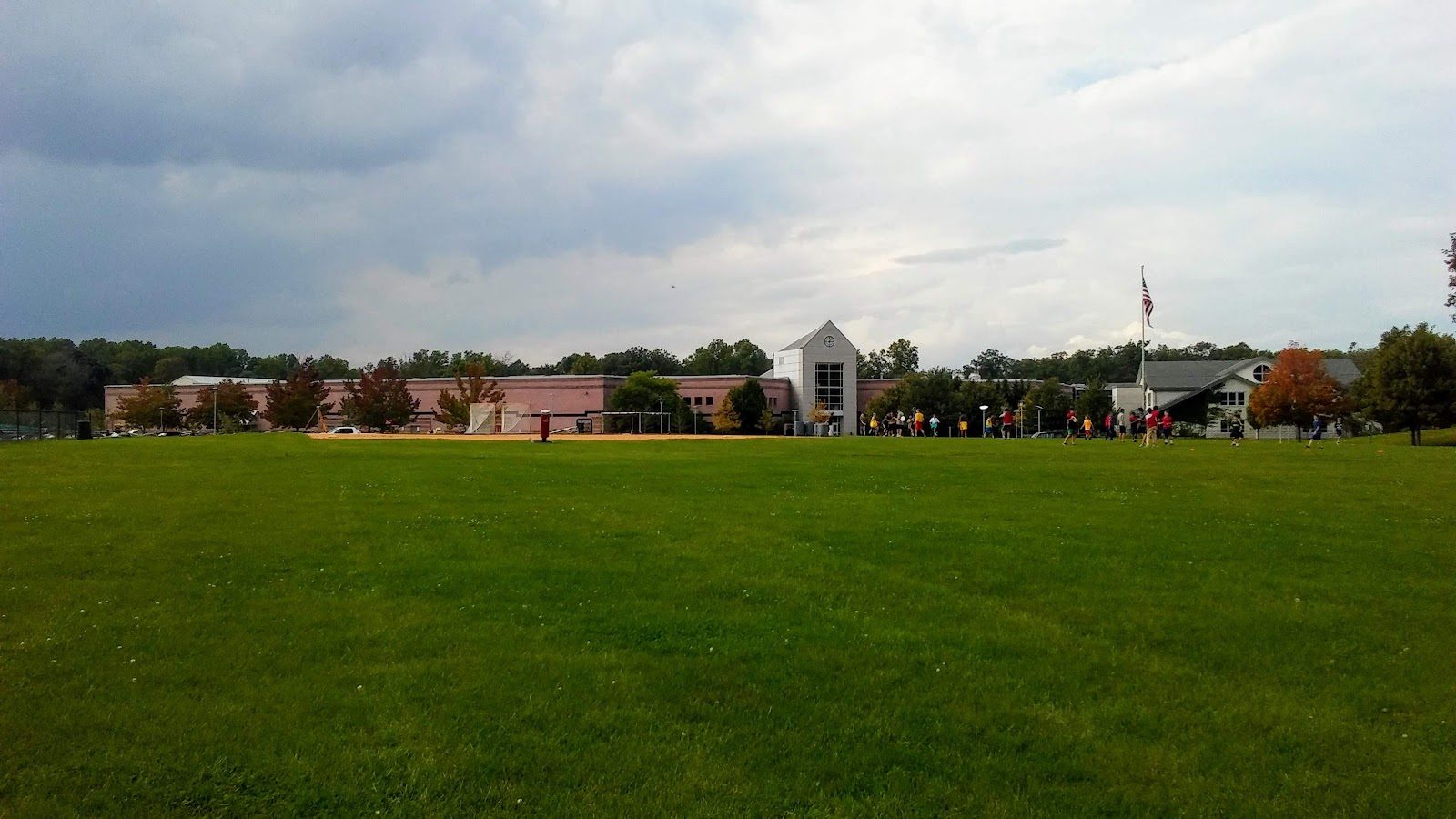
The Pingry School
Basking Ridge · United States
A 1861-founded New Jersey day school whose soccer pitches were deemed fit to host Morocco's 2026 World Cup training camp.
Same country and curriculum — closest matches within ±10 points either way