
Oregon
Rooted in a 450-year Jesuit tradition, this Beaverton campus pairs Ignatian rigor with 21 straight OSAA all-sports cups.

Photo © Josh Steuben via Google Maps
Type
Day
Ages
13–18
Curriculum
American
Qualifications
AP
Ratio
16:1
The Verdict
Editor's commitment
Right for
Families wanting a Catholic day school, founded in 1956, with a 1:13 ratio and a clear 9–12 college-preparatory brief.
Wrong for
Anyone wanting boarding, a secular ethos, or schooling outside ages 13–18; this Portland campus is Catholic, day-only and unapologetically mission-led.
Watch out for
NAIS accreditation and Jesuit branding carry weight, but the school does not publish exam outcomes here; parents must ask harder academic questions.
Ranking breakdown
Jesuit High School · #869 of 1591
Composite score 64.1. 8 weighted criteria.
By criterion
Academic Outcomes
Weight 20%
#450
of 1529 scored
University Placement
Weight 16%
#398
of 1529 scored
Prestige & Heritage
Weight 12%
#446
of 1571 scored
Alumni Network
Weight 12%
#1429
of 1530 scored
Facilities
Weight 12%
#406
of 1533 scored
Transparency & Communications
Weight 8%
#388
of 1532 scored
Peer & Industry Review
Weight 10%
#424
of 1548 scored
Admissions Selectivity & Demand
Weight 8%
#489
of 1529 scored
Peer & Industry Review
How Jesuit High School is regarded in the sector
72
Respected · medium confidence
Within Portland's private-school hierarchy, Jesuit is generally grouped with Oregon Episcopal School and Catlin Gabel as one of the region's most credible college-preparatory options, though heads at those secular, progressive-pedagogy schools would draw a clear distinction from Jesuit's faith-based model; the schools compete for local prestige more than for an identical applicant pool. Nationally, Jesuit sits within the Jesuit Schools Network, the body of US Jesuit secondary schools, and is treated by admissions offices at Gonzaga, Santa Clara and other Jesuit universities as a reliable feeder producing well-prepared, service-oriented applicants. Independent ratings sites such as Niche consistently place it among Oregon's top Catholic and top overall high schools, though it seldom appears in national league tables built around Ivy-Plus admission rates, since its outcomes skew toward strong regional and Jesuit-network placement rather than concentrated Ivy admission. UK-oriented advisory services such as WhichSchoolAdvisor and the Good Schools Guide do not cover it, consistent with its purely domestic, non-boarding profile.
- Tim Boyle — Chairman and CEO, Columbia Sportswear - business
- Chris Dudley — Former NBA player and politician
- Terrell Brandon — Former NBA player
Editors' overview
Jesuit High School sits in a crowded American college-prep market, but its identity is sharper than most. This is a Catholic day school for ages 13–18, founded in 1956, with a clear Jesuit frame: intellectual discipline, moral formation and service anchored in the Ignatian idea of educating the whole person. The school talks about spiritual, physical, emotional, intellectual and aesthetic growth, and that breadth matters. Plenty of schools claim to educate character; Jesuit has a long-established religious tradition, a governing board charged with protecting that mission, and a campus culture built around “men and women for others”. For parents who want serious formation rather than slogans, that is the point of difference.
What puts Jesuit on a shortlist is the rare combination of academic purpose and athletic dominance. The editorial tagline points to 21 straight OSAA all-sports cups, which marks the school out as a formidable sporting institution, not a school that treats athletics as decorative. That matters because it shapes the student experience: high expectations, busy schedules and a culture that prizes discipline and follow-through. The student-teacher ratio of 1:13 supports that ambition with real access to adults. Jesuit also states that it serves students of all religious faiths, so the school is not reserved for Catholic families; it is for families comfortable with a Catholic framework and a clear moral vocabulary.
There are limits. This is not the school for families who want a secular environment, a loose academic culture or a broad buffet of educational philosophies. Jesuit knows what it is, and the structure is part of the offer. The school also puts unusual emphasis on safety infrastructure, with a full-time campus safety team, an on-site School Resource Officer, mandatory training around abuse prevention, and formal reporting channels. Some parents will read that as hard-headed seriousness; others will find the security posture too explicit. Either way, it signals an institution that prefers systems to sentiment.
The best fit is a student who thrives with expectations, values community, and does not flinch at accountability. A motivated scholar-athlete will find a natural home here, but so will a student drawn to service, leadership and purpose beyond self. The school suits teenagers who want structure, strong adult guidance and a culture where faith still has public force. For the right child, Jesuit offers ambition with ballast and tradition with teeth.
Academic Performance
Jesuit does not publish the core data that would let parents judge academic performance against serious peers. We have not seen average SAT or ACT scores, aggregate AP results, university matriculation distributions, National Merit counts, or any other external examination profile in the public domain. That matters. In the American independent-school market, strong schools that want credit for academic outcomes put at least some of those numbers on the record. Jesuit instead asks families to trust its college-preparatory identity and Jesuit intellectual tradition without the hard proof that would place it cleanly among Oregon’s most academically transparent schools.
That does not make the academic standard weak; it makes it opaque. The school’s published emphasis on intellectual competence, articulate wisdom and the full development of the student points to a demanding internal culture, and the low staffing ratio supports close academic oversight. Its long sporting success also signals a student body used to discipline and performance under pressure, which can reinforce classroom standards as much as it can distract from them. But without external exam disclosure, Jesuit fits the peer group of mission-driven, high-expectation schools whose reputation runs ahead of their published metrics. Parents who need comparative academic evidence, not ethos, will find the picture frustratingly incomplete.
Facilities
Jesuit’s facility story is strongest where the school’s identity is strongest: sport, supervision and the practical infrastructure of a tightly run day school. The published record points to playing fields substantial enough to sustain an all-sports culture at scale, and that already places Jesuit above many urban Catholic peers whose athletic ambitions outstrip their space. A full-time campus safety team and an on-site School Resource Officer also mark a campus built around visible control and institutional seriousness, not a relaxed open-campus model. For some families, that reads as reassuringly hard-edged; for others, it gives the school a more regulated feel than the warmer, looser independent-school ideal. Either way, the operational infrastructure is stronger than the norm.
What is missing is just as important. We have not seen a clear public account of specialist academic facilities: no proper showcase of science labs, libraries, maker spaces, performing arts venues or design provision, and no detailed breakdown of what distinguishes classrooms beyond the school’s mission language. Against well-resourced American college-prep competitors, that is a weakness in disclosure. Strong schools do not need glossy boasts, but they do need to show parents the physical means by which teaching happens. Jesuit clears the bar on sport and student safeguarding; on academic and arts facilities, the public picture remains thin, under-evidenced and less persuasive than a school of this standing deserves.
Jesuit High School sits in a crowded American college-prep market, but its identity is sharper than most
Prestige
Jesuit carries real local prestige, but it is not an American brand-name school with automatic national cachet. Its standing rests on three things: the weight of the Jesuit tradition, a disciplined college-prep identity, and an athletic record that is hard to ignore. That run of 21 straight all-sports cups gives the school a public profile far beyond the chapel-and-classroom image many parents attach to Catholic education. In Oregon, that matters. It marks Jesuit as a school that wins, organises well, and expects students to deliver. The religious dimension also adds distinction. “Men and women for others” is not decorative copy here; it is the language of an institution with a clear moral centre and a serious institutional memory.
The ceiling on prestige is academic opacity. Top-tier prestige in this market depends on published outcomes as well as reputation, and Jesuit does not disclose the external performance data that would settle the question cleanly. That keeps it out of the undisputed elite on evidence, even if local families place it high on their list. Still, prestige is not only exam tables. For parents who value structure, service, competition and a Catholic frame with real backbone, Jesuit has earned stature. It reads as a school respected for standards and culture, not one inflated by glossy myth-making.
Jesuit’s distinctiveness lies in the way mission governs the whole institution rather than decorating it
Communications
Jesuit communicates with parents in the manner one would expect from a tightly run religious school: formal, procedural and values-led. The public face is clear about mission, governance and safeguarding. Parents can see who holds responsibility, how the board oversees the school’s direction, and what standards govern conduct. The safety language is unusually explicit: a full-time campus safety team, an on-site officer, trained counsellors, mandatory reporting duties, a state hotline, and complaint procedures available through a named senior leader. That is serious institutional communication, not vague reassurance. It gives families a clear picture of how the school handles risk, discipline and student protection, and it reinforces a culture of visible adult control.
Where Jesuit is less effective is breadth. The school communicates ethos and safety better than it communicates day-to-day educational substance. We have not seen a rich public explanation of teaching, academic performance, department strength, or the practical details that help parents judge how the school runs beyond its moral framework. The message is coherent but selective. Parents who want certainty on values, boundaries and reporting systems will find the communication reassuringly direct. Parents who want deeper academic disclosure, more evidence of classroom life, or a fuller account of what distinguishes the school in practice will find it too guarded. In short: strong on mission and safeguarding, thinner where hard academic communication matters most.
Uniqueness
Jesuit’s distinctiveness lies in the way mission governs the whole institution rather than decorating it. Plenty of American college-prep schools bolt service, leadership and wellbeing onto an academic core; Jesuit starts with an Ignatian idea of formation and builds outward from there. The school names five graduate traits drawn from that tradition and ties curriculum development and teaching to them, which gives the place a coherent moral architecture rare in a market full of elective identities. The phrase “men and women for others” is not soft branding here. It sets a standard of duty, self-command and concern for justice that reaches beyond chapel language into daily expectations. For students, that brings clarity, moral pressure and a stronger sense that school life is for more than transcript-building.
The other point of difference is the fusion of that religious seriousness with a fiercely competitive athletic culture signalled by 21 straight all-sports cups. Many schools manage one of those identities; few sustain both without drift. That combination produces a student experience built around commitment, routine and public accountability. Add the school’s explicit safety systems, trained reporting structures and full adult oversight, and the result is a campus with firm edges and very little ambiguity about conduct. Students who thrive here get structure, close watching and a culture that prizes contribution over display. Students who want latitude, irony or institutional looseness will find it too tightly drawn.
The school talks about spiritual, physical, emotional, intellectual and aesthetic growth, and that breadth matters
Student Profile
The student who fits Jesuit accepts structure without bargaining over it. This is a school for adolescents who can live inside a Catholic moral framework, take adults seriously and handle a culture where expectations are public, not private. Students of other faiths can fit well, but only if they are comfortable with religion woven into the life of the school rather than parked at the margins. The strongest match is a teenager with discipline, stamina and a service instinct: someone who can move from classroom to training ground to community obligation without treating any of it as optional. The school’s graduate profile — open to growth, intellectually competent, loving, religious and committed to justice — gives a clear read on the sort of character it wants to produce. That is purposeful, demanding and not for the faint-hearted.
Socially, Jesuit suits students who do not need performative freedom to feel secure. The atmosphere reads closely supervised and high-accountability, with trained counsellors, formal reporting channels and a visible safety apparatus. That will steady some teenagers and chafe others. A strong scholar-athlete is an obvious fit, given the school’s long run of sporting dominance, but the deeper requirement is reliability: turning up prepared, contributing to community life, and accepting that “men and women for others” carries real behavioural force. Children who thrive in firmly drawn institutions will do well here. Those who want looseness, detachment or a more ironic peer culture will not.
For parents who want serious formation rather than slogans, that is the point of difference
Co-curricular strengths
Arts & sport, on a separate axis
Overall 8.2/10
Scored 0-10 from the school's own published evidence. This axis is editorial-only — it does not feed the main WTS ranking.
Sports
9/10
Drama
8.7/10
Dance
6.6/10
Music
8.6/10
Visual Arts
8.1/10
Strengths
- +Jesuit High School has been coeducational since 1993 and now enrolls roughly 1,280-1,300 students across grades 9-12. Jesuit High School opened for freshmen boys on September 10, 1956 and girls have been admitted since 1993.
- +The school reports strong four-year college progression, with 82% of students from this school go on to attend a 4-year college.
- +Financial assistance is substantial in scale: for the 2026-2027 academic year, Jesuit High School will provide over $4 million in financial assistance, with an average financial aid grant of $13,000.
- +Niche ranks it #1 in Best Catholic High Schools in Portland Area and among the top 10 private schools in Oregon overall.
- +Co-curricular breadth is wide, with the school describing 80 clubs, 59 athletic teams, and a fine arts program for its student body.
Considerations
- −Annual tuition sits around $18,600-$19,325 depending on the year cited, a significant recurring cost for relocating families. TUITION | $18,600 and Tuition is $19,325 for the highest grade offered.
- −Entry is structured almost entirely around Grade 9: we accept transfers into grade 12 only in extraordinary circumstances (e.g., if the student is transferring from a Catholic high school outside of the Portland metropolitan area), limiting options for families arriving mid-secondary school.
- −Financial aid is not extended to those who do enter via transfer: we are unable to offer financial assistance to transfer students at this time; however, we do have convenient tuition payment plans available to all our students.
- −As a Catholic, Jesuit institution the school explicitly builds spiritual formation into daily life, with retreats, liturgies, and service as core components, which may not suit strictly secular families even though it enrolls students of all faiths.
Availability
Primary entry gate & tests
HSPT + Interview
Gallery
Photo © Timothy Fryer via Google Maps
Photo © Timothy Fryer via Google Maps
Photo © Jesuit High School via Google Maps
Parent reviews
Have you sent your child here?
Voice reviews carry the strongest trust badge — we transcribe them for you to tidy up before they go live. Prefer to type? A written review is fine too.
Add your voice
In 60 seconds, tell other parents: what's the best thing about Jesuit High School, and what surprised you when your child joined?
We ask for a Google sign-in so every review has a real face behind it — no anonymous drive-by attacks on schools, and no faked positive reviews. Your email is never shown publicly.
Send this profile to a friend
International parents rely on word-of-mouth. Share this review with someone weighing the same decision.
Schools with places
Similar schools to Jesuit High School with places available now.
Princeton Day School
Princeton · United States
- 2026-27
- CLOSEDRegular cycle closed
- 2027-28
- OPENS SOONOpens Sept '26
Head-Royce School
Oakland · United States
- 2026-27
- CLOSEDRegular cycle
- 2027-28
- OPENS SOONOpens Sept '26
The Buckley School
New York City · United States
- 2026-27
- CLOSEDConfirmed full
- 2027-28
- OPENS SOONOpens post-Labor Day '26
Greenwich Academy
Greenwich · United States
- 2026-27
- CLOSEDRegular cycle closed
- 2027-28
- OPENS SOONOpens Sept '26
Availability first, then country, area, curriculum, price, co-curricular
Consider also
Also worth looking at alongside Jesuit High School.

Princeton Day School
Princeton · United States
Formed by a 1965 merger of two century-old Princeton schools, pairing STEAM rigor with a rare four-year architecture program across 106 acres.
Head-Royce School
Oakland · United States
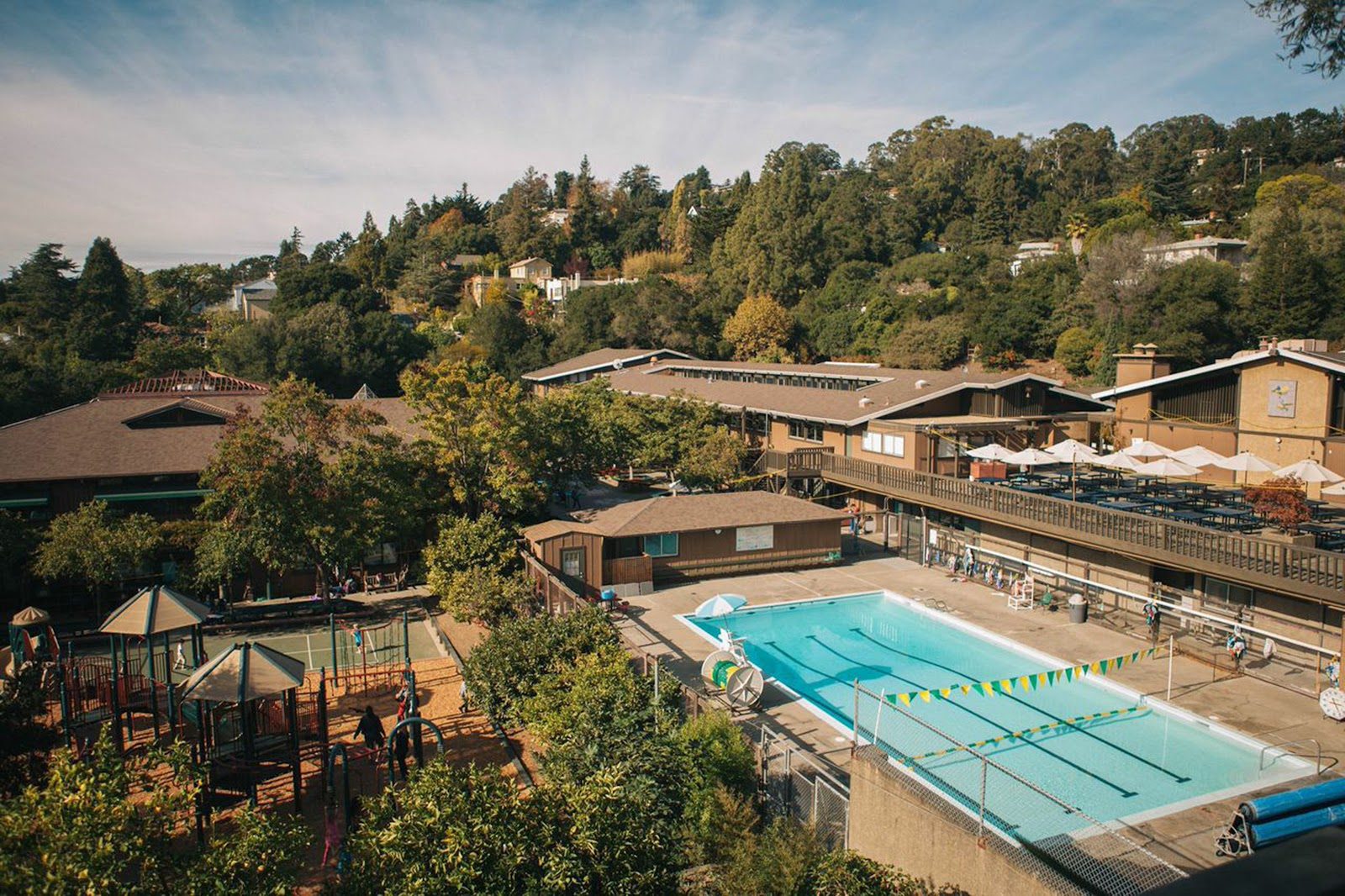
Since 1887 on a wooded Oakland hills campus, pairing rigorous scholarship with a decades-old public-school partnership that opens college doors for first-generation students
The Buckley School
New York City · United States
On Manhattan's Upper East Side since 1913, a K-9 boys' school pairing classical rigor with mandatory public-speaking training for every student.

Greenwich Academy
Greenwich · United States
Connecticut's oldest all-girls school pairs single-sex grounding with coeducational upper-school classes shared alongside Brunswick's boys.
Same country and curriculum — closest matches within ±10 points either way