
Hanoi
Hanoi–Amsterdam High School for the Gifted
Born of a 1972 Amsterdam solidarity gift, this Hanoi lakeside academy for the gifted keeps stacking science Olympiad medals.
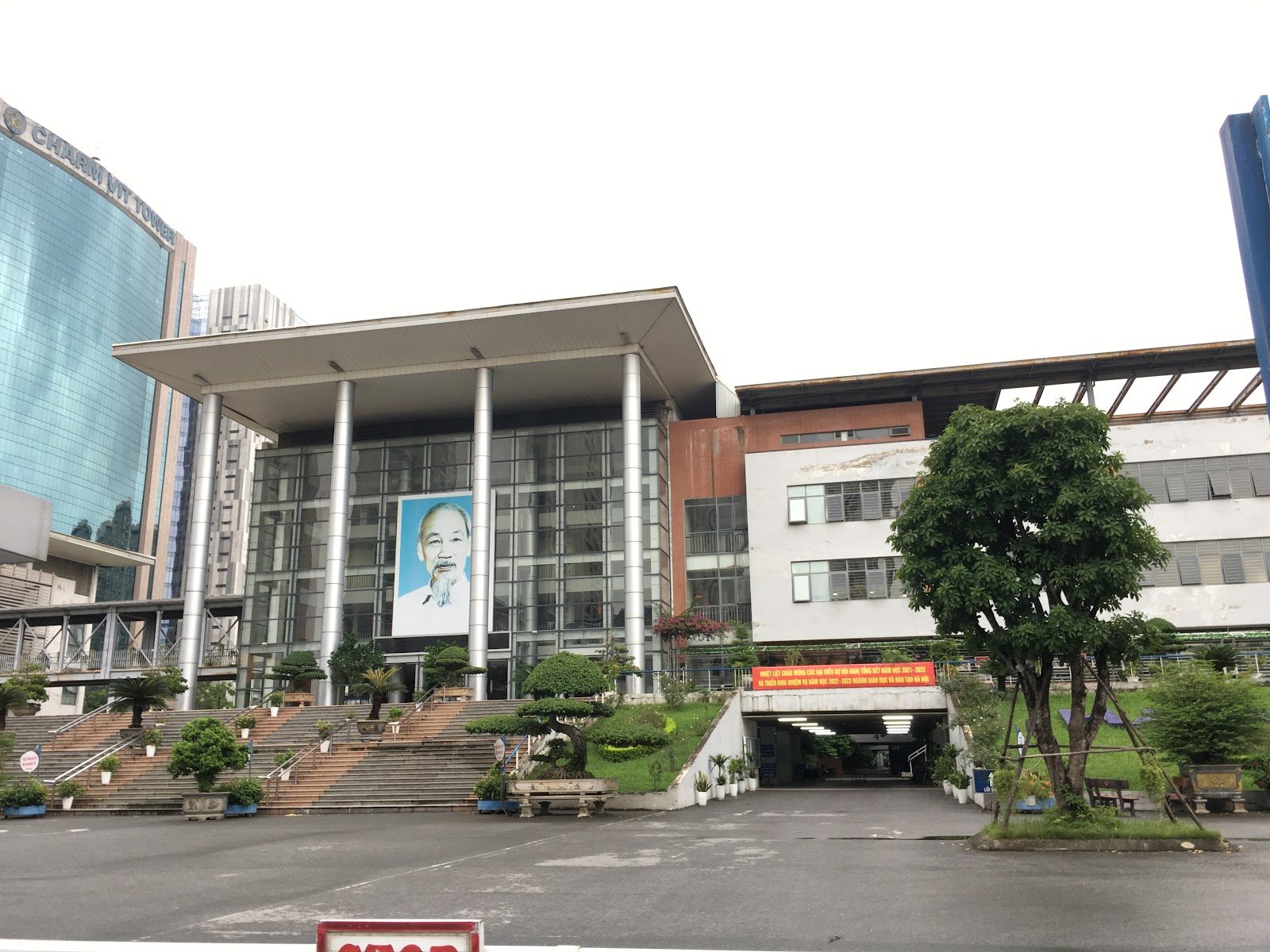
Photo © Dong Ta Phuong via Google Maps
Type
Day
Ages
15–18
Curriculum
Vietnamese
Qualifications
Vietnamese national curriculum (gifted track)
Ratio
—
The Verdict
Editor's commitment
Right for
15–18-year-olds in Hanoi who want a secular day school with Vietnamese curriculum and serious specialist streams from English to maths and informatics.
Wrong for
Families wanting boarding, a non-Vietnamese main curriculum, or a broad all-round secondary; this 1985 academy is built for gifted sixth-formers.
Watch out for
Teaching runs in Vietnamese and English, but the school does not publish aggregate exam outcomes or university destinations on its website.
Ranking breakdown
Hanoi–Amsterdam High School for the Gifted · #900 of 1591
Composite score 62.3. 8 weighted criteria.
By criterion
Academic Outcomes
Weight 20%
#208
of 1529 scored
University Placement
Weight 16%
#1015
of 1529 scored
Prestige & Heritage
Weight 12%
#207
of 1571 scored
Alumni Network
Weight 12%
#1323
of 1530 scored
Facilities
Weight 12%
#1102
of 1534 scored
Transparency & Communications
Weight 8%
#1242
of 1532 scored
Peer & Industry Review
Weight 10%
#642
of 1548 scored
Admissions Selectivity & Demand
Weight 8%
#21
of 1529 scored
Peer & Industry Review
How Hanoi–Amsterdam High School for the Gifted is regarded in the sector
68
Respected · medium confidence
Hanoi-Amsterdam is consistently treated by Vietnamese education officials and press as the country's benchmark specialized school, alongside Hanoi National University's High School for Gifted Students. Ministry of Education and Training annual reports on national excellent-student competitions (Vietnam's IMO/IChO/IBO team selection) routinely list Amsterdam as the top or near-top feeder school, a metric widely cited by VnExpress, Tuoi Tre and Dan Tri education-desk league tables. Its graduates' admission counts to Ivy League, Oxbridge, ANU and NUS are tracked informally by Vietnamese university-counseling forums and cited by rival specialized schools (Chuyen Le Hong Phong, Chuyen Khoa học Tu nhien) as the comparator to beat. International olympiad medal tallies (IMO, IPhO, IChO) published by MOET give it recurring visibility in regional STEM education press. It lacks coverage in Western independent-school review platforms (Good Schools Guide, WhichSchoolAdvisor do not profile it), so its reputation signal is almost entirely domestic press and peer-school benchmarking rather than international admissions-officer commentary.
- Nguyen Tu Quang — CEO/Founder, Bkav - cybersecurity/tech
- Nguyen Manh Hung — Minister of Information and Communications, former Viettel CEO
- Ngo Thi Phuong Lien — Academic/Researcher
Editors' overview
Hanoi–Amsterdam High School for the Gifted occupies a distinct place in Vietnam’s state-school hierarchy: a selective academic powerhouse with a long record in Olympiad culture, specialist teaching and high-stakes admissions. Founded in 1985, it serves ages 15–18 as a day school in Hanoi, teaching in Vietnamese with English also in use. The school’s own site makes its focus plain. This is a “trường chuyên” in the full Vietnamese sense: subject-streamed classes in English, chemistry, physics, Russian, French, biology, history, informatics, mathematics, Chinese, literature and geography. For parents, that matters. This is not a broad, gently differentiated comprehensive. It is a school built for intellectual competition, exam pressure and subject specialisation.
What puts it on a shortlist is the combination of prestige, depth and ecosystem. Hanoi–Amsterdam sits in the small group of Vietnamese schools that feed national teams, scholarship wins and elite university applications while sustaining a dense student culture of clubs, debates, STEM events and high-output peer networks. The homepage alone is crowded with AI competition results, international science Olympiad selection notices, debate tournaments and scholarship news. That reflects a school where top students sharpen one another. The payoff is serious academic traction and peer intensity that few schools can match. The cost, in human terms, is obvious too: weaker self-starters get lost, and students who need pastoral hand-holding or a slower pace will find the atmosphere unforgiving.
The market position is clear. This is a top-tier public gifted high school, not an international school and not a bilingual lifestyle brand. Its value lies in selection, reputation and concentration of talent, not in glossy facilities or foreign curricula. The age range is narrow — 15–18 — and the model is unapologetically academic. Parents who want a school with a wide ability range, heavy individual coaching or a softer social climate should look elsewhere. Parents who want hard academic stretch, status in the Vietnamese system and access to an alumni-grade student network built through selective entry have a strong reason to consider it.
The right student for Hanoi–Amsterdam is ambitious, resilient and already operating at the top of the local curve. They enjoy mastering a subject, not merely passing it; they can handle constant comparison with other high achievers; and they gain energy from competition rather than shrinking under it. A child who wants sport, pastoral warmth and open-ended exploration as the centre of school life will not get the best from this environment. A child who wants deep subject identity, fast company and a school culture that treats academic distinction as the main event will. The school’s special quality is simple: it concentrates exceptional students in one place and gives them reasons to push harder.
Academic Performance
Academic performance sits at the centre of this school’s value. The public record points less to broad exam statistics than to a high-pressure, medal-driven culture built around selective subject strength and national competition pathways. The school’s own channels foreground Olympiad selection notices, AI competition success and scholarship wins; the editorial pattern is unmistakable. This is a school that measures excellence through top-end distinction, not through reassuring publication of whole-cohort outcomes. That places it above ordinary state peers in academic prestige and below the best international schools in one respect only: transparency. We have not seen aggregate graduation data, university destination breakdowns or school-wide external exam score tables in the public domain. For a school of this standing, that gap matters.
Relative to peers inside Vietnam’s specialised public-school sector, Hanoi–Amsterdam belongs in the top bracket. The depth of specialist streams alone gives it a stronger academic spine than most schools, and the steady visibility of students in elite competitions confirms that the strongest pupils are operating at a nationally competitive level. Parents should read the results story in the right way. The key output here is not polished reporting on cohort averages; it is repeated production of students who win places, prizes and attention far beyond the classroom. That makes the school formidable at the top end and less useful for families who want clean, published data on every student rather than proof of excellence from the sharpest few.
Facilities
The facility story is functional rather than lavish. The school’s public face points to a large, busy academic site with a lecture-hall scale venue — HT200 is named for school events — plus a library, video library, image gallery and the subject infrastructure required to run specialist classes across science, mathematics, informatics, humanities and multiple languages. STEM activity has visible space in school life: the site highlights science engagement, AI competition work and student-run academic events, which matters more here than ornamental architecture. For a selective public school, that mix is fit for purpose and academically aligned. What the school does not publish is just as important: there is no clear public inventory of laboratories, sports provision, performing arts spaces or campus-wide specialist equipment. That leaves the facilities picture less transparent than it should be.
Against Vietnam’s strongest specialist state schools, this reads as solid rather than exceptional. The school has the infrastructure to sustain a high-output, competition-heavy culture, and that is the real benchmark that matters in this segment. Against premium international schools, the contrast is sharper: those schools publish theatres, pools, maker spaces and design suites in forensic detail because facilities are part of the product. Hanoi–Amsterdam sells something else. Its physical environment supports intense study, club activity and large-group academic programming, but families hunting for showpiece campus amenities or a polished co-curricular estate will find the public case thin. The school’s strengths sit in intellectual concentration, not in bricks-and-mortar display.
That reflects a school where top students sharpen one another
Prestige
A Hanoi–Amsterdam education carries serious domestic prestige because entry is selective, the peer group is strong, and the school sits near the summit of Vietnam’s state academic ladder. In practical terms, the brand has weight with families, universities and students who know the local system. The school does not trade on imported status markers; it trades on proof of intellectual sorting. Its specialist structure matters here. This is not a generalist upper secondary with a gifted label attached. It runs named streams across 12 specialist areas, from mathematics and informatics to literature, history and multiple foreign languages. That breadth gives the school authority beyond a single-science niche and reinforces its reputation as a place where top pupils gather, compete and define themselves by subject mastery.
The prestige rating also rests on visibility. The school’s own channels are crowded with Olympiad selection notices, AI competition coverage, debate events, scholarship stories and alumni success. That creates a high-status internal culture in which achievement is public, comparison is constant and mediocrity has no hiding place. There is, however, an important limit to the prestige story. This is elite within its own national frame, not a global finishing school with the international signalling of top British or American-brand institutions. For Vietnamese families who value academic standing, competitive selection and association with a hard-driving top student network, the name carries real force. For families shopping first for overseas curriculum prestige, it carries less.
This is a top-tier public gifted high school, not an international school and not a bilingual lifestyle brand
Communications
Parent communication is active, public and skewed towards notices rather than relationship-building. The school website carries a heavy flow of updates across admissions, timetables, scholarship news, competitions, education policy, student life and official documents. Parents can find practical items such as admissions paperwork, grade-report templates, confirmation-letter forms and timetable changes, alongside headline school news. The navigation is dense and old-fashioned, with many sections competing for attention at once. That cuts two ways. For families already fluent in the Vietnamese state-school system, it offers a high-volume, workmanlike stream of information. For newcomers, it is cluttered, harder to scan and weaker on signposting than a well-run international-school portal.
The school also uses multiple contact points — email, forums, newsletter sign-up, contact links and sitemap access — which gives parents routes in beyond a single front desk. That breadth helps. So does the frequency of updates: admissions notices and event coverage are posted promptly, and the site does not sit dormant. The weakness is clarity. We do not see a sharply organised parent hub, a clean calendar architecture or much evidence of communication built around pastoral guidance, family onboarding or explanation for those outside the specialist-school culture. In plain terms, this is institution-first communication from a serious academic machine. It gets essential information out, and in a school handling large volumes and selective processes, that matters more than polish. It is effective for administration; it is less effective at feeling parent-friendly.
Uniqueness
What makes Hanoi–Amsterdam unique is not just selectivity, but the way it turns subject identity into the organising principle of school life. Students do not enter a generic high school and then pick up enrichment on the side; they enter a place divided into 12 specialist streams, each with its own internal standards, peer hierarchy and habits of excellence. That structure produces a *rare concentration of intellectual tribalism*: mathematicians, coders, linguists, historians and scientists all working at speed, all measuring themselves against other strong students who care about the same thing. The result for pupils is early academic self-definition. A teenager with real depth in a subject gets more than good teaching; they get a peer group that treats mastery as normal.
The other distinctive feature is the school’s place inside Vietnam’s competition pipeline. The public life of the school is saturated with Olympiad notices, AI contests, debate fixtures, scholarship stories and student-run initiatives with serious scale; one astronomy event alone is described with more than 50 activities. That creates a culture with constant upward pressure. Students learn to perform in public, build projects that leave the classroom, and operate in an environment where achievement is visible and comparison is relentless. For the right child, that is electrifying. It gives confidence, speed, resilience and access to a network of equally driven peers. For the wrong child, it is not for the faint-hearted.
The right student for Hanoi–Amsterdam is ambitious, resilient and already operating at the top of the local curve
Student Profile
The students who thrive here are the ones who want to be measured against other very able teenagers every day and do not need adults to cushion that fact. This is a school for pupils with a strong academic identity already in place: the mathematician who wants harder problems, the coder who likes contests, the linguist who enjoys precision, the debater who wants sharper opposition. The specialist structure — 12 named streams — matters because it rewards students who like committing to a field, not drifting across interests without depth. Socially, the fit is a child who can tolerate comparison, public recognition of achievement and a peer culture where distinction carries status. Confidence helps. So does stamina.
The weaker fit is just as clear. A student who needs frequent reassurance, loose expectations or a broad middle-of-the-road environment will struggle. So will a child who wants school life built first around sport, performance or pastoral warmth. The website’s public rhythm is crowded with competitions, scholarship stories, academic talks and student initiatives on a large scale; one student astronomy event alone involved more than 50 activities. That tells you a great deal about the tribe. The best match is self-propelled, highly competitive, thick-skinned and *genuinely excited by intellectual hierarchy. For the right teenager, that is rocket fuel. For the wrong one, it is exhausting*.
The school’s special quality is simple: it concentrates exceptional students in one place and gives them reasons to push harder
Co-curricular strengths
Arts & sport, on a separate axis
Overall 6.8/10
Scored 0-10 from the school's own published evidence. This axis is editorial-only — it does not feed the main WTS ranking.
Sports
7/10
Drama
6.8/10
Dance
6/10
Music
7.2/10
Visual Arts
7/10
Strengths
- +One of Hanoi's four regional magnet schools, regarded as one of the most prestigious and academically selective high schools in Vietnam, with entry historically requiring top marks and a citywide exam.
- +Acceptance rate is often as low as 3% for the more selective classes, such as English, chemistry, physics, and mathematics, reflecting a genuinely rigorous academic filter.
- +Students have won gold medals at the International Physics Olympiad (2019) and International Chemistry Olympiad (2019), plus a silver medal at the International Mathematical Olympiad (2019), evidencing sustained strength in STEM competitions.
- +As a public school, tuition is free under Resolution 217/2025/QH15, with only $50-$100 in annual additional costs, making it markedly cheaper than private or international alternatives in Hanoi.
- +Students can specialize in one of 12 subject areas including literature, mathematics, computer science, physics, chemistry, biology, and several foreign languages, offering unusually broad academic tracking within a single public school.
Considerations
- −Instruction follows the Vietnamese national curriculum entirely in Vietnamese; the school does not offer IB, A-Level or another internationally recognised qualification track.
- −As of April 2, 2024, Hanoi has stopped accepting new students to Hanoi-Amsterdam's 6th grade as per the Vietnamese Ministry of Education and Training's new regulations, closing the traditional early-entry route many families relied on.
- −The admission process is always stressful due to the high competition ratio and the immense pressure on students preparing for the exam, according to a former Deputy Minister of Education, signalling a demanding exam culture rather than a low-stakes environment.
- −Enrollment is approximately 3,000 students across grades 6-12 with a faculty of 190, implying a large-scale public school setting rather than small, highly personalised classes.
Availability
Primary entry gate & tests
Hanoi DOE Competitive Exam
Gallery
Photo © ptt3i via Google Maps
Photo © Kien Vu Duy via Google Maps
Photo © Những con đường chúng ta đi - - via Google Maps
Photo © Lập Nguyễn via Google Maps
Photo © Khôi Đặng Huy via Google Maps
Photo © José Luis via Google Maps
Photo © khanh xinh via Google Maps
Parent reviews
Have you sent your child here?
Voice reviews carry the strongest trust badge — we transcribe them for you to tidy up before they go live. Prefer to type? A written review is fine too.
Add your voice
In 60 seconds, tell other parents: what's the best thing about Hanoi–Amsterdam High School for the Gifted, and what surprised you when your child joined?
We ask for a Google sign-in so every review has a real face behind it — no anonymous drive-by attacks on schools, and no faked positive reviews. Your email is never shown publicly.
Send this profile to a friend
International parents rely on word-of-mouth. Share this review with someone weighing the same decision.
Schools with places
Similar schools to Hanoi–Amsterdam High School for the Gifted with places available now.
Availability first, then country, area, curriculum, price, co-curricular
Consider also
Also worth looking at alongside Hanoi–Amsterdam High School for the Gifted.

Uppingham School
Uppingham · United Kingdom
A Rutland boarding school where Thring's music-first Victorian philosophy still shapes seven-day house life today
Merryland International School
Abu Dhabi · United Arab Emirates
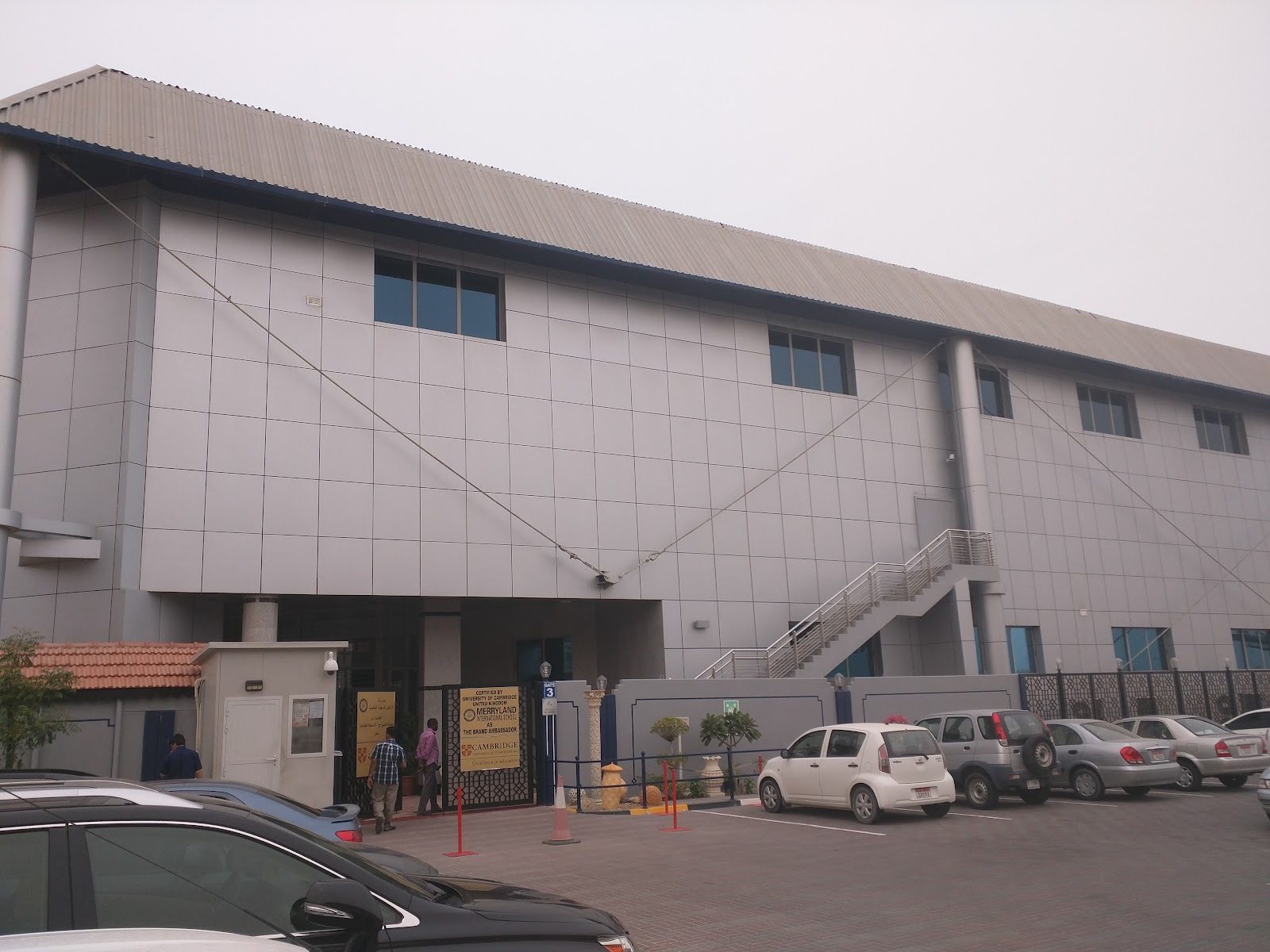
In Mussaffah, this Cambridge pilot school holds Abu Dhabi's top ADEK rating at a fraction of premium British-school fees.

The Grammar School Nicosia
Nicosia · Cyprus
First in Cyprus to embed STEM schoolwide, this Nicosia day school blends Cambridge A Levels with the Apolytirion.
International School of Bremen
Bremen · Germany
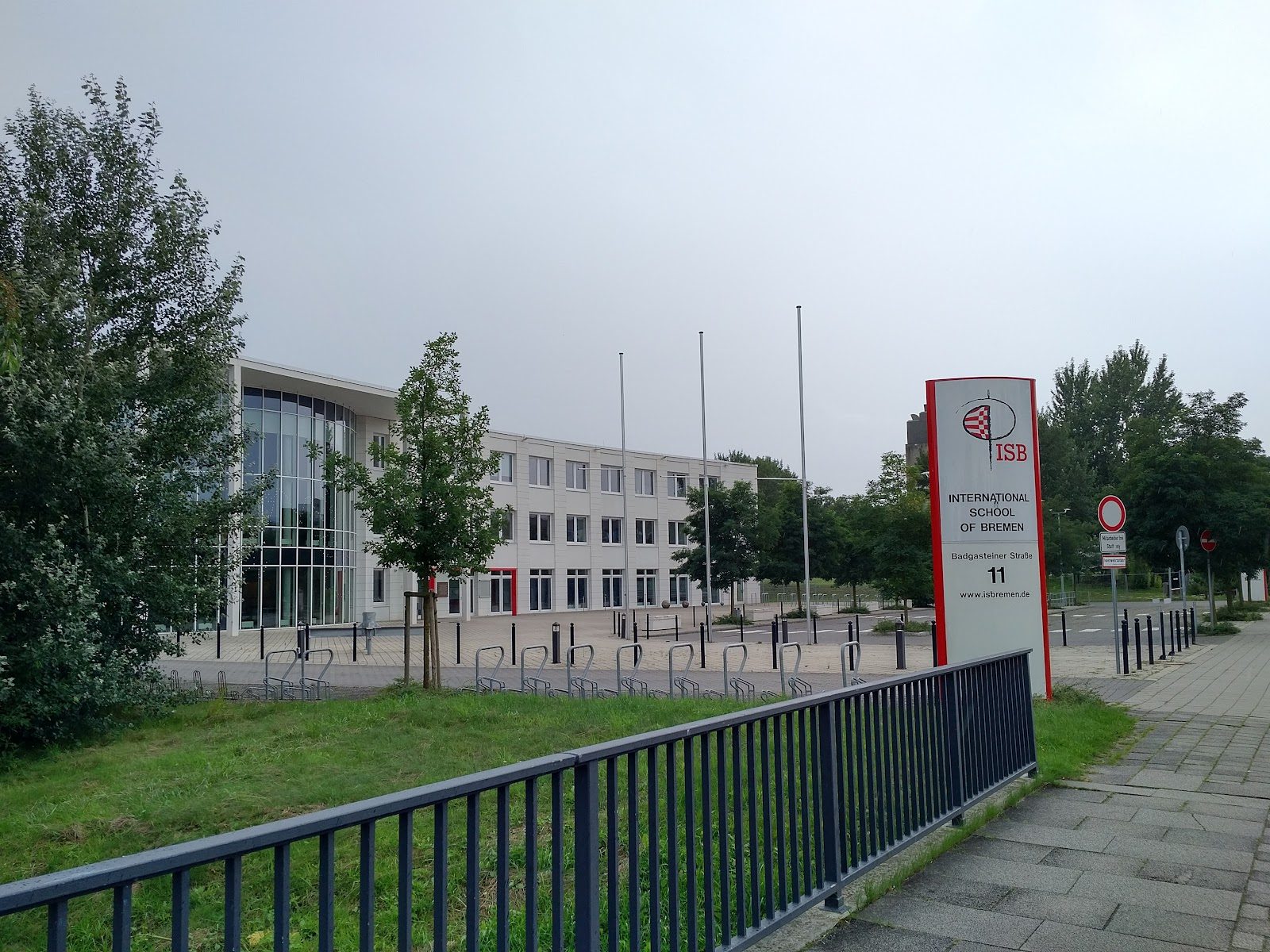
On Bremen University's campus, Germany's only MINT-EC STEM-network school pairs IB rigor with hands-on science and engineering.
Same country and curriculum — closest matches within ±10 points either way