
Connecticut
Westminster School
low confidence· 2/6 cats · 2.75 avg sourcesOn Williams Hill above the Farmington Valley, a 5:1 student-teacher ratio turns 'grit and grace' from motto into daily practice
Type
Both
Ages
14–18
Curriculum
American
Qualifications
AP
Ratio
5:1
The Verdict
Editor's commitment
Right for
Boarders or day pupils aged 14–18 who want an American programme with a 1:5 ratio and staff who know them closely.
Wrong for
Families wanting a religious school, another language of instruction, or a broad age range: Westminster is non-religious, English-medium and 14–18 only.
Watch out for
NEASC and NAIS accreditation reassure, but the school does not publish exam outcomes here; at this price point, that opacity matters.
Ranking breakdown
Westminster School · # of 1591
Composite score 66.5. 8 weighted criteria.
By criterion
Academic Outcomes
Weight 20%
#900
of 1529 scored
University Placement
Weight 16%
#848
of 1529 scored
Prestige & Heritage
Weight 12%
#597
of 1571 scored
Alumni Network
Weight 12%
#389
of 1530 scored
Facilities
Weight 12%
#559
of 1534 scored
Transparency & Communications
Weight 8%
#778
of 1532 scored
Peer & Industry Review
Weight 10%
#891
of 1548 scored
Admissions Selectivity & Demand
Weight 8%
#837
of 1529 scored
Peer & Industry Review
How Westminster School is regarded in the sector
66
Respected · medium confidence
Westminster is grounded within New England's Founders League circuit, competing academically and athletically alongside Taft, Hotchkiss, Loomis Chaffee, and Kent, which places it firmly inside the recognized tier of elite Connecticut boarding schools rather than at the very top alongside Andover, Exeter, or Deerfield. NEASC accreditation and consistent inclusion in standard boarding-school comparison guides (Peterson's, Niche, The Association of Boarding Schools directory) confirm its standing as a credible, established college-preparatory institution rather than an emerging or unproven name. Independent education press coverage is modest compared to marquee New England schools; it appears in general boarding-school round-ups and comparison articles rather than featuring prominently in investigative or feature coverage from outlets like the Good Schools Guide or WhichSchoolAdvisor, which focus more heavily on UK institutions. Its college matriculation lists, published on its own site, show steady placement at strong liberal arts colleges and some Ivy-adjacent universities, consistent with a solid regional reputation. Overall, Westminster is respected within New England prep circles as a dependable, athletics-strong, community-oriented school, but lacks the widespread cross-border name recognition, media scrutiny, or peer-head commentary that surrounds the most prestigious northeastern boarding schools.
Editors' overview
Westminster School in Simsbury occupies a clear niche in the American boarding market: an old New England school, founded in 1888, with the scale and staffing to give adolescents close adult attention without flattening them into a pastoral project. The headline number is the 1:5 student-teacher ratio. That changes the daily experience. Students get watched, challenged and known. The school’s own language about “grit and grace” is not empty branding when matched with an academic programme that foregrounds “gritty trial and error”, advising, academic support, a postgraduate option and a full boarding-school structure for ages 14–18. This is a place for families who want serious supervision, high-contact teaching and a campus life that asks students to participate, not drift.
What marks Westminster out is breadth with coherence. Many schools claim balance; Westminster has built it into the institutional shape. Academics sit alongside studios, labs, gym, fields and rink, and the arts programme is not decorative. The public record shows a substantial performance culture, with a steady run of fall plays and winter musicals, plus visual arts, dance, music and theatre. Athletics also carry real weight, with strength and conditioning and team sport treated as part of character formation rather than an afterthought. Add the Hartford partnership work and the school’s stated commitment to “service beyond self”, and the result is a school with earned self-discipline, full-campus engagement and strong communal habits. Parents looking for a purely exam-drilled, narrowly academic hothouse should look elsewhere. Westminster’s selling point is formation through range.
Its market position is strongest with families who want a traditional independent-school environment without a doctrinal religious frame. It is non-religious, teaches in English, runs an American curriculum and holds NEASC and NAIS membership. The setting on Williams Hill above the Farmington Valley adds to the appeal: not urban, not isolated, and well suited to the contained rhythm boarding schools need. The school also publishes enough structural detail to show institutional seriousness, though it does not publish headline outcome data in the extract here, so parents should ask harder questions about university destinations, top-end course access and how academic distinction is distributed across the cohort. That opacity matters in a crowded market.
The right student for Westminster is not a passive high-achiever hunting prestige by association. It is a teenager who wants to do several things well, who can handle being held to account, and who benefits from adults being close at hand. Boarders and day pupils who thrive here will value close adult mentorship, robust extracurricular life and a culture that rewards stamina more than polish. The school belongs on a shortlist for families seeking a grounded, demanding education in a traditional American boarding setting, with enough structure to support growth and enough opportunity to test it.
Academic Performance
Westminster does not publish aggregate external exam outcomes in the public domain cited here. No school-wide AP profile, SAT or ACT averages, National Merit data, or university-matriculation breakdown appears in the extract. That is a real weakness for parents trying to judge academic return against rival New England boarding schools, many of which put headline results front and centre. The school does show the machinery around academic seriousness — curriculum pages, advising, academic support, standardised test preparation, transcript requests, college counselling and even a postgraduate option — but machinery is not outcome. For a school with a 1:5 staffing ratio, families are entitled to ask for hard results, clear score distributions and evidence of top-end academic lift.
Relative to peers, Westminster sits in the group of established US independents whose reputation rests on institutional depth and close teaching rather than publicly broadcast exam statistics. That can still translate into strong individual outcomes, but the school does not make the case numerically. In this market, opacity costs ground against more data-forward competitors. Parents should ask direct questions: how many pupils take APs, which subjects run every year, what the score profile looks like at grades 4 and 5, where the top quartile matriculates, and how results differ between the strongest pupils and the middle of the cohort. Until Westminster answers those points, its academic performance remains credible but unproven, serious in structure and insufficiently transparent.
Facilities
Westminster’s facilities matter because they support a full boarding-school day rather than a narrow classroom timetable. The school points parents to studios and labs, a library, an academic centre, dedicated college-counselling resources, Armstrong Dining Hall, the Brockelman Student Center & Grill, dorm life, health and fitness provision, and a campus athletics offer that includes fields and rink. That is a properly equipped institutional base, not a token set of specialist rooms. The arts side also has real physical backing: visual arts plus dance, music and theatre, with a public archive of productions that signals sustained use rather than decorative branding. For families comparing schools in this tier, the key takeaway is range. Westminster covers the essentials for all-day adolescent life — study, sport, rehearsal, eating, social space and boarding — in one coherent campus system.
Against peer New England boarding schools, this is a strong, credible facilities package rather than an arms-race showpiece. The rink stands out, since not every competitor can offer that on campus, and it gives winter sport genuine weight. The student-teacher ratio of 1:5 also changes how facilities function: library support, arts teaching, athletic coaching and academic help are easier to access when staff density is this high. What Westminster does not advertise here is the glossy end of the market — no conspicuous claims about cutting-edge science complexes, signature performing-arts centres or spectacular sports infrastructure. That restraint cuts both ways. It avoids brochure inflation, but it also leaves parents without hard comparative detail on the condition, scale and modernity of the campus.
For a school with a 1:5 staffing ratio, families are entitled to ask for hard results, clear score distributions and evidence of top-end academic lift
Prestige
Westminster carries *solid New England boarding-school prestige*, but not the kind built on global name recognition or relentless publication of outcomes. Its status rests on older, sturdier signals: longevity, a full residential-school ecosystem, deep extracurricular provision, and the intimacy implied by a 1:5 staffing ratio. That ratio matters reputationally. It places Westminster in the company of schools that can promise attention, access to adults and sustained oversight rather than mass delivery. The programme breadth also adds weight: visual arts, dance, music, theatre, strength and conditioning, a rink, and a visible service partnership with Hartford. This is earned prestige, tied to institutional substance and daily expectation, not prestige by slogan.
That said, Westminster sits below the topmost prestige tier in one important respect: public academic proof. The school publishes the architecture of seriousness — college counselling, academic support, test preparation, a postgraduate option, faculty chairs, study and travel abroad — but not the headline score data or destination breakdowns that convert reputation into measurable academic authority. For families in the US independent-school market, that limits how far the badge alone carries. The result is credible, established, and respected prestige rather than rarefied prestige. Westminster has standing among families who know boarding schools well. It does not command instant international cachet on name alone, and the lack of disclosed outcomes stops it from claiming more.
That said, Westminster sits below the topmost prestige tier in one important respect: public academic proof
Communications
Westminster communicates with parents through a boarding-school style mix of portal infrastructure, calendar discipline and event-based contact. The public-facing architecture is clear: a parent portal, named parent events, an important-dates calendar stretching across future school years, travel and storm information, commencement pages, class-specific giving pages, and a Parents Committee. That matters. Schools that run a full residential rhythm need to handle logistics without confusion, and Westminster has built visible channels for routine information as well as community touchpoints. The presence of transcript requests, college resources and standardised test preparation pages also tells parents where academic process lives. This is orderly, institutionally mature communication, with enough signposting to reduce friction.
Its weakness is depth, not structure. Westminster publishes plenty about programme categories and community life, but less in the way of hard-edged academic disclosure that parents use to judge value. The school tells you how the institution is organised and what it cares about; it tells you less about cohort-wide outcomes. That creates a communications profile that is strong on access, strong on cadence, and weaker on proof. For current parents, that still works if day-to-day messaging is prompt and if the portal carries the operational load. For prospective parents, the standard rises. A school with a 1:5 staffing ratio and a broad co-curricular machine needs communication that is not just warm and frequent, but plain-spoken, data-literate and exact about results.
Uniqueness
What sets Westminster apart is not novelty for its own sake but the way the school binds ambition to supervision. The phrase “grit and grace” would be empty at many schools; here it connects to a clear institutional habit of pushing pupils through trial, error, correction and renewed effort. That matters because the low staffing ratio — 1:5 — changes the terms of school life. Students do not disappear into the middle of the pack. Teachers, advisers and coaches have the capacity to notice drift, press for better work and draw reluctant teenagers into the life of the campus. For the right child, that creates serious accountability, close adult scrutiny and a high-contact education that is hard to fake.
Westminster also has a distinct moral shape. The school ties academics, arts, athletics and Hartford partnership work into one idea of education: participation carries obligations beyond personal advancement. That gives the place more backbone than schools where service sits off to the side as a résumé line. The arts archive reinforces the point. A long run of productions, from Shakespeare to musical theatre, signals a school where performance is routine labour, not annual window dressing. Add the rink, the dining hall, the student centre and the full dorm structure, and Westminster offers a contained world with strong communal habits. Students gain range, stamina and the experience of being needed by a community, not just taught by one.
It does not command instant international cachet on name alone, and the lack of disclosed outcomes stops it from claiming more
Student Profile
The best fit at Westminster is a teenager who wants to be busy, known and pushed. This is not a school for students who want to drift quietly through lessons and disappear after games. The public shape of the place points to pupils who can handle a full day: serious classes, sport, arts, service, advisory meetings and communal life all carry weight. A low staffing ratio of 1:5 means adults have the time to notice effort, lapses and attitude. That suits students who respond to close oversight, steady correction and high expectations, not those who resent adult involvement as interference. The school also courts the student who improves through repetition and failure, not the polished child who only wants to display finished strengths.
Socially, Westminster fits adolescents who are prepared to join in. The theatre record, the emphasis on team sport, the student organisations, the dining hall and student-centre culture, and the Hartford partnership work all point to a school that prizes contribution over detachment. A pupil who brings energy across the week, community-minded habits and enough confidence to try unfamiliar things will find room here. So will the late developer who benefits from structure and access to adults. The weaker fit is the hyper-specialised teenager who wants a narrow academic hothouse or a stripped-back day school routine. Westminster asks for range, stamina and a willingness to be part of something larger than personal achievement.
This is a place for families who want serious supervision, high-contact teaching and a campus life that asks students to participate, not drift
Co-curricular strengths
Arts & sport, on a separate axis
Overall 8.58/10
Scored 0-10 from the school's own published evidence. This axis is editorial-only — it does not feed the main WTS ranking.
Sports
9.1/10
High-performance Founders League athletic competitor, fielding highly competitive varsity squash, hockey, and lacrosse squads across extensive grounds.
Drama
8.7/10
Ambitious theater tracking staging complex contemporary plays and student-written works inside modern theater spaces.
Dance
8.2/10
Offered as a popular co-curricular activity providing core choreography assets for seasonal school showcases.
Music
8.4/10
Robust private vocal and instrumental infrastructure feeding active jazz big bands and full chamber symphonies.
Visual Arts
8.5/10
Highly structured fine art layout leaning heavily toward technical design, digital graphics, and portfolio mastery.
Strengths
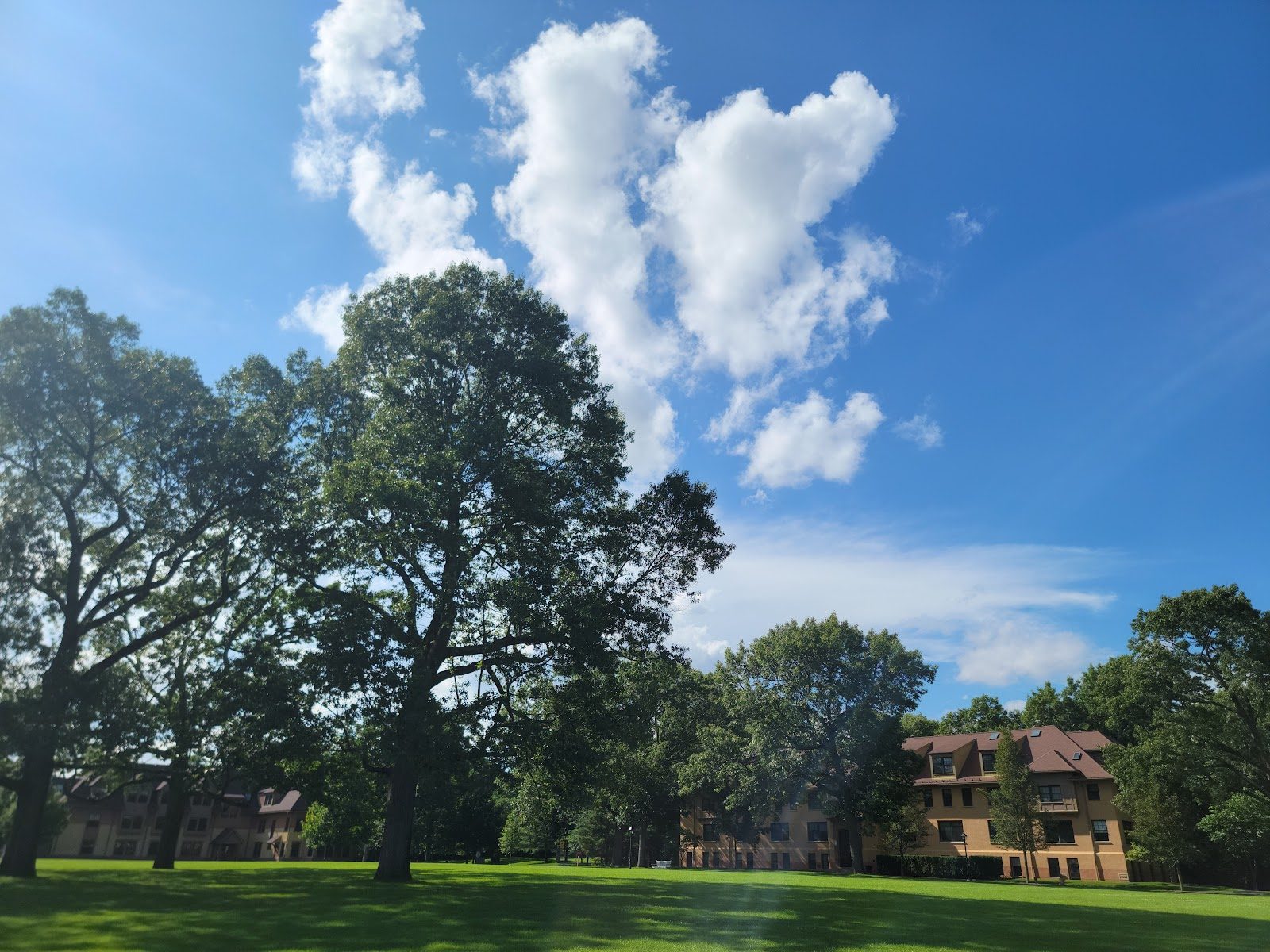
- +230-acre hilltop campus offers substantial outdoor space.
- +Boarding and day options add flexibility for families.
- +Founders League setting suits serious hockey, squash, lacrosse.
- +NEASC and NAIS accreditation provide external institutional checks.
Considerations
- −Ages 14–18 only; no lower or middle school.
- −American curriculum may not suit IB or British seekers.
- −English-only instruction limits bilingual learning options.
Availability
Primary entry gate & tests
ISEE/SSAT + Interview
Gallery
Parent reviews
Have you sent your child here?
Voice reviews carry the strongest trust badge — we transcribe them for you to tidy up before they go live. Prefer to type? A written review is fine too.
Add your voice
In 60 seconds, tell other parents: what's the best thing about Westminster School, and what surprised you when your child joined?
We ask for a Google sign-in so every review has a real face behind it — no anonymous drive-by attacks on schools, and no faked positive reviews. Your email is never shown publicly.
Send this profile to a friend
International parents rely on word-of-mouth. Share this review with someone weighing the same decision.
Schools with places
Similar schools to Westminster School with places available now.
Greenwich Academy
Greenwich · United States
- 2026-27
- CLOSEDRegular cycle closed
- 2027-28
- OPENS SOONOpens Sept '26
Brunswick School
Greenwich · United States
- 2026-27
- CLOSEDRegular cycle
- 2027-28
- OPENS SOONOpens Sept '26
Hopkins School
New Haven · United States
- 2026-27
- CLOSEDRegular cycle
- 2027-28
- OPENS SOONOpens Sept '26
Loomis Chaffee School
Windsor · United States
- 2026-27
- WAITPOOLLate/Rolling Space Available
- 2027-28
- OPENS SOONOpens 1 Sept '26
Availability first, then country, area, curriculum, price, co-curricular
Consider also
Also worth looking at alongside Westminster School.

The Haverford School
Haverford · United States
Since 1884 on Philadelphia's storied Main Line, an all-boys campus balances rigorous academics with athletics and the arts.
Ethical Culture Fieldston School
New York City · United States
Rooted in Felix Adler's 1878 Ethical Culture movement, its wooded Riverdale hilltop campus still anchors progressive American pedagogy.

Friends Seminary
New York City · United States
Founded in 1786, the oldest coeducational school in New York City still teaches Quaker simplicity and peace amid Manhattan's bustle
Rye Country Day School
Rye · United States
Founded in 1869 as a girls' seminary in Westchester, this campus still measures success by its motto: not for self, but for service.
Same country and curriculum — closest matches within ±10 points either way