
Georgia
The Lovett School
low confidence· 1/6 cats · 2.67 avg sourcesA Buckhead campus with a 1,245-acre outpost: its own Andean cloud forest reserve for hands-on conservation science.
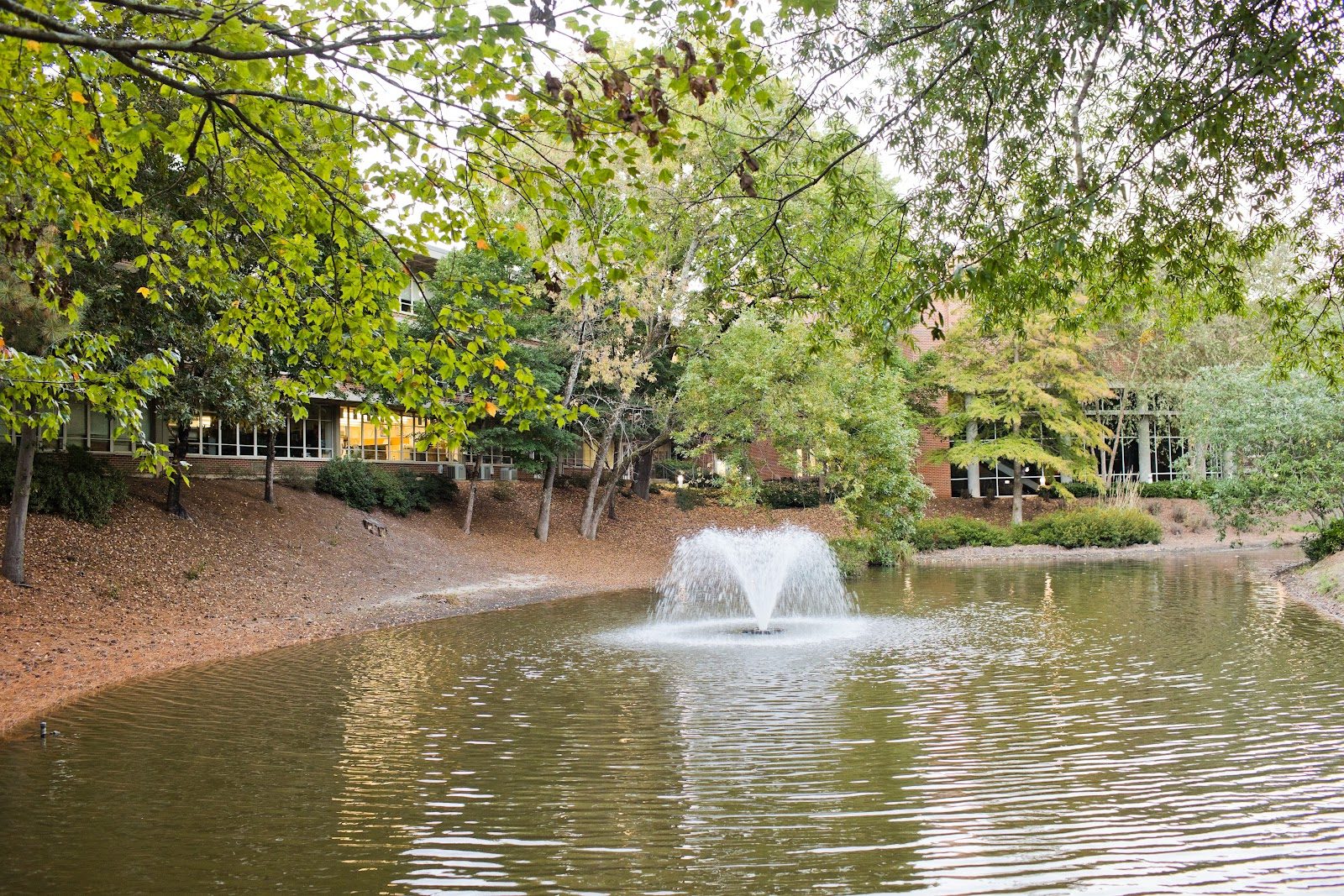
Photo © The Lovett School via Google Maps
Type
Day
Ages
5–18
Curriculum
American
Qualifications
AP · US High School Diploma
Ratio
8:1
The Verdict
Editor's commitment
Right for
Atlanta families wanting a non-religious, coed American day school with an 8:1 ratio and serious conservation science beyond Buckhead.
Wrong for
Families needing boarding, a faith-based ethos, or another curriculum; Lovett is day-only, non-religious and school-declared American.
Watch out for
The average annual fee is $37,980, and the public case for that price leans harder on ethos than on published academic outcomes.
Ranking breakdown
The Lovett School · # of 1591
Composite score 62.2. 8 weighted criteria.
By criterion
Academic Outcomes
Weight 20%
#669
of 1533 scored
University Placement
Weight 16%
#584
of 1529 scored
Prestige & Heritage
Weight 12%
#529
of 1580 scored
Alumni Network
Weight 12%
#1348
of 1530 scored
Facilities
Weight 12%
#474
of 1540 scored
Transparency & Communications
Weight 8%
#512
of 1547 scored
Peer & Industry Review
Weight 10%
#524
of 1564 scored
Admissions Selectivity & Demand
Weight 8%
#647
of 1529 scored
Peer & Industry Review
How The Lovett School is regarded in the sector
70
Respected · medium confidence
Within Atlanta's independent-school hierarchy, Lovett is commonly grouped with Westminster Schools and Pace Academy as one of the city's leading day schools, though it is generally perceived as sitting a tier below Westminster, whose longer academic pedigree and more selective admissions keep it at the top of regional comparisons. Lovett's college matriculation lists show consistent placement at the University of Georgia, Georgia Tech, and Vanderbilt, with a smaller, steady trickle to Ivy League and other highly selective national universities - a pattern admissions professionals typically read as a solid regional feeder rather than an elite pipeline school. Coverage in independent education press is thin: national guides such as Good Schools Guide concentrate on UK and international schools and do not profile Lovett in depth, so most public assessment of the school comes from Atlanta-focused outlets like Atlanta Magazine's private-school rankings rather than specialist education journalism, limiting its presence in national league-table discourse.
- Chris Robinson — Musician, The Black Crowes
- Rich Robinson — Musician, The Black Crowes
- Clark Howard — Consumer Advocate/Media Personality
Editors' overview
Lovett sits in the top tier of Atlanta day schools on scale, resources and breadth. The numbers alone establish that: 1,640 students, an 8:1 student-teacher ratio, a $140 million endowment and a 100-acre Buckhead campus. This is not a boutique school and it does not trade on intimacy. It trades on reach. Parents looking for a full-spectrum American education from early years to graduation, with serious infrastructure in arts, athletics and student support, will find a school built to deliver it. The Academic Resource Center adds substance for families who want learning support inside a high-functioning mainstream school, not as an afterthought. Ambitious without being frenetic, Lovett offers scale with structure.
What puts Lovett on a shortlist is Siempre Verde, its 1,245-acre research centre in the Ecuadorian cloud forest. That is not a decorative overseas link; it is a rare piece of educational property with real academic use. Students learn conservation and botany, undertake service projects, build Spanish in context and work beyond the usual “global citizenship” slogans. Add a marine biology lab on campus, junior outdoor expeditions, 24 AP and Post-AP courses, and Lovett’s programme has a strong experiential spine. This is a school for families who want more than clean college preparation and polished pastoral language. *The school has genuine educational hardware.* It can move a student from classroom study to fieldwork, performance, lab work and competition with unusual ease.
The arts and athletics provision is not tokenistic. Lovett states that 86 per cent of students participate in the arts, while 81 per cent of Upper School students take part in athletics; it also claims 133 state championships. That points to a campus culture where participation is expected, not marginal. The risk, for some children, is obvious: a large, active, high-participation environment can feel demanding, even exposed, for students who want anonymity or a quieter social tempo. Lovett suits the student who wants to do a lot and can manage a busy day well — the child who will use the theatre, the ceramics studio, the teams, the outdoor programme, the cloud forest and the college counselling office, rather than merely admire them on a tour.
The best fit is a student who is curious, energetic and willing to engage across disciplines. A natural joiner will thrive here. So will the scientifically minded child who wants fieldwork, the artist who wants institutional support, and the athlete who wants competitive sport in a school where sport matters. Families who want tiny classes, a narrowly academic culture or a consciously alternative ethos should look elsewhere. Lovett’s strength lies in institutional confidence, breadth with purpose and a rare capacity to turn resources into lived experience.
Academic Performance
Lovett does not publish the data that would let parents judge academic performance cleanly against Atlanta’s strongest independents. The school states that it offers 24 AP and Post-AP courses, which signals range in the upper years, but it does not disclose aggregate AP scores, pass rates, mean scores, SAT or ACT profiles, National Merit outcomes, or a university matriculation list in the extracts we have seen. That is a real gap. For a school with this level of resource and ambition, public outcomes data matters. Without it, any claim of academic standing rests on programme breadth and institutional reputation rather than hard comparative evidence.
That leaves Lovett in an oddly opaque position relative to peers. The academic architecture is there: broad course choice, dedicated learning support, substantial staffing, and the kind of infrastructure that supports able students across disciplines. Parents can infer a school with serious academic capacity and a mainstream college-preparatory trajectory. They cannot verify, from published figures, whether Lovett sits at the very top of the city’s academic pack or a step below schools that release cleaner results data. In editorial terms, this is a *high-confidence school with low-confidence disclosure*. Families who care about measurable academic outcomes should ask direct questions on AP distributions, testing profiles, top university destinations, and how many graduates secure places at highly selective US colleges.
Facilities
Lovett’s facilities are built for range, not ornament. The main campus gives students serious room to work across disciplines: a state-of-the-art theatre with 650 seats, a ceramics studio with dedicated wheels, a marine biology lab stocked for live study rather than display, extensive library provision in the lower years, and athletic infrastructure on the scale of a major American independent school. The woods and open ground matter too. This is not a compressed urban site where every square metre has been pushed into one more classroom block. Against peer day schools, that breadth places Lovett in the upper bracket for physical plant. Plenty of rivals offer strong arts rooms and good sports fields; fewer combine performance space, lab-based science, outdoor learning and campus acreage with this level of institutional seriousness.
The outlier is Siempre Verde. A 1,245-acre cloud forest research centre in Ecuador lifts Lovett beyond the standard menu of travel week, service trip and partner-school exchange. For facilities alone, that is genuinely distinctive. It gives environmental science, conservation work and Spanish learning a base with academic credibility, not just marketing sparkle. Benchmarking this against peers is simple: most schools can arrange experiential learning; Lovett owns an entire field site. That does not make every facility better than every rival’s. Some competitors will beat it in specialised STEM build, design technology or elite athletic training. But taken as a whole, Lovett’s estate is rarely conventional, well integrated and unusually effective at turning resources into daily use.
Lovett sits in the top tier of Atlanta day schools on scale, resources and breadth
Prestige
Lovett carries real local prestige. In Atlanta’s independent-school market, it sits in the small group of names that signal money, access and institutional heft in one phrase. That standing rests on durable ingredients: a large alumni base, a substantial endowment, a full K–12 structure, and the kind of campus and programme infrastructure that wealthy urban day schools spend decades building. The school’s public face reinforces that status. It offers polished admissions messaging, visible confidence in the arts and sport, and the expectation that students will participate widely rather than pass through quietly. For many families, a Lovett education reads as established, socially legible and securely upper-tier.
The prestige is strongest at city and regional level, not in the rarified national bracket occupied by the most selective US boarding schools or a tiny handful of hyper-elite day schools. That distinction matters. Lovett has serious name recognition and the resources to sustain it, but it does not publish the outcomes data that would strengthen a claim to top-flight academic prestige in harder comparative terms. Its status therefore rests more on institutional reputation, parent demand, facilities, extracurricular depth and visible wealth than on transparent public proof of academic outperformance. The Ecuador reserve, the marine biology lab and the scale of student opportunity give the school a memorable signature that many peers cannot match. Prestige here is earned through breadth and permanence, not mystique.
But taken as a whole, Lovett’s estate is rarely conventional, well integrated and unusually effective at turning resources into daily use
Communications
Lovett communicates like a large, well-run institution that expects families to stay engaged. The website does the heavy lifting: admissions steps are clear, major programme areas are easy to find, and the school gives parents multiple windows into daily life through news items, event-driven stories and its “Living Lovett” podcast. That creates a steady flow of institutional voice rather than the dead, static feel of many school sites. The messaging is polished to the point of high corporate finish, but it is also functional. Parents can see what the school values because it keeps returning to the same priorities: student life beyond the classroom, visible faculty presence, and a culture of participation. For a school of 1,640 students, that coherence matters.
The weakness is not tone but disclosure. Lovett communicates culture, opportunity and community activity very confidently; it communicates hard academic outcomes far less well. That imbalance affects trust. Families get plenty of narrative and a strong sense of momentum, yet less of the comparative data that serious parents use to judge academic return on a very expensive education. The result is slick but incomplete communication: strong on atmosphere, strong on showcasing programmes, weaker on the numbers that test institutional claims. Day-to-day parent communication inside the school may be excellent; the public-facing communication is disciplined, active and easy to navigate, but it stops short of full transparency where it counts most.
Uniqueness
Lovett’s clearest point of difference is that it owns a working environmental field site on another continent and uses it across age groups, not as a prestige add-on for a narrow slice of older pupils. Siempre Verde gives the school an uncommon seriousness in conservation science, service and place-based learning. Students do not just hear the language of sustainability in assemblies and strategy documents; they can study botany in a cloud forest, undertake fieldwork with real ecological texture, and connect Spanish to community life rather than textbook drills. That shifts “global education” from soft branding to lived practice. The same pattern runs through the rest of the programme: the marine biology lab, off-campus learning, and the junior outdoor expedition all point to a school that values doing, making and testing knowledge in the world.
What this brings to students is breadth with consequences. A child with scientific curiosity gets access to settings that make environmental study concrete and memorable. An engaged all-rounder gets a campus culture where arts, sport, service and academics all carry weight, rather than one domain existing as window dressing for another. Lovett’s participation figures in both arts and athletics, plus its 67 teams and 24 advanced courses, indicate a school built for students who want to commit, not coast. That is the gain and the warning. Lovett is distinctive, resource-heavy and rich in opportunity, but it suits pupils who will use that machinery with energy. Quiet observers have room here; passive passengers do not.
Lovett is distinctive, resource-heavy and rich in opportunity, but it suits pupils who will use that machinery with energy
Student Profile
The student who fits Lovett is busy by instinct. This is a school for children who want to join, compete, perform, travel, make, research and keep moving through the day with purpose. A passive child will find too much machinery around them and too much social emphasis on participation. A self-starting pupil, by contrast, gets a campus culture that rewards energy and visible engagement. The strong take-up in the arts and upper-school sport, the presence of 67 teams, and the school’s own account of experiential learning all point in the same direction: Lovett suits the high-functioning all-rounder, the keen contributor, the student who is happiest with a full timetable and a public role in school life.
That does not mean only extroverts thrive. Focused scientists, serious young artists and students who like structured challenge also fit well here, because the school gives them real places to work and a culture that treats co-curricular life as part of education, not decoration. The cloud-forest reserve is the clearest signal: a child with environmental curiosity, appetite for fieldwork or interest in applied Spanish gets something genuinely rare. The Academic Resource Center also matters. Families with a bright student who benefits from informed learning support, but does not need a specialist school, have a credible mainstream option. The weaker fit is the child who wants anonymity, resists organised activity, or prefers a lower-pressure, more inward school culture.
The numbers alone establish that: 1,640 students, an 8:1 student-teacher ratio, a $140 million endowment and a 100-acre Buckhead campus
Co-curricular strengths
Arts & sport, on a separate axis
Overall 9.52/10
Scored 0-10 from the school's own published evidence. This axis is editorial-only — it does not feed the main WTS ranking.
Sports
9.8/10
Drama
9.5/10
Dance
9.3/10
Music
9.5/10
Visual Arts
9.5/10
Strengths
- +Founded in 1926 by Eva Edwards Lovett, Lovett is a non-denominational, coeducational K-12 day school on a 100-acre suburban campus in Atlanta.
- +The school reports a student-teacher ratio of 8:1 across a student population of 1,627 pupils.
- +Lovett fields 68 competitive teams across 16 sports, giving students a wide choice of interscholastic athletics.
- +The curriculum includes a full range of honors and Advanced Placement courses.
- +Notable alumni include astronaut Shane Kimbrough ('85) and fashion designer Wes Gordon ('05), among others listed by Private School Review.
Considerations
- −Published tuition figures for the upper grades vary by source from roughly the high-$20,000s to over $40,000 a year, which is a substantial and recurring cost families must budget for.
- −Lovett ranks among the top 20% of Georgia private schools for lowest average acceptance rates, indicating a genuinely selective admissions bar rather than an open-enrollment day school.
- −Lovett operates within the Judeo-Christian tradition, and a nondenominational chapel service is held weekly for all students, which is a fixed part of school life rather than an optional extra.
- −One independent review notes that while the culture is not overly competitive, some students may find it challenging to find their place socially, describing the social scene as the school's one relative weakness.
Availability
Primary entry gate & tests
SSAT/ISEE + Interview
Gallery
Photo © The Lovett School via Google Maps
Photo © Kokob Weldu via Google Maps
Photo © Felton Sabrina via Google Maps
Photo © RicBurns via Google Maps
Photo © RicBurns via Google Maps
Parent reviews
Have you sent your child here?
Voice reviews carry the strongest trust badge — we transcribe them for you to tidy up before they go live. Prefer to type? A written review is fine too.
Add your voice
In 60 seconds, tell other parents: what's the best thing about The Lovett School, and what surprised you when your child joined?
We ask for a Google sign-in so every review has a real face behind it — no anonymous drive-by attacks on schools, and no faked positive reviews. Your email is never shown publicly.
Send this profile to a friend
International parents rely on word-of-mouth. Share this review with someone weighing the same decision.
Schools with places
Similar schools to The Lovett School with places available now.
Boston University Academy
Boston · United States
- 2026-27
- CLOSEDRegular cycle closed
- 2027-28
- OPENS SOONOpens Sept '26
The Browning School
New York City · United States
- 2026-27
- CLOSEDConfirmed full
- 2027-28
- OPENS SOONOpens 25 Aug '26; appointments from 8 Sep
Marymount School of New York
New York City · United States
- 2026-27
- CLOSEDConfirmed full
- 2027-28
- PLACES OPENApplications opened 1 Aug '26
Greenwich Academy
Greenwich · United States
- 2026-27
- CLOSEDRegular cycle closed
- 2027-28
- OPENS SOONOpens Sept '26
Availability first, then country, area, curriculum, price, co-curricular
Consider also
Also worth looking at alongside The Lovett School.
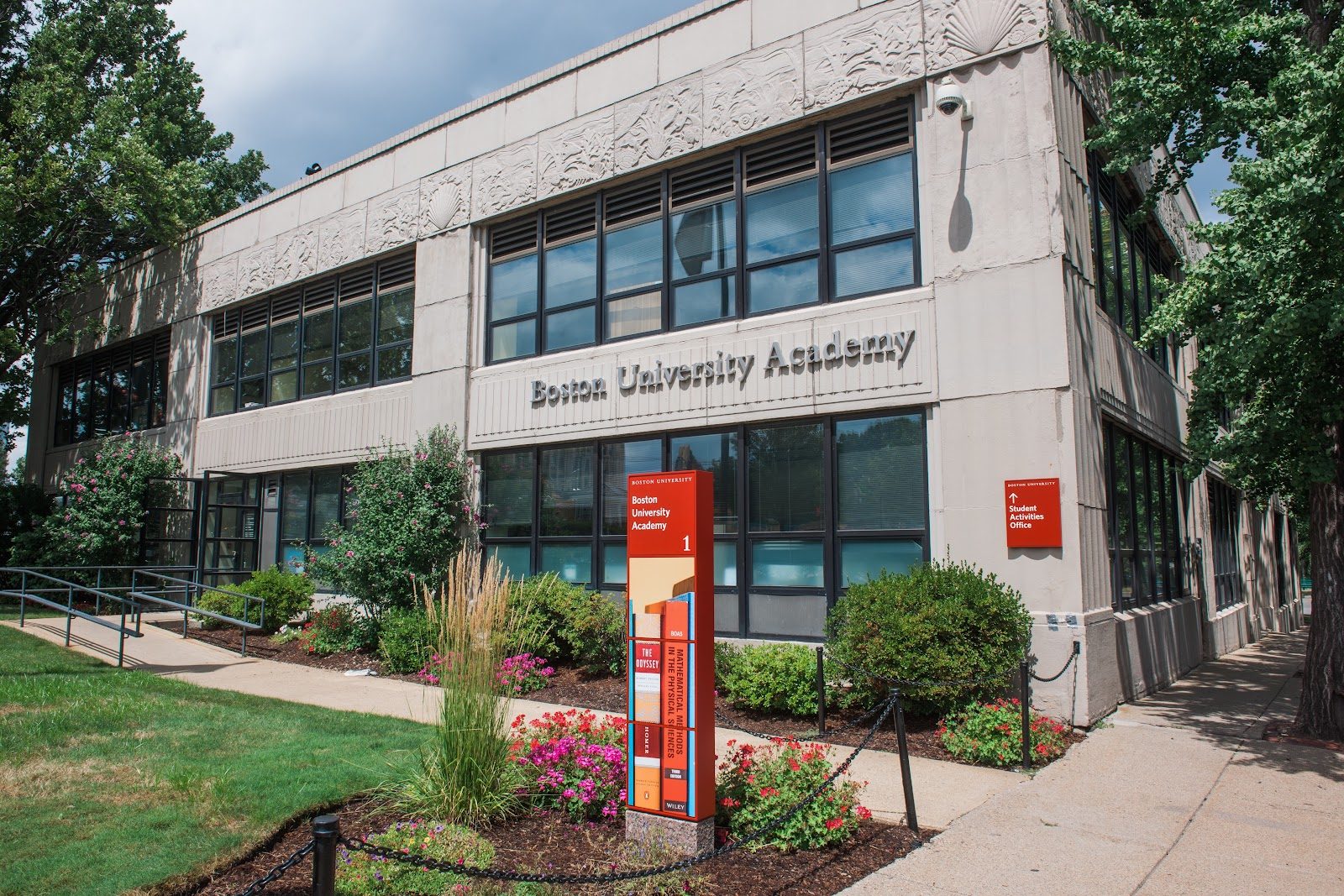
Boston University Academy
Boston · United States
Upperclassmen trade study halls for Boston University lecture halls, banking college credit before graduation.

The Browning School
New York City · United States
Manhattan's only K-12 all-boys day school, expanding onto East 64th Street after nearly 140 years on the Upper East Side.

Marymount School of New York
New York City · United States
On Fifth Avenue, landmark mansions give way to Bloomberg terminals and classrooms inside the Met.

Greenwich Academy
Greenwich · United States
Connecticut's oldest all-girls school pairs single-sex grounding with coeducational upper-school classes shared alongside Brunswick's boys.
Same country and curriculum — closest matches within ±10 points either way