
MENA
St. Christopher's School
Founded in a church hall in 1961, this Isa Town school remains among the Gulf's longest-established international institutions.

Type
Day
Ages
3–18
Curriculum
British
Qualifications
IGCSE · A-Levels
Ratio
—
The Verdict
Editor's commitment
Right for
Families wanting a British, English-medium day school in Manama with roots back to 1961 and external scrutiny through COBIS and BSO.
Wrong for
Parents seeking boarding, a faith-defined ethos, or a non-British pathway; St Christopher's is a non-religious day school for ages 3–18.
Watch out for
Beyond 1961, Manama, British curriculum and COBIS/BSO status, the school does not publish enough here to judge outcomes or value.
Ranking breakdown
St. Christopher's School · #1428 of 1591
Composite score 51.0. 8 weighted criteria.
By criterion
Academic Outcomes
Weight 20%
#1313
of 1529 scored
University Placement
Weight 16%
#1371
of 1529 scored
Prestige & Heritage
Weight 12%
#1219
of 1571 scored
Alumni Network
Weight 12%
#1267
of 1530 scored
Facilities
Weight 12%
#1193
of 1533 scored
Transparency & Communications
Weight 8%
#1151
of 1532 scored
Peer & Industry Review
Weight 10%
#1482
of 1548 scored
Admissions Selectivity & Demand
Weight 8%
#1419
of 1529 scored
Peer & Industry Review
How St. Christopher's School is regarded in the sector
52
Credible · medium confidence
St. Christopher's is consistently ranked among Bahrain's handful of long-established British curriculum schools, alongside British School of Bahrain and Sacred Heart School, and is regularly cited by expatriate education consultants and relocation guides as one of the safer, more traditional choices in Manama given its 1961 founding and long operating history. Coverage in expatriate-focused outlets and international-school directories (including Good Schools Guide International's Middle East listings) treats it as a solid, mid-to-upper tier British school rather than a top-tier international brand comparable to GEMS or Nord Anglia campuses in the Gulf. Its A-Level and IGCSE results feed a steady, unspectacular stream of leavers into UK universities, with no independently verifiable Oxbridge or Ivy League placement data publicly reported. It does not feature prominently at international schools conferences (COBIS, HMC overseas panels) in the way flagship British-curriculum schools in Dubai or Doha do, reflecting its status as a respected local institution rather than a regionally benchmarked heavyweight.
Editors' overview
St. Christopher's School occupies a rare position in Bahrain: an English-medium, non-religious British day school founded in 1961, with a reach from age 3–18 and accreditations from COBIS and British Schools Overseas. In a market crowded with newer entrants, that longevity matters. It signals institutional memory, durable demand and a school that has had decades to refine its systems. The strongest point in its favour is stability. Parents who want a school with an established place in the Manama market, rather than a fast-built operation still defining itself, will find that hard to ignore. This is one of the Gulf’s longer-established international schools, and that alone gives it serious weight.
Its appeal rests less on novelty than on consistency. A British curriculum in English from early years through sixth form gives families a clear through-line, which matters for expatriate parents who value transferability and for local families targeting British-pattern university preparation. The BSO and COBIS accreditations add external scrutiny, which is more valuable than glossy claims because it signals that the school has opened itself to formal inspection and peer comparison. That does not make it exceptional by default; it makes it credible. In practical terms, St. Christopher’s belongs on a shortlist for parents who want proven infrastructure, institutional steadiness and a school that sits firmly in the mainstream of British international education rather than at its fringes.
The school will suit students who thrive in a structured academic environment and families who prize continuity over experimentation. It fits children who need a clear framework, steady expectations and an English-speaking setting from nursery to pre-university years. It also suits internationally mobile families who want to avoid curriculum disruption. The less obvious strength is cultural: a non-religious school in Bahrain with this history offers a grounded cosmopolitanism that many parents want and few schools sustain over decades. Families hunting for radical pedagogy, a niche educational philosophy or a boutique specialist identity will find stronger options elsewhere. Families wanting long-tested credibility and a straightforward British pathway should keep St. Christopher’s near the top of the list.
Academic Performance
St. Christopher’s does not publish enough hard outcome data for a clean ranking against the strongest British schools in the Gulf. That is the central fact parents need. We have not seen aggregate GCSE or A-level distributions, year-on-year top-grade rates, average point scores, or university destination data robust enough to test the school’s academic ceiling. In a market where serious academic schools now release clear, comparable exam profiles, that gap matters. It leaves St. Christopher’s in a less accountable position than peers that put results in full public view, and it makes any claim of elite academic standing impossible to verify.
That does not place the school in weak company; it places it in opaque company. A long-established British school with enduring demand does not survive without delivering competent examination outcomes for a broad parent base. The issue is distinction, not baseline credibility. Parents comparing St. Christopher’s with the most results-forward operators in the region need to ask for headline measures in plain form: the proportion of top grades at GCSE and A level, pass rates across multiple years, cohort size, and destination patterns after sixth form. Until the school discloses those figures, its academic performance sits in the category of credible but unproven at the top end.
Facilities
St. Christopher’s strongest facilities asset is not a single showpiece building but the breadth that comes with serving the full age range on one day-school platform. For parents, that usually translates into the practical essentials done at scale: specialist teaching spaces for older pupils, age-appropriate areas for younger children, and the sports and arts provision needed to support a complete school week rather than an exam factory. That matters because many long-running schools in the Gulf occupy a middle ground between flashy capital spend and functional adequacy. St. Christopher’s sits in that bracket. It does not trade on the architectural theatre that newer premium campuses use to sell themselves, but a school with this reach and market position still needs labs, performance space, libraries and playing facilities that can carry a large co-curricular load.
Against direct peers, that places it in a solid but not spectacle-driven category. Families chasing the newest indoor arenas, headline design features or resort-style sports complexes will find stronger physical plants elsewhere in the region. Families who care more about whether facilities are properly integrated into daily school life than whether they photograph well will judge the offer more favourably. The missing piece is detail. The school does not publish a clear, consolidated public account of its facilities strong enough to benchmark room by room against the best-resourced British schools in the Gulf. That lack of hard specificity limits confidence. On facilities, St. Christopher’s reads as serviceable and established, not sector-leading.
Christopher’s reads as serviceable and established, not sector-leading
Prestige
St. Christopher’s carries real local prestige, but not the kind that travels automatically across the global independent-school circuit. Its standing rests on age, market familiarity and the confidence that comes from a school that has served Bahrain families for generations. In that sense, the brand has deep regional recognition. Parents in Bahrain know the name; employers and long-settled expatriate families know it too. That matters. In international education, prestige is not only about headline selectivity or glittering university lists. It is also about whether a school has held its place through shifts in population, competition and parent taste. St. Christopher’s has done that for more than 60 years, and that record gives it earned authority.
The ceiling, though, is clear. This is not a school with the published outcomes or public aura of a top-tier global trophy school. Its prestige is stronger in Bahrain than abroad, stronger in reputation than in disclosed academic proof, and stronger among families who value stability than among those chasing status through visible elite results. The inspection and membership badges help, but badges do not settle the question on their own. We rate St. Christopher’s as a serious, established name with durable standing in its home market, not as an undisputed academic powerhouse. That is a respectable form of prestige. It is also a more limited one than the school’s strongest admirers may prefer to admit.
That does not make it exceptional by default; it makes it credible
Communications
St. Christopher’s communicates with parents from a position of institutional confidence rather than aggressive salesmanship. That has strengths and limits. The strength is tone: schools with an established local name rarely need to shout, and parents who dislike glossy overproduction often prefer a calmer, more matter-of-fact style. The limit is clarity. Across the public-facing picture, St. Christopher’s does not project the kind of forensic transparency that now marks the best-run international schools. When a school publishes less hard data on outcomes and facilities than its competitors, that affects communications as much as accountability. Parents then rely more heavily on direct contact, meetings, routine updates and the quality of answers from staff.
That means effectiveness hinges on operational discipline rather than branding. For a through-school serving ages 3–18, parent communication needs to be tight, regular and phase-specific: early years families need warmth and immediacy; senior school families need precision, deadlines and examination guidance without waffle. St. Christopher’s has the profile of a school that communicates adequately day to day but without the crisp public specificity that distinguishes the strongest operators. We have not seen enough published detail to call its parent communications exemplary. Nor do we see signs of chaos. The verdict sits in the middle: competent, established communication with room for sharper public disclosure, especially where performance data, facilities detail and whole-school comparability matter most to hard-headed parents.
Uniqueness
What sets St. Christopher’s apart is not novelty but endurance with breadth. In Bahrain, plenty of schools offer a British pathway; far fewer have carried families from nursery to sixth form across more than one generation without a religious frame and without a franchise identity doing the reputational work for them. That gives St. Christopher’s a distinct local authority. It is a school that sits inside the country’s educational memory, not one still trying to secure a place in it. For students, that brings a culture with settled expectations, routines that have been tested over time, and a parent body that includes both internationally mobile families and deeply rooted local ones. That mix can produce a more grounded social world than the transient, brand-led atmosphere found in newer international schools.
The other point of difference is institutional shape. An all-through age range from 3–18 in a single day-school structure gives pupils unusual continuity: fewer forced transitions, a clearer sense of progression, and staff who understand the school’s internal standards across phases rather than in isolated sections. That matters for children who do best with consistency rather than reinvention. It also means younger pupils grow up with a visible line of sight to the senior school, while older students stay in a community that does not treat adolescence as a separate commercial product. The trade-off is plain: families seeking a sharply specialised or deliberately disruptive school model will find this one too conventional. Its uniqueness lies in being established, coherent and socially embedded.
Christopher’s does not publish enough hard outcome data for a clean ranking against the strongest British schools in the Gulf
Student Profile
The students who fit best here are the ones who value continuity, clear rules and a community that does not reinvent itself every few years. This is a school for families who want their child to grow up inside one institutional culture from the early years to sixth form, with steady expectations and a mainstream social mix rather than a niche tribe. Children who settle well in structured environments, cope with routine and benefit from adults who prize order over experimentation will do well. So will pupils from internationally mobile families who need a school that feels legible and transferable, and local families who want an established peer group rather than a start-up atmosphere. The age span of 3–18 matters here: pupils live with visible progression, older students act as a reference point for younger ones, and the school community carries a stronger sense of internal identity than fragmented schools manage.
Who will not love it? Children who need a highly alternative culture, a radically individualistic ethos or a school built around one standout passion. This does not read as a haven for mavericks who want loose structures, nor for families chasing a status-charged social scene built on aggressive exclusivity. The strongest fit is the student who wants breadth, stability and a peer environment that feels settled rather than performative. That profile has real appeal. It also narrows the lane.
Until the school discloses those figures, its academic performance sits in the category of credible but unproven at the top end
Co-curricular strengths
Arts & sport, on a separate axis
Overall 8.56/10
Scored 0-10 from the school's own published evidence. This axis is editorial-only — it does not feed the main WTS ranking.
Sports
8.8/10
Drama
8.6/10
Dance
8.6/10
Music
8.8/10
Visual Arts
8/10
Strengths
- +Founded in 1961 as a small villa school, it now provides education to over 2,300 children and young adults, aged three to eighteen, from around seventy nations, giving it deep institutional history in Bahrain.
- +The school was awarded "Outstanding" in all standards during its February 2023 Penta International inspection, marking the fourth consecutive "Outstanding" rating from this UK Government-accredited British Schools Overseas body.
- +It is also rated "Outstanding" by the Bahrain Education & Training Quality Authority (BQA), giving convergent external validation across two separate inspection regimes.
- +The school offers GCSE, BTEC, A-Levels, and IB Diploma pathways, giving sixth-form families a wider choice of exit qualifications than schools offering a single track.
- +In 2025, 91 per cent of students accepted an offer from their first-choice university; 45 per cent received offers from Russell Group universities; and 11 per cent received offers from Ivy League schools.
Considerations
- −Annual tuition ranges from BHD 2,007 to BHD 8,826 for 2026/27, with a non-refundable BD100 application fee and, if a place is offered, a one-off registration fee of BD1,250 per child — a meaningful up-front cost for relocating families.
- −St Christopher's has significant waitlists for Year 1 and Year 7, and starting a search in February or March for September entry is already late at the popular schools, so late applicants may be shut out of preferred year groups.
- −According to one fee-comparison guide, the school offers no sibling discounts and no school transport, which adds to the effective cost of attendance versus rivals that bundle these in.
- −Independent aggregator reviews are mixed and based on small samples — a rating of 3.8 out of 5 based on 5 existing reviews on one site — with at least one unverified parent review alleging the school has "gone down hill over the last 5 years or so"; this cannot be corroborated against inspection data.
Availability
Primary entry gate & tests
Academic Record + Assessment
Gallery
Photo © St Christopher's Senior School, Bahrain’s Premier British Style School Since 1961 - سنت كريستوفر المدرسة الاعدادية والثانوية via Google Maps
Photo © St Christopher's Senior School, Bahrain’s Premier British Style School Since 1961 - سنت كريستوفر المدرسة الاعدادية والثانوية via Google Maps
Photo © St Christopher's Senior School, Bahrain’s Premier British Style School Since 1961 - سنت كريستوفر المدرسة الاعدادية والثانوية via Google Maps
Photo © St Christopher's Senior School, Bahrain’s Premier British Style School Since 1961 - سنت كريستوفر المدرسة الاعدادية والثانوية via Google Maps
Photo © St Christopher's Senior School, Bahrain’s Premier British Style School Since 1961 - سنت كريستوفر المدرسة الاعدادية والثانوية via Google Maps
Parent reviews
Have you sent your child here?
Voice reviews carry the strongest trust badge — we transcribe them for you to tidy up before they go live. Prefer to type? A written review is fine too.
Add your voice
In 60 seconds, tell other parents: what's the best thing about St. Christopher's School, and what surprised you when your child joined?
We ask for a Google sign-in so every review has a real face behind it — no anonymous drive-by attacks on schools, and no faked positive reviews. Your email is never shown publicly.
Send this profile to a friend
International parents rely on word-of-mouth. Share this review with someone weighing the same decision.
Schools with places
Similar schools to St. Christopher's School with places available now.
Availability first, then country, area, curriculum, price, co-curricular
Consider also
Also worth looking at alongside St. Christopher's School.
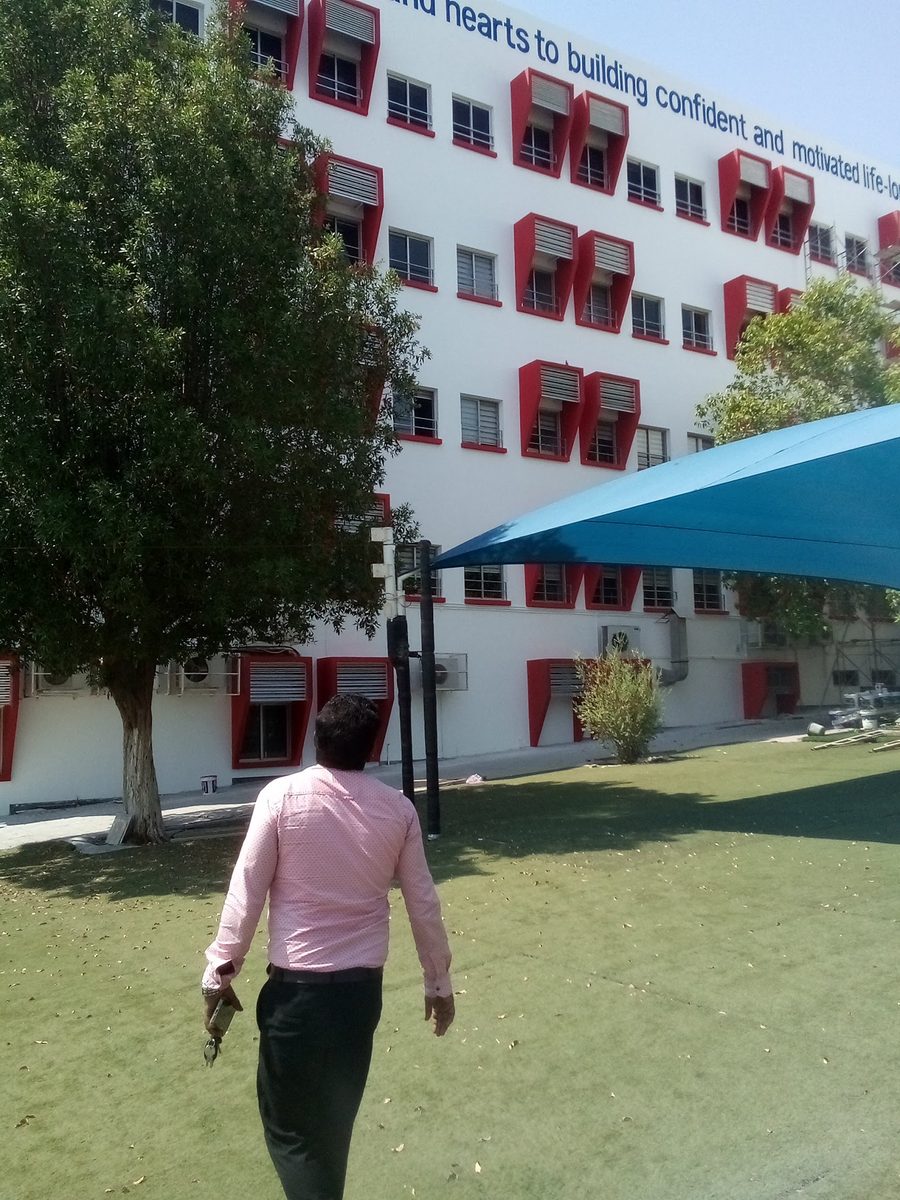
Al Hekma International School
Manama · Bahrain
Bahrain's first STEM-certified school pairs an American diploma track with an IB pathway for Manama's college-bound.
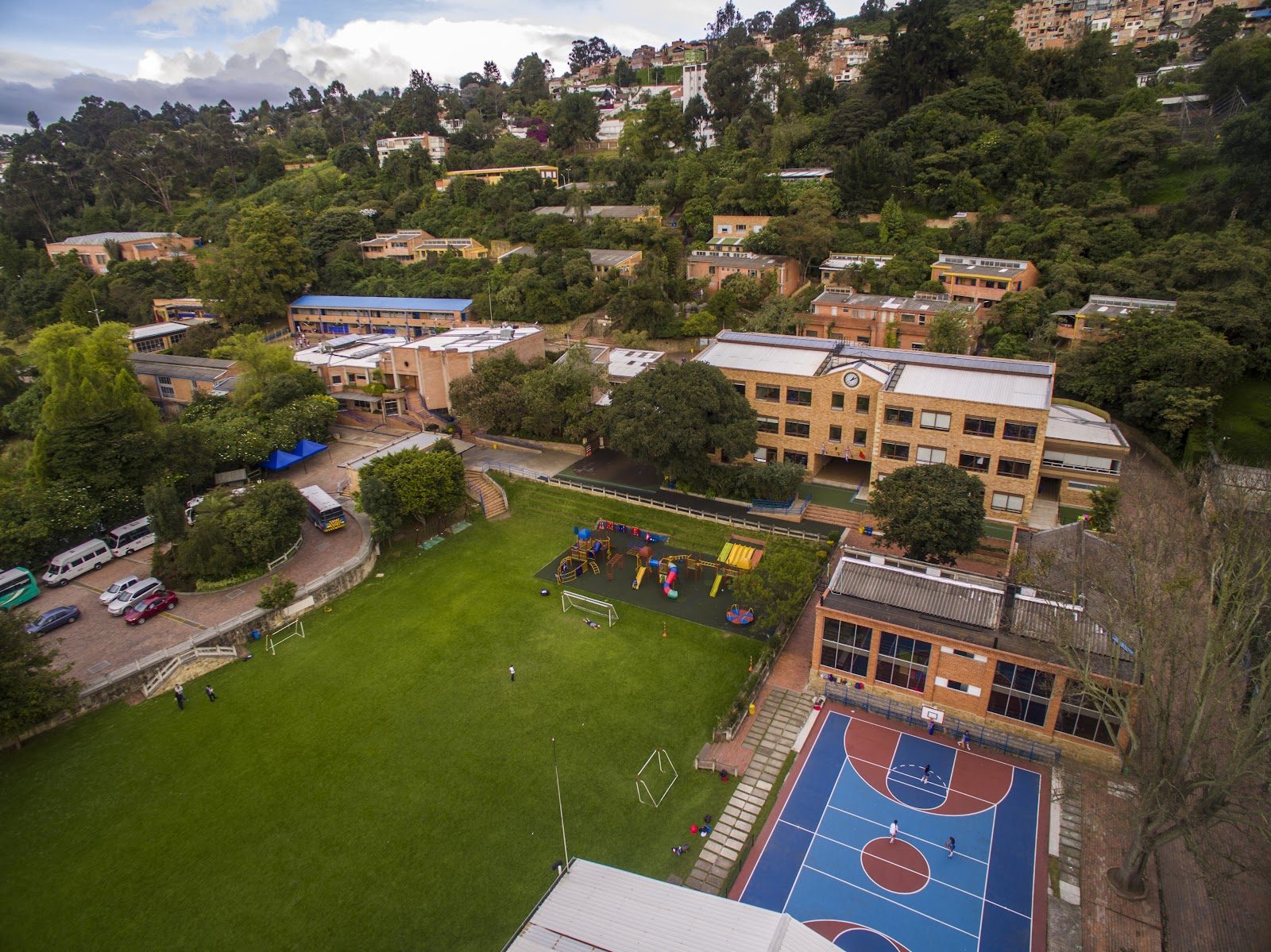
Colegio San Jorge de Inglaterra
Bogotá · Colombia
A Cambridge curriculum campus tucked inside a Suba nature reserve, where music is taught as a fourth language alongside French.
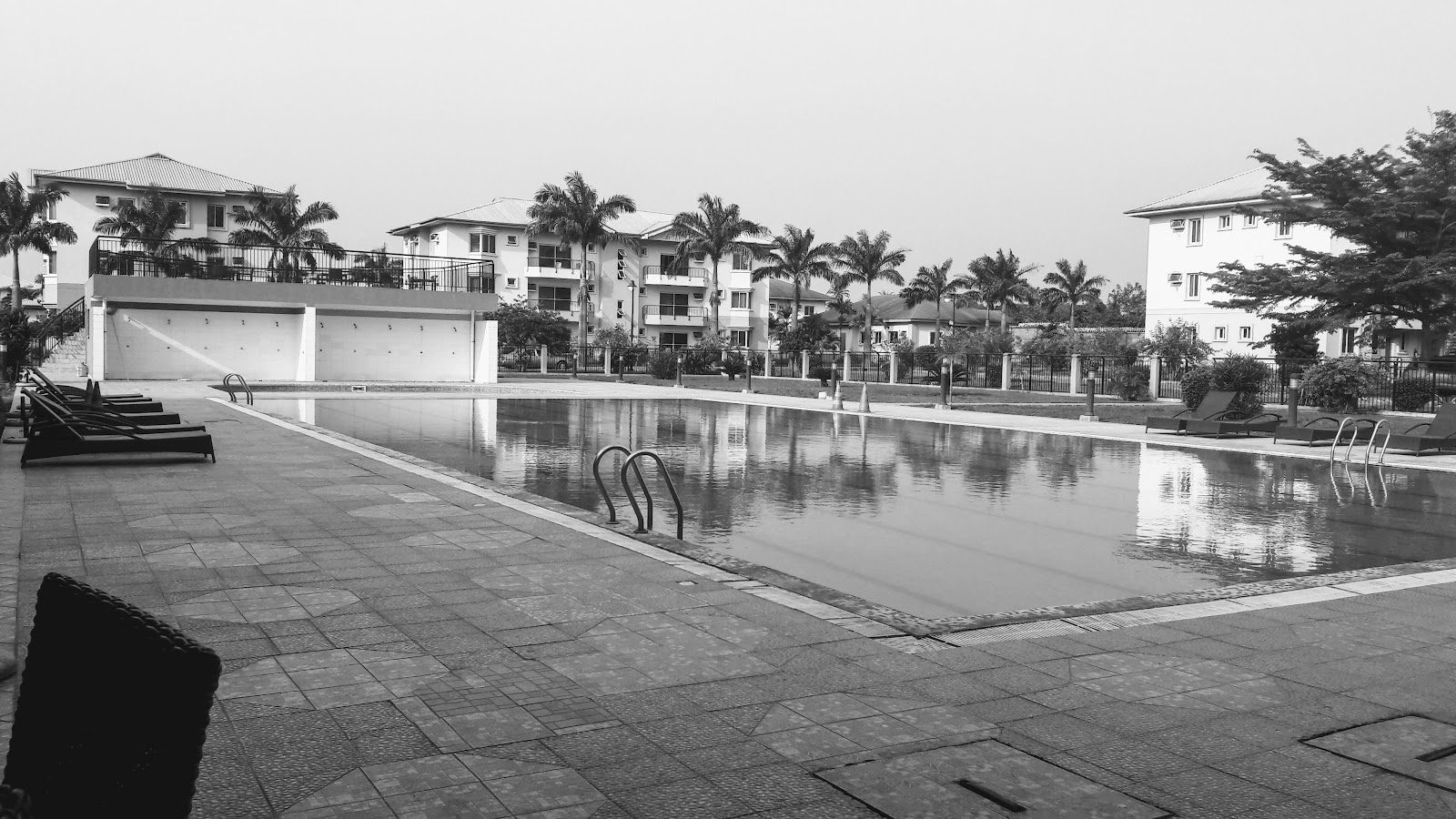
Day Waterman College
Abeokuta · Nigeria
On 35 hectares outside Abeokuta, British-curriculum boarders swap city noise for golf greens and a FIFA-sized pitch.
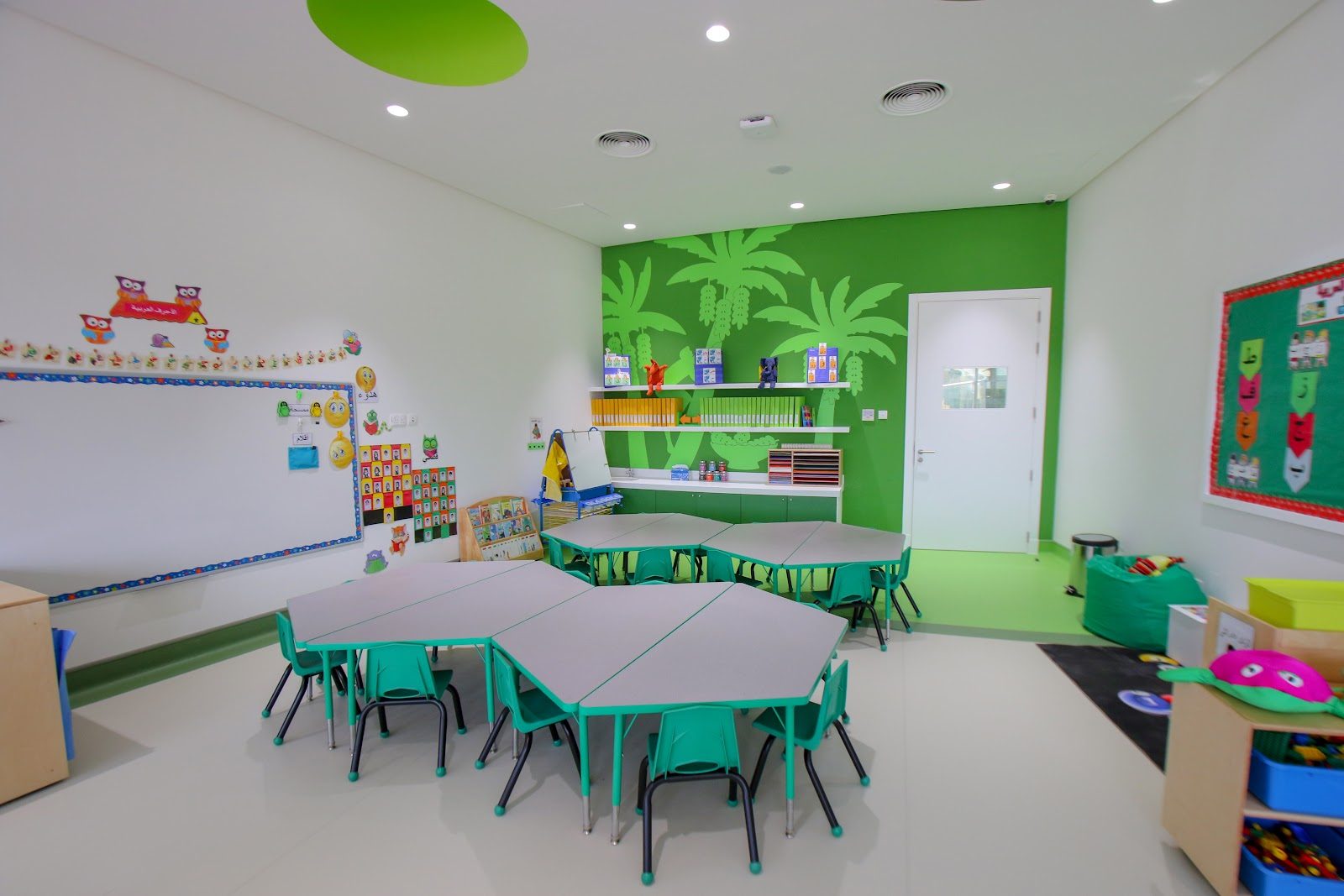
Bahrain Bayan School
Isa Town · Bahrain
Founded by parents in 1982, this Isa Town campus pairs Arabic-English bilingual roots with dual IB and American diplomas.
Same country and curriculum — closest matches within ±10 points either way