
Maryland
The nation's only Jesuit boarding school, shaping young men through Ignatian rigor since 1789 on a 93-acre Maryland campus.

Type
Both
Ages
13–18
Curriculum
American
Qualifications
AP
Ratio
8:1
The Verdict
Editor's commitment
Right for
Boys 13–18 who want an all-male Jesuit school with boarding, a 93-acre campus and an 8:1 student-teacher ratio.
Wrong for
Families wanting co-education, a secular culture or anything beyond an American curriculum in English at a Catholic school founded in 1789.
Watch out for
This is expensive: average annual fees run to $47,450 for day pupils and $78,015 for boarders, with NAIS accreditation but no published outcomes here.
Peer & Industry Review
How Georgetown Preparatory School is regarded in the sector
78
Strong · medium confidence
Among Washington-area independents, Georgetown Prep is respected as the most tradition-bound and mission-driven of the boys' schools, distinct from coeducational rivals like Sidwell Friends or St. Albans, which it is rarely compared to directly given its boarding component and Catholic identity. Its standing within the Jesuit Schools Network is strong, regularly cited alongside peers such as Regis and Fordham Prep in discussions of Ignatian education. University admissions offices know it chiefly through its Ivy-plus placement record and its unusual distinction of producing two sitting Supreme Court justices (Gorsuch, Kavanaugh), a fact frequently referenced in national press coverage of the school, including profiles during their confirmation hearings. Because it is a single-sex Catholic boarding school, it sits outside the usual US day-school league-table conversations and receives little attention from UK-oriented guides such as Good Schools Guide or WhichSchoolAdvisor, which do not systematically cover American prep schools; its reputation is instead sustained through Jesuit-network circles and periodic national news coverage tied to its alumni.
- Neil Gorsuch — U.S. Supreme Court Justice, Judiciary
- Brett Kavanaugh — U.S. Supreme Court Justice, Judiciary
- Sargent Shriver — Diplomat/First Peace Corps Director, Public Service
Editors' overview
Georgetown Prep trades on a distinction few American schools can match: it is the only Jesuit boarding school in the United States, and it has been doing this since 1789. That matters because the school’s offer is unusually specific. This is an all-boys Catholic school for ages 13 to 18, on a 93-acre campus in North Bethesda, with an American curriculum, a stated commitment to forming the whole person, and a boarding structure reinforced by staff presence on site; the school says more than 16 teachers live on campus. The 8:1 student-teacher ratio strengthens that case. For parents who want a school with a clear institutional identity rather than a vague blend of college preparation, sport and pastoral care, Georgetown Prep belongs on the shortlist.
The attraction is not breadth for its own sake but institutional coherence. Jesuit schools work best when intellectual pressure, spiritual formation and adult oversight pull in the same direction, and Georgetown Prep has that architecture in place. The school foregrounds rigorous academics, arts, athletics and college counselling, and the boarding-day mix gives it a wider catchment and a more layered community than a standard local boys’ day school. It also has NAIS accreditation, which gives parents one external marker of organisational seriousness. What the school does not publish here is hard outcome data: no aggregate exam results, no university destination lists, no public academic profile by cohort. That opacity matters. A school asking families to pay an average of $47,450 a year for day pupils or $78,015 for boarders needs scrutiny on outcomes as well as ethos.
The right student for Georgetown Prep is a boy who will respond to structured expectations, a strong Catholic culture and a brotherhood model that is deliberately traditional. This is not the place for families who want a co-educational environment, a loose social atmosphere or a school without a religious centre. It is for boys who can use close faculty access, formal guidance and a campus community to grow up fast, and who will value a school where formation is treated as seriously as grades. In market terms, Georgetown Prep sits in the premium bracket of US independent education: expensive, distinctive and narrow in its appeal, but compelling for the family that wants exactly an all-boys Jesuit boarding school and nothing softer or broader.
Academic Performance
Georgetown Prep does not publish the data that would let parents judge academic performance with precision. We have not seen aggregate SAT or ACT results, AP score distributions, average GPA, cohort-wide university destination tables, or a public breakdown of how many boys secure places at the most selective colleges. That absence places the school at a disadvantage against peers that disclose hard numbers and let families test rhetoric against outcomes. For a school with an overtly high-pressure college-preparatory identity, that gap is conspicuous. Parents are left to infer standards from structure: a low staffing ratio, close faculty access, a substantial counselling operation, and a school culture that treats academic seriousness as part of character formation rather than a bolt-on.
Relative to the US independent-school market, Georgetown Prep fits the elite but opaque camp: strong institutional reputation, clear mission, and no public exam dashboard. That does not weaken the school’s standing with universities; long-established Jesuit schools often carry real weight with admissions offices. It does weaken external scrutiny. In plain terms, Georgetown Prep gives families confidence in adult oversight and educational intent, but not in the form most analytically minded parents want: published outcomes. Among direct competitors, that makes it a school to interrogate hard at open days. Ask for AP participation and scoring, median standardised-test results, matriculation by cohort, and how performance varies across the year group. Without that, academic judgement rests on trust more than evidence.
Facilities
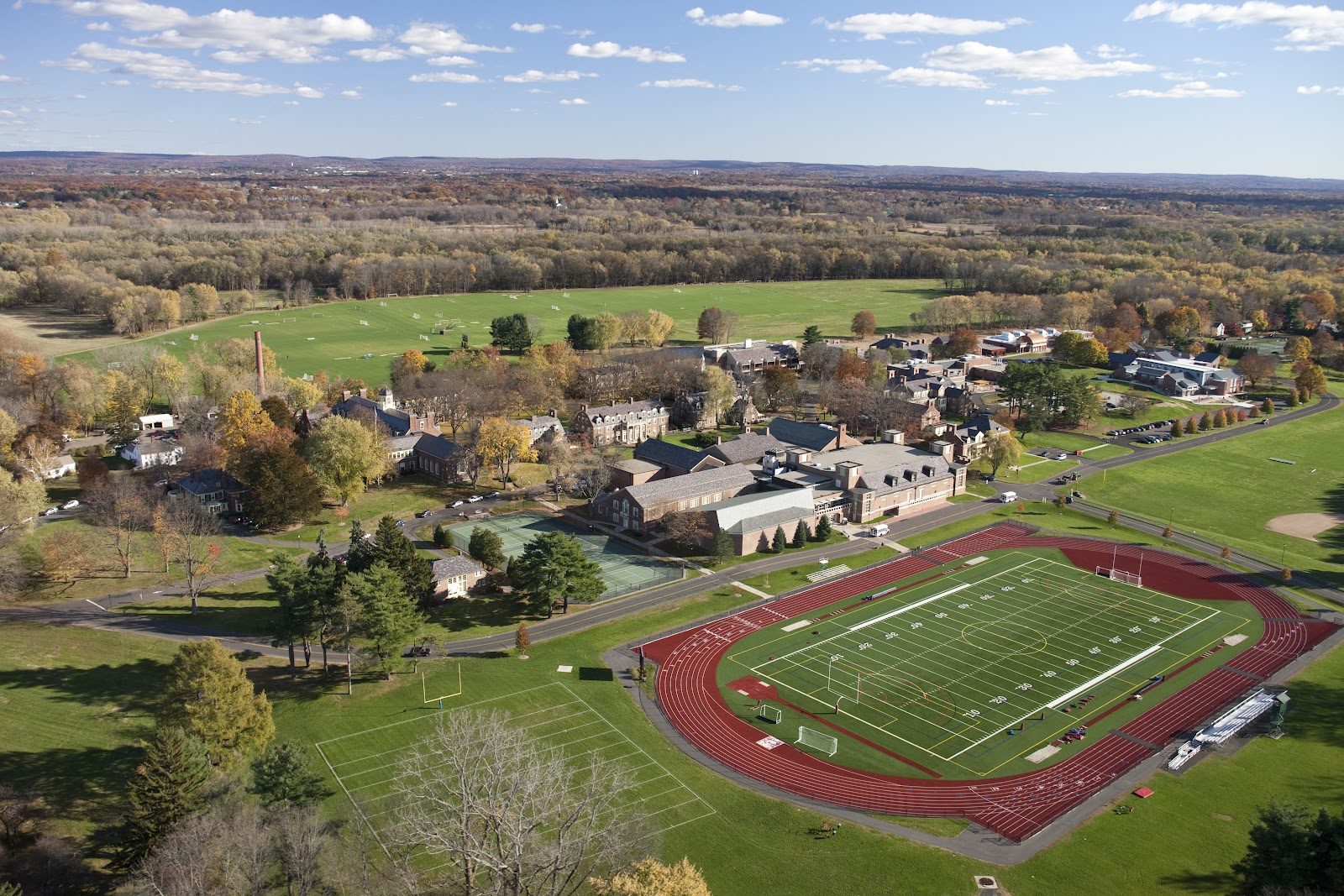
The campus offer is strongest where boarding schools need it most: land, adult presence and enough breadth beyond the classroom to keep adolescent boys occupied, supervised and stretched. Georgetown Prep has a 93-acre site and the school puts real weight on a four-part model of academics, arts, athletics and spiritual formation. That mix matters more here than at a pure day school, because facilities are not just enrichment; they are part of the school’s daily operating logic. The most important assets, then, are the grounds themselves, the sports provision implied by a competitive athletics programme, and the boarding infrastructure reinforced by more than 16 faculty residents on site. Add college counselling, health support and pastoral coverage from counsellors, coaches and nurses, and the school has the serious residential machinery parents should expect at this price point.
Against peer schools, that is a strong but not extravagantly documented facilities picture. Many premium American boarding schools publish exhaustive detail on theatres, labs, maker spaces, boathouses or specialist centres; Georgetown Prep’s public case is thinner and more mission-led. Parents get a clear sense of scale, supervision and institutional purpose, but not a room-by-room inventory of standout buildings. That does not mean the campus is weak. It means the school sells formation over spectacle. For families comparing it with secular East Coast boarding competitors, that restraint will read either as refreshingly confident or as a gap that needs testing in person. Visit with a checklist and inspect the arts spaces, science teaching rooms and boarding houses closely.
That matters because the school’s offer is unusually specific
Prestige
Georgetown Prep carries real prestige in a narrow, old-established lane of American private education: Catholic, all-boys, university-preparatory, and explicitly Jesuit. Its distinction is not mass-market brand gloss but institutional singularity. There is only one school in the country with this exact combination of religious order, boarding tradition and male-only senior-school focus, and that alone gives it a status few peers can claim. The link to the broader Jesuit educational tradition matters too. For families who value discipline, formation and a recognisable moral framework, Georgetown Prep has serious cachet. The school also benefits from the social capital that attaches to a long-entrenched alumni body of more than 6,800 former pupils and from the adult presence implied by more than 16 teachers living on campus.
That said, prestige here rests more on history, identity and network than on published academic proof. The school projects old-school authority and a high-status brotherhood model, but it does not put hard outcome data into the public domain in the way many analytically confident rivals do. That limits the strength of its claim among parents who define prestige through transparent results rather than legacy and milieu. My rating, then, is high but specific: Georgetown Prep is prestigious by heritage and position, not by radical openness. In the US independent-school market, that still counts for a great deal, especially among Catholic and East Coast families, but it is not the same thing as evidence-led academic supremacy.
Its distinction is not mass-market brand gloss but institutional singularity
Communications
Georgetown Prep communicates with parents through a clear but controlled institutional voice. The public-facing message is consistent: formation, brotherhood, academic seriousness, college counselling and adult oversight all sit at the centre. That coherence helps. Parents do not have to decode a muddled brand or a school trying to sell ten identities at once. The school also gives one concrete signal of accessibility that matters in a boarding context: more than 16 teachers live on campus. That points to a culture in which adults are present and contact with families has a practical route through house life, teaching staff and pastoral teams. The mention of counsellors, coaches and nurses also indicates that communication does not rest on one office alone.
The weakness is notable: the school communicates values far better than it communicates performance. It tells parents what it believes, how it wants boys to grow, and why Jesuit education matters. It does not publish the hard academic and destination data that serious parents use to test a school’s claims. That makes the communications model strong on ethos, weaker on evidence. For some families, especially those already sold on an all-boys Catholic environment, that will feel sufficient. For others, it will feel too curated. A school charging an average of $47,450 for day pupils and $78,015 for boarders needs communication that is not just polished and mission-led, but also numerate, transparent and open to scrutiny.
Uniqueness
Georgetown Prep’s uniqueness is not a cosmetic point of difference; it is the organising fact of the school. This is the country’s only Jesuit boarding school, and that gives it a rare institutional clarity that many American independents lack. The school does not try to be all things to all families. It offers an all-boys Catholic education with a residential culture, a strong emphasis on formation, and a brotherhood model that runs through academic life, pastoral life and extracurricular life alike. More than 16 teachers live on campus, which matters because it turns boarding from accommodation into adult-supervised community. Students get tighter oversight, easier access to teachers, and a daily environment where expectations do not stop at the classroom door.
That singularity brings clear benefits and clear limits. For the right boy, Georgetown Prep offers a high-control, high-belonging setting in which faith, discipline, service and college preparation reinforce one another instead of competing for space. The school’s Jesuit framework gives students a moral vocabulary as well as an academic one: reflection, discernment, conscience and responsibility are built into the offer, not added as branding. Its alumni body of more than 6,800 also extends the school’s reach beyond graduation. The trade-off is obvious. This is a tradition-bound environment with a defined religious centre and a male-only culture. Boys who want a looser, more plural social setting will find it constraining; boys who thrive under structure and shared purpose will find it formative in the best sense.
Georgetown Prep’s uniqueness is not a cosmetic point of difference; it is the organising fact of the school
Student Profile
The boy who fits Georgetown Prep is one who can live comfortably inside a school with a strong moral centre and few ambiguities about conduct. This is not a place for adolescents who want to test every boundary, drift socially, or treat school as a loose collection of classes and activities. It suits boys who respond to structure, accept authority, and can handle a culture where religion, service, study and team life are meant to reinforce one another. The all-boys setting will appeal to families who want leadership opportunities and camaraderie built into daily life; it will not suit those who want a more mixed or socially open environment. The low 8:1 staffing ratio points to a student body that gets watched closely, taught closely and known well.
The strongest fit is an engaged, resilient boy with enough self-possession to use adult support rather than resent it. Boarders need independence, but not the performative kind; this school rewards boys who can live communally, respect routines and contribute to a disciplined brotherhood. Day pupils also need to buy into that culture, because the school’s identity does not switch off after lessons. Boys with intellectual seriousness, some appetite for reflection, and a willingness to take faith formation seriously will do well here. Boys who dislike overt religious expectations, resist communal norms, or want a looser adolescence will find the model constraining rather than strengthening.
Students get tighter oversight, easier access to teachers, and a daily environment where expectations do not stop at the classroom door
Co-curricular strengths
Arts & sport, on a separate axis
Overall 7.36/10
Scored 0-10 from the school's own published evidence. This axis is editorial-only — it does not feed the main WTS ranking.
Sports
8.8/10
Preeminent all-boys IAC athletic force; home to historically dominant football, track, and lacrosse programs that consistently produce NCAA Division I talent.
Drama
8.3/10
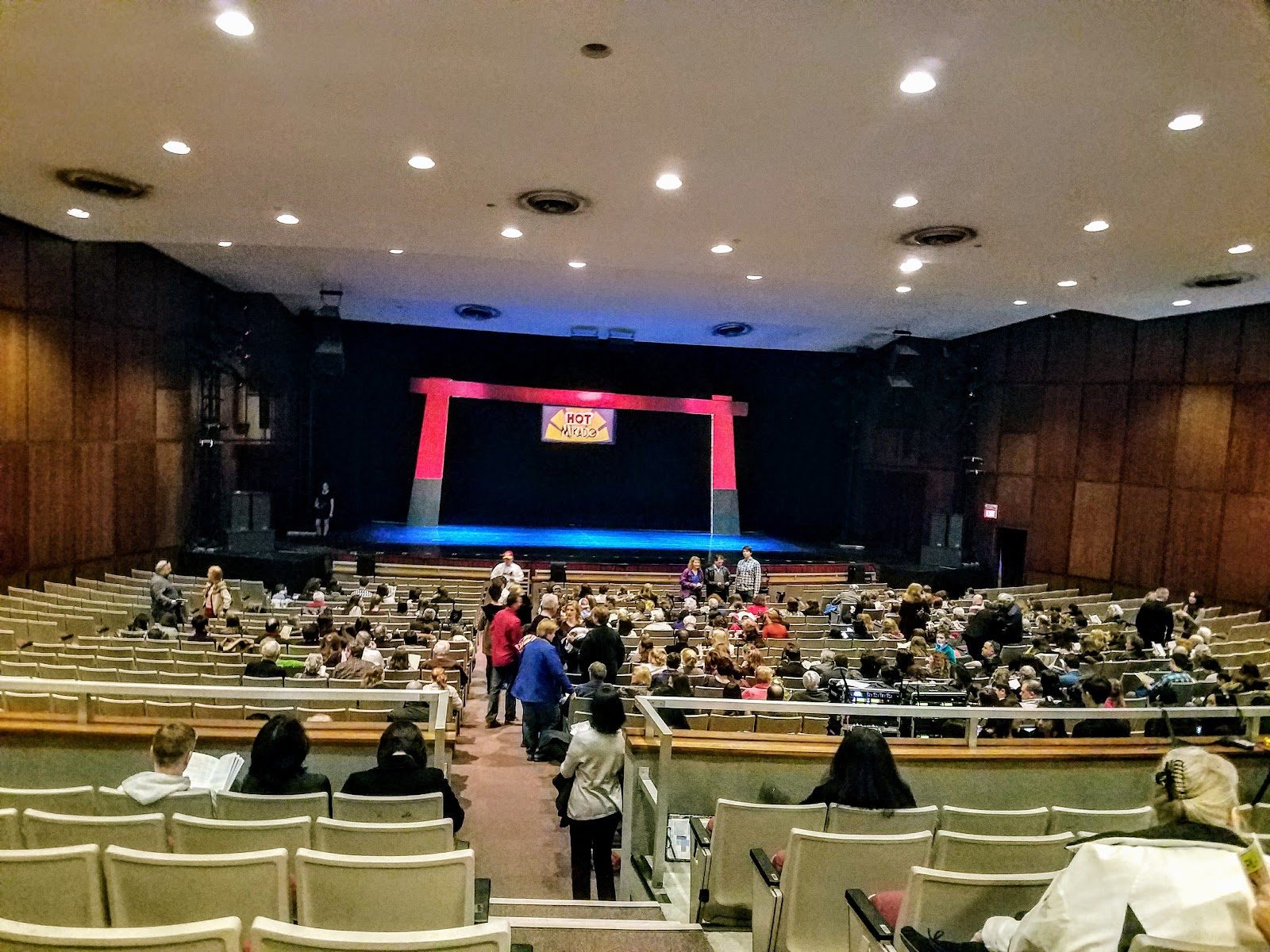
Ambitious theater curriculum staging large-scale classical and contemporary plays inside their primary performing arts spaces.
Dance
3.5/10
Offered primarily as a movement asset within theatrical physical training rather than an independent classical track.
Music
8.7/10
Exceptional music wing supporting top-tier youth orchestras, chamber groups, and elite choirs with deep civic pipelines.
Visual Arts
7.5/10
Highly disciplined fine arts track emphasizing technical portfolio mastery and advanced graphic design suites.

WTS 300 badge
Georgetown Preparatory School is one of the World's Top 300 Schools. Claim your listing to add it to your site →
Strengths
- +Legally part of Georgetown University until their separation in 1927, Prep is the only Jesuit boarding school in the United States, and one of the oldest U.S. boarding schools still operating.
- +Average class size: 16, Student/teacher ratio: 8:1, allowing for close faculty contact across the 9-12 curriculum.
- +Alumni include U.S. Supreme Court Justices Neil Gorsuch '85, Brett Kavanaugh '83, and Federal Reserve Chair Jerome Powell '71.
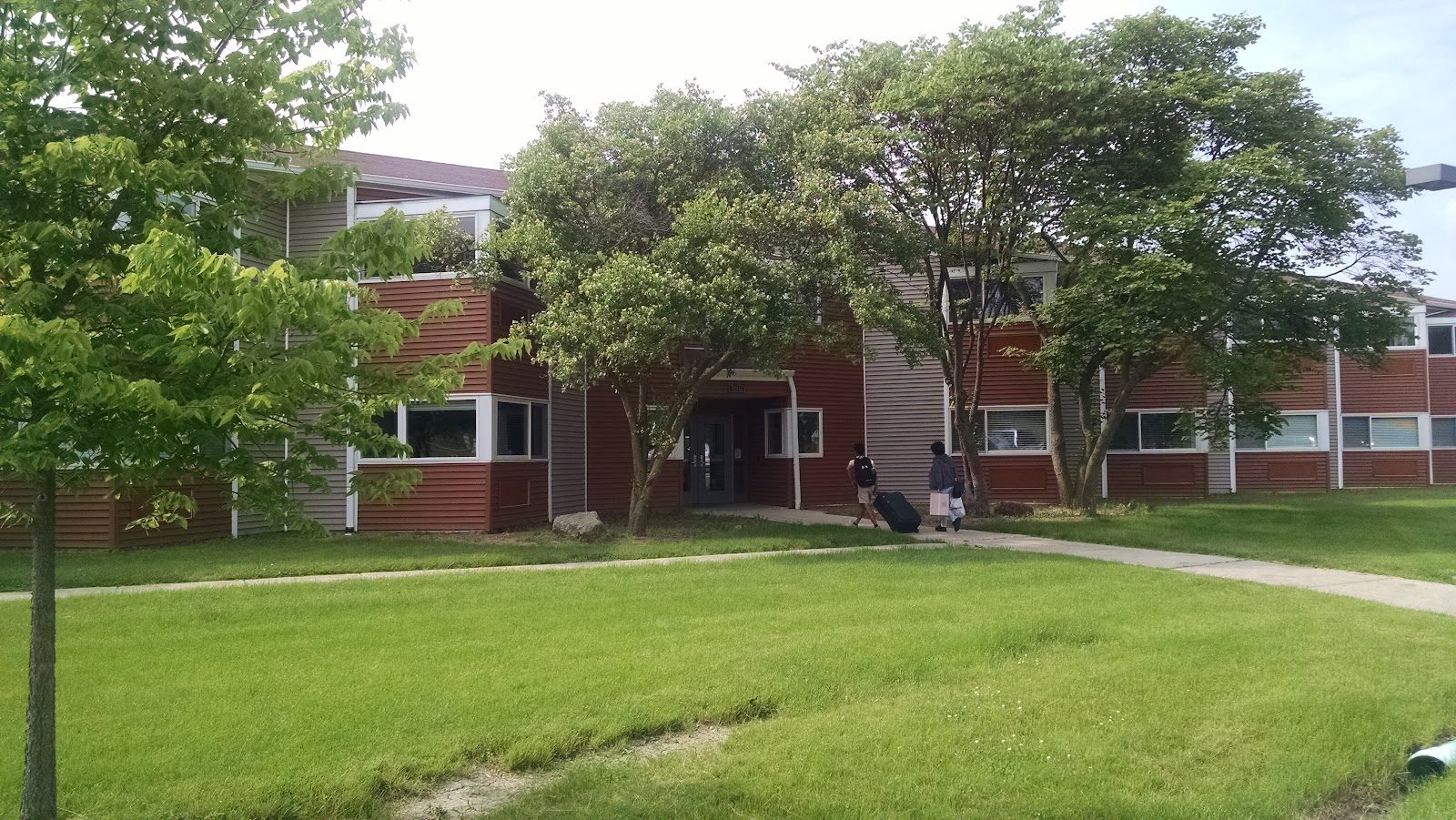
- +This state-of-the-art Campus Center & Residence Hall opened in 2022, home to 120 students from across the U.S. and around the world, on a 93-acre campus in the Washington, D.C. suburbs.
- +About 30% of families receive financial aid... Prep does not offer academic, merit or athletic scholarships, reserving all aid for those who have a demonstrated financial need, a need-based model rather than a merit-buying one.
Considerations
- −The school is single-sex: Georgetown Preparatory School is All-boys only, closing off the coeducational option some relocating families prefer.
- −Fees are substantial: Tuition: $73,535 for boarding students and roughly $44,700-$47,500 for day students depending on the year, placing it among the costlier options in the region.
- −Admission is competitive, with an Acceptance Rate: 23%, so places are not guaranteed even for well-prepared applicants.
- −Some family reviewers note that while Georgetown Prep excels in many academic areas, certain departments, like science and STEM, could be expanded or improved, suggesting the sciences are not the school's strongest suit relative to its humanities and Jesuit liberal-arts core.
Availability
Primary entry gate & tests
SSAT/ISEE + Interview (Boys)
Gallery
Parent reviews
Have you sent your child here?
Voice reviews carry the strongest trust badge — we transcribe them for you to tidy up before they go live. Prefer to type? A written review is fine too.
Add your voice
In 60 seconds, tell other parents: what's the best thing about Georgetown Preparatory School, and what surprised you when your child joined?
We ask for a Google sign-in so every review has a real face behind it — no anonymous drive-by attacks on schools, and no faked positive reviews. Your email is never shown publicly.
Send this profile to a friend
International parents rely on word-of-mouth. Share this review with someone weighing the same decision.
Schools with places
Similar schools to Georgetown Preparatory School with places available now.
Loomis Chaffee School
Windsor · United States
- 2026-27
- WAITPOOLLate/Rolling Space Available
- 2027-28
- OPENS SOONOpens 1 Sept '26
Davidson Academy of Nevada
Reno · United States
- 2026-27
- PLACES OPENApplications still open
- 2027-28
- OPENS SOONOpens late summer '26
Riverdale Country School
New York City · United States
- 2026-27
- WAITPOOLLate application possible
- 2027-28
- OPENS SOONOpens 8 Sept '26 (Noon ET)
Ethical Culture Fieldston School
New York City · United States
- 2026-27
- WAITPOOLLimited late availability
- 2027-28
- OPENS SOONOpens post-Labor Day '26
Availability first, then country, area, curriculum, price, co-curricular
Consider also
Also worth looking at alongside Georgetown Preparatory School.

Polytechnic School
Pasadena · United States
Descended from Caltech's own Throop roots, this 1907 Pasadena day school still marries rigorous academics with hands-on inquiry.
Loomis Chaffee School
Windsor · United States
On a river-cut 'Island' campus, seniors trade classrooms for client work each spring in the Innovation Trimester.
Bergen County Academies
Hackensack · United States
Seven college-style academies and on-campus stem-cell, nanotech, and optics labs turn Hackensack teens into Regeneron Science Talent Search scholars.
Illinois Mathematics and Science Academy
Aurora · United States
A tuition-free state laboratory in Aurora where a fifth of the school week is reserved for original research, not lectures.
Same country and curriculum — closest matches within ±10 points either way