
Dublin
Ireland's only Methodist secondary school, coeducational since 1911 and tracing its ethos back to 1845 on St Stephen's Green.
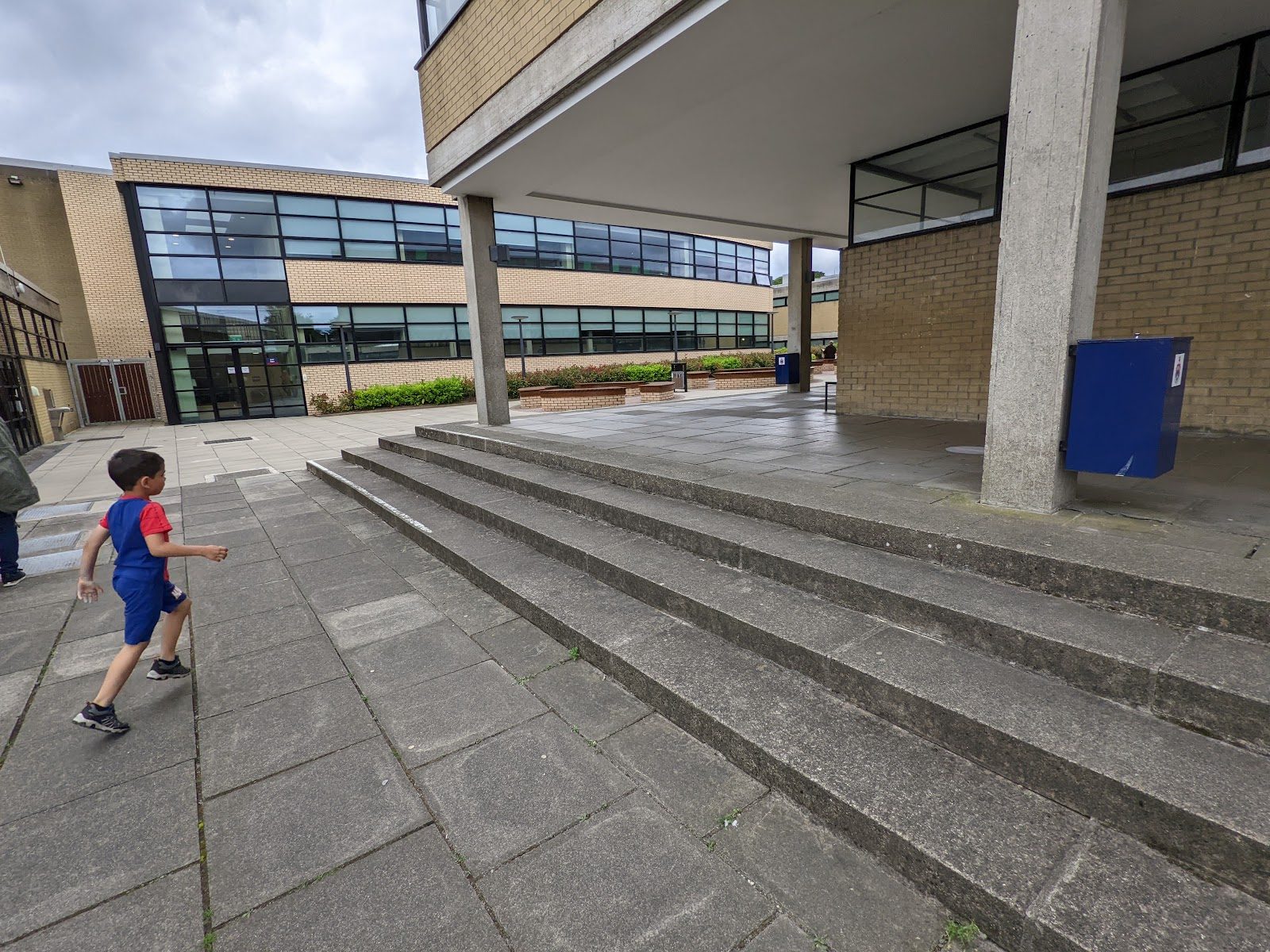
Photo © Narinder Malik via Google Maps
Type
Both
Ages
12–18
Curriculum
Leaving Certificate (Ireland)
Ratio
—
The Verdict
Editor's commitment
Right for
Families wanting Ballinteer day or boarding education in English, with ages 12–18 and Ireland’s Leaving Certificate inside a Methodist school.
Wrong for
Parents seeking a secular school, primary years, or a non-Irish pathway; Wesley runs 12–18 only and teaches in English.
Watch out for
Founded in 1845 and governed by the Methodist Church in Ireland, Wesley’s religious ownership is real; coeducation does not dilute it.
Ranking breakdown
Wesley College Dublin · #175 of 1591
Composite score 75.2. 8 weighted criteria.
By criterion
Academic Outcomes
Weight 20%
#386
of 1529 scored
University Placement
Weight 16%
#398
of 1529 scored
Prestige & Heritage
Weight 12%
#53
of 1571 scored
Alumni Network
Weight 12%
#81
of 1530 scored
Facilities
Weight 12%
#38
of 1534 scored
Transparency & Communications
Weight 8%
#62
of 1532 scored
Peer & Industry Review
Weight 10%
#250
of 1548 scored
Admissions Selectivity & Demand
Weight 8%
#1232
of 1529 scored
Peer & Industry Review
How Wesley College Dublin is regarded in the sector
60
Respected · low confidence
Wesley College Dublin is a long-established (founded 1845) Methodist secondary school in Ballinteer, occasionally referenced in Irish media league tables and school-guide roundups as a solid south Dublin institution with notable alumni (e.g., musicians and public figures), but it lacks the consistent presence in Tatler, Good Schools Guide, or Sunday Times School of the Year coverage that top-tier Irish schools like St. Columba's or Blackrock College receive. Independent verification is limited mainly to Irish Times feeder-school and exam-performance league tables rather than dedicated reputational profiling.
Evidence sources
Editors' overview
Wesley College Dublin occupies a narrow and distinct niche in the Irish market: a co-educational day and boarding secondary school with a Methodist foundation dating back to 1845. That matters. Ireland has no surplus of schools combining Protestant heritage, boarding, and full co-education under one roof; Wesley’s own claim to be the “complete co-educational day and boarding school” captures the point, even if the phrase carries the usual school-brand gloss. For parents who want a school with a clear Christian inheritance but without the single-sex framework that still shapes much of Irish secondary education, Wesley earns a place on the shortlist. The continuity of ethos from St Stephen’s Green to Ballinteer gives it institutional memory, not borrowed tradition.
Its market position rests less on mystique than on format. Wesley serves ages 12–18, teaches in English, and follows the Leaving Certificate. That puts it inside the mainstream Irish academic pathway while offering a boarding option that widens its catchment beyond south Dublin. The governance structure is also plain: the school sits under a Board of Governors appointed each year by the Methodist Church in Ireland. Parents who value clear religious ownership and a school that does not blur its identity will find that attractive; parents seeking a secular or loosely affiliated environment will not. Wesley’s advantage lies in being unusually specific about what it is: independent, Methodist, co-educational, and boarding as well as day.
The students who thrive here are those who want a school with structured community, not an anonymous urban conveyor belt. Boarders will value the built-in social fabric; day pupils gain access to the same wider rhythm of school life. Families looking for a polished cosmopolitan brand with multiple international curricula should look elsewhere. Families who want a grounded Irish education with boarding, a recognisable ethos, and a long institutional history should look closely. Wesley is not special because it tries to be everything. It is special because in the Irish market it remains a rare combination.
Academic Performance
Wesley does not publish aggregate Leaving Certificate results in the public domain. That is the central fact, and it matters. In a market where serious academic schools use headline outcomes to establish credibility, silence leaves parents with an opaque picture of attainment. We have not seen school-wide distributions for top grades, average points, subject-by-subject performance, or university destination data tied to examination results. Without that, Wesley cannot claim a public position among Ireland’s results-driven independents on evidence. The school may deliver strong individual outcomes; it does not disclose the figures that would prove the case.
That places Wesley in a hard-to-rank category academically: not weak by published results, but unverified by them. For families comparing Irish fee-paying schools, that is a handicap. Transparent schools make benchmarking possible; Wesley does not. The right question for admissions is therefore straightforward and non-negotiable: ask for the last 3 years of Leaving Certificate outcomes, including the share of pupils reaching high-point bands, performance in core subjects, and destination patterns after graduation. If the school produces clear internal data, concern eases. If it does not, parents are being asked to buy into academic reputation on trust alone, and trust is not enough at this level.
Facilities
The public picture of Wesley’s facilities is thinner than it should be. The school foregrounds day and boarding provision, sport, a canteen, fixtures, calendars and parent guidance, but it does not publish the kind of detailed campus inventory that stronger peers now treat as standard. That gap matters. At this level, parents need more than menu links and housekeeping pages; they need to know the calibre of science labs, specialist arts spaces, music provision, indoor sports capacity, boarding houses, study areas and pastoral infrastructure. Wesley gives a functional signal rather than a compelling one. The presence of boarding points to a campus built for longer days and fuller pastoral cover than a pure day school, which is useful. It does not, on public evidence, prove top-tier facilities.
Against Irish fee-paying competitors, that leaves Wesley in a middling position on facilities transparency. The best benchmark schools publish rich photography, floor-by-floor detail, venue lists and a clear account of what pupils can use and when. Wesley does not. That does not mean the estate is weak; it means the school asks families to infer quality instead of demonstrating it. For a school selling a distinctive format, that is an avoidable weakness. Any visit needs to focus hard on the lived basics: the condition of classrooms, the seriousness of boarding accommodation, the range of sports spaces, and whether communal areas feel well-run or tired. If the campus is a strength, Wesley needs to show it with more discipline.
Wesley’s advantage lies in being unusually specific about what it is: independent, Methodist, co-educational, and boarding as well as day
Prestige
Wesley carries real but bounded prestige. In Ireland, name recognition rests first on longevity and institutional continuity, then on who a school serves and how visibly it converts heritage into outcomes. Wesley has the first in abundance and the second in a narrow, defensible lane: it is a fee-paying secondary school with day and boarding provision under Methodist governance, a combination that gives it a distinct identity rather than mass-market status. That matters to families inside Protestant, expatriate and boarding-aware circles. Outside those circles, Wesley does not command the automatic social weight of the most famous Dublin names. Its prestige is niche, not dominant.
The limiting factor is public proof. Schools at the top of the prestige ladder publish results that sustain the aura; Wesley does not. That weakens its standing with hard-nosed families who rank schools by examination output and university destinations rather than heritage or ethos. So the school’s prestige sits on three pillars: historical continuity, a rare institutional profile, and a governance structure that gives it clear ownership. It does not sit on published academic superiority, because that evidence is absent. We rate Wesley as respectable rather than exalted: a school with a clear place in the Irish independent sector, valued by families who want its precise mix of community, religion and format, but not one that sets the pace for the market as a whole.
For a school selling a distinctive format, that is an avoidable weakness
Communications
Wesley’s parent communication looks serviceable rather than sophisticated. The site offers the core navigation a parent needs — staff contacts, guidance for parents, sports fixtures, calendar, canteen menu, boarding pages and useful links — and that tells you the school understands the practical rhythm of family life. Fixtures and calendars matter in a school with a full extracurricular and residential dimension; parents need timings, changes and routine information without friction. On that basic test, Wesley does the job. The problem is depth. The public-facing communication is functional, not rich. We have not seen a strong culture of publishing substantive academic information, detailed departmental insight, or the kind of regular explanatory content that helps parents understand not just what is happening, but why.
That gap limits confidence. Good school communication is not only about notices; it is about institutional clarity. Wesley’s site gives quick links and operational signposts, but the overall impression is workmanlike rather than compelling. For existing parents, that may prove perfectly adequate if day-to-day channels beyond the public site are disciplined and responsive. For prospective parents, the school leaves too much unsaid. A school asking families to commit to a high-trust relationship needs sharper public communication than this: clearer academic disclosure, better explanation of pastoral and boarding routines, and a fuller picture of who does what. At present, Wesley communicates the essentials, but not with the precision or confidence-building detail that stronger competitors now treat as standard.
Uniqueness
Wesley’s uniqueness lies in combination, not gimmick. In the Irish secondary market, very few schools unite a Protestant foundation, full co-education, and a genuine day-and-boarding structure in one institution. That gives Wesley a clear-edged identity that many competitors lack. It is not a generic independent school with a chapel attached as an afterthought; the Methodist link runs into governance as well as ethos. For students, that creates a school culture with defined moral framing, a stronger sense of continuity, and fewer mixed signals about what the institution values. The co-educational setting matters too. In a system still shaped by single-sex traditions, Wesley offers boys and girls one shared academic and social environment from the outset, which tends to produce a more socially fluent and less compartmentalised school experience.
The boarding element changes the texture of school life beyond the classroom. It creates a fuller weekly rhythm, tighter peer bonds and a community that does not switch off at the end of the day. That benefits boarders most directly, but day pupils also gain from a school with a more all-encompassing communal life than a standard commuter model. The result is a student experience that feels close-knit rather than anonymous. That will suit families who want structure, belonging and a school with strong institutional character. It will not suit those who want a secular, low-identity environment or the wider menu of a large international school. Wesley’s distinctiveness is real because its format is rare, not because its branding says so.
Schools at the top of the prestige ladder publish results that sustain the aura; Wesley does not
Student Profile
The best fit is a student who wants a school with clear structure and does not need a loose, anonymous teenage experience. Wesley suits pupils who are comfortable inside a community with a defined Christian frame, visible adult oversight and a stronger collective rhythm than a standard commuter secondary. Boarders and day pupils both feed that culture, and that matters: it tends to reward students who join in, keep to routines and value belonging over self-invention. Children who want a socially mixed but ordered environment, and who are content with a school that knows what it stands for, fit well here. Teenagers who bristle at institutional expectations, or who want a low-identity school where religion sits at the margins, will not.
It also fits families who value co-education through the full secondary years and want that within one coherent setting rather than a patchwork of separate social worlds. The age range — 12–18 — gives Wesley a straight run from early adolescence to school-leaving, which suits students who benefit from continuity and a stable peer group. The strongest match is not the child chasing a flashy international brand or a school built around public results theatre. It is the pupil who will use the school’s close-knit format well: steady, community-minded, sport-and-activity ready, and comfortable in a place where ethos is not decorative but active.
Wesley’s distinctiveness is real because its format is rare, not because its branding says so
Co-curricular strengths
Arts & sport, on a separate axis
Overall 7.54/10
Scored 0-10 from the school's own published evidence. This axis is editorial-only — it does not feed the main WTS ranking.
Sports
8.5/10
Drama
8.2/10
Dance
4.5/10
Music
8.5/10
Visual Arts
8/10
Editor first-pass · editor-reviewable · 7/30/2026

WTS 300 badge
Wesley College Dublin is one of the World's Top 300 Schools. Claim your listing to add it to your site →
Strengths
- +Wesley College is a co‑educational day and boarding secondary school situated on a spacious campus in Ballinteer, Dublin, having relocated from its original St Stephen's Green premises in 1969, making it one of Ireland's oldest continuously-run secondary schools.
- +The college delivers a broad-based curriculum that balances rigorous academic study with a wide range of extra-curricular activities, including sport, music, drama and community service, supported by modern classrooms, science laboratories, a library and dedicated arts spaces.
- +Wesley College was founded on 1 October 1845 and counts two Nobel laureates among its alumni, George Bernard Shaw (Literature) and Ernest Walton (Physics), alongside other notable past pupils in the arts, sport and public life.
- +Rooted in the Methodist tradition, the school embraces an inclusive ethos that welcomes students of all faiths and none, and has been coeducational since 1911.
- +Wesley has also been extremely successful in hockey, winning the All Ireland hockey trophy, and fields well-established rugby, cricket and athletics programmes alongside a long-running past-pupils sporting network.
Considerations
- −As a fee-charging school, day fees run roughly EUR 7,885 to EUR 9,545 and boarding EUR 18,365 to EUR 20,630 per year, putting it beyond reach for families reliant on the free state school system.
- −The academic offering is confined to the Irish state system: students complete a three-year Junior Cycle programme, then Transition Year, then a two-year Leaving Certificate programme, with no IB or British-curriculum alternative for families anticipating a further international move.
- −The Ballinteer campus, while set in mature grounds, sits in a suburb that the surrounding area has transformed into a sprawling suburb cut through with constant heavy traffic, making it less convenient than a city-centre school for car-free families.
- −Governance sits with a Board of Governors appointed annually by the Methodist Church in Ireland, meaning the school's ultimate oversight remains denominational even though enrolment itself is open to all faiths.
Availability
Primary entry gate & tests
Transcripts + Interview
Gallery
Photo © Narinder Malik via Google Maps
Photo © Narinder Malik via Google Maps
Photo © Narinder Malik via Google Maps
Photo © Branko Jakovetić via Google Maps
Photo © Branko Jakovetić via Google Maps
Parent reviews
Have you sent your child here?
Voice reviews carry the strongest trust badge — we transcribe them for you to tidy up before they go live. Prefer to type? A written review is fine too.
Add your voice
In 60 seconds, tell other parents: what's the best thing about Wesley College Dublin, and what surprised you when your child joined?
We ask for a Google sign-in so every review has a real face behind it — no anonymous drive-by attacks on schools, and no faked positive reviews. Your email is never shown publicly.
Send this profile to a friend
International parents rely on word-of-mouth. Share this review with someone weighing the same decision.
Schools with places
Similar schools to Wesley College Dublin with places available now.
St. Kilian's Deutsche Schule Dublin
Dublin · Ireland
- 2026-27
- WAITPOOLVacancy-dependent
- 2027-28
- OPENS SOONExpected Oct '26
St. Andrew's College Dublin
Dublin · Ireland
- 2026-27
- WAITPOOLVacancy-dependent
- 2027-28
- PLACES OPEN
Availability first, then country, area, curriculum, price, co-curricular
Consider also
Also worth looking at alongside Wesley College Dublin.
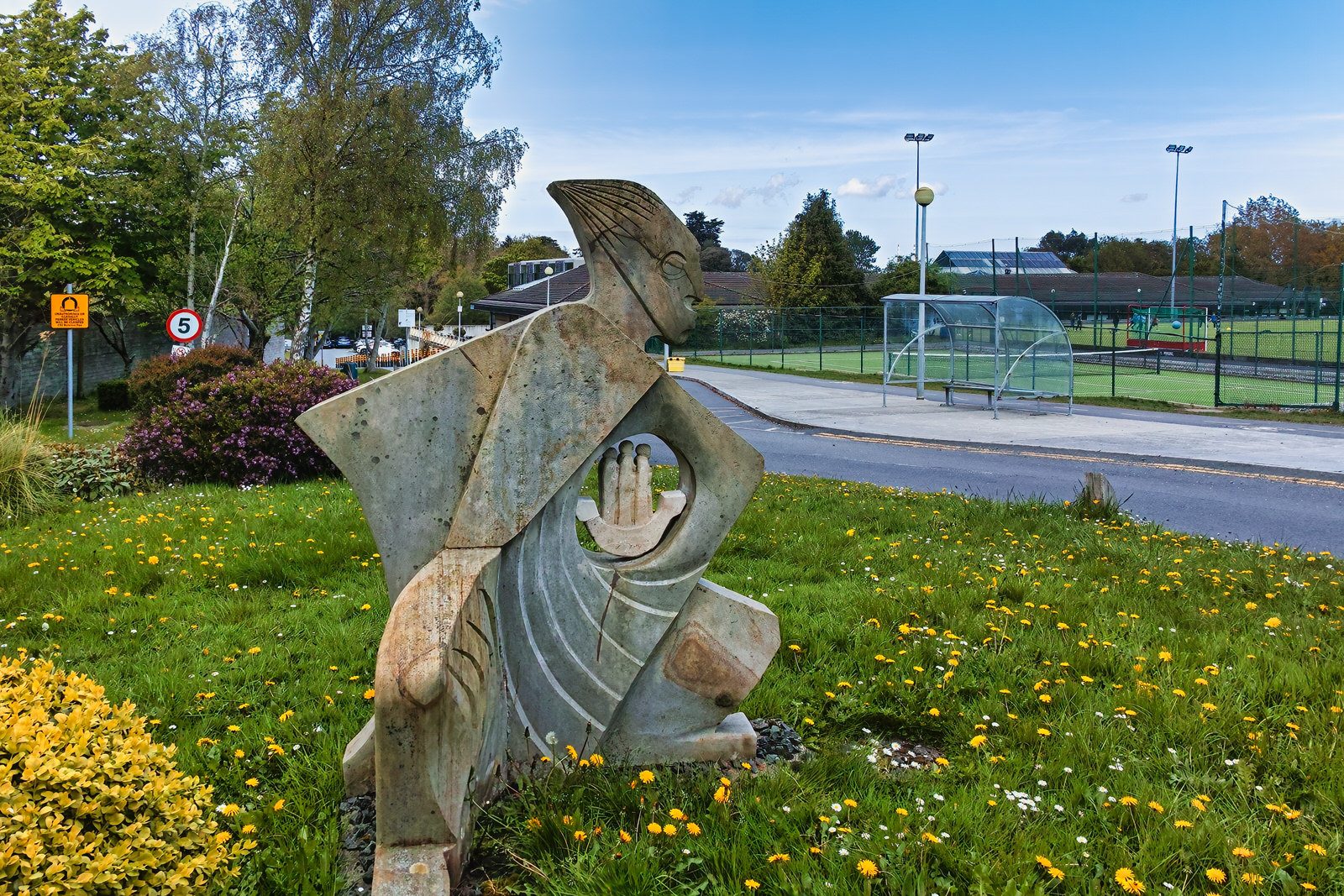
St. Kilian's Deutsche Schule Dublin
Dublin · Ireland
A 1950s refugee-aid charity's legacy now runs a dual-track Abitur and Leaving Cert campus shared with a French lycee in Clonskeagh.
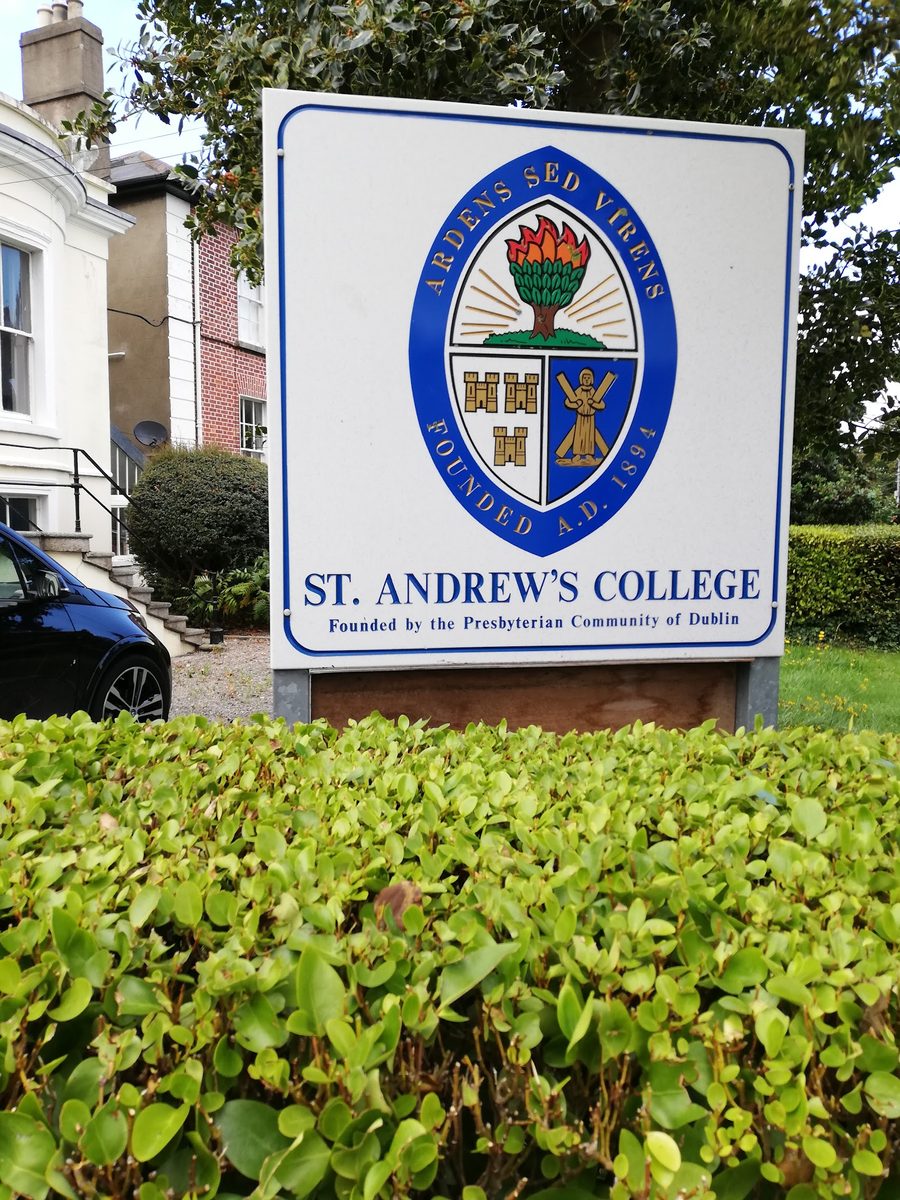
St. Andrew's College Dublin
Dublin · Ireland
First in Ireland to gain IB Diploma authorisation, this interdenominational Booterstown day school still hosts its own Model UN each Easter.
Convent of the Sacred Heart (NYC)
New York City · United States
Since 1881, New York's oldest girls' school has taught inside two landmarked Fifth Avenue mansions.

Shanghai American School
Shanghai · China
A century-old Shanghai institution since 1912, running AP and IB in parallel across two sprawling campuses
Same country and curriculum — closest matches within ±10 points either way