
North Carolina
Charlotte Country Day School
North Carolina's first IB Diploma Program anchors a two-campus Charlotte day school with 143 state athletic titles.

Photo © Charlotte Country Day School via Google Maps
Type
Day
Ages
3–18
Curriculum
American
Qualifications
AP
Ratio
8:1
The Verdict
Editor's commitment
Right for
Charlotte families wanting a serious day school: 1941 foundations, an 8:1 ratio, and North Carolina's first IB Diploma Programme.
Wrong for
Anyone needing boarding, a religious frame, or a small school atmosphere; 1,745 pupils across two campuses is a big operation.
Watch out for
At an average $31,346 a year, this is expensive, and 50 Mecklenburg ZIP codes plus 7 bus stops mean long commutes for many.
Ranking breakdown
Charlotte Country Day School · #1111 of 1591
Composite score 60.5. 8 weighted criteria.
By criterion
Academic Outcomes
Weight 20%
#668
of 1529 scored
University Placement
Weight 16%
#584
of 1529 scored
Prestige & Heritage
Weight 12%
#537
of 1571 scored
Alumni Network
Weight 12%
#1502
of 1530 scored
Facilities
Weight 12%
#569
of 1533 scored
Transparency & Communications
Weight 8%
#652
of 1532 scored
Peer & Industry Review
Weight 10%
#645
of 1548 scored
Admissions Selectivity & Demand
Weight 8%
#489
of 1529 scored
Peer & Industry Review
How Charlotte Country Day School is regarded in the sector
68
Respected · medium confidence
Among Charlotte's independent schools, Country Day is consistently ranked alongside Charlotte Latin and Providence Day as one of the city's three dominant college-preparatory institutions, a grouping repeated in local business press (Charlotte Business Journal, Business North Carolina) and parent-facing sites such as Niche.com, where it scores highly on regional 'best private schools' lists. It does not feature prominently in UK-oriented guides like the Good Schools Guide or WhichSchoolAdvisor, which concentrate on British and international boarding schools, reflecting its identity as a US day school rather than a globally marketed institution. It is largely absent from national American 'most elite' rankings dominated by Northeastern boarding schools (Andover, Exeter, Groton), placing it in a strong regional rather than nationally elite tier. College counseling outcomes are respectable and widely spread across flagship state universities and mid-tier private institutions, without the concentrated Ivy-heavy placement record that defines the most nationally scrutinized prep schools. Its standing rests on strong local reputation, NAIS membership, and consistent presence in regional independent-school conferences rather than on international press coverage or quoted admiration from rival heads outside its immediate Charlotte competitive set.
- Stephen Curry — NBA player, basketball
- Seth Curry — NBA player, basketball
Editors' overview
Charlotte Country Day runs a broad, old-established Charlotte proposition with two points of distinction that matter in practice: a separate middle school campus and the city’s first IB Diploma Programme. That combination gives it more structure than many all-through American independents. The school serves JK–12, enrols 1,745 students, and keeps an 8:1 student-to-faculty ratio, which is strong at this scale. Parents also get real institutional heft: 350 full-time faculty and staff, an alumni network of 8,027, and an endowment of $86.8 million, which the school states is the largest among independent schools in North Carolina. This is a big, well-resourced machine, not a boutique school trading on intimacy alone.
What puts it on a shortlist is the range and seriousness of the offer. Country Day draws families from 50 Mecklenburg County ZIP codes and surrounding counties, so it functions as a regional pull school, not a neighbourhood enclave. The separate middle school campus is more than a real-estate footnote; it gives early adolescents their own academic and pastoral setting, with details such as single-gender maths classes and curriculum design built around that age group. Add 143 state athletic titles and the picture sharpens: this is a school for students who want substance beyond the classroom and who can use a large platform well. The average annual day fee is $31,346, which places it in the expensive end of the Charlotte day-school market, but the scale of staffing, transport provision and programme breadth explains the tariff.
The ideal student for Country Day is motivated, organised and comfortable in a high-functioning, ambitious environment. It suits children who want strong academics in an American framework, with the IB Diploma available at the top end, and who will take advantage of a campus culture large enough to support serious sport, music and a long menu of summer and enrichment programmes. It suits families who want institutional depth and a clear all-through pathway from the early years to graduation. It suits less well those who want a tiny school, a more alternative educational style, or a lower-pressure social setting. Country Day offers scale, options and expectation; students who thrive there tend to like all three.
Academic Performance
Country Day’s academic reputation rests on programme depth and institutional muscle, but its externally verifiable outcomes are less transparent than the strongest data-publishing independents. The school highlights the IB Diploma Programme and a college-preparatory identity, yet it does not publish aggregate IB results, average Diploma scores, subject pass rates, AP performance, SAT or ACT means, or university matriculation breakdowns in the public domain we have seen. That matters. In a market where top independents increasingly treat outcomes data as part of the academic case, this level of disclosure leaves parents without the clean comparative markers they need. The school’s first-rate staffing and resources point to a serious academic operation; the absence of published headline results keeps that claim from landing with full force.
Relative to peers, that puts Country Day in an awkward middle ground: plainly substantial, plainly ambitious, but not as evidentially open as schools that publish exam and destination data year after year. The available indicators still count. An 8:1 student-to-faculty ratio, significant financial aid, and a large full-time staff give it the infrastructure to support able students across a broad range of courses and co-curricular demands. North Carolina’s first IB Diploma Programme also gives sixth formers a recognisable external benchmark inside an American school. But until the school publishes hard outcomes, its academic standing remains credible rather than proven in the way the best-reported schools manage to prove it.
Facilities
Facilities here are defined less by one trophy building than by institutional range. The practical advantage is the split-site model: junior and senior students do not all compete for the same spaces, and the separate middle school campus gives that age group its own academic and pastoral environment. That is a meaningful operational edge over many all-through American independents, where middle school pupils are folded into a larger K–12 plant with less deliberate separation. The school also runs 7 bus stops and a shuttle between campuses, which matters more than glossy architecture for families using a city-wide school every day. Add 150 summer academic and enrichment programmes and the message is clear: this is a campus system built for throughput, scheduling and breadth, not a boutique idyll.
What we do not get is the level of public detail that top peer schools now provide on specialist facilities. The school points to vocal and instrumental music, but it does not publish a clean, parent-friendly account of theatres, performance venues, science labs, design spaces, libraries or athletics infrastructure in the sources we have seen. That makes the estate harder to benchmark at the high end. Still, the scale of staffing and the long list of programmes indicate serious capacity, and the athletics record points to strong sports provision even without a published facilities inventory. Against peers, Country Day reads as well equipped, operationally mature and broad in use, but less transparent than the best schools at showing exactly what sits behind the doors.
The school also runs 7 bus stops and a shuttle between campuses, which matters more than glossy architecture for families using a city-wide school every day
Prestige
Country Day carries real local prestige. In Charlotte, it sits in the top tier of independent-school names: old, established, socially recognised, and large enough to project influence across the city rather than inside one neighbourhood pocket. The draw from a wide spread of postcodes and nearby counties reinforces that standing. So does the scale of the institution itself — 1,745 pupils, 8,027 alumni, and an endowment of $86.8 million — which gives the school visibility, durability and a level of clout that smaller competitors cannot match. Prestige here is not built on mystique. It is built on permanence, donor confidence, a deep parent network, and a school name that carries weight in Charlotte professional and civic circles.
That said, this is regional prestige, not national glamour. Country Day has stature in its own market, and families in North Carolina will know exactly where it sits. It does not occupy the same symbolic space as America’s tiny handful of globally recognised boarding schools, nor does it publish the kind of headline academic outcomes that turn reputation into hard proof. The school’s status rests more securely on institutional strength, selective independent-school culture, and long-term local standing than on publicly documented results. That still makes a Country Day education socially and educationally valuable — just not untouchable, and not beyond scrutiny.
What we do not get is the level of public detail that top peer schools now provide on specialist facilities
Communications
Country Day communicates like a large, administratively serious school. The public-facing basics are in place and easy to find: transport information is concrete, campus logistics are spelled out, and the school gives parents useful institutional markers rather than vague mood music. Bus routes, shuttle arrangements between campuses, summer-programme volume and financial-aid reach all signal a school that knows families need operational clarity, not just aspirational language. The scale matters here. When a school serves a wide catchment and runs more than one site, weak communication creates friction fast; Country Day has built enough practical information into its parent-facing channels to reduce that risk. The reenrolment figure — 98% over five years — also points to parent confidence in the day-to-day experience, and communication is part of that.
The limitation is depth and candour. Country Day communicates confidently about community, tradition and opportunity, but it is less exacting when parents need harder evaluative information. We have not seen the kind of clean public reporting on academic outcomes, specialist facilities or comparative performance that the best-run independent schools now treat as standard parent communication. That leaves the school strong on tone and logistics, weaker on scrutiny. For current families, the system itself is well-drilled and functional. For prospective families doing serious comparison, it is too controlled in the areas that matter most.
Uniqueness
What distinguishes Country Day is not a single signature programme but an *unusually coherent piece of school engineering*. Many large all-through schools promise age-appropriate support; this one has built it into the estate and timetable. The dedicated middle school campus gives early adolescents a distinct setting at the point when many schools lose precision, and the school has tied that separation to concrete choices such as single-gender maths classes and middle-years curriculum design calibrated to that stage. For students, that brings a more deliberate bridge between childhood and the upper school: less crowding by older pupils, clearer pastoral ownership, and a structure that treats the middle years as their own phase rather than a holding pen before the serious work starts.
The other genuine point of difference is breadth with regional pull. Families travel in from 50 Mecklenburg County ZIP codes and neighbouring counties, which tells you this is not a hyper-local community built around one catchment or one social pocket. That wider intake tends to produce a broader peer mix and a school culture with more momentum. Add a worldwide alumni network of 8,027 and 150 summer academic and enrichment programmes, and students get access to a large-platform education: more routes to find their level, more activities that are run at proper scale, and more institutional memory behind them. The trade-off is obvious. This is a big-system school, and children who need constant intimacy or a looser, more alternative atmosphere will find the machinery heavy.
What distinguishes Country Day is not a single signature programme but an unusually coherent piece of school engineering
Student Profile
The students who fit best here are energetic, organised and comfortable in a high-expectation, busy, multi-track environment. This is not a school for children who want to drift anonymously through the week or pick from a thin extracurricular list. It suits pupils who like having options and then using them — in sport, music, summer programmes, service, leadership and the day-to-day churn of a large independent school. The school’s reach across a wide spread of families also matters: children who do well here can handle social range and a peer group drawn from well beyond one neighbourhood circle. With 150 summer academic and enrichment programmes and 7 bus stops feeding the operation, the rhythm is full-scale and logistically grown-up.
The strongest fit is a student who values structure without needing hand-holding at every turn. The separate middle school model will suit families with children who benefit from a more contained setting before moving into the senior years, but the broader culture still rewards self-management, resilience and willingness to step forward. Athletes, performers and students who want a substantial all-round school life have more room here than they would at a smaller campus. Children who need a tiny, soft-edged environment, or who recoil from ambitious peers and visible standards, will find the pace hard work. Country Day works best for students who want to join a serious institution rather than a cosy enclave.
With 150 summer academic and enrichment programmes and 7 bus stops feeding the operation, the rhythm is full-scale and logistically grown-up
Co-curricular strengths
Arts & sport, on a separate axis
Overall 9.42/10
Scored 0-10 from the school's own published evidence. This axis is editorial-only — it does not feed the main WTS ranking.
Sports
9.8/10
Drama
9.5/10
Dance
9/10
Music
9.3/10
Visual Arts
9.5/10
Strengths
- +Founded in 1941, the school was the first independent school in Charlotte and is now one of the largest independent, coeducational college-preparatory schools in the region.
- +Offers the full International Baccalaureate Diploma Programme alongside more than 20 Advanced Placement courses, giving students parallel IB and AP pathways.
- +Operates with a 12:1 student-to-teacher ratio and an average class size of roughly 15 students across its Cannon and Bissell campuses.
- +Graduates have gone on to institutions such as MIT, Yale, Harvard and Princeton, indicating a track record of competitive university placement.
- +Serves close to 1,700-1,738 students across PK/JK through grade 12, giving continuity from early years through senior school on affiliated campuses.
Considerations
- −It is a day school only, with no boarding option, which limits its usefulness for relocating expat families without an existing local residence.
- −Day tuition for 2025-26 runs from about $23,350 to $32,450 depending on grade, a substantial cost even by US independent-school standards.
- −The school experienced an abrupt, unexplained head-of-school departure in December 2023, with the board declining to detail the reasons - a governance disruption worth noting.
- −Entry requires a multi-step selective process, including transcripts, recommendations, an interview and (for grades 5-12) the ISEE entrance exam, rather than open enrollment.
Availability
Primary entry gate & tests
ISEE/SSAT + Interview
Gallery
Photo © Charlotte Country Day School via Google Maps
Photo © Charlotte Country Day School via Google Maps
Photo © Charlotte Country Day School via Google Maps
Photo © Charlotte Country Day School via Google Maps
Photo © Charlotte Country Day School via Google Maps
Photo © Charlotte Country Day School via Google Maps
Photo © Charlotte Country Day School via Google Maps
Parent reviews
Have you sent your child here?
Voice reviews carry the strongest trust badge — we transcribe them for you to tidy up before they go live. Prefer to type? A written review is fine too.
Add your voice
In 60 seconds, tell other parents: what's the best thing about Charlotte Country Day School, and what surprised you when your child joined?
We ask for a Google sign-in so every review has a real face behind it — no anonymous drive-by attacks on schools, and no faked positive reviews. Your email is never shown publicly.
Send this profile to a friend
International parents rely on word-of-mouth. Share this review with someone weighing the same decision.
Schools with places
Similar schools to Charlotte Country Day School with places available now.
Germantown Friends School
Philadelphia · United States
- 2026-27
- CLOSEDRegular cycle closed
- 2027-28
- OPENS SOONOpens Sept '26
Poly Prep Country Day School
Brooklyn · United States
- 2026-27
- CLOSEDRegular cycle closed
- 2027-28
- OPENS SOONOpens Sept '26
Marymount School of New York
New York City · United States
- 2026-27
- CLOSEDConfirmed full
- 2027-28
- PLACES OPENApplications opened 1 Aug '26
Boston University Academy
Boston · United States
- 2026-27
- CLOSEDRegular cycle closed
- 2027-28
- OPENS SOONOpens Sept '26
Availability first, then country, area, curriculum, price, co-curricular
Consider also
Also worth looking at alongside Charlotte Country Day School.

Germantown Friends School
Philadelphia · United States
Rooted in an 1845 Quaker meeting in historic Germantown, where juniors design a month-long independent study of their own.
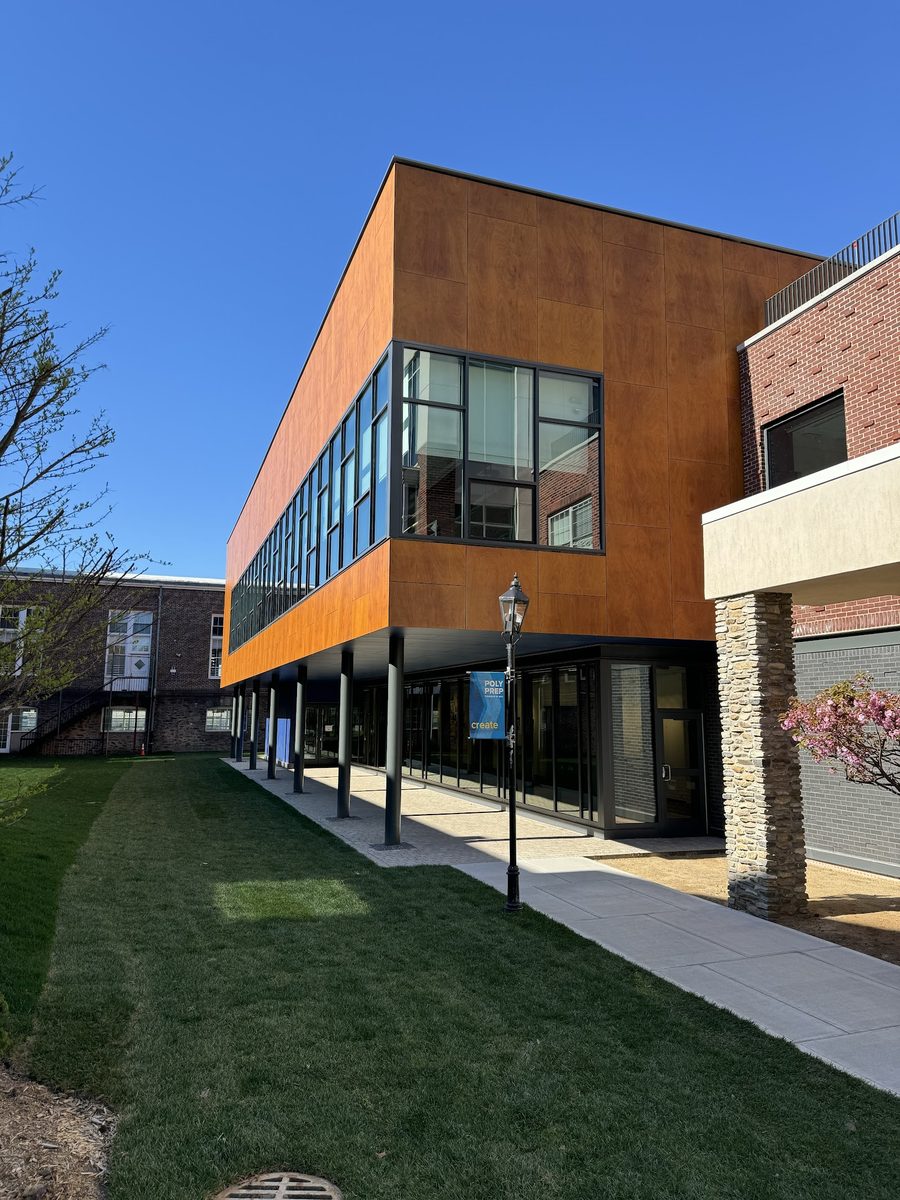
Poly Prep Country Day School
Brooklyn · United States
Founded in 1854 as Brooklyn's first boys' school, this day school pairs a Prospect Park mansion with a 25-acre Dyker Heights campus.

Marymount School of New York
New York City · United States
On Fifth Avenue, landmark mansions give way to Bloomberg terminals and classrooms inside the Met.
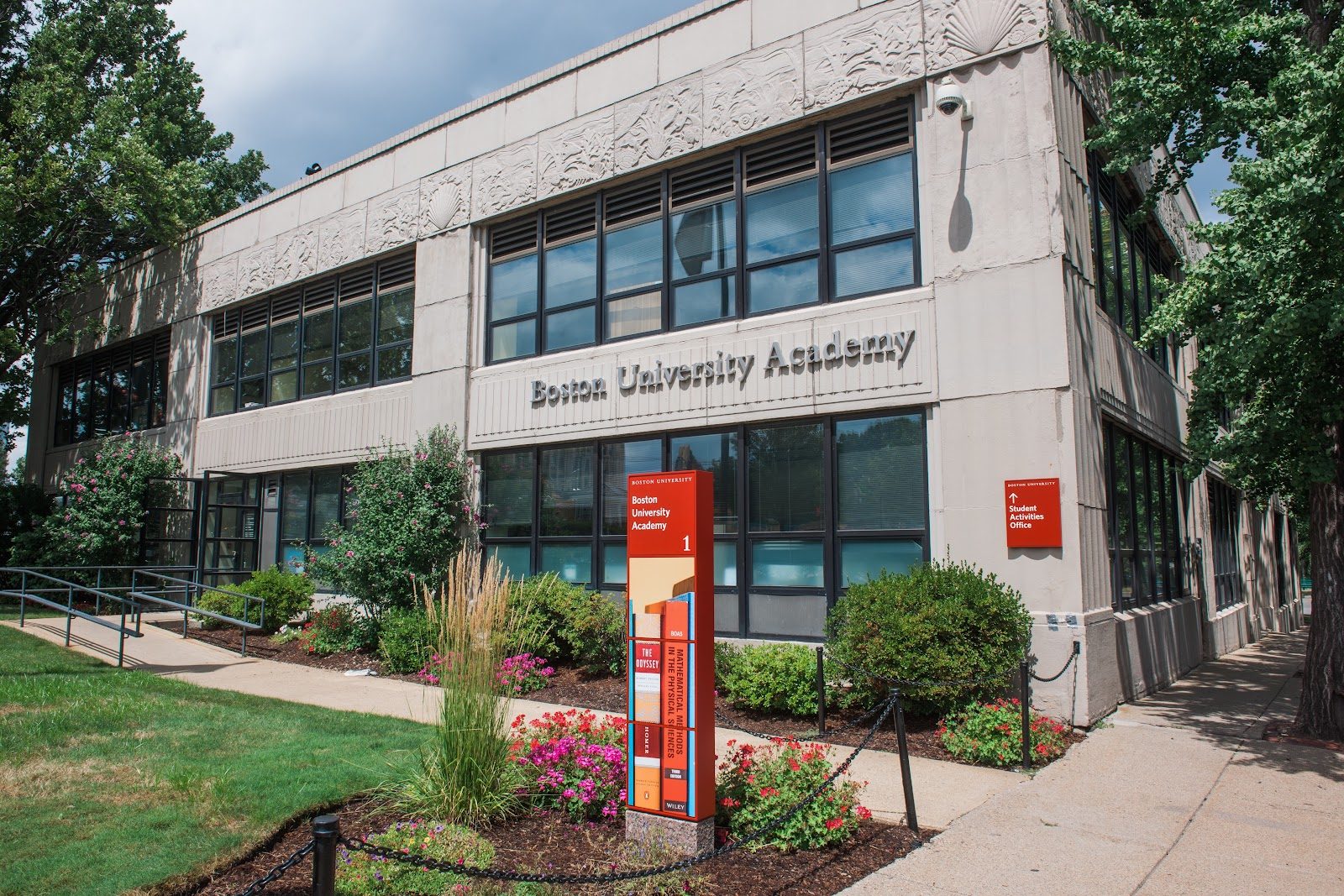
Boston University Academy
Boston · United States
Upperclassmen trade study halls for Boston University lecture halls, banking college credit before graduation.
Same country and curriculum — closest matches within ±10 points either way