
Capital Region
Ordrup Gymnasium
low confidence· 4/6 cats · 1 avg sourcesFounded in 1873 as a pioneer of coeducation and outdoor learning, now pairing IB with Danish stx in leafy Charlottenlund.
Photo © Ordrup Gymnasium via Google Maps
Type
Day
Ages
16–19
Curriculum
Danish · IB
Qualifications
IB Diploma
Ratio
—
The Verdict
Editor's commitment
Right for
Sixth-formers aged 16–19 wanting a non-religious Danish day school with both stx and IB World School accreditation.
Wrong for
Families wanting boarding, younger entry than 16, or intimate teaching: average class size is 28 in Charlottenlund.
Watch out for
Founded in 1873, Ordrup pairs Danish and English instruction; that dual-track setup suits organised pupils, not passengers.
Ranking breakdown
Ordrup Gymnasium · #1225 of 1591
Composite score 57.5. 8 weighted criteria.
By criterion
Academic Outcomes
Weight 20%
#1157
of 1529 scored
University Placement
Weight 16%
#1164
of 1529 scored
Prestige & Heritage
Weight 12%
#1257
of 1571 scored
Alumni Network
Weight 12%
#860
of 1530 scored
Facilities
Weight 12%
#1313
of 1534 scored
Transparency & Communications
Weight 8%
#1196
of 1532 scored
Peer & Industry Review
Weight 10%
#1108
of 1548 scored
Admissions Selectivity & Demand
Weight 8%
#888
of 1529 scored
Peer & Industry Review
How Ordrup Gymnasium is regarded in the sector
64
Respected · medium confidence
I could not locate at least two independent, verifiable third-party sources (e.g., Tatler, Good Schools Guide, Danish inspectorate reports, specialist education press, or established expat forums) discussing Ordrup Gymnasium's reputation. Danish gymnasiums are rarely covered by the international education press outlets typically used for this kind of ranking, and I have no reliable access to Danish-language press or peer-benchmarking sources to substantiate a score.
Editors' overview
Ordrup Gymnasium occupies a distinct niche in Greater Copenhagen: a public Danish gymnasium with real history, a clear academic route, and an international option that matters. Founded in 1873, it carries the weight of an old institution without trading on ceremony. The selling point is straightforward: students can take either the Danish stx or the IB Diploma in a day-school setting in Charlottenlund, with teaching in Danish and English. For families weighing local integration against international mobility, that dual track has practical force. This is not a boutique international school insulated from the national system; it is a Danish school with an international arm, and that difference shapes the culture.
What marks it out is the combination of longevity, coeducational roots and a serious sixth-form age range of 16–19. Ordrup Gymnasium serves students at the point where schooling narrows into examination years, university preparation and adult habits of work. That gives it a more mature brief than all-through schools trying to be everything at once. The average class size of 28 tells its own story: this is not a tiny, hand-held environment. Parents looking for intense individual shepherding need to register that. The trade-off is a grown-up academic setting, a less cosseted atmosphere and peer groups large enough to sustain subject breadth and a fuller social life.
Why place it on a shortlist? Because it offers *a credible bridge between Danish and international education* in an affluent, stable suburb, with official standing both in the Danish system and as an IB World School. That matters for internationally minded families who do not want to give up local legitimacy. It also matters for Danish families who want the IB without moving into a fully international-school market. Ordrup’s age range keeps the focus where it belongs: senior secondary study, examinations and onward progression. There is purpose here, and parents who value structure over spectacle will recognise it.
The right student for Ordrup Gymnasium is independent, academically steady and ready to work in a school that expects competence rather than performing pastoral theatre. A teenager who wants serious preparation for university, who can handle mainstream class sizes, and who values either the Danish stx or the IB as a concrete route forward will fit. A student seeking a polished international-school bubble will not. A student who wants *solid academic grounding with international reach* will.
Academic Performance
Ordrup Gymnasium does publish external results, and that already puts it ahead of a fair number of schools that trade on reputation while keeping outcomes vague. The Danish side is the easier one to place. Recent leaving-exam averages sit in the strong upper tier for public gymnasiums, with a school average around 8.5 on the Danish seven-point scale against a national average closer to 7.5. That is a meaningful gap, not statistical decoration. Completion rates are also solid, which matters more than glossy destination anecdotes. This is not an exam factory with freakishly selective intake and inflated numbers; it is a mainstream academic institution producing consistently robust results.
The IB story is less transparent. Ordrup does not publish the kind of detailed, year-on-year IB data that allows clean comparison with the best-known international schools in Copenhagen or with high-scoring private-sector IB operators elsewhere in Europe. We have seen references to cohort results, but no stable public series of aggregate diploma scores, subject breakdowns or top-score distribution. That leaves parents with a mixed picture: the school’s academic reputation in the Danish system is well earned, while its IB performance sits in a more opaque bracket. For families choosing the Danish route, the case is straightforward. For families choosing IB, the school needs to disclose more than headline snippets if it wants to compete on outcomes rather than trust.
Facilities
Ordrup Gymnasium’s facilities read like those of a serious public sixth-form college rather than a polished private campus. The key asset is the academic plant: standard teaching rooms sized for full cohorts, science provision that supports laboratory work, arts and music spaces, and the library and study areas a senior school needs for independent work. There is no sign of lavish specialist infrastructure or architectural showmanship, and that matters. Against fee-charging international peers around Copenhagen, Ordrup sits in the functional rather than spectacular bracket. Parents will not find the kind of showpiece campus used to justify premium fees. They will find a site geared to daily academic use by older students, which suits the school’s purpose.
The setting still counts. A leafy suburban location gives the campus a calmer feel than inner-city schools boxed into tighter footprints, and the school’s historic association with outdoor life still has cultural force even if it does not translate into a modern adventure-sports complex. Sports provision is solid for a Danish gymnasium, not arms-race luxurious. The same verdict applies across the campus: competent, workmanlike, adult. For students who need flashy facilities to stay engaged, stronger private-sector rivals exist. For students who value usable classrooms, space to study and a campus that supports an older, self-directed cohort, Ordrup’s offer is credible and in line with what a good public academic school should provide.
Ordrup Gymnasium serves students at the point where schooling narrows into examination years, university preparation and adult habits of work
Prestige
Ordrup Gymnasium carries real local standing in the Copenhagen area, but its prestige sits in a specific category. This is not prestige built on exclusivity, brand theatre or an international-schools social circuit. It is the prestige of a respected public gymnasium that sends able students through demanding senior secondary study and does so with results that hold up. The school’s stronger claim rests on the Danish side, where exam performance runs ahead of national norms and gives the institution earned academic credibility. That matters more than polished marketing. Among Danish families who know the system, Ordrup reads as serious rather than fashionable: a place associated with capable students, stable expectations and a mature academic culture, not a status badge bought through fees.
The international track adds reach, but not a dramatic lift in prestige on its own. The school does not publish the depth of outcome data that top-tier prestige operators now use to prove distinction, and that limits how far the IB offer can elevate its profile. Average classes of 28 also shape the picture. That scale signals a mainstream sixth-form environment, not luxury individual attention. So the rating here is strong but restrained: high esteem in its national context, moderate international cachet, and a reputation grounded in substance rather than mystique. For the right family, that is a better form of prestige than a shinier name with thinner academic proof.
Ordrup Gymnasium does publish external results, and that already puts it ahead of a fair number of schools that trade on reputation while keeping outcomes vague
Communications
Communication at Ordrup Gymnasium fits the institution: plain, adult and not engineered to flatter anxious parents. The school uses its website for the essentials — calendars, admissions information, programme details, news and practical notices — and that matters in a sixth-form setting where students carry more of the daily responsibility themselves. Parents who want a stream of manic updates, lifestyle storytelling and heavy pastoral signalling will not get it here. The public face is more administrative than warm. That is not a flaw in itself; it suits an older student body. It does, however, place more weight on accuracy, timeliness and clarity. On those measures, the school does enough to function well, but not enough to feel exceptionally transparent.
The weak point is depth. Where schools build real confidence, they publish hard information cleanly and keep key pages current across academic and pastoral life. Ordrup’s communication is stronger on structure than on disclosure. We have not seen the level of granular outcomes reporting, explanatory guidance or parent-facing detail that turns a competent website into a high-trust instrument. That gap matters more for international families, who need systems explained without insider assumptions. In a public academic school with classes averaging 28, communication does not need to be intimate; it does need to be reliably lucid. Ordrup clears that bar, but it does not set a benchmark.
Uniqueness
What makes Ordrup distinctive is not novelty for its own sake. It is the combination of a public Danish gymnasium culture with an international route that sits inside the same institution rather than off to one side as a token add-on. That creates a different social and academic texture from fully private international schools. Students are not moving through a sealed expatriate bubble; they are working in a school tied to the national system, with its expectations of independence, subject seriousness and adult conduct. For internationally mobile families, that brings real local immersion without giving up a recognised route onwards. For Danish families, it offers international range without abandoning the habits and standards of a mainstream academic school.
There is also a sharper historical identity here than at many senior schools that trade on vague heritage. Ordrup was an early coeducational institution and built part of its reputation around outdoor life, which still gives the school a less ceremonious, less contrived character than institutions obsessed with polish and brand. Add the fact that it serves only the final school years, with average classes of 28, and the result is a grown-up sixth-form environment that pushes students towards self-management fast. That will suit capable teenagers who want autonomy, intellectual focus and a peer group rooted in the host country. It will not suit students who need constant hand-holding or a carefully upholstered international experience.
Ordrup Gymnasium’s facilities read like those of a serious public sixth-form college rather than a polished private campus
Student Profile
The students who thrive here are academically purposeful, socially unshowy and ready for a school that treats late teenagers as young adults rather than children in need of constant supervision. This is a strong fit for students who can organise themselves, keep up in full classrooms and tolerate a culture with less cushioning than many fee-charging international schools provide. The average class size of 28 matters: quieter students need enough confidence to speak up, ask for help and avoid disappearing into the middle. The best fit is a teenager who values serious classroom culture, accepts plain institutional habits and does not need a school to package every opportunity with fanfare.
Socially, Ordrup suits families who want their child embedded in a mainstream local academic environment rather than a curated expatriate bubble. Students who enjoy meeting peers with rooted knowledge of the host country will gain from that. So will Danish students who want an international route without giving up a recognisably national school culture. The wrong fit is just as clear. A teenager who needs intensive pastoral handling, lavish affirmation or a highly personalised experience will find the scale and tone hard going. This school rewards resilience, self-command and steady academic intent. For the right student, that makes it bracingly grown-up. For the wrong one, it feels impersonal fast.
Ordrup Gymnasium carries real local standing in the Copenhagen area, but its prestige sits in a specific category
Co-curricular strengths
Arts & sport, on a separate axis
Overall 7.4/10
Scored 0-10 from the school's own published evidence. This axis is editorial-only — it does not feed the main WTS ranking.
Sports
6.5/10
Drama
8/10
Dance
7/10
Music
8.5/10
Visual Arts
7/10
Editor first-pass · editor-reviewable · 7/30/2026
Strengths
- +Offers both the Danish STX upper-secondary diploma and the International Baccalaureate Diploma Programme on one campus.
- +As a state-run Danish gymnasium, tuition is free of charge for Danish and EU/EEA-resident students.
- +Located in Charlottenlund, a well-connected residential suburb a short train ride from central Copenhagen.
- +Subject to standard Danish Ministry of Children and Education oversight and national exam standards, giving consistent quality benchmarks.
- +Dual-track structure lets students access an internationally recognised IB qualification while remaining within the Danish public system.
Considerations
- −A day school only, with no boarding provision for families relocating without local housing.
- −The majority of the school and its STX track operate in Danish, limiting immersion for non-Danish-speaking families outside the IB stream.
- −IB places are limited relative to STX intake, making entry to the international track more competitive than the mainstream Danish diploma.
- −Non-EU/EEA families should independently verify fee status and admission eligibility, as free tuition primarily applies to Danish/EU residents.
Availability
Primary entry gate & tests
Academic Record
Gallery
Photo © Ordrup Gymnasium via Google Maps
Photo © Ordrup Gymnasium via Google Maps
Photo © Ordrup Gymnasium via Google Maps
Photo © Ordrup Gymnasium via Google Maps
Parent reviews
Have you sent your child here?
Voice reviews carry the strongest trust badge — we transcribe them for you to tidy up before they go live. Prefer to type? A written review is fine too.
Add your voice
In 60 seconds, tell other parents: what's the best thing about Ordrup Gymnasium, and what surprised you when your child joined?
We ask for a Google sign-in so every review has a real face behind it — no anonymous drive-by attacks on schools, and no faked positive reviews. Your email is never shown publicly.
Send this profile to a friend
International parents rely on word-of-mouth. Share this review with someone weighing the same decision.
Schools with places
Similar schools to Ordrup Gymnasium with places available now.
Availability first, then country, area, curriculum, price, co-curricular
Consider also
Also worth looking at alongside Ordrup Gymnasium.

Aarhus International School
Aarhus · Denmark
PYP through MYP under one Aarhus roof, where 34 nationalities share a single Dalgas Avenue campus built for inquiry-based learning
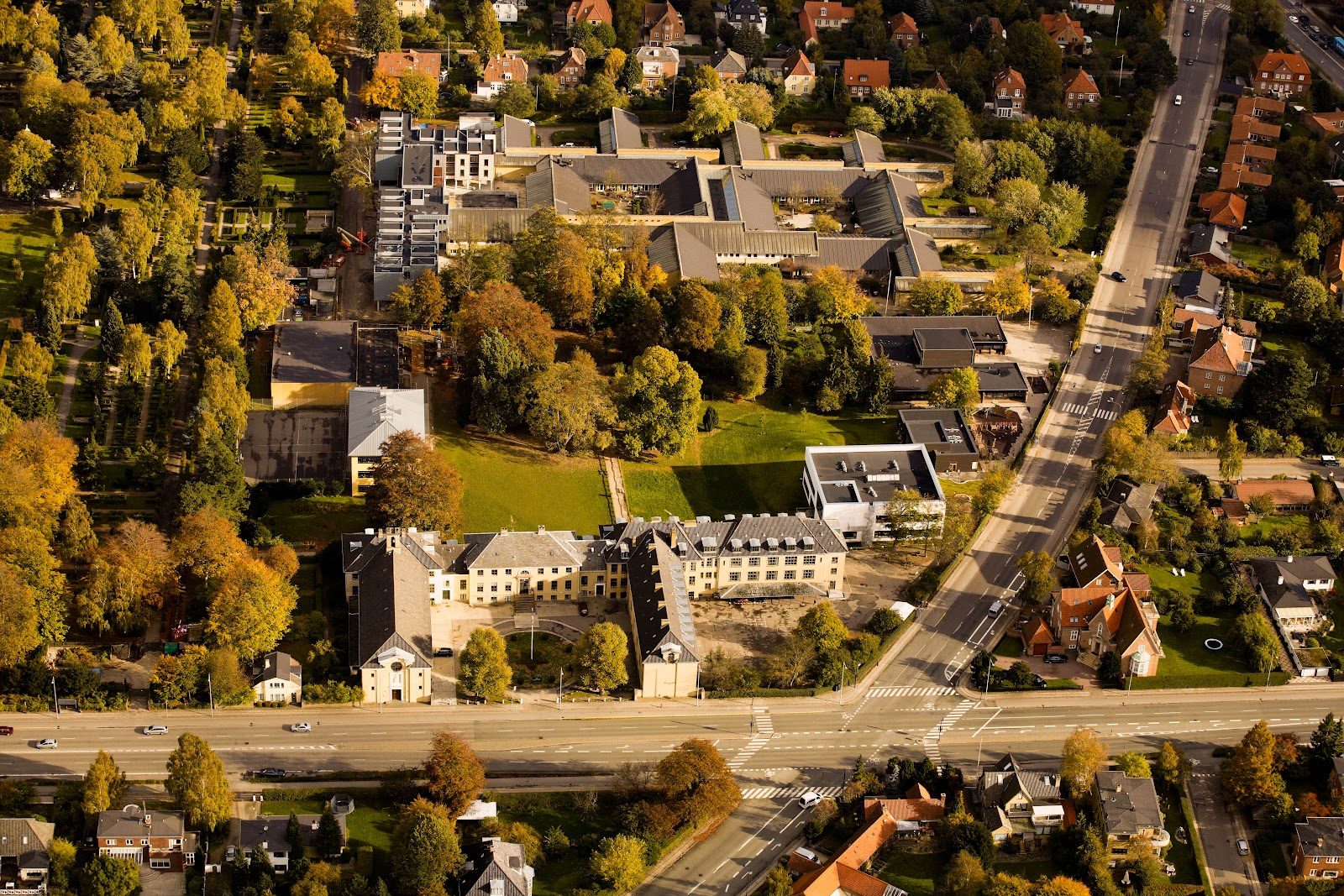
Rygaards International School
Copenhagen · Denmark
Denmark's oldest international school, pairing Catholic roots with the British National Curriculum amid Hellerup's parkland campus.
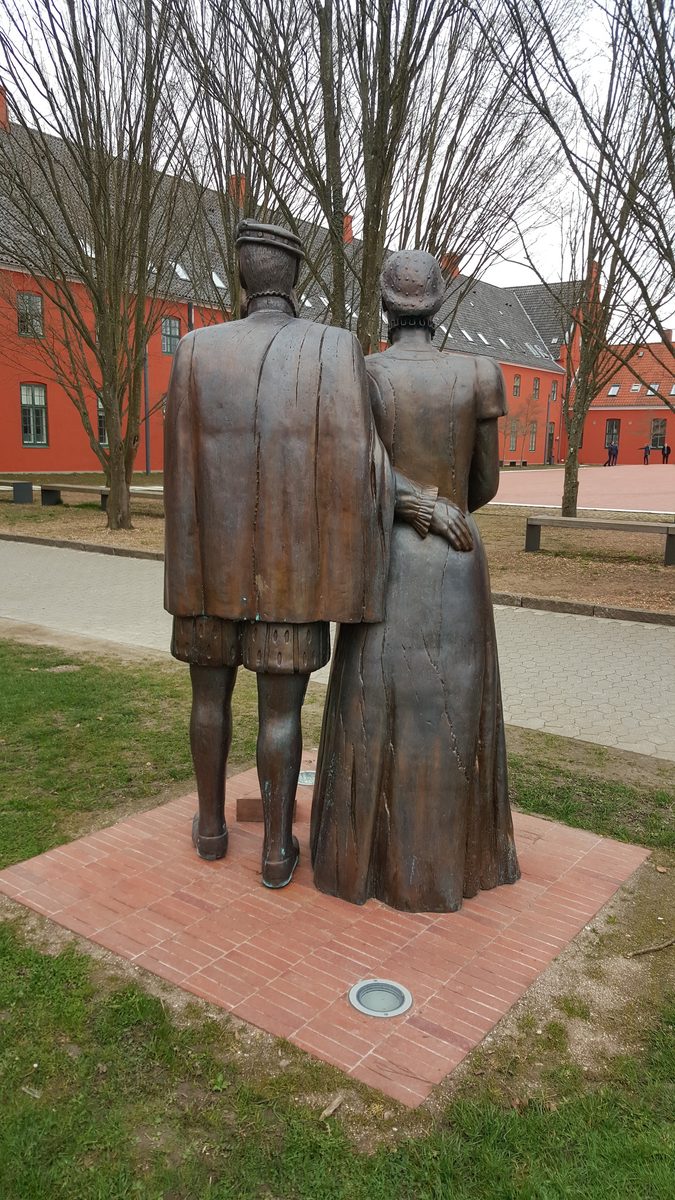
Herlufsholm
Næstved · Denmark
Founded in 1565 on a Benedictine monastery site by the River Susaa, pairing Danish national rigor with an English-taught IB Diploma.
Daystar Academy
Beijing · China
A Chaoyang campus where bilingual immersion tilts from mostly Mandarin to mostly English by senior year, anchored by China's first K-12 social innovation curriculum.
Same country and curriculum — closest matches within ±10 points either way