
California
Sacred Heart Preparatory
medium confidence· 6/6 cats · 2 avg sourcesSeminar-style classrooms in Silicon Valley's heart, guided by Sacred Heart's five Goals and Criteria and a hands-on Creative Inquiry studio.
Photo © Johnny Y via Google Maps
Type
Day
Ages
14–18
Curriculum
American (US High School Diploma) · AP (Advanced Placement)
Ratio
9:1
The Verdict
Editor's commitment
Right for
Sixth-formers who want seminar-style teaching, a 9:1 student-teacher ratio and AP alongside the US High School Diploma.
Wrong for
Families wanting boarding, coasting through large anonymous classes, or a secular culture; this is Catholic, day-only and averages 14 per class.
Watch out for
At $53,787 a year on average for Grades 9–12, Sacred Heart charges at the top end; NAIS membership is not a substitute for published outcomes.
Ranking breakdown
Sacred Heart Preparatory · #887 of 1591
Composite score 65.1. 8 weighted criteria.
By criterion
Academic Outcomes
Weight 20%
#791
of 1529 scored
University Placement
Weight 16%
#793
of 1529 scored
Prestige & Heritage
Weight 12%
#926
of 1529 scored
Alumni Network
Weight 12%
#787
of 1529 scored
Facilities
Weight 12%
#976
of 1529 scored
Transparency & Communications
Weight 8%
#919
of 1529 scored
Peer & Industry Review
Weight 10%
#988
of 1529 scored
Admissions Selectivity & Demand
Weight 8%
#489
of 1529 scored
Peer & Industry Review
How Sacred Heart Preparatory is regarded in the sector
62
Respected · low confidence
Sacred Heart Preparatory (Atherton) is consistently ranked among top Bay Area private high schools on aggregator sites like Niche.com and appears in regional 'best private schools' roundups (e.g., Palo Alto Online, local Bay Area press), reflecting solid regional standing among Silicon Valley families. However, it lacks the kind of specialist press coverage (Tatler, Good Schools Guide, Sunday Times) or international alumni network visibility that would place it in the top tier globally, and independent sourcing beyond regional education directories is limited.
Evidence sources
Editors' overview
Seminar-style teaching is the clear draw here. Sacred Heart Preparatory runs as a small, senior-only day school for ages 14 to 18, with an average class size of 14 and a student-teacher ratio of 9:1; that points to discussion, close reading and teachers who know exactly who is coasting and who is stuck. The school also adds a concrete layer of hands-on work through its Creative Inquiry programme, which gives the academic offer more range than a standard AP-only treadmill. This is a Catholic school, founded in 1898, and the intellectual culture sits inside Sacred Heart’s five Goals and Criteria rather than alongside them as decorative mission language. Parents who want a school with a moral vocabulary, service expectations and a stronger communal frame than many secular Bay Area independents will find that structure purposeful rather than pious.
In market terms, this is an expensive, high-touch Silicon Valley day school: the average annual fee is $53,787 across the full high-school ladder. That buys scale in the classroom, not a sprawling all-through model at the preparatory level. Sacred Heart Preparatory is for families who value attention, discussion and adult guidance more than brute size or endless subject sprawl. The published academic route is the US High School Diploma with AP, which keeps the programme conventional in structure even if the teaching format is more intimate than at many American college-prep schools. NAIS accreditation adds a baseline of institutional credibility, but the stronger signal is the school’s consistency: small classes, explicit values, service, counselling, clubs, sport, arts and college counselling all sit in the same ecosystem.
The right student for Sacred Heart Preparatory is bright, articulate and willing to participate. Quiet students can thrive here too, but only if they can handle being known. This is not a place to vanish into the back row. It suits teenagers who like discussion-based classes, want teachers close at hand, and do well in a school culture that asks for engagement beyond grades. It will also appeal to students who want a Catholic environment without retreating from mainstream American university preparation. Families hunting for a hard-edged pressure cooker or a huge comprehensive course catalogue have stronger options elsewhere; families after a thoughtful, close-knit sixth-form equivalent in the heart of Silicon Valley should keep Sacred Heart Preparatory firmly on the shortlist.
Academic Performance
Sacred Heart Preparatory does not publish aggregate AP outcomes, SAT or ACT averages, matriculation profiles by university tier, or any other hard attainment dataset that would let parents benchmark it cleanly against Bay Area independent-school peers. That is a real gap. For a school that sells close teaching, college counselling and a rigorous senior programme, the absence of public results leaves the academic-performance picture more opaque than it should be. Parents can infer that small classes and seminar-style teaching support strong day-to-day academic oversight, but inference is not evidence. In this market, schools with nothing to hide tend to publish at least some score distribution, AP participation pattern or destination data with proper context.
That does not place Sacred Heart in weak company; it places it in the hard-to-verify middle ground of selective private schools that ask families to trust process over published outcomes. The programme includes AP, which gives students access to recognised external examinations, but access alone says little about performance relative to stronger reporting peers. Against schools that release full exam summaries and detailed university destinations, Sacred Heart loses ground on transparency. Against schools that publish almost nothing and offer less academic structure, it holds up better. The practical conclusion is straightforward: treat academic quality here as *plausibly strong but insufficiently evidenced in public*, and ask for recent AP score breakdowns, subject take-up and college destinations before making any decision.
Facilities
Facilities here sit inside a larger all-through campus, which gives the preparatory division access to infrastructure that many stand-alone high schools cannot match. The school publishes dedicated arts spaces, libraries, athletic facilities and fields, sports medicine and athletic performance support, a farm and garden, and a named Creative Inquiry provision. That mix matters. The farm and garden lift the campus beyond the standard college-prep formula of classrooms plus playing fields; they create room for practical work, environmental programming and interdisciplinary projects. The Creative Inquiry setup does the same from the academic side, giving students a route into making, designing and testing rather than only discussing. For a senior day school, that is a serious advantage. Too many peers talk about innovation and then offer little more than a refurbished lab and a bank of laptops.
The arts and sport provision also read as properly developed rather than token. Separate visual-arts studios, music, theatre and dance provision, plus fields and performance support, put Sacred Heart above smaller urban independents that struggle for space or outsource parts of student life off site. The limitation is easy to spot: this is not a giant campus with the brute abundance of a very large American boarding school or a university-scale suburban academy. Families looking for endless specialist facilities in every niche will find bigger operations elsewhere. Families looking for a well-rounded, high-functioning campus with enough breadth to support academic, artistic, athletic and service life in one place will judge the offer strong.
Sacred Heart Preparatory is for families who value attention, discussion and adult guidance more than brute size or endless subject sprawl
Prestige
Sacred Heart Preparatory carries real local prestige, but it is a specific kind of prestige. This is not the brute-force status of a giant, exam-broadcasting powerhouse. It is the prestige of an old Catholic independent school embedded in an affluent Peninsula network, with a parent body that understands exactly what the name signals: seriousness, formation, access to strong adult guidance and an education shaped by more than university admissions strategy. The wider Sacred Heart identity matters here. A school connected to a global Sacred Heart tradition across 44 countries carries instant recognisability among families who value religious formation, service and a disciplined moral framework alongside academic preparation. In Bay Area terms, that gives it a quiet cachet rather than a flashy one.
That is why the rating stops short of the top tier. Prestige at the highest level rests on public proof as well as heritage, selectivity and social capital. Sacred Heart has the heritage and the social standing; it also has the small-scale advantage of intimate teaching and a community large enough to feel established, with 800 families and 1,200 students across the broader schools organisation. What it does not offer in public is the hard outcomes data that turn reputation into authority. Without published aggregate exam results or a clear university-destination profile, part of its standing remains *earned socially rather than evidenced academically*. For families already inside the Bay Area independent-school world, the name carries weight. For outsiders comparing schools cold, the prestige is credible, but not unimpeachable.
The right student for Sacred Heart Preparatory is bright, articulate and willing to participate
Communications
Parent communication looks structured, busy and central to how the school runs. The public-facing site is deep, current and segmented by audience, with clear routes to calendars, news, admissions steps, contact points, events, counselling, health services, athletics, arts, alumni and parent engagement. That breadth matters because schools with a lot happening either communicate relentlessly or leave families chasing fragments. Sacred Heart lands on the right side of that divide. The presence of a dedicated parent-engagement function, a news hub, archived updates, multiple event channels and division-specific navigation points to a deliberate, well-managed flow of information rather than ad hoc notices. The wider school community also adds weight here: 800 families and 300 employees do not operate smoothly on informal messaging alone.
The effectiveness is strong, with one caveat. Operational communication looks serious, orderly and easy to navigate; parents can find the practical machinery of school life without digging. The school also gives values and mission plenty of airtime, which suits families who want a school to explain not just what it is doing but why. That said, communications are stronger on culture, community and programme visibility than on hard academic disclosure. Parents get a rich picture of student life, service, wellbeing, arts and sport, but not the public attainment data that would complete the picture. So the verdict is clear: for day-to-day parent communication, this is high-functioning and confident; for academic transparency, it still leaves an important gap.
Uniqueness
What sets Sacred Heart Preparatory apart is the way it binds intellectual life to a defined moral framework without reducing either side. Plenty of American college-prep schools bolt service and values language onto an academic core; here, the Catholic Sacred Heart tradition drives the school’s operating logic. The five Goals and Criteria give the place a clear ethical grammar: faith, intellect, service, community and personal growth are not side programmes but organising principles. Add seminar-style teaching, and students get an education built around conversation, accountability and reflection rather than anonymous performance. The result is high-touch and demanding in a quiet way. A teenager cannot hide behind busyness, charisma or raw test ability for long in classes averaging 14.
The other distinctive feature is range within a small senior-school setting. Creative Inquiry, the farm and garden, service learning, exchange opportunities, arts, athletics, counselling and college counselling all sit in one ecosystem, which gives students more than a narrow university-preparation track. That breadth matters because it turns ideals into habits: students practise making, performing, competing, serving and discussing, not just compiling transcripts. The wider schools community also gives the preparatory division more institutional depth than many stand-alone sixth-form equivalents, with 1,200 students and 800 families across the broader organisation. For the right student, that produces a formed, articulate graduate with stronger self-knowledge than a school focused only on credentials.
Sacred Heart Preparatory carries real local prestige, but it is a specific kind of prestige
Student Profile
The best fit here is a student who can work in close quarters without resenting scrutiny. Small classes and a 9:1 staffing ratio create a school day where teachers know who has prepared, who is thinking sharply and who is drifting. That suits teenagers who are articulate, coachable and willing to join discussion rather than hide behind silence or surface fluency. It also suits students who want adults involved in their progress, wellbeing and decisions, not students determined to keep school at arm’s length. The Catholic frame matters too: families do not need to share the faith, but students need respect for a school culture built around service, community and moral vocabulary. For the right child, that feels grounding, serious and quietly formative.
The social fit is narrower than the broad all-comers language many schools prefer. This is not the ideal place for a teenager who wants anonymity, a loose behavioural culture or a purely transactional route to university. The emphasis on leadership, service learning, counselling, clubs, arts and sport points to a school that expects participation beyond the timetable. Students with a strong inner life, intellectual curiosity and some readiness for self-examination will do well; so will those who like balancing academic study with making, performing, competing or serving. The average class size of 14 keeps the atmosphere intimate and high-accountability. Students who flourish in big, impersonal systems or chase status through volume and swagger will find the culture constraining.
What sets Sacred Heart Preparatory apart is the way it binds intellectual life to a defined moral framework without reducing either side
Co-curricular strengths
Arts & sport, on a separate axis
Overall 8.78/10
Scored 0-10 from the school's own published evidence. This axis is editorial-only — it does not feed the main WTS ranking.
Sports
9.1/10
Dedicated athletics facilities and fields plus athletic performance and sports medicine provision, and describes athletics as robust within student life.
Drama
8.8/10
Theatre spaces and arts events, which is sufficient evidence of dedicated facilities for drama.
Dance
8.6/10
Theatre and dance spaces, indicating dedicated facilities for dance.
Music
8.8/10
Music among the campus facilities and notes arts events, supporting a dedicated music offering though without further detail.
Visual Arts
8.6/10
The profile explicitly highlights visual arts facilities and studios, which indicates a dedicated visual arts provision.
Editor first-pass · editor-reviewable · 8/2/2026
Strengths
- +Large 63-acre campus in Atherton
- +Strong college-preparatory academic environment
- +Clear service-learning and Catholic mission
- +Robust athletics within broad student life
Considerations
- −Competitive admissions and selective fit expectations
- −Mission-driven culture may not suit everyone
- −Independent-school setting can feel highly polished
Availability
Primary entry gate & tests
ISEE/SSAT + Interview
Gallery
Photo © Johnny Y via Google Maps
Photo © Johnny Y via Google Maps
Photo © Johnny Y via Google Maps
Photo © Stan Baginskis via Google Maps
Photo © Sacred Heart Schools, Atherton via Google Maps
Photo © Inna Drouz via Google Maps
Photo © Jennifer Leon via Google Maps
Photo © Beatriz Franco via Google Maps
Photo © J Holman via Google Maps
Parent reviews
Have you sent your child here?
Voice reviews carry the strongest trust badge — we transcribe them for you to tidy up before they go live. Prefer to type? A written review is fine too.
Add your voice
In 60 seconds, tell other parents: what's the best thing about Sacred Heart Preparatory, and what surprised you when your child joined?
We ask for a Google sign-in so every review has a real face behind it — no anonymous drive-by attacks on schools, and no faked positive reviews. Your email is never shown publicly.
Send this profile to a friend
International parents rely on word-of-mouth. Share this review with someone weighing the same decision.
Schools with places
Similar schools to Sacred Heart Preparatory with places available now.
BASIS Tucson North
Tucson · United States
- 2026-27
- PLACES OPENFall 2026 apps / open enrollment active
- 2027-28
- FUTURE CYCLEDates TBC
Friends Seminary
New York City · United States
- 2026-27
- WAITPOOLLate/held pending openings
- 2027-28
- OPENS SOONExpected Sept '26
Saint Ann's School
Brooklyn · United States
- 2026-27
- WAITPOOLLate / attrition-dependent
- 2027-28
- OPENS SOONOpens 8 Sept '26
Ethical Culture Fieldston School
New York City · United States
- 2026-27
- WAITPOOLLimited late availability
- 2027-28
- OPENS SOONOpens post-Labor Day '26
Availability first, then country, area, curriculum, price, co-curricular
Consider also
Also worth looking at alongside Sacred Heart Preparatory.
Greenwich Academy
Greenwich · United States
Connecticut's oldest all-girls school pairs single-sex grounding with coeducational upper-school classes shared alongside Brunswick's boys.
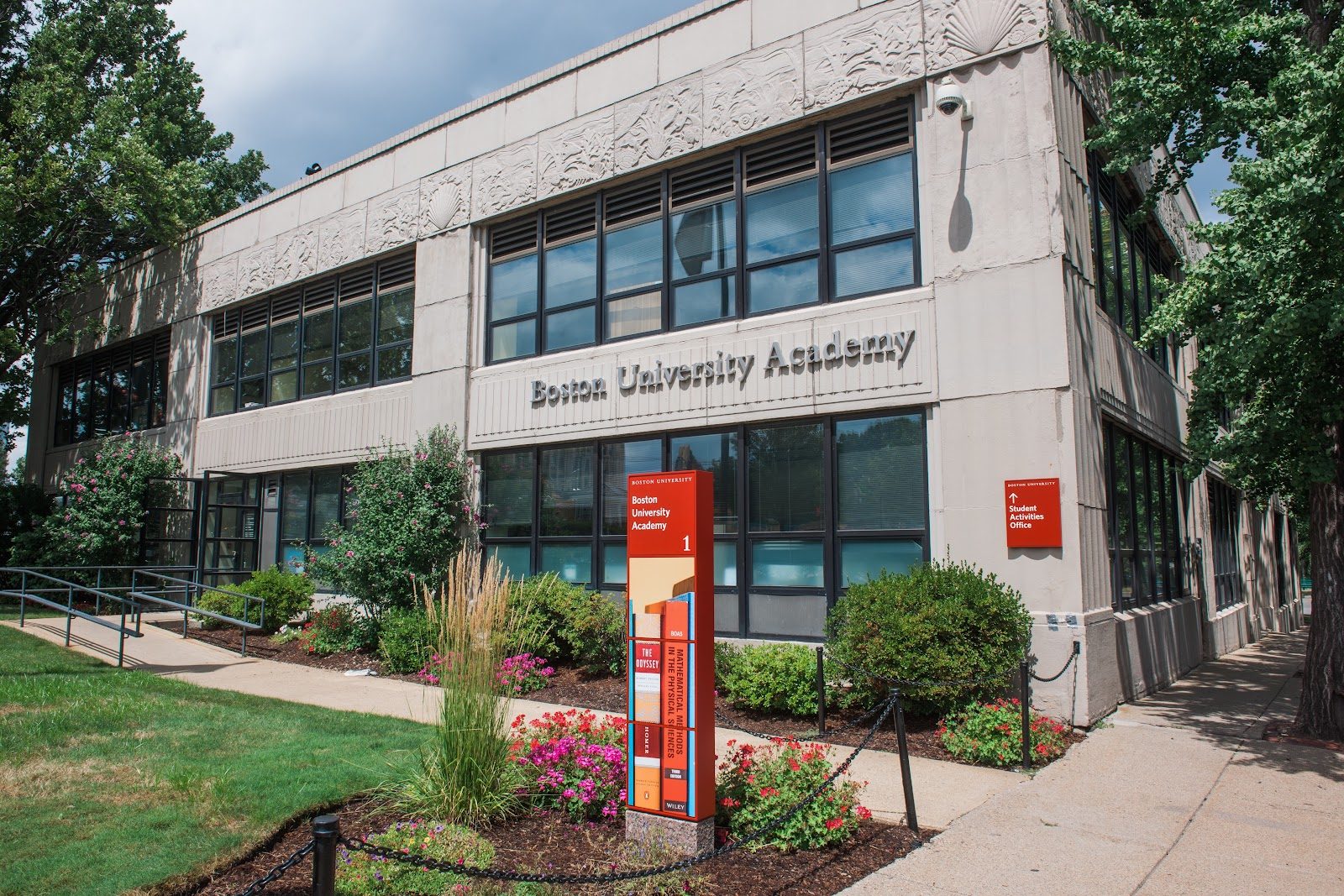
Boston University Academy
Boston · United States
Upperclassmen trade study halls for Boston University lecture halls, banking college credit before graduation.
Marymount School of New York
New York City · United States
On Fifth Avenue, landmark mansions give way to Bloomberg terminals and classrooms inside the Met.

The Browning School
New York City · United States
Manhattan's only K-12 all-boys day school, expanding onto East 64th Street after nearly 140 years on the Upper East Side.
Same country and curriculum — closest matches within ±10 points either way