
Dubai
Safa British School
medium confidence· 4/6 cats · 3.18 avg sourcesIndependently owned in Jumeirah, where KHDA rates leadership, inclusion and curriculum design Outstanding despite the Very Good headline.
Photo © Safa British School via Google Maps
Type
Day
Ages
3–18
Curriculum
British
Qualifications
A-Level · IGCSE
Ratio
12:1
The Verdict
Editor's commitment
Right for
Jumeirah families wanting a British all-through school from FS1 to Year 13, with KHDA Outstanding leadership, inclusion and curriculum design.
Wrong for
Parents who equate a Very Good KHDA headline with mediocrity, or want published A-level outcomes rather than broad Sixth Form messaging.
Watch out for
Founded in 2014 and day-only, Safa sells a polished campus and BSO Outstanding badge; test substance through GCSE 2024 detail.
Ranking breakdown
Safa British School · #451 of 1591
Composite score 69.7. 8 weighted criteria.
By criterion
Academic Outcomes
Weight 20%
#294
of 1529 scored
University Placement
Weight 16%
#398
of 1529 scored
Prestige & Heritage
Weight 12%
#854
of 1571 scored
Alumni Network
Weight 12%
#761
of 1530 scored
Facilities
Weight 12%
#177
of 1533 scored
Transparency & Communications
Weight 8%
#254
of 1532 scored
Peer & Industry Review
Weight 10%
#533
of 1548 scored
Admissions Selectivity & Demand
Weight 8%
#1123
of 1529 scored
Score history
Safa British School · 2026
Movement across 2024–2026. Peer average overlaid.
Overall — 2024–2026
69.7/ 100
▲ +28.8 vs 2025
year on year
Peer & Industry Review
How Safa British School is regarded in the sector
78
Strong · high confidence
Safa British School has emerged as one of Jumeirah's most consistently praised British curriculum schools, with SchoolsCompared calling it "one of very few schools in the UAE that we recommend without qualification" and noting it "ranks in the top British Schools in Dubai year after year." The regulatory record backs the sentiment: a Very Good KHDA rating held across successive cycles sits alongside an Outstanding grading from British Schools Overseas, a combination WhichSchoolAdvisor flags as evidence of a genuinely progress-driven, well-led institution under Principal Brian Horwell. Its rapid growth into a 1,700-student all-through school, record GCSE and BTEC results in 2025, and status as the first school outside the UK to win the SMSC Quality Mark have all drawn sustained sector press coverage. The main caveat is that its all-through offering is still young, with the first Year 13 cohort only graduating in 2026, so its alumni network and long-run academic track record remain in the building phase.
Editors' overview
Safa British School occupies a strong niche in Dubai’s crowded British-school market: an all-through, non-selective day school in Jumeirah with the scale to offer breadth, but not the sprawl that turns children into admin problems. It teaches the British curriculum from age 3 to 18, runs a dedicated sixth form, and enrols more than 1,600 students from over 80 nationalities. The headline KHDA judgement sits at Very Good, but the sharper detail matters more: leadership, inclusion and curriculum design have all been rated Outstanding, as have wellbeing and inclusion in the school’s own published claims. That combination gives Safa a clear identity. This is not a legacy-name Dubai giant selling cachet; it is a school that wins parents through delivery, organisation and a campus that feels thought through rather than improvised.
What marks Safa out is the blend of pastoral competence and physical environment. The move to a new campus in 2020 gave it a more modern operating base, and the school pushes that advantage hard: enhanced outdoor play, a dedicated sixth form area, a parent café, and more than 60+ ECAs. The published 12:1 student-teacher ratio strengthens the case for families who want access to teachers, not just polished branding. Early years has a distinct pitch through child-led learning and the Curiosity Approach, while older students get a full through-school pathway without the disruption of changing schools at Year 7 or Year 12. The school also advertises 2024 GCSE success, but without aggregate score data in the public domain, parents should treat that as a prompt to ask harder questions about attainment at the top end.
Why shortlist it? Because Safa offers something many Dubai schools promise and fewer execute: serious attention to inclusion, calm operational clarity, and a school day built for families who want structure without stiffness. It has enough size to run an extensive curriculum and broad activities programme, but the messaging stays anchored in student experience rather than prestige theatre. Parents who value warm culture, easy communication, outdoor space and a coherent all-through British education will find a lot to like here. Families hunting for an aggressively academic, exam-data-heavy, ultra-selective environment may prefer a different tier of school. Families who want a grounded, well-run school with strong pastoral infrastructure should keep Safa high on the list.
The student who fits Safa best is one who will use the school’s range: the child who likes sport, outdoor learning, clubs, leadership roles and a busy school life beyond lessons. It also suits students who benefit from close adult oversight and a school that takes inclusion seriously rather than treating it as a compliance box. For younger children, the appeal lies in play, routine and space; for older ones, in continuity through to sixth form on one campus. Safa is for families who want confidence without flash: a British school in Jumeirah that has built its reputation on the daily substance of school life.
Academic Performance
Safa British School advertises strong GCSE performance and gives that message prominent billing, but the public data stops there. We have seen a headline claim that students “excelled” in the latest GCSE sitting; we have not seen the aggregate grade profile, top-grade share, pass-rate breakdown, cohort size, or subject-by-subject distribution that would let parents place that result against Dubai’s stronger British-school field. There is no published run of A level or equivalent sixth-form outcomes in the source set either. That leaves academic performance partly visible, partly opaque — enough to indicate confidence, not enough to verify top-tier exam strength.
Relative to peers, that matters. In Dubai, the schools that sit at the sharp end of the British market publish hard numbers and publish them consistently: headline GCSE grades, A*/A or 9–7 proportions, destination data, and trend lines over time. Safa does not do that here. The school’s external validation is stronger on inspection than on exam disclosure: the British Schools Overseas judgement is clear and impressive, and the KHDA profile cited elsewhere points to serious institutional competence. That combination supports trust in teaching quality and school leadership. It does not settle the narrower question of elite academic outcomes. Parents considering Safa for an exam-driven child should ask for the last 3 years of GCSE and sixth-form results, full distributions, and university destinations before treating it as a proven high-attainment school.
Facilities
The campus is one of Safa British School’s strongest assets. The move to a new site gave it the kind of physical coherence many Dubai schools still lack: spaces planned for how children actually move through the day, not a patchwork of later additions. The most important features are the serious outdoor provision, the dedicated sixth form area, and the breadth built around activity rather than display. For younger children, the emphasis on enhanced outdoor play matters; in a market where early years outdoor space can feel tokenistic, Safa gives it real weight. For older students, the sixth form has its own identity instead of being squeezed into spare classrooms. Add a parent café and more than 60+ activities, and the school reads as operationally mature rather than showroom polished.
Against peers, that puts Safa in a strong middle ground. It does not trade on the spectacle facilities of Dubai’s biggest premium campuses, with their theatre-grade performance spaces or headline sports complexes advertised as destination assets in their own right. Nor does it feel under-resourced. The published student-teacher ratio of 12:1 reinforces the sense that facilities remain usable rather than overcrowded. The best comparison is with schools that win families on day-to-day functionality: enough specialist space, enough outdoor room, enough extracurricular breadth, and a campus that supports a full school life without fraying at the edges. Parents chasing flashy excess will find grander builds elsewhere. Parents who want a campus that works hard for children will rate Safa highly.
Safa British School advertises strong GCSE performance and gives that message prominent billing, but the public data stops there
Prestige
Safa British School sits in Dubai’s upper-middle prestige band: well regarded, in demand, and credible with discerning local parents, but not a status trophy in the mould of the city’s legacy-name British brands. Its reputation rests on execution, not inherited cachet. The strongest prestige markers here are institutional rather than social: an Outstanding British Schools Overseas judgement, KHDA recognition for leadership, inclusion and curriculum design, and a school culture that puts organisation and student support ahead of glossy mythology. For many families, that carries more weight than old-brand aura. For others, it does not. If a parent wants a school name that signals exclusivity at the valet stand, Safa is not that school.
Why rate it this way? Because the school has built earned respect through substance that parents can test: a modern campus, a visible sixth form, more than 60+ activities, and a published student body of over 1,600. That gives it presence and operational seriousness. The weakness in prestige terms is public academic signalling. The school promotes GCSE success, but it does not publish the hard outcome data that top-rank prestige schools use to prove academic dominance. That gap matters. In this market, true top-tier prestige rests on a mix of inspection strength, exam transparency, university destinations and brand history. Safa clears the first test comfortably, does enough on breadth and environment, and falls short on the last three. The result is solid reputational capital, not untouchable elite standing.
Safa British School communicates in a clear, parent-facing way, with the practical basics easy to find and organised around action
Communications
Safa British School communicates in a clear, parent-facing way, with the practical basics easy to find and organised around action. The website gives direct routes to fees, term dates, timings, transport, uniforms, online enrolment and tours, which tells parents something useful about the school’s habits: it understands that communication starts with logistics, not rhetoric. The daily timetable is published in granular detail across age groups and across the shortened Friday, and that level of operational clarity matters for working families. The parent portal is signposted prominently, and the school has built visible touchpoints around access, including a parent café and ready-made channels for visits and applications. There is none of the needlessly elusive navigation that weaker schools use to bury practical information.
The weakness is not day-to-day communication but academic disclosure. Safa is confident when promoting inspection success, inclusion, wellbeing and GCSE headlines; it is less convincing when parents need the hard outcome data behind those claims. “Students excel” is publicity, not reporting. We have not seen the full exam distributions or destination detail that would turn marketing into evidence. That leaves the communications picture strong on usability, warm in tone, and incomplete where scrutiny matters most. Parent testimonials add colour, but they do not replace data. The overall verdict: effective for current-family operations, admissions and school-life visibility; less effective for hard-nosed parents comparing academic performance across Dubai’s stronger British schools.
Uniqueness
What makes Safa distinctive in Dubai’s British-school market is not a single prestige hook but a well-integrated operating model. The school combines an all-through structure with a campus built for continuity, then adds a strand of early-years practice that gives the lower end of the school a real identity rather than a generic prep-school start. The Curiosity Approach and child-led learning matter here because they set a tone: younger children get a more exploratory, less conveyor-belt experience, with outdoor play treated as part of the educational day rather than decorative packaging. At the other end, the school has a dedicated sixth form area and promotes university preparation as a defined pathway. That cradle-to-leaver span, on one site, gives students a stable through-line and spares families the disruption of moving schools at major transition points.
The other point of difference is the school’s emphasis on inclusion and daily student life. Plenty of schools claim warmth; fewer build it into staffing, leadership and the shape of the week. Safa’s low published staffing ratio, broad activity menu and student body drawn from over 80 nationalities create a school where access matters more than social theatre. The benefit for students is concrete: more adult attention, more chances to join in, and a school culture that supports children who need close guidance as much as those who thrive on independence. This is not a hothouse academic machine. It is a confidently pastoral, broadly capable school that gives students room to grow without letting them drift.
That leaves academic performance partly visible, partly opaque — enough to indicate confidence, not enough to verify top-tier exam strength
Student Profile
Safa British School suits families who want a child to be known well, kept busy and held to clear routines without being pushed through a bruising academic culture. The student body is unusually mixed, with more than 80 nationalities, so this is a comfortable setting for internationally mobile families and children used to diversity rather than tight local cliques. It will also work for students who gain confidence from participation: the sporty child, the club-joiner, the pupil who wants leadership roles, performances, trips and a full school week beyond lessons. With more than 60+ activities and a published staffing ratio of 12:1, the school has the structure to keep students engaged rather than anonymous.
The best fit is a child who benefits from strong pastoral scaffolding and teachers who notice when something is off. Safa is also a good match for students who need inclusion taken seriously in daily practice, not left as admissions rhetoric. Younger children who thrive in outdoor play and child-led early learning fit naturally here; older students who want continuity through to sixth form, without a disruptive school change mid-journey, also fit the model. The weaker fit is the student chasing a hothouse, status-heavy, exam-obsessed peer culture. Safa serves children who want breadth, encouragement and steady adult oversight better than those hunting for social exclusivity or a relentless competitive edge.
The school promotes GCSE success, but it does not publish the hard outcome data that top-rank prestige schools use to prove academic dominance
Co-curricular strengths
Arts & sport, on a separate axis
Overall 7.92/10
Scored 0-10 from the school's own published evidence. This axis is editorial-only — it does not feed the main WTS ranking.
Sports
7.8/10
The extracurriculars explicitly list multiple sports—Football, Basketball, Swimming, Netball, Cricket and Athletics—showing a solid multi-activity sports offering.
Drama
8.3/10
Drama appears explicitly in the extracurriculars list.
Dance
7.5/10
Dance appears explicitly in the extracurriculars list.
Music
8/10
Choir, which is specific evidence of music provision.
Visual Arts
8/10
Art Club is offered, indicating visible visual-arts participation, but there is no evidence of dedicated studios, specialist staff or exhibitions.
Editor first-pass · editor-reviewable · 7/27/2026
Strengths
- +The school holds an Outstanding rating from the British Schools Overseas inspectorate (awarded in 2022 and retained in the 2025 report), confirming alignment with UK educational standards.
- +KHDA rates the school Very good overall, with wellbeing and inclusion rated Outstanding.
- +Inclusion provision is extensive and tiered, with a dedicated Bridge Learning Centre for Primary and Horizon Learning Centre for Secondary serving pupils with complex needs alongside mainstream SEND support.
- +More than 60 extracurricular activities are included free within tuition, spanning sport, performing arts and academic enrichment rather than being charged separately.
- +Annual fees run from roughly AED 45,000 to AED 74,000, positioning the school below Dubai's top-tier British schools.
- +The school publishes its first full cohort 2024 GCSE results in detail, with 63% of grades at A*-A / 9-7 and reported value-added of 1.9 grades above CAT expectations.
Considerations
- −Sixth Form provision is young: the 2024 GCSE cohort was the first full year group, and there is no published A-Level or BTEC Level 3 outcome record yet compared with longer-established all-through schools.
- −The overall KHDA classification remains Very good rather than Outstanding, so the regulator's headline rating trails the school's BSO designation and its own Outstanding sub-indicators.
- −Entry is not automatic: children from Year 1 upward sit placement assessments (computerised tests plus, where possible, interviews), and popular year groups can carry waiting lists filled first-come, first-served.
- −With roughly 1,600 pupils across more than 80 nationalities on a single Al Safa campus, the school operates at a scale that is not a small, boutique setting.
Availability
Primary entry gate & tests
Age-appropriate placement / baseline test
Gallery
Photo © Safa British School via Google Maps
Photo © Safa British School via Google Maps
Photo © Safa British School via Google Maps
Photo © Safa British School via Google Maps
Photo © Safa British School via Google Maps
Recommended reading
Independent write-ups of this school from editorial outlets we trust.
- Safa British School ReviewWhichSchoolAdvisor
- Safa British School — review on SchoolsComparedSchoolsCompared
Parent reviews
Have you sent your child here?
Voice reviews carry the strongest trust badge — we transcribe them for you to tidy up before they go live. Prefer to type? A written review is fine too.
Add your voice
In 60 seconds, tell other parents: what's the best thing about Safa British School, and what surprised you when your child joined?
We ask for a Google sign-in so every review has a real face behind it — no anonymous drive-by attacks on schools, and no faked positive reviews. Your email is never shown publicly.
Send this profile to a friend
International parents rely on word-of-mouth. Share this review with someone weighing the same decision.
Schools with places
Similar schools to Safa British School with places available now.
Kings' School Al Barsha
Dubai · United Arab Emirates
- 2026-27
- PLACES OPENApps open / space-dependent
- 2027-28
- PLACES OPENSpace-dependent
Hartland International School
Dubai · United Arab Emirates
- 2026-27
- WAITPOOLSpace-dependent
- 2027-28
- OPENS SOONOpens Sept '26
Dubai British School Emirates Hills
Dubai · United Arab Emirates
- 2026-27
- PLACES OPENApps open / space-dependent
- 2027-28
- WAITPOOL2027/28 timetable TBC
Repton School Dubai
Dubai · United Arab Emirates
- 2026-27
- PLACES OPENApps open / space-dependent
- 2027-28
- PLACES OPENRolling
Availability first, then country, area, curriculum, price, co-curricular
Consider also
Also worth looking at alongside Safa British School.
Kings' School Al Barsha
Dubai · United Arab Emirates
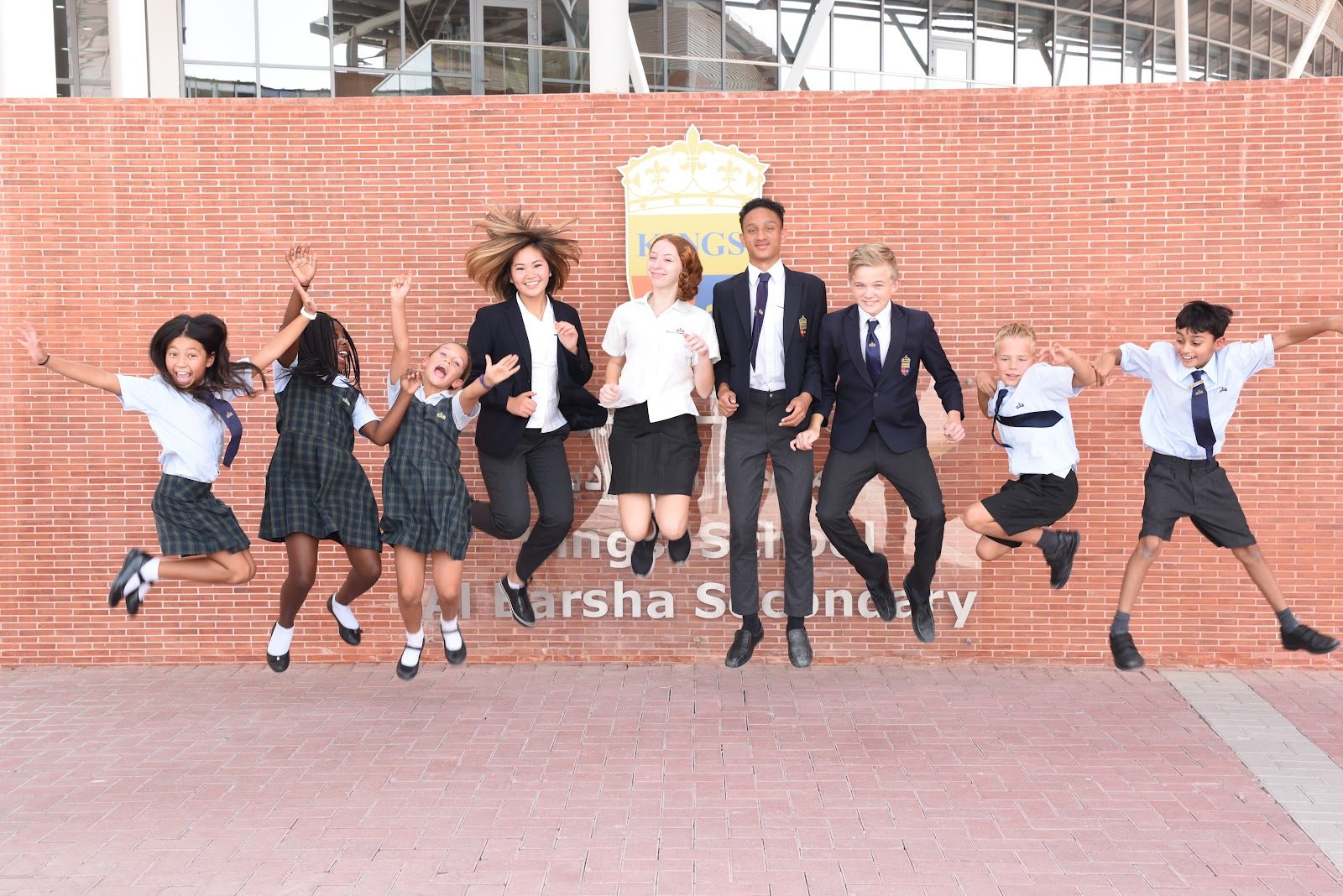
A red-brick, doughnut-shaped campus in Al Barsha climbed from Good to Outstanding across four KHDA inspections.
Hartland International School
Dubai · United Arab Emirates
Ten minutes from the Burj Khalifa, where maths and physics classes study the skyline as their textbook
Repton Abu Dhabi
Abu Dhabi · United Arab Emirates
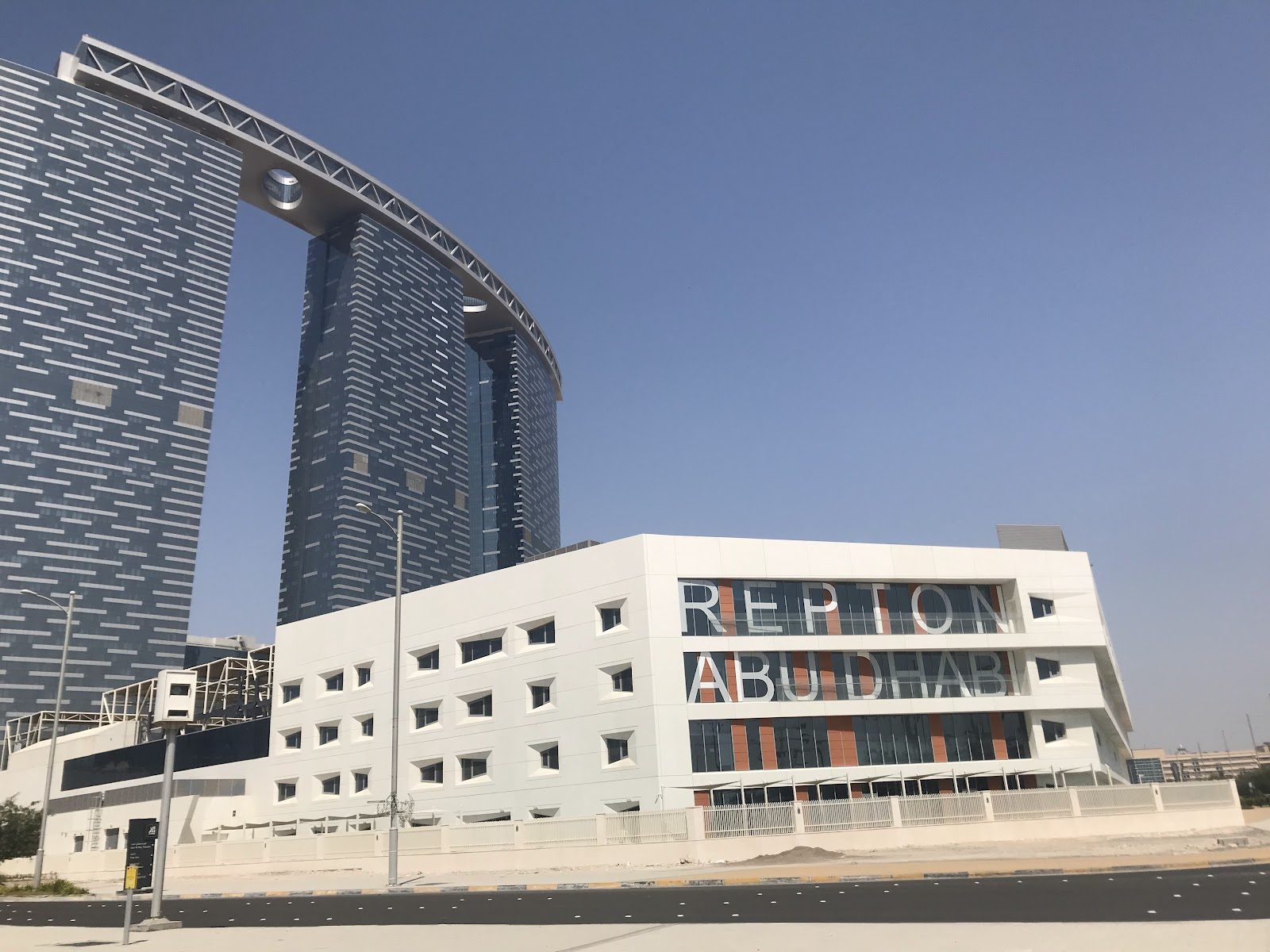
A 450-year Derbyshire house tradition roots this Reem Island campus, where inter-house rivalry shapes a British curriculum education.
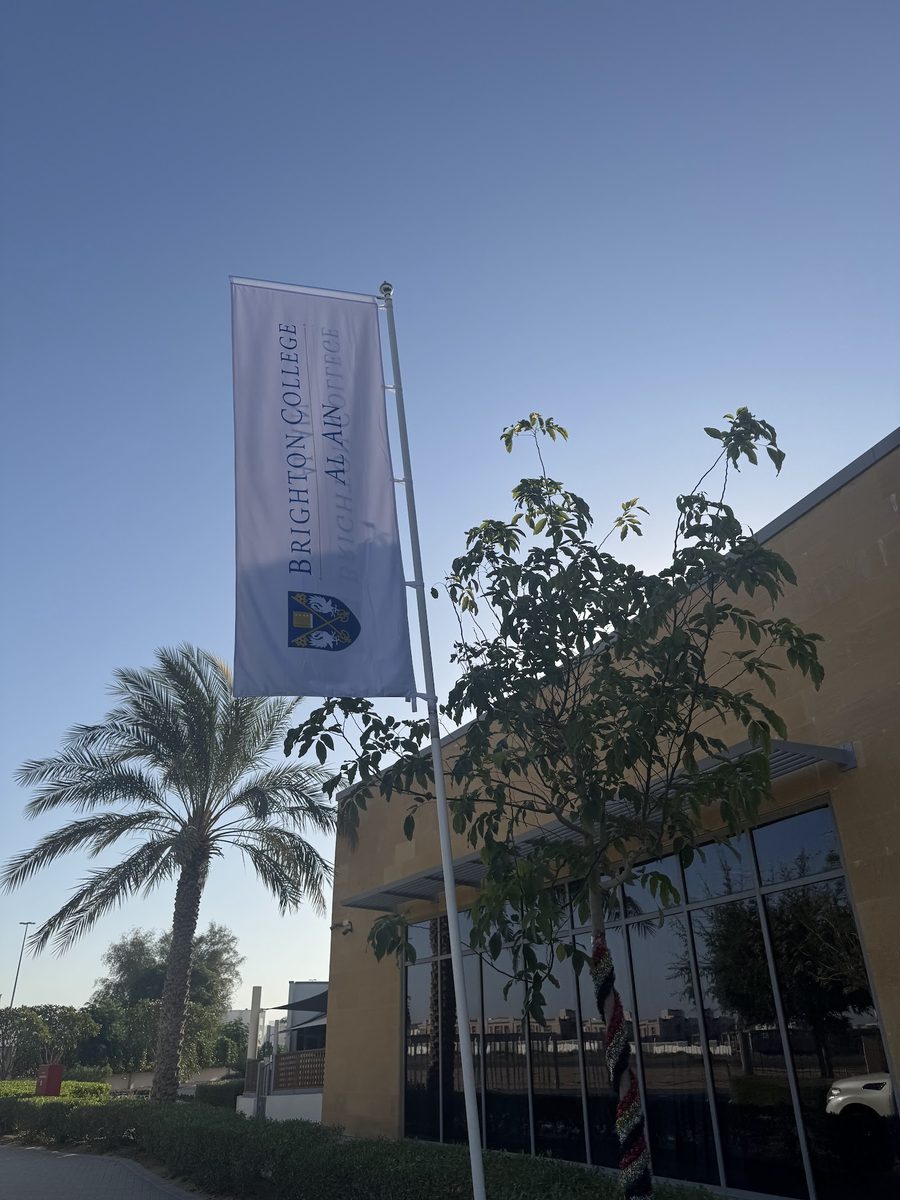
Brighton College Al Ain
Al Ain · United Arab Emirates
Sister school to England's Sunday Times School of the Decade, sending 59% of 2025 A-Level leavers into Russell Group universities.
Same country and curriculum — closest matches within ±10 points either way