
Surrey
St John’s School
low confidence· 2/6 cats · 2 avg sourcesA Surrey clergy foundation since 1851 built around a house system pupils call 'the best thing', paired with the country's most flexible boarding model.
Type
Both
Ages
11–18
Curriculum
British
Qualifications
A-Level · GCSE
Ratio
—
The Verdict
Editor's commitment
Right for
Families wanting an Anglican 11–18 British school in Leatherhead, with the house system and flexible boarding at the centre.
Wrong for
Parents who want a secular school, a non-British curriculum, or a pure day-school setup without boarding in the mix.
Watch out for
Average annual day fees run to £32,000, and the school does not publish headline academic results in the public domain here.
Ranking breakdown
St John’s School · #976 of 1591
Composite score 60.9. 8 weighted criteria.
By criterion
Academic Outcomes
Weight 20%
#745
of 1529 scored
University Placement
Weight 16%
#736
of 1529 scored
Prestige & Heritage
Weight 12%
#597
of 1571 scored
Alumni Network
Weight 12%
#1315
of 1530 scored
Facilities
Weight 12%
#654
of 1534 scored
Transparency & Communications
Weight 8%
#685
of 1532 scored
Peer & Industry Review
Weight 10%
#791
of 1548 scored
Admissions Selectivity & Demand
Weight 8%
#686
of 1529 scored
Peer & Industry Review
How St John’s School is regarded in the sector
67
Respected · medium confidence
St John's sits in the second tier of Surrey's crowded independent school market, respected as a solid HMC member but overshadowed regionally by Epsom College, Cranleigh and Charterhouse. Good Schools Guide and Tatler Schools Guide both profile it favourably, praising its STEM specialism and pastoral care, though neither ranks it among the county's 'super-selective' names. National league tables (Times/Telegraph A-level and GCSE listings) place it mid-pack for Surrey day/boarding schools rather than top-20 nationally. University destinations lean heavily Russell Group (Surrey, Bristol, Nottingham, Exeter, King's College London), with a small but steady Oxbridge trickle rather than a flagship pipeline, which admissions commentary attributes to its broad, non-hyper-selective intake. Independent education press coverage is largely local/regional (Surrey Advertiser, ISC circulars) rather than national feature pieces. Its HMC and Round Square memberships give it credibility in head-teacher networking circles, and it is a recognised presence at Surrey heads' conferences, but it is described by peers as a 'good, improving school' rather than a nationally benchmarked academic powerhouse.
- Mark Damazer — Broadcasting executive, Former Controller of BBC Radio 4
- Ian Curteis — Screenwriter, Television drama
- Robert Adley — Politician, Member of Parliament
Editors' overview
What marks out St John’s School in Leatherhead is not a flashy academic claim or a specialist niche, but two structural strengths that matter in family life: a deeply embedded house system and a boarding model the school itself treats as central. In a crowded British independent market, that combination gives St John’s a clearer identity than many competitors. The school is Anglican, co-educational, takes pupils from 11 to 18, and has been in place since 1851; that long clerical foundation still reads in the culture, but the more practical attraction for modern parents is social architecture. Houses are not an add-on here. The school calls them a “beating heart”, and pupils reportedly call the house system “the best thing”. That matters because a house system, when it is more than branding, can hold together day pupils and boarders, younger pupils and sixth formers, and children who need a quicker route into belonging.
The other shortlist point is boarding. St John’s itself foregrounds a “flexible boarding philosophy”, and that phrase is doing real work. For families who want the resources and rhythm of a boarding school without committing to a rigid full-boarding model, this is a serious advantage. It widens the pool: local families who want occasional structure, international families who need continuity, and teenagers who want independence without disappearing into an impersonal boarding machine. The school runs on a British curriculum, teaches in English, and holds ISI and HMC accreditation, which places it squarely in the established independent-school mainstream rather than at the experimental edge. The average annual day fee across the school is £31,582, expensive but not at the very top of the Surrey market.
The pupil who will want St John’s is not hunting for a hard-edged hot-house or a school built around relentless public examination theatre. This is a better fit for a child who wants a full boarding-or-day school experience: strong peer life, visible pastoral scaffolding, clubs and societies, sport, performing and creative arts, and a school culture that prizes resilience and participation as much as grades. Children who thrive in institutions with ritual, identity and cross-year loyalty will get more from it than pupils who want anonymity. Parents should shortlist St John’s if they want an all-rounder senior school with real social glue, a genuinely flexible boarding offer, and a culture that reads warm rather than showy. The trade-off is clear too: families seeking published hard-edged outcome data will find the public case less detailed than the pastoral one.
Academic Performance
St John’s puts academic success front and centre in its news flow, with public celebration of both GCSE and A level outcomes and explicit attention to destinations beyond school, from Oxford to apprenticeships. That tells you something important about the school’s academic posture: it wants to be taken seriously on results, but it does not publish the aggregate numbers a hard-nosed parent would use to place it precisely against Surrey’s most exam-driven independents. We have not seen headline breakdowns such as the share of top grades at A level or GCSE, subject-level strength, value-added measures, or university destination tables. That leaves the academic case less transparent than the pastoral one. In a competitive peer set, opacity is a weakness.
That does not make St John’s academically weak; it makes it harder to benchmark. The public emphasis on “outstanding” results signals confidence, and schools do not push exam stories this prominently if outcomes are poor. Still, confidence is not data. Relative to the county’s results-first operators, St John’s sits in a more all-rounder bracket unless and until it publishes fuller evidence. Parents who want a school where academics sit inside a broad institutional life, rather than a single-minded examination machine, will not mind that balance. Parents who compare schools by published A level and GCSE grade profiles will find the current picture too thin.
Facilities
St John’s does not sell itself on a single marquee facility; it sells range. The public map of school life points to the essentials families expect in this bracket: dedicated provision for sport, performing arts, creative arts, learning resources, health and wellbeing, and boarding life, all tied into a full senior-school day rather than treated as decorative add-ons. That breadth matters. At weaker all-rounder independents, one or two departments carry the load while the rest trail behind. Here, the structure reads properly full-service. The school also offers lettings and venue hire, a small but useful signal that parts of the estate are substantial enough to function beyond timetabled lessons. For a school whose identity rests on belonging and participation, that breadth of usable space is more important than a single showpiece building.
Against Surrey and south-west London peers, the facilities case is strong but not swaggering. We have not seen the kind of publicly itemised capital-project language that top-fee rivals use to advertise theatres, elite indoor sports complexes or specialist sixth-form centres. Parents who want architectural spectacle or a campus built to impress on first glance will find louder options elsewhere. Parents who want a school where facilities support daily life across houses, clubs, rehearsals, matches and study will find a more grounded proposition here. In market terms, St John’s sits above schools with thin co-curricular infrastructure and below the sector’s arms-race campuses. For many families, that is the sensible middle.
The average annual day fee across the school is £31,582, expensive but not at the very top of the Surrey market
Prestige
St John’s carries solid independent-school prestige, not top-table mystique. In British terms, this is an established HMC school with the cultural markers many families still value: chapel-rooted heritage, a serious co-educational senior offer, and a boarding structure that extends its reach beyond the immediate commuter belt. That combination gives it status and durability. It does not, however, sit in the tiny band of schools whose name alone functions as social currency across every market. The distinction matters. St John’s has recognition, credibility and institutional weight; it does not trade on rarefied brand power. Its average annual day fee of £31,582 places it in an expensive bracket, which reinforces that standing, but fee level alone does not create prestige.
The rating rests on what the school can substantiate publicly and what it does not. It has a coherent identity, a well-established house culture, visible breadth beyond the classroom, and enough confidence to foreground community life rather than drape itself in crude status theatre. That is a strength. The limit is academic signalling. Prestigious schools at the sharper end of the market publish enough hard outcome data to convert reputation into proof. St John’s does not. As a result, its prestige lands in the respected rather than commanding tier: a school other independents will know, and many parents will admire, but not one that closes the argument on name alone.
St John’s carries solid independent-school prestige, not top-table mystique
Communications
St John’s communicates like a school that expects parents to stay engaged in the daily life of the place, not just turn up for reports and fixtures. The public-facing structure is orderly: a clear admissions journey, dedicated areas for school life, calendar dates, sports fixtures, publications, policies, parent association activity and separate portal access for current families. That matters because it reduces friction. Parents can find the practical spine of school life without hacking through slogan-heavy clutter. Open events are pushed prominently, and the site keeps news moving with fresh exam stories, futures coverage and event notices. The tone is confident, community-led and at points boosterish, but the navigation does the real work.
Effectiveness is strong on rhythm and weaker on depth. Families already in the school will get the message that St John’s runs on participation, visibility and regular touchpoints; the architecture for that is in place. The presence of a school calendar, publications, portal access and sport updates points to a well-drilled communications culture rather than an ad hoc one. The weakness sits elsewhere: the school publishes plenty of life, but less hard-edged institutional data than exacting parents may want. Communications are warm, tidy and operationally useful; they are less good at supplying the forensic evidence that helps families scrutinise outcomes, departmental strength or school performance in detail. In short, St John’s informs parents well about what is happening. It persuades less well when the question is how the school measures up.
Uniqueness
What sets St John’s apart is not a niche academic programme or a single flagship department, but the way it organises adolescent life. The house system is not decorative branding bolted onto a senior school prospectus; it sits at the centre of belonging, competition, friendship and daily identity. The school itself calls it a beating heart, and pupils call it “the best thing”. That points to a lived institutional strength. In practical terms, it gives new joiners a faster route into friendships, gives older pupils visible positions of responsibility, and stops the school from feeling like a loose collection of lessons and clubs. For children who need structure without social stiffness, that is a serious advantage.
The other distinctive feature is the boarding model. In an English independent market where boarding can still carry a rigid, old-template feel, St John’s pushes flexibility to the front. That changes who can use the school well. Families do not need to buy into a full-immersion boarding culture to benefit from longer days, supervised evenings, or a more independent rhythm in the later teenage years. For pupils, the gain is concrete: more choice over how they inhabit school, stronger continuity between academic and social life, and a community that does not split neatly into day children on one side and boarders on the other. At an average annual day fee of £31,582, the school’s distinctiveness lies less in luxury than in social design that works.
What sets St John’s apart is not a niche academic programme or a single flagship department, but the way it organises adolescent life
Student Profile
The pupil who fits St John’s is not chasing anonymity, nor a school life reduced to lessons, tests and home. This is a place for children who want to join in and can tolerate being known. The social structure matters: houses carry real weight, and that suits pupils who like competition, team identity and cross-year ties. Boarders and day pupils both have a route into the same institutional life, which broadens the circle beyond the standard local day-school crowd. Teenagers who grow through routine, shared loyalties and a busy week will do well here. So will pupils with interests that spill past the classroom into sport, performing arts, creative work, service or clubs. At an average annual day fee of £31,582, families are buying a full-spectrum school experience, not a narrow academic drill.
The less natural fit is the hyper-independent child who wants to keep their head down, do the academic minimum socially, and avoid communal obligations. Nor is this the obvious first pick for families who want a results-obsessed culture with constant public proof points. St John’s asks for engagement. It rewards pupils who are socially game, resilient, and willing to contribute to the tone of the place. Children who need pastoral structure without fuss, or who want growing independence inside a supervised environment, stand to gain most. The strongest fit is an all-rounder with energy, decent self-management and no fear of a school that expects them to belong.
At an average annual day fee of £31,582, the school’s distinctiveness lies less in luxury than in social design that works
Co-curricular strengths
Arts & sport, on a separate axis
Overall 8.44/10
Scored 0-10 from the school's own published evidence. This axis is editorial-only — it does not feed the main WTS ranking.
Sports
9.1/10
Powerful Surrey athletic force, fielding nationally competitive rugby, cricket, and hockey programs across state-of-the-art turf grounds.
Drama
8.8/10
The performing arts center anchors an ambitious dramatic tracking program, mounting complex classical and modern plays.
Dance
7.2/10
Offered as a popular co-curricular activity providing core choreography assets for seasonal school showcases.
Music
8.8/10
Robust private vocal and instrumental infrastructure feeding active jazz big bands and full symphonies.
Visual Arts
8.3/10
Highly structured fine art layout leaning heavily toward technical drawing, digital graphics, and portfolio mastery.
Strengths
- +Boarding and day options, with boarding treated as central to school life
- +World-class sport, particularly rugby, cricket and hockey
- +Broad co-curricular strength: elite music and drama, outstanding visual arts
- +British 11-18 pathway suited to UK universities
- +Accredited by ISI and a member of HMC
Considerations
- −Detailed exam breakdowns and university destinations not independently verifiable from public material
- −Anglican foundation may not suit every family
- −Centre of gravity is house and sporting culture, less so pure academic selectivity
Availability
Primary entry gate & tests
Written Exams + Interview
Parent reviews
Have you sent your child here?
Voice reviews carry the strongest trust badge — we transcribe them for you to tidy up before they go live. Prefer to type? A written review is fine too.
Add your voice
In 60 seconds, tell other parents: what's the best thing about St John’s School, and what surprised you when your child joined?
We ask for a Google sign-in so every review has a real face behind it — no anonymous drive-by attacks on schools, and no faked positive reviews. Your email is never shown publicly.
Send this profile to a friend
International parents rely on word-of-mouth. Share this review with someone weighing the same decision.
Schools with places
Similar schools to St John’s School with places available now.
Royal Grammar School, Guildford
Guildford · United Kingdom
- 2026-27
- CLOSEDStandard route closed
- 2027-28
- PLACES OPEN11+ / 13+ / 16+ active
Charterhouse
Godalming · United Kingdom
- 2026-27
- CLOSEDStandard route
- 2027-28
- PLACES OPEN16+ Active (Closes 23 Sept); 13+ Late
Availability first, then country, area, curriculum, price, co-curricular
Consider also
Also worth looking at alongside St John’s School.
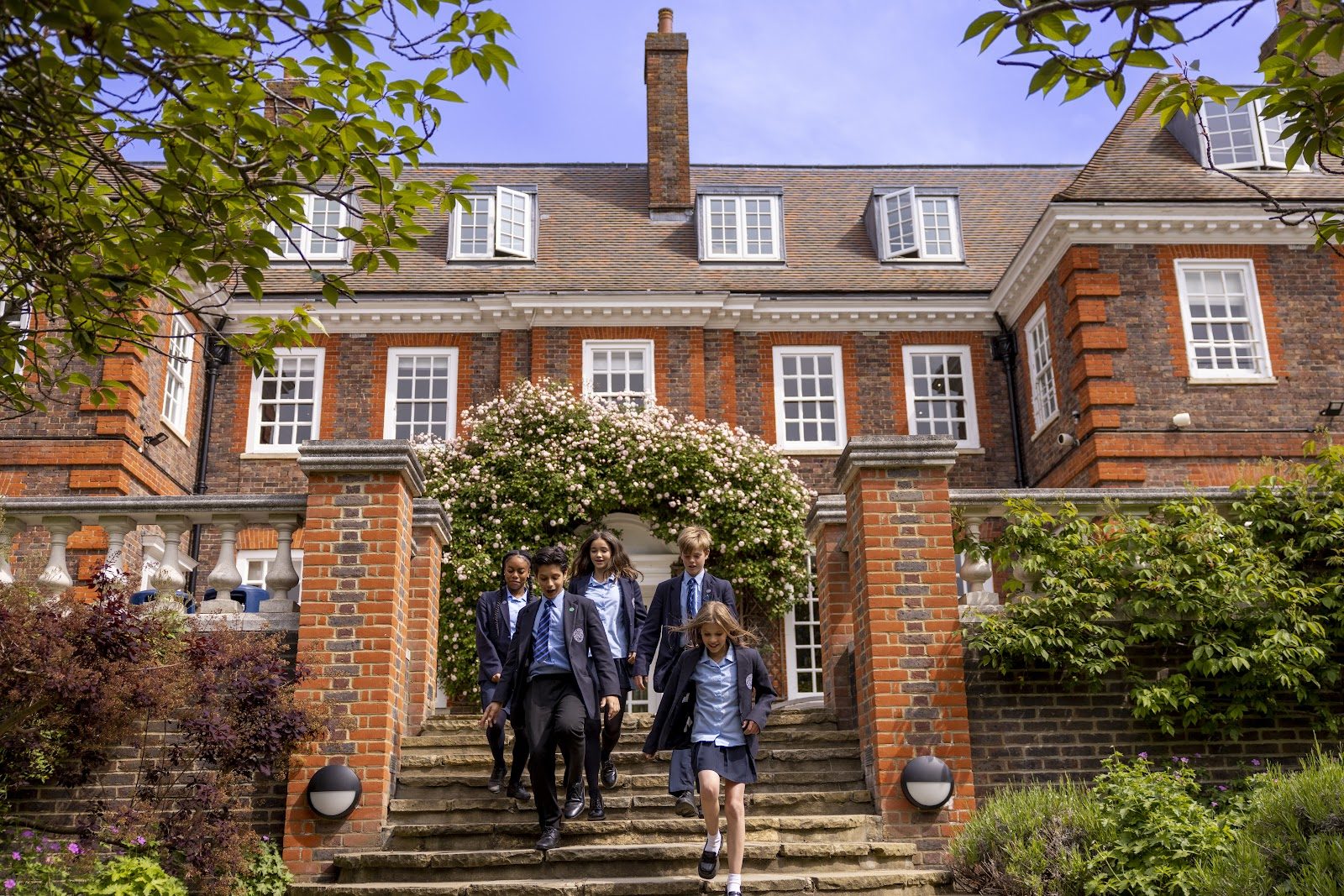
Ibstock Place School
London · United Kingdom
On the fringe of Richmond Park, a Froebel-founded day school has championed co-education since 1894.
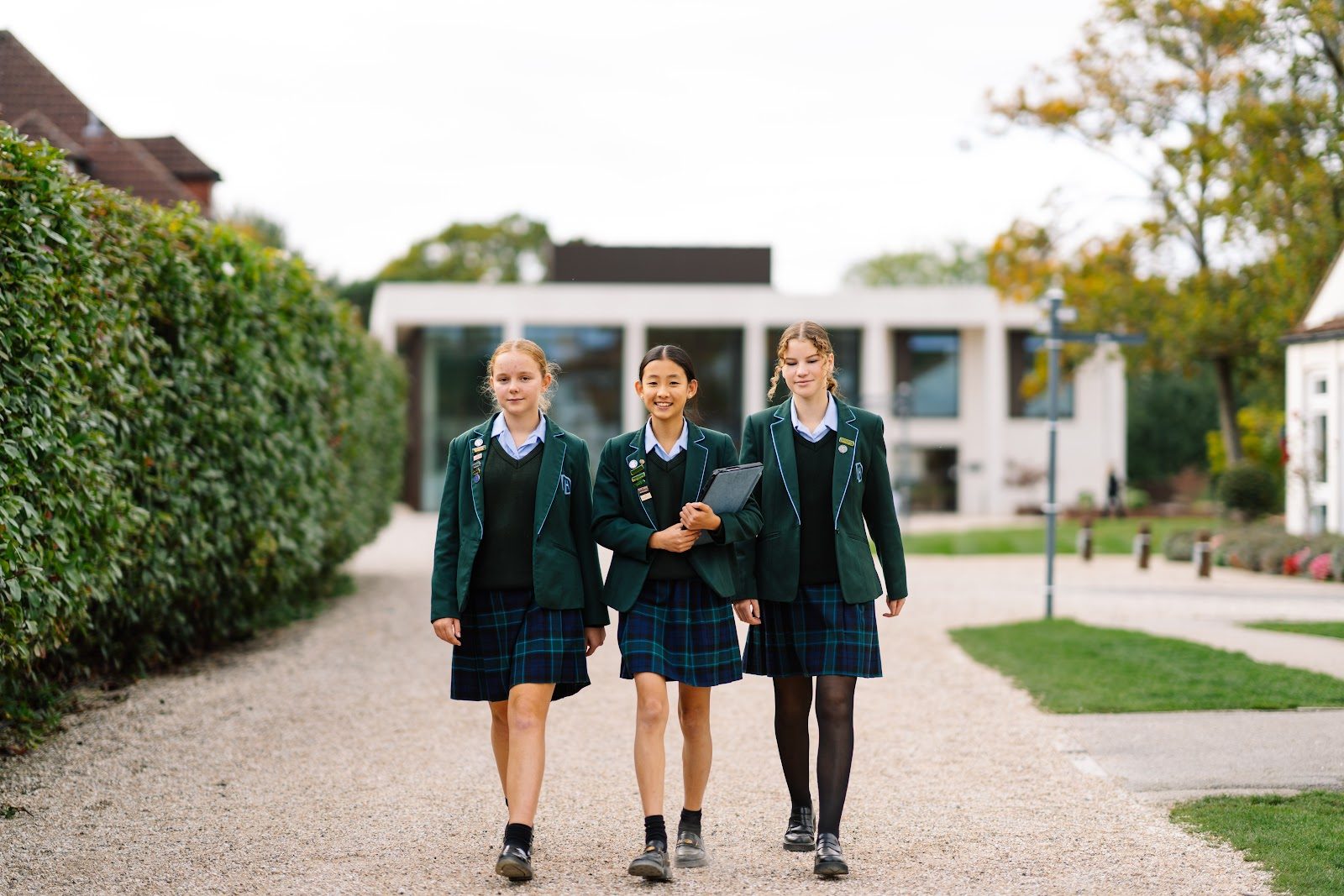
Downe House School
Cold Ash · United Kingdom
Rooted in Charles Darwin's former home, now a 110-acre Berkshire estate where science thrives and Oxbridge ambition runs deep.

Oakham School
Oakham · United Kingdom
Where a 1584 market-town foundation meets Rutland Water sailing, early co-education, and a long-standing IB Diploma alongside A-levels.
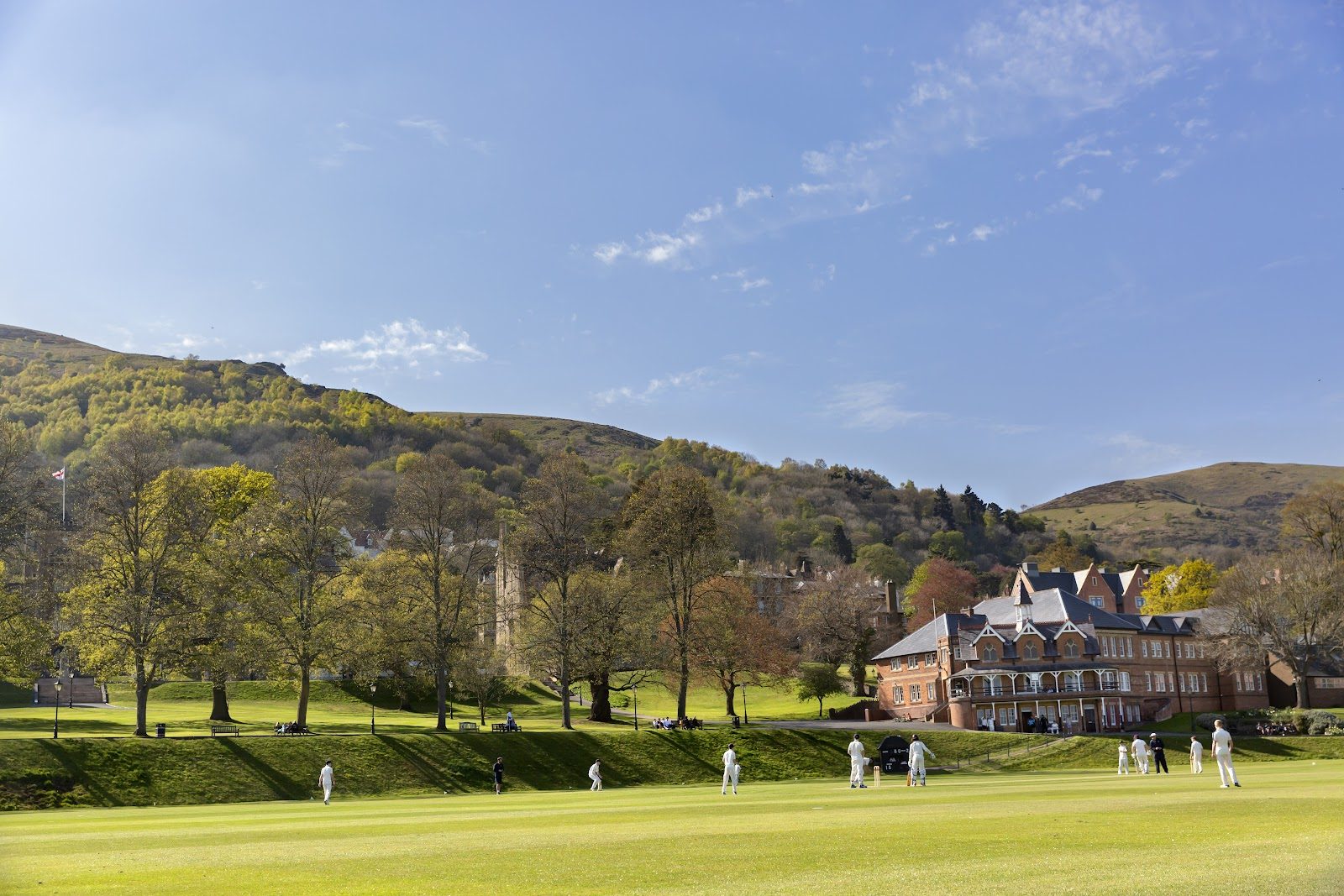
Malvern College
Malvern · United Kingdom
Beneath the Malvern Hills, a campus that once housed wartime radar research has produced four Nobel Prize winners.
Same country and curriculum — closest matches within ±10 points either way