
Free State
Grey College Bloemfontein
Since 1855, this parallel-medium Free State boarding school has produced more Springboks than any other in South Africa.
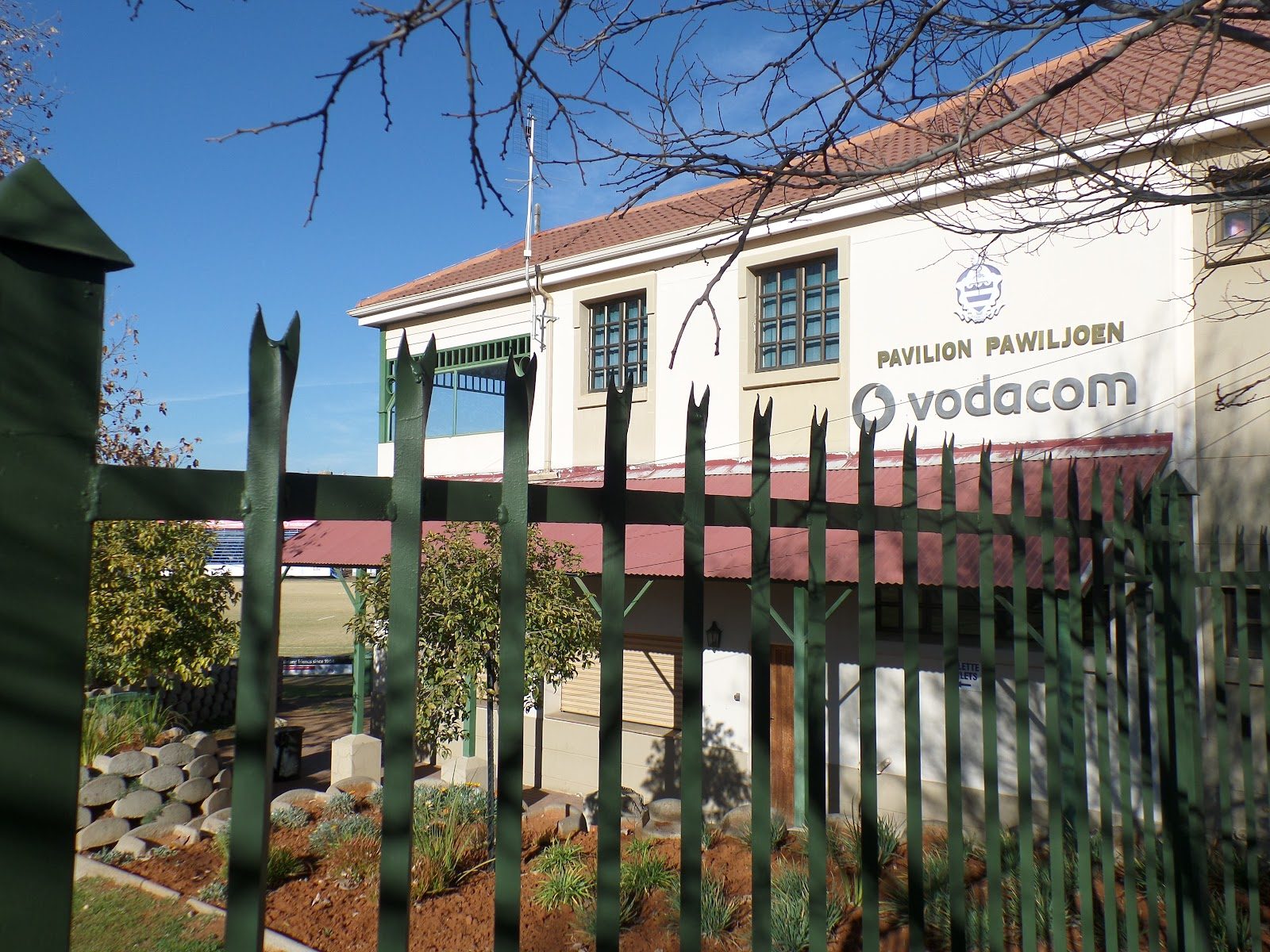
Photo © Ray BarK via Google Maps
Type
Boarding + Day
Ages
6–18
Curriculum
National Senior Certificate
Ratio
—
The Verdict
Editor's commitment
Right for
Boys aged 6–18 who want a boarding or day school in Bloemfontein with English teaching and a National Senior Certificate route.
Wrong for
Families wanting co-education, girls' places, or a fully English-only culture: Grey College is for boys and runs in English and Afrikaans.
Watch out for
Founded in 1855 and Christian, Grey trades on history and identity; parents need to want that culture, not just the boarding.
Ranking breakdown
Grey College Bloemfontein · #698 of 1591
Composite score 66.5. 8 weighted criteria.
By criterion
Academic Outcomes
Weight 20%
#1003
of 1529 scored
University Placement
Weight 16%
#1259
of 1529 scored
Prestige & Heritage
Weight 12%
#1008
of 1571 scored
Alumni Network
Weight 12%
#1461
of 1530 scored
Facilities
Weight 12%
#21
of 1533 scored
Transparency & Communications
Weight 8%
#865
of 1532 scored
Peer & Industry Review
Weight 10%
#30
of 1548 scored
Admissions Selectivity & Demand
Weight 8%
#1326
of 1529 scored
Peer & Industry Review
How Grey College Bloemfontein is regarded in the sector
91
Top-tier · medium confidence
Grey College's reputation among South African peer schools rests almost entirely on rugby, not academic league tables. It is consistently grouped with Paul Roos Gymnasium, Affies, Monument and Grey High School Port Elizabeth as one of the country's traditional rugby powerhouses, a status reinforced yearly by SuperSport and SARugbymag coverage of the Free State schools derby and the Grey College first XV's producing more Springboks (Naka Drotske, Ruan Pienaar, Juan Smith, among others) than almost any other school. Its proximity to the University of the Free State gives it an established academic-sport pipeline recognised locally, though it lacks the kind of independent international scrutiny (Good Schools Guide, WhichSchoolAdvisor) applied to UK or private SA schools, since it is a state (Model C) institution outside that review ecosystem. Domestic press treatment (News24, Rapport school rankings) situates it as an elite government school rather than an internationally benchmarked independent one. No verifiable quotes from rival heads or university admissions officers specifically addressing Grey College's academic standing could be sourced.
Award

Elite Sport 80
World's Top School · The Global Ranking
Grey College Bloemfontein is featured on our Global Top 80 ranking at #9. This seal is available for the school's marketing team to use on their website, prospectus and social channels.
- Naas Botha — Rugby player, Sport
- Bobby Skinstad — Rugby player, Sport
- Ruan Pienaar — Rugby player, Sport
Editors' overview
Grey College Bloemfontein occupies a rare position in South African schooling: a historic boys’ school with boarding, a national sporting reputation, and a reach that extends well beyond the Free State. Founded in 1855, it carries the weight of one of the country’s old institutional names, and that matters. Families do not choose Grey for progressive experimentation or a boutique academic proposition. They choose it for tradition with force, a disciplined environment, and a school culture built around loyalty, competition and public achievement. The National Senior Certificate keeps the academic route familiar and legible for South African families, while the age span of 6–18 gives boys a long runway inside one system.
What puts Grey on a shortlist is not novelty. It is concentration of identity. This is a Christian, boarding-and-day school for boys that has spent generations refining a very specific offer: hard-edged school spirit, strong structure, and a serious commitment to co-curricular life, above all sport. The headline claim in the market is plain: no other South African school has produced more Springboks. That gives Grey a stature few schools can match in rugby-minded households. It also shapes the social tone. This is not a soft, ambiguous place. It is competitive by design, steeped in ritual, and comfortable with standards, hierarchy and expectation. Parents who want a highly sheltered, gently personalised education will find stronger options elsewhere.
The boy who will thrive here wants a school with scale, history and a clear pecking order. He does well with routine, responds to institutional discipline, and wants to belong to something bigger than himself. Sporty boys, especially those drawn to rugby, will feel the pull most strongly, but Grey is not only for elite athletes; it also suits boys who value tribal belonging, visible tradition and the confidence that comes from an established name. Families need to want a boys’ school, a Christian setting, and the ethos that comes with an old South African boarding institution. For that narrow but substantial constituency, Grey is not just relevant; it is one of the country’s defining schools.
An Elite Sport 80 school
Grey College in Bloemfontein is the closest thing rugby has to a global gold-standard secondary school. It sits at rank nine on the Elite Sport 80 because it has produced roughly sixty Springboks over its history — more than any other single school in the world, from any code — and continues to dominate South African schoolboy rugby with a Craven Week presence measured in dozens of caps per decade. It also runs strong cricket, athletics and hockey programmes at Currie Cup and Proteas feeder standard.
The specialism is rugby, taken to a level of professional seriousness rarely seen in the school game anywhere. The 1st XV is coached by ex-professional staff, the strength-and-conditioning setup rivals a full academy, and matches against Paul Roos, Grey High, Paarl Gimnasium and Affies are televised events. Cricket is the strong secondary sport, with Proteas alumni including Hansie Cronje and Kagiso Rabada (Grey College Junior).
Notable alumni across codes include Ruan Pienaar, Ox Nché, Frans Steyn, Ruan Combrinck, Coenie Oosthuizen, and — from earlier generations — a long list of Springbok captains. Hansie Cronje remains the most famous cricket son of the school, and current Proteas quicks continue to emerge from its 1st XI.
International openness is genuine but layered. Grey admits internationally — a small but consistent cohort of pupils comes from Namibia, Zimbabwe, the UK, Australia and mainland Europe — and full boarding is available on-site. Fees are extremely modest by international standards, sitting around ZAR 90,000-110,000 per year including boarding, which makes it one of the highest-value elite sport schools in the world. Overseas applications go through the standard admissions office plus a boarding-house interview and a rugby or cricket trial. Language of instruction is English (with Afrikaans as a strong second), and the residency permit is straightforward for South African relocations. For a family serious about a rugby pathway, Grey is quite plausibly the single best-value school on this list.
Academic Performance
Grey’s public academic profile is strikingly opaque for a school of this stature. We have not seen a published run of National Senior Certificate outcomes, no subject-level breakdowns, no distinction counts, and no comparative data that would let parents place it cleanly against South Africa’s stronger academic independents. That matters. In a market where leading schools use external results to prove depth, consistency and stretch at the top end, Grey leaves families to infer academic strength from reputation rather than inspect hard numbers. For parents who treat exam transparency as non-negotiable, that is a real weakness.
That does not place the school in an academic vacuum. A long-established boys’ school with serious competitive culture and strong internal discipline seldom drifts into academic disorder. But Grey’s prominence rests far more securely on sport, institutional identity and old-school loyalty than on a data-rich academic narrative. Relative to peers, it sits in a different category of appeal: families choosing schools chiefly for examination proof, subject breadth at the highest level, and published benchmarking will find stronger evidence elsewhere; families content with a school whose academic standing is carried by name, culture and selectivity will accept the trade. Until Grey publishes aggregate NSC outcomes, top-mark bands and university placement patterns, its academic reputation remains under-evidenced.
Facilities
Grey’s facilities profile is defined less by architectural novelty than by what the school’s identity demands: grounds and infrastructure that can sustain a hard-driving boys’ programme across a full age range, with boarding and day life running in parallel. Parents should expect the essentials of a major South African traditional school—playing fields, boarding houses, assembly and worship spaces, and the specialist rooms needed for mainstream secondary teaching—but the school does not publish the kind of detailed campus inventory that stronger communicators now put in the public domain. There is no clear public accounting of theatre provision, design and technology workshops, science suite depth, library scale, aquatics, or high-performance conditioning spaces. For a school with this level of public stature, that lack of specificity is a real gap.
Against peers, that matters because the top South African boys’ schools now treat facilities as part of the educational argument, not just part of the estate. They show parents exactly what backs the sporting machine, the arts programme and the academic day. Grey’s reputation guarantees that sport infrastructure is central and taken seriously; the school’s market position would collapse without it. But families comparing it with the country’s best-resourced competitors will want harder detail before assuming top-tier breadth beyond the playing fields. The core impression is of a campus built for tradition, scale and routine, not for flashy reinvention.
Until Grey publishes aggregate NSC outcomes, top-mark bands and university placement patterns, its academic reputation remains under-evidenced
Prestige
Grey carries serious national prestige in the old South African sense: name recognition, institutional weight, and instant social legibility far beyond its own province. Its standing rests on more than age. This is one of the 23 Milner Schools, which places it inside a small historical group that still carries status in South African education. Add the school’s long-entrenched rugby mythology and the result is a brand with unusual reach among families who value tradition, masculine esprit de corps and high-visibility school identity. In that constituency, Grey sits near the top of the market. Doors open on the strength of the name alone, and the alumni network matters.
That prestige has a distinct shape. It is not intellectual prestige first; it is prestige built on legacy, sporting renown, and the social authority of an old boys’ institution that knows exactly what it is. That makes Grey powerful, but also narrow. Families hunting for a school admired chiefly for published academic results, modern educational thinking or international polish will not rank it in the same bracket as the country’s most academically transparent independents. Families who want hard-edged status, tribal loyalty and a school badge that still carries force in South African professional and sporting circles will rate it very highly indeed.
Against peers, that matters because the top South African boys’ schools now treat facilities as part of the educational argument, not just part of the estate
Communications
Grey does not communicate with the polish now standard at top-fee schools. Public-facing information is functional rather than persuasive: enough to confirm the school’s identity, ethos and broad structure, but thin on the operational detail parents actually need once they move past first interest. We have not seen strong publication of academic data, detailed facilities mapping, or the kind of parent-facing explanatory material that clarifies how school life runs in practice across day and boarding routines. That matters because a school with this level of institutional confidence can slip into assumed understanding — the belief that families already know what Grey is and will fill in the blanks themselves. For established local audiences, that may work. For new families, interstate movers, or international parents, it leaves too much unsaid.
The tone also matters. Grey communicates like a school that expects deference to its culture, not like one competing to explain itself line by line. That gives its messaging a self-assured, old-order quality that many loyalists will value. It also creates friction for parents who want prompt clarity on pastoral systems, academic tracking, communication frequency, and how concerns get handled. The school’s standing does a lot of the work that sharper communications ought to do. That is efficient, but not parent-centred. Against current independent-school standards, Grey’s communications are serviceable, not strong; they reinforce prestige, but they do not deliver enough transparency.
Uniqueness
Grey’s uniqueness lies in concentration: a boys’ school with a forged-in-history identity, a bilingual South African setting, and a sports legacy so dominant that it shapes the whole institutional mood. The most distinctive public marker is plain enough: the claim that no other school in the country has produced more Springboks. That matters because it tells families what the school rewards. Grey does not trade in educational eclecticism or personalised curation. It offers institutional immersion — boys are inducted into a culture of allegiance, competition, hierarchy and shared ritual that has been refined over generations. Its place among the 23 Milner Schools adds another layer of distinction: this is not just an old school, but one tied to a specific historic stratum of southern African education.
What students get from that is both powerful and limited. Boys who want clear standards and a strong collective identity gain belonging, stamina and confidence inside a system that knows how to socialise them into team life. The school’s parallel-medium character also gives students daily contact with more than one cultural register inside South African society, which has its own value. But Grey’s singularity cuts both ways. The same hard-edged tribalism that builds loyalty can crowd out boys who dislike pecking orders, who do not want sport and status to carry such weight, or who need a more flexible idea of success. For the right student, Grey is formative in a deep way. For the wrong one, it is constricting.
But families comparing it with the country’s best-resourced competitors will want harder detail before assuming top-tier breadth beyond the playing fields
Student Profile
The boy who fits Grey best wants structure without negotiation. He is comfortable in a school where rules, routine and collective standards carry real force, and where belonging is earned through participation rather than tailored around individual preference. He does not need constant emotional hand-holding. He can take correction, absorb hierarchy and live inside a culture where peer standing matters. For boarders and day boys alike, that points to students with resilience, self-command and a tolerance for institutional pressure. In a boys’ school with a reach and legacy of this kind, social confidence counts. Quiet boys can thrive, but they need inner ballast. Boys who wilt under competition, resist conformity, or want a soft-touch environment will struggle.
Grey also suits families who actively want a Christian, parallel-medium boys’ school and the social world that comes with it. The right student values team identity, school ritual and the hard-edged rewards of commitment; he wants to be part of something larger than himself, not the centre of a personalised programme. Sport-minded boys will feel the draw most sharply, but the deeper fit is temperamental, not athletic: the school rewards stamina, loyalty and willingness to submit to a strong common culture. Its place among the 23 Milner Schools adds another layer of expectation. This is a school for boys who enjoy tribal belonging and can carry the weight of a demanding institutional culture.
Grey does not communicate with the polish now standard at top-fee schools
Co-curricular strengths
Arts & sport, on a separate axis
Overall 8.58/10
Scored 0-10 from the school's own published evidence. This axis is editorial-only — it does not feed the main WTS ranking.
Strengths
- +Founded in 1855, Grey College is one of South Africa's oldest continuously operating boys' schools with a long institutional history.
- +Nationally recognised as a significant producer of Springbok and provincial rugby players over successive generations.
- +Offers both boarding and day options, drawing pupils from across the Free State province and further afield.
- +Follows the National Senior Certificate, giving graduates a recognised pathway into South African universities.
- +Maintains an established house and prefect system typical of older South African single-sex boarding schools.
Considerations
- −Single-sex boys' school, which excludes families seeking a co-educational environment.
- −Rugby and sporting culture is central to school identity, which may not suit boys with limited interest in team sport.
- −Located in Bloemfontein, a secondary South African city with fewer international flight connections and a smaller expat community than Johannesburg or Cape Town.
- −Limited independently published data on academic results, university placement, or current fee schedules compared with more internationally profiled schools.
Gallery
Photo © Andile Q via Google Maps
Photo © Lehlohonolo “Hloni” Thekisho via Google Maps
Photo © Lehlohonolo “Hloni” Thekisho via Google Maps
Photo © Mamorena Sedidi (Nekgase) via Google Maps
Photo © Jason via Google Maps
Photo © Jason via Google Maps
Photo © Jaco Oosthuizen via Google Maps
Parent reviews
Have you sent your child here?
Voice reviews carry the strongest trust badge — we transcribe them for you to tidy up before they go live. Prefer to type? A written review is fine too.
Add your voice
In 60 seconds, tell other parents: what's the best thing about Grey College Bloemfontein, and what surprised you when your child joined?
We ask for a Google sign-in so every review has a real face behind it — no anonymous drive-by attacks on schools, and no faked positive reviews. Your email is never shown publicly.
Send this profile to a friend
International parents rely on word-of-mouth. Share this review with someone weighing the same decision.
Schools with places
Similar schools to Grey College Bloemfontein with places available now.
Availability first, then country, area, curriculum, price, co-curricular
Consider also
Also worth looking at alongside Grey College Bloemfontein.

South African College Schools (SACS)
Newlands, Cape Town · South Africa
Founded in 1829 beneath Devil's Peak, the Cape Town institution whose academic wing became the University of Cape Town.
Glenwood High School
Durban · South Africa
A century-old Durban boys' school where sport is prized as 'the other half' of an education, not an afterthought

Paul Roos Gimnasium
Stellenbosch · South Africa
Beside the Eerste River, a rugby dynasty that has produced more Springboks than any other school meets rigorous IEB scholarship.
St. Thomas Aquinas High School
Fort Lauderdale, FL · United States
Fort Lauderdale Catholic prep melding AP rigor with a Cambridge International curriculum, backed by nationally ranked football.
Same specialism, country and curriculum — closest matches within ±10 points either way