
California
Long Beach Poly High School
An urban Long Beach public school where the century-old motto 'Scholars and Champions' still fits a campus with more NFL alumni than any other in America.
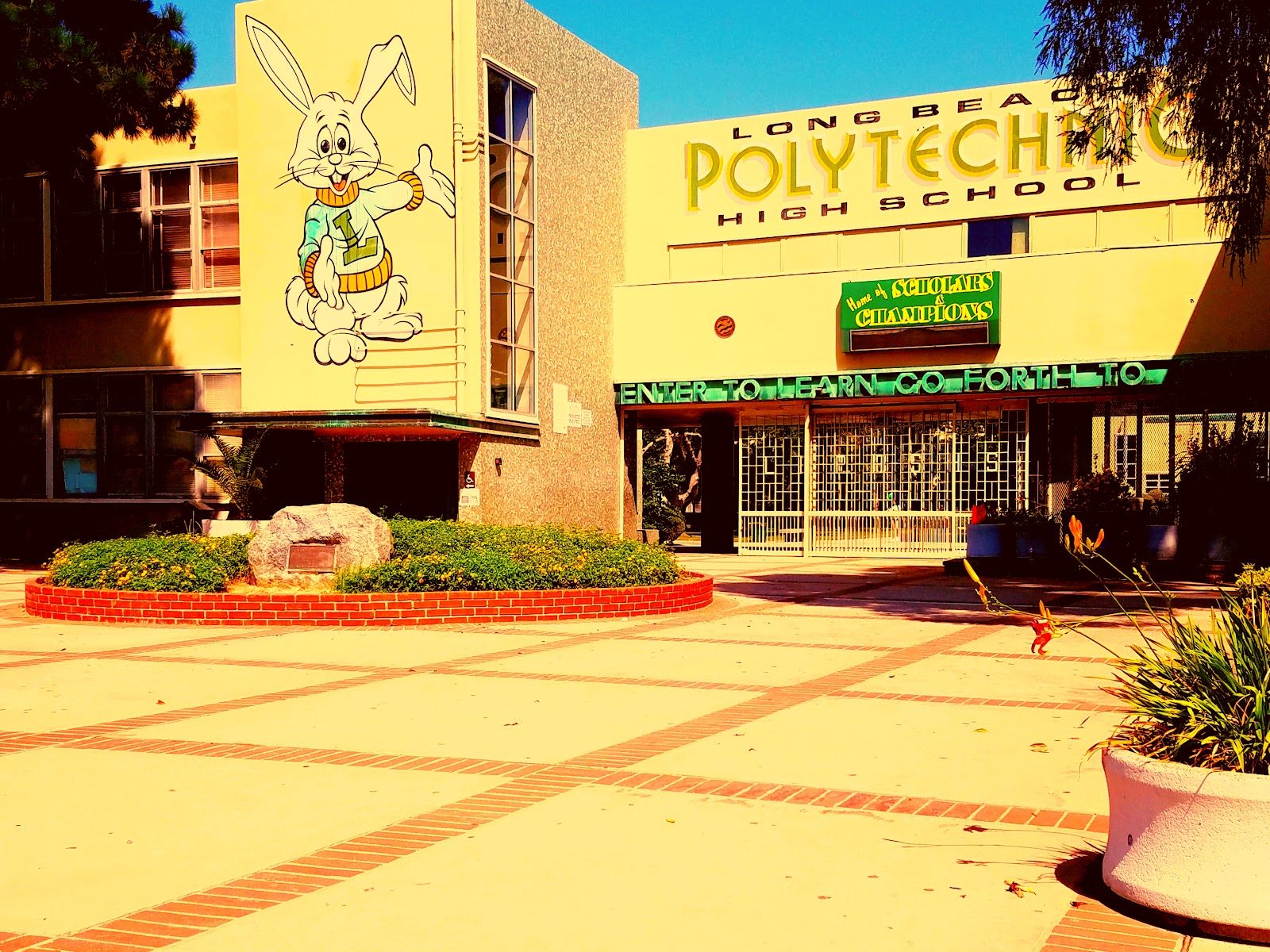
Photo © Ralphael Prepetit via Google Maps
Type
Day
Ages
14–18
Curriculum
US High School Diploma · Advanced Placement
Ratio
1:24
The Verdict
Editor's commitment
Right for
Teenagers who want a large urban public school: about 4,000 students, AP on offer, WASC accreditation, and a flagship LBUSD address.
Wrong for
Families wanting small-scale schooling will find 1:24 staffing and ages 14–18 on a huge Atlantic Avenue campus impersonal.
Watch out for
The pull is clear—1895 roots and 'Scholars and Champions'—but this is still a public day school of about 4,000, not a polished enclave.
Ranking breakdown
Long Beach Poly High School · # of 1591
Composite score 55.9. 8 weighted criteria.
By criterion
Academic Outcomes
Weight 20%
#1378
of 1529 scored
University Placement
Weight 16%
#1462
of 1529 scored
Prestige & Heritage
Weight 12%
#723
of 1571 scored
Alumni Network
Weight 12%
#623
of 1530 scored
Facilities
Weight 12%
#1238
of 1534 scored
Transparency & Communications
Weight 8%
#943
of 1532 scored
Peer & Industry Review
Weight 10%
#147
of 1548 scored
Admissions Selectivity & Demand
Weight 8%
#1523
of 1529 scored
Peer & Industry Review
How Long Beach Poly High School is regarded in the sector
78
Strong · medium confidence
Long Beach Poly's standing rests less on private-school peer networks and more on public recognition and athletic-to-university pipelines. It holds California Distinguished School and National Blue Ribbon School designations from the state and federal education departments, markers regularly cited by other large comprehensive public high schools when benchmarking academic performance. US News & World Report includes it in its annual public-school rankings, giving it a comparative national reference point alongside other elite public magnet and comprehensive schools in California. Independent sports and education journalism, notably a widely cited Sports Illustrated feature, singled out Poly for producing an unusually high number of Division I and professional athletes, a distinction that keeps it on college recruiters' and athletic directors' radar at programs such as USC and UCLA. Coverage tends to focus on this athletic-academic dual identity rather than boarding-school style peer commentary, reflecting its status as a large urban public school rather than a private institution competing on independent-school league tables like ISEE or Good Schools Guide metrics.
Award

Elite Sport 80
World's Top School · The Global Ranking
Long Beach Poly High School is featured on our Global Top 80 ranking at #56. This seal is available for the school's marketing team to use on their website, prospectus and social channels.
- Billie Jean King — Tennis Champion, Sports
- Cameron Diaz — Actress, Entertainment
- Snoop Dogg — Musician, Entertainment
Editors' overview
Long Beach Poly occupies a rare position in the American state-school market: a huge, urban, academically serious comprehensive with real civic weight. Founded in 1895, with around 4,000 students, it is not a boutique school selling intimacy; it is a public institution built at metropolitan scale. The school’s own identity — “Scholars and Champions” — matters because it captures the dual reputation parents already know: hard-edged academic ambition alongside a sports culture with national reach. In a crowded California landscape, that combination gives Poly its edge. This is a place with institutional heft, urban energy and a deep competitive culture.
What puts it on a shortlist is breadth. A school this large can sustain a wider menu of courses, activities and peer groups than smaller schools can manage, and the declared US High School Diploma plus Advanced Placement route gives able students clear academic stretch. The 1:24 student–teacher ratio tells its own story: personal attention is not the selling point. Scale is. For the right teenager, that scale brings opportunity, independence and a stronger chance of finding demanding classes and ambitious peers. For families who want a cosier, more sheltered sixth-form-style environment, this is the wrong school. Poly trades close hand-holding for serious range.
The special draw is the combination of flagship status in Long Beach Unified, long history and a sports legacy that few American schools can match. That matters beyond athletics: it shapes confidence, school spirit and expectations. Students who thrive here tend to be self-propelled, resilient and comfortable in a busy public-school ecosystem. They need to handle movement, competition and choice without constant supervision. The best fit is the teenager who wants big-school momentum, earned prestige and a campus where academic aspiration does not cancel out athletic ambition. Poly suits students who want to test themselves in a large urban setting, not students who need a quiet, curated experience.
An Elite Sport 80 school
Long Beach Poly High School is a Californian public school and sits at rank fifty-six on the Elite Sport 80 because, extraordinarily, it has produced more NFL professionals than any other single high school in the United States. The Jackrabbits have also been a national-level track and field powerhouse for decades, producing Olympians in the sprints and jumps at a rate few schools anywhere in the world can match.
The specialisms are American football (with a sustained USA Today ranking and Trinity League-adjacent competitive level), boys' track and field (a national schoolboy powerhouse, particularly in the sprints), boys' basketball, and boys' baseball. Girls' basketball and volleyball also run at nationally competitive Southern California standard. All are supported by professional-level coaching and integrated with UCLA, USC and Long Beach State recruiting pipelines.
Notable alumni across codes include Marcedes Lewis (NFL Pro Bowl tight end), Willie McGinest (three-time Super Bowl champion), DeSean Jackson, Chase Daniel, and — in track and field — Kim Bethune, Snoop Dogg (yes, in an earlier era, briefly a Jackrabbit), Cameron Burrell, and multiple Olympic sprinters. In baseball, Chase Utley and Milton Bradley are notable MLB alumni.
International openness is limited. Long Beach Poly is a Long Beach Unified School District public school and admits primarily local Long Beach residents; there is no boarding house or dedicated fee-paying international stream. Overseas admissions are typically handled through the district's international-student pathway with a modest annual fee and an F-1 student visa, but the primary route is through US residency. Language of instruction is English. For a family already relocating to the Los Angeles metropolitan area with a track- or football-oriented child, Long Beach Poly is one of the most historically productive public schools in the country and admission is essentially by residency; families arriving from overseas without a Long Beach residency plan will find boarding academies elsewhere on this list a more structurally practical fit.
Academic Performance
Academic performance is where Poly’s scale cuts both ways. The school offers Advanced Placement, which gives strong students recognised external benchmarks, but we have not seen published aggregate AP score data, AP participation rates or school-wide pass figures. That gap matters. For parents trying to place Poly against selective suburban publics or exam-transparent independents, results opacity is a real weakness. Flagship status and academic ambition carry weight, but they are not substitutes for disclosed outcomes. In a market where many schools publish SAT, ACT, AP or university-matriculation data, Poly leaves families to judge academic strength through reputation, programme breadth and student ambition rather than clean comparative metrics.
Relative to peers, that places Poly in an unusual bracket: stronger in perceived academic seriousness than the average large urban comprehensive, less transparent than the most data-conscious college-preparatory schools. The presence of AP matters because it gives access to serious academic stretch and externally moderated exams, but access alone does not prove top-end performance. The school’s size also means outcomes are rarely neat; large public schools produce a wide academic spread, from highly competitive university applicants to students on a more standard diploma path. The best conclusion is blunt: Poly has the ingredients of a strong academic environment, but without published aggregate examination results, it does not earn the same hard-edged academic credibility as peers that disclose them.
Facilities
For facilities, Poly’s defining asset is not boutique polish but institutional scale. As a district flagship with around 4,000 students, it operates on the footprint and tempo of a serious urban public school, not a manicured private campus. The practical advantage is range: a school this large can support extensive athletic infrastructure, multiple specialist teaching spaces and the kind of high-throughput campus organisation that smaller schools do not need to build. Given the school’s national football legacy and deep sporting culture, parents can assume athletics facilities matter here in a way they do not at the average comprehensive. That gives Poly an edge over many ordinary state schools, even if it does not carry the glossy theatre of a fee-paying campus.
Against peer schools, the comparison is clear. Poly is stronger on breadth and capacity than the typical local public high school and weaker on the curated shine that independent-school families may expect. We have not seen a detailed public inventory of science labs, performing arts venues, maker spaces or standout signature buildings, and that lack of specificity limits any claim to exceptionalism beyond sport and scale. So the fair judgment is blunt: the campus offers the functional infrastructure of a big, hard-working urban school with serious athletic weight, but not the transparent, amenity-led facilities pitch common at top private schools. Families drawn by intimate campuses, pristine new builds or heavily marketed specialist centres will find a more utilitarian proposition here.
The special draw is the combination of flagship status in Long Beach Unified, long history and a sports legacy that few American schools can match
Prestige
Poly carries real prestige, but it is a specific kind of prestige. This is not the lacquered status of a small independent school, nor the exam-table prestige of a hyper-selective magnet. It is the prestige of a serious public institution with district flagship standing, city-wide recognition and an alumni culture that extends well beyond the school gates. In southern California, that matters. The name has weight because generations of families, universities and employers know it. The school’s scale — around 4,000 students — also changes the equation: influence travels further when a school produces large numbers of graduates across sport, public life and the professions. That gives Poly civic stature that many better-resourced private schools never acquire.
The prestige is strongest in athletics and in the broader idea of earned reputation. Poly’s claim to more NFL alumni than any other school in America gives it a national sports identity that few public schools can match, and that legacy spills into school pride and external recognition. Academic prestige is more mixed. The school has a serious academic reputation inside its local market, but not the clean, data-backed elite status of schools that publish aggregate top-end outcomes. That distinction matters. Poly is widely respected, historically important and unmistakably high-profile; it is not an automatic proxy for academic exclusivity. I rate its prestige as high in public-school terms, formidable in sport, and solid rather than untouchable in pure academic status.
Flagship status and academic ambition carry weight, but they are not substitutes for disclosed outcomes
Communications
Communication at Poly carries the strengths and weaknesses of a big public institution. The essentials are easy to find: the school has a clear web presence inside the district, a published address and a straightforward place in the Long Beach Unified system. That matters, because parents at a school with roughly 4,000 students need structure more than charm. District integration tends to produce standardised channels, predictable notices and a cleaner administrative chain than the ad hoc messaging common in smaller schools. The school also benefits from being a known quantity in its local market; families are not dealing with an obscure campus that has to explain itself from scratch. The tone, though, is functional rather than high-touch. Nothing here points to concierge-style responsiveness or a polished parent-relations operation.
Effectiveness depends on what a family expects. For routine communication — calendars, contacts, school identity, basic orientation — Poly does the job. For families who want rich public-facing disclosure, it falls short. The school does not publish the kind of granular academic outcome data that ambitious parents use to benchmark schools, and that counts as a communications issue as much as an academic one. Strong schools communicate priorities through facts, not just through reputation. Poly’s communications therefore read as serviceable, institutional and geared to managing scale, not to winning over sceptical outsiders. Parents who value clarity over coddling will cope well. Parents who expect forensic transparency or constant individual attention will find the system blunt.
Uniqueness
What makes Poly distinct is the collision of two things that rarely coexist at this level: a serious city-school academic engine and a sports culture with genuine national mythology. Plenty of public schools have pride; far fewer have a motto that still tracks the lived identity of the place. “Scholars and Champions” is not decorative branding here. It signals a campus where intellectual ambition and competitive sport sit side by side, and where students grow up inside a culture that rewards drive in more than one form. With about 4,000 students, Poly also works on a scale that changes teenage experience. Students are not funnelled into a single mould. They can find high performers, athletes, strivers, creators and career-focused peers without the school flattening those identities into one approved type.
That scale and history bring concrete gains. Students get access to a denser peer field, stronger internal competition and more room to define themselves without constant adult choreography. The school’s status inside its district adds another layer: success at Poly carries local recognition because the institution matters beyond its gates. The sports legacy does more than feed headlines. It creates collective confidence, raises expectations and gives the campus a hard-driving tempo that ambitious teenagers often relish. The trade-off is clear. This is not a soft-edged environment built around coddling or intimacy. Its uniqueness lies in offering a big, demanding public-school life with civic stature and uncommon competitive force.
As a district flagship with around 4,000 students, it operates on the footprint and tempo of a serious urban public school, not a manicured private campus
Student Profile
Poly suits teenagers who gain energy from pace, pressure and choice. In a school of roughly 4,000, anonymity is available, but so is reinvention. The students who do best here are self-starting, socially agile and unruffled by movement between very different peer groups. They do not need constant checking-in from adults and they do not expect every door to be opened for them. This is a strong fit for the student who wants access to ambitious classmates, visible school pride and a campus culture where effort carries status. Athletes with real competitive drive fit naturally, but the school is not only for athletes; academically serious students who can navigate a busy public system also do well.
The weaker fit is just as clear. Teenagers who need high-touch pastoral oversight, small-class intimacy or a tightly managed social environment will struggle with the scale and bustle. Students who are tentative, easily lost in crowds or dependent on close adult prompting face a harder road. Poly rewards resilience, independence and appetite. It suits families who want their child tested by a big-city public-school reality rather than insulated from it. The ideal student does not need a polished, curated experience. They want room, competition and the chance to build their own identity inside a school with serious internal momentum.
Its uniqueness lies in offering a big, demanding public-school life with civic stature and uncommon competitive force
Co-curricular strengths
Arts & sport, on a separate axis
Overall 8.9/10
Scored 0-10 from the school's own published evidence. This axis is editorial-only — it does not feed the main WTS ranking.
Drama
9/10
Dance
8/10
Music
9.5/10
Visual Arts
8.5/10
Strengths
- +As a public school within Long Beach Unified School District, there is no tuition fee for resident families.
- +Offers PACE, a selective gifted/honors magnet strand, and a college-preparatory academic track alongside Advanced Placement courses.
- +Long-established athletics program; Sports Illustrated named Long Beach Poly the top high school sports program of the 20th century in a 2002 feature.
- +Notable alumni include entertainers Snoop Dogg and Cameron Diaz and MLB Hall of Famer Tony Gwynn, reflecting a broad talent pipeline.
- +Large, comprehensive campus (one of California's oldest public high schools, founded in the 1890s) with extensive extracurricular and sporting facilities.
Considerations
- −As a zoned public school, admission depends on residency within the district catchment area rather than an open application process for outsiders.
- −Large enrollment (several thousand students) means bigger class sizes and less individualised attention than smaller independent schools.
- −Selective magnet strands like PACE have separate, competitive entry requirements and limited places, so not all students access the same academic track.
- −No boarding option and limited support infrastructure specifically designed for newly arrived international or expat families.
Gallery
Photo © Ralphael Prepetit via Google Maps
Photo © Ralphael Prepetit via Google Maps
Photo © Kate L via Google Maps
Photo © Ralphael Prepetit via Google Maps
Photo © Ralphael Prepetit via Google Maps
Photo © Ralphael Prepetit via Google Maps
Photo © Ralphael Prepetit via Google Maps
Parent reviews
Have you sent your child here?
Voice reviews carry the strongest trust badge — we transcribe them for you to tidy up before they go live. Prefer to type? A written review is fine too.
Add your voice
In 60 seconds, tell other parents: what's the best thing about Long Beach Poly High School, and what surprised you when your child joined?
We ask for a Google sign-in so every review has a real face behind it — no anonymous drive-by attacks on schools, and no faked positive reviews. Your email is never shown publicly.
Send this profile to a friend
International parents rely on word-of-mouth. Share this review with someone weighing the same decision.
Schools with places
Similar schools to Long Beach Poly High School with places available now.
Head-Royce School
Oakland · United States
- 2026-27
- CLOSEDRegular cycle
- 2027-28
- OPENS SOONOpens Sept '26
The Webb Schools
Claremont · United States
- 2026-27
- CLOSEDRegular cycle closed
- 2027-28
- PLACES OPENPortal live
The Branson School
Ross · United States
- 2026-27
- CLOSEDRegular cycle
- 2027-28
- OPENS SOONOpens Sept '26
Crystal Springs Uplands School
Hillsborough · United States
- 2026-27
- CLOSEDRegular cycle
- 2027-28
- OPENS SOONOpens Sept '26
Availability first, then country, area, curriculum, price, co-curricular
Consider also
Also worth looking at alongside Long Beach Poly High School.
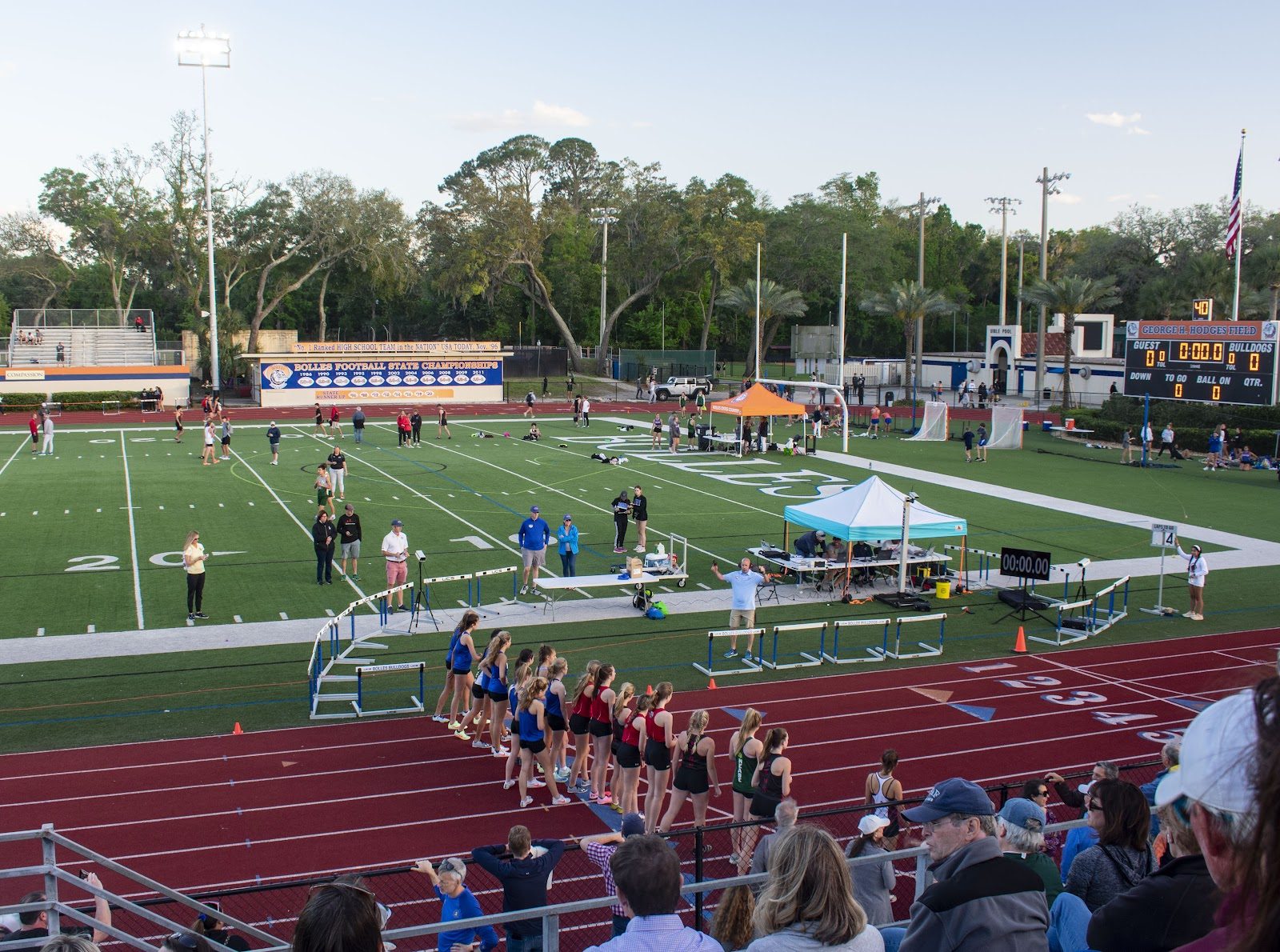
The Bolles School
Jacksonville, FL · United States
On a historic river bluff in Jacksonville, a swimming dynasty that has sent swimmers to Olympic podiums for decades.

Montverde Academy
Montverde, FL · United States
On a Lake Florence campus in Central Florida, boarders from some 80 countries share dorms with a basketball program that keeps feeding the NBA draft.

Burke Mountain Academy
East Burke, VT · United States
America's first ski-racing academy, tucked at the base of a Northeast Kingdom peak, has sent dozens of graduates to the Winter Olympics since 1970.

Shattuck-St. Mary's School
Faribault, MN · United States
A quiet Rice County campus since 1858, whose two NHL-sized rinks have fed the sport's pro and Olympic pipelines for decades.
Same specialism, country and curriculum — closest matches within ±10 points either way