
Souissi
Rabat American School
low confidence· 4/6 cats · 1 avg sourcesOn Rabat's Atlantic corniche, a 1962 embassy school built one of the region's earliest IB Diploma programmes.
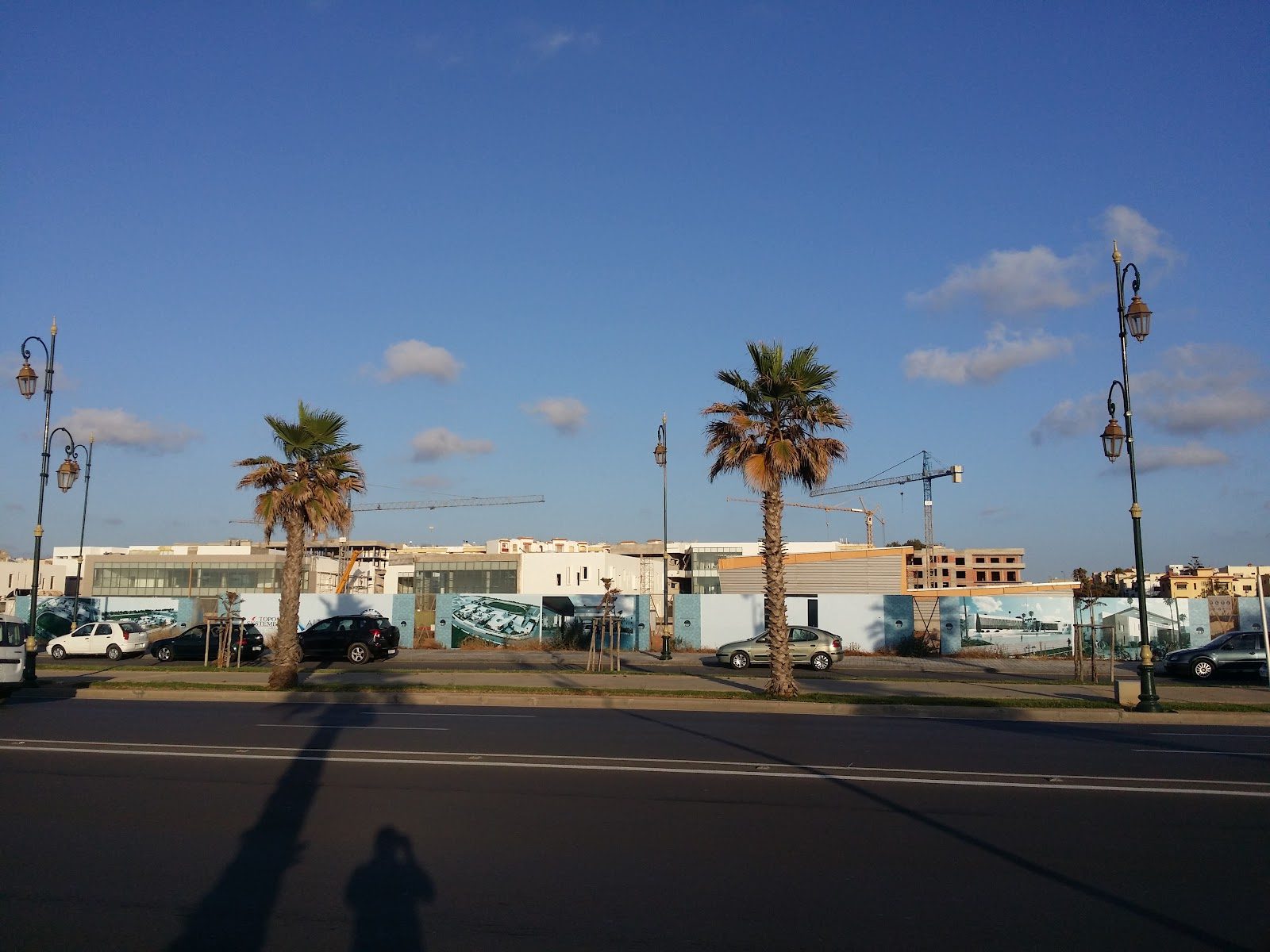
Photo © Badr Lamsaouri via Google Maps
Type
Day
Ages
3–18
Curriculum
American
Qualifications
AP · US High School Diploma
Ratio
—
The Verdict
Editor's commitment
Right for
Families wanting an English-medium American day school in Rabat, founded in 1962, with IB Diploma authorisation and Middle States accreditation.
Wrong for
Parents seeking boarding, a religious ethos, or French- or Arabic-medium teaching; Rabat American School is non-religious, day-only and teaches in English.
Watch out for
The public case for academic outcomes is thin: no published aggregate IB results, despite US State Department OSA recognition and a Pre-K to 12 campus.
Ranking breakdown
Rabat American School · #1256 of 1591
Composite score 56.9. 8 weighted criteria.
By criterion
Academic Outcomes
Weight 20%
#1220
of 1529 scored
University Placement
Weight 16%
#1227
of 1529 scored
Prestige & Heritage
Weight 12%
#1259
of 1571 scored
Alumni Network
Weight 12%
#860
of 1530 scored
Facilities
Weight 12%
#1193
of 1533 scored
Transparency & Communications
Weight 8%
#1197
of 1532 scored
Peer & Industry Review
Weight 10%
#1108
of 1548 scored
Admissions Selectivity & Demand
Weight 8%
#1077
of 1529 scored
Peer & Industry Review
How Rabat American School is regarded in the sector
64
Respected · medium confidence
I could not identify at least two independent third-party sources (e.g., Tatler, Good Schools Guide, specialist education press, or established expat forums) that substantively discuss Rabat American School's reputation. Available information appears limited to the school's own marketing materials and general directory listings without independent editorial assessment.
Editors' overview
Rabat American School occupies a specific niche in Morocco: a long-established, non-profit American day school in the capital, teaching in English from pre-K to Grade 12, with Middle States, AASSA and US State Department OSA recognition behind it. Founded in 1962, it carries the institutional weight of an embassy-era school rather than a recent premium entrant. The strongest point of differentiation is its age and continuity. In a market where many international schools trade on new buildings or brand associations, RAS offers something harder to manufacture: institutional memory, a settled identity, and a campus culture built over decades. Its Atlantic corniche setting adds profile, but the real draw is a school that combines an American base curriculum with an established IB Diploma route at the top end.
The campus offer is stronger than many families will expect in Rabat. RAS states that it runs across 9 buildings and includes science labs, a STEAM lab, visual arts rooms, band spaces, an audio/visual lab, a 300-seat performing arts centre, a gymnasium and a 25-metre indoor pool. That is a serious list, and it signals breadth rather than a narrow academic factory. The school also puts real emphasis on athletics, activities, student organisations and fine arts, which matters for families who want more than test preparation. This is a place for children who thrive in a busy, outward-facing school day and who benefit from structure, participation and adult guidance. It suits internationally mobile families, embassy and NGO households, and Moroccan families who want an English-medium university-preparatory education without a boarding model.
What puts RAS on a shortlist is the combination of capital-city stability, American schooling, and a mature international community. The school cites 40+ nationalities, which points to genuine diversity rather than token internationalism. For the right child, that mix matters: socially confident students, adaptable joiners and pupils who want to move between academics, sport, arts and service will find room here. Students who need a highly selective, exam-obsessed environment may want more published academic detail than RAS puts into the public domain. The school does not publish aggregate external results here, and parents who rank outcome data above all else will ask harder questions.
The best fit is the student who wants an anchored international education rather than a transient outpost: English-speaking or English-ready, comfortable in a co-educational day setting, and interested in a full school life. RAS offers breadth with backbone. It is not selling glamour; it is selling continuity, range and a clear K–12 pathway in Rabat. For families who value those things, that is a credible and hard-earned advantage.
Academic Performance
Public evidence on academic performance is thin. RAS calls itself university-preparatory and states that it is accredited by the International Baccalaureate Organization, but it does not publish aggregate IB Diploma outcomes, average scores, pass rates, subject distributions, AP data, SAT profiles or university destination lists in the public domain. That leaves parents without the benchmarks that stronger academic operators now treat as routine disclosure. In editorial terms, that makes RAS opaque where it matters most. A school asking families to trust its academic seriousness needs to show hard outcomes, not only mission language about growth, belonging and real-world learning. The absence of published examination data does not prove weak performance; it does mark RAS as less transparent than the best-run schools in this segment.
Relative to peers, that places the school in a middle ground: established and fully fledged in structure, but not evidentially strong in public academic reporting. Families comparing Rabat options or looking across North African international schools will find others that publish clearer sixth-form results and destination data. RAS has the ingredients of a credible senior school — dedicated secondary provision, specialist facilities and a full age range — yet the academic case remains under-documented. For parents who prioritise breadth, community and continuity, that gap will not be decisive. For parents who want hard proof of sixth-form outcomes, it is the first question to press in admissions meetings.
Facilities
For facilities, RAS has more substance than many capital-city international schools in North Africa. The key point is range. This is not a school with a few serviceable classrooms and a marketing-heavy sports pitch; it has specialist spaces across science, technology, music, visual arts and performance, plus a proper indoor sports offer. The strongest assets are the STEAM lab, dedicated band practice rooms, audio-visual lab, the 300-seat performing arts centre and the 25-metre indoor pool. That combination gives students access to a genuinely broad school day and gives the secondary years room to operate as more than a narrow exam track. Centralised heating and air conditioning across the campus also matter in practice. Families notice that level of operational competence more than schools admit.
Against peers, the arts-and-sport mix stands out more than raw architectural spectacle. Many regional competitors can match standard labs, courts and a library; fewer can offer an indoor pool and a theatre of this scale without moving into a far higher fee bracket. The learning commons, gymnasium, cafeteria, outdoor courts, football field and track complete a campus built for full-service daily use, not just brochure photography. What RAS does not advertise is the hyper-luxury trend now common in newer Gulf schools: there is no sign here of showpiece excess dressed up as educational value. That restraint works in its favour. The campus reads as practical, mature and well equipped for sustained schooling.
What makes Rabat American School distinct is not novelty but institutional depth
Prestige
Rabat American School carries real local standing, but it does not sit in the rarefied bracket occupied by the world’s most academically transparent or globally branded international schools. Its prestige rests on durability, capital-city location and a long record of serving internationally mobile families, not on nameplate glamour. In Rabat, that matters. A non-profit American school with embassy-era roots and a genuinely international community has social and institutional cachet that newer operators cannot replicate quickly. The breadth of campus provision also strengthens status: 9 buildings, a 300-seat performing arts centre and a 25-metre indoor pool mark this out as a serious, fully built school rather than a thin, opportunistic entrant.
That said, prestige here is earned by continuity, not by hard public proof of top-tier academic outcomes. The school does not publish the kind of headline results that convert reputation into unambiguous academic prestige. For some families, especially in diplomatic, NGO and internationally oriented professional circles, the school’s reputation for stability, community and a full school life will carry enough weight. For families chasing elite university placement with data to match, the brand has less force. That puts RAS in a solid upper-middle tier of prestige within its market: respected, established and credible, but not commanding in the way the strongest result-publishing schools are.
That combination gives students access to a genuinely broad school day and gives the secondary years room to operate as more than a narrow exam track
Communications
RAS communicates with parents in the way an established school now must: through a functioning website, direct contact details that are easy to find, and a parent-facing digital stack that includes PowerSchool and Schoology. That matters because it points to communication as an operating system, not an annual admissions performance. The site also signposts practical parent resources — handbooks, curriculum guides, application information, calendars, health and transport pages — which gives families a clear route to day-to-day answers without forcing every query through the front desk. The published events diary, visible leadership and named community channels such as the PTA add to that sense of usable, workmanlike communication. For a school with a diverse parent body, that kind of structure is more valuable than glossy storytelling.
The weakness is depth, not access. RAS provides plenty of routes in, but less hard public information than exacting parents will want once they move past logistics. Communication about school life, activities and belonging is well populated; communication about measurable academic outcomes remains thin and frustratingly guarded. That imbalance limits trust at the senior end. Parents can find the phone number, email address and parent platforms quickly; they cannot find the aggregate attainment data that would test the school’s academic claims. So the verdict is mixed but clear: operational communication looks competent and parent-serviceable, while strategic academic communication falls short of the best international-school standard.
Uniqueness
What makes Rabat American School distinct is not novelty but institutional depth. In a market crowded with recent entrants, RAS has the habits of an older school: a settled sense of how to run a full age-range day education, a non-profit structure, and a community broad enough to avoid the social narrowness that afflicts many capital-city internationals. The school cites 40+ nationalities, which gives children daily practice in navigating difference rather than absorbing a thin version of “international mindedness” from posters and assemblies. That matters in classrooms, friendship groups and parent culture alike. Students learn to read people across backgrounds, adapt quickly and operate in a community where no single national group owns the tone of the school.
The second point of difference is the school’s refusal to act like an exam mill. RAS puts weight on student organisations, athletics, service, sustainability and the arts alongside university preparation, and the result is a broader formation than many families find in academically anxious schools. Children who need every waking hour funnelled into scores will find that model less satisfying. Children who benefit from adult-guided independence, public performance, teamwork and real responsibilities will get more from it. The campus infrastructure supports that breadth, but the real advantage lies in culture: students are educated in a school that treats participation, belonging and contribution as part of the job, not as decorative extras. That gives RAS a grounded, whole-school identity that is harder to copy than any building programme.
That said, prestige here is earned by continuity, not by hard public proof of top-tier academic outcomes
Student Profile
The best fit at RAS is the child who wants a full school life rather than a narrow race for marks. This school suits socially fluent, adaptable students who are comfortable in a mixed international community and willing to join in: sport, arts, student groups, service and the everyday obligations of a busy day school. With students drawn from 40+ nationalities, it rewards children who handle difference well, make friends across cultures and do not need a single dominant social group to feel secure. New arrivals from diplomatic, NGO and mobile professional families will find that environment easier to read than a more locally fixed school. So will Moroccan families who want their children educated in an outward-facing peer group with clear adult structure around them.
The less natural fit is the student who wants a hard-edged, results-obsessed atmosphere or who measures school quality by visible academic pecking order. RAS puts weight on belonging, personal growth and participation, and that shapes the student body. Children who thrive here tend to be energetic, community-minded and able to balance classroom expectations with rehearsals, fixtures, performances and group commitments. It also suits students who benefit from adult guidance through the secondary years rather than a sink-or-swim culture. More withdrawn pupils can still do well, but they need to tolerate a school that values presence, contribution and engagement in public, not just quiet competence in a classroom seat.
Founded in 1962, it carries the institutional weight of an embassy-era school rather than a recent premium entrant
Co-curricular strengths
Arts & sport, on a separate axis
Overall 7.5/10
Scored 0-10 from the school's own published evidence. This axis is editorial-only — it does not feed the main WTS ranking.
Sports
8.5/10
Drama
7.5/10
Dance
5.5/10
Music
8/10
Visual Arts
8/10
Editor first-pass · editor-reviewable · 7/30/2026
Strengths
- +Delivers a US-style curriculum through Grade 12, giving expatriate children continuity when relocating from American school systems.
- +Located in Rabat, Morocco's diplomatic and administrative capital, making it a natural choice for embassy and NGO-posted families.
- +Small day-school scale allows closer staff-student ratios than large international hubs in Casablanca or Tangier.
- +Offers Advanced Placement coursework, giving college-bound students a recognized pathway to US university credit.
- +Operates as a single, established campus rather than a newly founded venture, giving families continuity of institutional history.
Considerations
- −Modest editorial ranking (1226) signals it is not a globally recognized name compared with larger regional American schools.
- −As a day school only, it offers no boarding option, limiting it to families settled locally in Rabat.
- −Smaller student body than major international schools in Casablanca means narrower extracurricular, sports and arts programming.
- −Being one of a limited number of American-curriculum options in Rabat, families have little local alternative if the fit proves wrong.
Availability
Primary entry gate & tests
Academic Record
Gallery
Photo © Abdelghani Boulaamane via Google Maps
Photo © Sebastian Felscher via Google Maps
Photo © Annelise Shannon via Google Maps
Photo © Annelise Shannon via Google Maps
Photo © Annelise Shannon via Google Maps
Parent reviews
Have you sent your child here?
Voice reviews carry the strongest trust badge — we transcribe them for you to tidy up before they go live. Prefer to type? A written review is fine too.
Add your voice
In 60 seconds, tell other parents: what's the best thing about Rabat American School, and what surprised you when your child joined?
We ask for a Google sign-in so every review has a real face behind it — no anonymous drive-by attacks on schools, and no faked positive reviews. Your email is never shown publicly.
Send this profile to a friend
International parents rely on word-of-mouth. Share this review with someone weighing the same decision.
Schools with places
Similar schools to Rabat American School with places available now.
Al Hekma International School
Manama · Bahrain
- 2026-27
- PLACES OPENApps open / space-dependent
- 2027-28
- WAITPOOL2027/28 timetable TBC
Marymount International School Rome
Rome · Italy
- 2026-27
- WAITPOOLSpace-dependent
- 2027-28
- PLACES OPENRolling
Germantown Friends School
Philadelphia · United States
- 2026-27
- CLOSEDRegular cycle closed
- 2027-28
- OPENS SOONOpens Sept '26
Poly Prep Country Day School
Brooklyn · United States
- 2026-27
- CLOSEDRegular cycle closed
- 2027-28
- OPENS SOONOpens Sept '26
Availability first, then country, area, curriculum, price, co-curricular
Consider also
Also worth looking at alongside Rabat American School.
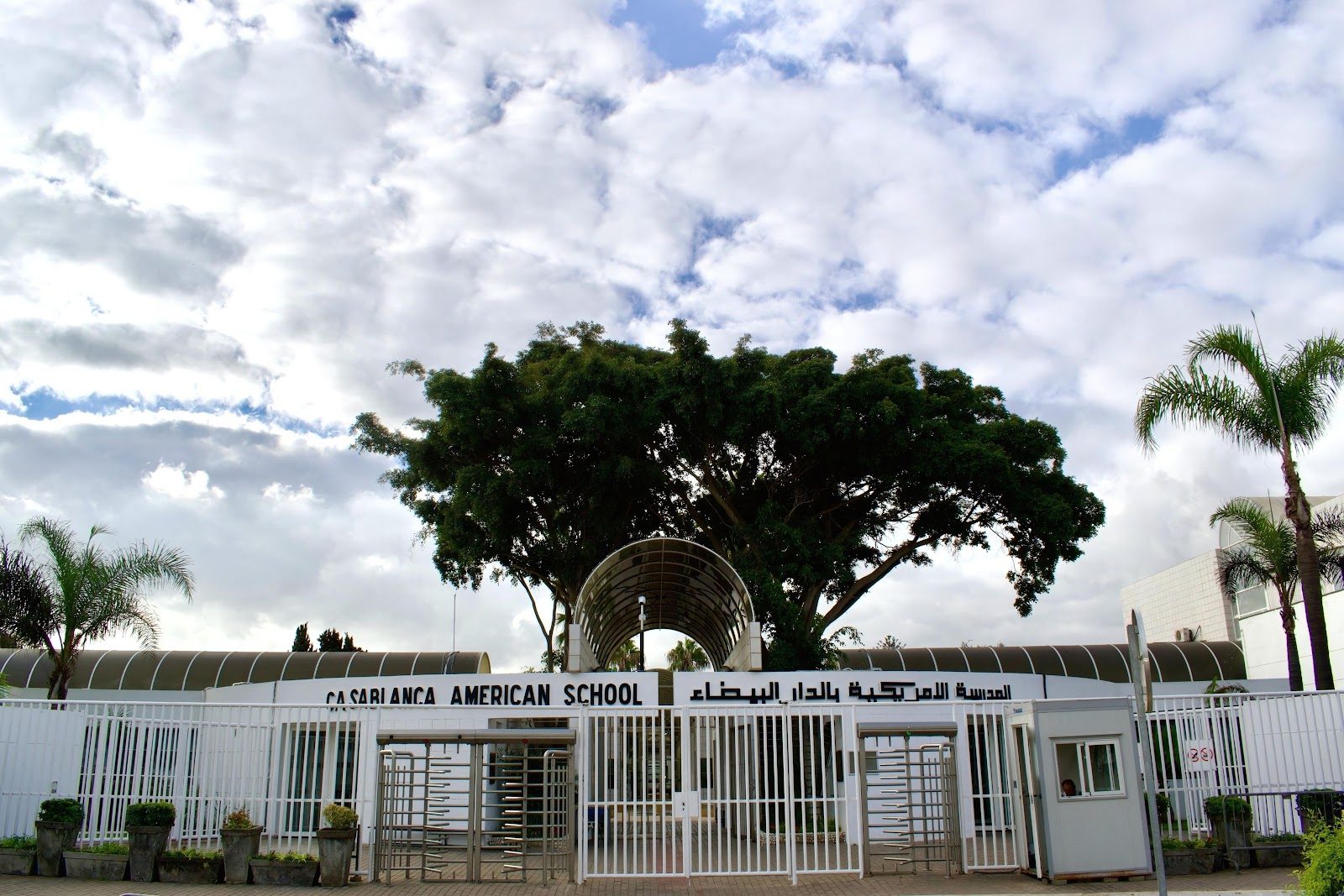
Casablanca American School
Casablanca · Morocco
North Africa's first full IB Diploma programme, paired since 1986 with an American university-prep track in Casablanca.
American School of Marrakesh
Marrakesh · Morocco
Outside Marrakesh, a dual-diploma campus pairs American college prep with the IB in English, French and Arabic classrooms.
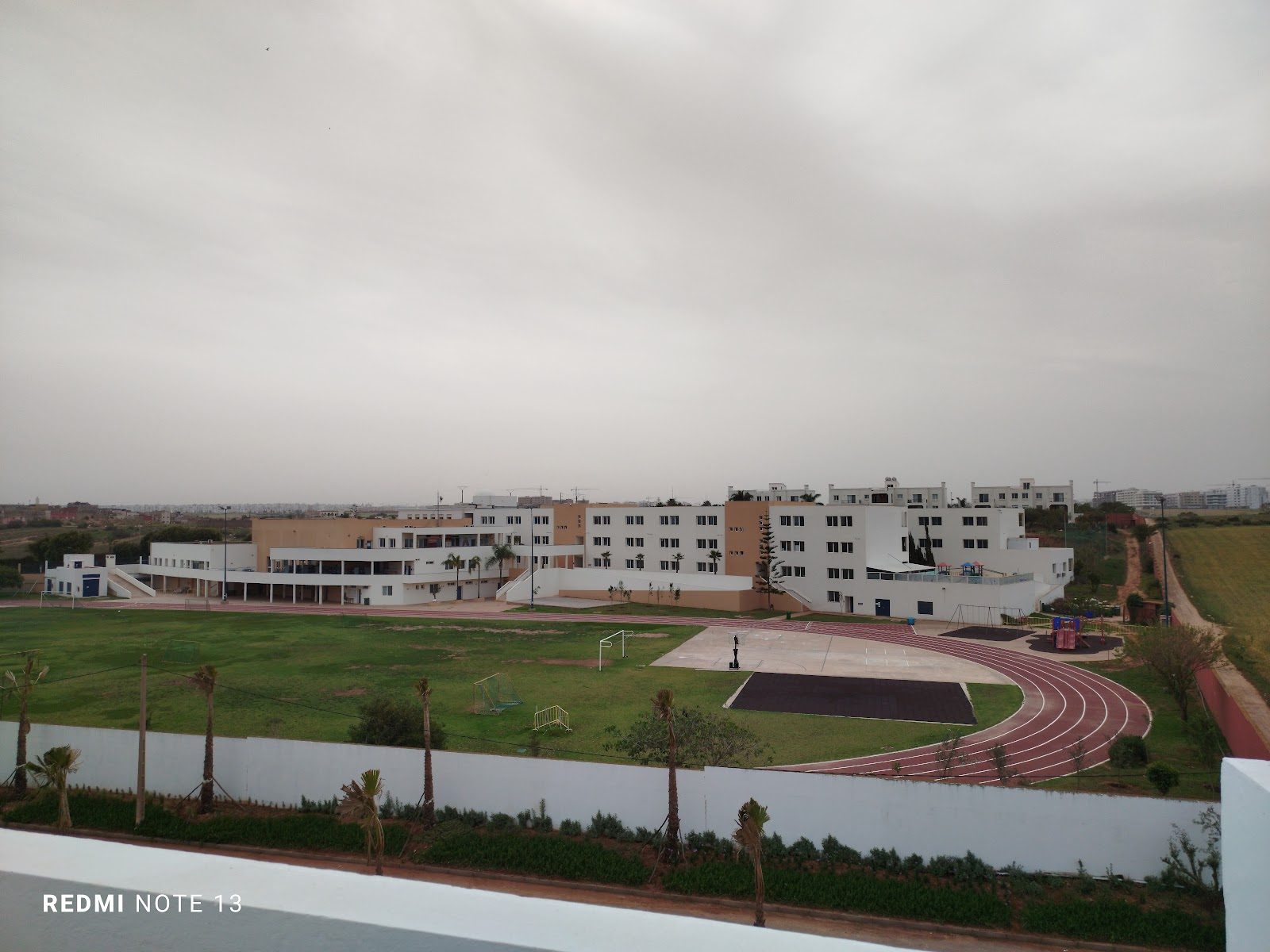
George Washington Academy
Casablanca · Morocco
American diploma meets IB rigor in trilingual Casablanca, anchored by Morocco's only LEGO Innovation Center.
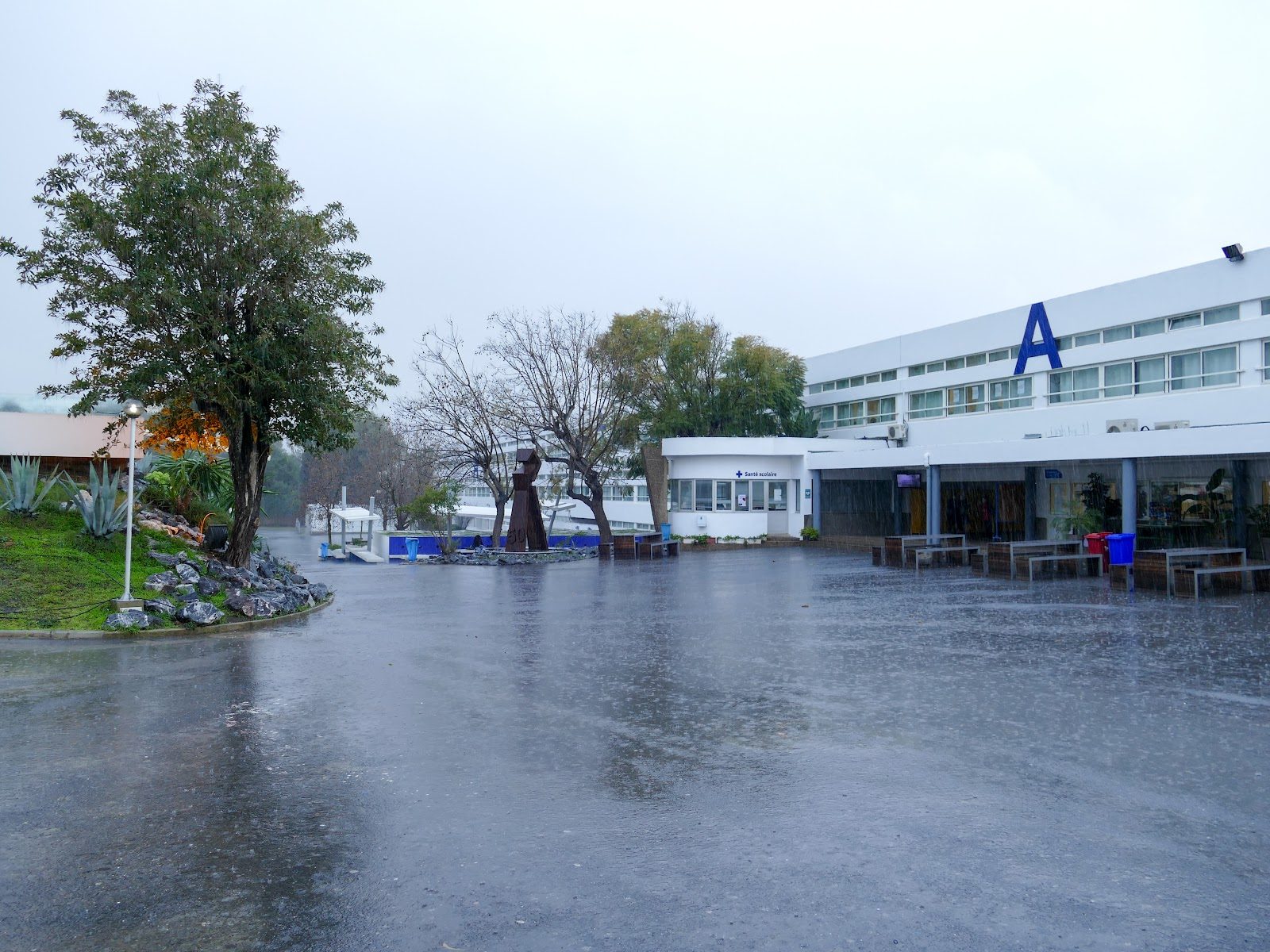
Lycée Descartes
Rabat · Morocco
In Agdal, graduates trade mortarboards for embroidered tarbouches, crowning a Baccalaureate pipeline that runs clear through to classes preparatoires.
Same country and curriculum — closest matches within ±10 points either way