
Seoul
Daewon Foreign Language High School
low confidence· 6/6 cats · 0 avg sourcesKorea's pioneering foreign-language school, pairing five-language immersion tracks with a Global Leadership Program aimed at Ivy League admissions.

Photo © 정보선 via Google Maps
Type
Day
Ages
15–18
Curriculum
Korean National
Ratio
—
The Verdict
Editor's commitment
Right for
Seoul families wanting a private, non-religious day school for ages 15–18, with Korean National curriculum taught in English.
Wrong for
Parents seeking boarding, a through-school beyond ages 15–18, or anything other than a Seoul-based private preparatory school.
Watch out for
The school trades on a sharp reputation, yet publishes no verified outcomes here; beyond Seoul, ages 15–18 and Korean National, detail is thin.
Ranking breakdown
Daewon Foreign Language High School · #374 of 1591
Composite score 70.9. 8 weighted criteria.
By criterion
Academic Outcomes
Weight 20%
#209
of 1529 scored
University Placement
Weight 16%
#187
of 1529 scored
Prestige & Heritage
Weight 12%
#91
of 1571 scored
Alumni Network
Weight 12%
#646
of 1530 scored
Facilities
Weight 12%
#1247
of 1533 scored
Transparency & Communications
Weight 8%
#1326
of 1532 scored
Peer & Industry Review
Weight 10%
#424
of 1548 scored
Admissions Selectivity & Demand
Weight 8%
#22
of 1529 scored
Peer & Industry Review
How Daewon Foreign Language High School is regarded in the sector
72
Respected · medium confidence
Daewon Foreign Language High School is consistently ranked by Korean press (JoongAng Ilbo, Chosun Ilbo) among the top two or three special-purpose high schools alongside Hansung and Seoul Foreign Language High Schools, based on university placement data rather than self-reported claims. Its reputation rests heavily on documented Ivy League and Oxbridge admissions, cited in Korean education-ministry statistics and university admissions counseling circles as evidence of unusually strong early-decision success for a non-international, Korean-curriculum school. Rival school administrators and hagwon consultants frequently reference Daewon as the benchmark for foreign-language-track college prep, though critics in Korean media (Hankyoreh, among others) have questioned the intense exam-focused culture and equity implications of the special-purpose high school system itself. International education commentary is thinner than for Western independent schools, since Daewon does not target inbound foreign enrollment, so it receives little coverage from outlets like Good Schools Guide or WhichSchoolAdvisor, which focus on UK/international markets. Its standing is thus strongest domestically and among university admissions offices tracking Korean applicant pipelines, rather than in global independent-school peer networks.
Editors' overview
Daewon Foreign Language High School occupies a distinct niche in Seoul: a private, academically selective day school for ages 15–18 built around foreign-language specialisation rather than a generic college-prep model. Its claim on any shortlist rests on focus. This is not a broad church comprehensive with a few strong language classes bolted on. It is a school for students who want an education shaped by linguistic intensity, academic competition and international ambition. The combination of the Korean National curriculum with English as the language of instruction gives it a sharper profile than many domestic high schools. For families targeting overseas universities, that matters.
What sets Daewon apart is the sense of high-pressure ambition built into the proposition. The school’s reputation rests on attracting students who are ready to work hard, thrive in a selective peer group and treat languages as a serious academic discipline, not an extracurricular flourish. The editorial tagline points to five-language immersion tracks and a Global Leadership Program aimed at Ivy League admissions; that signals a school geared towards prestige-conscious families and students with clear international intent. Parents who want a softer, more pastoral sixth-form experience should look elsewhere. Daewon suits teenagers who enjoy intensity, handle competition well and want to be surrounded by equally driven classmates.
In market terms, Daewon sits at the top end of Seoul’s specialist academic school landscape: status-heavy, demanding and tightly aligned with upwardly mobile families who value elite university trajectories. Its day-school format will suit households already based in Seoul; it offers no boarding fallback for international families arriving without local support. The strongest fit is a student who is already academically strong by 15, can cope with a fast pace through 18, and wants language learning to sit at the centre of school life rather than at the edges. For that child, Daewon offers serious academic traction, a disciplined peer culture and a clear identity. That clarity is its advantage.
Academic Performance
Daewon’s academic standing rests less on published school-wide exam data than on its long-entrenched reputation for sending a strong share of students into top Korean universities and selective overseas destinations. That reputation matters, but parents should note the gap between prestige and disclosure: the school does not publish aggregate external examination results in the public domain in the way many international schools now do with IB averages, AP score distributions or A-level grades. For a school with a high-status, results-driven profile, that opacity is a weakness. It leaves families relying on selectivity, university destinations and peer reputation rather than a clean results dashboard.
Relative to peers, Daewon sits in the elite academic bracket of South Korea’s specialist secondary market, with expectations closer to a pressure-cooker exam school than to a rounded comprehensive. The key comparison is not with broad international schools, which market transparent diploma outcomes, but with other academically selective Korean high schools where entrance standards and university placements carry more weight than polished public reporting. That makes Daewon formidable for the right student and hard-edged in its academic culture. It also makes due diligence more important. Parents should ask for recent university matriculation patterns, subject-level outcomes and any available standardised test data before treating the school’s reputation as sufficient proof.
Facilities
Daewon’s facilities matter less as a selling point in their own right than as infrastructure for a single-minded academic machine. The school’s identity points parents toward language-study spaces, standard classrooms built for intensive timetable use, and the specialist rooms needed to support a demanding secondary programme rather than a resort-style campus. That puts it closer to Korea’s selective urban exam schools than to sprawling international campuses that trade on theatres, aquatics complexes and manicured outdoor acreage. For families expecting a showpiece estate, this is the wrong benchmark. The real question is whether the physical plant supports concentration, throughput and disciplined study. That is the standard Daewon needs to meet.
Against peer schools, the likely advantage lies in focus, not breadth. A specialist foreign-language school needs strong library provision, serious classroom turnover, reliable academic technology and space for sustained independent work; it does not need the country-club excess that pads many premium-school prospectuses. Public information on Daewon’s campus facilities is thin, and that lack of detail is a weakness. We have not seen the kind of clear facility breakdown that top fee-charging schools now publish, down to labs, arts spaces and sports stock. Parents comparing Daewon with better-documented rivals should ask direct questions: how many language labs, what library resources, what performing-arts provision, what indoor sports capacity, and how heavily shared those spaces are. In this bracket, opacity is not a virtue.
We have not seen the kind of clear facility breakdown that top fee-charging schools now publish, down to labs, arts spaces and sports stock
Prestige
Daewon carries serious prestige in South Korea’s secondary market because entry itself functions as a status filter. This is not prestige built on glossy campus theatre or imported brand names; it rests on selectivity, a long-standing specialist identity and the social capital attached to winning a place at a school associated with elite academic ambition. The foreign-language focus sharpens that cachet. In a system crowded with strong generalist schools, a specialist institution that channels high-performing teenagers into competitive university pathways acquires scarcity value. For families who care about peer group, academic signalling and recognition among Korean educators, Daewon sits in the top-tier conversation.
The rating stops short of the absolute highest mark for one reason: public transparency does not match the strength of the name. A prestigious school earns extra authority when it publishes hard outcome data cleanly and consistently. Daewon does not do that. Its standing therefore relies more on reputation, admissions competitiveness and destination narratives than on a fully open results record. That still leaves it powerfully regarded and socially legible in the local market, but it also makes the prestige more insider-driven than evidence-led. In plain terms, Daewon gives students a high-status badge that carries weight in the right circles. Families who value visible, externally benchmarked proof need to ask harder questions before mistaking esteem for full accountability.
For families who care about peer group, academic signalling and recognition among Korean educators, Daewon sits in the top-tier conversation
Communications
Daewon communicates like a selective academic institution, not a hospitality brand. That has strengths and costs. Parents can expect functional transmission of timetables, requirements, deadlines and high-stakes academic notices; a school built around pressure and performance does not have the luxury of vague messaging. The problem is public-facing clarity. We have not seen a rich, parent-oriented communications ecosystem with the kind of detail many premium schools now treat as standard: regular leadership updates, transparent academic reporting frameworks, clear pastoral explanation, or deep website navigation in English. For international or first-time Seoul families, that creates friction. For local families already fluent in the system, it is less damaging. The school’s communications profile reads as institution-first, transactional and short on hand-holding.
Effectiveness therefore depends on what a parent needs. If the goal is to stay on top of academic process inside a demanding school culture, Daewon is set up to push information that matters. If the goal is broader reassurance, context and a strong sense of day-to-day school life, the offer looks thin. That judgment follows from the mismatch between the school’s stature and the limited public detail around outcomes, facilities and parent-facing explanation. Strong schools communicate standards before parents need to ask. Here, too much still sits behind enquiry or insider knowledge. For a school serving students across 3 senior years and built on 5 language tracks, that is a missed opportunity and a mark against overall openness.
Uniqueness
Daewon’s real distinction lies in specialisation with teeth. Many schools talk about global outlook; Daewon builds its identity around language mastery as the organising principle of school life. The editorial framing points to five immersion tracks, and that matters because it creates a peer culture where multilingual study carries status rather than sitting at the academic margins. For students, that brings more than improved fluency. It builds close reading, precision in expression, tolerance for complexity and an instinct to compare cultures through language rather than through slogans. Add the Global Leadership Programme and the school’s uniqueness sharpens further: this is a place where languages are treated not as enrichment but as strategic capital for high-stakes university ambitions.
That combination produces a student experience with a very specific shape. Teenagers here are trained to think competitively, write and speak with control, and operate in a cohort where intellectual stretch is normal. The benefit is obvious for pupils aiming at selective overseas admissions or language-heavy academic fields: Daewon gives them a clear runway and a distinctive profile against more generic applicants. The cost is just as clear. A school this focused leaves less room for drift, reinvention or a leisurely adolescence. Students who want breadth without pressure will find the model narrow by design. Students who want linguistic intensity and an elite-minded peer group will find few direct equivalents.
The rating stops short of the absolute highest mark for one reason: public transparency does not match the strength of the name
Student Profile
The students who fit Daewon best are the ones who treat school as a competitive craft, not a backdrop to adolescence. This is a strong match for teenagers who enjoy being measured against capable peers, can absorb correction without drama, and do not need constant reassurance to keep moving. The foreign-language structure raises the bar in a very specific way: students need verbal precision, stamina for memorisation, and real tolerance for repetition, nuance and formal study. A child who likes languages only in the casual sense—travel, pop culture, conversational novelty—will find the academic version far harder. A child who enjoys structure, ranking, intellectual rivalry and long hours of desk work will fit far better. Entry at 15 also matters: there is little runway for reinvention once the pace sets in.
Personality matters as much as grades. The school suits self-propelled, status-aware students with a clear appetite for selective university pathways and the discipline to sustain pressure through 3 senior years. It is a weak fit for adolescents who need a broad pastoral cushion, expansive extracurricular identity, or space to drift before deciding what they care about. Socially, the peer group will reward fluency, speed, consistency and ambition; students who are thin-skinned, disorganised or allergic to comparison will struggle. The right student will find the environment electrifying, hard-driving and deeply motivating. The wrong one will find it claustrophobic.
If the goal is to stay on top of academic process inside a demanding school culture, Daewon is set up to push information that matters
Co-curricular strengths
Arts & sport, on a separate axis
Overall 7.56/10
Scored 0-10 from the school's own published evidence. This axis is editorial-only — it does not feed the main WTS ranking.
Sports
7/10
Drama
7.5/10
Dance
7.5/10
Music
8.3/10
Visual Arts
7.5/10
Editor first-pass · editor-reviewable · 8/5/2026
Strengths
- +One of Korea's first two foreign language high schools, approved in 1983 and opened in 1984 alongside Daeil FLHS, giving it a long institutional track record.
- +Small-scale teaching environment with an average class size of around 25 students and a student-to-teacher ratio of roughly 14:1.
- +Students choose a specialised foreign-language major from Chinese, French, Japanese, Spanish or German, alongside mandatory Korean and English study.
- +Notable alumni include Samsung Group heiress Lee Boo-jin and professional golfer Ryu So-yeon, reflecting a longstanding presence among Korea's elite networks.
- +2011 admissions reform removed the English listening exam and barred use of outside test scores or extracurricular records, shifting toward a more holistic middle-school-record-based process.
Considerations
- −Since a 2010 government mandate, the school may only accept applicants residing within Seoul, closing the door to relocating families based elsewhere in Korea.
- −Primary language of instruction is Korean, which can be a significant barrier for expat children without strong Korean fluency.
- −As a specialised foreign-language school, the curriculum's core strength lies in languages and humanities rather than broad STEM depth.
- −Admission is highly competitive by nature of Korea's foreign language high school system, and reported annual tuition of around $5,000 sits on top of the common expectation of extensive private after-school (hagwon) preparation.
Availability
Primary entry gate & tests
Middle School English Grades + Interview
Gallery
Photo © 정보선 via Google Maps
Photo © 정보선 via Google Maps
Parent reviews
Have you sent your child here?
Voice reviews carry the strongest trust badge — we transcribe them for you to tidy up before they go live. Prefer to type? A written review is fine too.
Add your voice
In 60 seconds, tell other parents: what's the best thing about Daewon Foreign Language High School, and what surprised you when your child joined?
We ask for a Google sign-in so every review has a real face behind it — no anonymous drive-by attacks on schools, and no faked positive reviews. Your email is never shown publicly.
Send this profile to a friend
International parents rely on word-of-mouth. Share this review with someone weighing the same decision.
Schools with places
Similar schools to Daewon Foreign Language High School with places available now.
Availability first, then country, area, curriculum, price, co-curricular
Consider also
Also worth looking at alongside Daewon Foreign Language High School.
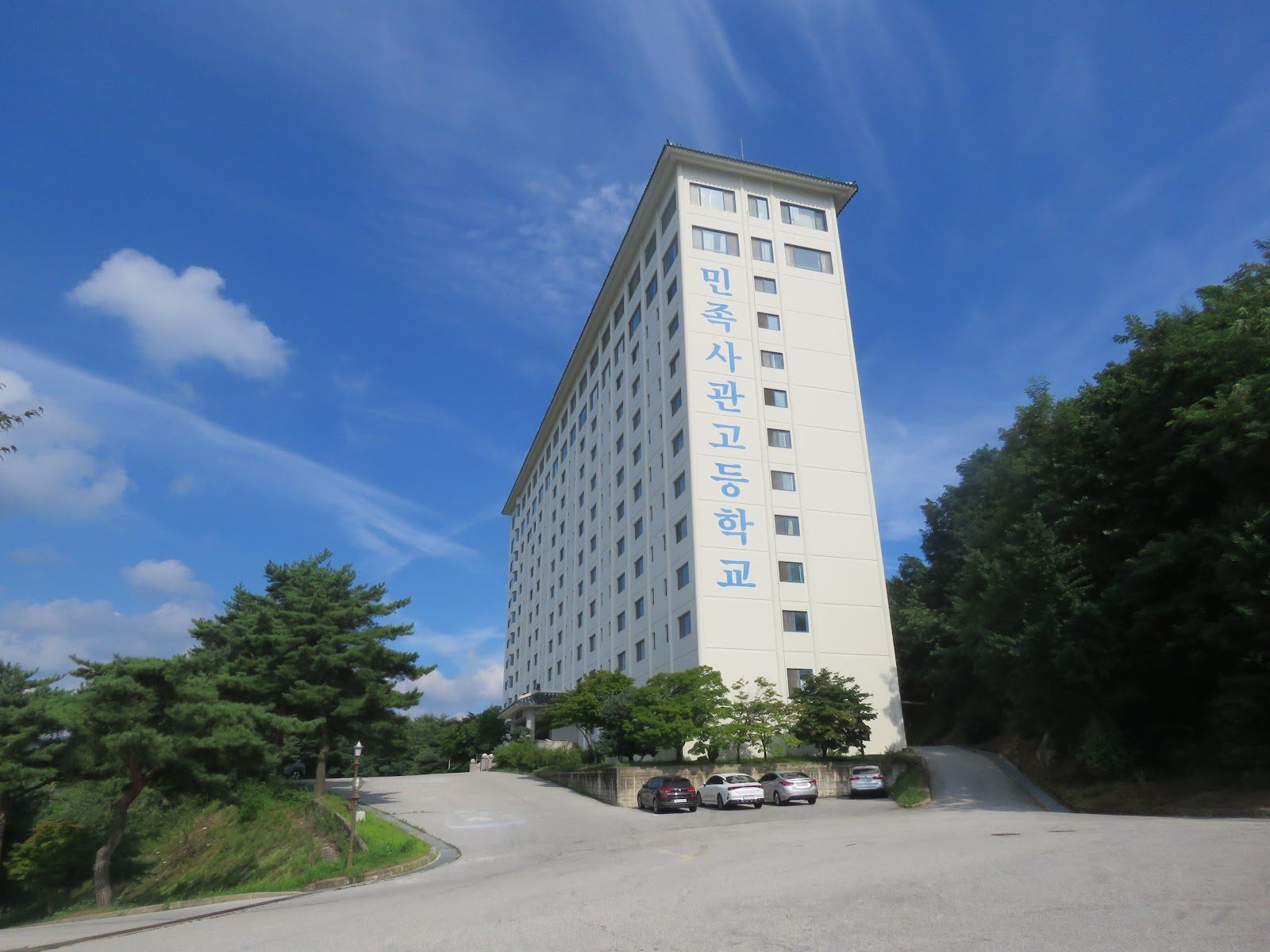
Korean Minjok Leadership Academy
Hoengseong · South Korea
On a Gangwon mountainside, hanbok-uniformed students hold English-only seminars, chasing an IB curriculum built to rival Eton.
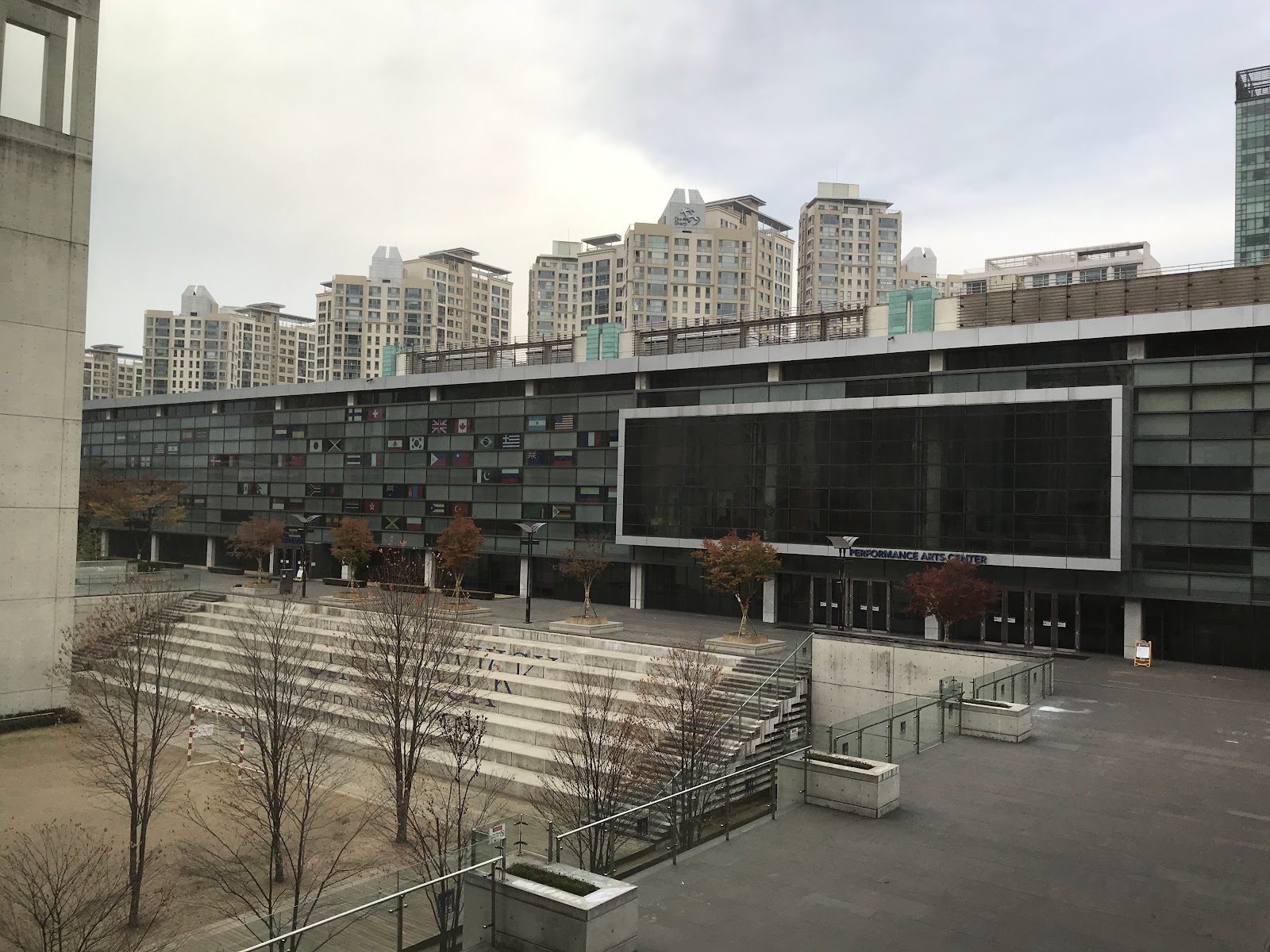
Chadwick International
Incheon · South Korea
One school, two continents: this Songdo campus mirrors a 1935 California founder, pairing IB rigor with mandatory outdoor-education expeditions.
Korea International School
Seongnam · South Korea
In Seongnam's Pangyo tech corridor, a dual IB-American track anchors a curriculum built around 24 Advanced Placement courses.

Seoul Foreign School
Seoul · South Korea
Founded in 1912 beside Yonsei University, first in Korea to adopt the IB, blending British, American and Clan-house traditions.
Same country and curriculum — closest matches within ±10 points either way