
Singapore
Six years, no O-levels, no A-levels -- just a bespoke diploma built around university-level math and science modules.
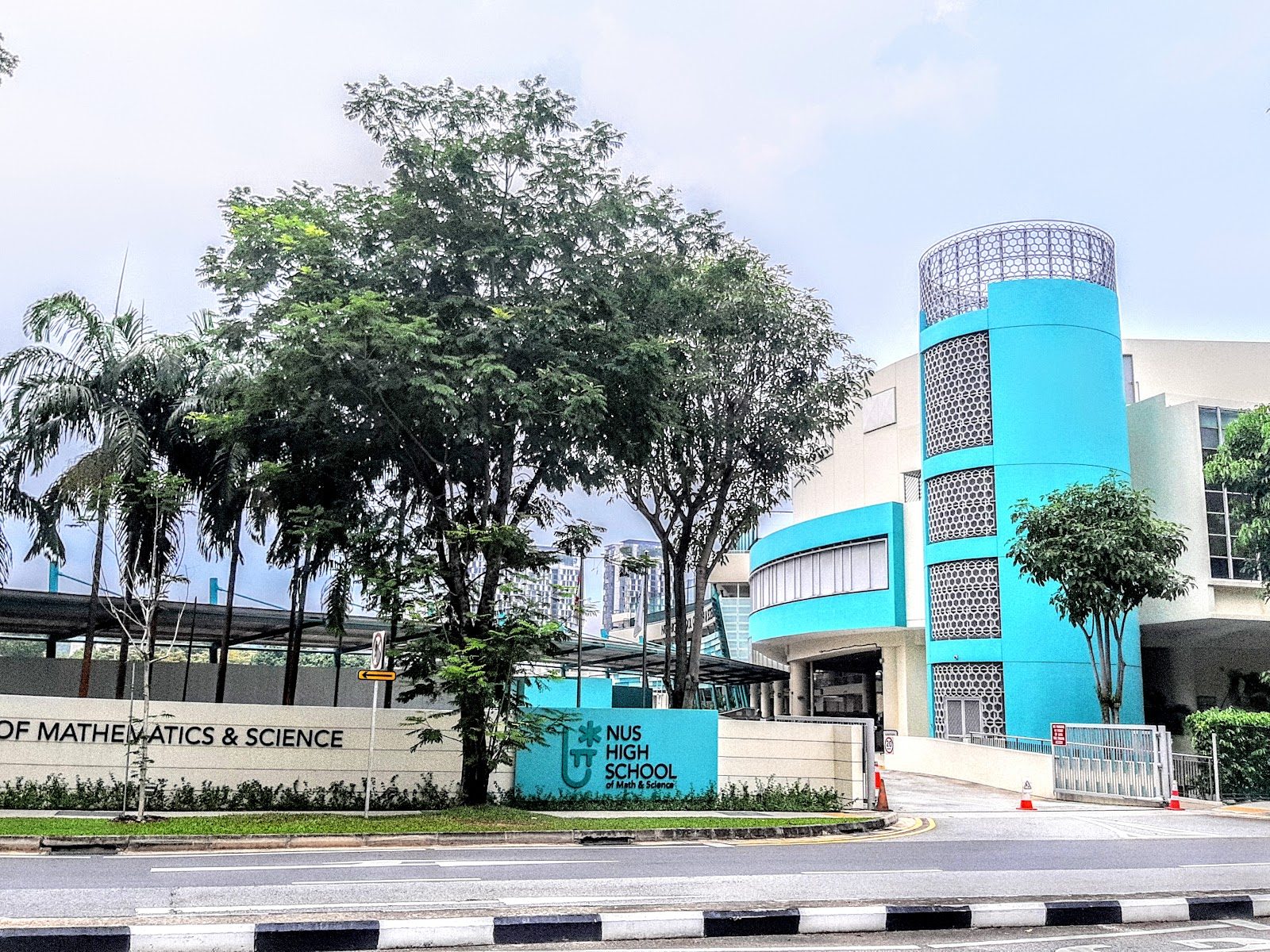
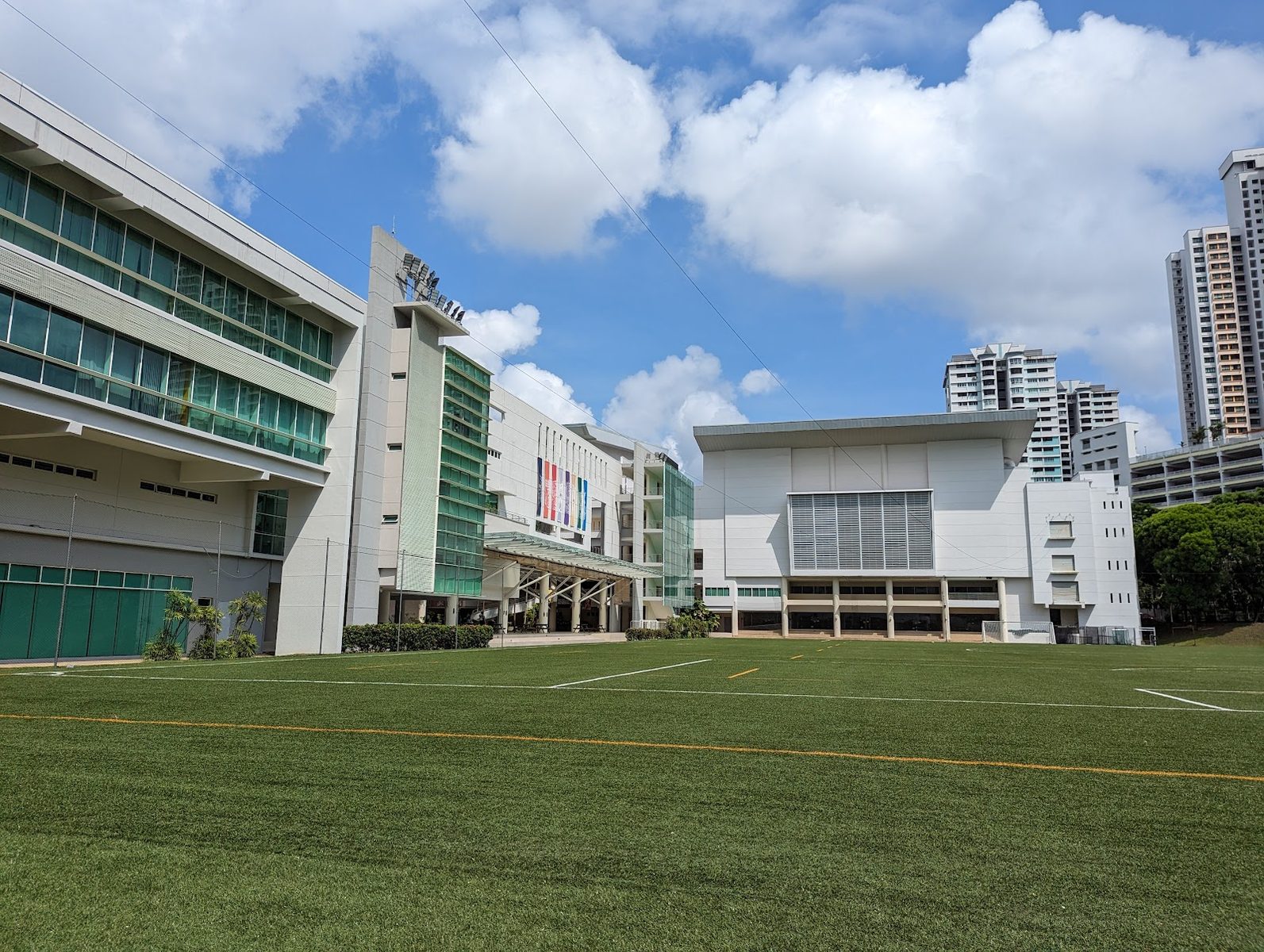
Photo © siang hang lim via Google Maps
Type
Day
Ages
12–18
Curriculum
Singapore National
Qualifications
Integrated Programme · NUS High School Diploma
Ratio
—
The Verdict
Editor's commitment
Right for
Children aged 12–18 who want six years of Singapore National schooling without O-levels or A-levels, ending in the NUS High School Diploma.
Wrong for
Families who want a conventional exam track, boarding, or a broad all-round brief; this 2005-founded day school is built for maths and science.
Watch out for
At SGD 33,600 a year on average, this independent day school sits in premium territory; CIS and IBO accreditation do not change its specialist remit.
Ranking breakdown
NUS High School of Math and Science · # of 1591
Composite score 78.9. 8 weighted criteria.
By criterion
Academic Outcomes
Weight 20%
#7
of 1529 scored
University Placement
Weight 16%
#24
of 1529 scored
Prestige & Heritage
Weight 12%
#438
of 1571 scored
Alumni Network
Weight 12%
#532
of 1530 scored
Facilities
Weight 12%
#188
of 1534 scored
Transparency & Communications
Weight 8%
#153
of 1532 scored
Peer & Industry Review
Weight 10%
#205
of 1548 scored
Admissions Selectivity & Demand
Weight 8%
#21
of 1529 scored
Score history
NUS High School of Math and Science · 2026
Movement across 2024–2026. Peer average overlaid.
Overall — 2024–2026
78.9/ 100
▲ +32.1 vs 2025
year on year
Peer & Industry Review
How NUS High School of Math and Science is regarded in the sector
60
Respected · medium confidence
NUS High School of Math and Science ranks among Singapore's most academically elite institutions, though it sits outside the international-school circuit that WhichSchoolAdvisor and SchoolsCompared typically cover, and neither has published a dedicated review of the school. Its standing instead rests on verifiable academic-sector signal: official records confirm it draws from the top 10% of the national PSLE cohort with an admissions rate below 8.5%, and Singapore Mathematics Olympiad results consistently place it winning Gold alongside Raffles Institution and Hwa Chong Institution, the country's two most prestigious academic brands. That evidences a formidable domestic peer reputation among educators and STEM competition circles, but as a specialised, MOE-linked school catering almost exclusively to Singaporean citizens and PRs, it has built little of the expat-facing editorial footprint that international parents typically consult. Coverage is therefore credible but narrow, strong on hard academic signal, thin on the third-party review commentary this guide's audience relies on.
Evidence sources
Award
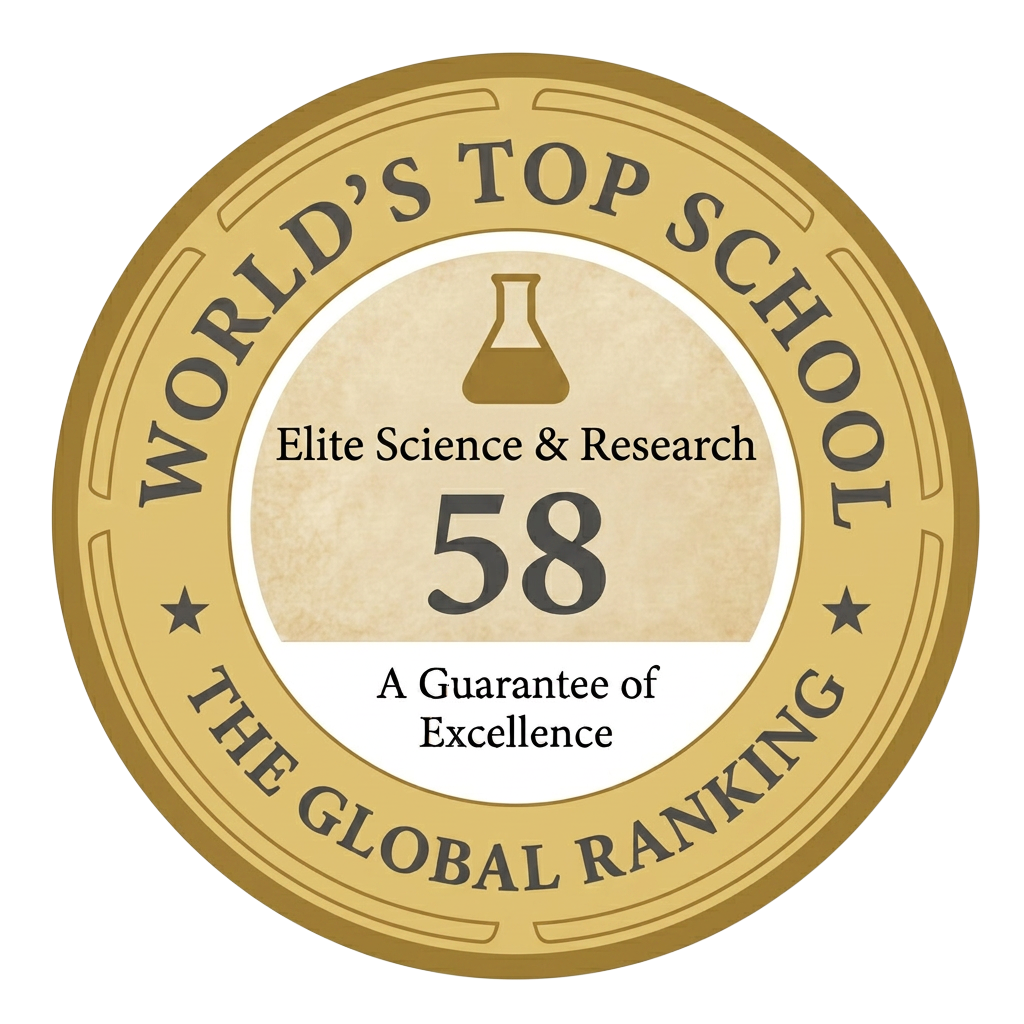
Elite Science & Research 58
World's Top School · The Global Ranking
NUS High School of Math and Science is featured on our Global Top 58 ranking at #2. This seal is available for the school's marketing team to use on their website, prospectus and social channels.
Award
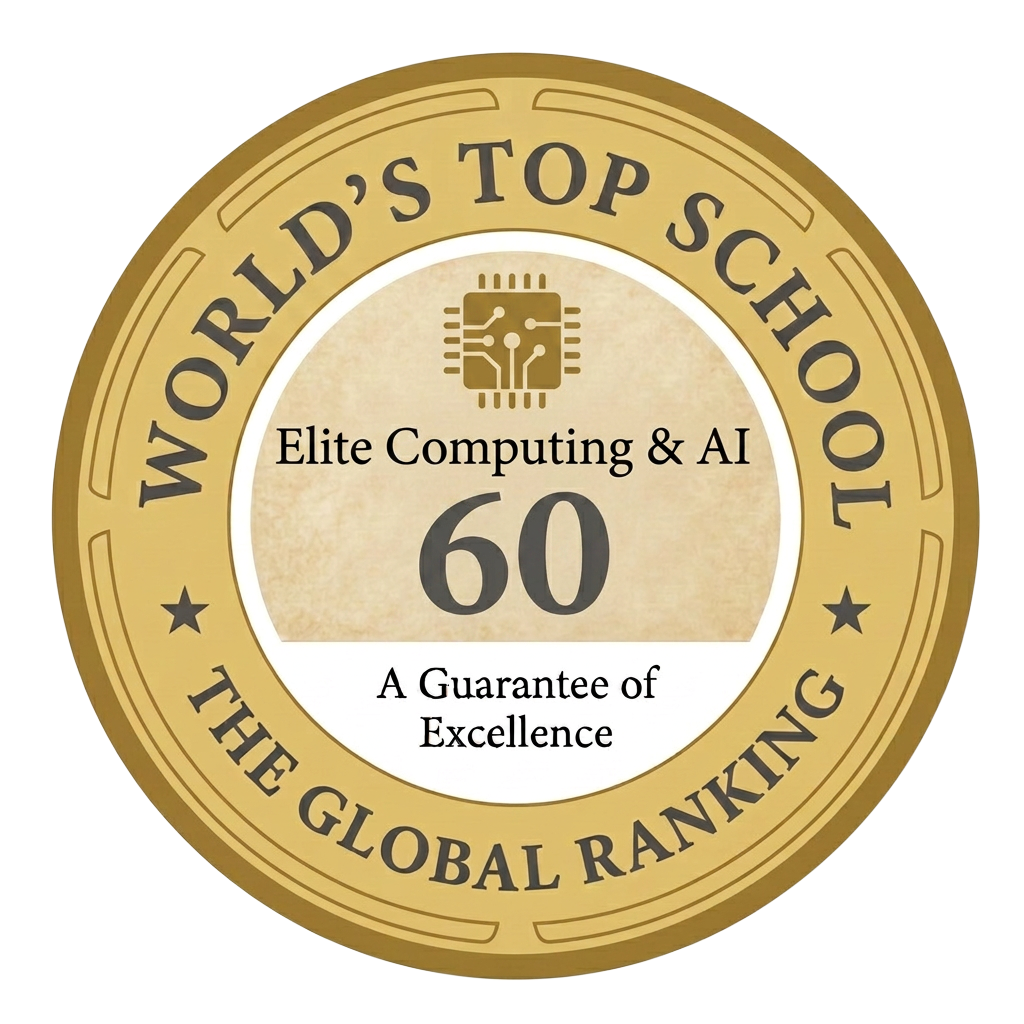
Elite Computing & AI 60
World's Top School · The Global Ranking
NUS High School of Math and Science is featured on our Global Top 60 ranking at #1. This seal is available for the school's marketing team to use on their website, prospectus and social channels.
Award
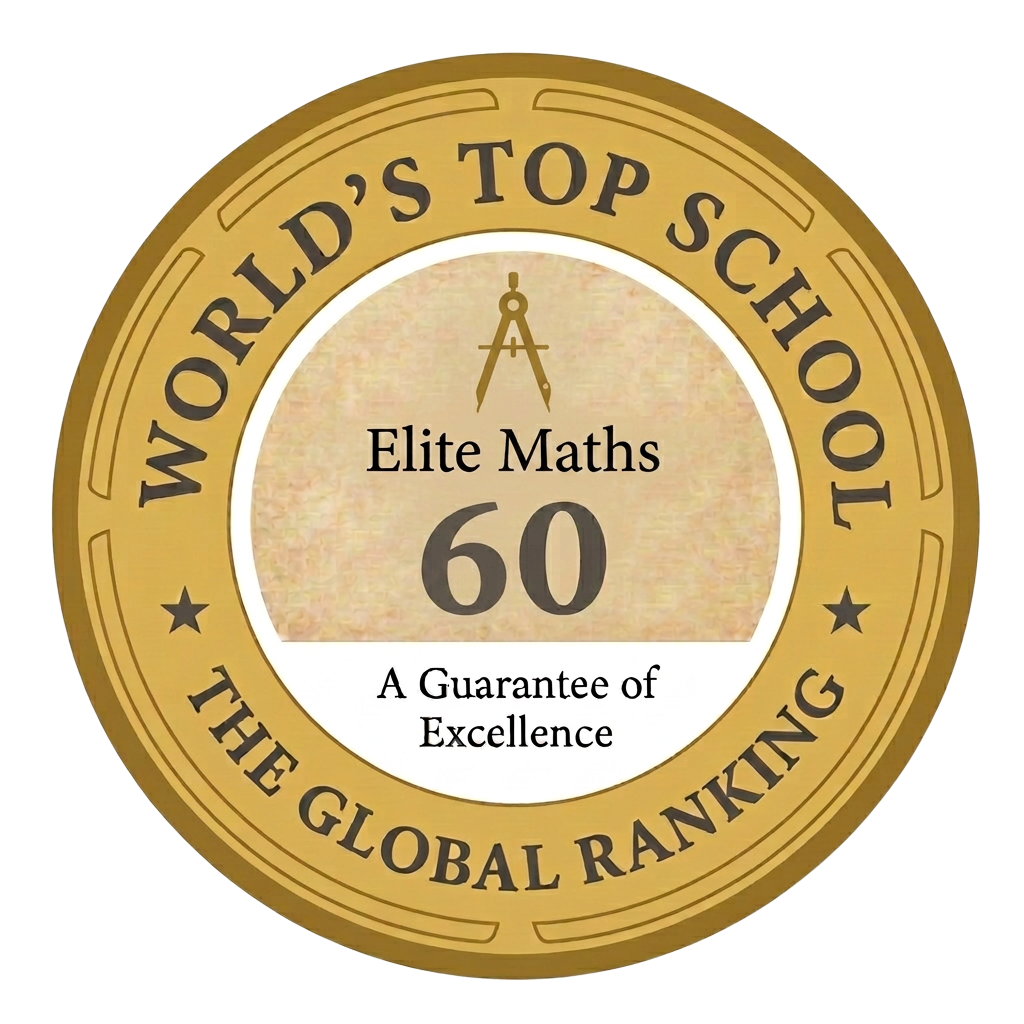
Elite Mathematics 60
World's Top School · The Global Ranking
NUS High School of Math and Science is featured on our Global Top 60 ranking at #7. This seal is available for the school's marketing team to use on their website, prospectus and social channels.
Editors' overview
Six years, no O-levels, no A-levels: NUS High School of Math and Science strips out the standard Singapore exam ladder and replaces it with a single Integrated Programme leading to the NUS High School Diploma. That alone puts it in a narrow category. This is a specialist day school in Singapore for ages 12 to 18, founded in 2005, with English as the language of instruction and a formal link to the National University of Singapore as its parent university. For families who want a conventional secondary school with broad mainstream pacing, this is not it. For families with a child who is genuinely hungry for maths and science, it has a clear claim on the shortlist.
What distinguishes the school is not branding but structure. The six-year programme gives it room to teach beyond the usual stop-start exam cycle, and the school’s own diploma signals that it is building its own academic pathway rather than preparing students for O-levels and A-levels. That is a serious academic proposition, not a cosmetic tweak. The focus is explicit in the name and in the model: this is a specialised independent high school built around maths and science. The international markers are there too — accreditations from IBO and CIS — but parents should read those as quality signals around external recognition, not as evidence that the school is running a standard international-school experience. It is operating inside the Singapore national context, in English, with a distinctly selective intellectual brief.
The fee level reinforces its position. At an average annual day fee of SGD 33,600 across the full six-year ladder, this sits in the expensive end of the local day-school market, though not at the level of a full expatriate luxury campus selling lifestyle as much as education. The value proposition is sharper than that: academic depth, specialisation and university adjacency. It will suit a student who likes abstraction, solves problems for pleasure and does not need constant reassurance to keep going. It will not suit a child who wants a broad, low-pressure school life with many exit ramps and second chances. NUS High is not for the faint-hearted; it is for students who want their secondary years shaped by intellectual intensity and who are ready, at 12, to commit to a six-year track that runs straight through to 18.
An Elite Science & Research 58 school
NUS High School of Math and Science, in Singapore, sits at rank two on the Elite Science & Research 58 because original research is not an enrichment extra here but a graduation requirement: every student in Years 5 and 6 must complete an Advanced Research Project, mentored by professors and researchers at leading universities and institutes, that contributes directly to their university admissions portfolio. That is full cohort penetration into sustained, externally mentored research, a rarity even among specialist science schools.
The architecture behind this is the Da Vinci Programme, culminating in a research project that typically runs nine to eighteen months and is generally mentored by professors, researchers and academics at NUS, other universities or polytechnics. Standout students are additionally selected for SCIENTIA, an eleven-month research programme run jointly with the NUS Faculty of Science in which they work under NUS faculty mentorship and present at the NUSHS Research Congress, alongside external tracks such as the NUS Science Mentorship Programme and the Nanyang Research Programme with NTU/NIE. The school's teams have translated this into results: Singapore's ISEF delegation, drawing heavily on NUS High entrants, won a record eleven awards at Regeneron ISEF 2025, and NUS High School teachers have personally led and trained national teams that won multiple medals at the International Chemistry, Physics and Biology Olympiads.
Notable alumni include Cheng Herng Yi (Class of 2011), who studied mathematics at MIT before becoming a Vanier Scholar and PhD candidate in Riemannian geometry at the University of Toronto, and Sankar Ananthanarayanan (Class of 2012), who founded the Herpetological Society of Singapore and now works on national biodiversity conservation research at NUS. Over 70% of graduates go on to pursue STEM degrees, with destinations spanning NUS, NTU and Ivy League, Oxbridge and other top overseas universities.
International openness runs through a dedicated DSA-Sec pathway for international students, who are exempt from the standard AEIS test given the school's specialised curriculum, though places are highly competitive against a cohort admitting roughly the top 10% of Singapore's national primary cohort. This is a day school with no boarding, instruction is entirely in English, and overseas families will need to arrange a Student's Pass through Singapore's immigration authority once an offer is secured. Fees for citizens are modest, but non-citizens should budget toward the higher end of typical Singapore school fee schedules for international students. Families should begin the DSA-Sec application process at least a year ahead of the September deadline, given the school's single annual January intake.
An Elite Computing & AI 60 school
NUS High School of Math and Science, in Singapore, sits at rank one on the Elite Computing & AI 60 on the strength of a single, hard fact: at the 2025 International Olympiad in Informatics in Bolivia, NUS High pupils Wei Bin and Jing Hong won Silver medals as part of a Singapore team that placed fifth out of 84 countries, the nation's joint second-best finish in 34 years of IOI participation. That is a direct, school-attributed medal at computing's toughest school-age competition, not a generic claim about STEM culture.
The specialism is built into the six-year NUS High Diploma. Every student takes CS1131 Computational Thinking in Year 1 before moving from broad Foundation Years into a genuine computer-science Specialisation stage. The school's Einstein+ Programme pairs talented students with NUS professors for research mentorship and dedicated Olympiad training, the pipeline behind a long run of National Olympiad in Informatics (NOI) results, including outright champions Tan Si Jie and Tia Shi Wei. Singapore's IOI squad is coached by faculty from NUS's School of Computing, ranked 13th globally and first in Southeast Asia for computer science by Times Higher Education.
The strongest named case is Ananya Kumar, an NUS High NOI gold medallist who went on to a Stanford PhD under Percy Liang and Tengyu Ma, then became a research lead at OpenAI and a core contributor to the o1, o3, GPT-4.5 and GPT-5 models, and now leads research at Meta's TBD Labs. Beneath him sits a continually refreshed bench rather than a single outlier - decades of NOI champions and, now, IOI medallists feeding the same pipeline.
Overseas applicants, resident in Singapore or entirely abroad, apply through the Year 1 Direct School Admission-Secondary exercise or the Year 3 route, and are explicitly exempted from the national AEIS-Secondary test given the school's specialised curriculum - though over 2,000 applications compete yearly for around 170 Year 1 places, an admission rate below 8.5 percent. Teaching is entirely in English. NUS High is primarily a day school, but boarding is compulsory in the research-heavy Year 5 and available earlier for international students, who need a local guardian. Non-ASEAN international secondary fees run to roughly S$2,190 a month under current MOE rates. Apply at least a year ahead of intake.
An Elite Mathematics 60 school
NUS High School of Math and Science, located in Clementi, Singapore, sits at rank seven on the Elite Mathematics 60. Its anchor credential is unambiguous: in 2012, NUS High student Lim Jeck became the first Singaporean to post a perfect score of 42 at the International Mathematical Olympiad, finishing ranked world number one among competitors from 100 countries.
The specialism runs deep rather than resting on a handful of stars. NUS High does not offer A Level or IB; instead it built its own modular NUS High School Diploma, mirroring the structure of its parent university, culminating in a Major or Major with Honours in Mathematics. Strong students take actual NUS undergraduate modules in lieu of school courses, including CS1231 Discrete Structures taught by NUS's School of Computing and an Honours Calculus module drawn straight from the university syllabus. Every student in Years 5 and 6 must complete an Advanced Research Project under the Da Vinci Research Programme, typically mentored by university or polytechnic academics. The school was named the West Zone Centre of Excellence for Mathematics in 2012, and in one recent IMO cycle its students alone made up half of Singapore's entire six-member national team, evidence that olympiad-level mathematics penetrates well beyond a token top tier.
Lim Jeck remains the school's defining name in mathematics, later returning to the Olympiad as an international coordinator. Cheng Herng Yi, a 2011 graduate, studied mathematics at MIT before pursuing a Vanier Scholarship-backed PhD at the University of Toronto, fusing geometry research with performance art.
International openness is limited but real. Overseas applicants enter via the MOE Direct School Admission (DSA-Sec) exercise for Year 1, or a separate Year 3 admission route, competing against roughly 2,000 applicants for around 170-180 places annually. NUS High is fundamentally a day school; its only residential element is a compulsory one-year in-house stay for all students during Year 5 to support research work, not a boarding pathway built for international recruitment. Instruction is entirely in English, with Mother Tongue subjects also required. Overseas families need a Student's Pass arranged through Singapore's immigration authority, and fees follow MOE's non-citizen school fee schedule, with non-ASEAN international students paying roughly S$2,190 a month at mainstream secondary level as a reference point. Families should confirm NUS High's own published rate directly and begin the DSA-Sec application in the year before entry.
Academic Performance
Academic performance here resists the usual Singapore shorthand because there are no O-level or A-level results to inspect. That cuts both ways. On one hand, the school is freed from the exam treadmill and can push able pupils further, faster, especially in the subjects that define the place. On the other, parents lose the easy benchmarking that comes with the mainstream national route. The key credential is the in-house diploma, and the public record in the sources here does not set out aggregate external examination data alongside it. That makes direct comparison with top junior colleges and Integrated Programme rivals harder than it should be. For a school with such a high-stakes academic model, more published outcome data would strengthen confidence.
Where does that leave it relative to peers? In practical terms, NUS High sits with Singapore’s selective, exam-defying schools rather than with conventional secondary schools. Its claim rests on the strength of its specialist pathway and its university link, not on headline public exam tables. That will appeal to families who value depth over standard metrics. It will frustrate families who want clean, market-tested indicators. The school’s reputation for academic seriousness is real enough; the published results picture is less transparent than the strongest data-rich competitors.
Facilities
Facilities here matter only insofar as they serve the school’s central purpose: advanced work in mathematics and science across a continuous six-year programme. The key asset is not a resort-style campus but proximity to a major university and the academic infrastructure that implies. For a specialist secondary school, that link is a serious operational advantage. It gives the school a more adult academic setting than most stand-alone campuses and fits the promise of higher-level study before university. Parents comparing it with Singapore’s top all-round independent schools should read this clearly: NUS High’s facilities proposition is strongest where laboratories, specialist teaching spaces and access to university-grade intellectual resources matter most. It is weaker as a glossy lifestyle sell.
That puts it in a distinct bracket. Against mainstream international schools, it does not trade on theatres, equestrian centres or hotel-like sports complexes. Against selective local peers, its edge lies in purpose-built academic intensity rather than breadth for breadth’s sake. Families choosing this school for elite sport or a country-club campus experience are shopping in the wrong market. Families choosing it for sustained scientific work, a hard-edged scholarly atmosphere and facilities aligned to that mission will find the priorities make sense. The school’s average annual fee of SGD 33,600 buys specialisation, not spectacle.
For families with a child who is genuinely hungry for maths and science, it has a clear claim on the shortlist
Prestige
NUS High carries serious academic prestige inside Singapore because it is not just another strong secondary school with a science badge attached. It runs a single six-year route, answers to the National University of Singapore, and awards its own diploma rather than feeding students through the standard public exam ladder. That combination gives it a rare institutional status: selective, specialist and structurally different. For the right student, admission signals more than high grades. It signals fit for an environment built around advanced quantitative thinking and sustained intellectual pressure from the start of secondary school. Among families who know the local landscape, that confers real cachet.
The prestige is not universal. This is not the polished, socially expansive prestige of an old all-round elite school, nor the international prestige of a global brand with campuses everywhere. Its standing is narrower and more exacting. It rests on academic seriousness in maths and science, on the credibility that flows from a parent university of NUS’s stature, and on the confidence to reject O-levels and A-levels outright. That makes the school distinctive in a crowded market. It also makes it a school whose reputation depends on intellectual culture more than public spectacle. The annual fee of SGD 33,600 reinforces that this is a high-value specialist proposition, not a mass-market option.
That makes direct comparison with top junior colleges and Integrated Programme rivals harder than it should be
Communications
Parent communication here has to do an unusual job. This is not a standard exam-track school where families can orient themselves around familiar external milestones. NUS High needs to explain a bespoke pathway, internal assessment logic and progression through a continuous 6-year programme with real clarity. The public-facing message that does come through is clean and intellectually coherent: the school tells parents what it is, what it is not, and whom it serves. That matters. Too many specialist schools bury the hard truth under glossy language. NUS High does not need that. Its university link and specialist mission are straightforward enough that the core narrative lands without strain.
The weaker point is outcome transparency. Parents making a commitment at 12 need more than institutional confidence; they need clear, repeated reporting on where students finish, how the diploma translates for universities, and how performance is tracked across the years. The absence of widely published aggregate benchmark data leaves a real communications gap. That does not mean the school is disorganised. It means families have to work harder than they should to test the strength of the model against external reference points. So the communication is strong on identity, weaker on proof. For a school asking families to buy into a high-commitment academic bargain, that imbalance matters.
Uniqueness
What makes NUS High distinct is not a branding exercise but a structural break with Singapore’s standard route. Pupils enter at 12 and commit to 6 uninterrupted years under one academic philosophy, with no O-levels, no A-levels and no mid-course reset into a different institution. The school also sits under the National University of Singapore, which gives the enterprise a rare institutional seriousness. For students, that changes the texture of secondary education. Strong mathematicians and scientists get more runway, more continuity and a timetable built for depth rather than exam choreography. The gain is obvious: less repetition, earlier exposure to advanced work, and a peer group selected for the same hard-driving academic appetite.
That structure brings clear benefits and clear constraints. A child who thrives on abstraction, problem-solving and sustained challenge will find a cleaner, tougher intellectual track than in broader all-round schools. The diploma matters here because it reflects the school’s own judgement of achievement rather than a generic national sorting mechanism. That gives teachers room to shape learning with more ambition. It also narrows the fit. Students who want a wider identity built around humanities breadth, social status or a conventional exam ladder get less of that here. NUS High offers something genuinely uncommon: a secondary education designed less as school-as-stage-management and more as early scholarly formation.
NUS High offers something genuinely uncommon: a secondary education designed less as school-as-stage-management and more as early scholarly formation
Student Profile
The best fit is a student who wants school to function as an intellectual workshop, not a holding pattern until public exams. This place suits children who enjoy hard problems, tolerate frustration, and get genuine satisfaction from precision, proof and extended independent thought. They need stamina as much as raw ability. A bright child who relies on last-minute revision, constant teacher prompting or external validation will struggle. So will a student who wants broad academic optionality before choosing a direction. The school asks for early commitment at 12 and then keeps the pressure on through a continuous 6-year run. That makes the peer group self-selecting, intellectually intense and, by ordinary secondary-school standards, unusually serious.
Socially, the strongest candidates do not need a loud, all-round campus identity to feel secure. They are content being defined, at least in part, by what they can think through and solve. That does not mean they need to be one-dimensional. It does mean they need comfort with a culture that puts academic depth at the centre of school life. Families with a child who wants constant variety, softer pacing or plenty of chances to reinvent themselves midstream should look elsewhere. NUS High works for pupils who are restless-minded, thick-skinned and happy in a community where scholastic ambition is normal, not apologised for.
That makes the peer group self-selecting, intellectually intense and, by ordinary secondary-school standards, unusually serious
Co-curricular strengths
Arts & sport, on a separate axis
Overall 7.24/10
Scored 0-10 from the school's own published evidence. This axis is editorial-only — it does not feed the main WTS ranking.
Sports
6.8/10
Basketball, badminton and swimming, and the external evidence adds various sports plus compulsory PE covering football, netball, basketball, badminton, floorball, baseball and access to a swimming pool, indicating a solid multi-sport offering without clear evidence here of competitive distinction or dedicated school-owned athletics facilities.
Drama
7/10
External evidence explicitly names a Drama Club.
Dance
7.2/10
External evidence explicitly names a Dance Club.
Music
8/10
Concert Band and Choir, while external evidence adds Chinese Orchestra, High School Choir, School Orchestra and music rooms, which together show multiple ensembles plus a dedicated music facility.
Visual Arts
7.2/10
The only evidence is broad reference to 'arts' and 'humanities & the arts' in the curriculum, with no explicit visual-arts club, department, studio, exhibition programme or specialist facility named.
Editor first-pass · editor-reviewable · 7/28/2026
WTS 300 badge
2025/26 editionNUS High School of Math and Science is one of the World's Top 300 Schools for 2025/26. Claim your listing to add it to your site →
Strengths
- +Specialised independent school run in partnership with the National University of Singapore, offering a six-year Integrated Programme that bypasses the O-Levels and leads to its own diploma.
- +Curriculum acceleration lets top students skip standard modules and take university-level material; for example, students are admitted at Year 1 or Year 3 after tests assessing their understanding and passion in mathematics and the sciences.
- +The NUS High School Diploma is recognised by the National University of Singapore, Nanyang Technological University, Singapore Management University and a range of overseas universities, including Ivy League and Oxbridge institutions.
- +Over 70% of graduates go on to pursue Science, Technology, Engineering and Medicine-related courses at university.
- +All students complete a mandatory Advanced Research Project under the school's Da Vinci Research Programme, giving early exposure to independent research.
Considerations
- −Admission is extremely competitive: the school receives over 2000 applications for around 170 Year 1 places annually, drawing from the top 10% of Singapore's national primary school cohort.
- −Unlike other Integrated Programme schools in Singapore, it does not offer A-Level or International Baccalaureate programmes, so families are committing to its own, less internationally standardised diploma track.
- −The curriculum is deliberately narrow and STEM-heavy; humanities and arts are taught but are secondary to the accelerated mathematics and science focus, which will not suit every learner.
- −Historical fee data indicate a marked gap between local and non-citizen charges (around S$300/month for citizens versus roughly S$930-S$1,200/month for ASEAN and non-ASEAN international students as of 2013), so relocating families should confirm current rates directly with the school.
Availability
Primary entry gate & tests
STEM DSA (Year 1 is 100% DSA)
Gallery
Photo © Tri Anh Nguyen via Google Maps
Photo © Spherical Cat via Google Maps
Photo © Spherical Cat via Google Maps
Photo © Hui-chieh Loy via Google Maps
Photo © Mokkie Mok via Google Maps
Photo © Mokkie Mok via Google Maps
Photo © Mokkie Mok via Google Maps
Photo © Mokkie Mok via Google Maps
Photo © See Ming Jie via Google Maps
Parent reviews
Have you sent your child here?
Voice reviews carry the strongest trust badge — we transcribe them for you to tidy up before they go live. Prefer to type? A written review is fine too.
Add your voice
In 60 seconds, tell other parents: what's the best thing about NUS High School of Math and Science, and what surprised you when your child joined?
We ask for a Google sign-in so every review has a real face behind it — no anonymous drive-by attacks on schools, and no faked positive reviews. Your email is never shown publicly.
Send this profile to a friend
International parents rely on word-of-mouth. Share this review with someone weighing the same decision.
Schools with places
Similar schools to NUS High School of Math and Science with places available now.
United World College of South East Asia
Singapore · Singapore
- 2026-27
- CLOSEDStandard route
- 2027-28
- OPENS SOONOpens 1 Sept '26 (Closes 2 Nov)
Anglo-Chinese School (Independent)
Singapore · Singapore
- 2026-27
- CLOSEDStandard route
- 2027-28
- WAITPOOLDSA completing; PSLE & JAE pending
Hwa Chong Institution
Singapore · Singapore
- 2026-27
- CLOSEDStandard route
- 2027-28
- WAITPOOLDSA completing; PSLE & JAE pending
Raffles Institution
Singapore · Singapore
- 2026-27
- CLOSEDStandard route
- 2027-28
- WAITPOOLDSA completing; PSLE & JAE pending
Availability first, then country, area, curriculum, price, co-curricular
Consider also
Also worth looking at alongside NUS High School of Math and Science.
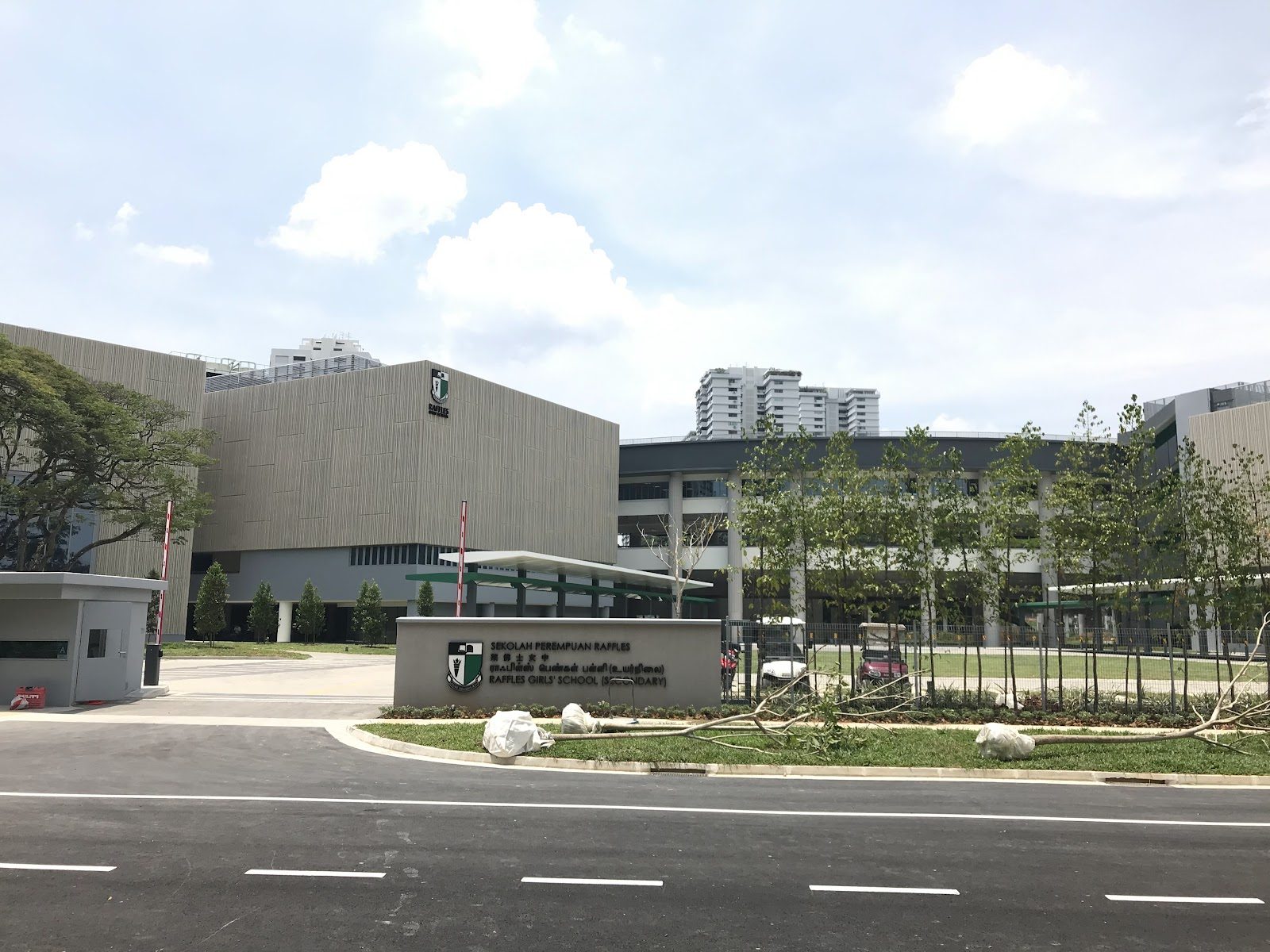
Raffles Girls' School
Singapore · Singapore
Singapore's storied all-girls secondary school offering a seamless six-year Integrated Programme from Secondary 1 through to A-Levels.
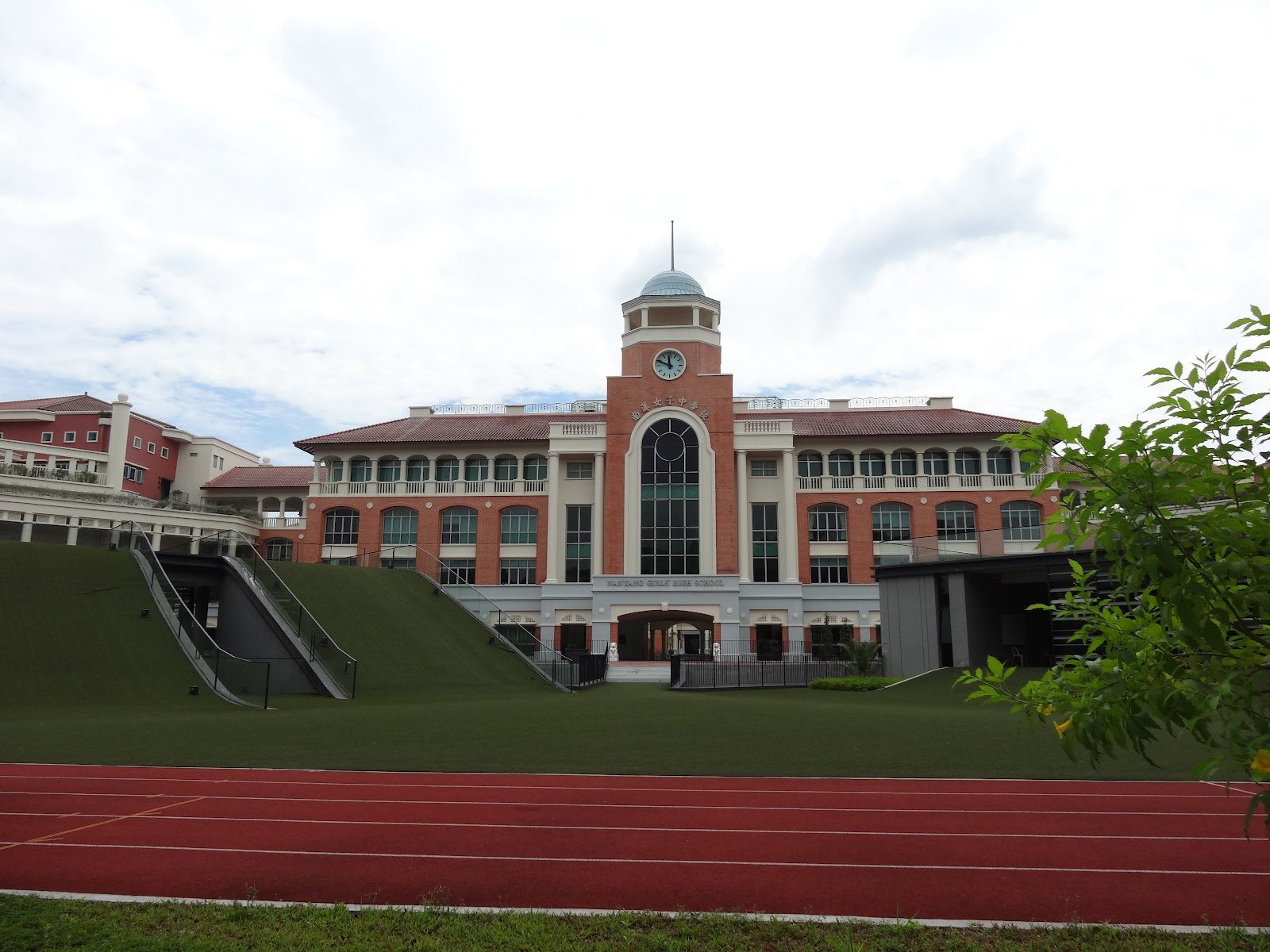
Nanyang Girls' High School
Singapore · Singapore
Founded in 1917, this Bukit Timah SAP school blends bilingual rigor with a six-year IP pathway feeding straight into Hwa Chong Institution.
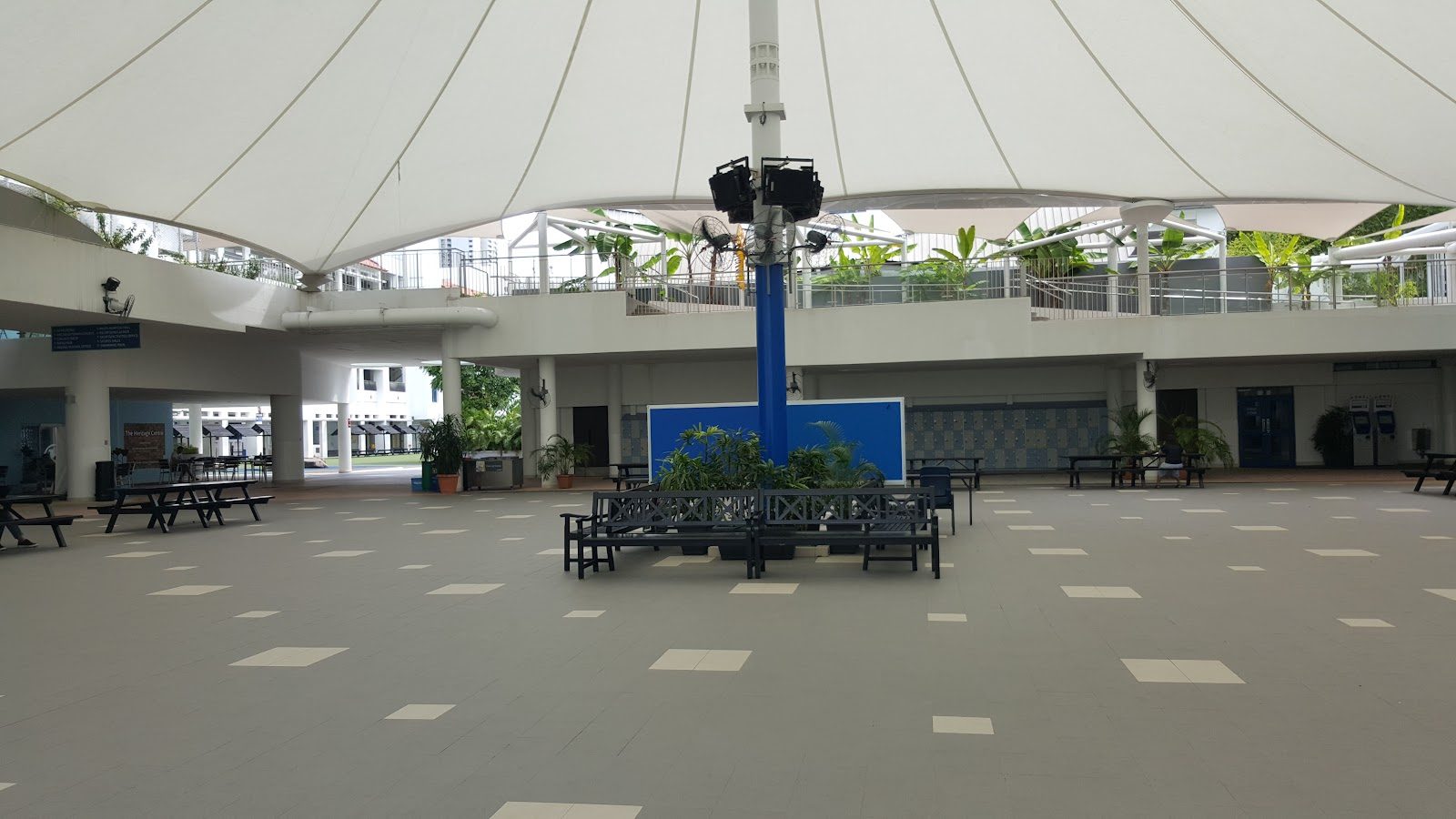
United World College of South East Asia
Singapore · Singapore
Across two Singapore campuses, service learning anchors an IB path capped by a rare Systems Transformation course for change leadership.
Anglo-Chinese School (Independent)
Singapore · Singapore
Singapore's first IB Diploma school, this Methodist boys' campus on Dover Road has ranked among the world's top three IB scorers for years.
Same country and curriculum — closest matches within ±10 points either way