
Greater London
Chartered by Elizabeth I in 1565, this Highgate grammar school now founds access academies alongside its Oxbridge-bound sixth form.
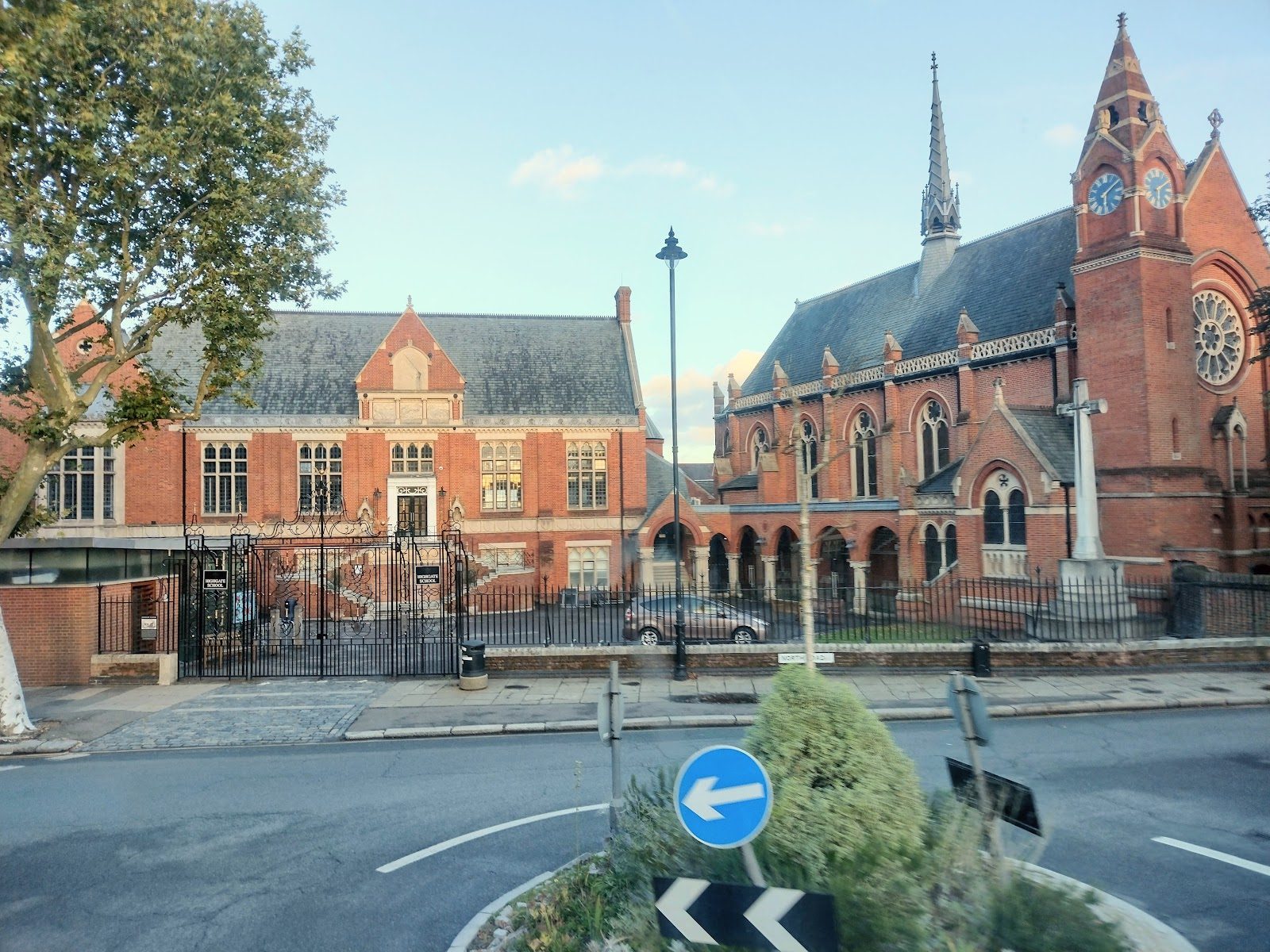
Photo © Lorna via Google Maps
Type
Day
Ages
11–18
Curriculum
British
Qualifications
A-Level
Ratio
10:1
The Verdict
Editor's commitment
Right for
Academically ambitious London families who want a serious British sixth form: 26 Oxbridge places, 91% to top-100 universities, 10:1 staffing.
Wrong for
Parents after bargain day schooling or a softer culture; the average annual fee is £33,000 and Highgate trades on scholarship.
Watch out for
This is a day school, not a pastoral cocoon: classes average 18, destinations skew hard to Oxford, Cambridge, UCL and Russell Group.
Ranking breakdown
Highgate School · # of 1591
Composite score 78.6. 8 weighted criteria.
By criterion
Academic Outcomes
Weight 20%
#119
of 1533 scored
University Placement
Weight 16%
#104
of 1529 scored
Prestige & Heritage
Weight 12%
#90
of 1580 scored
Alumni Network
Weight 12%
#62
of 1530 scored
Facilities
Weight 12%
#266
of 1540 scored
Transparency & Communications
Weight 8%
#154
of 1547 scored
Peer & Industry Review
Weight 10%
#137
of 1564 scored
Admissions Selectivity & Demand
Weight 8%
#153
of 1529 scored
Score history
Highgate School · 2026
Movement across 2024–2026. Peer average overlaid.
Overall — 2024–2026
78.6/ 100
▲ +23.5 vs 2025
year on year
Peer & Industry Review
How Highgate School is regarded in the sector
88
Strong · high confidence
Highgate School occupies a firmly top-tier position within London's independent sector, ranking among only twelve schools in the exclusive "Eton Group," a grouping widely recognised for its "reputation for prestige and exclusivity." Peer-facing review coverage is emphatic on results: WhichSchoolAdvisor notes the school "continues to deliver exceptionally strong academic outcomes," with pupils achieving 94% grades 9-7 at GCSE in 2025, while the Good Schools Guide's independent verdict calls it "impressive, providing a stimulating academic education with outstanding teaching and results delivered in a holistic environment." Its status as a founding HMC member alongside its Eton Group membership cements a benchmark reputation rather than a merely local one, and reviewers note it is genuinely selective, "only accepting those it feels confident can benefit from and enjoy the education it provides." Coverage across specialist and mainstream press is consistently strong, reflecting a well-established reputation among sector peers and the expat parent community.
Evidence sources
Editors' overview
Highgate trades on two things at once: old English academic seriousness and a modern access agenda. Chartered in 1565, Anglican in foundation and now fully co-educational, it runs a British senior school and sixth form with a clear scholarly bias, but the point is not old-school narrowness. The school talks about scholarship and independence rather than exam drilling, and the numbers back up a sixth form with real traction: from 175 leavers in 2024, 91% went to top-100 universities, with 26 to Oxbridge and 50 to Russell Group institutions. That places Highgate in the hard-edged academic bracket of London day schools. The average annual fee across ages 11 to 18 is £32,787, which is expensive, but not absurd by top north London independent standards.
What marks Highgate out is breadth without drift. A 10:1 student-teacher ratio and average class size of 18 give it room to teach ambitiously without turning every lesson into a lecture hall. The school’s public language is full of co-curricular breadth, charitable partnerships and emotional readiness for adult life; plenty of schools say the same, but Highgate has the institutional weight to make it credible. Its alumni footprint is deep, with at least 302 notable former pupils catalogued in Wikidata across politics, scholarship, journalism, the arts and sport. That matters less as bragging rights than as evidence of a school that has produced influence across many fields, not just a conveyor belt into finance and law. ISI and HMC accreditation place it squarely inside the established British independent mainstream.
This is not a school for a child who wants a soft landing or low-pressure anonymity. It suits bright, self-propelling students who want a serious intellectual culture, a substantial sixth form, and peers who are aiming high without needing constant theatrical motivation. It will also appeal to families who want academic prestige without a purely transactional exam factory, and who value bursary provision as part of a school’s moral credibility. Highgate belongs on a shortlist because it combines historic heft, strong university outcomes and a broader civic instinct in a way few London day schools manage cleanly. For the right pupil, it offers a demanding but grown-up education rather than a polished hothouse.
Academic Performance
Highgate’s public academic signals put it in the top tier of London day schools, not in the merely respectable middle. The school cites 87% of A level grades at A*–A and records a large Oxbridge haul in the same results cycle. That is hard evidence of serious attainment, even in a market where selective independents all trade on strong outcomes. More important than the headline is the school’s own emphasis: scholarship and independence over exam drilling. Plenty of schools make that claim; fewer can pair it with results at this level. The fit relative to peers is clear: Highgate sits with academically ambitious London independents that send substantial numbers to the most competitive universities, but without reducing the sixth form to a narrow marks factory.
There is, however, one caveat. The school broadcasts top-end outcomes but does not publish the fuller spread that sharper parents want: no public aggregate GCSE profile in the source extracts, no subject-by-subject breakdown, and no longer run of comparable exam data across multiple years. That leaves the reader with a strong snapshot rather than a full performance audit. Even so, the available indicators place Highgate in the serious, selective bracket: a school for pupils who can thrive in a high-pressure academic environment and convert strong teaching into elite university offers. In peer terms, this is genuinely competitive territory, not just polished branding.
Facilities
Highgate’s facilities read as those of a large, fully developed London independent school rather than a cramped urban day school making do with borrowed space. The public picture points to specialist provision across science, music, drama and sport, with the school’s own examples ranging from ensembles and casts to a serious STEM culture and subject-based fieldwork such as A level geography trips to Iceland. That breadth matters. Among academic London day-school peers, the dividing line is not whether a school has labs, performance space and playing provision, but whether those assets are extensive enough to support real depth beyond lesson time. Highgate clears that bar. The structure across pre-prep, junior, senior and sixth form also gives it the feel of a full-service institution, not a stand-alone senior school with thinner foundations underneath.
The limit is visibility. Highgate talks confidently about opportunity, but it does not publish the kind of hard facilities detail that exacting parents now expect: no clean public inventory of major spaces, no concise campus factsheet, no headline counts for studios, courts or specialist rooms. That makes comparison less precise than it should be. Even so, against its direct competitors, the school looks well resourced and operationally mature, with enough infrastructure to sustain ambitious academics, arts and partnerships work at scale. This is not a school selling one showpiece building. It offers the broader asset base of an established North London heavyweight, which for many families is the more useful thing.
The average annual fee across ages 11 to 18 is £32,787, which is expensive, but not absurd by top north London independent standards
Prestige
Highgate carries real metropolitan prestige: old institutional weight, serious academic selection and a public identity that extends beyond its own gates. In London’s independent-school hierarchy, it sits in the upper band of day schools that parents mention alongside the capital’s established academic names, not as a finishing school for polish but as a place for high-achieving, intellectually driven children. The prestige rests on more than age and architecture. University exits are strong at scale, the sixth form has clear pull for ambitious families, and the school’s alumni record is unusually deep across politics, scholarship, journalism, the arts and sport. A verified minimum of 302 notable former pupils gives that claim substance. This is earned status, not social-media gloss.
What sharpens Highgate’s standing is that it couples elite outcomes with civic seriousness. Its role in founding the London Academy of Excellence, sponsoring London Academy of Excellence Tottenham and funding the Chrysalis Partnership pushes it beyond the cloistered independent-school model. That matters. Plenty of prestigious schools protect their brand; fewer use it to build credible access and partnership work at system level. The bursary offer also strengthens the school’s moral authority, because fee-charging schools need more than rhetoric on access. There is one limit to the prestige case: Highgate projects intellectual seriousness more than glamour. Families chasing maximum social cachet or a more theatrical version of elite schooling may look elsewhere. Families who value substance over flash will rate Highgate very highly.
Highgate’s public academic signals put it in the top tier of London day schools, not in the merely respectable middle
Communications
Highgate communicates like a large, confident school with a lot going on and no interest in dumbing itself down. The website is busy but information-rich: clear routes into senior school and sixth form pages, visible parent and staff portals, a live news stream, staff and pupil blogs, and direct signposting to bursaries, visits and applications. That gives parents multiple entry points depending on what they need. The tone is assured, adult and more intellectually serious than the synthetic warmth many independents now paste over everything. The school also puts named senior voices in front of families — pastoral, access, geography, junior teaching — which helps. You get a sense of actual institutional life rather than pure brand management.
The weakness is compression. Highgate publishes plenty, but not always in the most parent-efficient form. Important operational detail sits inside a dense, promotional homepage rather than in sharper summary pages, and the facilities picture remains thinner than it should be for a school of this scale. Results messaging is strong on headline triumphs and weaker on full comparative data, which leaves communications selective where exacting parents want clean disclosure. Still, for day-school families the essentials are in place: a functioning parent portal, visible internal voices, regular news, and a communications style that treats parents as literate adults. That is refreshing. It will suit families who prefer substance to glossy hand-holding, and irritate those who want every key fact laid out in a single neat grid.
Uniqueness
What makes Highgate distinctive is not simply age or selectivity, but the combination of old-guard academic confidence with a serious public-access programme outside its own fee-paying walls. This is a school secure enough in its own status to invest institutional energy in founding and backing academies and in supporting 26 state schools through the Chrysalis Partnership. That matters because it changes the tone of the place. The school’s talk of community and responsibility has harder edges than the usual independent-school benevolence. Pupils are educated inside a culture that treats intellectual ambition as normal, but does not frame privilege as self-justifying. For families who dislike the closed social logic of some elite London schools, that is a meaningful differentiator.
For students, the payoff is a sixth form and senior school that marry high academic voltage with wider adult formation. The public emphasis on scholarship, independence and personalised A levels points to a school that wants pupils to think beyond the exam script, even while sending a striking share to leading universities. The co-curricular offer also carries unusual range: ensembles, casts, fieldwork, partnership days and environment work sit alongside the core academic engine rather than trailing behind it. That mix produces a pupil profile with more texture than the standard polished striver. Highgate’s best version of itself turns out young people who are intellectually serious, socially literate and less insulated than many of their peers in this bracket.
In peer terms, this is genuinely competitive territory, not just polished branding
Student Profile
Highgate suits bright children who enjoy being stretched and do not need constant cajoling to work hard. The social centre of gravity is academic, but not monastic. This is a school for pupils who want full timetables, serious classroom discussion, strong sixth-form ambitions and enough co-curricular life to avoid becoming one-dimensional. Students who thrive here tend to be self-propelling, intellectually competitive and comfortable among equally able peers. They also need decent reserves of composure. In a school sending 26 leavers to Oxbridge in one cycle and placing 91% of leavers into top-100 universities, high aspiration is normalised, not treated as exceptional.
The best fit is a child with range: someone who can move from scholarship to ensembles, casts, partnership work or field trips without treating any of that as decorative extra. Highgate’s access work and wider charity partnerships also shape the pupil culture in useful ways; the school does not confine its idea of success to private advantage. That gives it a more civically serious tone than many elite day schools. The weaker fit is clear too. A child who wants anonymity, loose expectations or a soft-edged school culture will struggle. So will families chasing pure social theatre. Highgate works for students who want a demanding peer group, adult treatment, and a school identity built around substance rather than display.
Highgate trades on two things at once: old English academic seriousness and a modern access agenda
Co-curricular strengths
Arts & sport, on a separate axis
Overall 8.58/10
Scored 0-10 from the school's own published evidence. This axis is editorial-only — it does not feed the main WTS ranking.
Sports
9/10
High-performance North London day athletic powerhouse; fields nationally dominant soccer, cricket, and netball programs across state-of-the-art grounds.
Drama
9/10
Ambitious theater curriculum utilizing an exceptional on-campus theater venue, providing deep training in scriptwriting and tech.
Dance
7/10
Active afternoon co-curricular activity offering structured contemporary and jazz choreography classes.
Music
9.1/10
Outstanding musical depth; supports multiple jazz big bands, massive symphonies, and elite choirs with deep civic pipelines.
Visual Arts
8.8/10
Breathtaking visual studios producing top-tier design portfolios, digital multimedia creations, and fine art pieces.
Editor-verified · 8/6/2026
Outcomes & destinations
Where students go next
Editorial estimateClass of 2024
175 graduates
A-Level distribution
100% covered
- A*48%
- A32%
- B17%
- C3%
Top destinations
78 placements
- Oxford· 14
- Cambridge· 12
- Harvard· 2
- UCL· 14
- Imperial College London· 10
- Durham· 8
- Bristol· 7
- Warwick· 6
- Edinburgh· 5
North London co-ed day school; strong Oxbridge and US flow.
Editor-approximated from the school's own leavers report. Awaiting school-attested figures.
Notable alumni · Wikidata
302notable alumni
181 historic (born pre-1930) · 23 modern (born post-1970)wikidata:2026-07-28 How we source this
The story in one line
68% achieved ≥ AAB in 2+ facilitating subjects·ISI Routine Inspection 2024
AAB with 2 facilitating subjects is the Department for Education's published predictor of admission to a top-third UK university: the pupil has scored high grades in at least two of the classic Russell-Group subjects (maths, sciences, English, history, geography, or a modern language). Independent schools don't appear in the state-only HE-destinations dataset, so this is the strongest DfE-verified sixth-form signal available. Source: DfE 16-18 school and college performance data · 2023/24. Value-added +0.30
DfE-verified statistics
Official GCSE data · 2024/2025
Progress 8
—
Value-added score. State-schools only; 0 = expected progress, +1 = one grade above.
Attainment 8
35.8
Average grade across 8 GCSEs (score out of 90). National ≈ 46.
EBacc average score
2.45
Avg grade across the 5 EBacc pillars (English, Maths, Sciences, Language, Humanity).
EBacc slots filled
1.2
How many of the 5 EBacc pillars pupils typically enter (max 5).
A-Level attainment
Cohort · 2023/24
Avg A-Level grade
A
APS per entry: 51.31
Best 3 grade
A+
Best-3 APS: 51.85
≥ AAB + 2 fac.
68.4%
Russell-Group predictor.
Progress (value-added)
+0.30
Above average
Read with care. Independent schools frequently sit IGCSEs or Pre-U qualifications instead of standard GCSEs — DfE data only counts standard GCSEs, so these numbers may reflect a partial cohort. For a fuller picture, cross-check with the school's own annually-published results.
URN 102163Verified · DfE 2024/2025
Official inspection
ISI report · 2024
Inspectorate
Independent Schools Inspectorate
The Government-approved inspectorate for English independent schools.
Latest report
24 September 2024
Routine Inspection
Report history
Verified · Independent Schools InspectorateSource-of-truth
WTS 300 badge
2026/27 editionHighgate School is one of the World's Top 300 Schools for 2026/27. Claim your listing to add it to your site →
Strengths
- +Independently inspected by the ISI and found compliant against the regulatory standards, with WSA listing the school as academically rigorous and heavily oversubscribed.
- +Strong published university destinations: 91% of the Class of 2024 progressed to top-100 universities, including 14 to Oxford, 12 to Cambridge, 14 to UCL and 10 to Imperial College London.
- +The school publishes its examination results openly; its 2024 A-level cohort recorded 48% A* and 80% A*–A, and it publicly reports Russell Group and Oxbridge placement each year.
- +An all-through structure from Pre-Prep to Sixth Form (ages 4 to 18) allows continuity through Junior and Senior School without an external transfer at 11.
- +Long institutional history (founded 1565) with a strong co-curricular offer — world-class music, sport and drama — and established academic partnership programmes such as the co-founded London Academy of Excellence Tottenham.
- +Extensive on-site facilities, including an indoor pool, gym, sports hall, astroturf and specialist teaching spaces, verified on the school’s own site.
Considerations
- −Boarding was phased out and the last boarders left in 1997; Highgate today operates as a day school only, which matters for relocating families expecting residential places.
- −Entry is academically selective: 11+ candidates sit English, maths and non-verbal reasoning papers followed by a second-stage interview, meaning places are not guaranteed even for capable applicants.
- −Day fees of £30,000 place it at the premium end of the London day-school market before any registration deposits or exam-board charges.
- −With close to 1,500 pupils across the school, families seeking a small, intimate pastoral environment may find the scale a limiting factor.
Availability
Primary entry gate & tests
11+ Written Exams + Interview
Gallery
Photo © Highgate School via Google Maps
Photo © Highgate School via Google Maps
Photo © Заря Звезда via Google Maps
Photo © Заря Звезда via Google Maps
Photo © Заря Звезда via Google Maps
Photo © Highgate School via Google Maps
Photo © Highgate School via Google Maps
Photo © Highgate School via Google Maps
Photo © Highgate School via Google Maps
Recommended reading
Independent write-ups of this school from editorial outlets we trust.
- Highgate School reviewGood Schools Guide
Parent reviews
Have you sent your child here?
Voice reviews carry the strongest trust badge — we transcribe them for you to tidy up before they go live. Prefer to type? A written review is fine too.
Add your voice
In 60 seconds, tell other parents: what's the best thing about Highgate School, and what surprised you when your child joined?
We ask for a Google sign-in so every review has a real face behind it — no anonymous drive-by attacks on schools, and no faked positive reviews. Your email is never shown publicly.
Send this profile to a friend
International parents rely on word-of-mouth. Share this review with someone weighing the same decision.
Schools with places
Similar schools to Highgate School with places available now.
Alleyn's School
London · United Kingdom
- 2026-27
- CLOSEDStandard route
- 2027-28
- OPENS SOONOpens Sept '26 (11+ on 1 Sept)
Harrow School
London · United Kingdom
- 2026-27
- CLOSEDStandard route
- 2027-28
- PLACES OPEN16+ Active; 13+ Closed
City of London School for Girls
London · United Kingdom
- 2026-27
- CLOSEDStandard route
- 2027-28
- PLACES OPENCloses Nov
Godolphin and Latymer School
London · United Kingdom
- 2026-27
- CLOSEDStandard route
- 2027-28
- PLACES OPENCloses Nov
Availability first, then country, area, curriculum, price, co-curricular
Consider also
Also worth looking at alongside Highgate School.
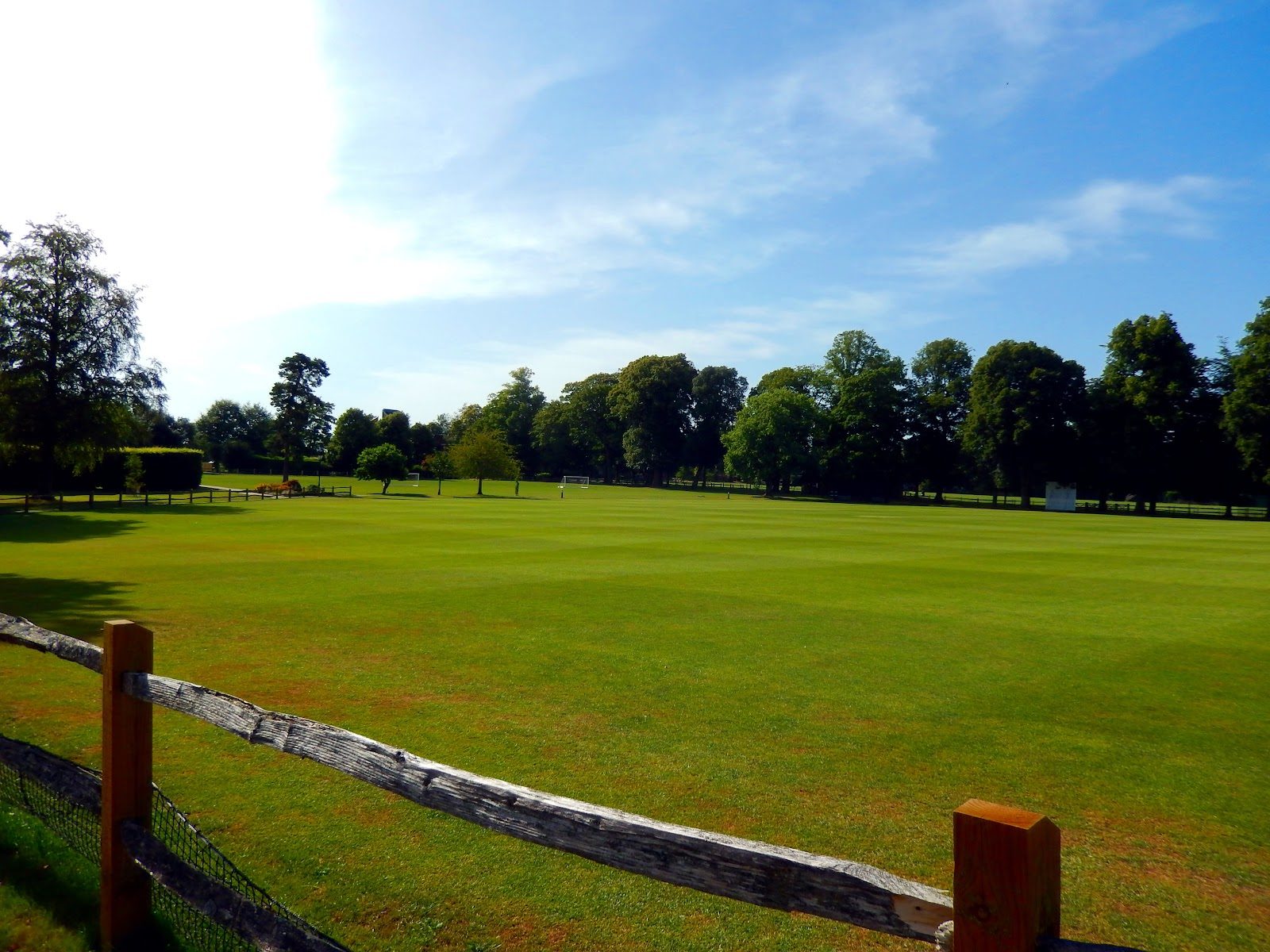
Charterhouse
Godalming · United Kingdom
One of England's Nine Great Public Schools, now fully coeducational, set on a 250-acre Surrey campus with IB scores averaging 37 points.
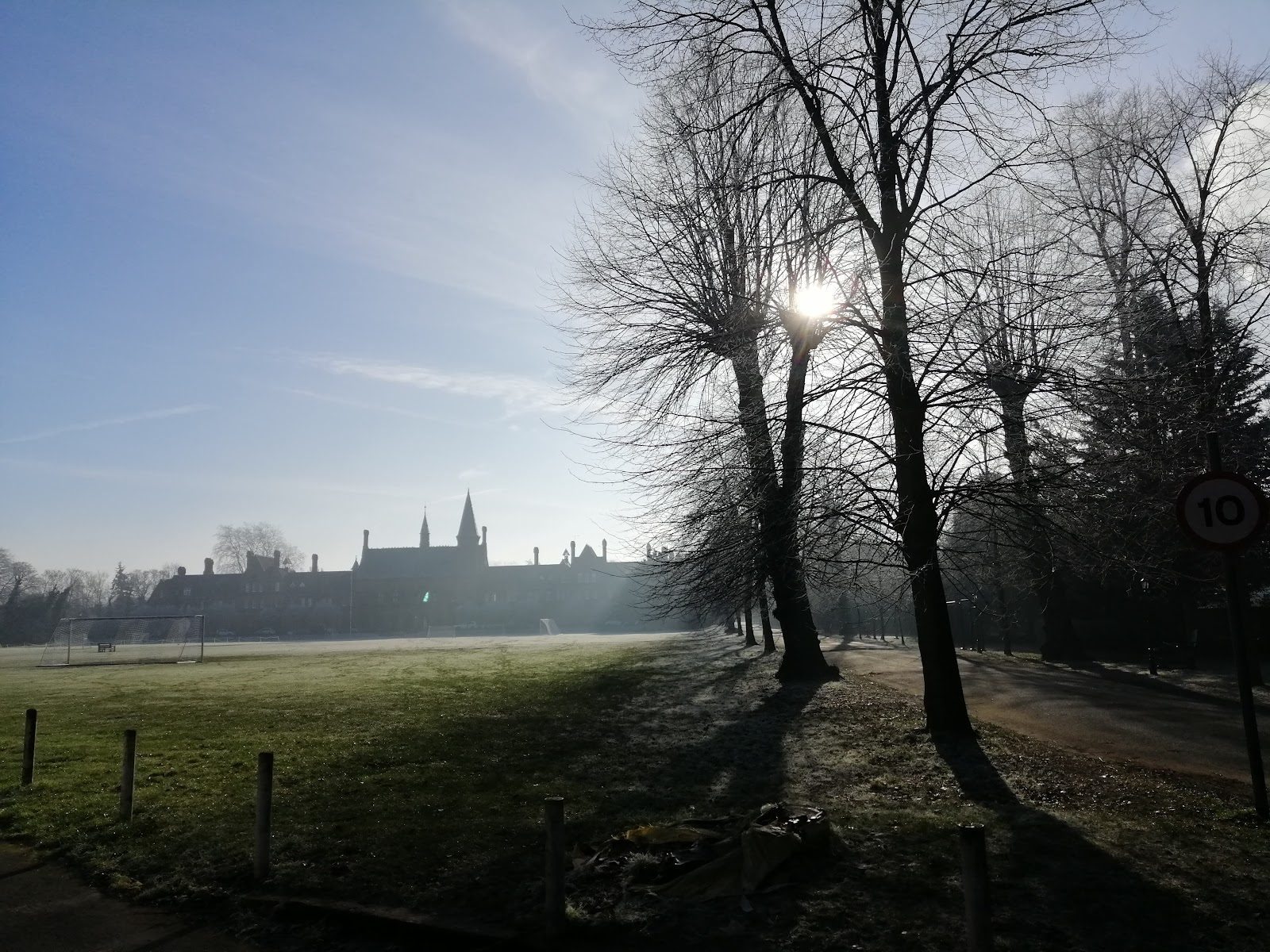
Reading School
Reading · United Kingdom
Founded within Reading Abbey in 1125, this selective state grammar for boys still sends the bulk of its leavers to Russell Group and Oxbridge places.
Alleyn's School
London · United Kingdom
A 1619 theatre fortune built this Dulwich day school, whose junior houses still bear the names of Edward Alleyn's playhouses.
King Edward's School, Birmingham
Birmingham · United Kingdom
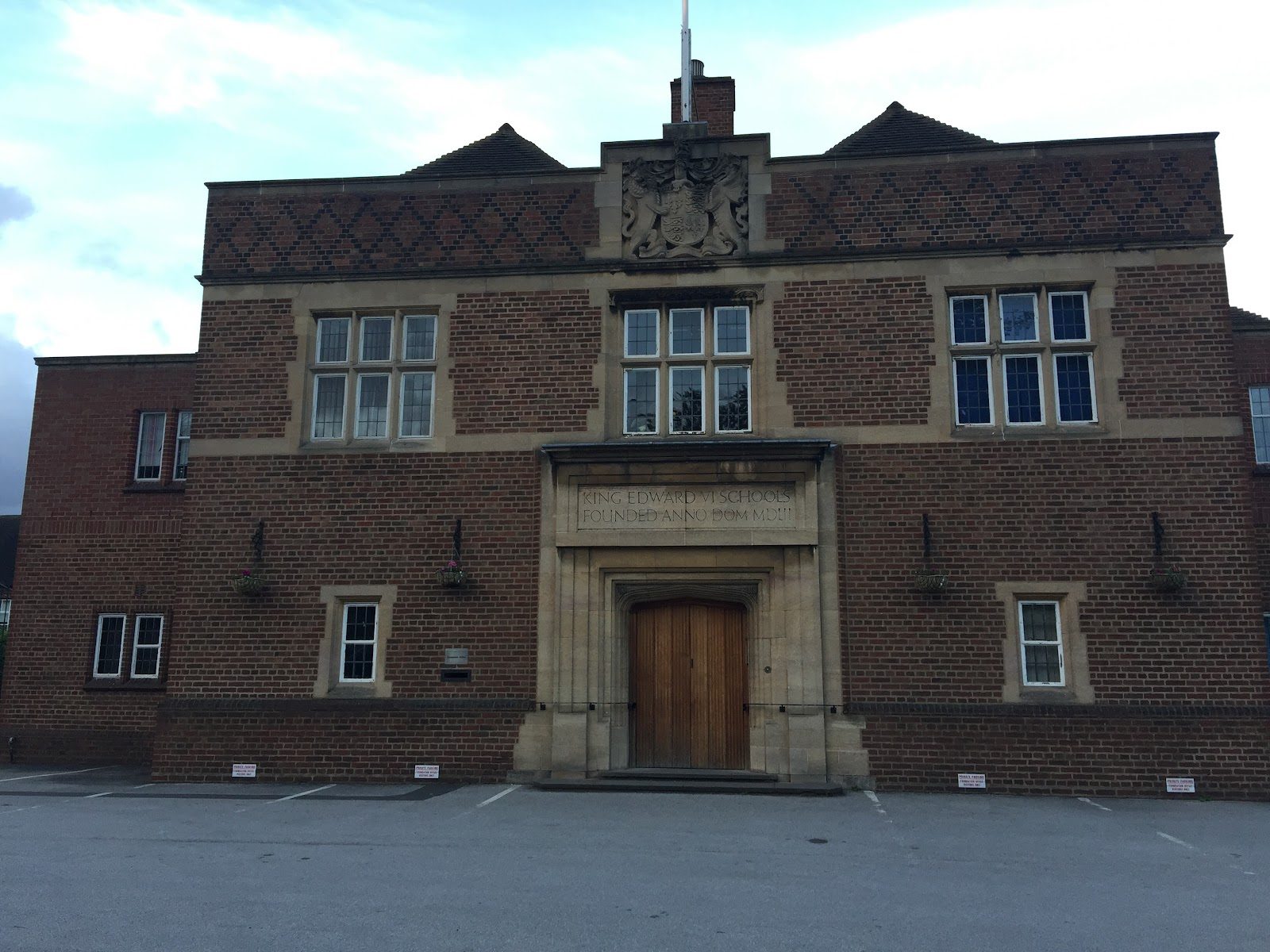
A royal charter from 1552 anchors this Edgbaston day school, where a third of new boys receive means-tested fee support.
Same country and curriculum — closest matches within ±10 points either way