
New York
Since 1814, this Gothic-towered hilltop in Troy has been rewriting what girls' education could be, one capstone Signature project at a time.

Photo © malcolm kogut via Google Maps
Type
Both
Ages
14–18
Curriculum
American (US High School Diploma) · AP (Advanced Placement) · Signature Program (design thinking, entrepreneurship)
Ratio
5:1
The Verdict
Editor's commitment
Right for
Girls 14–18 who want a serious US diploma with AP and Signature projects, plus boarding on a 137-acre Troy campus.
Wrong for
Families wanting co-education, religious formation or a huge school; Emma has 362 students, 11–13 per class and a girls-only brief.
Watch out for
At $49,995 for day and $80,495 for boarding, this is expensive; 28% international enrolment and a 65:35 boarding split shape campus life.
Ranking breakdown
Emma Willard School · # of 1591
Composite score 77.1. 8 weighted criteria.
By criterion
Academic Outcomes
Weight 20%
#183
of 1533 scored
University Placement
Weight 16%
#187
of 1529 scored
Prestige & Heritage
Weight 12%
#138
of 1580 scored
Alumni Network
Weight 12%
#100
of 1530 scored
Facilities
Weight 12%
#243
of 1540 scored
Transparency & Communications
Weight 8%
#206
of 1547 scored
Peer & Industry Review
Weight 10%
#222
of 1564 scored
Admissions Selectivity & Demand
Weight 8%
#198
of 1529 scored
Peer & Industry Review
How Emma Willard School is regarded in the sector
78
Strong · medium confidence
Emma Willard School is a well-known historic all-girls boarding school frequently cited in specialist boarding school guides and rankings such as Niche.com's 'Best Boarding High Schools' and various independent school directories. Its notable alumni network includes public figures like Jane Fonda, and it is regularly referenced in college counseling and boarding school comparison contexts, though it receives less international press coverage (e.g., Tatler) compared to some elite UK-focused institutions.
Evidence sources
Editors' overview
Set on a Gothic hilltop above Troy, Emma Willard trades on something more substantive than old-school American boarding romance: it has a serious claim to historic importance and a clear modern point of difference. Founded in 1814 as the first school of higher learning for young women in the United States, it now runs as a girls’ boarding and day school for ages 14 to 18 with a US high school diploma, AP courses and a Signature programme built around design thinking and entrepreneurship. That combination matters. Plenty of old East Coast schools do tradition well; fewer graft structured innovation on to a genuinely established academic institution. Emma Willard’s scale also works in its favour. With a 5:1 student-teacher ratio and an average class size of 11, teaching is personal, discussion-heavy and hard to hide in. Parents looking for a sprawling, anonymous American high school experience should look elsewhere.
The school’s market position is clear: this is a premium, academically serious US girls’ school with a strong residential core. The average annual fee is $49,995 for day pupils and $80,495 for boarders, which places it firmly in the expensive end of the independent market. In return, families get a small school with real international range: the school states that it enrols 362 students from 35 countries and 19 states, with 28% international students and a 65:35 boarding-to-day split. That mix gives Emma Willard more breadth than the standard local day school and more intimacy than many large-name American boarding schools. NAIS accreditation is table stakes at this level, not a differentiator, but the school’s long record in girls’ education still carries weight.
What is special here is not only heritage, but the kind of student the school is built to develop: bright, articulate girls who want a purposeful, high-contact education rather than a coasting route through secondary school. The Signature programme signals that Emma Willard values initiative and original work, not only AP accumulation, and the school’s own emphasis on intrinsic motivation points in the same direction. This suits girls who are intellectually ambitious, comfortable in a female-led environment, and keen to combine academic study with leadership, creative work or entrepreneurial thinking. It is not for the passive student who needs constant external prodding or who wants the social sprawl and spectator-sport culture of a large co-ed American campus. For the right family, Emma Willard earns a place on the shortlist because it offers a distinctive proposition: a historic girls’ school with a small-scale teaching model, a genuinely international boarding community and an academic programme that reaches beyond standard AP orthodoxy.
Academic Performance
Emma Willard does not publish aggregate AP scores, average SAT or ACT results, Ivy placement rates, or a school-wide university matriculation table. That is a real gap. In a US independent-school market where ambitious families compare hard outcomes, the absence of public, school-level attainment data leaves Emma weaker on transparency than the clearest academic peers. Parents therefore need to judge performance through structure and selectivity rather than headline scorecards: a tight staffing model, seminar-sized classes, and a curriculum built for serious academic engagement rather than mass delivery. The inclusion of postgraduate coursework in the school’s public description also points to a sixth-form culture with scope beyond a basic diploma track.
Relative to peers, Emma fits the high-expectation end of the girls’ boarding-school bracket, but without the public exam-data disclosure that would let it dominate that comparison on paper. The school’s scale works in favour of close supervision and individual feedback; it also raises the stakes, because in a school this small weak teaching or slack standards are harder to hide. The academic proposition is strongest for students who thrive in discussion, independent projects and sustained writing, not those chasing a numbers-driven leaderboard of published results. In plain terms: this is an academically credible school with a frustratingly opaque public results profile.
Facilities
The campus is one of Emma Willard’s strongest assets. Set across 137 acres on Mount Ida, it offers the kind of physical scale many urban day schools cannot match, but without the sprawl and impersonal feel that larger boarding campuses can acquire. The Gothic stone buildings give the place real visual authority; this is a school that looks rooted, not improvised. Green space and access to nature matter here too, not as brochure filler but as part of daily life for boarders and day pupils moving through a contained hilltop setting. For families weighing American boarding schools, that combination of architectural gravitas, usable grounds and a self-contained residential environment compares well with peers in the Northeast, even if the school does not trade on headline athletic infrastructure in the way some larger rivals do.
What stands out more is how the residential and co-curricular provision supports the school’s scale and mission. The presence of 11 full-time houseparents points to a boarding operation built around supervision and pastoral contact rather than loose independence. That is a serious staffing commitment. The school also advertises 14 interscholastic sports, a strong club offering and extensive arts, leadership and volunteer activity, which places it comfortably within the expectations of a premium US boarding school. The gap is specificity: the school gives broad counts, but far less public detail on specialist labs, performing arts spaces, design facilities or sports venues than the clearest peer schools. The setting is memorable and the residential infrastructure is well resourced; the specialist-facilities picture is less sharply documented.
Plenty of old East Coast schools do tradition well; fewer graft structured innovation on to a genuinely established academic institution
Prestige
Emma Willard has real prestige in the American girls’ school market, and not the thin, marketing-led kind. Its name carries institutional weight because the school sits at the root of women’s academic education in the United States, and that historical claim still matters. More importantly, the school has not drifted into museum-piece irrelevance. The combination of a university-preparatory academic spine with a capstone-style Signature strand gives it a serious intellectual identity rather than a generic independent-school gloss. The physical setting helps too: a Gothic hilltop campus still broadcasts old-establishment confidence, and for some families that symbolism counts. Prestige here rests on three things: historic importance, social recognition, and a model of education that remains deliberately distinct.
The school’s reputation is strengthened by selectivity of environment rather than brute scale. A student body of 362 keeps it intimate; 35 countries in the mix stop it feeling provincial. The alumnae record adds substance. Wikidata alone logs 27 notable alumni, with strength in writing and journalism and a smaller but credible footprint in scholarship and the arts. That is not the celebrity-heavy alumni roll call of the very largest US boarding names, and Emma does not publish the hard university-placement metrics that elite families now scrutinise. That limits its prestige at the sharpest end of the market. Even so, it remains a high-status choice for parents who value female academic ambition, tradition with purpose, and a school name that still has cultural and educational heft.
The physical setting helps too: a Gothic hilltop campus still broadcasts old-establishment confidence, and for some families that symbolism counts
Communications
Emma Willard communicates in the manner of an old, confident boarding school: mission-forward, polished, and selective about what it chooses to publish. The public-facing message is coherent. Parents get a clear sense of the school’s identity, its girls’-school rationale, and the shape of daily life, with enough hard institutional markers — 362 students, 35 countries, 11 full-time houseparents — to signal scale and pastoral seriousness. That matters. Schools with a strong residential element need to show adults are present, visible and in charge. Emma does that well. The tone is also assured rather than chatty, which fits the school. What it does not do is offer much granular operational detail in public on academic outcomes, specialist facilities or the mechanics of parent communication itself. That leaves the external picture disciplined but curated.
For parents, the implication is straightforward: the school communicates values and atmosphere better than it communicates proof points. Families who want to understand ethos, community mix and the kind of girl who thrives here will get a clear read fast. Families who want dashboards, comparative attainment data, or a forensic account of how information flows between house, classroom and home will find gaps. In editorial terms, the school’s communications are effective at attracting mission-aligned families and weaker at satisfying the hard-question crowd. That imbalance does not undermine the school’s seriousness, but it does place more weight on admissions conversations and direct parent contact than on the website alone.
Uniqueness
Emma Willard’s distinctiveness starts with origin and carries through to the present. Many girls’ schools claim heritage; few can claim to have changed the terms of women’s education in the United States. That historical role gives the school a sharper sense of purpose than the usual boarding-school nostalgia. It is not trading only on age, architecture or manners. The school is built around the education of girls as an intellectual project in its own right, and that still shapes the atmosphere: high-expectation, female-centred, and less distracted by the peacocking and social theatre that can dominate co-educational campuses. For students, that means more room to speak, lead, test ideas and fail publicly without being crowded out.
The second point of difference is the way the school combines that inheritance with a modern, authored strand of innovation. The Signature programme gives students a formal route into design thinking, entrepreneurship and capstone-style work, which sets Emma apart from schools that rely on AP accumulation alone. Add a student body drawn from 35 countries, a strong residential core and 11 full-time houseparents, and the result is a tightly held, international, purpose-driven community rather than a finishing-school relic. That brings real gains: close adult oversight, a wider range of perspectives in class and house life, and an education that pushes girls to produce work with shape and ownership, not just collect grades.
A student body of 362 keeps it intimate; 35 countries in the mix stop it feeling provincial
Student Profile
Emma Willard suits girls who want a serious, self-directed education in a small community where participation is expected and adult oversight is close. This is not a school for drifting under the radar. Classes are small, the social field is compact, and the culture rewards girls who can speak up, write well, manage their time and take ownership of their work. The school’s own stress on intrinsic motivation matters here: students who wait for constant chasing will feel exposed. The fit is strongest for academically ambitious girls who also want room for leadership, creative work or original projects, rather than a narrow grades-only treadmill. The international mix — students from 35 countries — also shapes the profile. Girls who are curious about other people, socially adaptable and comfortable with difference will settle faster than those who want a familiar local crowd.
The residential balance gives the school a close-held, high-contact atmosphere. With 11 full-time houseparents and a boarding-majority community, daily life has structure, visibility and adult presence. That will suit families who value pastoral containment and a strong communal rhythm; it will irritate girls who want early independence or a looser, more anonymous teenage life. Emma also suits students who want an all-girls environment for a reason: more space to lead, more expectation to contribute, and less patience for performative disengagement. In plain terms, this is a good match for bright, purposeful girls and a poor one for the half-committed or attention-averse.
Emma Willard’s distinctiveness starts with origin and carries through to the present
Co-curricular strengths
Arts & sport, on a separate axis
Overall 8.5/10
Scored 0-10 from the school's own published evidence. This axis is editorial-only — it does not feed the main WTS ranking.
Sports
8.5/10
Drama
8.5/10
Verified alumna Jane Fonda, an Academy Award-winning actress, provides star-tier drama pedigree that anchors this dimension at at least 7 despite limited programme detail.
Dance
8.5/10
Music
8.5/10
Visual Arts
8.5/10
Editor first-pass · editor-reviewable · 8/2/2026
Notable alumni · Wikidata
27notable alumni
15 historic (born pre-1930) · 2 modern (born post-1970)wikidata:2026-08-02 How we source this

WTS 300 badge
2026/27 editionEmma Willard School is one of the World's Top 300 Schools for 2026/27. Claim your listing to add it to your site →
Strengths
- +Founded in 1814 by Emma Hart Willard, it was the first school of higher learning for young women in the United States and remains a trailblazer in girls' education.
- +Average class size is 11 students with a student/teacher ratio of 7:1, allowing for close faculty contact in most courses.
- +The school's Signature is Emma Willard School's capstone program for juniors and seniors centered around exploring a personal interest, with students working on a chosen project for a full year with an on-campus mentor (and sometimes an off-campus expert).
- +A partnership with Rensselaer Polytechnic Institute allows Emma Willard students to access dual-enrollment courses, meaning they can take college-level classes while still in high school, earning credits toward future degrees.
- +The student body hails from 39 different countries and 20 states, giving the small campus a genuinely international mix for an upstate New York location.
Considerations
- −The school is an independent university-preparatory day and boarding school for young women, so it is not an option for families wanting a coeducational setting.
- −Fees are substantial: 2025-2026 tuition is $77,325 for boarding and $48,180 for day students, before incidental costs such as testing fees, books, and off-campus travel.
- −The acceptance rate of Emma Willard School is 35%, which is lower than the national average of 76%, so places are not guaranteed even for well-qualified applicants.
- −The campus type is rural, on Mount Ida in Troy, New York; while Boston and New York City are cited as being roughly three hours away, day-to-day life is set in a small upstate city rather than a metropolitan hub.
Availability
Primary entry gate & tests
SSAT/ISEE + Interview (Girls)
Gallery
Photo © malcolm kogut via Google Maps
Photo © Emma Willard School via Google Maps
Photo © Emma Willard School via Google Maps
Photo © Emma Willard School via Google Maps
Photo © Emma Willard School via Google Maps
Photo © Emma Willard School via Google Maps
Photo © Emma Willard School via Google Maps
Photo © Emma Willard School via Google Maps
Photo © Emma Willard School via Google Maps
Parent reviews
Have you sent your child here?
Voice reviews carry the strongest trust badge — we transcribe them for you to tidy up before they go live. Prefer to type? A written review is fine too.
Add your voice
In 60 seconds, tell other parents: what's the best thing about Emma Willard School, and what surprised you when your child joined?
We ask for a Google sign-in so every review has a real face behind it — no anonymous drive-by attacks on schools, and no faked positive reviews. Your email is never shown publicly.
Send this profile to a friend
International parents rely on word-of-mouth. Share this review with someone weighing the same decision.
Schools with places
Similar schools to Emma Willard School with places available now.
Regis High School
New York City · United States
- 2026-27
- CLOSEDStandard route
- 2027-28
- PLACES OPENNov 2 Deadline, HSPT 14 Nov
The Bronx High School of Science
New York City · United States
- 2026-27
- CLOSEDStandard route
- 2027-28
- OPENS SOONOpens 6 Oct '26 (Closes 30 Oct)
Hunter College High School
New York City · United States
- 2026-27
- CLOSED
- 2027-28
- OPENS SOONOpens late Sept '26
The Chapin School
New York City · United States
- 2026-27
- CLOSEDRegular cycle
- 2027-28
- OPENS SOONOpens Aug '26
Availability first, then country, area, curriculum, price, co-curricular
Consider also
Also worth looking at alongside Emma Willard School.
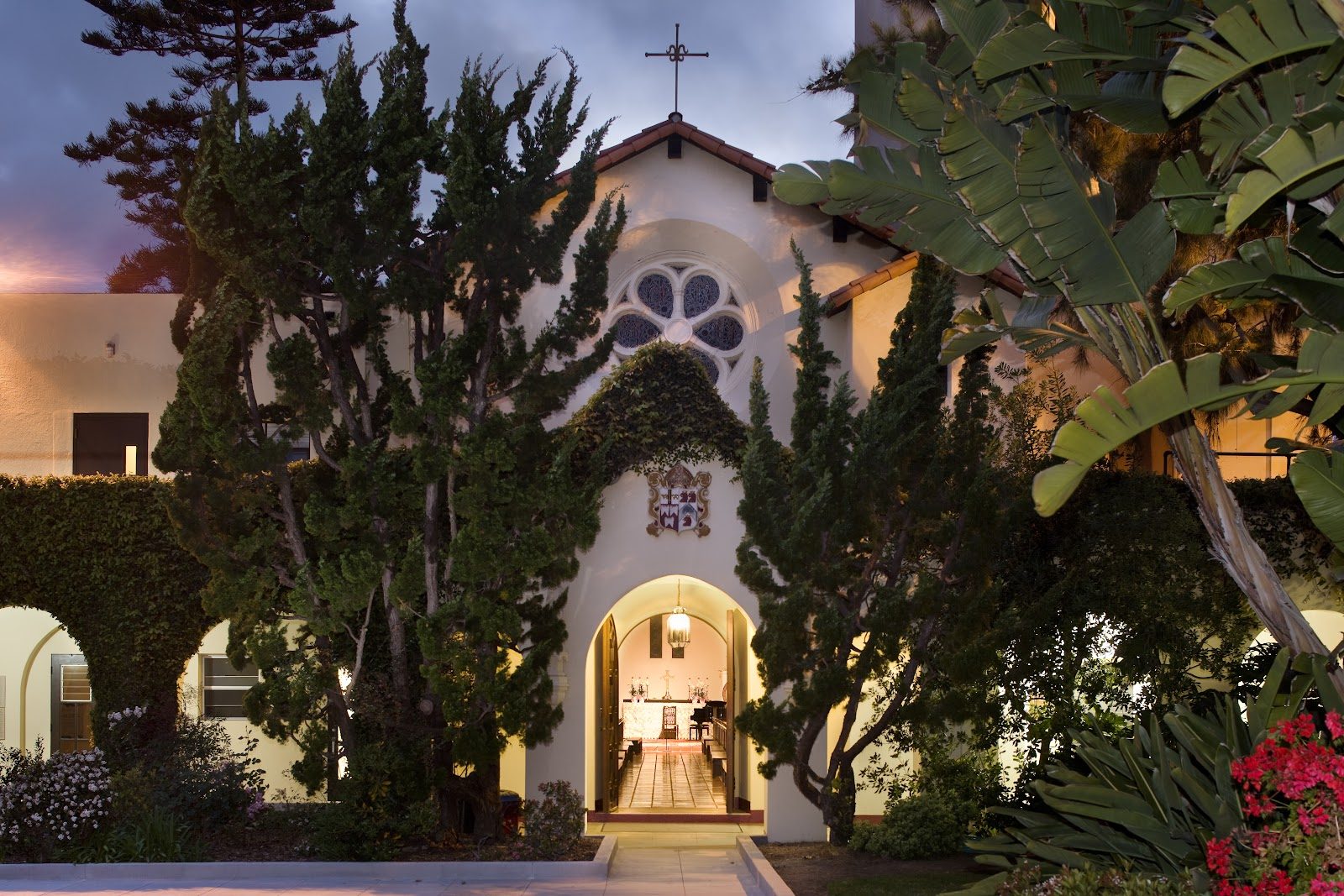
The Bishop's School
La Jolla · United States
A century-old Irving Gill campus steps from the Pacific, where tradition still bars the quad before noon.

Regis High School
New York City · United States
The only tuition-free Jesuit high school in America, drawing scholarship boys from across New York for a merit-based education.
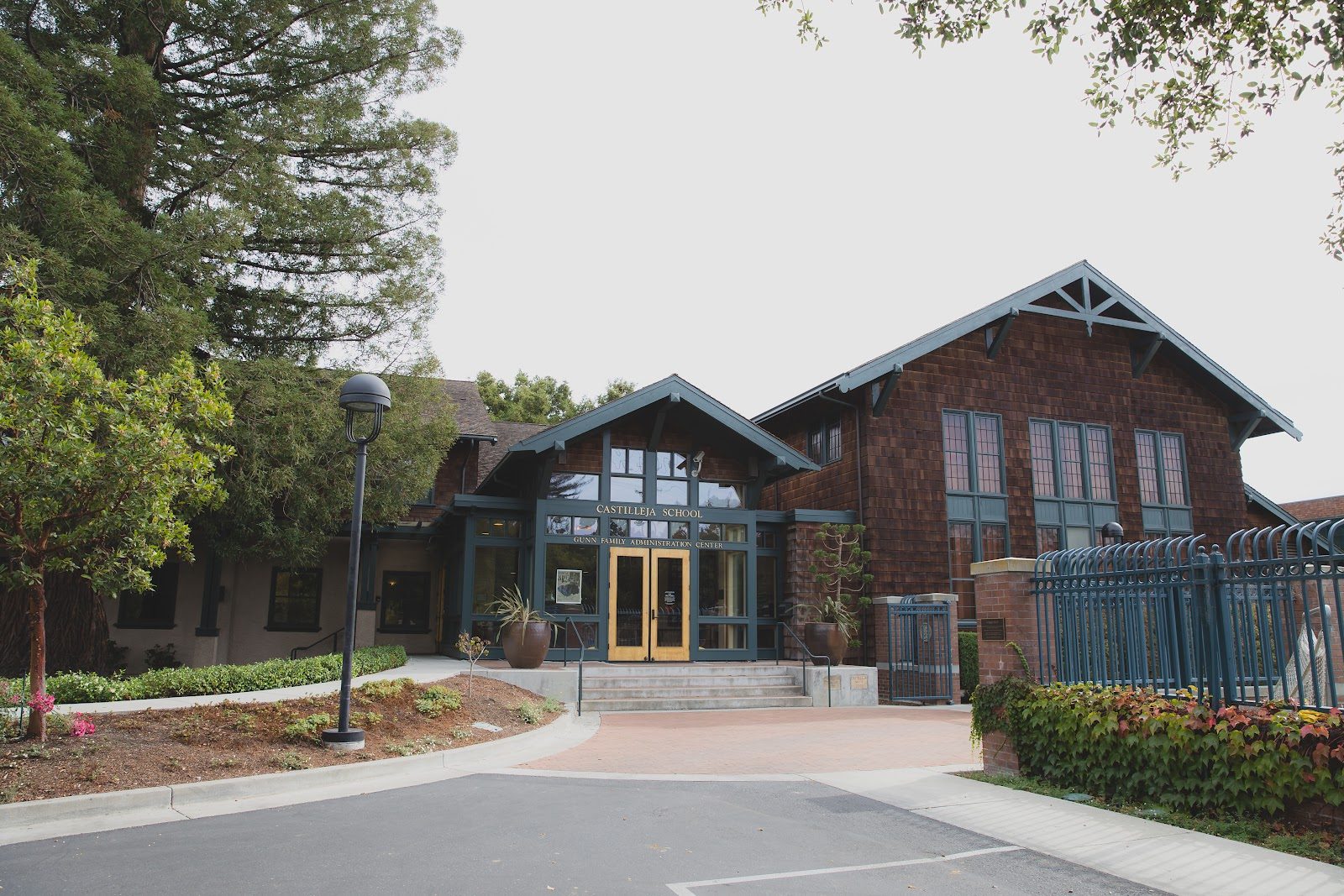
Castilleja School
Palo Alto · United States
The only nonsectarian all-girls campus in the Bay Area, pairing Stanford's front yard with a century-old leadership creed.

Marlborough School (LA)
Los Angeles · United States
Since 1889, this Hancock Park all-girls campus has paired a nationally recognized debate program with a first-of-its-kind Global Futures diploma.
Same country and curriculum — closest matches within ±10 points either way