
California
The only nonsectarian all-girls campus in the Bay Area, pairing Stanford's front yard with a century-old leadership creed.
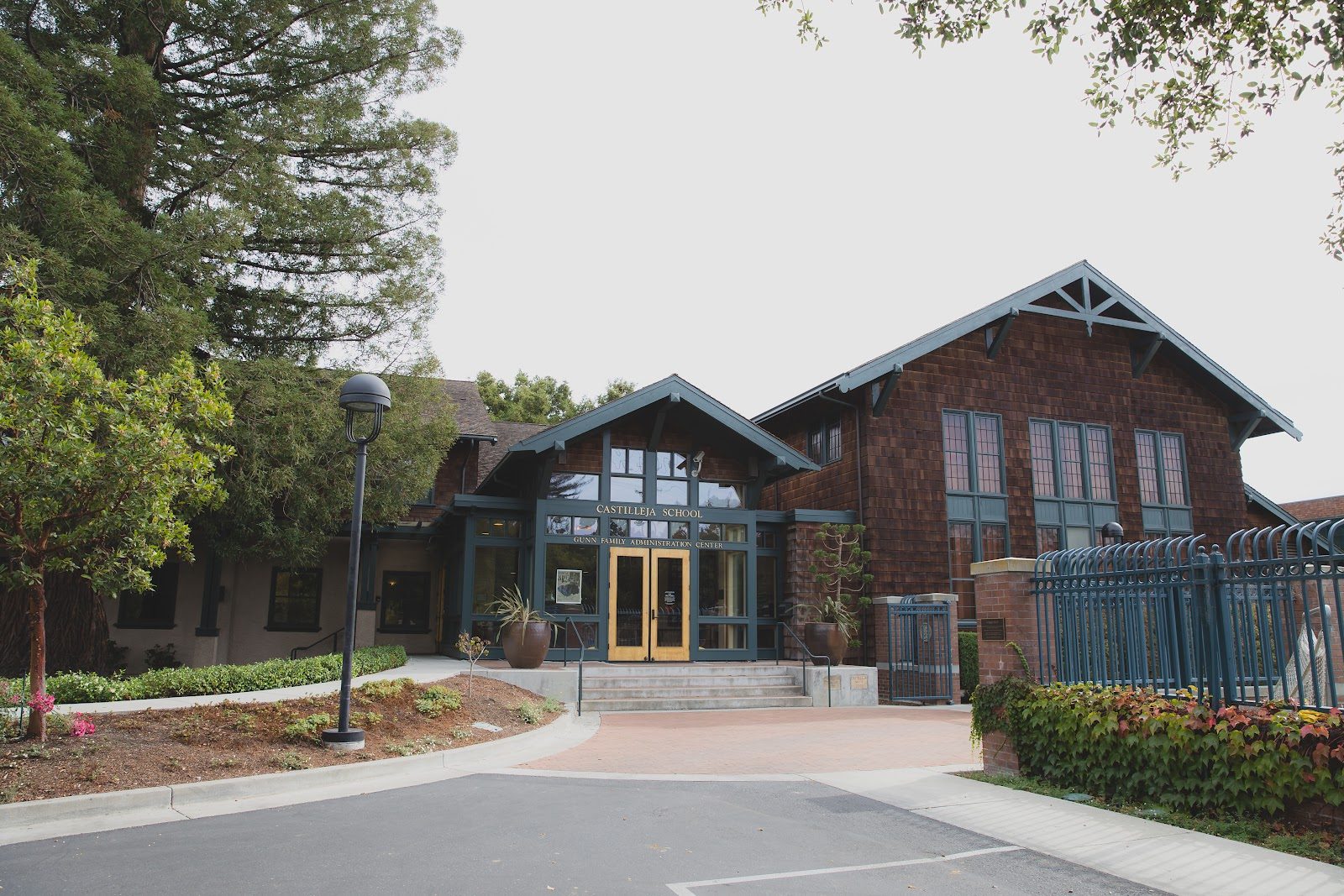
Photo © Castilleja School via Google Maps
Type
Day
Ages
11–18
Curriculum
American
Qualifications
AP
Ratio
—
The Verdict
Editor's commitment
Right for
Girls aged 11–18 who want an all-girls day school in Palo Alto, with American curriculum and NEASC, NAIS accreditation.
Wrong for
Families wanting coeducation, boarding or religious schooling; Castilleja is non-religious, day-only, and the Bay Area’s only nonsectarian all-girls campus.
Watch out for
The average annual fee is $67,750, and the school does not publish headline exam or university-destination data in the sources here.
Ranking breakdown
Castilleja School · # of 1591
Composite score 77.1. 8 weighted criteria.
By criterion
Academic Outcomes
Weight 20%
#118
of 1529 scored
University Placement
Weight 16%
#104
of 1529 scored
Prestige & Heritage
Weight 12%
#255
of 1571 scored
Alumni Network
Weight 12%
#155
of 1530 scored
Facilities
Weight 12%
#329
of 1534 scored
Transparency & Communications
Weight 8%
#153
of 1532 scored
Peer & Industry Review
Weight 10%
#234
of 1548 scored
Admissions Selectivity & Demand
Weight 8%
#153
of 1529 scored
Score history
Castilleja School · 2026
Movement across 2024–2026. Peer average overlaid.
Overall — 2024–2026
77.1/ 100
▲ +22.1 vs 2025
year on year
Peer & Industry Review
How Castilleja School is regarded in the sector
88
Strong · medium confidence
Castilleja is consistently ranked among the top all-girls independent schools in the US, frequently listed in Niche.com's 'Best Private High Schools in California' and 'Best All-Girls High Schools in America' rankings, often placing in the top 5-10 nationally. It has strong name recognition in Silicon Valley elite education circles, with notable alumni networks and consistent coverage in Bay Area press regarding its academic rigor and college placement outcomes, though it faced notable scrutiny in 2021-2022 over misconduct investigations reported by local and national media (e.g., San Jose Mercury News, NBC Bay Area).
Evidence sources
Editors' overview
Castilleja trades on a rare piece of geography and an even rarer market position: an all-girls, non-religious day school for ages 11 to 18 in Palo Alto, with Stanford on the doorstep and no direct like-for-like rival across the Bay Area. That matters. In a region crowded with co-educational independents and selective public options, Castilleja offers a distinctly focused proposition: girls only, American curriculum, English-medium, founded in 1907, and explicit about turning “motivated young women” into leaders. The pitch is clear and the price is steep. The average annual day fee is $67,750, which puts it firmly in the top tier of the US private-day market.
What sets the school apart is not mystery but concentration. Castilleja is old by West Coast standards, single-sex by design, and nonsectarian in a category where religious affiliation still shapes many girls’ schools. It also carries serious institutional credentials, with NEASC and NAIS accreditation, and public language that centres confidence, purpose and change rather than vague wellbeing fluff. The school is in the middle of campus modernisation, which signals capital confidence and a parent body willing to fund it. The faculty count published on Wikipedia — about 70 full- and part-time staff — points to a school with enough scale to run a proper secondary programme without feeling sprawling. This is a high-expectation environment, not a soft landing.
Parents should shortlist Castilleja if they want an academically driven girls’ school with strong identity, clear mission and a setting that feeds ambition. The student who will want it is bright, self-propelled and comfortable in a culture that talks openly about leadership. A girl who thrives in co-ed rough-and-tumble or wants anonymity in a large campus may find it constraining. A girl who wants intellectual seriousness, visible female peer culture and a school that treats purpose as part of the job will find Castilleja compelling. Its verified alumni footprint is not thin either: Wikidata already records 6 notable alumni, a useful floor for a school of this type. The missing piece is academic outcome transparency. The school does not publish exam data in the information here, so parents need to press for university destinations, course breadth and how competitive the internal academic culture feels in practice.
Academic Performance
Academic performance is the weak point in Castilleja’s public case, not because standards are low, but because the school does not publish the hard numbers that let parents test that claim. There are no aggregate AP results, no SAT or ACT profile, no IB data, and no published university-placement table in the sources here. That leaves families without the comparative grid they would expect from a high-fee, high-pressure secondary school serving ambitious students. In a market where peers increasingly disclose score distributions, matriculation lists or both, that opacity is a real deficit. It forces parents to rely on reputation, selectivity and word of mouth rather than audited outcomes.
That does not place Castilleja outside the top tier; it places it in the group of schools whose academic standing rests on institutional brand and the calibre of intake more than on openly published exam evidence. An all-girls school with a clear intellectual identity and a long-established local profile in Silicon Valley will attract strong applicants and serious parental expectations. But attraction is not proof. Relative to transparent peers, Castilleja is under-disclosing. Relative to weaker schools with thin demand, it occupies a more rarified position. The practical conclusion is simple: parents need to ask for five-year university destinations, upper-school course breadth, AP participation and score distribution, and how many students reach the most selective colleges in a typical cycle.
Facilities
Facilities are not yet the clean selling point here because the school is in the middle of campus modernisation. That cuts two ways. On one hand, it signals active investment rather than institutional drift. On the other, families need to ask what is finished, what is still contested, and how daily school life works during construction. The public front page puts that project near the top of its own priorities, alongside its campaign, which tells you facilities matter strategically. For a school of roughly 70 faculty, the campus does not need to sprawl; it needs to function well for a focused secondary programme, with science, arts, athletics and social space calibrated to a single-sex student body. Against Bay Area independent-school peers, that is a serious test. Many competitors can point to expansive suburban sites, newer specialist buildings or stronger public detail on what pupils actually use day to day.
What Castilleja has in its favour is location and concentration. A compact campus in this market can still work well if teaching spaces are efficient, common areas feel purposeful and the school has avoided the pinched, stop-start feel that afflicts urban independents short on land. But the school does not publish the kind of granular facilities inventory that would let parents judge laboratories, performance space, sports provision or design and technology against top local rivals. That lack of specificity is a real weakness. At this price point, parents should expect hard detail, not just a modernisation banner and institutional confidence.
The average annual day fee is $67,750, which puts it firmly in the top tier of the US private-day market
Prestige
Castilleja carries real local prestige because it occupies a category almost nobody else does. In the Bay Area, parents looking for a non-religious girls-only secondary school do not have a field of close substitutes; Castilleja sits in a scarce, high-status niche. That scarcity matters as much as age or branding. So does geography. A school planted in Palo Alto, drawing from families who live and work in the orbit of Stanford and Silicon Valley, benefits from a powerful social and intellectual halo. The all-girls proposition also sharpens its identity: this is not a generalist independent school trying to please everyone, but a self-conscious institution built around female ambition, leadership and confidence. The fee level — $67,750 on average each year — reinforces the point. This is expensive, selective private education aimed at families who expect access, polish and serious peer calibre.
The prestige is not absolute. Castilleja’s name carries weight in its own market, and its alumnae floor on Wikidata — 6 notable figures — supports that, but it does not publish the outcome data that would turn local esteem into an unqualified academic verdict. That matters. Prestige built on scarcity, history and parent networks is still prestige; it is also softer than prestige backed by transparent results. My rating stays high because the school has a clear social position, a distinct mission and no direct like-for-like rival nearby. It stops short of the topmost rank because public proof of academic yield is missing.
The public front page puts that project near the top of its own priorities, alongside its campaign, which tells you facilities matter strategically
Communications
Castilleja communicates with parents in a way that mirrors its institutional temperament: disciplined, mission-first and selective about what it foregrounds. The public-facing homepage is tidy and direct. It puts the school’s core proposition, current capital project and campaign activity front and centre, rather than burying them in lifestyle gloss. That is effective as brand control. Parents get a clean line on what the school cares about. The trade-off is plain too. Communication reads more like leadership messaging than operational disclosure. You can find the creed; you do not get much public substance on outcomes, programme detail or the practical texture of day-to-day school life. For a school charging an average of $67,750 a year, that is a real limitation.
The inclusion of a current head on the front page adds accountability and a visible human point of contact, which matters in a high-stakes parent community. The nondiscrimination statement is also explicit and properly placed, which signals administrative seriousness rather than casual compliance. But effective parent communication is not only about tone, polish or values language. It also requires usable information: where families are meant to go for key dates, academic reporting, pastoral updates, university guidance and campus-change disruption. Publicly, Castilleja does not give enough of that away. The result is controlled communication, not transparent communication. Existing parents may get far more through internal channels; prospective parents get a carefully managed picture rather than a fully informative one.
Uniqueness
Castilleja’s uniqueness starts with market structure, not mood. It is the Bay Area’s only nonsectarian girls-only secondary school, and that gives it a rare monopoly of purpose. Most independent schools in this region ask girls to thrive inside co-ed systems shaped by mixed priorities and mixed classroom dynamics. Castilleja does not. Every leadership role, classroom discussion, team place and visible standard of achievement sits in female hands. For students, that changes the daily texture of school life. Ambition is not coded as male, and confidence does not need to fight for room. In a culture already saturated with technology, status and adult achievement, that single-sex frame can be liberating for the right student and claustrophobic for the wrong one. The school’s own language about producing “confident thinkers and compassionate leaders” is not decorative. It is the organising idea.
The second point of difference is social and geographic: this is an old girls’ school planted in one of the country’s most intellectually charged neighbourhoods, charging an average annual fee of $67,750 and drawing families who expect serious returns. That combination creates a high-pressure, high-opportunity environment. Students gain a dense peer group of academically motivated girls and a school identity with sharper edges than the usual well-rounded independent package. They also inherit the burdens that accompany that model: a smaller social universe, stronger cultural self-consciousness and less room to disappear. For girls who want clear institutional identity and all the visibility that comes with it, that is the attraction.
It stops short of the topmost rank because public proof of academic yield is missing
Student Profile
The pupil who fits Castilleja is not hunting for anonymity, drift or a broad church of teenage types. She wants a high-definition school identity and can tolerate the scrutiny that comes with it. In an all-girls environment with a leadership creed built into the school’s own language, there is nowhere to hide from expectation. The right student is bright, self-motivated and willing to speak up, take responsibility and be known. She does not need a co-ed social stage to feel validated, and she will value a peer culture where girls hold the visible positions of influence by default. That can be galvanising. It can also feel intense for a girl who prefers a looser, less self-conscious school culture.
This is a strong match for families who want ambition framed in explicitly female terms and are prepared to pay for a selective private-school circle at $67,750 a year. The social fit matters as much as the academic one. A student who thrives here will cope well with driven classmates, adult expectations and a campus culture that treats purpose as part of the job. A girl who dislikes institutional mission-language, resists close-knit communities or wants a socially sprawling adolescent experience will find the setting constraining. Castilleja suits the student who wants to be challenged, noticed and shaped, not the one who wants to slip through school in peace.
Castilleja’s uniqueness starts with market structure, not mood
Co-curricular strengths
Arts & sport, on a separate axis
Overall 8.66/10
Scored 0-10 from the school's own published evidence. This axis is editorial-only — it does not feed the main WTS ranking.
Sports
8.8/10
Competes fiercely across Northern California independent school leagues, balancing intensive academic tracking with strong water polo and tennis squads.
Drama
8.5/10
Highly unique, creative theater curriculum utilizing professional-grade mainstages and studio black boxes.
Dance
8.5/10
Highly dedicated formal dance curriculum running classical ballet, jazz, and modern composition inside custom studios.
Music
8.5/10
Excellent instrumental breadth supporting multiple symphonies, jazz bands, and choirs that routinely anchor major seasonal showcases.
Visual Arts
9/10
Sun-drenched studio spaces running advanced design pipelines, ceramics, and photography to clear elite portfolios.
Editor-verified · 8/6/2026
Notable alumni · Wikidata
6notable alumni
3 historic (born pre-1930) · 3 modern (born post-1970)wikidata:2026-07-28 How we source this

WTS 300 badge
2025/26 editionCastilleja School is one of the World's Top 300 Schools for 2025/26. Claim your listing to add it to your site →
Strengths
- +Founded in 1907, Castilleja is described as the only non-sectarian all-girls middle and high school in the San Francisco Bay Area, giving it a distinct single-sex niche in a coeducational market.
- +Small-scale teaching model with roughly 416-426 students across grades 6-12, an average class size of 15 and a student-teacher ratio between 6:1 and 8:1.
- +Niche reports that after graduation 100% of students from this school go on to attend a 4-year college, reflecting strong college-placement infrastructure.
- +A well-funded tuition-assistance program distributes several million dollars a year: the school's own site states it distributes over $3.3 million to 22% of the student body, with awards ranging from $4,490 to $67,700 depending on need.
- +Notable alumnae span multiple fields, including synthetic biologist Pamela Silver, Olympic gymnast Amy Chow, Monterey Bay Aquarium founder Julie Packard, and musician Grace Slick, according to third-party profiles of the school.
Considerations
- −Day tuition sits at the top end of Bay Area independent schools, quoted at roughly $65,300 to $67,750 a year depending on the source and year, before any additional fees.
- −As a single-sex school for girls only, it is structurally unsuitable for families seeking a coeducational environment for their daughters or any placement for sons.
- −The campus has been the subject of a long-running, publicly contentious dispute with neighbors over enrollment size and traffic; the city fined the school after learning in 2013 that it had exceeded its permitted enrollment cap of 415 students for several years, and expansion talks have periodically divided the neighborhood.
- −The compact six-acre urban site constrains how much the school can grow, and historical reporting has noted it turning away the large majority of applicants because of enrollment limits, making places scarce relative to regional demand.
Availability
Primary entry gate & tests
ISEE/SSAT + Interview (Girls)
Gallery
Photo © Stan Baginskis via Google Maps
Photo © Yin Cui via Google Maps
Photo © Stan Baginskis via Google Maps
Photo © Lee Tourist via Google Maps
Photo © Lee Tourist via Google Maps
Photo © K L via Google Maps
Photo © Castilleja School via Google Maps
Parent reviews
Have you sent your child here?
Voice reviews carry the strongest trust badge — we transcribe them for you to tidy up before they go live. Prefer to type? A written review is fine too.
Add your voice
In 60 seconds, tell other parents: what's the best thing about Castilleja School, and what surprised you when your child joined?
We ask for a Google sign-in so every review has a real face behind it — no anonymous drive-by attacks on schools, and no faked positive reviews. Your email is never shown publicly.
Send this profile to a friend
International parents rely on word-of-mouth. Share this review with someone weighing the same decision.
Schools with places
Similar schools to Castilleja School with places available now.
The Bishop's School
La Jolla · United States
- 2026-27
- CLOSEDConfirmed full
- 2027-28
- OPENS SOONOpens Sept '26
Marlborough School (LA)
Los Angeles · United States
- 2026-27
- CLOSEDRegular cycle
- 2027-28
- OPENS SOONOpens Early Sept '26
Cate School
Carpinteria · United States
- 2026-27
- CLOSEDRegular cycle
- 2027-28
- PLACES OPEN
The Thacher School
Ojai · United States
- 2026-27
- CLOSEDRegular cycle
- 2027-28
- OPENS SOONOpens 1 Sept '26
Availability first, then country, area, curriculum, price, co-curricular
Consider also
Also worth looking at alongside Castilleja School.
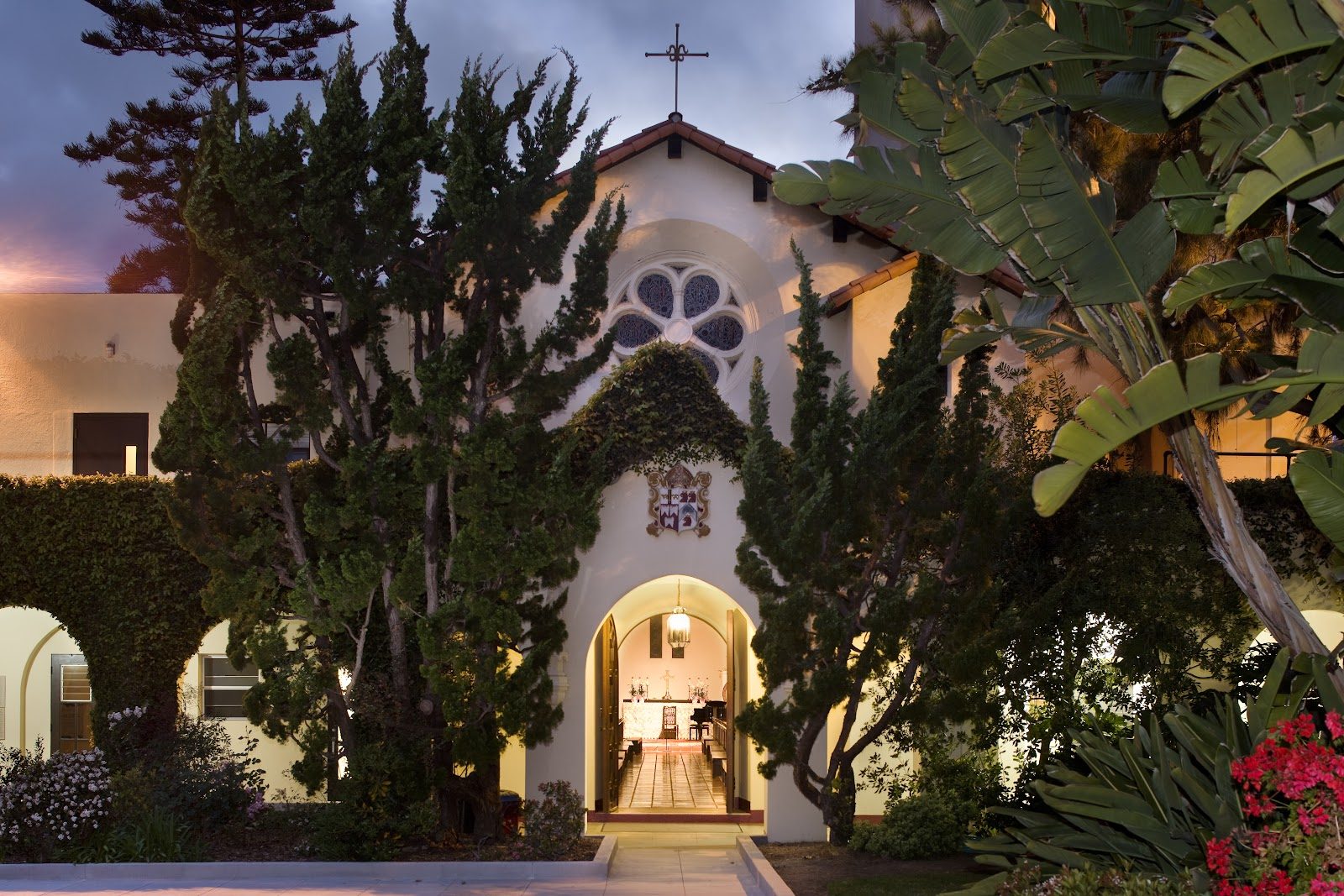
The Bishop's School
La Jolla · United States
A century-old Irving Gill campus steps from the Pacific, where tradition still bars the quad before noon.

Regis High School
New York City · United States
The only tuition-free Jesuit high school in America, drawing scholarship boys from across New York for a merit-based education.

Marlborough School (LA)
Los Angeles · United States
Since 1889, this Hancock Park all-girls campus has paired a nationally recognized debate program with a first-of-its-kind Global Futures diploma.
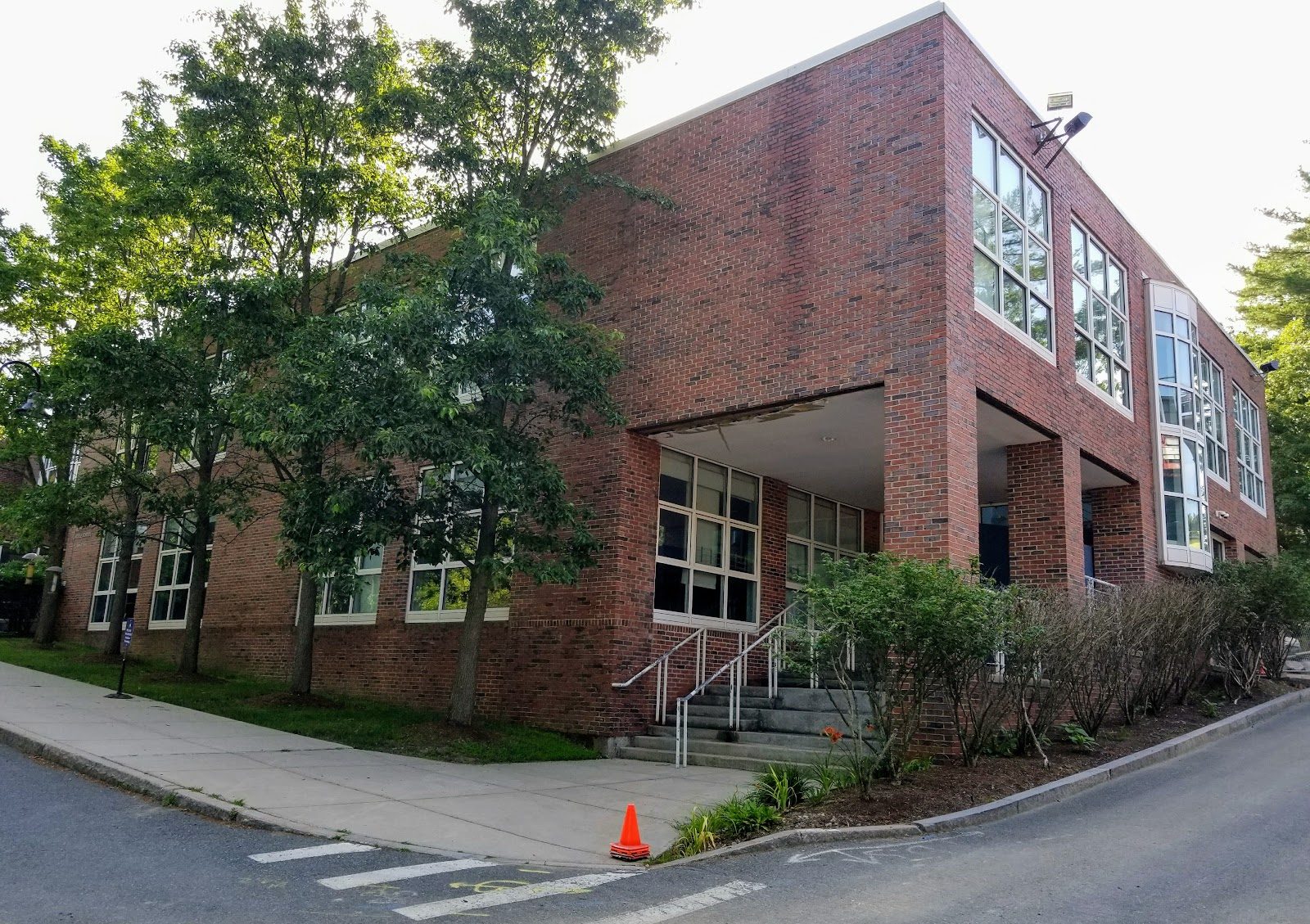
Noble and Greenough School
Dedham · United States
Founded in Boston in 1866, this Charles River campus pairs rigorous academics with hands-on EXCEL leadership training.
Same country and curriculum — closest matches within ±10 points either way