
Abu Dhabi
Emirates National Schools - Abu Dhabi Campus
medium confidence· 4/6 cats · 3.45 avg sourcesAmerican Common Core curriculum meets the IB Diploma and AP pathways, framed by mandatory Arabic and Islamic studies.
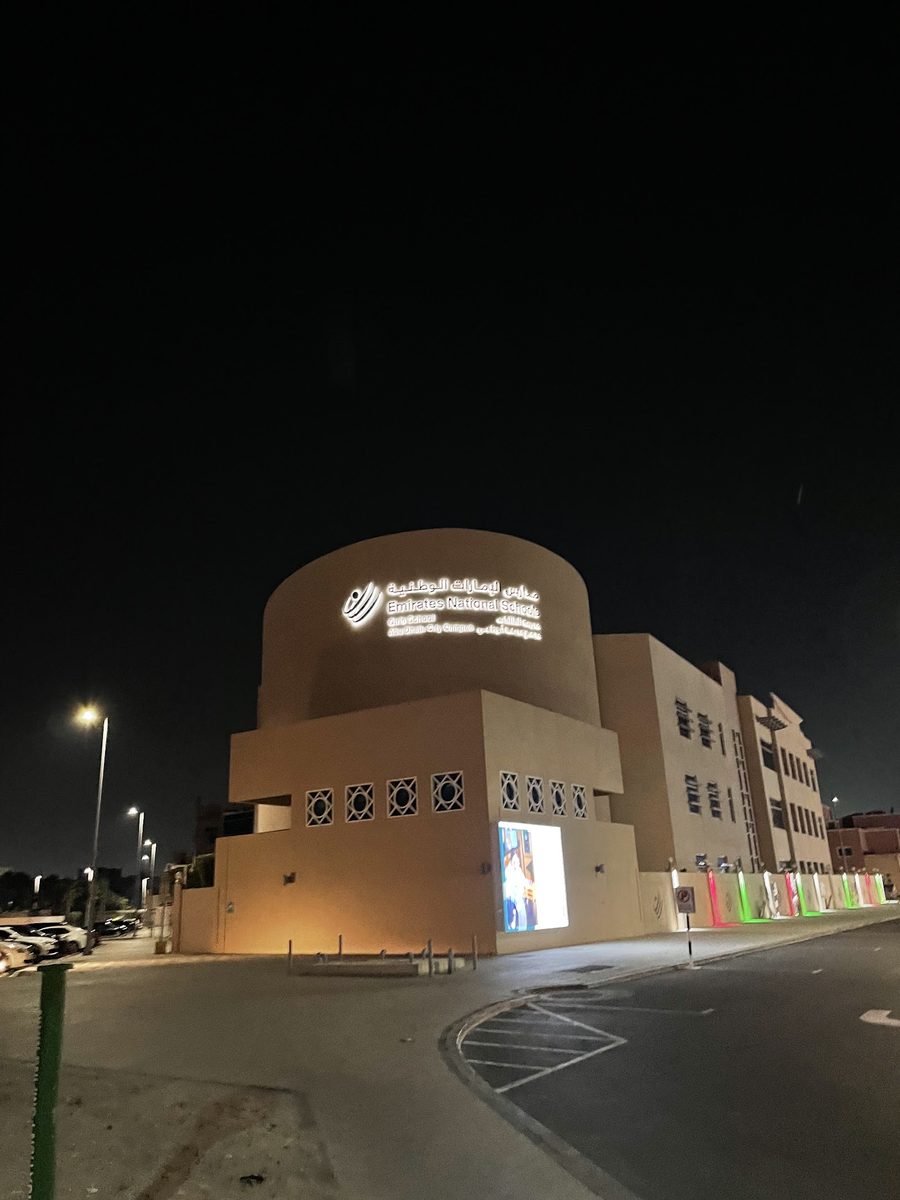
Photo © Me We via Google Maps
Type
Day
Ages
3–18
Curriculum
American
Qualifications
US High School Diploma
Ratio
—
The Verdict
Editor's commitment
Right for
Families in Abu Dhabi wanting a day school from ages 3–18 with American curriculum, plus IB Diploma and AP pathways.
Wrong for
Parents seeking a single-curriculum school, secular ethos, or non-Muslim framing; Emirates National Schools mandates Arabic and Islamic studies.
Watch out for
Founded in 2002, this Abu Dhabi campus teaches in English and Arabic; that bilingual, faith-based model is a commitment, not a garnish.
Ranking breakdown
Emirates National Schools - Abu Dhabi Campus · # of 1591
Composite score 63.9. 8 weighted criteria.
By criterion
Academic Outcomes
Weight 20%
#745
of 1529 scored
University Placement
Weight 16%
#793
of 1529 scored
Prestige & Heritage
Weight 12%
#1132
of 1571 scored
Alumni Network
Weight 12%
#816
of 1530 scored
Facilities
Weight 12%
#395
of 1534 scored
Transparency & Communications
Weight 8%
#455
of 1532 scored
Peer & Industry Review
Weight 10%
#1216
of 1548 scored
Admissions Selectivity & Demand
Weight 8%
#1370
of 1529 scored
Score history
Emirates National Schools - Abu Dhabi Campus · 2026
Movement across 2024–2026. Peer average overlaid.
Overall — 2024–2026
63.9/ 100
▲ +26.9 vs 2025
year on year
Peer & Industry Review
How Emirates National Schools - Abu Dhabi Campus is regarded in the sector
54
Credible · medium confidence
Emirates National Schools Abu Dhabi Campus reads as a credible, regulator-endorsed part of a well-established Presidential Decree network rather than a fixture of the Emirates' headline "best schools" conversation. WhichSchoolAdvisor's review confirms the campus was rated Good by ADEK, "a step up from the Acceptable rating achieved during its previous inspection", and now sits at Very Good in the 2024-25 round, while SchoolsCompared's Abu Dhabi curriculum overview corroborates that Very Good government rating alongside comparable American-curriculum peers. Its Cognia and IB accreditation is noted approvingly across both sites, but neither publisher's flagship "Best Schools" rankings or Gulf News' independently judged Top 10/25 lists feature the school, which instead sits in the solid-but-unranked tier dominated by British and American international names. Coverage is largely descriptive and inspection-led rather than a strong critical endorsement, reflecting a school with genuine local standing but a modest footprint in wider sector press." "score": 54, "confidence": "medium
Editors' overview
Emirates National Schools – Abu Dhabi Campus occupies a specific niche in the Abu Dhabi market: a local-rooted, English-medium day school that runs an American curriculum to graduation while keeping Arabic and Islamic education central, then opens two senior academic exits through the IB Diploma and AP. That combination matters. Many schools in the city force a sharper choice between an American route and an IB route, or treat Arabic and Islamic studies as compliance subjects bolted on at the edges. ENS integrates them into the core shape of school life. Founded in 2002, it has had time to settle its offer. For families who want a school that is academically international but unmistakably Emirati in outlook, this is the point of difference. The age range, 3–18, also gives it full-through continuity, which appeals to parents who want to avoid another admissions cycle at age 11 or 16.
Why put it on a shortlist? Because ENS offers breadth without the ideological sprawl that weakens many all-through schools. The proposition is clear: American Common Core foundations, then choice at the top end, delivered in English and Arabic, in a Muslim school setting. That suits families who want clear academic routes, cultural seriousness and institutional stability rather than a fashionable brand. It also suits parents who value a school that reflects the regulatory and social realities of the UAE instead of importing a foreign model wholesale. The school’s attraction lies less in glamour than in practical range: one campus, one system, multiple university-prep pathways, and no confusion about its cultural centre of gravity.
The best fit is a student who benefits from structure, can handle a bilingual environment, and does not want to choose between global university options and a strong local identity. This is a good match for children from Emirati families, Arab expatriate families, and internationally minded households that want serious Arabic provision rather than token exposure. Sixth form students who want the option to pursue the IB Diploma or build an AP profile will also find that flexibility useful. A child looking for a loose, progressive, ultra-creative atmosphere may find the framework too prescribed. A child who thrives in order, continuity and academic choice will find ENS compelling. Its strength is not reinvention; it is disciplined breadth delivered within a school culture that knows exactly what it is.
Academic Performance
Academic performance is the area where ENS needs to publish more. We have not seen aggregate IB Diploma results, average point scores, AP score distributions, SAT averages, or university destination data for this campus in the public domain. That gap matters. In Abu Dhabi’s upper tier, serious competitors now treat outcomes data as standard parent information, at least in headline form. Without it, ENS asks families to trust the breadth of its senior pathways without showing the hard proof of how those pathways convert into results. That does not make the academic offer weak; it makes it opaque. For a school with multiple graduation routes, transparency on attainment is not optional. It is basic institutional hygiene.
Relative to peers, ENS sits in a harder-to-judge position than schools that publish clean examination summaries each year. Parents comparing sixth form options therefore need to ask direct questions: IB cohort size, full diploma pass rates, average diploma points, AP entry numbers, score breakdowns at 3+, 4+ and 5, and destination lists by country and course. Until those figures are disclosed, ENS cannot claim the same level of academic accountability as the most data-literate schools in the market. The structure is credible; the published evidence is thin. That leaves the school in a middle ground: broad academic choice, but no public results record strong enough to place it confidently among Abu Dhabi’s proven examination performers.
Facilities
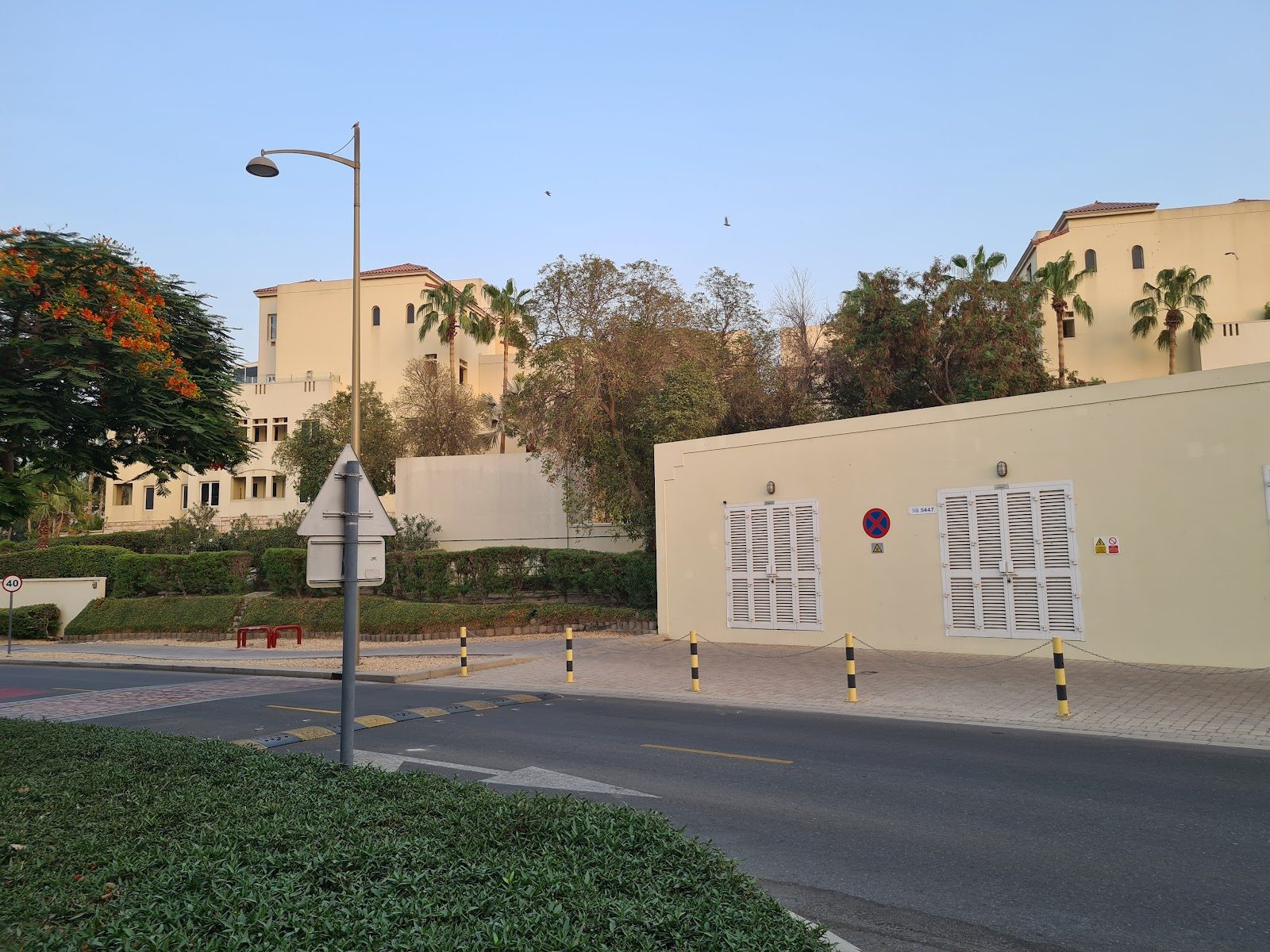
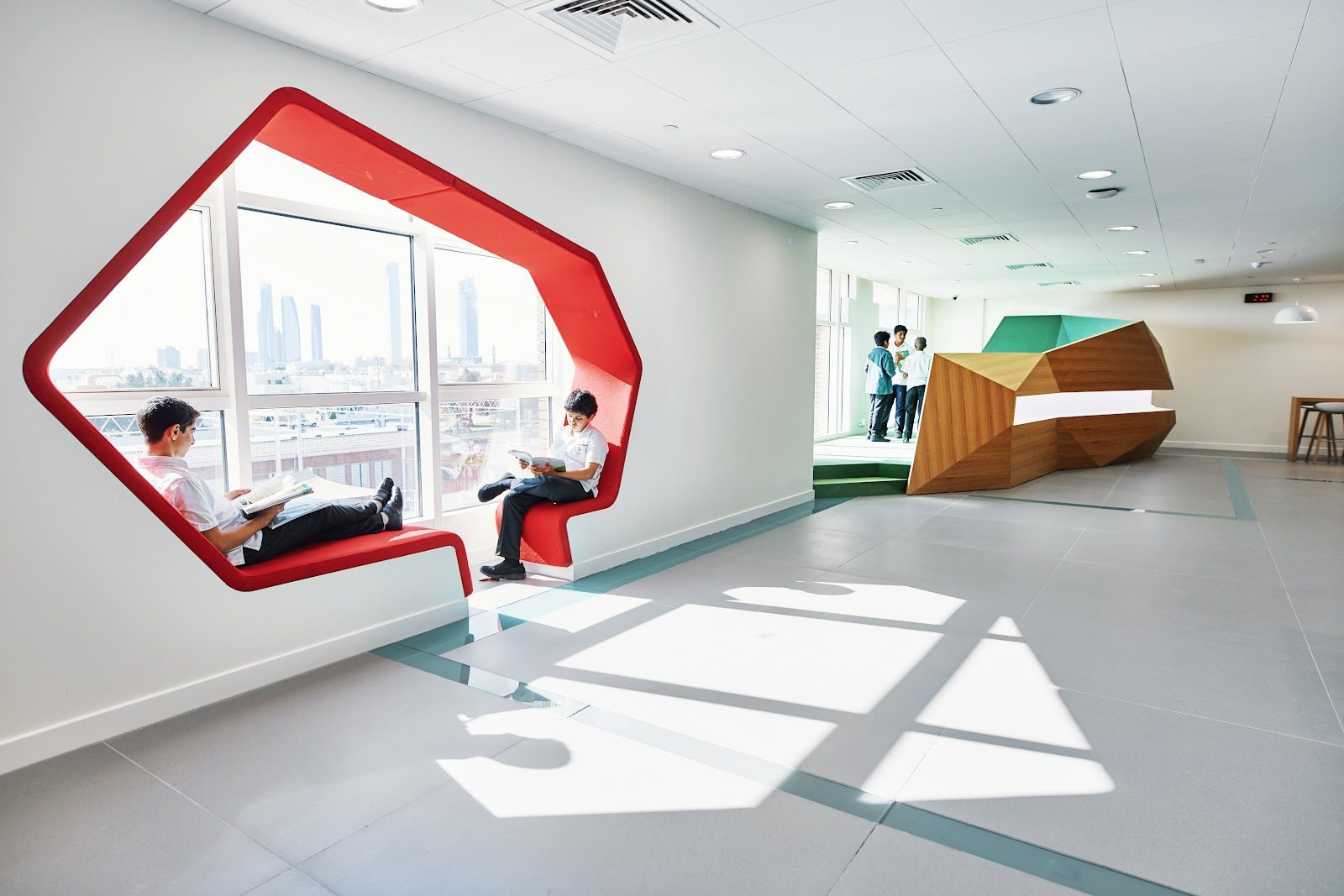
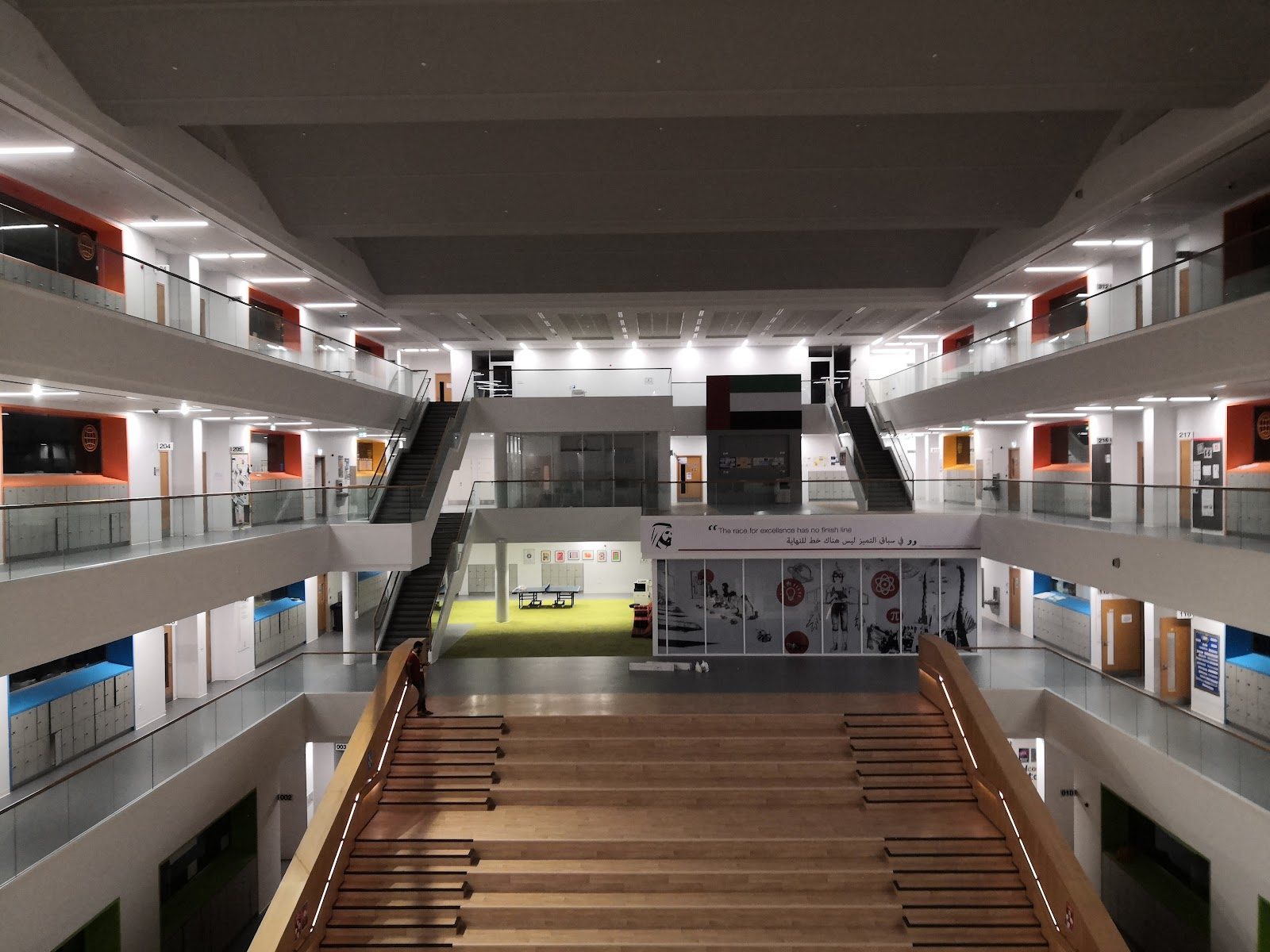
ENS’s facilities profile is hard to judge because the school does not publish a clear, campus-specific account of what sits on site. That is a weakness in itself. In this fee-conscious and increasingly competitive market, good schools show parents the science provision, sports infrastructure, library, performance space and specialist rooms in concrete terms. ENS does not make that easy. Parents therefore need to inspect the campus with a checklist in hand: laboratory quality, indoor sports capacity, shaded outdoor play, early-years space, music and art rooms, prayer facilities, dining arrangements, parking and traffic flow. For a school that runs from nursery to sixth form, the practical burden is heavier than for a stand-alone primary or secondary. Shared facilities can deliver efficiency; they can also produce crowded timetables, compromised specialist access and a blunt, all-purpose feel if the site has not been designed with enough separation by age.
Against Abu Dhabi peers, that puts ENS behind schools that publish hard-edged detail on their campuses and invest heavily in facility-led differentiation. At the top end of the market, parents now expect visible evidence: serious theatres, strong aquatics, competition-level sports provision, well-equipped maker spaces and sixth-form study areas that feel distinct from the main school. ENS may well have competent core provision, but competent is not enough when rivals treat campus infrastructure as part of the academic proposition. Until the school discloses more, its facilities sit in the credible but unverified bracket rather than the city’s clearly documented best.
The proposition is clear: American Common Core foundations, then choice at the top end, delivered in English and Arabic, in a Muslim school setting
Prestige
ENS carries solid local standing, not rarefied prestige. In Abu Dhabi, its status rests on continuity, recognisable governance and a school culture aligned with national expectations, not on social cachet or a glittering global brand. That distinction matters. For many families, especially those who want a school that treats Arabic and Islamic education as central rather than decorative, ENS has serious local credibility. It is a respected choice, not a trophy choice. The all-through structure, from age 3 to 18, adds to that standing because parents read longevity of enrolment as a test of confidence: families stay when a school does the job across phases. The sixth-form choice between 2 senior academic routes also gives ENS more weight than a single-track American school.
Why not rate it higher? Because prestige at the top end of this market depends on public proof as much as reputation, and ENS does not publish enough of it. Schools with sharper prestige disclose examination outcomes, destination patterns and other hard indicators that parents and universities can interrogate. ENS has a credible, locally anchored name, but not the aura of elite selectivity attached to the city’s most scrutinised academic institutions. Its prestige is strongest among families who value cultural fit, institutional steadiness and a clear moral frame. It is weaker among parents shopping for international brand power or headline results. That leaves ENS in a respectable middle tier: established, trusted, but not dominant.
Because prestige at the top end of this market depends on public proof as much as reputation, and ENS does not publish enough of it
Communications
ENS communicates with parents in a functional, institutional way rather than an intimate one. The school runs a large all-through operation, and that usually produces communication that is standardised, calendar-led and policy-heavy. That has strengths: expectations are easier to codify, routines are easier to enforce, and families who value order tend to appreciate clear lines of authority. It also has obvious risks. Messages can turn bureaucratic, pastoral nuance can get buried under notices, and parents can struggle to work out which information matters now and which sits there as background administration. For a school serving ages 3–18, communication needs to be sharply segmented by phase; otherwise nursery notices, secondary academic updates and senior pathway information blur into one stream. ENS needs precision here, not volume.
Effectiveness, then, rests less on warmth than on discipline. Parents choosing this school are not buying a hand-holding culture; they are buying structure, and communication needs to match that promise. The key test is whether the school gives families timely operational detail, direct access to the right staff, and unambiguous guidance at transition points, especially when pupils move into the senior years and academic choices narrow. We have not seen enough public-facing communication to rate ENS among the market’s best-run communicators. The school does the essentials of institutional messaging, but it does not project the crisp transparency or high-trust openness that marks the strongest parent-facing schools.
Uniqueness
What sets ENS apart is not novelty for its own sake, but a tight institutional mix that few schools sustain with any coherence: an American academic spine, compulsory Arabic and Islamic studies, and then 2 senior exit routes that keep university options open without cutting the school loose from its national setting. In many schools, those elements pull against each other. Here, the attraction lies in the attempt to hold them together. That gives ENS a clearer cultural centre than the market’s generic international schools, which borrow global branding while treating local identity as an afterthought. For families who want children educated for life in the UAE as well as for applications abroad, that is a concrete distinction, not a slogan.
For students, the benefit is structured dual fluency: they move through a school culture that expects comfort with international academic conventions and with the linguistic, religious and civic expectations of the country around them. That has practical value. It helps students avoid the split identity that many international schools produce, where school life and home life operate in separate registers. ENS’s all-through format also matters here. It lets the school build habits, expectations and cultural reference points over time rather than trying to impose them at the final stage. The trade-off is obvious: this is not a free-form, anything-goes environment. Students who want a looser ethos may find it restrictive. Students who value continuity, moral structure and 1 school able to carry them from early years to graduation get something more rooted than the standard international model.
For families who want a school that is academically international but unmistakably Emirati in outlook, this is the point of difference
Student Profile
The strongest fit is a student who accepts structure without resenting it. ENS suits children who can move comfortably between home expectations and school expectations because the two are not set up in opposition here. Pupils who do well tend to be respectful, routine-friendly and able to manage a day shaped by academic demands alongside compulsory religious and language study. That makes the school a strong match for Emirati families, Arab expatriate families and other households that want serious cultural continuity rather than an international education stripped of local reference points. It also suits parents who want school to reinforce conduct, not negotiate it. Children who need constant informality, loose boundaries or a highly individualistic classroom culture will find the environment too prescribed.
Socially, this works best for students who do not need a performative, ultra-prestigious peer culture to stay motivated. ENS is better for the steady high-functioning middle than for children chasing a scene. The senior years widen academic choice through 2 distinct routes, so the sixth-form fit is strongest for students who want options but still value a clear moral frame. Pupils who thrive here are the ones who can handle consistency over time: the same institution, the same expectations, the same cultural logic from the early years to graduation. For many families, that coherence is the point. For others, especially those seeking a more liberal or experimental atmosphere, it is the reason to look elsewhere.
The age range, 3–18, also gives it full-through continuity, which appeals to parents who want to avoid another admissions cycle at age 11 or 16
Co-curricular strengths
Arts & sport, on a separate axis
Overall 6.96/10
Scored 0-10 from the school's own published evidence. This axis is editorial-only — it does not feed the main WTS ranking.
Sports
7.8/10
The extracurriculars explicitly list multiple sports—Football, Basketball, Volleyball, Swimming, and Athletics—showing a solid multi-sport offering.
Drama
7/10
Dance
5.5/10
Music
7/10
The extracurriculars explicitly list School choir, which is a named music activity.
Visual Arts
7.5/10
The extracurriculars explicitly list Art club, which is a direct visual-arts offering.
Editor first-pass · editor-reviewable · 7/27/2026
Strengths
- +All-through day school, ages 3–18
- +American curriculum throughout schooling
- +English and Arabic instruction
- +ADEK-rated Very good
- +Faith based ethos may suit practising families
Considerations
- −Faith based ethos may not suit all families
- −American curriculum narrows non-US pathways
- −We could not independently verify whether the school publishes external examination outcomes
- −Less suited to families seeking a secular or highly progressive environment
Availability
Primary entry gate & tests
CAT4 / Assessment
Gallery
Photo © Ramil Erooth via Google Maps
Photo © Ramil Erooth via Google Maps
Photo © Ramil Erooth via Google Maps
Photo © Mohammed Hussain via Google Maps
Photo © SMILE ForEver via Google Maps
Parent reviews
Have you sent your child here?
Voice reviews carry the strongest trust badge — we transcribe them for you to tidy up before they go live. Prefer to type? A written review is fine too.
Add your voice
In 60 seconds, tell other parents: what's the best thing about Emirates National Schools - Abu Dhabi Campus, and what surprised you when your child joined?
We ask for a Google sign-in so every review has a real face behind it — no anonymous drive-by attacks on schools, and no faked positive reviews. Your email is never shown publicly.
Send this profile to a friend
International parents rely on word-of-mouth. Share this review with someone weighing the same decision.
Schools with places
Similar schools to Emirates National Schools - Abu Dhabi Campus with places available now.
The Sheikh Zayed Private Academy for Girls
Abu Dhabi · United Arab Emirates
- 2026-27
- WAITPOOLSpace-dependent
- 2027-28
- OPENS SOONOpens early Nov '26
American International School in Abu Dhabi
Abu Dhabi · United Arab Emirates
- 2026-27
- WAITPOOLSpace-dependent
- 2027-28
- WAITPOOL2027/28 timetable TBC
Availability first, then country, area, curriculum, price, co-curricular
Consider also
Also worth looking at alongside Emirates National Schools - Abu Dhabi Campus.
Universal American School
Dubai · United Arab Emirates
A not-for-profit Festival City campus where Grade 11 students choose between the IB Diploma and an AP-enriched US track
The Sheikh Zayed Private Academy for Boys
Abu Dhabi · United Arab Emirates
Massachusetts Common Core meets a UAE Armed Forces leadership programme, forging Emirati identity into an American diploma.
Swiss International Scientific School Dubai
Dubai · United Arab Emirates
The largest Swiss school outside Switzerland, running a bilingual IB continuum along Dubai Creek in French or German.
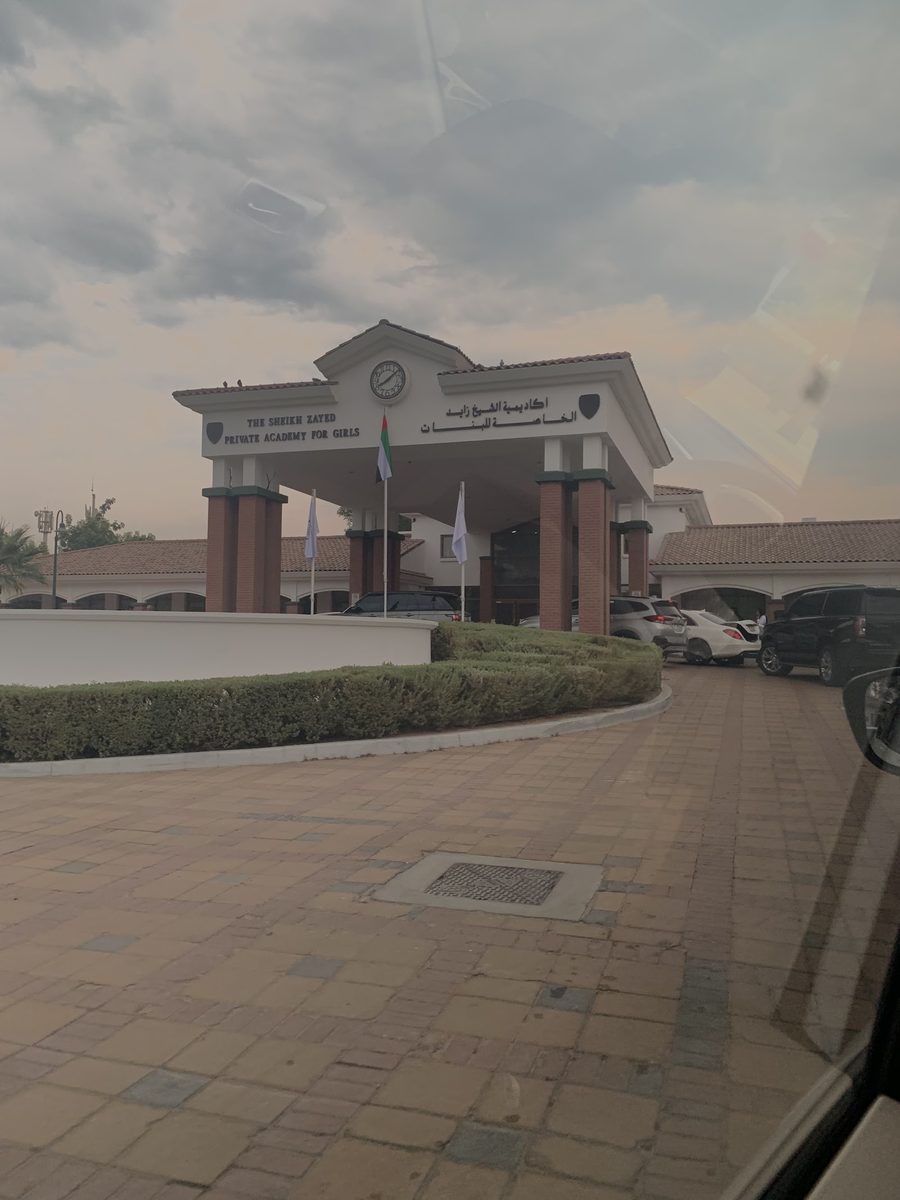
The Sheikh Zayed Private Academy for Girls
Abu Dhabi · United Arab Emirates
Massachusetts Common Core meets Emirati heritage, holding the sole top ADEK rating among Abu Dhabi's American-curriculum schools.
Same country and curriculum — closest matches within ±10 points either way