
São Paulo
Colégio Objetivo Integrado
Born from a 1965 med-student prep course on Avenida Paulista, its vestibular-driven curriculum anchors Brazil's largest private schooling network.
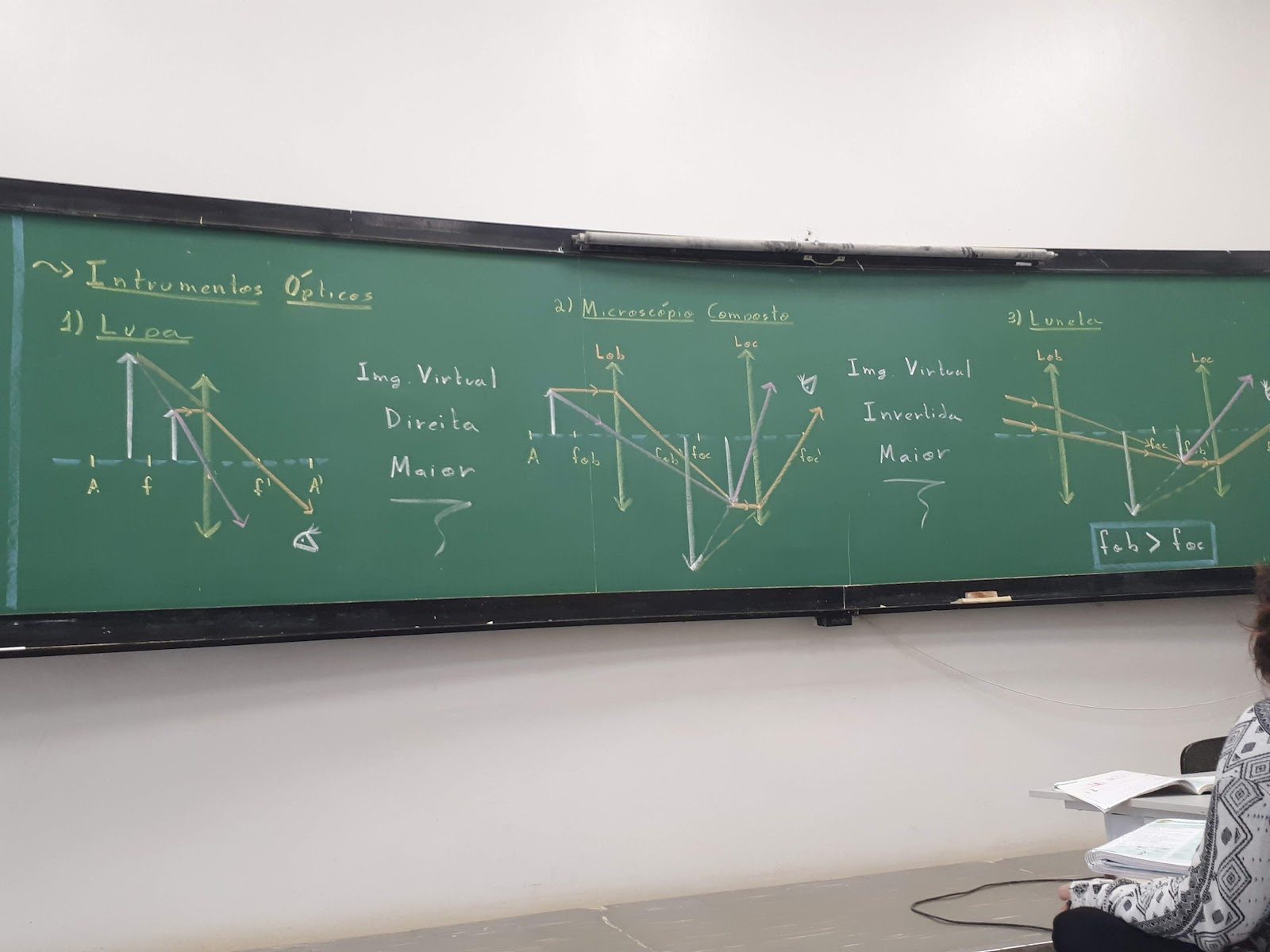
Photo © rafael cristovao via Google Maps
Type
Day
Ages
6–18
Curriculum
Brazilian
Qualifications
ENEM · FUVEST · Vestibular
Ratio
—
The Verdict
Editor's commitment
Right for
São Paulo families wanting a day school for ages 6–18 with a Brazilian curriculum and English alongside Portuguese.
Wrong for
Parents wanting boarding, religious formation or an international curriculum; this 1965 São Paulo school is secular, day-only and Brazilian.
Watch out for
The website serves a 404 on its 'about' page; for a network born in 1965, public-facing transparency needs work.
Ranking breakdown
Colégio Objetivo Integrado · # of 1591
Composite score 51.9. 8 weighted criteria.
By criterion
Academic Outcomes
Weight 20%
#1219
of 1529 scored
University Placement
Weight 16%
#1089
of 1529 scored
Prestige & Heritage
Weight 12%
#1381
of 1571 scored
Alumni Network
Weight 12%
#1179
of 1530 scored
Facilities
Weight 12%
#1419
of 1534 scored
Transparency & Communications
Weight 8%
#1433
of 1532 scored
Peer & Industry Review
Weight 10%
#1445
of 1548 scored
Admissions Selectivity & Demand
Weight 8%
#1326
of 1529 scored
Peer & Industry Review
How Colégio Objetivo Integrado is regarded in the sector
55
Credible · medium confidence
Colegio Objetivo Integrado is regarded primarily within Brazil's domestic vestibular-prep ecosystem rather than the international independent-school circuit covered by outlets like WhichSchoolAdvisor or the Good Schools Guide, which do not profile it. Its reputation is anchored in the wider Grupo Objetivo/COC network's long-standing brand for disciplined, exam-focused instruction geared toward ENEM and vestibulares such as FUVEST for USP and UNICAMP. Peer regard among other Sao Paulo private schools tends to position Objetivo as a high-volume, results-driven competitor rather than a progressive or internationally benchmarked institution, and it is rarely cited alongside Bandeirantes, Santa Cruz, or Porto Seguro in qualitative rankings. Brazilian media coverage (Folha de S.Paulo, Veja education supplements) references Objetivo mainly in aggregate vestibular approval-rate tables rather than editorial features on pedagogy or campus culture. University admissions offices in Brazil recognize the Objetivo name for consistent, high-volume placement into competitive public universities, but there is little documented international university or press commentary, reflecting its identity as a strong national exam-prep brand rather than a globally networked elite school.
Editors' overview
Colégio Objetivo Integrado occupies a distinct place in the São Paulo market: this is not a boutique international school, nor a progressive experiment. It is a large, academically driven Brazilian day school with roots in 1965, built from a medical entrance-prep course on Avenida Paulista and still defined by that exam culture. The special feature is not pastoral novelty or imported educational fashion; it is disciplined preparation for Brazil’s competitive university pathway. For families who want a school that treats academic performance as the main event, Objetivo earns a place on the shortlist. Its scale, longevity and name recognition in São Paulo give it serious institutional weight.
What sets it apart is the clarity of the proposition. Objetivo belongs to Brazil’s biggest private schooling network, and that matters: a long-developed teaching system, strong familiarity with vestibular demands, and a structure built to push students through a dense Brazilian curriculum from ages 6–18. Instruction in Portuguese with English added keeps it anchored in the national system rather than the expatriate market. Parents need to read this accurately. This is not the school for a child who needs a slow pace, a highly individualised alternative model or a campus culture centred on self-expression above results. It is for families who value exam-room discipline, competitive momentum and a school culture that treats university entry as a concrete objective, not a vague aspiration.
The students who thrive here are resilient, organised and comfortable with pressure. They do well with routine, frequent testing and clear external targets. Ambitious local families, and internationally minded Brazilian families who still want a national curriculum rather than IB or A levels, will find the offer coherent. Children who enjoy academic contest, respond to structure and want a peer group with hard-edged ambition will fit. Those who need a gentler environment, more curricular flexibility or broader disclosure on educational outcomes may find the model too narrow. The school’s public-facing information, at least on the pages we have seen, leaves gaps; a missing “about” page is not fatal, but it does not project editorial transparency. Even so, for the right student, Objetivo offers focused academic intent and *a direct route into Brazil’s admissions race*.
Academic Performance
Objetivo’s academic identity is easy to read, but its public reporting is thin. The school foregrounds “Resultados” and “Vestibulares” in site navigation, which fits a results-first culture centred on external selection, yet it does not publish the aggregate exam data that would let parents judge performance against São Paulo’s strongest private competitors. We have not seen cohort-wide university placement tables, average ENEM performance, subject-level score distributions or a clean set of historical outcomes across graduating classes. That is a real weakness. In a market where serious academic schools trade on hard numbers, opacity counts against them.
Even so, the school’s place in the market is clear. Objetivo belongs to a network built around high-stakes entrance preparation, and that gives it a hard-driving academic reputation in Brazil. Relative to progressive bilingual schools or softer all-rounders, it sits at the sharper end of exam preparation. Relative to the city’s most data-transparent academic heavyweights, it asks parents to trust brand strength more than published proof. The inference is straightforward: this is a school with a competitive-exam backbone, but not one that gives outside readers enough evidence to rank it precisely among top-tier peers. Families considering it should ask for recent vestibular and ENEM outcomes by campus, university admission lists, and any internal benchmarking against other leading schools.
Facilities
Objetivo’s public site gives parents almost nothing solid on facilities beyond unit navigation and a visit prompt. That silence matters. For a school with this level of market presence, one expects a clear account of science labs, libraries, sports provision, arts spaces and specialist rooms by campus. It is not there. We have not seen a campus masterplan, a meaningful photo-led facilities tour or a breakdown of what pupils in the primary and secondary years actually use day to day. Against strong São Paulo peers, that is weak disclosure and a real handicap for families trying to judge whether the physical environment matches the school’s academic ambition.
The sensible reading is that facilities serve the teaching machine first. In a network built around scale and examination preparation, parents should expect functional, high-throughput classrooms, standard laboratories, computer rooms and sports areas rather than the architectural showmanship or specialist luxuries found at premium international schools. That can work perfectly well if teaching is strong and sites are well run; it falls short if a family wants standout performing arts infrastructure, extensive maker spaces or a campus sold on breadth of experience. Until Objetivo publishes campus-specific detail, its facilities sit in the competent but unproven category: enough for a serious day school, short of the fully evidenced estate that top rivals now place in plain view.
Colégio Objetivo Integrado occupies a distinct place in the São Paulo market: this is not a boutique international school, nor a progressive experiment
Prestige
Objetivo carries real prestige in Brazil, but it is a specific kind of prestige. It does not trade on rarity, inherited social cachet or imported international-school gloss. Its standing rests on exam credibility, mass recognition and a long association with serious university preparation. In the local market, the name signals rigour, repetition and competitive intent. That matters. Families know what the brand is for, and students understand the bargain: work hard, absorb a dense academic load and aim at selective higher education. Prestige here comes from performance culture and market reach, not from exclusivity or polish.
That distinction shapes the rating. Objetivo is high-status in its lane and less compelling outside it. For ambitious Brazilian families who value vestibular preparation above educational theatre, the school holds substantial institutional clout. For parents chasing a more rarefied social environment, expansive pastoral language or the sheen of a global curriculum, it carries less force. Public communication also trims the shine. A school of this profile should publish cleaner evidence of outcomes and institutional substance; a broken “about” page and thin disclosure weaken top-tier authority. The result is a school with serious domestic prestige, but not the fully rounded, transparently evidenced prestige of the best-run academic heavyweights.
Contact channels are clear enough, with an 0800 number and a mobile contact published at the top of the page we saw
Communications
Parent communication is serviceable, but not strong. The public-facing structure points families towards practical navigation — units, admissions, results, news, university entrance and a visit booking prompt — and that tells you what the school prioritises: access points, recruitment and exam-related information. Contact channels are clear enough, with an 0800 number and a mobile contact published at the top of the page we saw. That is useful. What is missing is the layer of institutional explanation that serious parents expect from a major school group. A broken “Conheça o Objetivo” page is not a trivial glitch; it signals slack digital housekeeping. When a school cannot keep its own introductory page live, confidence in the rest of its communication takes a knock.
The effectiveness, then, is mixed: functional for getting in touch, thin on substance when parents want a coherent account of educational approach, campus differences or the lived experience beyond enrolment and exams. The restricted-area links hint at a parent portal, but the school does not show outsiders how information flows once a family is enrolled, so there is no public evidence of disciplined, transparent communication at home-school level. Strong schools make their communication standards visible before admission. Objetivo does not. Families interested in the school should test this directly: ask how reporting works, how quickly staff respond, how timetable changes are issued, and how much campus-level detail arrives in writing rather than by word of mouth.
Uniqueness
What makes Objetivo distinctive is not educational philosophy in the fashionable sense; it is its origin story and the machine built from it. This school grew out of an entrance-preparation culture, and that DNA still governs the offer. Many schools bolt exam coaching on top of a broader identity. Objetivo works the other way round: selection pressure sits at the centre, and the rest of school life is arranged around it. That gives students a clear, unsentimental bargain. Expectations are explicit, pacing is firm, and academic effort is treated as daily routine rather than occasional sprint. For the right child, that produces hard-earned confidence: pupils learn to handle volume, keep to deadlines and work under external scrutiny without drama.
Its other point of difference is scale of influence rather than boutique character. As part of a vast private network, Objetivo gives students access to a teaching culture refined for throughput, repetition and performance in competitive national assessments. That brings advantages: exam fluency, familiarity with question styles, and a peer environment where ambition does not need explanation. It also brings trade-offs. Students get structure, momentum and a direct sense of purpose; they get less romance, less educational looseness and less room for reinvention. In plain terms, this is a school for families who want discipline with intent, not a campus built around discovery for its own sake.
What makes Objetivo distinctive is not educational philosophy in the fashionable sense; it is its origin story and the machine built from it
Student Profile
The pupils who fit best here are *competitive, durable and deadline-tolerant*. They do not need constant reassurance, and they do not expect school to bend around every fluctuation in mood or motivation. They can absorb a fast teaching rhythm, handle repeated assessment and live with comparison. A child who enjoys measurable progress, likes knowing where they stand and treats academic pressure as a spur rather than a threat will find a natural peer group. So will families who want school life organised around clear external goals rather than around self-expression, therapeutic language or a wide menu of educational detours.
The weaker fit is just as clear. Children who need a gentler emotional climate, more open-ended teaching or sustained individual tailoring will feel the strain. So will students whose strengths sit outside the examinable core and who want those strengths to define their identity at school. This is not a refuge for the hesitant, the disorganised or the chronically disengaged. It suits pupils who can keep pace from the junior years through to the senior exit point at 18, and who are comfortable in a culture where effort is visible and underperformance does not hide. For the right student, that environment builds serious academic stamina. For the wrong one, it turns into a daily grind.
Many schools bolt exam coaching on top of a broader identity
Co-curricular strengths
Arts & sport, on a separate axis
Overall 7.8/10
Scored 0-10 from the school's own published evidence. This axis is editorial-only — it does not feed the main WTS ranking.
Sports
7.5/10
Drama
7.5/10
Dance
8/10
Music
8/10
Visual Arts
8/10
Strengths
- +Consistently ranks among Brazil's top-scoring schools in the ENEM national exam; in 2024 it posted an average score of 746.15, placing 13th nationally out of all schools in the country.
- +Located centrally on Avenida Paulista in the Bela Vista district, one of Sao Paulo's most connected and historic commercial corridors.
- +Campus has accessibility infrastructure including ramps, elevators, handrails and adapted bathrooms for students with disabilities or reduced mobility.
- +Operates an extended-day academic model, historically offering up to 12 hours of daily instruction geared toward exam preparation and university entrance results.
- +Staff roster includes psychologists and nutritionists alongside teaching faculty, in addition to computer and science laboratories and a covered sports court.
Considerations
- −The school teaches only the Ensino Medio stage (roughly ages 15-17); it has no early years, primary or middle school, so families must enrol children elsewhere beforehand.
- −Enrolment is small and selective by design: places are drawn from top performers already inside the wider Objetivo network based on academic potential, capped at around 45 students per class, rather than open application.
- −Parent and student reviews rate socio-emotional support notably lower (2.6/5) than physical infrastructure (4.3/5), with some accounts describing school coordination as unwelcoming.
- −Tuition has historically sat at the expensive end of Brazil's top ENEM-ranked schools; one 2011 industry survey put third-year monthly fees at roughly R$3,253, though current rates are not independently confirmed.
Availability
Primary entry gate & tests
Vestibulinho Exam
Gallery
Photo © rafael cristovao via Google Maps
Photo © Antônio Villa Roza via Google Maps
Photo © Caue Jose Ramalho Faria via Google Maps
Photo © Lucas Otto via Google Maps
Photo © Colégio Objetivo Integrado via Google Maps
Photo © Colégio Objetivo Integrado via Google Maps
Photo © Colégio Objetivo Integrado via Google Maps
Parent reviews
Have you sent your child here?
Voice reviews carry the strongest trust badge — we transcribe them for you to tidy up before they go live. Prefer to type? A written review is fine too.
Add your voice
In 60 seconds, tell other parents: what's the best thing about Colégio Objetivo Integrado, and what surprised you when your child joined?
We ask for a Google sign-in so every review has a real face behind it — no anonymous drive-by attacks on schools, and no faked positive reviews. Your email is never shown publicly.
Send this profile to a friend
International parents rely on word-of-mouth. Share this review with someone weighing the same decision.
Schools with places
Similar schools to Colégio Objetivo Integrado with places available now.
Graded - The American School of São Paulo
São Paulo · Brazil
- 2026-27
- WAITPOOLGrade-specific
- 2027-28
- PLACES OPENLocal Oct 2; Intl relocators now
St. Paul's School
São Paulo · Brazil
- 2026-27
- WAITPOOLVacancy-dependent
- 2027-28
- PLACES OPENNursery Active; Others available
Availability first, then country, area, curriculum, price, co-curricular
Consider also
Also worth looking at alongside Colégio Objetivo Integrado.

Escola Suíço-Brasileira Rio de Janeiro
Rio de Janeiro · Brazil
Brazil's first bilingual school, still running three parallel language tracks and blending Swiss Matura with IB in Barra da Tijuca.
Colégio Santo Agostinho Rio de Janeiro
Rio de Janeiro · Brazil
Augustinian friars have run rigorous Catholic schooling from Leblon since 1946, still placing among Rio's top ENEM scorers.

British College of Brazil
São Paulo · Brazil
Sao Paulo's twin campuses pair Cambridge IGCSEs with Juilliard-linked arts and a rare secondary sailing programme.
Escola Beacon
São Paulo · Brazil
A former industrial warehouse in Vila Leopoldina now houses a full IB continuum rooted in bilingual Brazilian identity.
Same country and curriculum — closest matches within ±10 points either way