
Singapore
Founded in 1917, this Bukit Timah SAP school blends bilingual rigor with a six-year IP pathway feeding straight into Hwa Chong Institution.
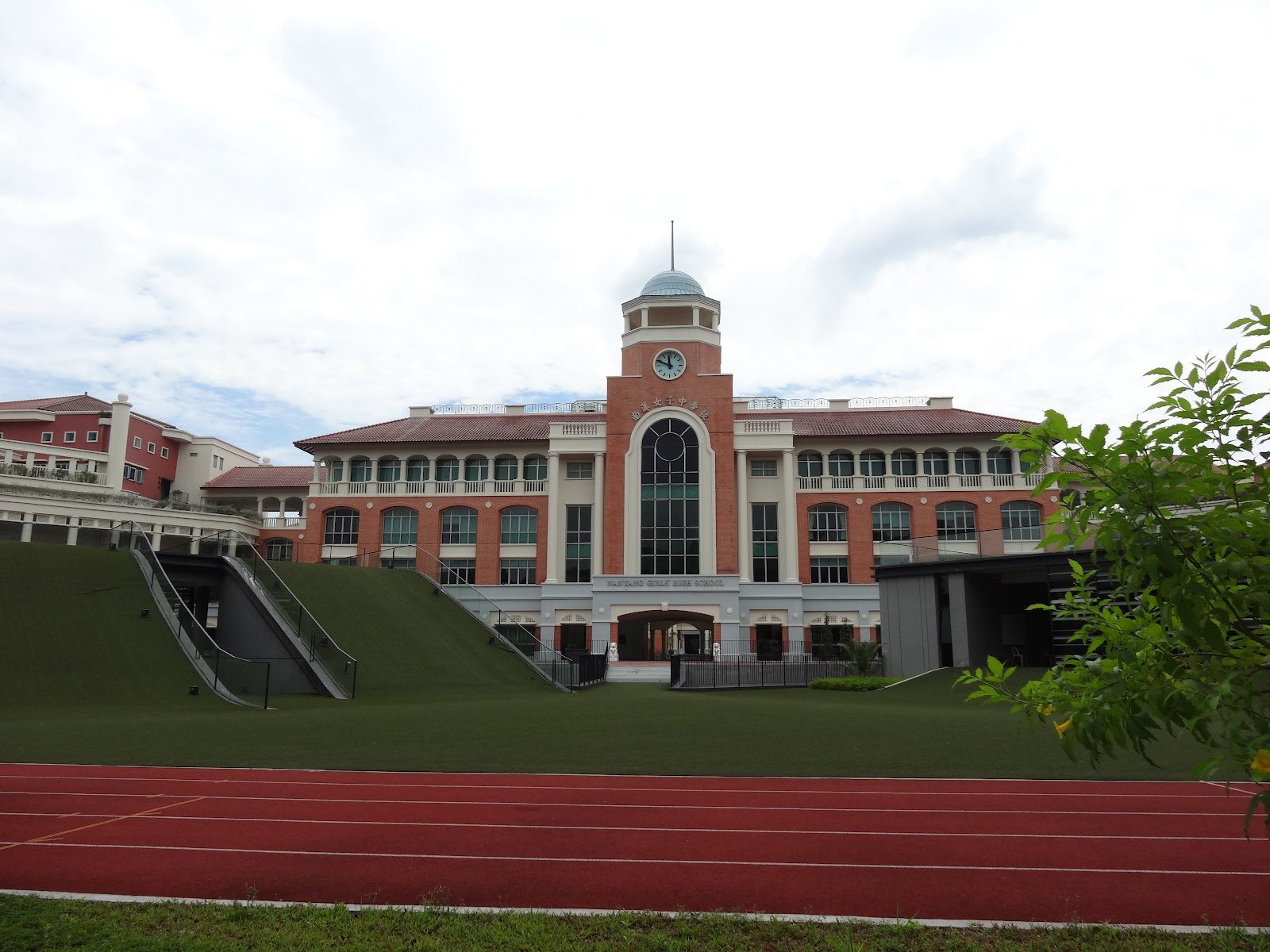
Photo © Joseph MT via Google Maps
Type
Day
Ages
3–18
Curriculum
IP (Integrated Programme)
Ratio
15:1
The Verdict
Editor's commitment
Right for
Girls who want a six-year IP in Bukit Timah, skipping O Levels and moving straight to Hwa Chong Institution.
Wrong for
Families needing co-education, boarding, or a broad international menu; this is a non-religious girls' day school with English instruction.
Watch out for
The average annual day fee is SGD 4,080, but the real price is selectivity and a fixed Years 1-6 route.
Ranking breakdown
Nanyang Girls' High School · #86 of 1591
Composite score 78.1. 8 weighted criteria.
By criterion
Academic Outcomes
Weight 20%
#66
of 1529 scored
University Placement
Weight 16%
#848
of 1529 scored
Prestige & Heritage
Weight 12%
#91
of 1571 scored
Alumni Network
Weight 12%
#42
of 1530 scored
Facilities
Weight 12%
#279
of 1533 scored
Transparency & Communications
Weight 8%
#93
of 1532 scored
Peer & Industry Review
Weight 10%
#38
of 1548 scored
Admissions Selectivity & Demand
Weight 8%
#45
of 1529 scored
Peer & Industry Review
How Nanyang Girls' High School is regarded in the sector
79
Strong · medium confidence
Nanyang Girls' High School sits among the handful of schools Singapore's own Ministry of Education rankings and independent education guides treat as the benchmark for girls' academic achievement, consistently placed in the top tier of secondary schools nationally. Its Integrated Programme partnership with Hwa Chong Institution, Singapore Quality Award (the first girls' school to receive it) and a notable-alumni roster including a sitting Cabinet minister and senior public figures underpin a reputation the National Library Board's own heritage archive describes as one of the country's most respected institutions for girls' education. Coverage is overwhelmingly domestic rather than from international school-review specialists such as WhichSchoolAdvisor, which focus on Singapore's expat international-curriculum sector rather than SAP/MOE national schools like NYGH. Within that local frame, however, peer and press regard is virtually unanimous: selectivity is extreme, and independent parent-facing guides routinely rank it alongside Raffles Girls' School as one of the two most prestigious girls' schools in the country.
Evidence sources
Award
Elite Mathematics 60
World's Top School · The Global Ranking
Nanyang Girls' High School is featured on our Global Top 60 ranking at #54. This seal is available for the school's marketing team to use on their website, prospectus and social channels.
Editors' overview
Nanyang Girls’ High School is a very specific proposition: a girls’ day school in Bukit Timah with a six-year Integrated Programme that removes the O-Level checkpoint and feeds directly into the college section of Hwa Chong Institution for Years 5 and 6. That structure matters. It suits families who want an uninterrupted academic runway rather than repeated public-exam sorting, and it puts the school firmly in Singapore’s high-pressure academic elite. Founded in 1917, non-religious, and teaching in English, it combines long institutional history with the distinctive SAP-school emphasis flagged in its editorial context: bilingual rigour, clear academic selection and a culture that does not waste time pretending every route suits every child.
The practical picture is equally clear. This is a day school for ages 3 to 18, with a student-teacher ratio of 15:1 and average class sizes of 30. Those numbers do not point to boutique pastoral intimacy; they point to a large, organised, academically driven environment where students need to manage pace, competition and independence. The average annual day fee is SGD 4,080, which places it in a remarkably accessible bracket for a school with this level of academic selectivity and prestige in Singapore. Parents paying private-international-school prices elsewhere will notice the contrast immediately.
What is special here is not glossy facilities or a sprawling menu of pathways. It is the clarity of the academic bargain. Girls enter a school with a defined intellectual identity, move through four years at Nanyang, then continue to Hwa Chong for the final two years before the GCE A Levels. That route will appeal to students who are fiercely able, self-disciplined and comfortable in a strong cohort of other high performers. It will not suit children who need constant hand-holding, a broad choice of curricular identities, or a softer school culture. For the right student, though, Nanyang belongs on any serious shortlist: old, exacting, academically ambitious, and tied to one of Singapore’s best-known sixth-form destinations in a way that is structurally hard to replicate.
An Elite Mathematics 60 school
Nanyang Girls' High School, in Bukit Timah, Singapore, sits at rank fifty-four on the Elite Mathematics 60 because an all-girls school has repeatedly matched the country's specialist maths institutions at the top of the national table. In the Singapore Mathematics Olympiad School Award (Category 1), which scores an entire school's entrants rather than a handful of stars, Nanyang Girls' High School took Gold alongside Anglo-Chinese School (Independent), Hwa Chong Institution, NUS High School of Mathematics and Science, Raffles Girls' School and Raffles Institution in 2014, and again earned Gold in the 2020 Category 1 award alongside Hwa Chong Institution, NUS High School and the Raffles schools.
The specialism runs through a six-year Integrated Programme shared with Hwa Chong Institution: students study in NYGH from Years 1 through 4, before proceeding to the College section of Hwa Chong Institution in Years 5 and 6, bypassing the O-Levels entirely. Mathematics itself is tiered, with Integrated Mathematics in lower secondary and Integrated Mathematics 2 and Advanced Mathematics as upper-secondary options, delivered inside a curriculum where NYGH adopted Dr Lynn Erickson's concept-based approach in 2016. The sharper differentiator is the Science and Math Talent Program introduced in 2009 for students gifted in Sciences and Mathematics, who are offered the Stanford EPGY Mathematics Course, an accelerated external track rather than a repackaged A-Level module. Competition coaching has a named lead: Tan Chik Leng of Nanyang Girls' High School served as a team leader for Singapore's squad at the 20th China Western Mathematical Invitational in Chongqing in 2023. The school does not publish what share of its roughly 1,600 pupils reach the advanced stream.
Notable named mathematicians among NYGH's alumnae are still emerging in public record, so the strongest evidence is the competition trail itself, with Gold School Awards in 2014, 2015, 2016 and 2020 - an unusually consistent run for a girls' school in a table otherwise dominated by co-educational specialist schools. The wider alumni roll includes Cabinet minister Grace Fu, Minister for Culture, Community and Youth, evidence of the school's broader pedigree beyond mathematics.
International openness is limited by design: NYGH has no boarding, and overseas non-resident families cannot apply directly but must go through the Admissions Exercise for International Students, which covers admission to Secondary 1 to 3 for the following academic year, with admission not guaranteed and placement based on test performance, available vacancies and declared residential area. English is the medium of instruction, but as a Special Assistance Plan school Higher Chinese carries real weight in entry. Fees are modest by international standards: Singapore Citizens pay S$250 to S$300 per month, while Permanent Residents pay S$880 per month, and international students from ASEAN countries pay S$1,580.50 per month, while non-ASEAN students pay S$2,398.00 per month, plus a flat miscellaneous charge. Families should sit the AEIS at least a year ahead and treat a residential move to Singapore, not a direct application, as the real first step.
Academic Performance
Academic performance here sits in Singapore’s top-flight selective tier, but with an important caveat for parents who want clean comparative data: Nanyang does not produce O-Level results because its students bypass that exam, and the school does not publish a consolidated set of A-Level outcomes under its own name because the final two years are completed at Hwa Chong Institution. That makes school-specific external-exam benchmarking less transparent than at schools that publish full public-exam breakdowns. Parents looking for a neat table of school-owned outcomes will not get one.
That said, the structure itself is a strong signal. Entry into this route is academically competitive, the cohort is filtered early, and progression into a major sixth-form destination is built into the model rather than won through a separate post-16 admissions scramble. In practical terms, Nanyang belongs with the serious academic operators in Singapore’s independent and government-aided selective landscape, not with broad-access schools serving a mixed attainment range. The absence of a stand-alone exam record does not weaken that standing; it shifts the evidence from raw school-branded score reporting to student selection, programme design and the calibre of the destination cohort. For families comfortable with Singapore’s exam-hardened meritocracy, that is enough. For families who insist on school-level published outcome data, it is a real limitation.
Facilities
Facilities are not the core sales point here, and the school does not publish the kind of glossy, room-by-room campus inventory that many international schools use to sell themselves. That matters. Parents will not get a grand showcase of theatres, Olympic pools or vast boarding-style sports estates. What they do get is a long-established selective school that operates at scale, with classes averaging 30 and a student-teacher ratio of 15:1; that points to facilities built for serious daily academic use, not boutique under-occupancy. In this peer group, that puts Nanyang closer to Singapore’s high-output local elite than to the amenity-heavy international-school model where the campus itself does a large part of the persuasion.
Against direct academic peers, that is not a weakness so much as a signal of priorities. Selective schools on this track win trust through teaching, cohort quality and institutional discipline, not through atrium architecture. Still, the opacity is real: the school does not publicly lay out enough detail on specialist science spaces, arts provision, sports infrastructure or junior-years facilities for parents to benchmark them with precision. That leaves Nanyang less transparent than rivals that publish full campus maps and named specialist centres. The practical conclusion is straightforward: expect competent, functional provision that supports a demanding academic machine; do not expect the facilities themselves to be the headline reason to choose it.
Inside its home market, though, it sits firmly in the top echelon
Prestige
Nanyang’s prestige rests on selectivity, institutional history and the force of the Hwa Chong link. In Singapore, that combination carries serious status. This is not prestige built on branding fluff or imported aspiration; it is prestige built inside one of the country’s most competitive school ecosystems. The school occupies a high-trust academic lane: families know what it is for, pupils know the pace demanded, and universities know the calibre associated with that route. The girls-only setting sharpens the identity further. This is a school with a strong internal culture, not a generic high-performer trying to please every market segment.
I rate its prestige highly because the route is structurally selective and socially legible. A 6-year pathway that removes one major national exam checkpoint and carries students on to Hwa Chong for the final stretch signals confidence in the cohort and confidence in the academic machinery behind it. That matters more than glossy claims. The prestige here is also earned rather than theatrical: the average annual fee of SGD 4,080 makes it strikingly inexpensive by international-school standards, yet its name still carries weight among Singapore families who track educational hierarchy closely. The limitation is clear: this is narrow prestige, not universal prestige. Outside Singapore and Chinese-speaking education circles, the name has less instant recognition than global private-school brands. Inside its home market, though, it sits firmly in the top echelon.
This is a day school for ages 3 to 18, with a student-teacher ratio of 15:1 and average class sizes of 30
Communications
Nanyang’s parent communication has the strengths and limits of a *serious state-linked academic institution*. It does not trade in glossy persuasion, and that is no bad thing. Families drawn to this school are not shopping for lifestyle branding; they want clarity, process and confidence that important information lands cleanly. The public-facing picture is functional rather than expansive. Key structural facts are easy to grasp, the school’s academic route is not buried under marketing noise, and the fee position — an average of SGD 4,080 a year — is plain enough to underscore that this is not a school selling exclusivity through polish. What is missing is richer disclosure. Parents who want a detailed sense of pastoral systems, campus life, specialist provision or day-to-day parent engagement do not get much depth.
That makes communication effective for the hard essentials and weaker on texture. Existing families in Singapore’s selective system will cope well with that compact style; they already understand the grammar of deadlines, expectations and institutional hierarchy. International families or first-time entrants face a steeper learning curve. The school communicates like an organisation that expects parents to keep up, not one that courts reassurance. That stance can work when the underlying operation is disciplined, but it leaves little margin for ambiguity or uncertainty. My view: parent communication is competent, spare and unsentimental — good enough for confident families, less good for those who need warmth, narrative or hand-holding.
Uniqueness
What marks Nanyang out is not just selectivity but structural continuity. Girls do not spend their middle teen years preparing for one school-leaving hurdle only to start again in a different institution with a different culture. They move through a single 6-year academic track, with the final stretch completed at Hwa Chong Institution’s college section. That gives the school a clear, uncompromising shape: it is built for students who thrive when the route is settled early and the expectations stay high. The SAP identity sharpens that further. This is a school for families who want bilingual rigour woven into daily academic life, not parked at the edges as an enrichment extra.
For students, that structure brings two concrete advantages. First, it removes one layer of public-exam churn and frees time for deeper study, stronger subject grounding and a more coherent intellectual pace. Second, it places girls in a high-attainment female cohort during years when confidence, voice and academic self-concept can harden for life. That matters. In mixed environments, very able girls still get out-talked, out-performed theatrically, or pushed into safer versions of ambition. Here, the competition is internal, the benchmark is demanding, and the culture backs serious scholarship without apology. The trade-off is plain: this is not a broad church. Students who want multiple exit points, lighter pressure or a looser sense of purpose will find the model restrictive.
Parents paying private-international-school prices elsewhere will notice the contrast immediately
Student Profile
The girls who thrive here are *fast, self-propelled and academically combative* in the best sense. They do not need constant praise to keep working, and they do not wilt when surrounded by other high attainers. A class size of 30 tells you something important: this is not a soft, ultra-attentive environment built around individual coaxing. Students need to hold their ground, keep pace and cope with comparison without drama. The school suits children who like intellectual structure, respect clear standards and can manage a culture where performance carries weight. It also suits families who value disciplined study habits early and do not flinch at a school identity tied to selection and pressure. The girls-only setting will appeal to students who want ambition normalised rather than explained away.
Who will struggle? Children who need heavy pastoral cushioning, frequent academic rescue or a wide-open school culture built around personal choice. This is a high-expectation, low-fuss environment. The staffing ratio of 15:1 does not indicate neglect, but it does indicate scale and institutional confidence rather than boutique care. A child who enjoys working independently, takes correction well and is comfortable in a serious female cohort will fit. A child who needs room to drift, resist structure or reinvent herself every year will not. This is a school for girls who want a hard-edged academic track and have the stamina to stay on it.
What is special here is not glossy facilities or a sprawling menu of pathways
Co-curricular strengths
Arts & sport, on a separate axis
Overall 8.5/10
Scored 0-10 from the school's own published evidence. This axis is editorial-only — it does not feed the main WTS ranking.
Sports
8/10
Drama
8/10
Dance
8.5/10
Music
9/10
Visual Arts
9/10
WTS 300 badge
Nanyang Girls' High School is one of the World's Top 300 Schools. Claim your listing to add it to your site →
Strengths
- +Founded in 1917, NYGH is one of Singapore's oldest girls' schools and holds Special Assistance Plan (SAP) status, giving it a long-established bicultural, bilingual academic tradition.
- +Runs a six-year Integrated Programme in partnership with Hwa Chong Institution, letting students bypass O-Levels and progress directly from Year 4 secondary school into Hwa Chong's junior college section for Years 5-6.
- +One of the most selective IP schools nationally, with a PSLE Achievement Level cut-off point typically around 6, reflecting a highly academically able intake.
- +Strong, well-resourced co-curricular programme spanning around 35 CCAs and multiple Direct School Admission (DSA) pathways in sport, arts and academics.
- +Alumnae network includes prominent public figures such as Cabinet minister Grace Fu and former First Lady and architect Ling Siew May, indicating a long track record of producing high-profile professionals.
Considerations
- −Single-sex institution, so families wanting a co-educational secondary experience will need to look elsewhere.
- −Entry is extremely competitive, requiring near-perfect PSLE scores or a strong DSA portfolio, which shuts out all but a small academic cohort.
- −As a SAP school, Chinese language and bicultural study are woven throughout the curriculum, which may disadvantage expat families without a Higher Chinese or Mandarin background.
- −Fees rise sharply for non-citizens: Singapore Citizens pay roughly S$250-300 a month, but Permanent Residents pay around S$880 and international students face S$1,580-2,398 monthly, a significant premium for relocating families.
Availability
Primary entry gate & tests
PSLE / S1 Posting / DSA (Girls)
Gallery
Photo © Nanyang Girls' High School via Google Maps
Photo © Wei Wang via Google Maps
Photo © Danny Heng via Google Maps
Photo © Yeow Ong Lim via Google Maps
Photo © cse1217 via Google Maps
Photo © Kuan JX via Google Maps
Photo © chuttersnap via Google Maps
Photo © Ian Wui via Google Maps
Photo © Alvin Khoo via Google Maps
Parent reviews
Have you sent your child here?
Voice reviews carry the strongest trust badge — we transcribe them for you to tidy up before they go live. Prefer to type? A written review is fine too.
Add your voice
In 60 seconds, tell other parents: what's the best thing about Nanyang Girls' High School, and what surprised you when your child joined?
We ask for a Google sign-in so every review has a real face behind it — no anonymous drive-by attacks on schools, and no faked positive reviews. Your email is never shown publicly.
Send this profile to a friend
International parents rely on word-of-mouth. Share this review with someone weighing the same decision.
Schools with places
Similar schools to Nanyang Girls' High School with places available now.
United World College of South East Asia
Singapore · Singapore
- 2026-27
- CLOSEDStandard route
- 2027-28
- OPENS SOONOpens 1 Sept '26 (Closes 2 Nov)
NUS High School of Math and Science
Singapore · Singapore
- 2026-27
- CLOSEDStandard route
- 2027-28
- PLACES OPENYr 3 active (12-26 Aug); Yr 1 DSA
Tanglin Trust School
Singapore · Singapore
- 2026-27
- CLOSEDNo late apps
- 2027-28
- PLACES OPEN
Anglo-Chinese School (Independent)
Singapore · Singapore
- 2026-27
- CLOSEDStandard route
- 2027-28
- WAITPOOLDSA completing; PSLE & JAE pending
Availability first, then country, area, curriculum, price, co-curricular
Consider also
Also worth looking at alongside Nanyang Girls' High School.
United World College of South East Asia
Singapore · Singapore
Across two Singapore campuses, service learning anchors an IB path capped by a rare Systems Transformation course for change leadership.
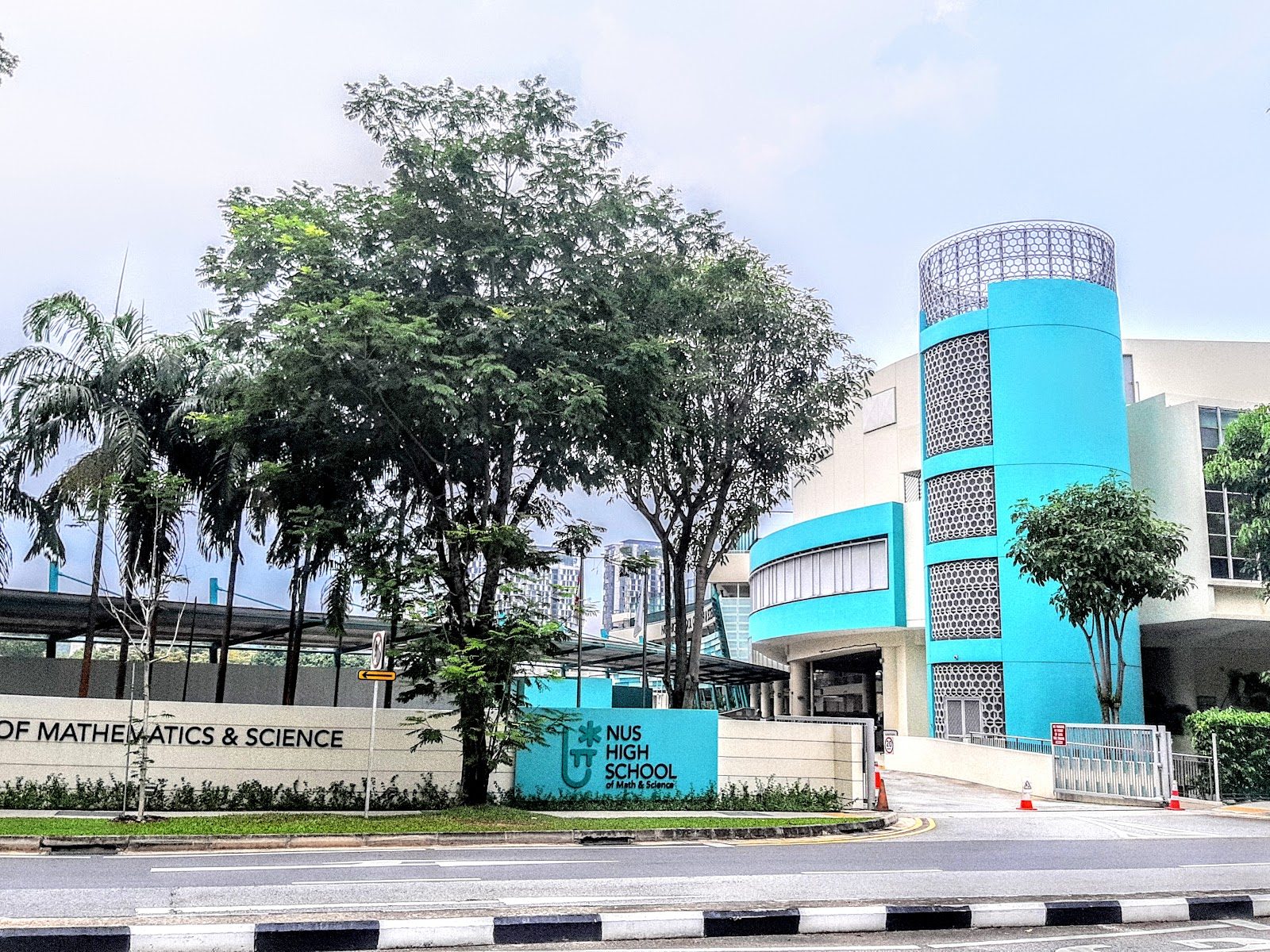
NUS High School of Math and Science
Singapore · Singapore
Six years, no O-levels, no A-levels -- just a bespoke diploma built around university-level math and science modules.
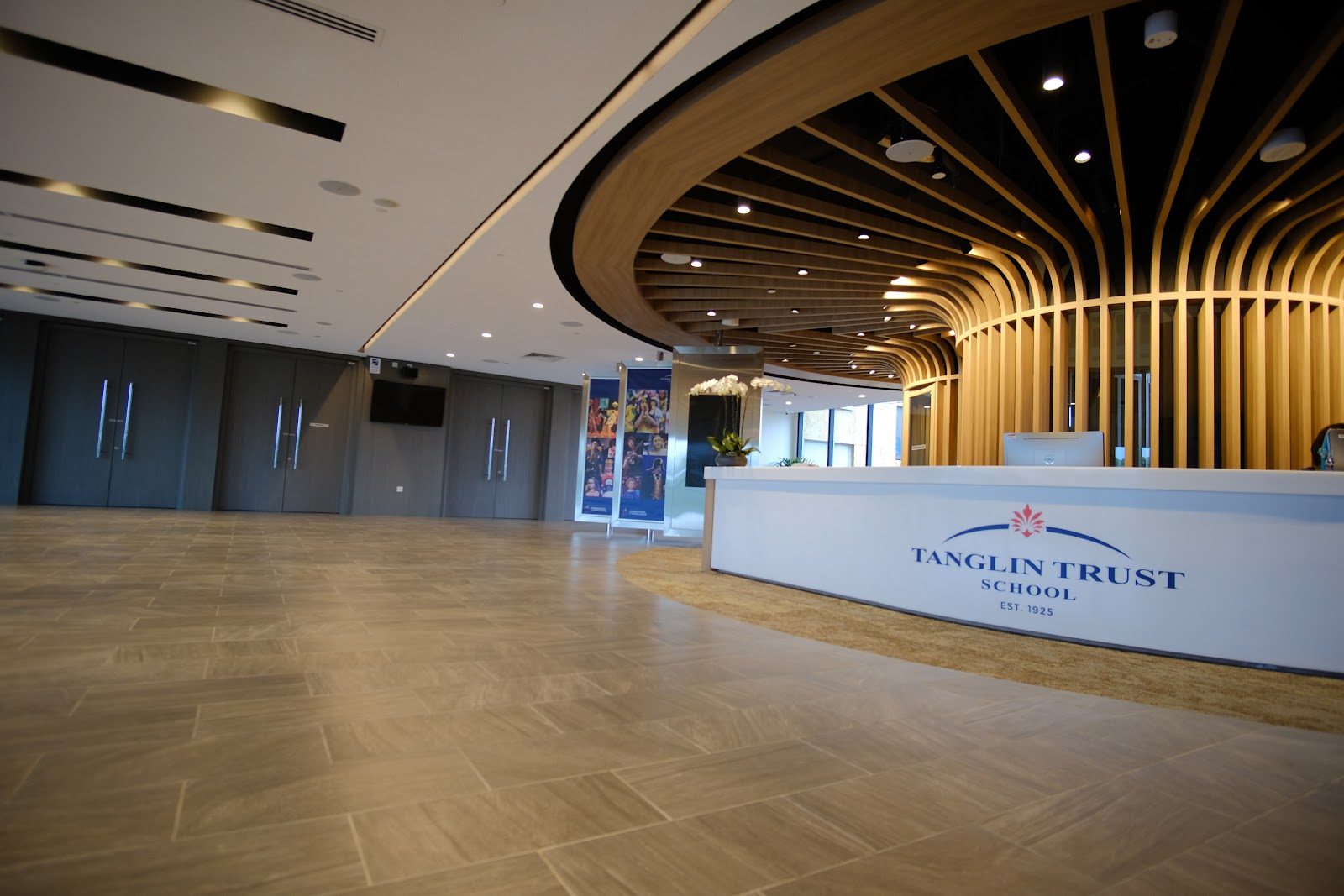
Tanglin Trust School
Singapore · Singapore
Southeast Asia's oldest British school pairs IB with A-Levels, then sends every Year 9 to the Australian bush for five weeks.
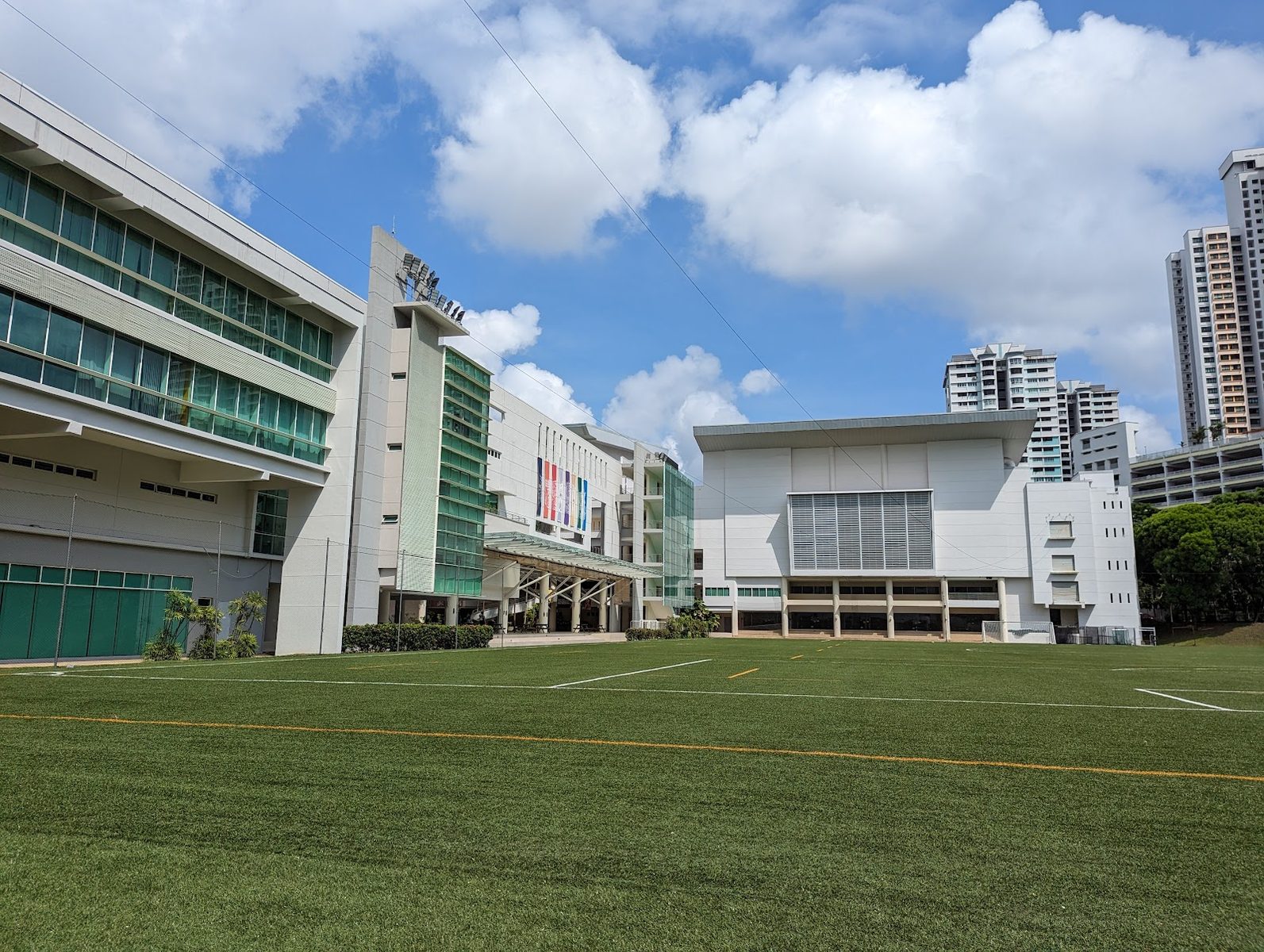
Anglo-Chinese School (Independent)
Singapore · Singapore
Singapore's first IB Diploma school, this Methodist boys' campus on Dover Road has ranked among the world's top three IB scorers for years.
Same country and curriculum — closest matches within ±10 points either way