
Riyadh Province
Five decades running the Saudi national curriculum in tandem with California English-standard benchmarking and MAP testing.
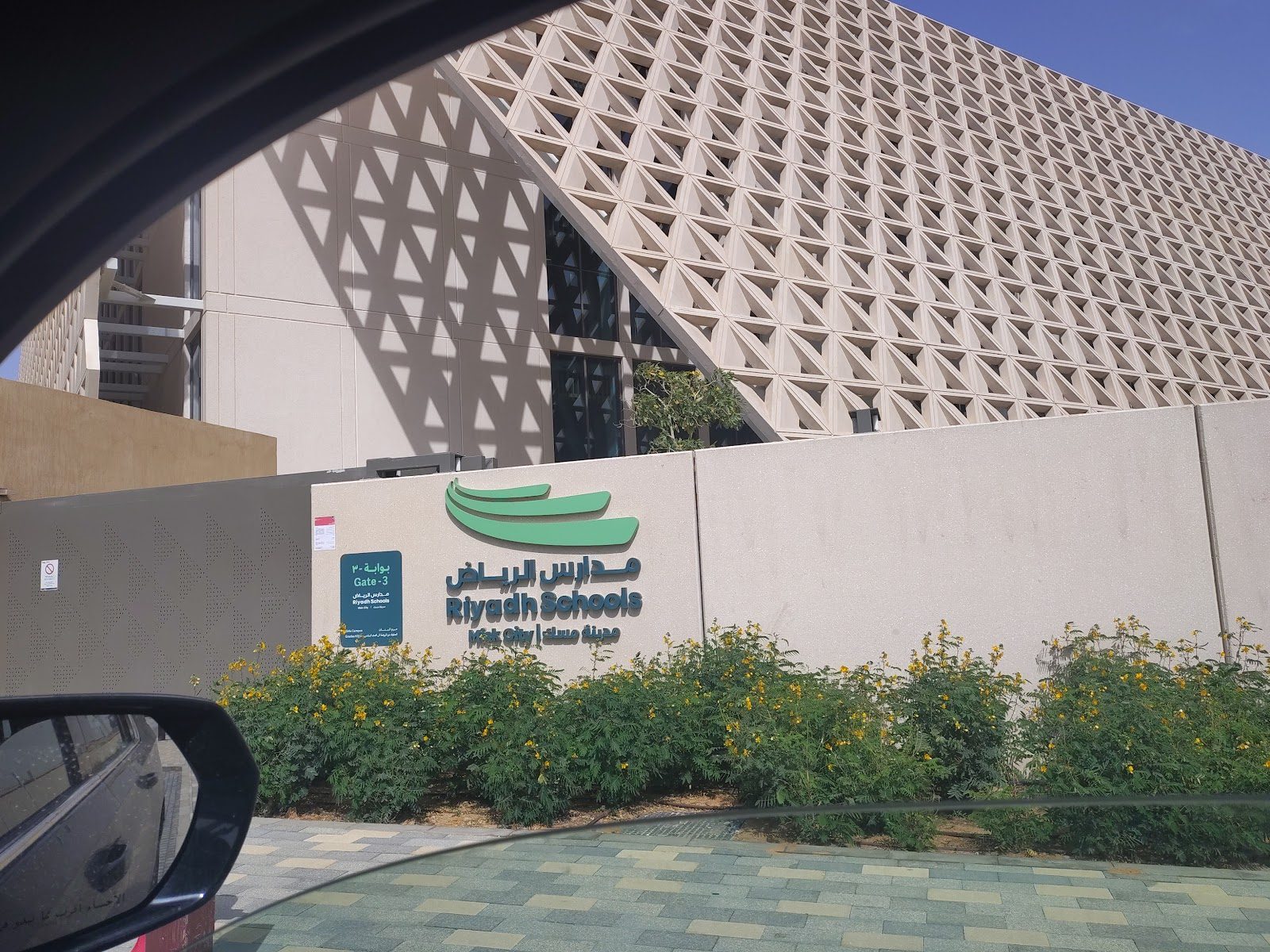
Photo © abodo22 abodo22 via Google Maps
Type
Day
Ages
4–18
Curriculum
Saudi National
Qualifications
Saudi Tawjihi
Ratio
—
The Verdict
Editor's commitment
Right for
Families in Riyadh who want a day school founded in 1955, with Arabic and English teaching under the Saudi National curriculum.
Wrong for
Parents seeking IB, A Levels or boarding will not find them here; Riyadh Schools is day-only, Islamic, and school-declared Saudi National.
Watch out for
The California English-standard benchmarking and MAP testing add external reference points, but the core offer remains Saudi National from ages 4–18.
Ranking breakdown
Riyadh Schools · #1445 of 1591
Composite score 49.6. 8 weighted criteria.
By criterion
Academic Outcomes
Weight 20%
#1386
of 1529 scored
University Placement
Weight 16%
#1414
of 1529 scored
Prestige & Heritage
Weight 12%
#1060
of 1529 scored
Alumni Network
Weight 12%
#1428
of 1529 scored
Facilities
Weight 12%
#1336
of 1529 scored
Transparency & Communications
Weight 8%
#1511
of 1529 scored
Peer & Industry Review
Weight 10%
#1478
of 1529 scored
Admissions Selectivity & Demand
Weight 8%
#1419
of 1529 scored
Peer & Industry Review
How Riyadh Schools is regarded in the sector
50
Credible · medium confidence
Riyadh Schools operates within a crowded and fast-expanding Saudi private-education market that includes internationally benchmarked institutions such as British International School Riyadh and Riyadh International Schools, which dominate the limited independent commentary available on outlets like WhichSchoolAdvisor and Good Schools Guide International. Neither of these review platforms nor major regional press (Arab News, Saudi Gazette) currently carries a substantive, sourced profile of Riyadh Schools specifically, meaning its standing among peer heads or admissions officers cannot be verified through public citation. Where it appears in Ministry of Education recognition lists and local parent forums, commentary is largely administrative rather than qualitative. Unlike higher-tier Riyadh schools that report specific UK Russell Group or US university offers, no verifiable university admissions data or officer testimonials referencing Riyadh Schools graduates were found in public records. Its regional reputation therefore appears to rest more on local enrollment demand and government accreditation than on documented peer or press endorsement, distinguishing it from more internationally scrutinized competitors in the same city.
Editors' overview
Riyadh Schools sits in a distinctive niche: a long-established Saudi day school, founded in 1955, that runs the Saudi national curriculum while importing external academic checks through California English-language standards and MAP testing. That combination matters. Many schools in Riyadh offer either a fully international pathway or a straightforward national one; Riyadh Schools does something tighter and more pragmatic. It keeps students anchored in Arabic, English and an Islamic school culture while measuring parts of performance against an overseas benchmark. For families who want cultural continuity without surrendering academic scrutiny, that is a serious selling point.
What puts it on a shortlist is not novelty but fit. This is a school for parents who want their children educated inside the Saudi system from ages 4–18, yet do not want English provision treated as decorative. The California benchmarking gives the school a sharper edge than a standard national-curriculum option, and MAP testing adds a layer of data many local families now expect. The attraction is clear: rootedness without isolation, a long institutional history, and a bilingual structure that reflects the realities of professional life in Riyadh. The trade-off is also clear. Families seeking the IB, A levels, or a broad Western liberal curriculum will not find that here. Riyadh Schools serves a different brief, and serves it with clear intent.
The students who thrive here are those who value structure, linguistic range and a school identity tied to national and religious context. Ambitious Saudi families, and others committed to Arabic and Islamic education, will see the appeal. Children who do best here will not need a cosmopolitan brand to feel motivated; they will respond to order, expectations and steady progression inside a familiar framework. For the right family, that produces confidence, belonging and academic direction. For the wrong one, it will feel too bounded. That is the real market position: not a catch-all international school, but a focused Saudi day school with 70 years of history and a more rigorous English-measurement spine than many direct competitors.
Academic Performance
Riyadh Schools does not publish the hard outcome data that would let parents judge academic performance against serious local competitors. We have not seen aggregate national exam scores, subject-by-subject pass rates, university destinations, or year-on-year attainment trends. That leaves a conspicuous gap in a market where ambitious families increasingly expect numbers, not reassurance. The presence of MAP testing and external English benchmarking gives the school a measure of discipline and comparative reference, but those tools are only useful to parents when results are disclosed in a form outsiders can interrogate. Here, the public picture remains opaque.
That places Riyadh Schools in the middle of the pack for transparency, not at the front. Some peers in Riyadh publish headline attainment data, acceptance lists, or at least clearer performance indicators by phase. Riyadh Schools asks families to trust the structure more than the scoreboard. For parents who prioritise cultural fit and continuity inside the national system, that may be enough. For parents making a hard-nosed academic comparison, it is not. The school’s long operating history gives it institutional weight, but history is not the same as proof. Until Riyadh Schools releases verifiable exam outcomes and destination data, its academic standing relative to peers stays difficult to rank with confidence.
Facilities
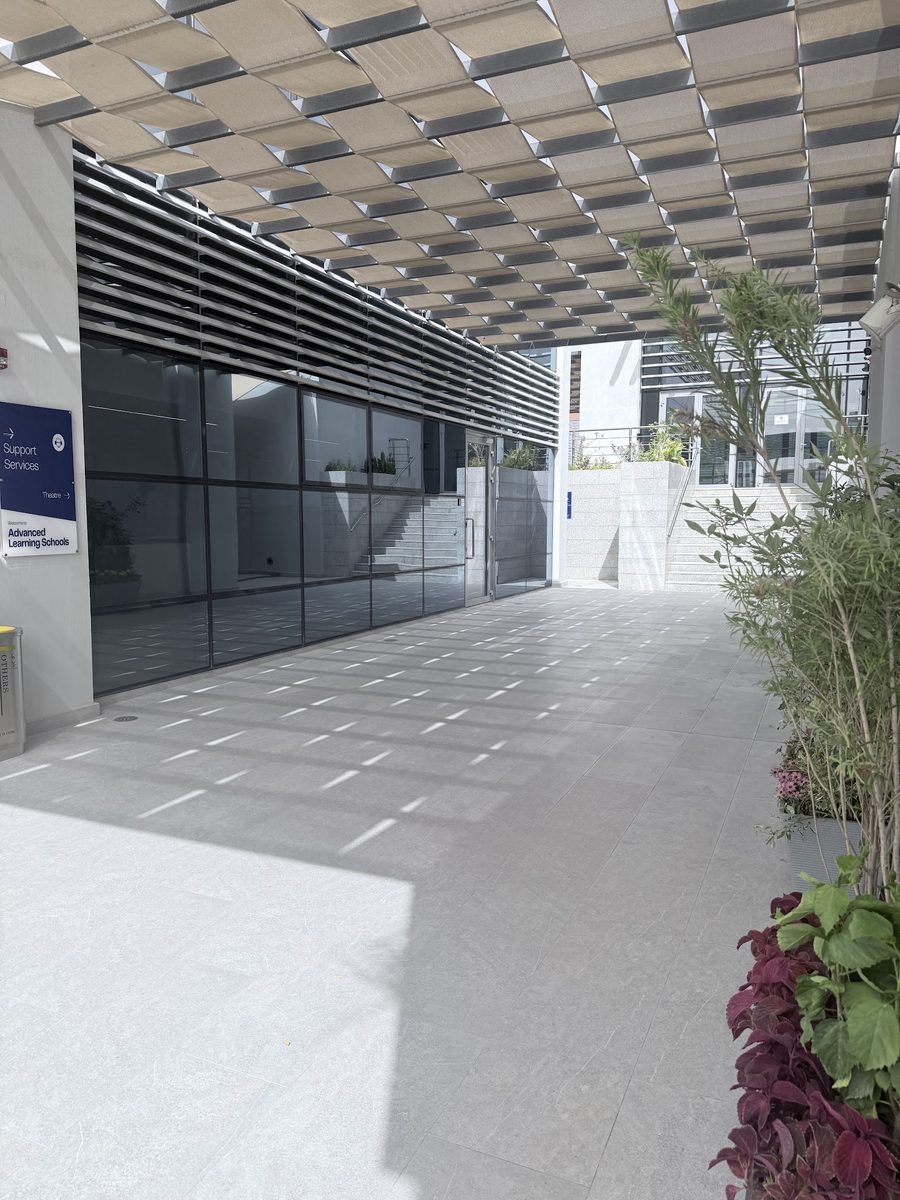
Riyadh Schools does not publish the kind of campus detail that lets parents assess facilities with precision. We have not seen a full campus map, specialist-room inventory, theatre specification, sports provision list or serious visual documentation of teaching spaces by phase. That matters. In Riyadh, peer schools competing for ambitious families now spell out their science labs, indoor sports halls, performance spaces, libraries and age-specific early years environments in concrete terms. Riyadh Schools leaves too much of that unsaid. The absence of hard detail does not prove weak provision, but it does leave the school behind the curve on disclosure and forces parents to inspect in person rather than make an informed first pass online.
What can be said is narrower. A school serving children from the early years to graduation needs broad, functional provision across academics, sport and student life; anything less would be operationally thin. The question is not whether facilities exist, but whether they match the stronger campuses in the city on range, finish and specialist depth. On that point, Riyadh Schools gives no persuasive public case. Premium international competitors in Riyadh market facilities as part of the product. Riyadh Schools treats them as background. For some families, that signals substance over display. For others, it reads as unnecessarily opaque. Against peers, the facilities picture ranks as credible but unproven.
Many schools in Riyadh offer either a fully international pathway or a straightforward national one; Riyadh Schools does something tighter and more pragmatic
Prestige
Riyadh Schools carries solid domestic standing, not elite cachet. Its reputation rests on longevity, scale of operation and fit for families who want a Saudi education delivered with more discipline around English measurement than many national-system peers. That gives it institutional credibility in its own market segment. It does not give it the sheen of Riyadh’s highest-status international brands, nor the social signalling attached to schools that feed visibly into overseas universities and publish glossy outcome data. Prestige here is practical rather than rarefied: parents choose it for continuity, order and cultural alignment, not for exclusivity.
That is why the school sits in the upper middle tier for prestige rather than at the top. A long track record matters. So does serving the full age range through to 18. But prestige hardens when schools disclose results, university destinations and standout distinctions that outsiders can verify. Riyadh Schools does not do that. The result is a school with real local weight and limited external shine. For families rooted in the Saudi system, that weight counts for a great deal. For families chasing status in the international-school marketplace, it does not. This is a respected name, not a coveted one.
Riyadh Schools serves a different brief, and serves it with clear intent
Communications
Riyadh Schools communicates with parents in a functional, institution-first way. The public-facing picture lacks the cadence and precision that strong schools now treat as standard: no clear stream of published performance data, no detailed facilities briefing, and limited outward-facing explanation of how school life is tracked across the full age range. That matters because parent communication is not only about notices and reminders; it is also about giving families a hard-edged account of what their children experience, how standards are monitored and where the school is succeeding or falling short. On that measure, Riyadh Schools is serviceable rather than impressive. Families can infer that internal communication must carry a heavy load in a school serving ages 4–18, but the school does not give outsiders much proof of disciplined parent reporting before enrolment.
That weakens confidence at the enquiry stage. In a market where schools compete hard for trust, Riyadh Schools does not publish enough to show a transparent communication culture. Parents who value direct access, clear academic reporting and regular explanation of school decisions will want to test this carefully in person: ask how progress is shared, how concerns are escalated, how quickly staff respond, and whether reporting differs by phase. A school with this profile does not need glossy marketing. It does need plain, consistent candour. At present, the communications picture feels competent but guarded, which will suit families content with a traditional hierarchy and frustrate those expecting sharper accountability.
Uniqueness
What marks Riyadh Schools out is not novelty but combination. It keeps children inside the Saudi system from the start of schooling to the end of it, while building in external checks that many national schools still treat lightly. The California-linked English benchmarking and MAP testing give the school a useful hard edge: students do not simply study English; they are measured against standards outside the immediate local bubble. That matters for families who want cultural continuity without accepting low scrutiny in language development. In practice, it gives students a more disciplined read on progress, a clearer sense of where they stand, and less room for complacency than a purely inward-facing model.
The benefit is as much social as academic. Students move through a school culture that is firmly rooted in Saudi and Islamic norms, without English being pushed to the margins as a secondary subject. That creates a distinctive balance: identity is reinforced, not diluted, while students still build the bilingual competence now required in higher education and professional life. The all-through structure from age 4 to 18 also brings continuity of expectations and fewer transition shocks than fragmented school pathways. For the right family, that mix produces students who are grounded, linguistically agile and comfortable operating in more than one frame of reference. Few schools in this segment offer that combination with the same institutional steadiness.
Riyadh Schools does not publish the hard outcome data that would let parents judge academic performance against serious local competitors
Student Profile
The best fit here is the family that wants a child educated inside a structured, values-led environment where Arabic, Islam and school discipline carry real weight in daily life. Students who thrive are comfortable with clear rules, adult authority and a defined moral framework. They do not need a highly performative campus culture, endless elective choice or an overtly international peer mix to stay engaged. They benefit from routine, consistent expectations and a school identity that does not wobble between competing messages. The all-through format from 4–18 also suits children who do better with continuity than with repeated school changes and fresh social resets.
This is a strong match for upwardly mobile Saudi families, and for others who want children fluent in both local norms and serious English study without stepping outside the national system. It is a weaker fit for students who want a looser classroom culture, a more questioning academic style or the social texture of a globally mixed international school. Creative, highly independent children can still do well here, but only if they are content working inside a clear perimeter rather than pushing constantly against it. In temperament, the school suits the steady, dutiful, grounded student more than the iconoclast. For the right child, that brings security and direction. For the wrong one, it feels confining by the middle and senior years.
That places Riyadh Schools in the middle of the pack for transparency, not at the front
Co-curricular strengths
Arts & sport, on a separate axis
Overall 6.7/10
Scored 0-10 from the school's own published evidence. This axis is editorial-only — it does not feed the main WTS ranking.
Sports
8/10
Drama
6.3/10
Dance
6.2/10
Music
6.6/10
Visual Arts
6.4/10
Strengths
- +Riyadh Schools is part of Riyadh Schools Group, a leading non-profit educational institution in Saudi Arabia and a subsidiary of the Misk Foundation, blending internationally recognized curricula with Saudi heritage.
- +The school offers both a national stream and an international stream for boys and girls across primary, middle and high school, both accredited by AdvancED.
- +The national stream follows the Ministry of Education's curriculum from Grades 1-12 alongside an advanced English curriculum aligned with California Core Standards, with progress tracked via MAP tests.
- +Riyadh Schools partners with the Mawhiba Foundation on the Prince Mohammed Bin Salman Scholarship, providing 50 scholarships for gifted and distinguished students to join the Mawhiba Program.
- +Tuition sits in the budget band relative to Riyadh's international-school market, with primary fees estimated around SAR 30,000-42,000 and secondary around SAR 38,000-58,000 per year, according to a third-party fee aggregator.
Considerations
- −The core offering is a Saudi Ministry of Education national-curriculum pathway taught mainly in Arabic, which will not suit expat families seeking a full IB, A-level or AP track for direct entry to non-Saudi universities.
- −In the Muslim world, public schools and most private schools are sex-segregated, and Riyadh Schools' national stream follows this common Saudi practice rather than operating as a coeducational Western-style day school throughout.
- −The editorial rank (403) and challenger_300 tier place it below Riyadh's premium international schools in reputation and resourcing, and no independent inspection-body report (e.g. BSO, ISI) could be verified publicly.
- −Fee and outcome figures circulating online come mainly from third-party aggregators rather than the school's own published fee schedule, so families should confirm exact costs and academic results directly with the admissions office.
Availability
Primary entry gate & tests
Academic Record + Placement Test
Gallery
Photo © abodo22 abodo22 via Google Maps
Parent reviews
Have you sent your child here?
Voice reviews carry the strongest trust badge — we transcribe them for you to tidy up before they go live. Prefer to type? A written review is fine too.
Add your voice
In 60 seconds, tell other parents: what's the best thing about Riyadh Schools, and what surprised you when your child joined?
We ask for a Google sign-in so every review has a real face behind it — no anonymous drive-by attacks on schools, and no faked positive reviews. Your email is never shown publicly.
Send this profile to a friend
International parents rely on word-of-mouth. Share this review with someone weighing the same decision.
Schools with places
Similar schools to Riyadh Schools with places available now.
Multinational School Riyadh
Riyadh · Saudi Arabia
- 2026-27
- PLACES OPENApps open / space-dependent
- 2027-28
- WAITPOOL2027/28 timetable TBC
Misk Schools
Riyadh · Saudi Arabia
- 2026-27
- PLACES OPENApps open / space-dependent
- 2027-28
- WAITPOOL2027/28 timetable TBC
Manarat Al Riyadh Schools
Riyadh · Saudi Arabia
- 2026-27
- WAITPOOLSpace-dependent
- 2027-28
- PLACES OPENRolling
Kingdom Schools
Riyadh · Saudi Arabia
- 2026-27
- WAITPOOLSpace-dependent
- 2027-28
- PLACES OPENRolling
Availability first, then country, area, curriculum, price, co-curricular
Consider also
Also worth looking at alongside Riyadh Schools.
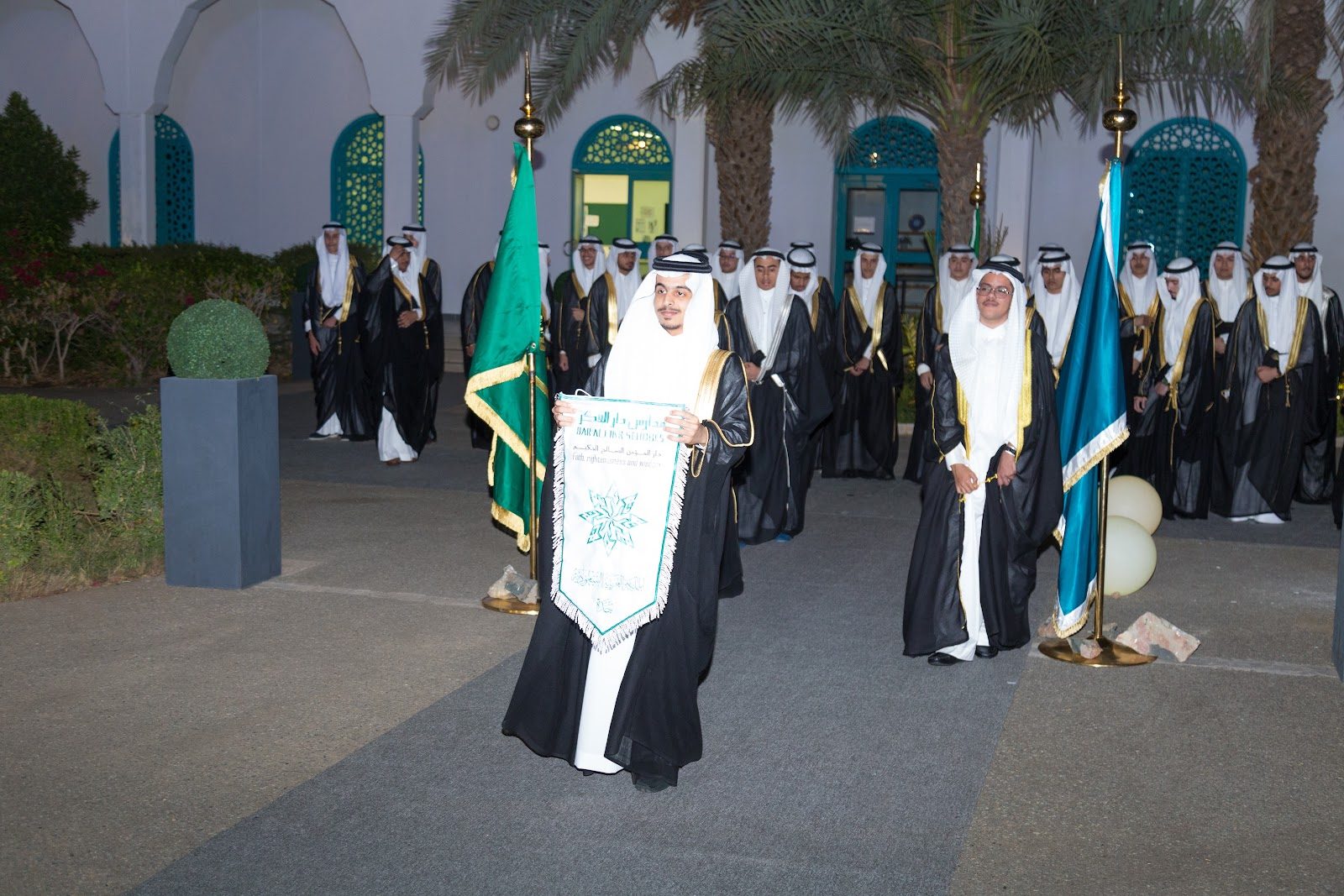
Dar Al Fikr Schools
Jeddah · Saudi Arabia
A campus engineered like a solar system, with faith as the fixed center around which British rigor and Arab-Islamic identity orbit.
King Faisal School
Riyadh · Saudi Arabia
Founded by the King Faisal Foundation in 1991, the first school in the Kingdom to run all three IB programmes end to end.
Al-Tarbia Al-Islamiah Schools
Riyadh · Saudi Arabia
Founded in 1964 by Saudi royalty, this Rahmaniyah day school pairs Quranic values with disciplined academic rigor in Riyadh.
Advanced Learning Schools
Riyadh · Saudi Arabia
In central Riyadh, a full IB continuum meets American college prep for a student body that is majority Al Saud.
Same country and curriculum — closest matches within ±10 points either way