
Valle del Cauca
Founded in 1947 at the foothills of the Andes, where three-walled, open-air classrooms meet a bilingual, dual-diploma American curriculum.
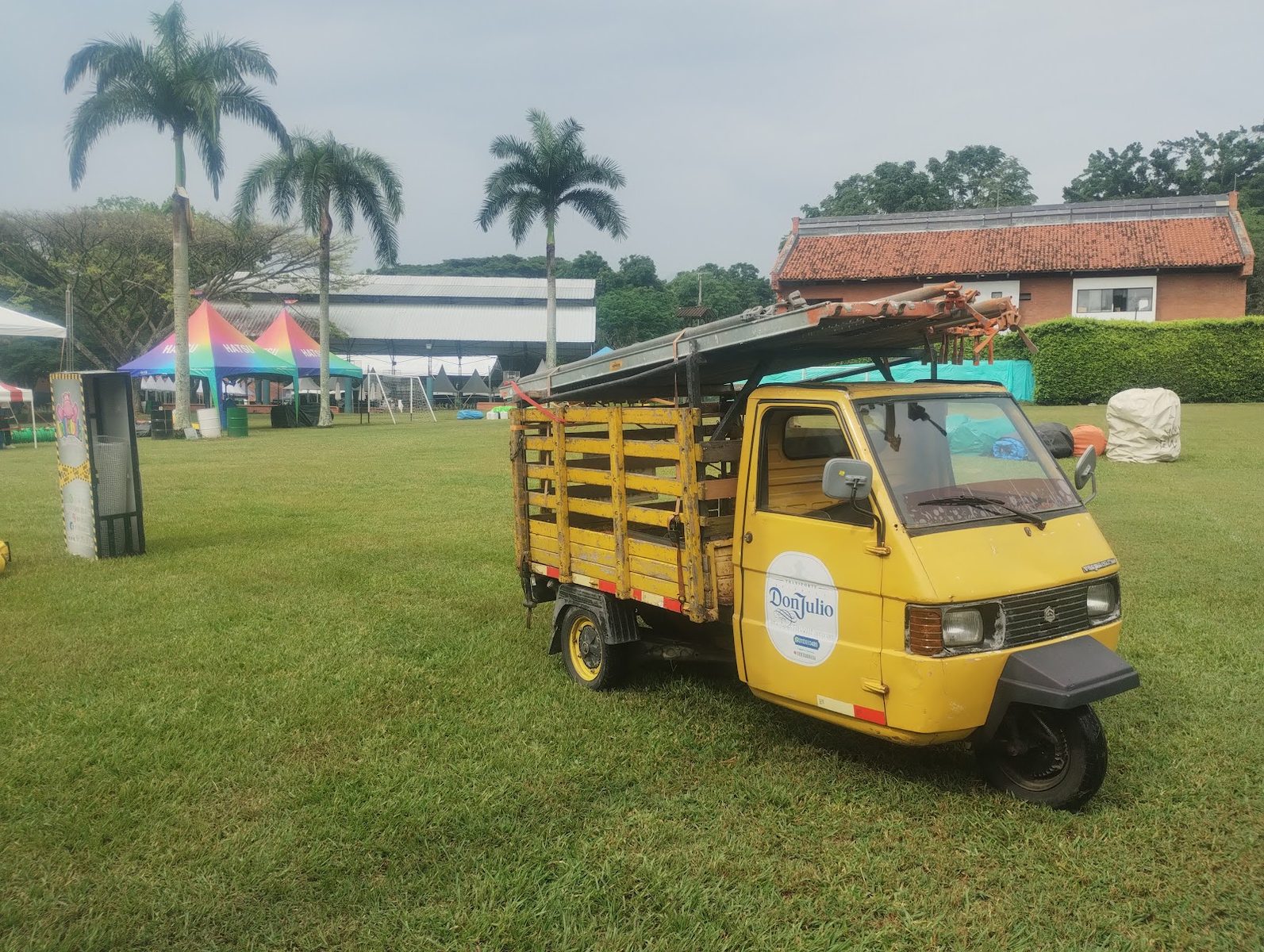
Photo © Hielo Noruega via Google Maps
Type
Day
Ages
3–18
Curriculum
American
Qualifications
AP · US High School Diploma
Ratio
—
The Verdict
Editor's commitment
Right for
Families in Cali who want a day school founded in 1947, with English and Spanish instruction and CIS plus Middle States accreditation.
Wrong for
Parents seeking boarding, a British or IB curriculum, or a school with public destination breadth beyond 87 leavers and 12 to Los Andes.
Watch out for
The American dual-diploma offer is clear; hard outcome data are not. The school publishes 2024 destinations, not aggregate exam results.
Ranking breakdown
Colegio Bolívar · #180 of 1591
Composite score 74.9. 8 weighted criteria.
By criterion
Academic Outcomes
Weight 20%
#512
of 1529 scored
University Placement
Weight 16%
#136
of 1529 scored
Prestige & Heritage
Weight 12%
#212
of 1571 scored
Alumni Network
Weight 12%
#234
of 1530 scored
Facilities
Weight 12%
#12
of 1533 scored
Transparency & Communications
Weight 8%
#41
of 1532 scored
Peer & Industry Review
Weight 10%
#250
of 1548 scored
Admissions Selectivity & Demand
Weight 8%
#1232
of 1529 scored
Score history
Colegio Bolívar · 2026
Movement across 2024–2026. Peer average overlaid.
Overall — 2024–2026
74.9/ 100
▲ +19.2 vs 2025
year on year
Peer & Industry Review
How Colegio Bolívar is regarded in the sector
60
Respected · low confidence
Colegio Bolívar is consistently cited as one of Cali's premier bilingual/IB schools, is AdvancED/Cognia and IB-accredited, and is referenced in expat forums and regional 'best international schools in Colombia' listicles as a top choice in the Valle del Cauca region. However, it lacks coverage in major global rankings like Tatler or Good Schools Guide, and independent press mentions beyond regional expat/relocation guides are limited.
Evidence sources
Editors' overview
Colegio Bolívar occupies a rare position in Colombia’s school market: a long-established, bilingual American day school in Cali with real scale, a deep local reputation, and a campus that alters the texture of daily school life. Founded in 1947, it sits on 14 hectares at the foothills of the Farallones, with 15 classroom blocks, three auditoriums, multiple sports facilities and abundant outdoor space. The detail that matters is not just acreage. It is the school’s architectural and climatic logic: open-air, three-walled classrooms and a green campus give the place a distinct rhythm, more rooted in place than the sealed, generic international-school model. For families who want an English-Spanish education without losing contact with Colombian culture, that counts.
What puts Colegio Bolívar on a shortlist is the combination of dual orientation and institutional maturity. It runs an American curriculum, teaches in English and Spanish, and sends graduates both abroad and into Colombia’s top universities; the Class of 2024 had 87 leavers, with Universidad de Los Andes and Javeriana Cali among the published destinations. The student-teacher ratio of 1:8 is strong for a school of this size. There is also substance in the academic structure: early childhood through high school on one site, a stated college counselling function, and visible investment in science, technology, arts and sport. The school’s own language about innovation, AI and sustainability is contemporary; the harder fact is that it already has the physical plant and organisational depth to support those ambitions. Space to grow is not a slogan here; it is built into the campus.
Parents should also read it clearly. This is not a boutique school, not a British-style hothouse, and not a narrowly elite expatriate enclave. It is a large, established day school with a confident internal culture and a strong sense of community, values and service. Families who want constant hand-holding or an intensely personalised, small-school atmosphere may prefer a different setting. Families who want breadth, continuity, and a school that can carry a child from nursery to university entry in one institution will find a serious option here. The accreditations listed for this profile are CIS and Middle States Association, and that matters for international families who want external validation alongside local standing.
The student who fits Colegio Bolívar best is academically capable, socially adaptable and energised by a campus with movement, nature and activity rather than polished formality. This suits children who thrive in bilingual settings, enjoy extracurricular range, and respond well to a school that expects self-direction, community-mindedness and intellectual range. It also suits families who want their children prepared for both Colombia and the wider world, without treating those paths as opposites. The school’s strongest draw is that balance: serious without stiffness, expansive rather than narrow, and anchored in Cali while keeping international doors open.
Academic Performance
Colegio Bolívar does not publish the data that would let parents judge academic performance with confidence. We have not seen aggregate SAT, AP or other external examination results, no subject-by-subject breakdowns, and no university outcomes beyond a short destinations list for one recent cohort. That leaves a real gap in a market where stronger schools put hard numbers into the public domain. The school does highlight college counselling and scholarship support, and the leavers’ list includes respected Colombian universities alongside overseas study. That signals credible academic ambition. It does not amount to a results record. For a school of this stature, the absence of published attainment data is a weakness, not a trivial omission.
Relative to peers, Colegio Bolívar sits in an odd middle ground: established enough to command trust, but less transparent than the best-run international schools when it comes to evidence of academic outcomes. The strongest public indicators are indirect: a low staffing ratio already noted above, a long-running external quality framework, and a graduate pipeline that extends beyond the local market. Those factors point to solid academic infrastructure. They do not prove top-tier examination performance. Until the school publishes clearer figures, parents should treat Colegio Bolívar as a school with credible academic foundations and opaque results, rather than one with a demonstrably elite outcomes profile.
Facilities
Facilities are one of Colegio Bolívar’s strongest assets, and they matter in daily use, not just on a tour. The school occupies a genuinely substantial site with 15 classroom blocks, science and technology centres, a library, auditoriums, gyms, a swimming pool, cafeterias and multiple sports fields. The outdoor environment is not decorative filler. It gives pupils room to move, train and learn beyond enclosed rooms, which sets the school apart from many urban competitors operating on tighter, more vertical campuses. The campus also carries ecological texture, with 112 species recorded on site, which gives environmental learning more substance than the token garden patch common elsewhere. For sport and general circulation, this is well above the local norm.
The more important comparison is with serious peer schools: Colegio Bolívar has breadth, but not every part of the estate is already at the level its strongest competitors now deliver. The school is still developing a master infrastructure plan that includes a new sports complex, a Fine Arts and Science Center, and a new auditorium with multimedia and exhibition space. That pipeline is promising but unfinished. Parents should read that clearly. The existing provision is already impressive in scale and stronger than many schools can offer, especially for outdoor activity and whole-school events, but the next phase matters if Bolívar wants facilities that match its institutional standing without qualification. At present, it offers real substance, with upgrades still to prove themselves in use.
What puts Colegio Bolívar on a shortlist is the combination of dual orientation and institutional maturity
Prestige
Colegio Bolívar carries real prestige in its market, but it is a specific kind of prestige. This is not the flash of a brand-name Anglo boarding school or the cachet of a tiny, selective urban academy. Its standing rests on longevity, institutional depth and social recognition in one of Colombia’s major cities. A school that has produced more than 7,000 graduates and sends a meaningful share of leavers overseas has reach beyond its own gates. The setting also matters. A campus of 14 hectares with 15 classroom blocks, specialist spaces and substantial sporting provision gives the school physical authority that parents and students feel at once. Prestige in Latin America still has a spatial dimension; scale, permanence and visible investment count.
I rate Colegio Bolívar as high-status but not untouchable: a school with genuine local weight, credible international links and a broad, confident alumni base, but not one that publishes the kind of academic data that would justify calling it academically pre-eminent. That distinction matters. The school has the social capital and institutional seriousness of a top-tier established school, and its university destinations confirm access to respected Colombian options as well as study abroad. What it lacks is the hard public results evidence that separates the most prestigious schools from the most admired ones. In blunt terms: Colegio Bolívar has name recognition, staying power and community stature; it does not have the transparent outcomes record to claim unchallenged supremacy.
Colegio Bolívar does not publish the data that would let parents judge academic performance with confidence
Communications
Colegio Bolívar communicates with parents in a visible, high-volume way. The website is active, current and built to keep families in the loop, with news items, event coverage, calendar access, online services and a steady Instagram feed that shows school life in motion rather than just staged admissions imagery. That matters in a large all-through school: parents need regular signals that different divisions, projects and routines are functioning, and Bolívar provides them. The public-facing tone is warm, values-led and community-heavy, with repeated emphasis on wellbeing, inclusion, innovation and social commitment. There is also concrete operational usefulness in the structure: academic sections are clearly signposted, college counselling is named, and practical portals sit close to the main navigation. For day-to-day visibility, communication is stronger than average.
Where the school is less convincing is in precision. It says a great deal about ethos and future plans, and far less about academic outcomes, internal accountability or how success is measured. The result is polished but uneven communication: parents get a clear sense of culture, priorities and campus life, but a weaker grip on performance. That imbalance matters. Good school communications do not just celebrate community; they also publish the hard evidence serious parents look for. Bolívar does the first job well. It does the second incompletely. For families who value connection, warmth and regular updates, this will work well. For families who want hard-nosed transparency, the school leaves work for the parent to do.
Uniqueness
What makes Colegio Bolívar distinct is not a single programme or badge, but a combination few schools replicate: a large, established school that still feels physically tied to its landscape. The open-air, three-walled classroom model changes the texture of the school day. Pupils are not funnelled through sealed corridors and air-conditioned boxes; they work in a setting with light, breeze, noise, movement and constant contact with the outdoors. On a campus with 112 recorded species and multiple specialist zones, that produces a school life that is less artificial, more porous and more connected to the place it inhabits than the polished, interchangeable international-school format. For children, that brings room, circulation and a daily sense that learning is not confined to a desk.
There is also a clear institutional signature in the way Bolívar combines that environment with a strong internal culture of service, wellbeing and personal responsibility. The school talks openly about deeper learning, conscious discipline, sustainability and AI; many schools now use that vocabulary, but Bolívar has the age range, campus breadth and staffing depth to embed it across the whole student journey. The result for students is a school experience that is broad rather than narrow: strong scope for sport, arts, field-based learning, robotics, pastoral development and community engagement within one continuous setting. That does not suit children who want a tightly managed, ultra-formal academic hothouse. It suits students who thrive with space, autonomy and momentum — and who gain from a school that treats character and citizenship as part of the core job, not an after-school add-on.
Facilities are one of Colegio Bolívar’s strongest assets, and they matter in daily use, not just on a tour
Student Profile
The best fit at Colegio Bolívar is a student who benefits from range, movement and a campus life that extends well beyond the classroom. This suits children who can handle a busy, socially active environment without needing constant adult choreography. The school’s emphasis on deeper learning, robotics, sustainability, service and emotional discipline points to a pupil profile that is engaged rather than passive: curious, willing to participate, and comfortable shifting between academic work, activities and community expectations. The low student-teacher ratio of 1:8 supports individual attention, but this does not read as a school built for cocooning. It expects students to use that support well, not lean on it for every step.
Socially, Bolívar fits families who want their children in a community with a strong internal identity and clear behavioural expectations around respect, integrity and responsibility. Students who thrive here are adaptable, community-minded and able to work across different social groups, rather than children who want a tiny peer circle or a highly rarefied academic enclave. The school also suits internationally oriented families who still want firm contact with Colombian life, since graduates move on both locally and abroad. Children who need a tightly managed, ultra-quiet or intensely selective atmosphere may find the scale and energy less comfortable. Children who enjoy breadth, outdoor life and a school culture with real momentum will fit far better.
Colegio Bolívar carries real prestige in its market, but it is a specific kind of prestige
Co-curricular strengths
Arts & sport, on a separate axis
Overall 7.9/10
Scored 0-10 from the school's own published evidence. This axis is editorial-only — it does not feed the main WTS ranking.
Sports
8.5/10
The extracurriculars explicitly list Basketball, Volleyball, Soccer and Swimming, showing a solid multi-sport offering.
Drama
8/10
Drama productions, which goes beyond a bare listing of drama but gives no named theatre, department or recurring flagship production.
Dance
6.5/10
Music
8/10
Choir and Jazz band, indicating multiple named music activities with visible participation.
Visual Arts
8.5/10
Editor first-pass · editor-reviewable · 7/27/2026
Outcomes & destinations
Where students go next
Class of 2024
87 graduates
Top destinations
85 placements
- Universidad Javeriana, Cali· 4
- Universidad de Los Andes, Bogotá· 12
- Undecided· 1
- IE University, Madrid· 10
- CESA, Bogotá· 5
- Northeastern University· 1
- Universidad ICESI, Cali· 11
- University of Virginia· 2
- American University· 1
- Universidad de Palermo· 1
- Purdue University· 2
- Universidad de Navarra, Pamplona· 2
- Universidad Javeriana, Bogotá· 3
- UDIT, Madrid· 1
- Lamar University· 1
- Queen Mary London· 1
- Lauder Business School, Vienna· 1
- Rollins College· 1
- Full Sail University· 1
- Universidad Europe, Madrid· 1
- SCAD Atlanta· 1
- University of Florida· 1
- Georgetown University· 1
- Universidade do Algarve· 1
- Universidad Francisco de Vitoria, Madrid· 1
- Furman University· 1
- EAFIT, Medellín· 2
- University of British Columbia· 1
- Michigan State University· 1
- Columbia University· 1
- Emory University· 1
- CEU San Pablo, Madrid· 1
- TAI, Madrid· 1
- Warwickshire University and College· 1
- Boston University· 1
- University Indiana Bloomington, Indiana· 1
- New York University· 1
- Gap Year· 1
- Universidad Bocconi, Milán· 1
- Parsons – The New School, New York· 1
- ESADE, Barcelona· 1
- Universidad del Rosario, Bogotá· 1
Reported by the school. Confirm with admissions.
WTS 300 badge
2025/26 editionColegio Bolívar is one of the World's Top 300 Schools for 2025/26. Claim your listing to add it to your site →
Strengths
- +Founded in 1947 to serve expatriate families, the school's population has since shifted from majority expatriate to majority Colombian nationals, giving it deep roots in Cali's professional community.
- +The school's educational program is approved by Colombia's Ministry of National Education and internationally accredited by AdvancED-COGNIA since 1961, one of the longest-standing accreditations among Cali's international schools.
- +Middle School prepares students for both the Colombian Bachillerato and U.S. High School Diploma, and High School offers a double diploma with AP courses, AP Capstone and a Senior Project, giving graduates dual-system credentials.
- +The school is college preparatory, with almost 99% of graduates continuing onto higher education in Colombia and abroad, supported by a dedicated college counseling office.
- +The 14-hectare campus at the foothills of the Farallones of Cali includes 15 classroom blocks, science and technology centers, a library, auditoriums, gyms, a swimming pool, and multiple sports fields.
Considerations
- −The school is one of the most expensive schools in Colombia and as well in Latin America, yet specific tuition figures are not published online.
- −Tuition rates require families to inquire directly with the school rather than being listed publicly, making upfront budgeting harder for relocating families.
- −As an American double-diploma school rather than an IB World School, families specifically seeking the full IB continuum will need to look at other Cali institutions.
- −The current student population is roughly 90% Colombian, so families hoping for a highly international, expatriate-heavy peer group may find the community less globally mixed than the school's founding profile suggests.
Availability
Primary entry gate & tests
Academic Record + Interview
Gallery
Photo © jairo ipuz via Google Maps
Photo © Colegio Bolivar via Google Maps
Photo © Colegio Bolivar via Google Maps
Photo © Colegio Bolivar via Google Maps
Photo © javier pineda via Google Maps
Parent reviews
Have you sent your child here?
Voice reviews carry the strongest trust badge — we transcribe them for you to tidy up before they go live. Prefer to type? A written review is fine too.
Add your voice
In 60 seconds, tell other parents: what's the best thing about Colegio Bolívar, and what surprised you when your child joined?
We ask for a Google sign-in so every review has a real face behind it — no anonymous drive-by attacks on schools, and no faked positive reviews. Your email is never shown publicly.
Send this profile to a friend
International parents rely on word-of-mouth. Share this review with someone weighing the same decision.
Schools with places
Similar schools to Colegio Bolívar with places available now.
Availability first, then country, area, curriculum, price, co-curricular
Consider also
Also worth looking at alongside Colegio Bolívar.
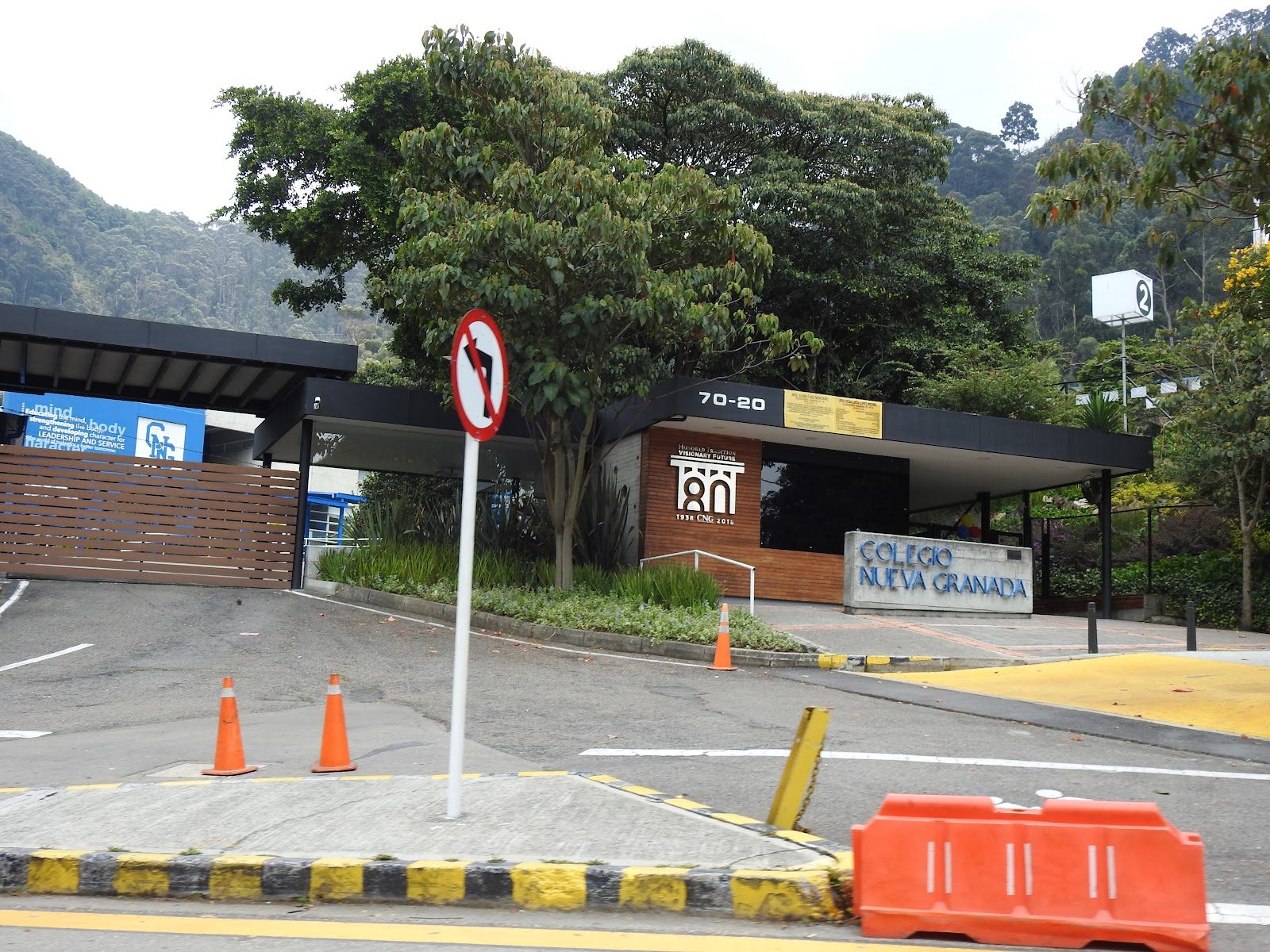
Colegio Nueva Granada
Bogotá · Colombia
A 1938 foothills campus in Bogota pairing dual US-Colombian diplomas, 32 AP courses and a four-house tradition.
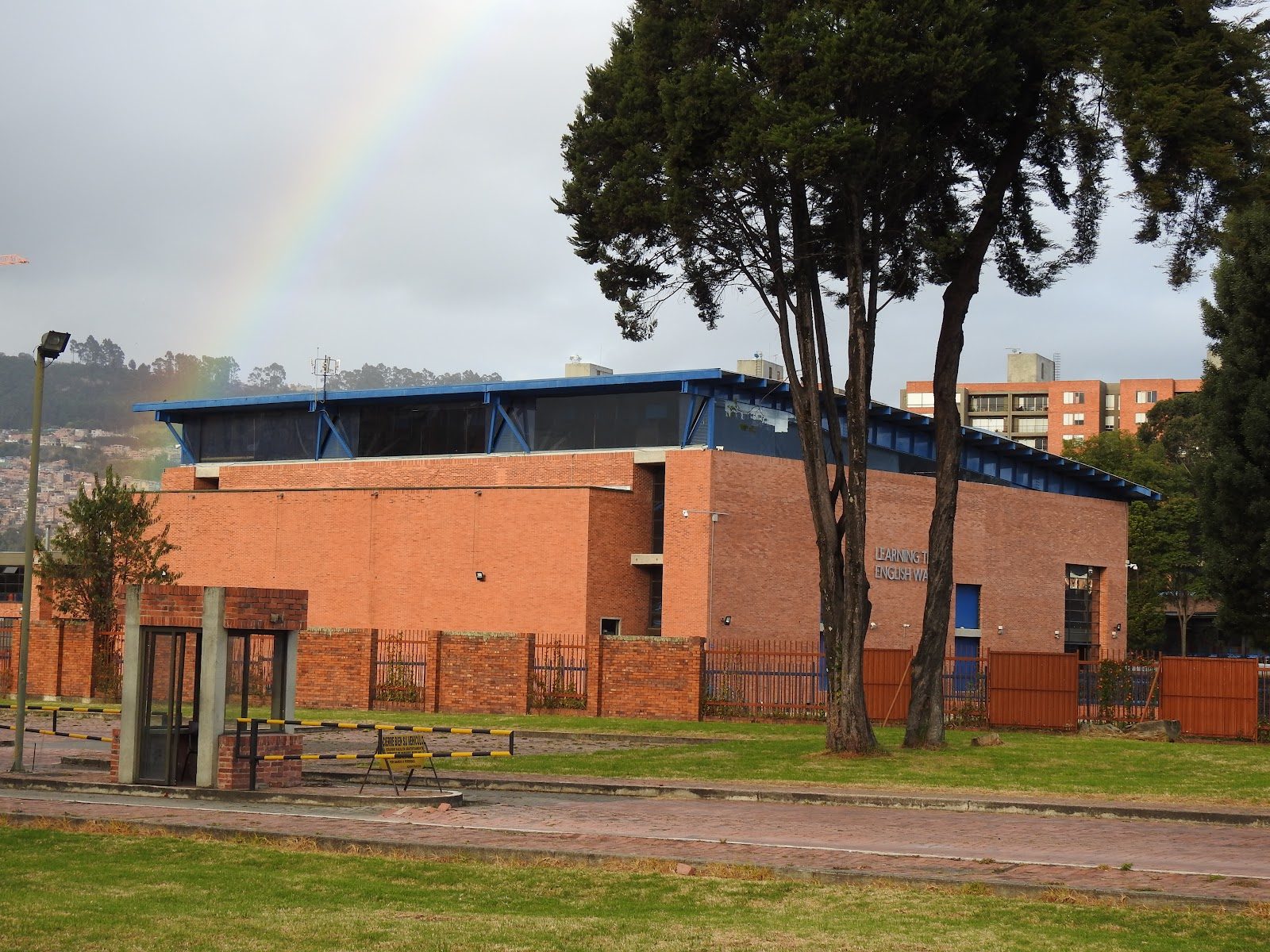
The English School
Bogotá · Colombia
Founded in 1961 as a bilingual British-style day school, now the first in Colombia authorized for all four IB programmes
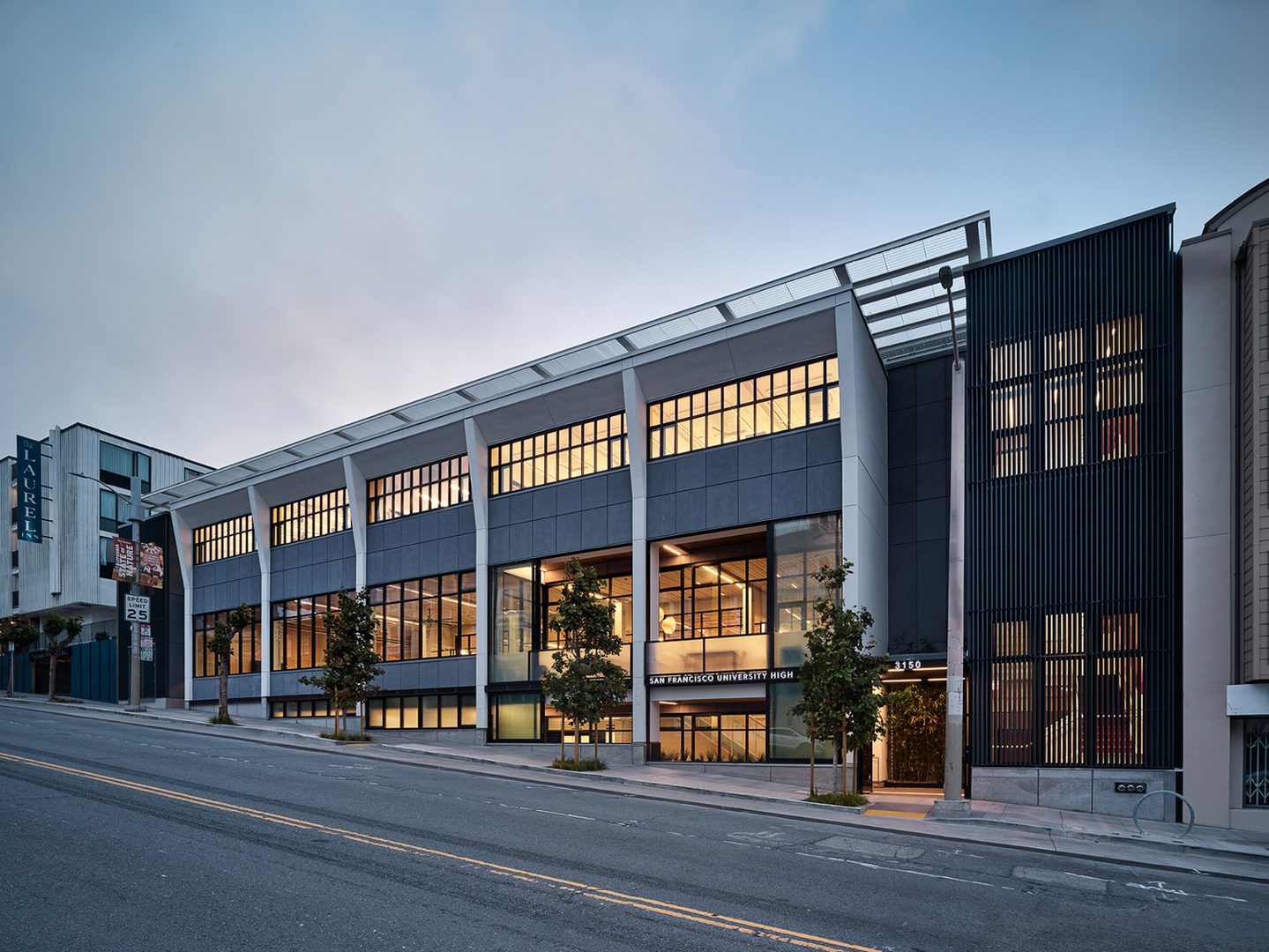
San Francisco University High School
San Francisco · United States
Inside a 1917 Julia Morgan building in Pacific Heights, a signature Civilization seminar drives independent-study scholarship.
Convent of the Sacred Heart (NYC)
New York City · United States
Since 1881, New York's oldest girls' school has taught inside two landmarked Fifth Avenue mansions.
Same country and curriculum — closest matches within ±10 points either way