
Bogotá D.C
A 1938 foothills campus in Bogota pairing dual US-Colombian diplomas, 32 AP courses and a four-house tradition.
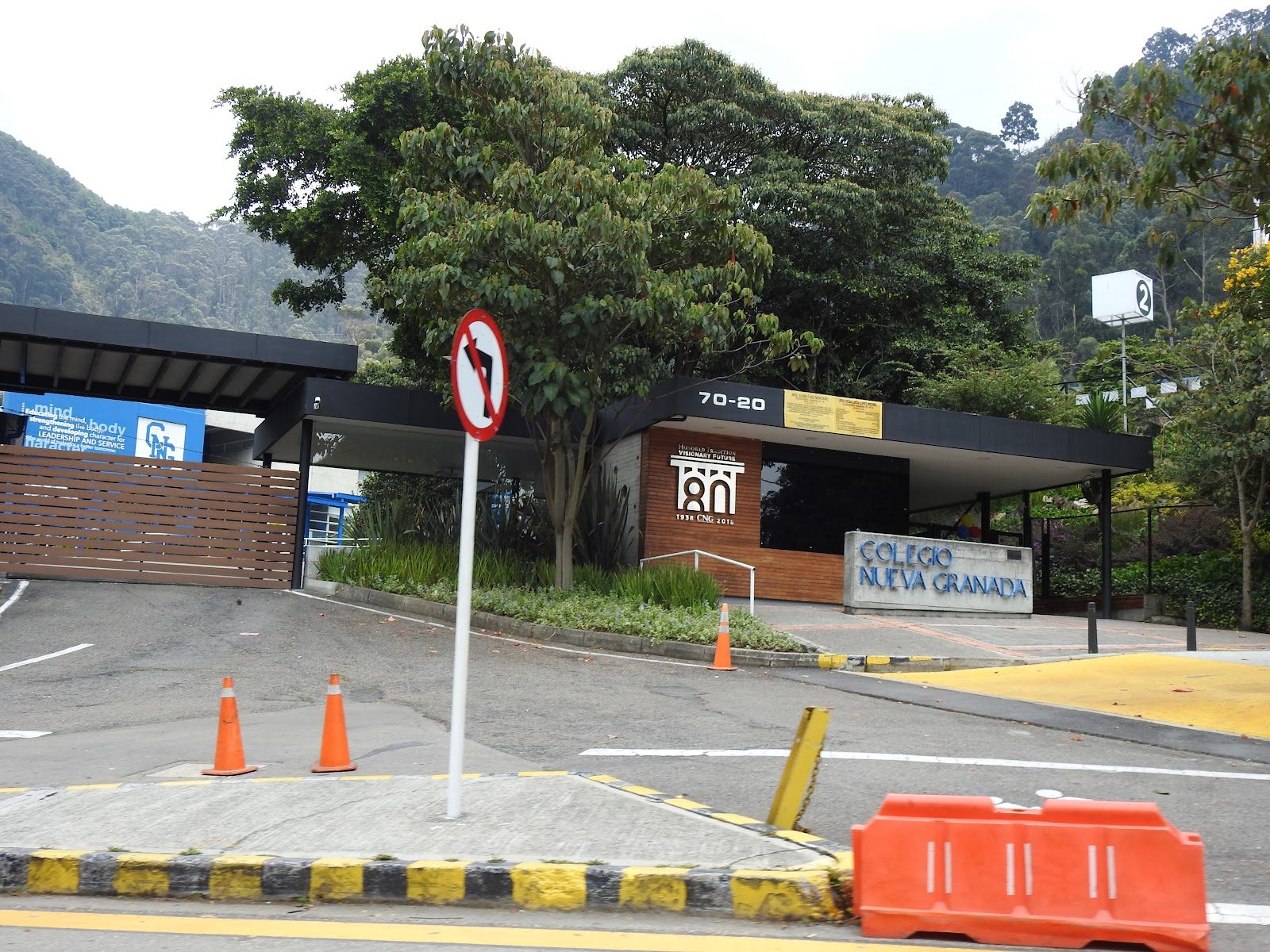
Photo © Luis Miguel Tamayo Gaviria via Google Maps
Type
Day
Ages
3–18
Curriculum
American · IB
Ratio
—
The Verdict
Editor's commitment
Right for
Families wanting bilingual American and IB schooling from age 3 to 18, with 32 AP courses and dual US-Colombian diplomas.
Wrong for
Anyone seeking boarding, a single-curriculum route, or bargain fees: this day school averages $20,000 and sends many graduates to CESA.
Watch out for
Recent destinations skew local: CESA 20 and Pontificia Universidad Javeriana 11. If you want broad overseas outcomes, ask harder questions.
Ranking breakdown
Colegio Nueva Granada · #101 of 1591
Composite score 78.2. 8 weighted criteria.
By criterion
Academic Outcomes
Weight 20%
#208
of 1529 scored
University Placement
Weight 16%
#9
of 1529 scored
Prestige & Heritage
Weight 12%
#144
of 1529 scored
Alumni Network
Weight 12%
#207
of 1529 scored
Facilities
Weight 12%
#48
of 1529 scored
Transparency & Communications
Weight 8%
#4
of 1529 scored
Peer & Industry Review
Weight 10%
#52
of 1529 scored
Admissions Selectivity & Demand
Weight 8%
#1232
of 1529 scored
Score history
Colegio Nueva Granada · 2026
Movement across 2024–2026. Peer average overlaid.
Overall — 2024–2026
78.2/ 100
▲ +25.8 vs 2025
year on year
Peer & Industry Review
How Colegio Nueva Granada is regarded in the sector
68
Respected · medium confidence
Colegio Nueva Granada is consistently cited in expat parent forums (e.g., InterNations, ExpatExchange, Bogotá expat guides) and AASSA/Cognia accreditation directories as one of the leading American international schools in Bogotá, alongside Colegio Anglo Colombiano and Colegio Los Nogales. It lacks coverage in specialist UK-oriented press like Tatler or Good Schools Guide, but its long-standing accreditation status and frequent mention in 'best international schools in Bogotá' expat discussions indicate a solid, respected regional reputation rather than unanimous elite status.
Evidence sources
- Juan Pablo Montoya — Racing driver, Motorsport
- Camilo Villegas — Professional golfer, Sports
Editors' overview
A 1938 school in Bogotá’s foothills, Colegio Nueva Granada occupies a rare space in the Colombian market: a bilingual day school with dual US-Colombian diplomas, English and Spanish as languages of instruction, and an academic menu that runs to 32 AP courses alongside the IB. That combination matters. It gives families a route into North American university admissions without cutting students off from the Colombian system. The school’s four-house tradition adds a layer of identity and competition that many international schools claim and few sustain well over time. At an average annual day fee of $20,000, it sits in the premium bracket for Bogotá, but the proposition is clear: a long-established, academically ambitious school with a genuinely bicultural structure.
What puts it on a shortlist is not novelty but institutional heft. Founded in 1938, Colegio Nueva Granada has had time to build habits, expectations and alumni reach, and there is verified evidence of that footprint: 9 notable alumni catalogued in Wikidata, including 4 politicians or statespersons. The school also holds IB accreditation, which gives formal backing to the international side of its offer. University destinations in the context skew domestic rather than global glamour-signalling — CESA, Pontificia Universidad Javeriana and Universidad de la Sabana — and that is useful information. It points to a school that serves families invested in Colombia as well as those using an American-style curriculum for mobility. Parents looking for a conveyor belt to a narrow set of US or UK brand-name universities will want fuller leavers’ data; the school does not publish that here.
The right student for Colegio Nueva Granada is academically serious, comfortable operating in two languages, and ready for a demanding, structured environment rather than a loose progressive one. This is a school for families who want substance over theatre: a non-religious setting, a full age 3–18 span, and a curriculum architecture broad enough to keep options open late into secondary school. It will suit students who thrive on range — American curriculum, IB, AP, local diploma requirements — and who want a peer group anchored in Bogotá rather than a transient expatriate bubble. It is not for families seeking softness: the attraction here is breadth, discipline and a hard-edged academic proposition with local roots.
Academic Performance
Colegio Nueva Granada gives families a school with a serious examination culture, but the published picture is incomplete. The strongest hard datapoint in the profile is the breadth of advanced course provision: 32 AP courses. That places it in the top tier of schools in Colombia for subject choice, and it matters because range at that level usually tracks with staffing depth, timetable flexibility and a cohort large enough to sustain specialist classes. The dual-diploma structure also gives students more than one formal leaving route, which is a competitive advantage against schools that force families into a single university admissions track. For academically ambitious students, that breadth is a real asset. For parents trying to judge pure outcomes, though, the school leaves a gap: it does not publish aggregate AP scores, IB diploma results, pass rates or score distributions here.
That absence puts Colegio Nueva Granada in an opaque position relative to the best outcome-reporting schools in the region. Some peers publish mean IB points, AP participation and score bands, or destination lists with international depth; this school does not. The university destinations disclosed in the context point to a school with strong domestic traction rather than a headline-chasing global placements machine. That is not a weakness in itself, but it does limit external benchmarking. The verdict is straightforward: the academic architecture is formidable; the public results reporting is not. Parents comparing Bogotá’s top private schools on academic performance need fuller exam data before placing it at the very top of the market.
Facilities
Facilities are not documented in enough detail to support a blow-by-blow campus audit, and that matters at this price point. We know the school runs from the early years through the end of secondary and sustains an advanced upper-school course load of 32 AP classes; that scale demands more than generic classrooms. A school carrying that academic spread needs proper science labs, specialist arts rooms, a serious library, sports provision and enough timetable space to stop sixth-form teaching from collapsing into compromise. The public picture does not spell out those assets, which leaves parents without the level of operational clarity that stronger peer schools provide. In a top-tier market, opacity on facilities is a weakness.
Against Bogotá’s premium competitors, that places Colegio Nueva Granada in an awkward middle ground: the institutional breadth points to a substantial plant, but the published estate story lacks the hard specifics families need. The school’s long history and full age range imply a campus built for continuity rather than flash, which can be an advantage if the spaces are well maintained and fit for purpose. But implication is not enough. The best peer schools publish laboratories, performance venues, sports infrastructure, libraries and early-years environments with precision. Here, parents get the sense of a serious working school rather than a glossy facilities showcase, but they still need direct answers on what children actually use day to day.
Colegio Nueva Granada gives families a school with a serious examination culture, but the published picture is incomplete
Prestige
Prestige here rests on depth, not glamour. Colegio Nueva Granada carries the weight of a school that has been part of Bogotá’s upper-tier educational landscape for generations, and that matters more than polished branding. The dual diploma structure gives it stature with families who want Colombian credibility without closing off international university routes. The advanced-course offer strengthens that reputation: 32 AP courses is not decorative window dressing, it signals a school with the staffing, timetable capacity and student demand to sustain serious upper-secondary breadth. The average annual fee of $20,000 places it firmly in the city’s premium market, so parents are paying for an established institution with real academic muscle, not a newcomer selling aspiration.
Its prestige is strongest in Colombia and among families who value institutional solidity over global name-dropping. The disclosed university destinations point to strong recognition within the domestic market, especially with respected private universities, but they do not establish the kind of international placements record that turns a school into a global status badge. That distinction matters. This is a high-status local school with an international academic frame, not a Swiss-finishing-school fantasy or a London export. The verified alumni footprint adds weight — 9 notable alumni catalogued, including public figures — and reinforces the sense of a school with durable connections and serious social capital. The prestige is genuine, but it is grounded, local and earned through longevity and academic range rather than spectacle.
That absence puts Colegio Nueva Granada in an opaque position relative to the best outcome-reporting schools in the region
Communications
Parent communication reads as serviceable rather than exemplary. The school gives families the basic institutional anchors — identity, academic breadth and the fact of a premium fee level — but it does not give enough operational detail in public to count as fully transparent. That matters because a complex school with multiple pathways needs disciplined, plain-English communication to stop parents filling gaps with assumption. Where communication is strongest is in the clarity of the school’s overall proposition: this is not a muddled institution with an incoherent message. Where it falls short is in the absence of the hard reporting parents now expect from top schools, especially around outcomes, facilities and the day-to-day mechanics of student life. At an average annual fee of $20,000, thin public disclosure is a weakness, not a quirk.
That gap does not mean communication with enrolled families is poor; it means the public-facing standard is less exacting than the best schools in the market. The tone is institutional rather than warm, and that suits a school built around seriousness and structure. For some parents, that will feel reassuring. For others, it will read as old-school and guarded. The key test is whether leadership communicates decisions, academic expectations and student support with the same precision that the school brings to its academic architecture. Publicly, we have not seen enough to give it top marks. The message is clear; the evidence base behind it is too spare.
Uniqueness
What marks Colegio Nueva Granada out is the way it combines multiple exit routes without turning the sixth form into a patchwork compromise. Students can work within an American framework, keep a firm foothold in the Colombian system and still draw on a deep advanced-course menu. That is unusually hard to execute well. In practice, it gives families room to delay irreversible decisions about university geography and qualification strategy. A child heading towards Colombian higher education is not boxed into a purely international track; a student aiming abroad is not trapped in a purely national one. The result is a school with real strategic flexibility, not the thin “global” branding many competitors trade on. The breadth of the upper-school offer — 32 AP courses — also matters beyond admissions optics: it supports intellectual range, sharper subject matching and a stronger chance of keeping able students stretched inside one institution.
The other distinctive feature is cultural rather than curricular. This is a rooted bicultural school, not an expatriate enclave with a local address. That changes the student experience. Peer networks, identity and university planning all sit closer to Colombian professional life than at schools built around transient international turnover. Add the four-house structure and you get a campus culture with more institutional memory than many newer rivals manage. For students, that brings continuity, competition and a stronger sense that school life belongs to something larger than a timetable. For parents, it means a demanding, grounded proposition with clear local ballast.
What marks Colegio Nueva Granada out is the way it combines multiple exit routes without turning the sixth form into a patchwork compromise
Student Profile
The students who fit best here are bright, organised and comfortable with pressure. This is not a gentle school for children who need constant hand-holding or a loose, exploratory culture. It suits pupils who can move between different academic demands without losing focus, and who have the stamina to cope with a timetable that offers real upper-school breadth. A teenager who wants narrow specialisation too early may find the school’s structure constraining; a student who values options and can manage them will thrive. The advanced-course menu — 32 AP options — points to a cohort with strong attainment, competitive instincts and parents who expect measurable academic progress. The house system also tells you something important: this is a school where belonging, rivalry and institutional identity still matter, not one where students drift anonymously through the years.
Socially, the best fit is a child who wants a peer group anchored in local professional life rather than a revolving expatriate crowd. That gives the school a grounded, locally fluent character that will suit families planning to stay and families who want international pathways without losing Colombian context. Students who do well here are self-possessed, able to work across cultural settings and happy in an environment with high expectations and a serious social tone. Children who need a soft-edged, highly therapeutic atmosphere have stronger options elsewhere. This school is for families paying a premium — an average of $20,000 a year — for discipline, ambition and continuity.
Parents comparing Bogotá’s top private schools on academic performance need fuller exam data before placing it at the very top of the market
Co-curricular strengths
Arts & sport, on a separate axis
Overall 8.52/10
Scored 0-10 from the school's own published evidence. This axis is editorial-only — it does not feed the main WTS ranking.
Sports
8.8/10
Basketball, football and volleyball, and external evidence adds a girls' basketball team that won the XXII Juegos Binacionales, which constitutes named competitive success.
Drama
8.5/10
Drama productions as an extracurricular, which is stronger than a bare 'drama' listing because it evidences actual staged participation, but no facility, department, specialist staff or recurring named productions are given.
Dance
8/10
Music
8.5/10
Concert band and choir ensemble, showing structured music participation through named ensembles.
Visual Arts
8.8/10
Editor first-pass · editor-reviewable · 7/28/2026
Outcomes & destinations
Where students go next
Top destinations
297 placements
- CESA· 20
- Pontificia Universidad Javeriana· 11
- Universidad de la Sabana· 2
- Universidad de los Andes· 74
- Babson College· 3
- Barnard College· 1
- Bates College· 1
- Bentley University· 10
- Berklee College of Music· 2
- Boston University· 5
- Bowdoin College· 1
- Broward College - Florida· 1
- Brown University· 1
- Bryant University· 1
- Butler University· 1
- Columbia University in the City of New York· 4
- Cornell University· 1
- Dartmouth College· 1
- Duke University· 2
- Emory University· 1
- Fairmont State University· 1
- Florida Atlantic University· 1
- Florida State University· 1
- George Mason University· 1
- George Washington University· 5
- Georgetown University· 1
- Indiana Institute of Technology· 1
- Johns Hopkins University· 1
- Lynn University· 1
- Massachusetts Institute of Technology· 2
- New York University· 6
- Northeastern University· 13
- Northwestern University· 3
- Nova Southeastern University· 2
- Pratt Institute-Main· 1
- Purdue University-Main Campus· 5
- Ringling College of Art and Design· 1
- Santa Monica College· 1
- Stanford University· 1
- Syracuse University· 1
- Texas State University· 1
- The New School· 2
- Trinity University· 1
- Tufts University· 1
- Tulane University of Louisiana· 3
- University of California-Berkeley· 2
- University of California-Los Angeles· 2
- University of California-San Diego· 4
- University of Chicago· 4
- University of Illinois Urbana-Champaign· 1
- University of Miami· 6
- University of Michigan-Ann Arbor· 5
- University of Notre Dame· 5
- University of Pennsylvania· 1
- University of South Florida· 2
- University of Utah· 1
- University of Virginia-Main Campus· 4
- University of Wisconsin-Madison· 1
- Vanderbilt University· 1
- Yale University· 1
- Karel De Grote Univerity College, Antwerp· 1
- Katholieke Universiteit Leuven· 1
- McGill University· 2
- The University of British Columbia· 3
- Toronto Metropolitan University· 1
- University of Alberta· 1
- University of Calgary· 1
- Emlyon Business School· 1
- EU Business School – Munich· 1
- Bocconi University· 1
- John Cabot University· 1
- Yonsei University· 1
- Tecnológico de Monterrey· 1
- Amsterdam University College· 1
- University College Utrecht· 1
- University of Amsterdam· 1
- Comillas Pontifical University· 1
- ESADE Business School· 4
- IE University - Madrid Campus· 10
- La Salle - Ramon Llull University· 1
- Les Roches - Spain Campus· 2
- Polytechnic University of Madrid· 2
- Polytechnic University of Valencia· 1
- TAI University Center of Arts· 1
- Universidad Carlos III de Madrid· 2
- Universidad Europea de Madrid· 1
- Universidad Francisco de Vitoria - UFV Madrid· 1
- University of Navarra· 1
- EHL· 1
- Les Roches - Switzerland· 2
- New York University Abu Dhabi· 1
- Hult International Business School· 1
- Istituto Marangoni London· 1
- King's College London, University of London· 2
- Regent's University London· 2
- The University of Edinburgh· 1
Reported by the school. Confirm with admissions.
Notable alumni · Wikidata
9notable alumni
1 historic (born pre-1930) · 4 modern (born post-1970)wikidata:2026-07-28 How we source this

WTS 300 badge
2025/26 editionColegio Nueva Granada is one of the World's Top 300 Schools for 2025/26. Claim your listing to add it to your site →
Strengths
- +Founded in 1938, CNG is one of Bogota's oldest continuously operating international schools, giving it a long institutional track record rather than a recent start-up profile.
- +The school offers over 20 Honors/Pre-AP classes and 25 Advanced Placement courses, with a dual program preparing students for both the U.S. High School Diploma and the Colombian Bachillerato Diploma.
- +CNG is accredited by Cognia and the Colombian Ministry of Education, giving it dual recognition for U.S.-bound and Colombian-bound university applicants.
- +Colegio Nueva Granada is home to the first Confucius Institute established in a K-12 school in Latin America, promoting Chinese language and culture study, an unusual add-on for a Bogota day school.
- +The student body draws from 47 nationalities, giving a genuinely international mix rather than a purely local intake.
Considerations
- −English proficiency is required from 1st grade onward, with limited ENL services for international families and no ENL program beyond 5th grade, which can make mid-secondary entry difficult for non-English speakers.
- −Historical tuition has run into the ten-to-twelve-thousand-dollar range per year by grade band, alongside a one-time capital fee, placing it among Bogota's pricier day schools rather than a budget option.
- −Learning Center services are capped at 15% of students per grade level, so places for children needing additional academic support are limited and not guaranteed.
- −A decades-long building moratorium tied to a class-action lawsuit over Bogota's eastern hillsides prevented CNG from adding new construction for roughly 15 years, a reminder that campus expansion here has been unusually constrained by local land-use disputes.
Availability
Primary entry gate & tests
Academic Record (Expat Priority)
Gallery
Photo © Daniel Quintana via Google Maps
Photo © Juan Londoño via Google Maps
Photo © Juan Londoño via Google Maps
Photo © The Sapphire Phoenix via Google Maps
Photo © The Sapphire Phoenix via Google Maps
Photo © The Sapphire Phoenix via Google Maps
Photo © The Sapphire Phoenix via Google Maps
Photo © The Sapphire Phoenix via Google Maps
Photo © The Sapphire Phoenix via Google Maps
Parent reviews
Have you sent your child here?
Voice reviews carry the strongest trust badge — we transcribe them for you to tidy up before they go live. Prefer to type? A written review is fine too.
Add your voice
In 60 seconds, tell other parents: what's the best thing about Colegio Nueva Granada, and what surprised you when your child joined?
We ask for a Google sign-in so every review has a real face behind it — no anonymous drive-by attacks on schools, and no faked positive reviews. Your email is never shown publicly.
Send this profile to a friend
International parents rely on word-of-mouth. Share this review with someone weighing the same decision.
Schools with places
Similar schools to Colegio Nueva Granada with places available now.
Loomis Chaffee School
Windsor · United States
- 2026-27
- WAITPOOLLate/Rolling Space Available
- 2027-28
- OPENS SOONOpens 1 Sept '26
Schule Schloss Salem
Salem · Germany
- 2026-27
- WAITPOOLVacancy-dependent
- 2027-28
- WAITPOOLVacancy-dependent / Rolling
Dhirubhai Ambani International School
Mumbai · India
- 2026-27
- WAITPOOLVacancy-dependent
- 2027-28
- WAITPOOLEnquiry/app live (Dates TBC)
Hong Kong International School
Hong Kong · Hong Kong
- 2026-27
- WAITPOOLVacancy-dependent
- 2027-28
- PLACES OPENPriority 1 Oct/1 Nov
Availability first, then country, area, curriculum, price, co-curricular
Consider also
Also worth looking at alongside Colegio Nueva Granada.
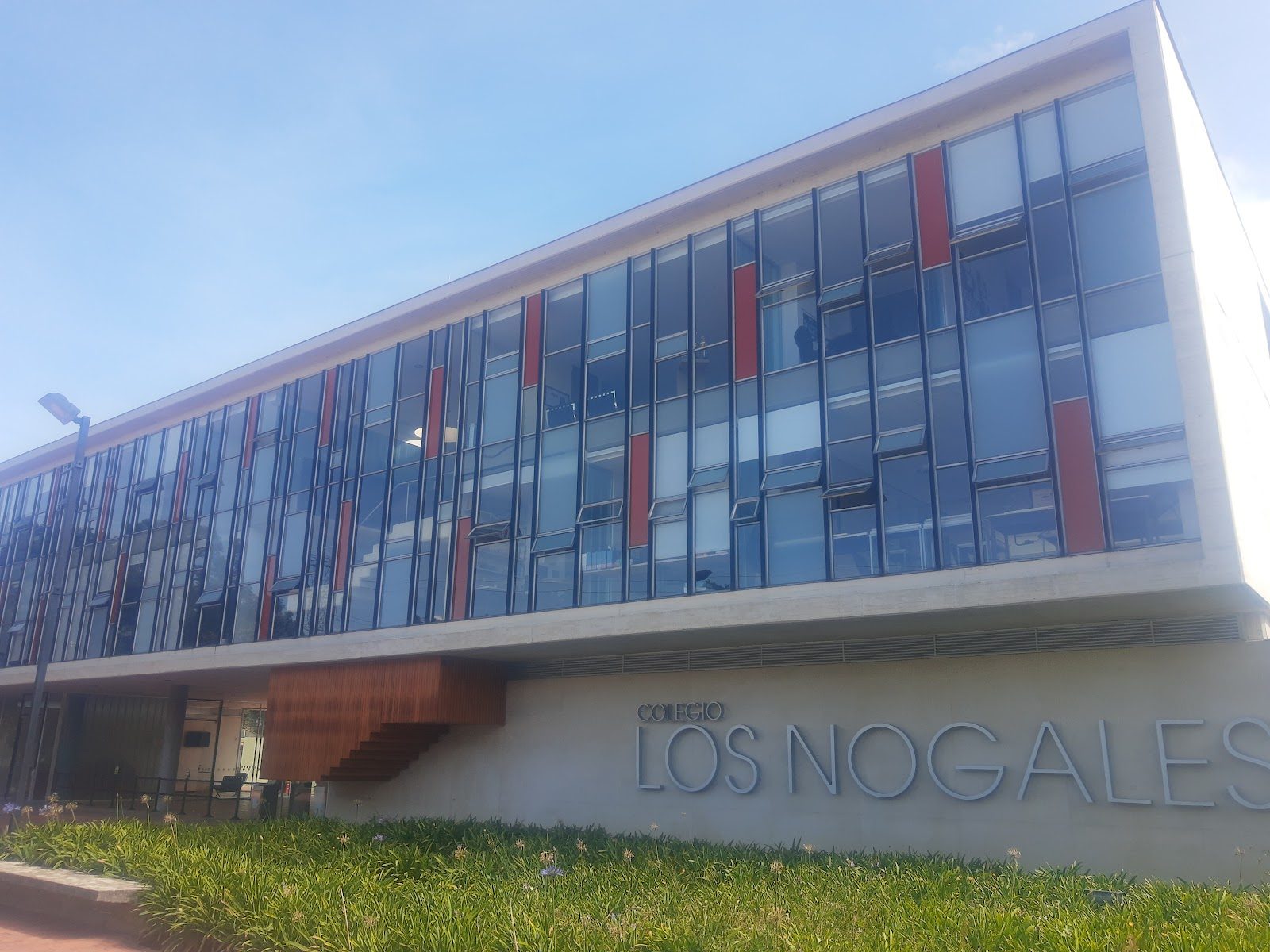
Colegio Los Nogales
Bogotá · Colombia
One of Colombia's earliest IB adopters, running its own campus bio-refuge and a grade-11-led house system in the Bogota foothills.
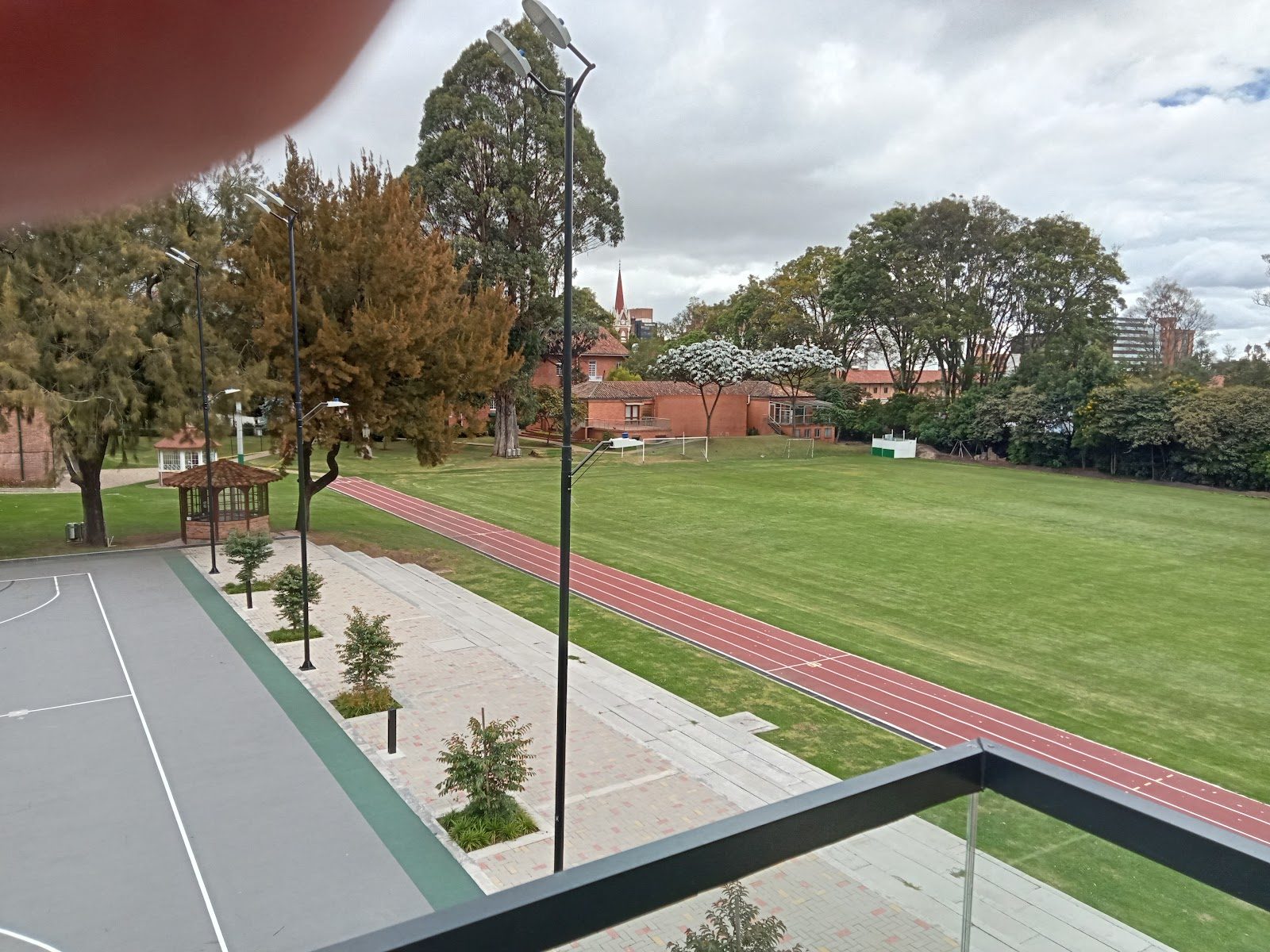
Gimnasio Moderno
Bogotá · Colombia
Since 1914, this Bogota pioneer of South America's Escuela Nueva movement still runs its IB classrooms on Montessori and Decroly roots.
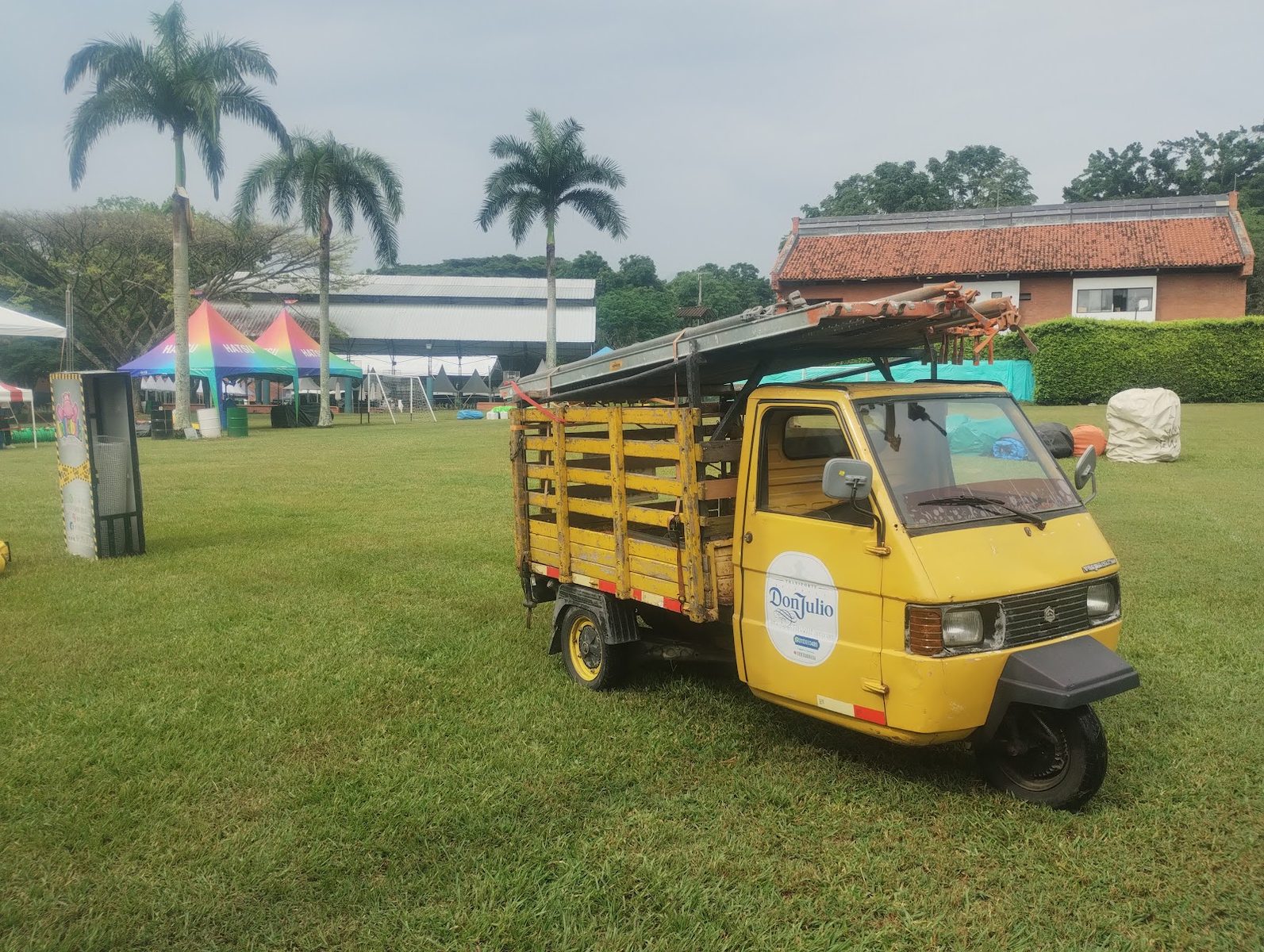
Colegio Bolívar
Cali · Colombia
Founded in 1947 at the foothills of the Andes, where three-walled, open-air classrooms meet a bilingual, dual-diploma American curriculum.
Colegio Anglo Colombiano
Bogotá · Colombia
Houses named for Nelson, Rodney, Hood and Beatty channel a Royal Navy ethos into a full IB continuum on Bogota's high savanna.
Same country and curriculum — closest matches within ±10 points either way