
Dubai
Jebel Ali School
low confidence· 4/6 cats · 0 avg sourcesRooted in 1977 as a school for Jebel Ali Port's workers' children, now an all-through Damac Hills campus with a top BSO inspection mark.
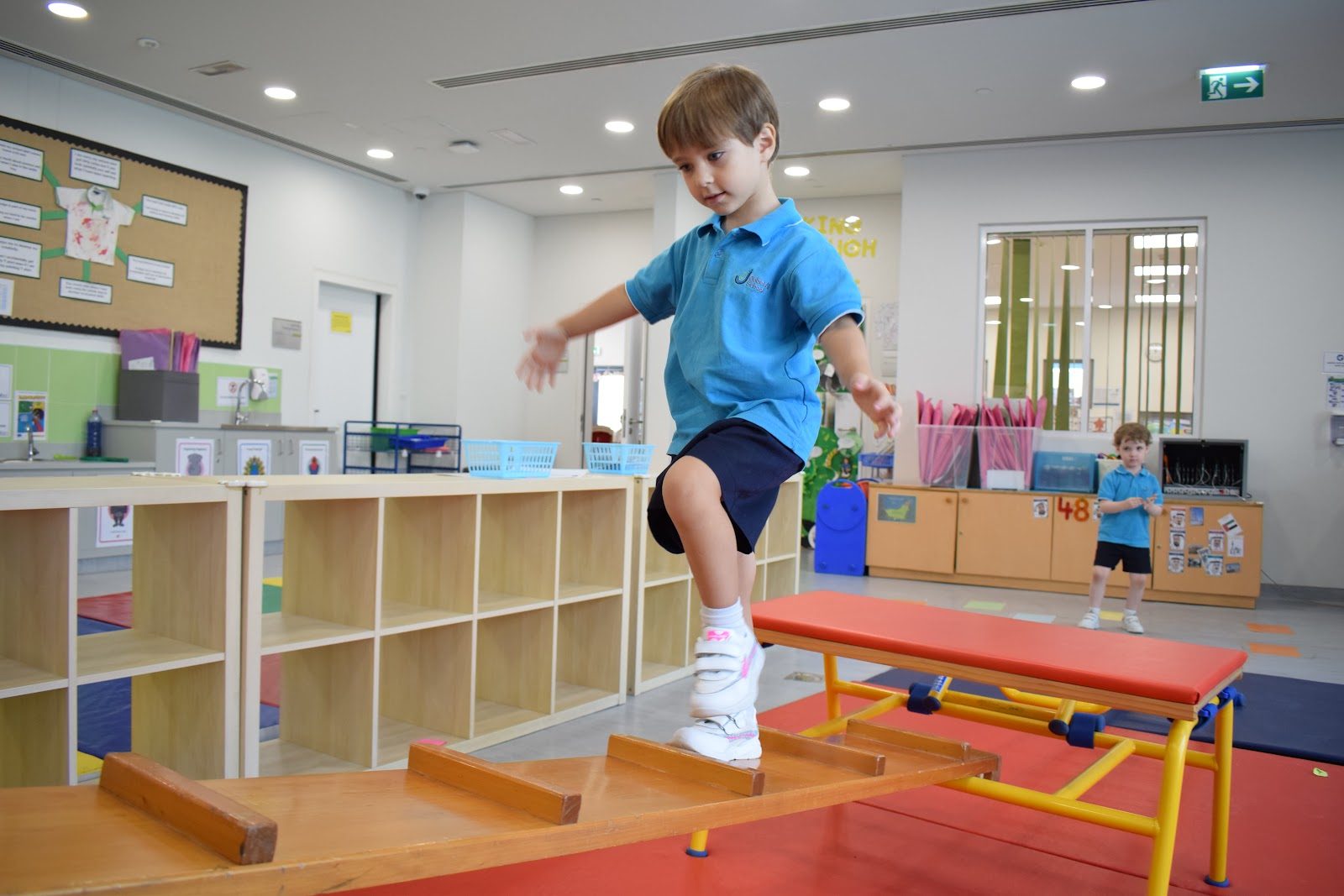
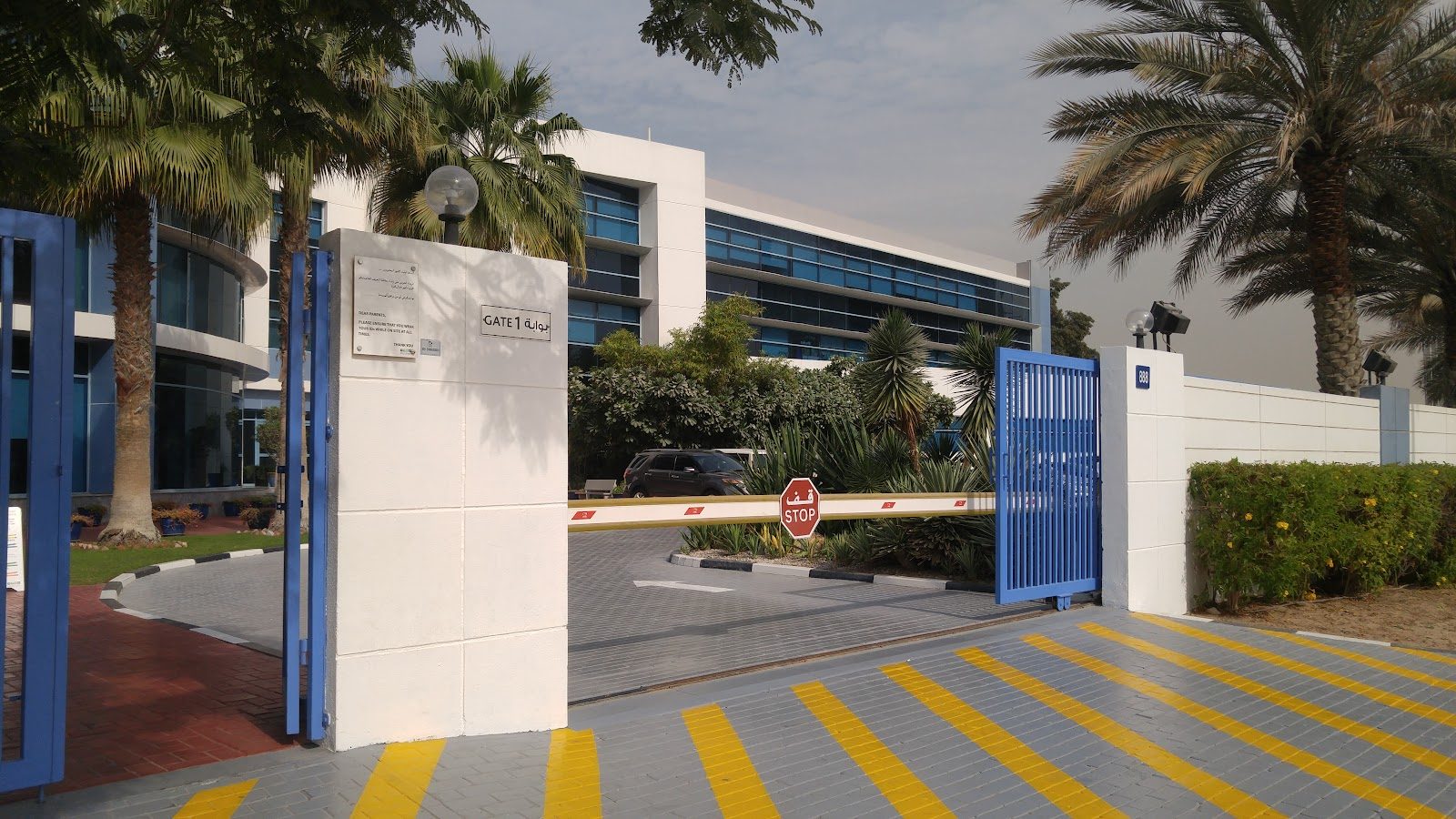
Photo © Jebel Ali School via Google Maps
Type
Day
Ages
3–18
Curriculum
British
Qualifications
A-Level · BTEC
Ratio
10:1
The Verdict
Editor's commitment
Right for
Families wanting a British all-through school with KHDA Very Good, BSO accreditation and a low 10:1 student-teacher ratio.
Wrong for
Parents chasing bargain fees or a niche curriculum; AED 59,999 buys a British day school, ages 3–18, on one campus.
Watch out for
The school sells warmth and community; check whether 2,000+ students and 06-form entry still deliver the intimacy you want.
Ranking breakdown
Jebel Ali School · #637 of 1591
Composite score 67.2. 8 weighted criteria.
By criterion
Academic Outcomes
Weight 20%
#585
of 1529 scored
University Placement
Weight 16%
#584
of 1529 scored
Prestige & Heritage
Weight 12%
#900
of 1571 scored
Alumni Network
Weight 12%
#726
of 1530 scored
Facilities
Weight 12%
#246
of 1534 scored
Transparency & Communications
Weight 8%
#389
of 1532 scored
Peer & Industry Review
Weight 10%
#791
of 1548 scored
Admissions Selectivity & Demand
Weight 8%
#1156
of 1529 scored
Peer & Industry Review
How Jebel Ali School is regarded in the sector
68
Respected · high confidence
Jebel Ali School has cemented itself as a solid, rapidly improving player in Dubai's British curriculum sector, buoyed since 2022 by its acquisition by Taaleem, the emirate's second-largest school group, which SchoolsCompared notes has brought close to AED 60m of fresh investment. WhichSchoolAdvisor lists it among its "Good Schools" and Best of rankings, with parents scoring it 4.3 out of 5 and results described as "secure, consistent and strengthening" as the sixth form matures. SchoolsCompared's own survey data reinforces this middle-to-upper tier standing, with parents unusually positive on value for money and science attainment singled out by KHDA inspectors as a genuine strength. It remains, however, a Very Good rather than Outstanding-rated school still building out its senior cohort track record, so peer chatter is warm but stops short of the elite Dubai bracket.
Editors' overview
Jebel Ali School trades on something many Dubai schools cannot claim: real institutional history. It began in 1977 for the children of Jebel Ali Port workers and now runs as an all-through British day school in Damac Hills, serving ages 3 to 18. That matters because the school combines an established community identity with a modern campus model; it moved to its current site in 2016 and now educates more than 2,000 students. The academic proposition is straightforward: British curriculum, English-medium teaching, KHDA-rated Very Good for 2023/24, with BSO accreditation on top. In a market crowded with polished new operators, Jebel Ali stands out as a school with genuine roots and a track record long enough to test whether the culture holds up beyond admissions rhetoric.
The strongest concrete indicator in the profile is the 10:1 student-teacher ratio. For a school of this size, that points to serious staffing depth rather than a bare-minimum delivery model. The school also states 25+ A-Level and BTEC options in sixth form, which gives older pupils breadth without forcing the school into an inflated “something for everyone” claim it cannot support. This is not a boutique school, and that is part of the appeal: six-form entry and 300-plus staff make it a properly scaled all-through institution, not a small primary that happens to bolt on secondary years. The average annual day fee across the full age range is AED 59,999, which places it in Dubai’s upper-middle tier: expensive, but not at the market’s stratospheric end. Parents paying that sum will expect competent teaching, stable leadership and clear pastoral systems, not just glossy facilities.
Why shortlist it? Because Jebel Ali School offers a combination that is harder to find than schools like to admit: established reputation, full British continuity from FS1 to Year 13, credible inspection backing, and enough scale to sustain subject choice and extracurricular life without feeling transient. What is special here is not novelty; it is institutional solidity. The school’s own language leans heavily on warmth, belonging and values, and the historic reputation of Jebel Ali has long rested on community as much as academics. The child who will thrive here is one who wants a grounded, busy, mainstream British school with a strong social fabric, rather than an ultra-pressurised academic hothouse or a niche progressive outlier. Families looking for a school with deep Dubai ties, visible operational heft and a less fickle identity than many newer entrants should keep it firmly on the list.
Academic Performance
Jebel Ali School publicises celebratory GCSE and A-level posts, but it does not publish a consolidated exam-results dashboard with cohort-wide pass rates, top-grade distributions, subject breakdowns or multi-year trends. That matters. In Dubai’s competitive British-school market, academically confident schools put the hard numbers where parents can inspect them. Here, the data trail is thin. You can infer that results are strong enough to market individual high achievers, but inference is not disclosure. For a school with this level of fee and reputation, the absence of a clear results set is a real weakness in the academic case.
Relative to peers, that places Jebel Ali in an awkward middle ground. It has the scale, sixth-form breadth and inspection credibility of a school that should be competing with Dubai’s established upper-tier British operators, yet its public exam transparency falls short of the best in that group. Schools at the top end publish the numbers and let parents judge the trajectory. Jebel Ali asks families to trust the overall story more than the evidence. That does not mean weak outcomes; it means opaque ones. Parents who prioritise measurable academic performance, university-readiness signalling and year-on-year results scrutiny will want the school to produce full GCSE and sixth-form results before treating it as a clear academic frontrunner.
Facilities
The school’s key facilities story starts with scale and phase coverage. This is a full all-through campus, not a cramped primary with secondary grafted on later, and the website points to specialist provision across foundation stage, primary, secondary and sixth form. For older pupils, the practical marker is the sixth-form course menu: 25+ A-levels and BTECs demand proper teaching spaces and timetabling capacity, not just a token post-16 offer. The school also leans hard on trips, residentials, extracurricular provision and after-school activities, which indicates a campus built for constant use beyond the formal timetable. Parents should read that as a sign of a busy, operationally mature school rather than a design-showcase campus that photographs well and then sits idle.
Against Dubai peers, that puts Jebel Ali in the strong middle of the premium British market for facilities: broad enough to support a large student body and a serious sixth form, but without the chest-beating language schools use when they want to sell Olympic-scale aquatics centres, black-box theatres or headline sports complexes. The site’s public case rests more on learning environments, relationships and everyday school life than on iconic bricks-and-mortar features. That is not a flaw, but it is a distinction. Families chasing flashy flagship infrastructure will want a more detailed facilities list before drawing conclusions. Families who care more about whether a campus can sustain a full, lived-in school day across all age groups will find the offer credible.
Jebel Ali School trades on something many Dubai schools cannot claim: real institutional history
Prestige
Jebel Ali School carries real local prestige, but not the rarefied status of Dubai’s most globally recognisable British brands. Its reputation rests on durability, community memory and operational substance, not on inherited UK nameplate glamour or selective mystique. That distinction matters. Among parents who know the city well, Jebel Ali has long held a place as a trusted mainstream choice: the sort of school families recommend because it has lasted, expanded and kept enough confidence to attract a large roll and a deep staff base. The all-through structure strengthens that standing. So does the school’s ability to offer 25+ sixth-form courses without slipping into a thin, token menu. Prestige here comes from being a serious institution, not a fashionable one.
The external validation helps. A top BSO judgement gives the school more weight than the average mid-market operator, and the regulator’s current verdict keeps it in the upper section of Dubai’s crowded British field. That said, prestige has limits. The school does not carry the admissions heat, old-boy cachet or exam-data clarity that define the city’s most coveted academic names. Its public identity leans hard on belonging, warmth and values, which is attractive, but also less potent as a prestige signal than relentless results publication or ultra-selective branding. My rating, then, is clear: Jebel Ali offers solid, earned prestige within Dubai’s established school market, strengthened by scale and inspection strength, but it does not sit at the absolute summit of status.
Jebel Ali School carries real local prestige, but not the rarefied status of Dubai’s most globally recognisable British brands
Communications
Jebel Ali School communicates with parents in a high-contact, overtly relational way. The public-facing signals are clear: book-a-tour prompts sit everywhere, there is a direct “chat to our parents” route, social channels are busy, and the school foregrounds openness, voice and home-school partnership rather than hiding behind a sterile admissions funnel. That matters because a large all-through school can easily drift into impersonal process. Here, the communication model pushes the opposite line: accessible admissions staff, visible community messaging, and a steady stream of celebratory student news. The scale of the operation — more than 300 staff and over 2000 pupils — makes that effort necessary, not optional. On that front, the school does the day-to-day reassurance well.
The weakness is precision. Jebel Ali talks fluently about belonging, wellbeing, leadership opportunities and school life, but the harder academic communication is less disciplined. The website gives parents atmosphere and intent in abundance; it gives less hard comparative information on outcomes, performance trends and what academic success looks like across the cohort. That imbalance limits trust with analytical parents. Warmth is useful. Clarity is better. Families who want a strong sense of community will find the school’s tone open, energetic and human. Families who want crisp, data-rich accountability will find the communication softer than it should be for a school at this price point.
Uniqueness
What sets Jebel Ali School apart is not novelty but continuity. In Dubai, plenty of schools sell a polished concept; far fewer carry a lived institutional identity that families and staff have tested over decades. Jebel Ali still draws strength from that legacy. The school’s own language centres on belonging, openness and partnership with parents, and here that reads less like branding than an extension of a long-standing community culture. The phrase “JAS family” could have been cloying in another setting. Here it lands as a marker of a school that has kept a deep-rooted sense of itself while expanding into a large all-through operation. For students, that brings a rare stability: children move through the school inside one settled ecosystem rather than a stitched-together set of phases with mismatched expectations.
The second point of difference is the combination of scale with a conspicuously human tone. This is a big school with 25+ sixth-form pathways, extensive leadership roles, trips, residentials and a stated 6Cs framework running through lessons. That mix matters. Breadth gives students room to find a lane; the values-and-skills model gives the place a coherent internal grammar. The result is not an austere academic machine and not a boutique, personality-driven outlier either. It is a grounded, full-service school with enough heft to offer choice and enough cultural consistency to stop that choice turning diffuse. For many children, that means a school life that feels both expansive and securely held.
Jebel Ali School communicates with parents in a high-contact, overtly relational way
Student Profile
The best fit here is a child who wants a proper school community rather than a polished, transactional experience. Jebel Ali suits pupils who benefit from continuity, routine and a clear sense of belonging across the whole age range. The school talks a great deal about relationships, voice and partnership with families, and that points to a student body shaped less by hard-edged competitiveness than by participation and steady engagement. With more than 2000 pupils and over 300 staff, this is not an intimate niche environment; children need enough confidence to navigate a large campus and enough social ease to make use of the leadership roles, trips, residentials and after-school life on offer. Pupils who like being busy, joining in and growing inside a settled mainstream culture will fit well.
This is a weaker match for families chasing a pressure-cooker academic tribe or a highly selective social atmosphere. The public case for the school rests on warmth, values and breadth, not on exclusivity or relentless performance theatre. That makes it attractive for children who are capable, well-rounded and responsive to encouragement rather than constant ranking. The sixth form’s 25+ A-level and BTEC options also point to a student profile with varied strengths: conventional academic high-achievers, practical learners and teenagers who want choice without moving schools. In short, Jebel Ali fits pupils who want structure without stiffness, opportunity without swagger, and a school identity strong enough to carry them from the early years to the end of sixth form.
What sets Jebel Ali School apart is not novelty but continuity
Co-curricular strengths
Arts & sport, on a separate axis
Overall 8.26/10
Scored 0-10 from the school's own published evidence. This axis is editorial-only — it does not feed the main WTS ranking.
Sports
8.3/10
Multiple sports—Football, Netball, Rugby, Swimming, Athletics, Cricket and Basketball—showing a broad structured offering, but gives no named facility, specialist staff or competitive results.
Drama
8.3/10
Drama appears explicitly in the extracurriculars list.
Dance
8.5/10
Music
8.2/10
Choir is offered, which is clear evidence of music provision, but there is no further detail on ensembles, facilities or specialist staff.
Visual Arts
8/10
Editor-verified · 8/5/2026
Official inspection · Dubai
KHDA report · 2023/24
Official · KHDAInspectorate
Knowledge & Human Development Authority
Dubai's mandatory education regulator; annual DSIB inspections.
Curriculum
British
Held vs previous cycle
Full report
KHDA report finderRating history
Strengths
- +British all-through curriculum for ages 3–18 on one campus
- +KHDA Very good rating
- +Publishes A Level results, with a 2026 A*–A share of 54% and a 100% pass rate
- +Modern purpose-built campus occupied since 2016
- +Strong co-curricular provision, with dance rated elite and sports, music, drama and visual arts rated outstanding
Considerations
- −No boarding; day school only
- −English-only instruction may not suit all families
- −No alternative curriculum pathways offered
Availability
Primary entry gate & tests
CAT4 / Assessment
Gallery
Photo © Jebel Ali School via Google Maps
Photo © Jebel Ali School via Google Maps
Recommended reading
Independent write-ups of this school from editorial outlets we trust.
- Jebel Ali School ReviewWhichSchoolAdvisor
- Jebel Ali School — review on SchoolsComparedSchoolsCompared
Parent reviews
Have you sent your child here?
Voice reviews carry the strongest trust badge — we transcribe them for you to tidy up before they go live. Prefer to type? A written review is fine too.
Add your voice
In 60 seconds, tell other parents: what's the best thing about Jebel Ali School, and what surprised you when your child joined?
We ask for a Google sign-in so every review has a real face behind it — no anonymous drive-by attacks on schools, and no faked positive reviews. Your email is never shown publicly.
Send this profile to a friend
International parents rely on word-of-mouth. Share this review with someone weighing the same decision.
Schools with places
Similar schools to Jebel Ali School with places available now.
The English College Dubai
Dubai · United Arab Emirates
- 2026-27
- PLACES OPENApps open / space-dependent
- 2027-28
- WAITPOOL2027/28 timetable TBC
Swiss International Scientific School Dubai
Dubai · United Arab Emirates
- 2026-27
- PLACES OPENApps open / space-dependent
- 2027-28
- WAITPOOL2027/28 timetable TBC
Royal Grammar School Guildford Dubai
Dubai · United Arab Emirates
- 2026-27
- PLACES OPENApps open / space-dependent
- 2027-28
- PLACES OPENRolling
Dubai Heights Academy
Dubai · United Arab Emirates
- 2026-27
- PLACES OPENApps open / space-dependent
- 2027-28
- WAITPOOL2027/28 timetable TBC
Availability first, then country, area, curriculum, price, co-curricular
Consider also
Also worth looking at alongside Jebel Ali School.
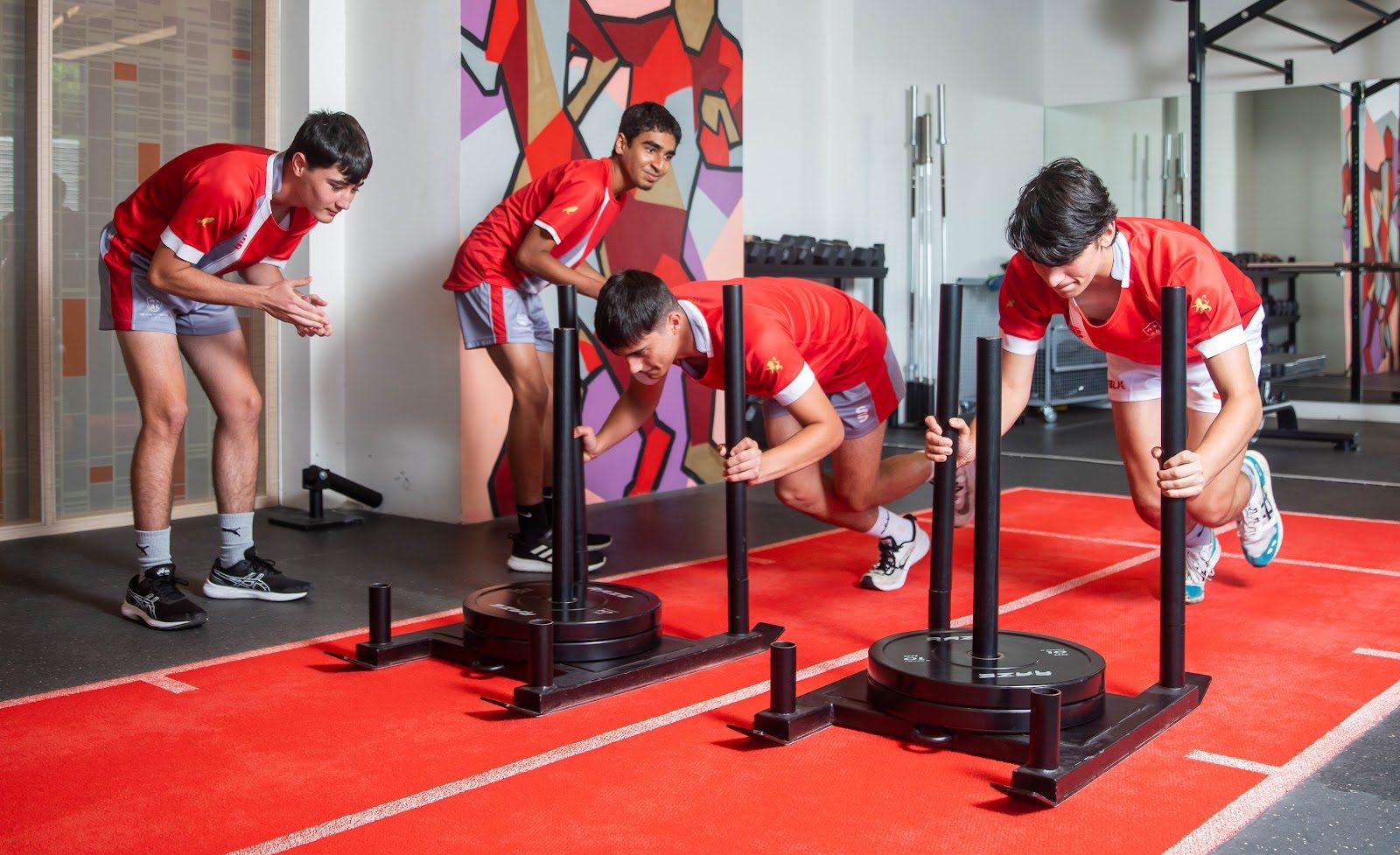
The English College Dubai
Dubai · United Arab Emirates
Non-selective by design in Al Safa, where a rare grass playing field and a house-led Arts Day rival exam season for school pride.
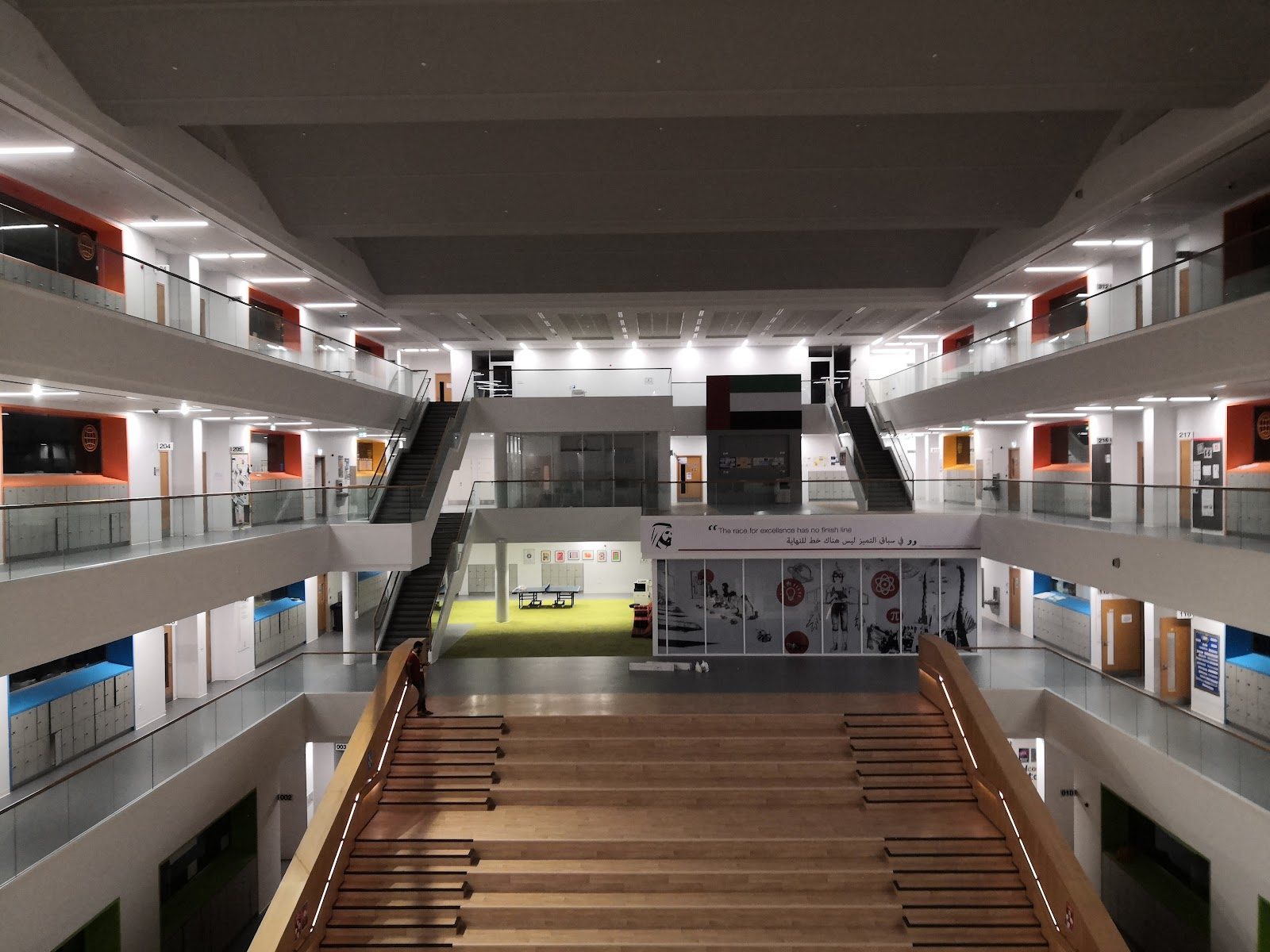
Swiss International Scientific School Dubai
Dubai · United Arab Emirates
The largest Swiss school outside Switzerland, running a bilingual IB continuum along Dubai Creek in French or German.
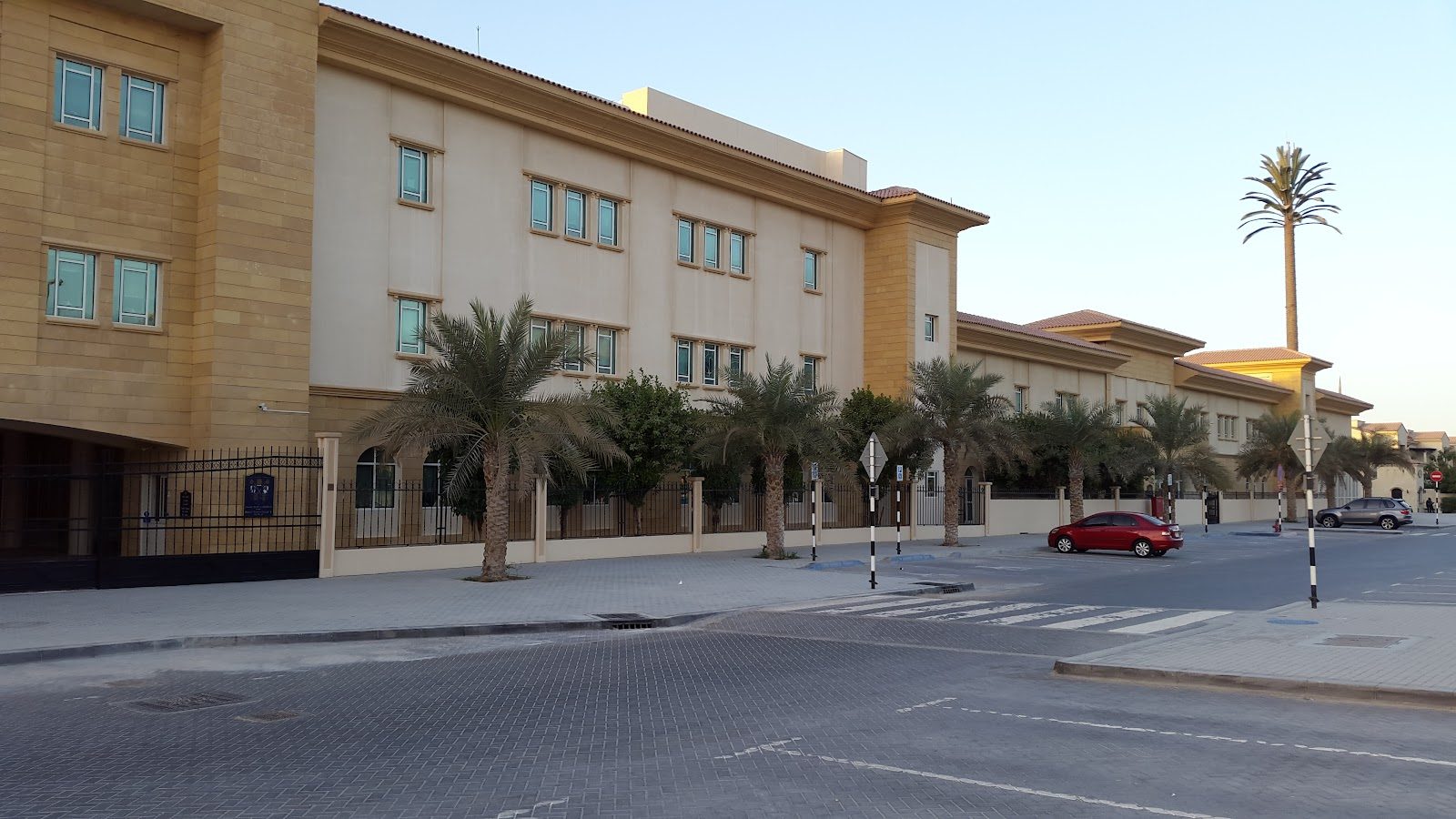
Brighton College Abu Dhabi
Abu Dhabi · United Arab Emirates
Opened as Brighton College's first campus outside Britain, now pioneering a University of Buckingham PGCE in Arabic teaching.
GEMS Wellington International School
Dubai · United Arab Emirates
Near Dubai Marina, a dozen straight top-tier KHDA verdicts back a British curriculum school running parallel A-Level and IB Diploma sixth forms.
Same country and curriculum — closest matches within ±10 points either way