
São Paulo
Colégio Poliedro
Rooted in an ITA-prep course born in Brazil's aerospace capital, it now sends graduates into universities across seven countries.
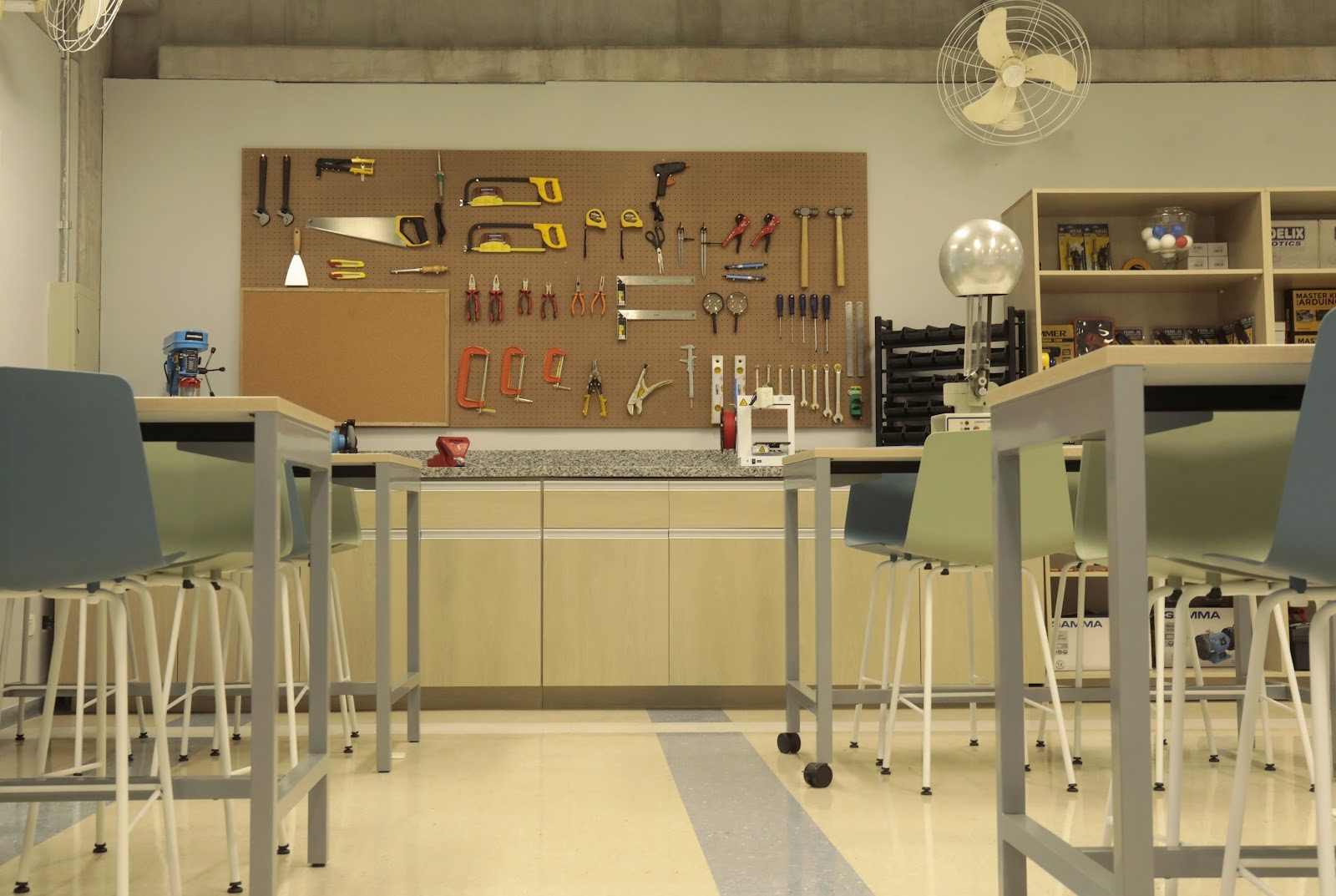
Photo © Poliedro Colégio São José dos Campos via Google Maps
Type
Day
Ages
11–18
Curriculum
Brazilian
Qualifications
ENEM · ITA/IME entrance · Vestibular
Ratio
—
The Verdict
Editor's commitment
Right for
Families in São José dos Campos who want a day school, ages 11–18, built on Brazilian curriculum and serious university entrance preparation.
Wrong for
Parents after boarding, religious formation, or a softer school culture; Poliedro was founded in 1993 and trades on results, not ambience.
Watch out for
Instruction runs in Portuguese and English, but the school does not publish aggregate exam scores or university destination breakdowns by country.
Ranking breakdown
Colégio Poliedro · #954 of 1591
Composite score 62.9. 8 weighted criteria.
By criterion
Academic Outcomes
Weight 20%
#668
of 1529 scored
University Placement
Weight 16%
#136
of 1529 scored
Prestige & Heritage
Weight 12%
#854
of 1571 scored
Alumni Network
Weight 12%
#1224
of 1530 scored
Facilities
Weight 12%
#1247
of 1533 scored
Transparency & Communications
Weight 8%
#1098
of 1532 scored
Peer & Industry Review
Weight 10%
#998
of 1548 scored
Admissions Selectivity & Demand
Weight 8%
#760
of 1529 scored
Peer & Industry Review
How Colégio Poliedro is regarded in the sector
65
Respected · medium confidence
Colegio Poliedro's reputation is largely domestic, built on measurable results rather than international peer commentary. Within Brazil, it is consistently referenced in ENEM-based school rankings published by outlets like Veja and Folha de S.Paulo, which track top-performing private schools by average national exam scores; Poliedro campuses regularly appear near the top of these regional and national tables. Its standing among other elite Brazilian schools rests on its dual identity as both a school network and a major didactic-materials publisher (Sistema Poliedro), used by hundreds of partner schools, which gives it unusual influence over curriculum standards in the pre-vestibular segment. University-side recognition is evidenced indirectly through strong, publicized admission rates into USP, UNICAMP, ITA, and competitive medical programs, cited in local press coverage of vestibular results rather than formal statements from admissions officers. It does not feature in international independent-review platforms such as WhichSchoolAdvisor or the Good Schools Guide, reflecting its focus on the Brazilian exam-preparation market rather than the international-school circuit. Overall, its industry credibility is strongest among Brazilian cursinho/pre-vestibular peers and national education journalists, with limited visible engagement at the international independent-schools level.
Editors' overview
Colégio Poliedro sits in a very specific corner of the Brazilian market: the high-performance, results-first day school built out of a serious university entrance machine. Founded in 1993 in São José dos Campos, Brazil’s aerospace capital, it grew from a prep-course culture with deep roots in the ITA admissions race. That history matters. This is not a school that treats exam success as a by-product of “holistic” education; it treats it as core business. The group states that it is the national leader in ITA admissions and publishes a headline total of 13,465 university acceptances for 2026, including 5,399 via SiSU/Enem and 468 first places. Those are system-wide figures across the broader Poliedro operation, not a single-campus school result, and parents need to read them with that distinction in mind. Even so, the signal is clear: serious academic ambition, hard-edged focus and a culture built around measurable outcomes.
What sets Poliedro apart is the combination of Brazilian curriculum delivery with a strong bilingual current in Portuguese and English, backed by a large education group that runs its own schools, prep courses and teaching system. The school talks about a “solid methodology”, interdisciplinary projects, technology and full student support. That gives it more infrastructure than many independent local competitors. It also gives families access to a brand that operates across all Brazilian states and the Federal District through more than 700 associated schools. The attraction here is not charm or old-school prestige; it is scale, process and an unmistakable examination engine. Parents who want a school with a clear academic agenda, strong routines and a direct line into Brazil’s most competitive university pathways will keep it on the shortlist.
The trade-off is equally clear. Families seeking a loose, progressive, child-led atmosphere or a school that downplays competition will find Poliedro too intense. This is a place for students who thrive on pace, structure and external benchmarks; who want to test themselves against demanding entrance standards; and who do not need their school to disguise ambition in softer language. It will suit disciplined adolescents from ages 11–18 who are motivated by university goals, especially in selective Brazilian admissions and other internationally minded routes. For the right student, that produces a strong sense of direction, competitive energy and visible academic purpose. For the wrong one, it will feel pressurised.
Academic Performance
Academic performance sits at the centre of Poliedro’s identity. This is a school group built out of entrance-exam preparation, and its public results language is blunt: approvals, first places and leadership in the country’s toughest admissions races. The strongest named benchmark is ITA, where Poliedro claims national leadership, and that matters in Brazil because ITA stands at the sharp end of selective engineering admissions. The wider headline totals are huge — 13,465 university approvals, 5,399 via SiSU/Enem and 468 first places — but parents need discipline when reading them. Those figures belong to the broader Poliedro operation, not a clean single-school scorecard for this campus. That makes direct like-for-like comparison with stand-alone peer schools harder than it should be.
Even with that caveat, the direction of travel is clear. Relative to peers, Poliedro belongs in the results-driven elite of Brazilian schools serving ambitious university applicants, especially students targeting high-pressure domestic entrance routes rather than a softer all-round profile. Its strength lies in converting exam preparation into measurable admissions outcomes at scale. Its weakness is transparency at campus level: we have not seen disaggregated school-specific IB, AP, A level or other international exam data, and the school does not publish a granular breakdown that lets families test subject-by-subject performance against competitors. For families who value *hard evidence of competitive admissions success*, Poliedro has a compelling case. For families who want clean, campus-specific disclosure, the reporting remains incomplete.
Facilities
Poliedro does not trade on a published estate story. The public emphasis falls on methodology, technology, interdisciplinary projects and student support, not on a catalogue of specialist buildings. That matters. Against Brazilian peers in the high-performance day-school bracket, the signal is clear: this is a school where facilities serve the academic machine, not the other way round. Parents looking for glossy centrepiece architecture, sprawling sports grounds or a boarding-style campus experience will not find that case made here. Parents looking for functional, exam-oriented infrastructure tied to a large education group will. The one scale marker worth noting is the wider network behind it: more than 700 associated schools, plus the group’s own schools and prep-course operation. That gives Poliedro access to deeper operational infrastructure than a stand-alone local school, even if the campus-level physical offer is not laid out in detail.
The strongest facility-related clues sit in the school’s talk of multi-idiom teaching, technology and integrated student support, including the Conviver e Integrar strand, which links academic life with emotional development. In peer terms, that places Poliedro above smaller, single-site schools that rely on thin counselling and dated classroom kit, but below institutions that publish serious detail on laboratories, theatres, design spaces, sports complexes and sixth-form centres. The verdict is straightforward: the facilities proposition is serviceable and strategically aligned with the school’s academic purpose, but opaque at campus level. Families who rank outcomes above environment will accept that trade. Families who want a richer, fully documented physical campus will ask harder questions.
The rating stops short of the very top tier of all-round institutional prestige because the public story is narrower than the best schools’ story
Prestige
Poliedro carries real prestige in one specific lane: high-stakes academic competition. In Brazil, that counts. A school built out of an entrance-exam culture and tied to a national teaching system with more than 700 associated schools has reach, name recognition and a reputation for producing candidates who can withstand pressure. Its claim to leadership in ITA approvals gives the brand weight far beyond a local catchment. That is not the same thing as old-family social prestige, nor the aura of a grand philanthropic institution. It is a results prestige, earned in a market that respects rankings, admissions lists and hard conversion into university places. For ambitious families, that distinction matters more than polish.
The rating stops short of the very top tier of all-round institutional prestige because the public story is narrower than the best schools’ story. Poliedro’s status rests on performance and scale, not on rarefied selectivity, historic cachet or exceptional disclosure at campus level. The school group publishes headline outcomes — including 13,465 approvals and 468 first places — and those figures are attention-grabbing. They are also system-wide, which dilutes their value as a measure of this school alone. So the verdict is clear: Poliedro offers serious brand strength for families who prize academic traction and competitive admissions credibility. It does not carry the finished, rounded prestige of a school whose excellence is equally visible in culture, public transparency and institutional distinctiveness.
Poliedro’s status rests on performance and scale, not on rarefied selectivity, historic cachet or exceptional disclosure at campus level
Communications
Poliedro communicates like a large, process-driven education group: centrally, frequently and with a strong bias towards information that reinforces academic purpose. The public-facing channels are busy. The site pushes families towards methodology, results, news, events and themed guidance pieces on topics such as school management, military careers and writing support. That breadth tells you something important about tone. This is not intimate, headteacher-led communication built around the personality of a single campus. It is brand-managed, high-volume and tightly aligned with an institutional message about performance, structure and educational method. The presence of more than 700 associated schools also points to a communications operation built for scale rather than warmth.
How effective is it? Effective at broadcasting the group’s priorities; less effective at answering the granular questions parents ask before committing. The school explains what it values and gives a clear sense of its results-first culture. It does not publish the kind of campus-level detail that would make communication fully convincing: we have not seen a clean breakdown of school-specific outcomes, nor a richer account of day-to-day parent communication, feedback routines or leadership access. That leaves the external picture strong on message, thin on texture. Families who want a disciplined, corporate clarity around academic expectations will find enough here. Families who want evidence of responsive, human-scale communication between school and home need to ask harder questions in person.
Uniqueness
What makes Poliedro unusual is the way a school, a teaching system and a prep-course culture sit inside the same educational organism. This is not a conventional independent school that later bolted on exam coaching. The exam engine came first, and the school experience grows out of it. That produces a hard-wired seriousness about academic method, routines and measurable progress that many schools claim and few sustain. The scale also matters: a group operating across all Brazilian states and the Federal District through more than 700 associated schools does not function on improvisation. For students, that brings tight academic scaffolding, tested teaching systems and a stronger sense of direction than the looser, personality-led model common in smaller schools.
The other distinctive feature is that Poliedro does not confine itself to drill-and-repeat test preparation. Its own language stresses interdisciplinary projects, technology, multi-idiom teaching and integrated emotional support through Conviver e Integrar. That mix gives students a more complete experience than a pure cram-school environment, while keeping results at the centre rather than treating them as an optional extra. The benefit for the right child is clear: disciplined momentum, competitive resilience and confidence in high-pressure assessment settings. The drawback is just as clear. Students who need space, ambiguity or a gentler pace will find the culture demanding to the point of strain. This is a school for adolescents who want structure and can use it.
The other distinctive feature is that Poliedro does not confine itself to drill-and-repeat test preparation
Student Profile
The students who fit Poliedro best are adolescents with a strong competitive instinct and a high tolerance for structure. They do not need school to manufacture motivation for them; they already have it, whether that comes from selective university ambitions, pleasure in ranking highly, or satisfaction in mastering demanding routines. This is a good match for pupils who like clear expectations, accept frequent measurement and can work at pace without constant emotional cushioning. The school’s identity grew out of a prep-course culture and a wider organisation with more than 700 associated schools, so the atmosphere suits students who respond well to systems, repetition and external standards rather than open-ended exploration. For them, the appeal is hard-edged purpose, serious academic discipline and a results-conscious peer group.
The weaker fit is just as clear. Students who need a loose classroom culture, broad tolerance for inconsistency, or a school day led by self-expression before performance will struggle here. So will children who are bright but disorganised, or able but indifferent to competition. Poliedro talks about integrated emotional support, which matters, but that does not change the underlying character of the place: demanding, pressurised and not for the faint-hearted. The best Poliedro student is resilient, coachable and unembarrassed by ambition. They can absorb feedback without drama, handle comparison with peers and keep going when the work becomes repetitive. In the right case, that produces formidable exam readiness. In the wrong case, it produces fatigue and resistance.
Colégio Poliedro sits in a very specific corner of the Brazilian market: the high-performance, results-first day school built out of a serious university entrance machine
Co-curricular strengths
Arts & sport, on a separate axis
Overall 6.2/10
Scored 0-10 from the school's own published evidence. This axis is editorial-only — it does not feed the main WTS ranking.
Sports
6.5/10
Drama
6/10
Dance
5.5/10
Music
6.5/10
Visual Arts
6.5/10
Strengths
- +Since 1993 the Poliedro network has accumulated 1,406 approvals at the elite ITA aerospace-engineering academy and has held the top national ranking since 1996, reflecting a deep STEM-preparation culture rooted in its home city.
- +The São José dos Campos campus provides science laboratories, covered sports facilities and accessibility features such as ramps, elevators and sound/visual signage for students with disabilities.
- +Poliedro runs its own campuses in São José dos Campos, São Paulo and Campinas, and its wider Sistema de Ensino reaches more than 700 associated schools and roughly 220,000 students across Brazil.
- +Upper-secondary students follow flexible 'itinerarios formativos' subject tracks and can draw on tutoring, vocational orientation and support for those applying to universities abroad.
- +The school sits in the same city as the Aeronautics Institute of Technology (ITA), a nationally referenced aerospace engineering institution, reinforcing a STEM-oriented local academic ecosystem.
Considerations
- −The school does not publish an official fee schedule, and third-party estimates of Poliedro tuition vary considerably, making cost planning harder for relocating families.
- −The curriculum is delivered entirely in Portuguese under the Brazilian national framework, with no bilingual or international (IB/A-level) track for families anticipating a later move into English-medium systems.
- −Much of the Poliedro brand's national fame rests on its separately run pre-vestibular exam-prep course, whose ITA/IME results outstrip every other cursinho and school in Brazil combined, pointing to an intense, exam-centred culture that may not suit students wanting a broader, less competition-driven education.
- −In the most recent Enem cycle, the São José dos Campos unit's own results were described merely as stable, while the group's Campinas campus topped its regional ranking, suggesting the local day school's outcomes trail the network's headline statistics.
Availability
Primary entry gate & tests
Entrance Exam
Gallery
Photo © Poliedro Colégio São José dos Campos via Google Maps
Photo © Poliedro Colégio São José dos Campos via Google Maps
Photo © Poliedro Colégio São José dos Campos via Google Maps
Photo © Maristela Neves Conceição via Google Maps
Photo © naulite hd via Google Maps
Photo © Personal Trainer karina Bueno via Google Maps
Photo © naulite hd via Google Maps
Parent reviews
Have you sent your child here?
Voice reviews carry the strongest trust badge — we transcribe them for you to tidy up before they go live. Prefer to type? A written review is fine too.
Add your voice
In 60 seconds, tell other parents: what's the best thing about Colégio Poliedro, and what surprised you when your child joined?
We ask for a Google sign-in so every review has a real face behind it — no anonymous drive-by attacks on schools, and no faked positive reviews. Your email is never shown publicly.
Send this profile to a friend
International parents rely on word-of-mouth. Share this review with someone weighing the same decision.
Schools with places
Similar schools to Colégio Poliedro with places available now.
Graded - The American School of São Paulo
São Paulo · Brazil
- 2026-27
- WAITPOOLGrade-specific
- 2027-28
- PLACES OPENLocal Oct 2; Intl relocators now
St. Paul's School
São Paulo · Brazil
- 2026-27
- WAITPOOLVacancy-dependent
- 2027-28
- PLACES OPENNursery Active; Others available
Availability first, then country, area, curriculum, price, co-curricular
Consider also
Also worth looking at alongside Colégio Poliedro.
Chapel School
São Paulo · Brazil
Founded in 1947 by Oblate priests for American Catholic families, this Sao Paulo day school runs American, Brazilian and IB diplomas side by side.

Graded - The American School of São Paulo
São Paulo · Brazil
Born in 1920 as a corporate venture of Citibank, Ford and GE, this Morumbi campus still sends seniors off with three diplomas at once.
Jumeira Baccalaureate School
Dubai · United Arab Emirates
In Jumeirah 1, a full IB continuum runs alongside a Francophone native-speaker stream unmatched elsewhere in Dubai.

Lycée Condorcet
Paris · France
Housed in a former Capuchin cloister near Saint-Lazare, this boarding-free lycee still funnels day students into France's elite prep classes.
Same country and curriculum — closest matches within ±10 points either way